Fröccs
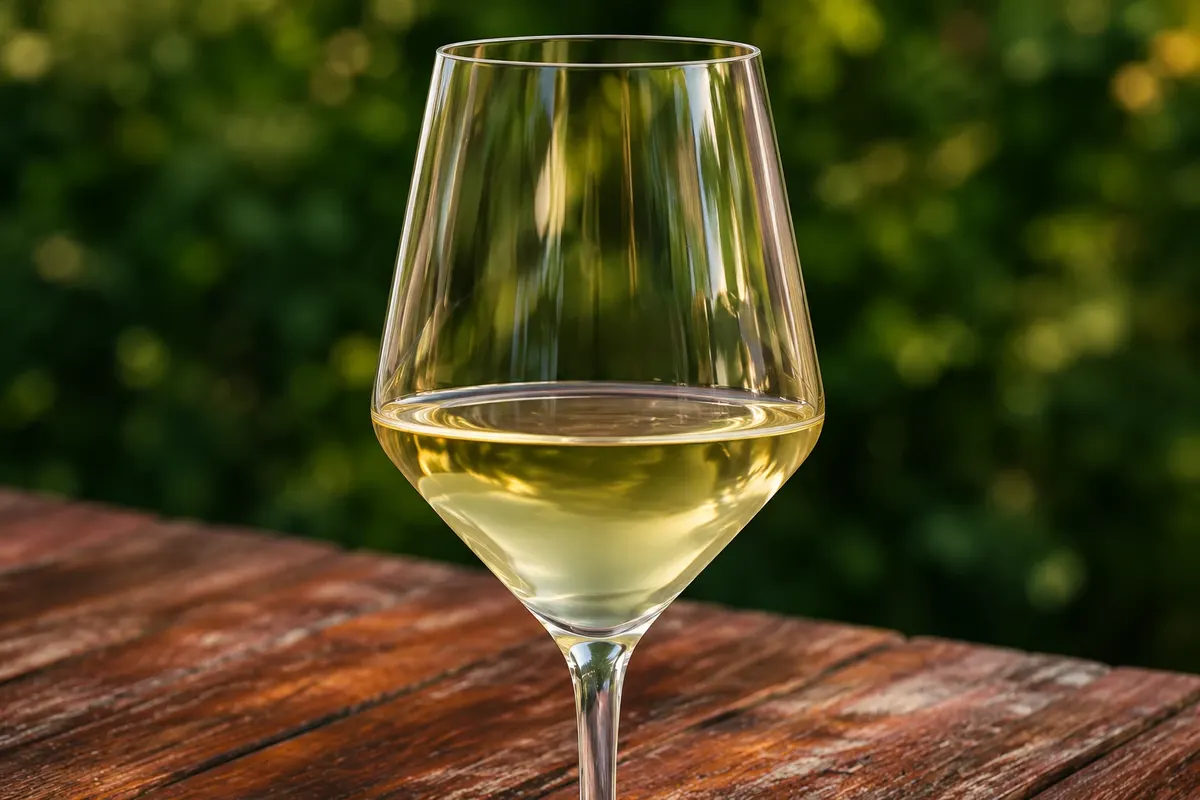
Wine mixed with sparkling water (szóda), in proportions that have their own names, such as kisfröccs, hosszúlépés and házmester. White, rosé or red, it is the summer drink of Hungary’s bars, cellars and terraces.
Flavors · Hungary
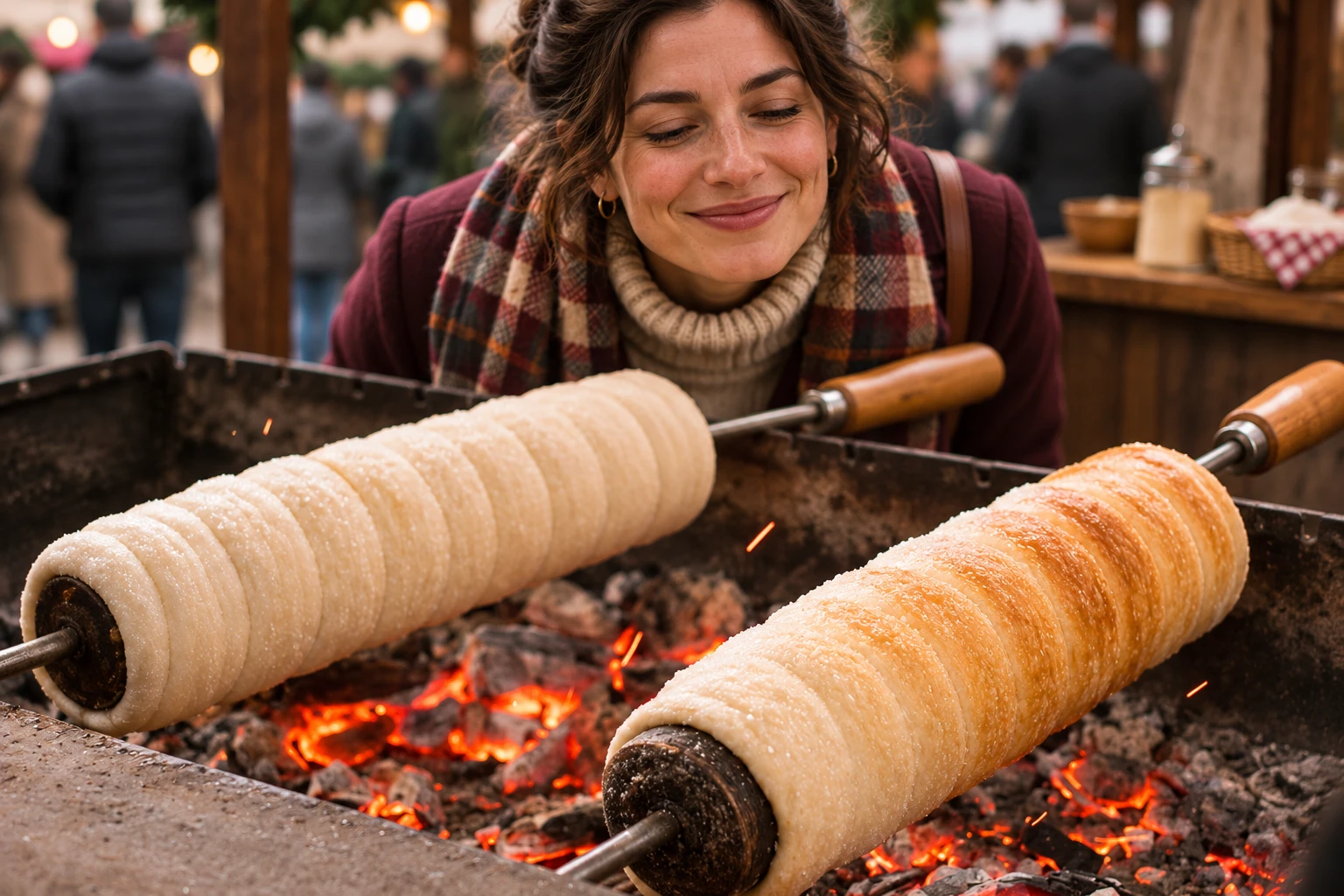
Sweet yeast dough rolled into a strip on a wooden spindle, baked while turned over embers and coated with caramelized sugar. It comes off the spindle in the shape of a hollow cylinder. It originated in the Land of the Székely in Transylvania and is sold at fairs and Christmas markets throughout Hungary.
Traditional sweet from Hungary
Also known as: kürtős kalács, kürtös kalács, chimney cake
Illustrative images. The pictures in this guide are illustrations based on the real place, not photographs, and may differ from it.
Click a photo to enlarge it.
Kürtőskalács — Hungary
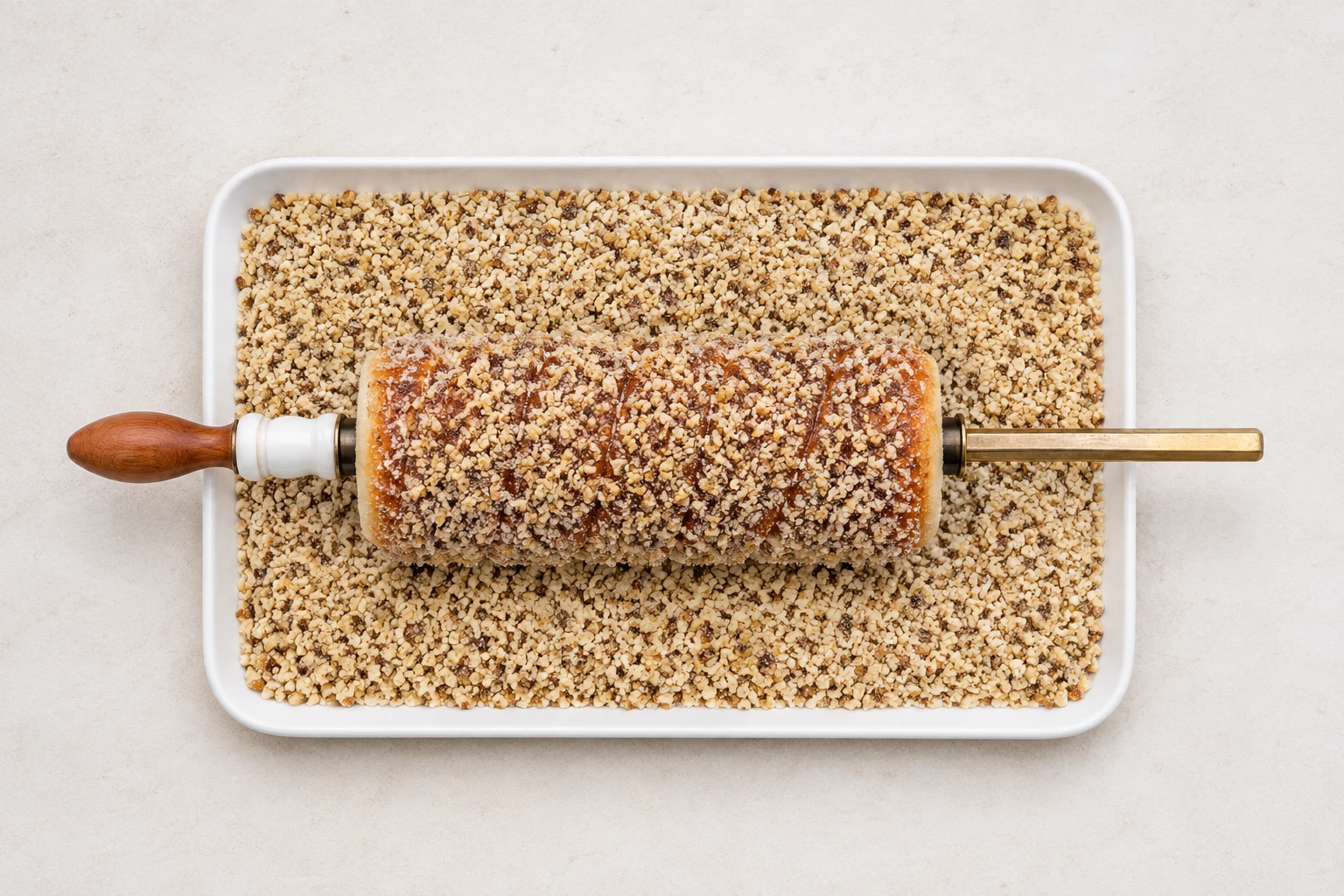
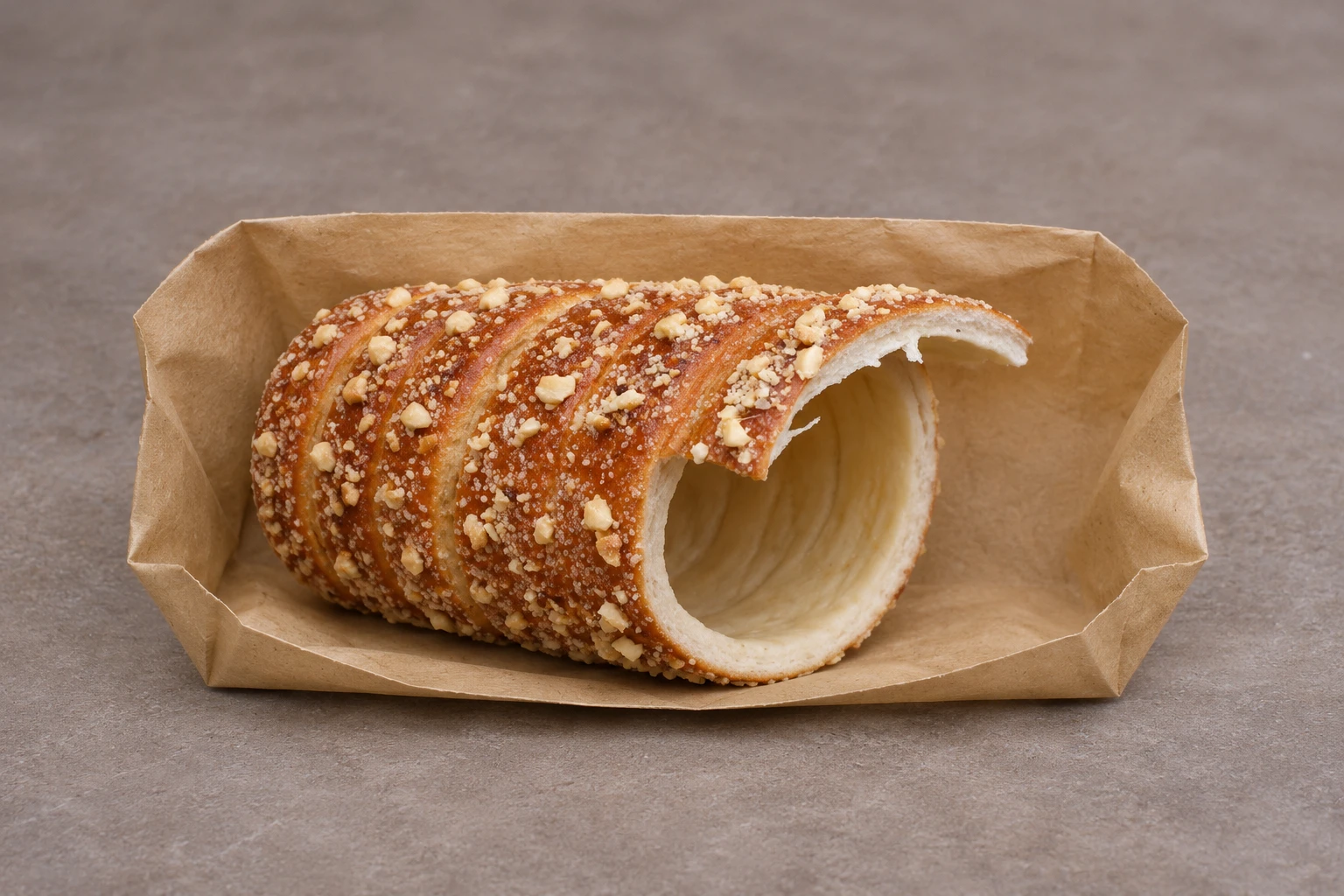
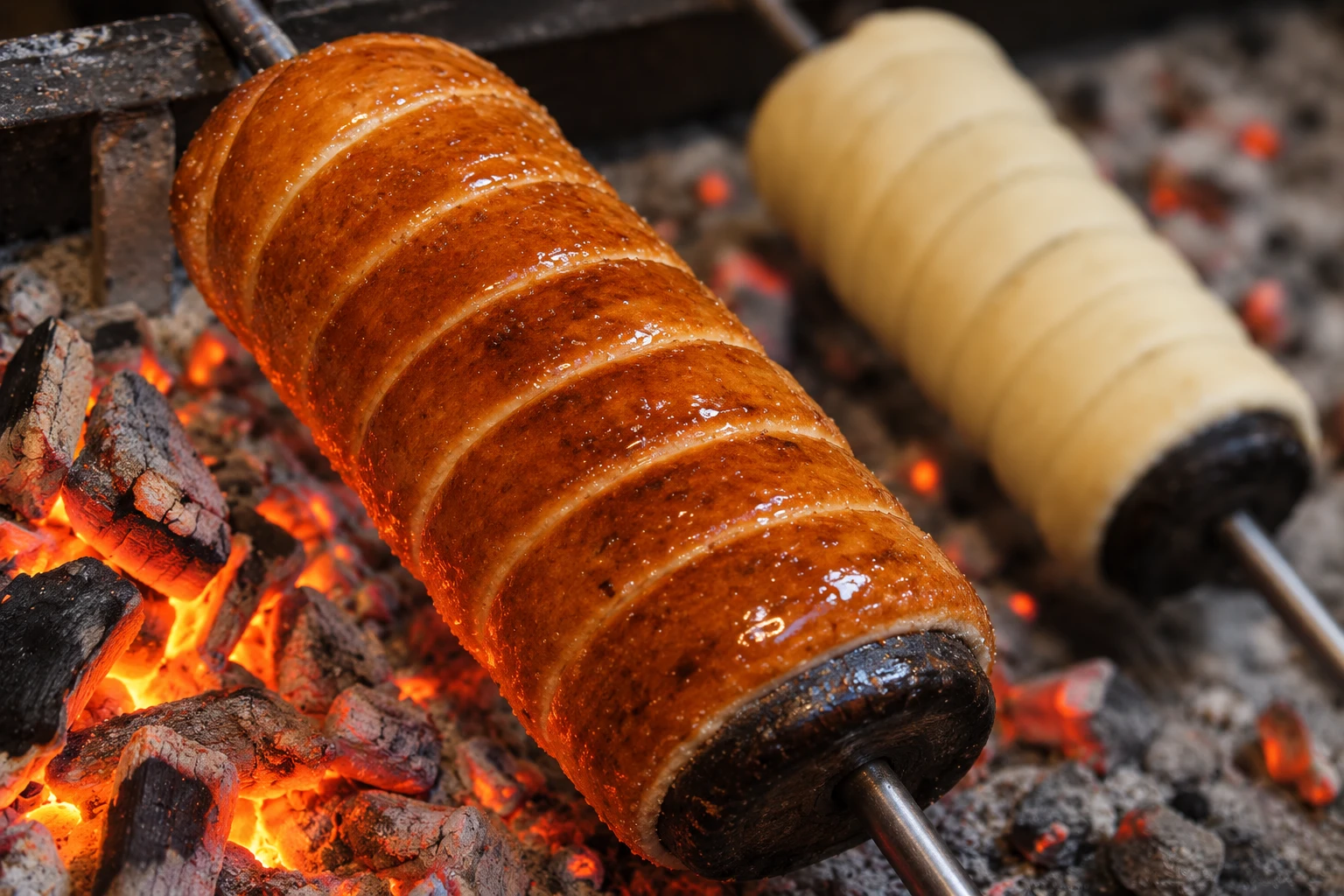
Kürtőskalács is made from a sweet yeast dough cut into a long strip and spiraled around a wooden spindle. The dough is rolled in sugar and baked while turned over glowing charcoal until the sugar caramelizes and forms a shiny, crispy crust. After being removed from the spindle, the pastry takes the shape of a hollow tube that pulls apart in a spiral when torn by hand.
The name combines kürtő, the word for a chimney pipe, and kalács, sweet bread, because of its cylindrical shape. The pastry comes from Transylvania, where it was prepared by Hungarians and by the Székely, a Hungarian-speaking community living in the eastern part of the region, now within Romania. One of the earliest known recipes appears in the cookbook of Countess Mária Mikes of Zabola, dated 1784. By the late 18th century, the pastry was already known across Hungarian-speaking areas.
Historically, kürtőskalács was made for weddings, Christmas and baptisms. A sugar coating with chopped nuts became widespread in the early 20th century. Today it is sold year-round at stalls, with coatings such as cinnamon, nuts, chocolate or coconut. The pastry is also known in neighboring countries like Romania, Slovakia and the Czech Republic, where related versions exist.
In 2015, kürtőskalács was entered in the Collection of Hungarikumok, the official list of national values. The official file presents it as both a Hungarian and Transylvanian sweet.

Hungary
A sweet originating in Transylvania, outside present-day Hungarian territory, today sold at fairs and markets across the country.
Wheat flour, yeast, milk, eggs, butter and sugar in the dough; sugar for caramelizing; toppings such as cinnamon, nuts, chocolate or coconut.
Hot, immediately after coming off the spindle, pulling the spiral of dough with your hands. It is often eaten on the street, right at the stall.
Fair and festival sweet, very common at Christmas markets; formerly made for weddings and baptisms.
Your questions
A sweet yeast dough rolled on a wooden spindle, baked over embers and coated with caramelized sugar. It comes off the spindle as a hollow tube.
From Transylvania, where it was prepared by Hungarians and by the Székely, a Hungarian-speaking community in the eastern part of the region, now part of Romania. One of the earliest known recipes dates to 1784.
Kürtő is a chimney pipe and kalács is sweet bread. The name refers to the pastry’s cylindrical shape.
Flavors of Hungary

Wine mixed with sparkling water (szóda), in proportions that have their own names, such as kisfröccs, hosszúlépés and házmester. White, rosé or red, it is the summer drink of Hungary’s bars, cellars and terraces.

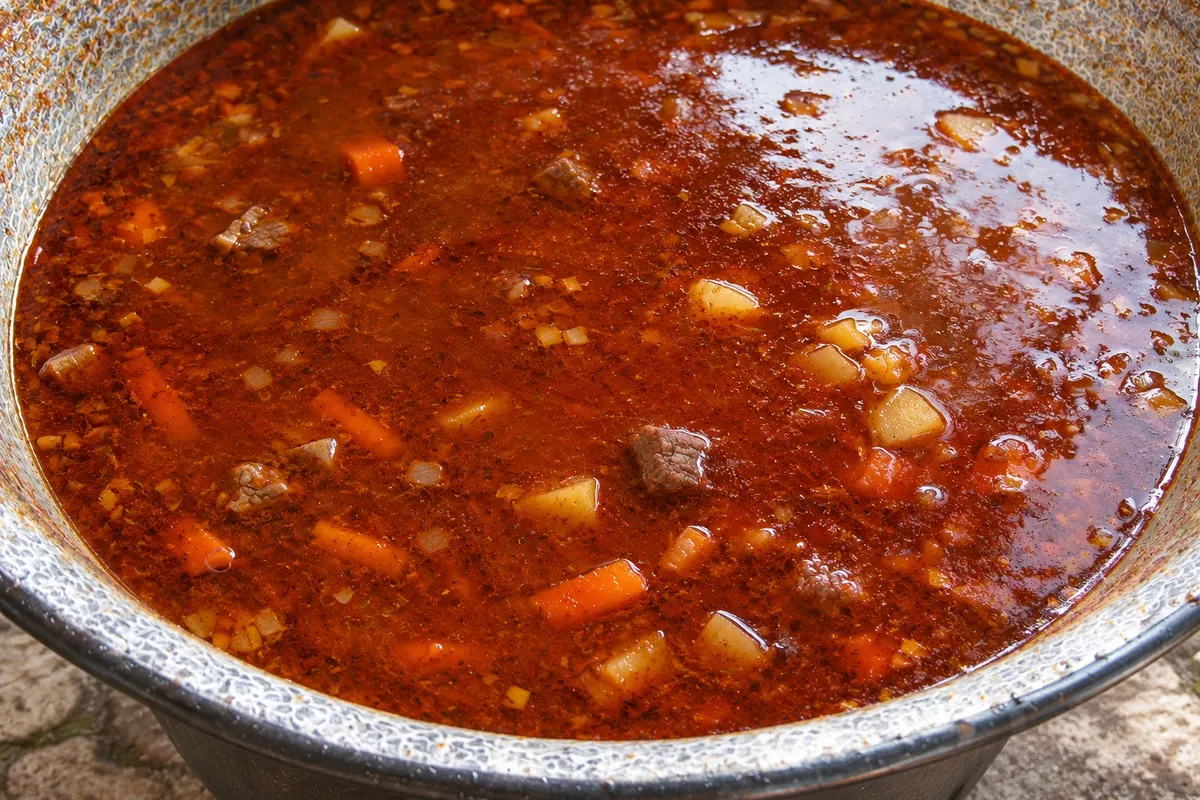
Beef soup with plenty of broth, onion, paprika, diced potato and csipetke, a pinched noodle that cooks in the pot. It is made without thickening with flour. The name comes from the gulyás, the herdsmen of the Great Plain.

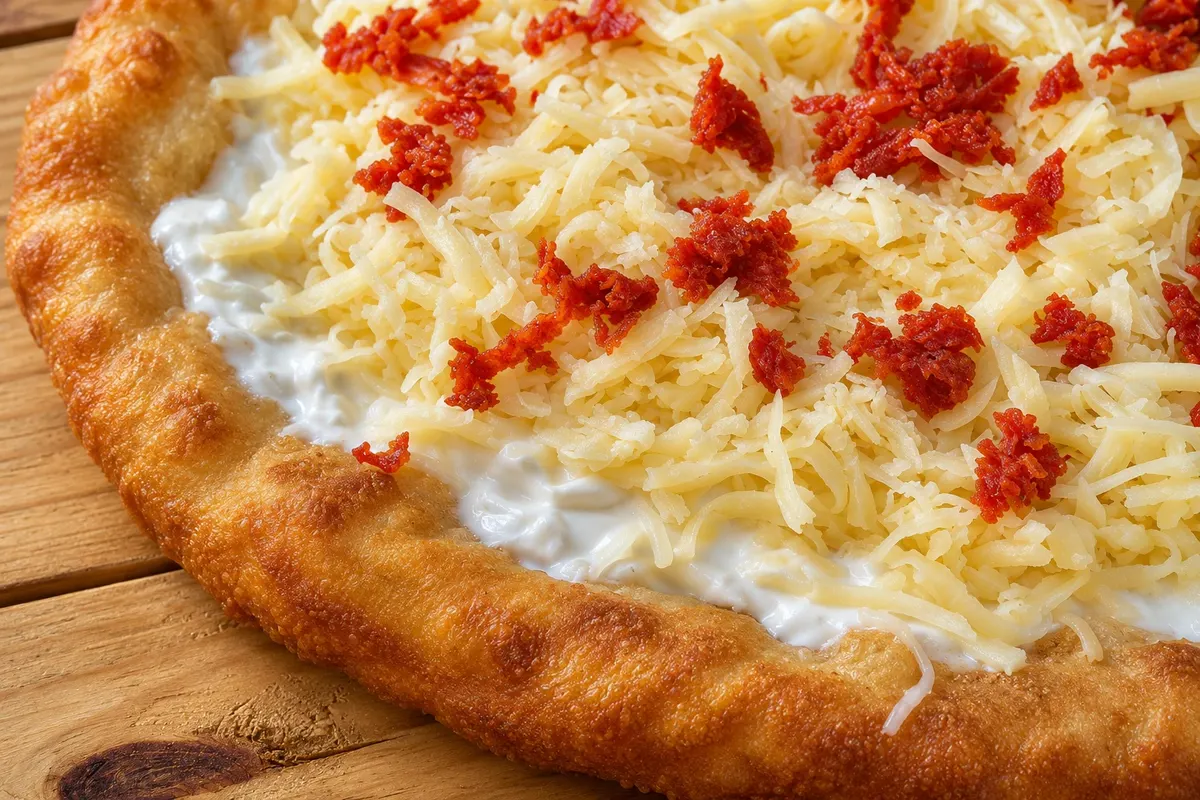
Yeast dough hand-opened and fried until golden, crunchy on the outside and soft inside. The classic topping is sour cream, grated cheese and, if you like, garlic. A street food found at fairs, markets and beaches across the country.

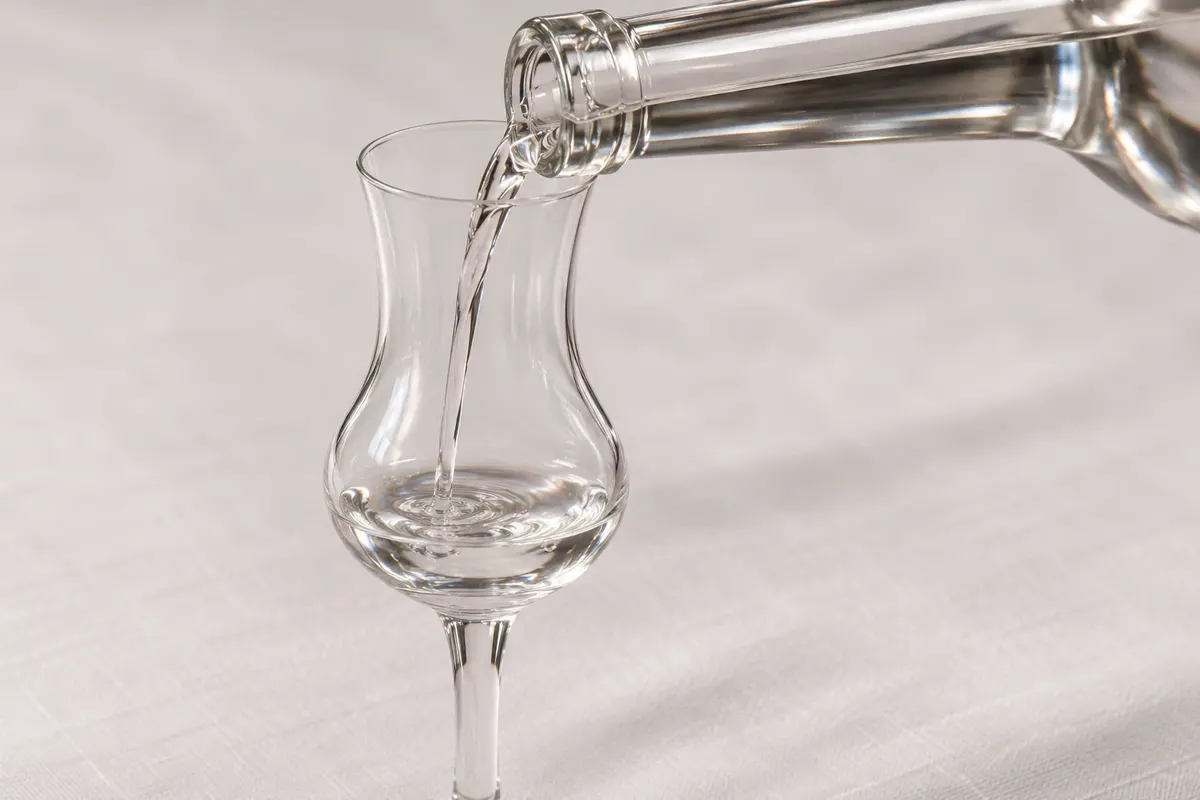
Fruit brandy distilled in Hungary from plum, apricot, pear, apple, cherry and many others. By law the fruit must be grown in Hungary, and all stages from fermentation to bottling must take place in the country. It is a protected geographical indication of the European Union.

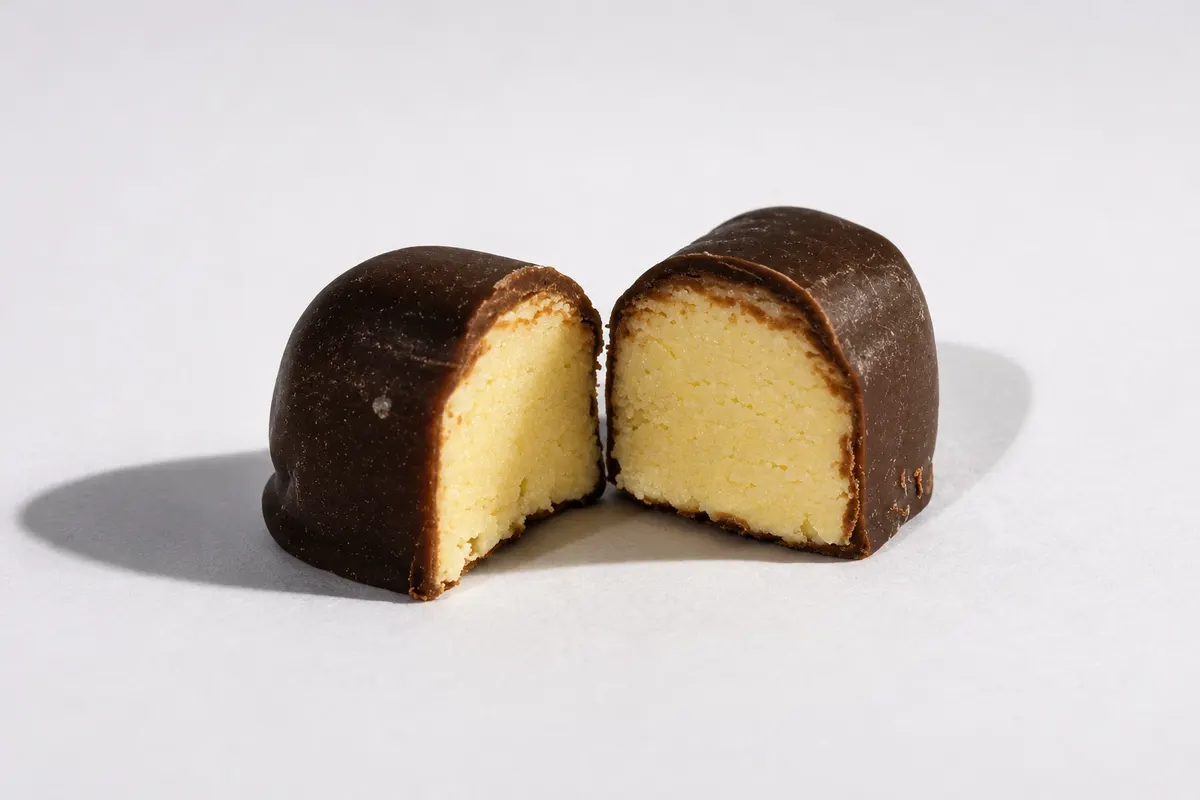
Christmas bonbon, usually a fondant candy covered in chocolate, wrapped in shiny colored foil and hung on the branches of the Christmas tree. The most common fillings are fruit jelly, marzipan, coconut and caramel.

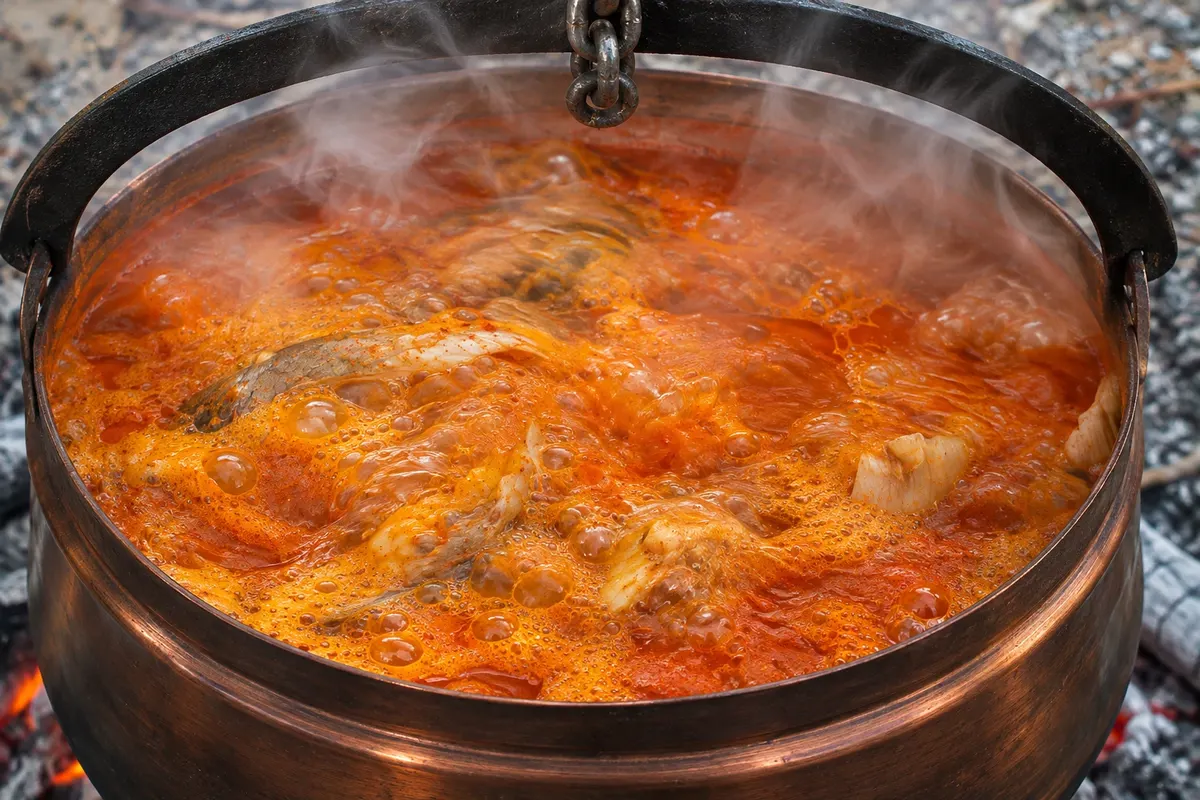
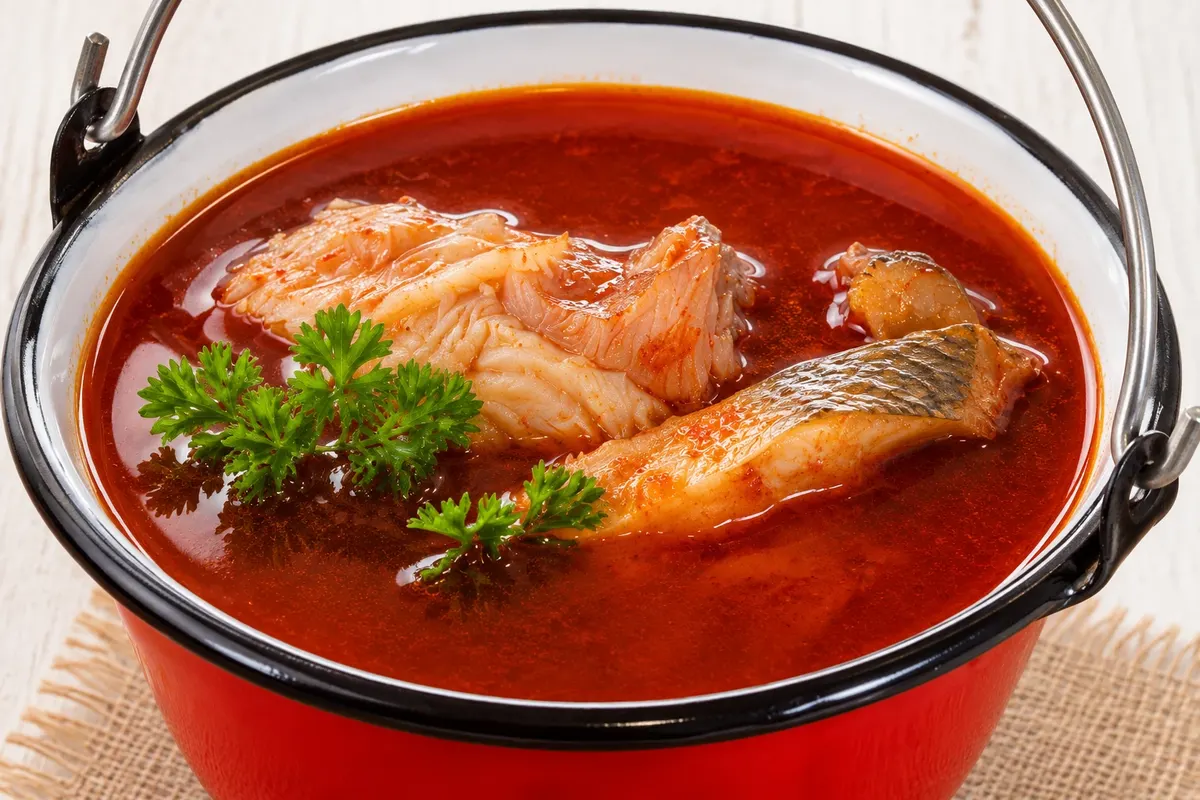
Baja fish soup from the banks of the Danube, made with carp, onion and ground paprika cooked together in a cauldron, without straining the broth. It’s served over a thin noodle, gyufatészta, with the fish on the side and hot pepper.

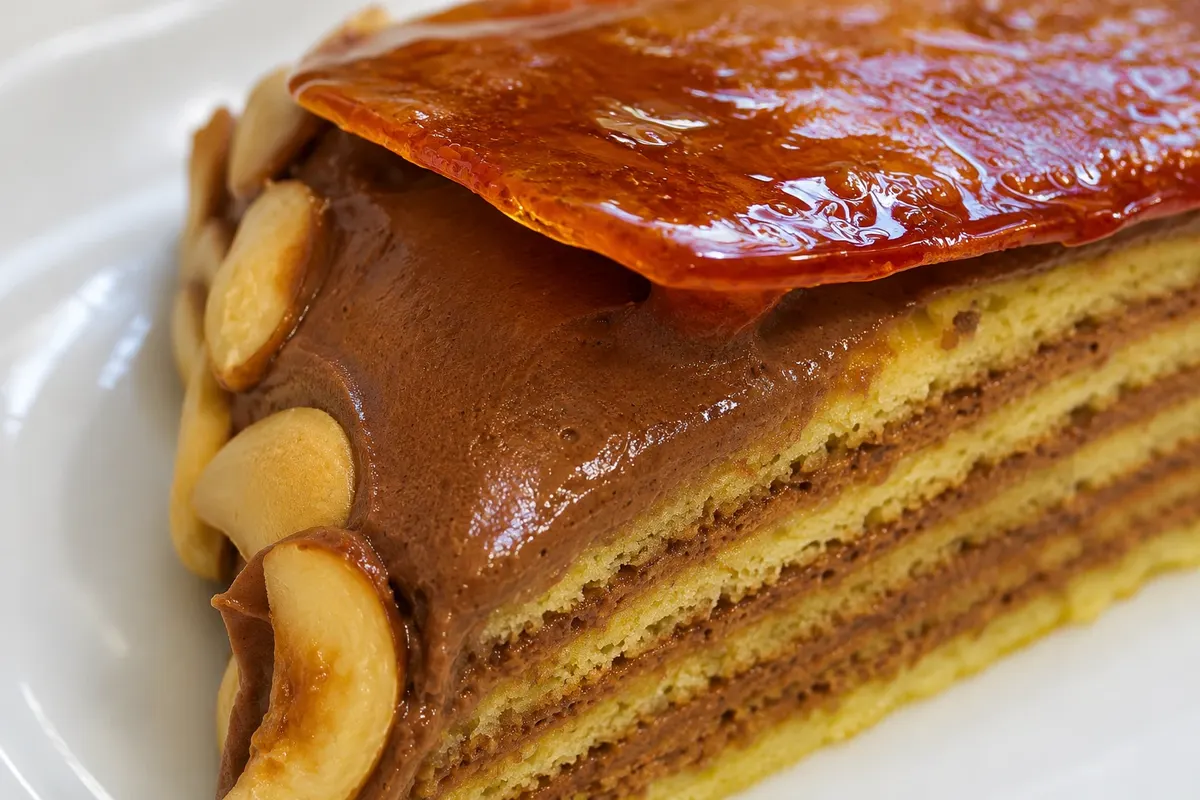
Layered sponge cake with thin layers of sponge alternated with chocolate buttercream and topped with a sheet of caramel. It was created by pastry chef József C. Dobos, owner of a delicatessen in Budapest, and presented at the 1885 National General Exhibition.

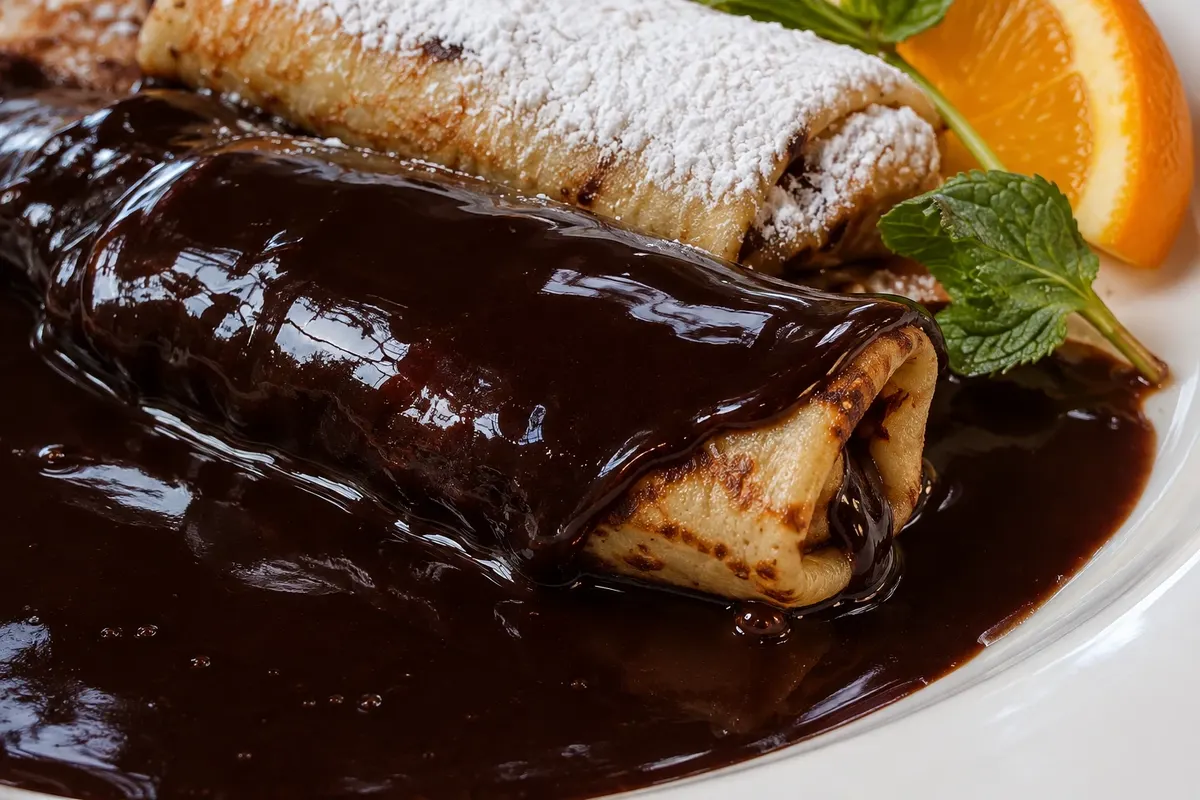
Crepe folded and filled with walnuts, raisins and candied orange peel, flavored with rum and topped with chocolate sauce. It is named after the Gundel restaurant in Budapest’s City Park, which put it on the menu; the recipe is attributed to Ilona Matzner, wife of the writer Sándor Márai.

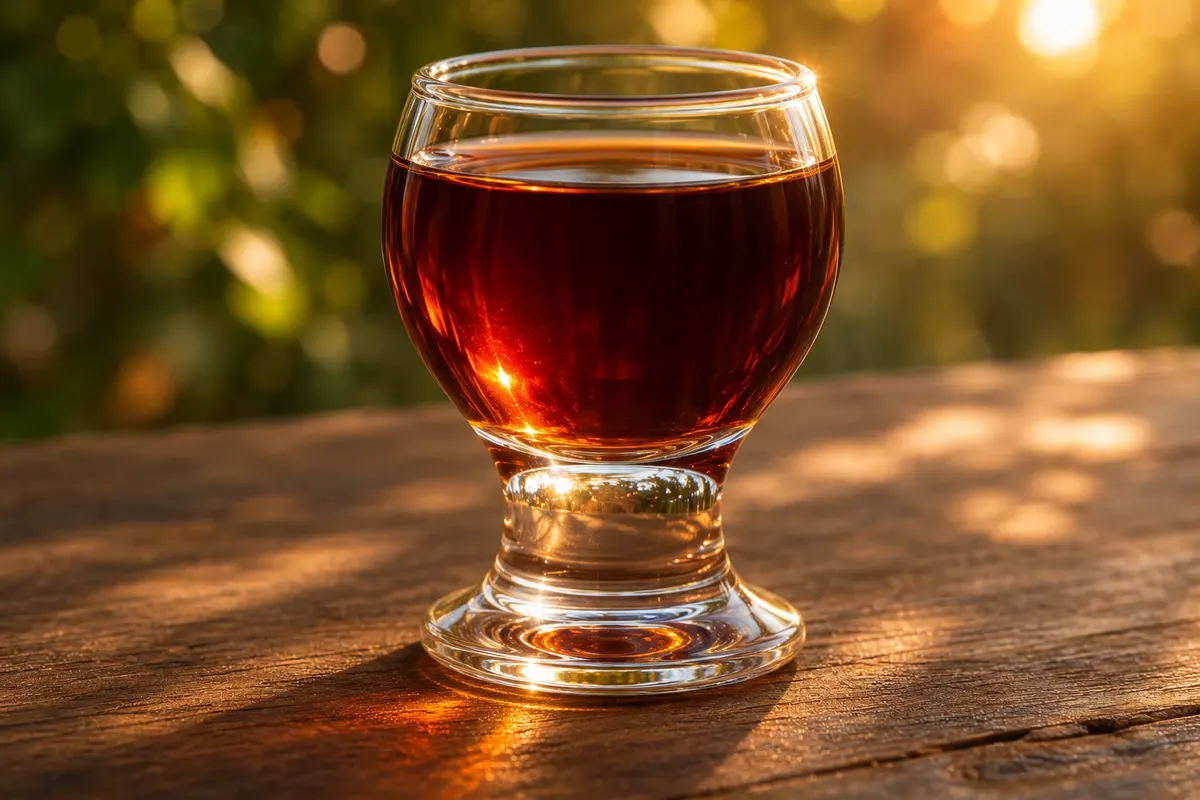
Bitter herbal liqueur, dark, produced by the Zwack family in Budapest with a secret recipe of more than 40 herbs and spices, aged in oak casks. The round bottle with a cross on the label is recognised throughout the country.

Szeged river fish soup, red from paprika, made with a thick broth of several fish, carp heads and bones, and onion, passed through a sieve. Carp pieces cook in that broth, and the soup is served with bread and hot pepper on the side.

Sweet wine from the Tokaj wine region in northeastern Hungary, made from grapes affected by noble rot and harvested berry by berry. The aszú berries are crushed and macerated in must or wine, and the wine ages in oak barrels in underground cellars.

White wine from the kéknyelű grape, grown almost exclusively in the Badacsony wine region on the northern shore of Lake Balaton. The grape’s name means “blue stem.” The wines are usually dry with marked acidity, and there are also sparkling and sweet versions.