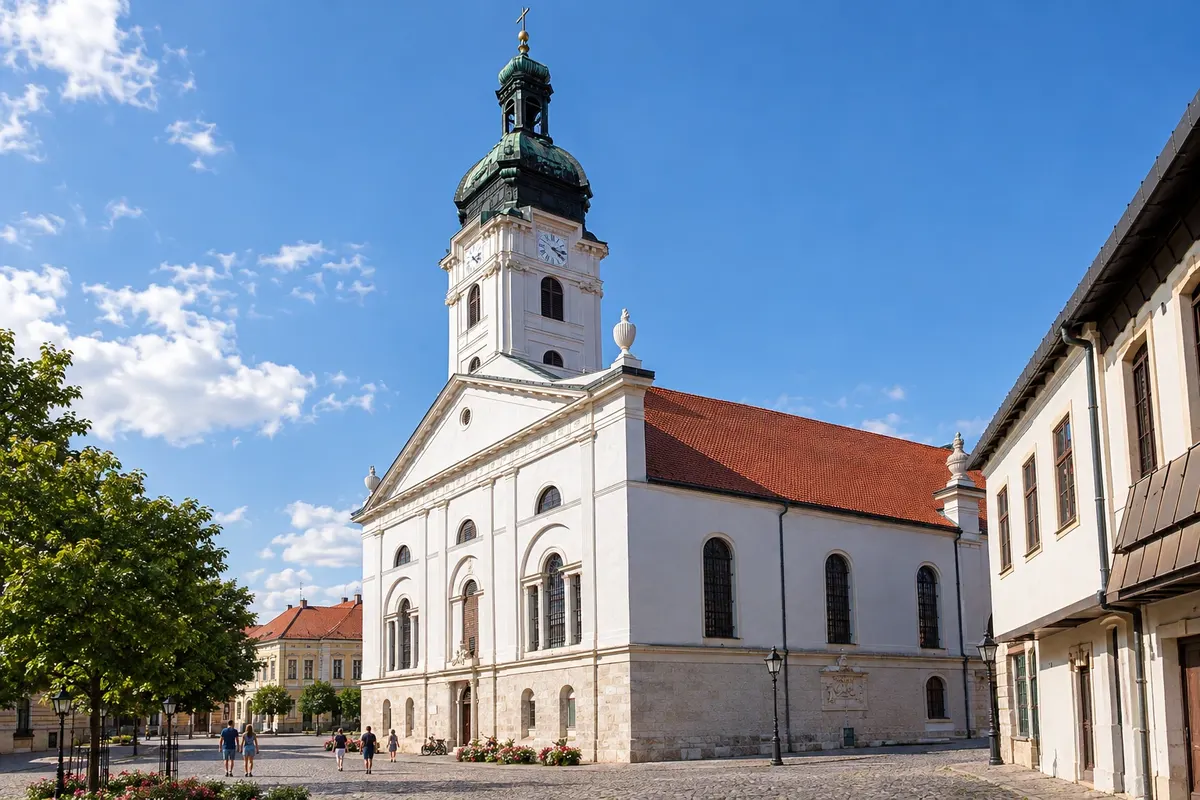
Balatonfüred
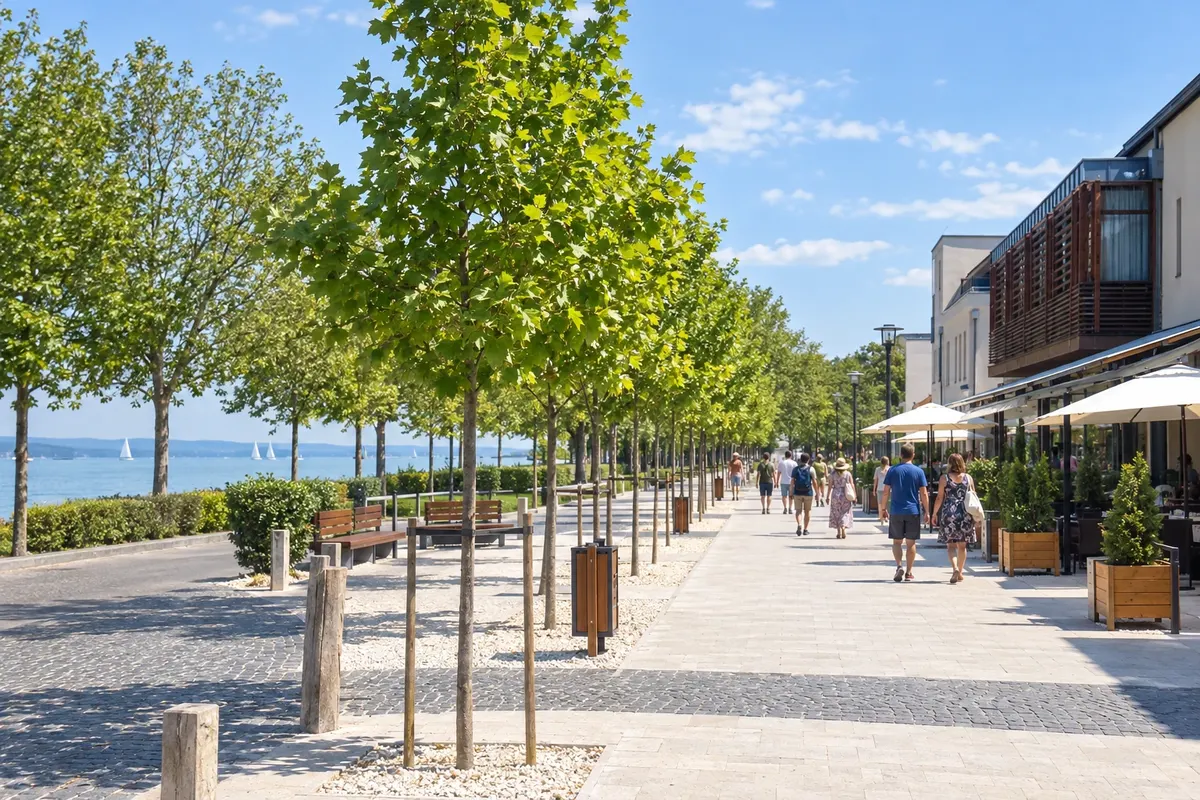
Balatonfüred is a base on Balaton’s north shore. The Tagore sétány combines a waterside promenade, gardens and contact with boating activity. Train access makes it easy to reach from Budapest and continue to other stops in the region.
Your place in the guide
A direct path for those who have already chosen the next stop of the trip. 10 destinations and 19 cities in Hungary.
Explore by destinationIllustrative images. The pictures in this guide are illustrations based on the real place, not photographs, and may differ from it.
Today's highlights
Balatonfüred is a base on Balaton’s north shore. The Tagore sétány combines a waterside promenade, gardens and contact with boating activity. Train access makes it easy to reach from Budapest and continue to other stops in the region.
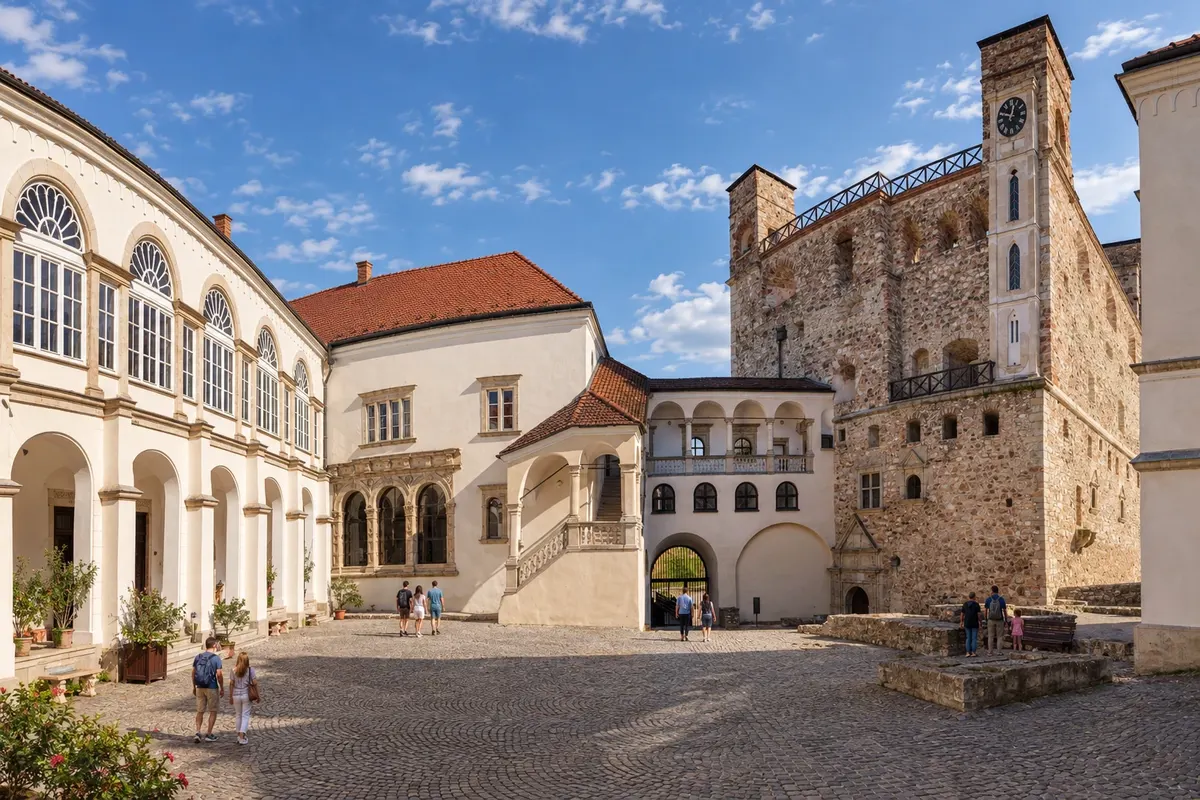
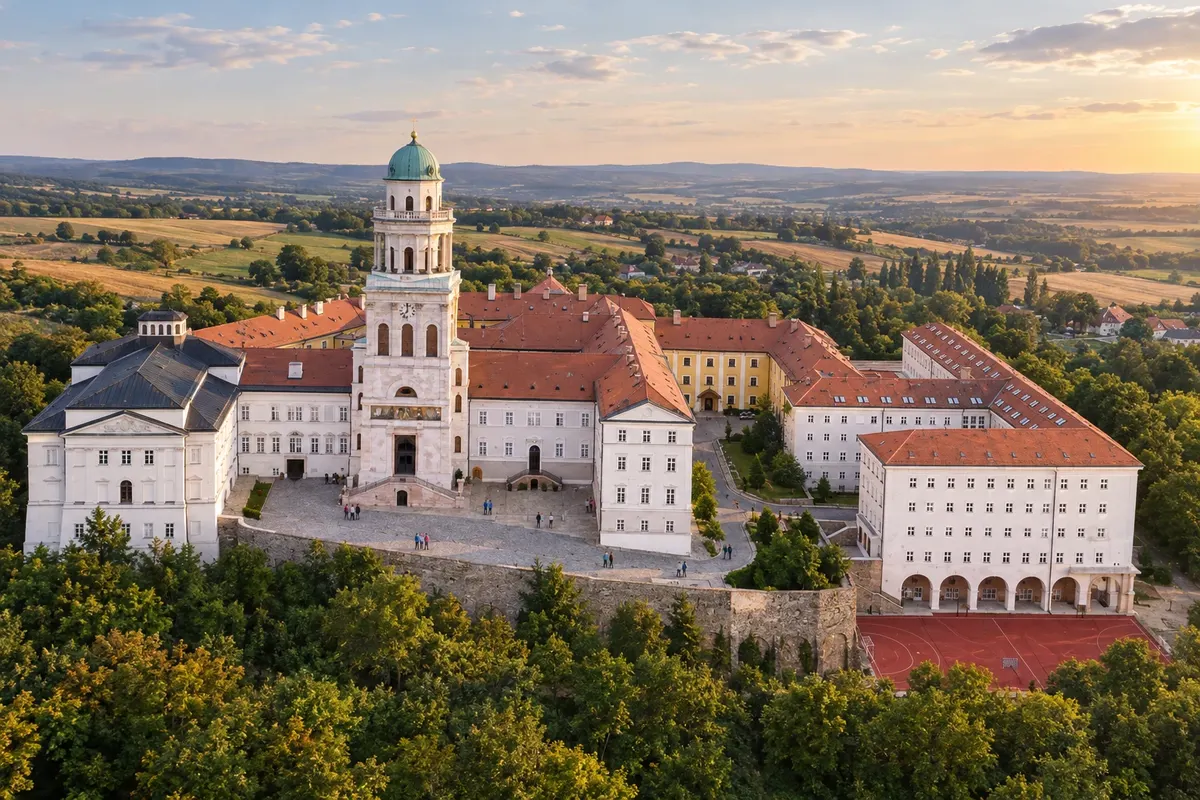
Pannonhalma develops below the hill of the Benedictine abbey, founded in 996. The monastic complex, with its library, basilica and cloister, is the main reason to visit. Arrival from Győr requires allowing time for the final transfer between public transport and the climb up the hill.
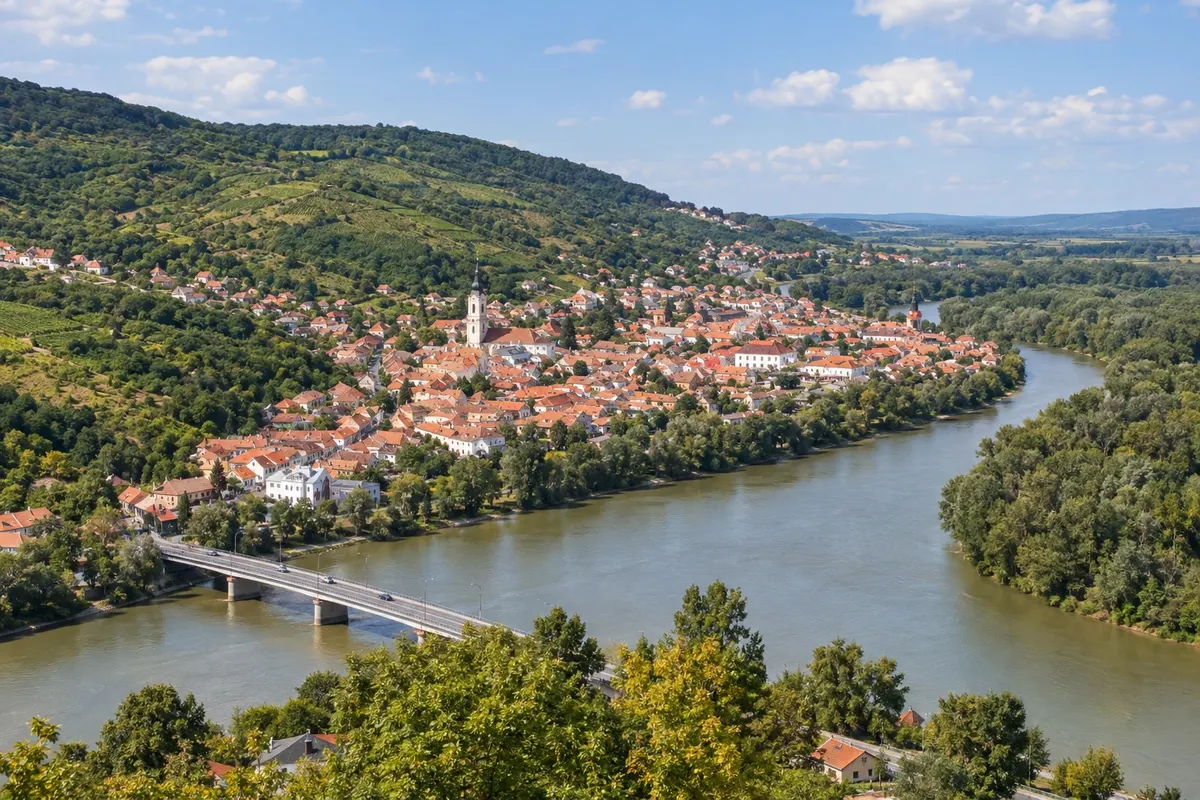
Tokaj sits at the confluence of the Tisza and the Bodrog and gives its name to a landscape of vineyards. The Tokaji Múzeum presents the local history; the Wine Museum explains the regional wine culture. The slopes of Tokaj-Hegyalja require choosing an area and organizing an excursion beyond the town centre.
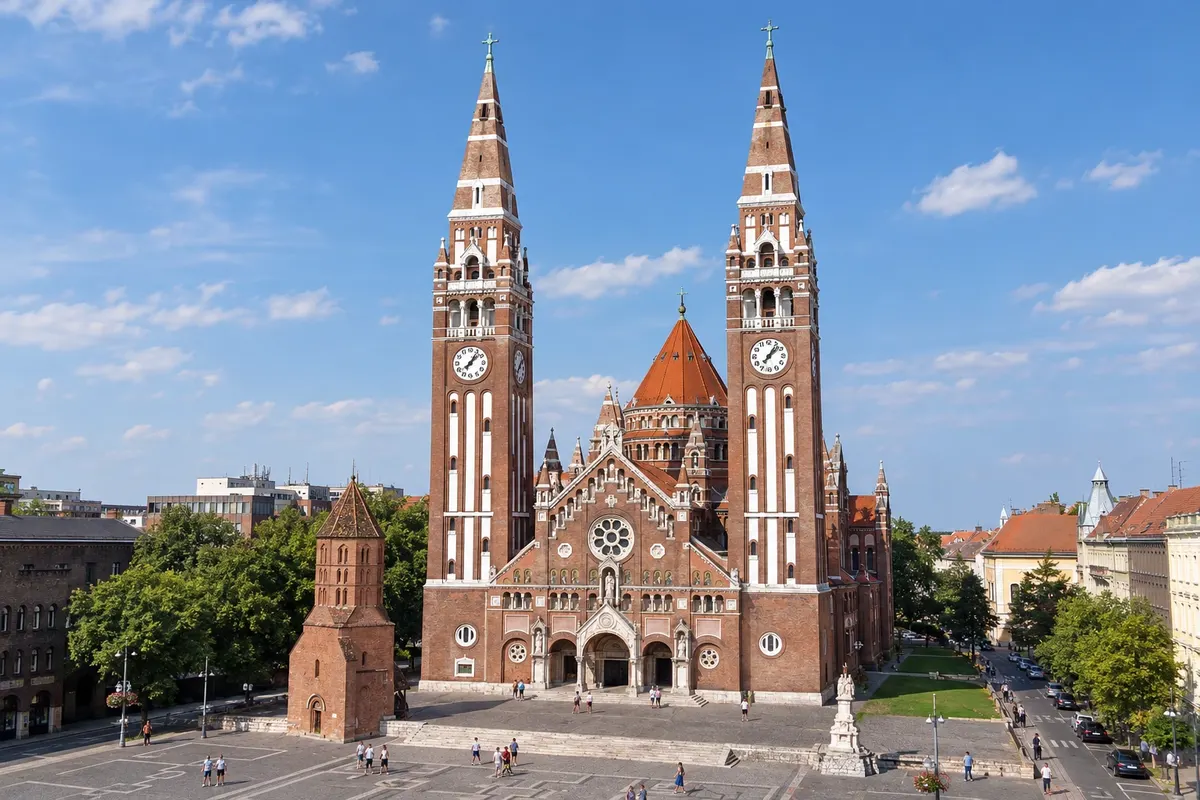
Szeged is organized along the Tisza on the Great Plain. The votive church and its square, the New Synagogue and the Reök Palace display different architectures. The Ferenc Móra Museum adds archaeology and regional culture near the river.
Sárospatak occupies a stage of the Bodrog valley in the Zemplén region. Rákóczi Castle and its Red Tower are the main heritage attractions. The riverside surroundings allow combining viewing the building with a walk through the historic core.
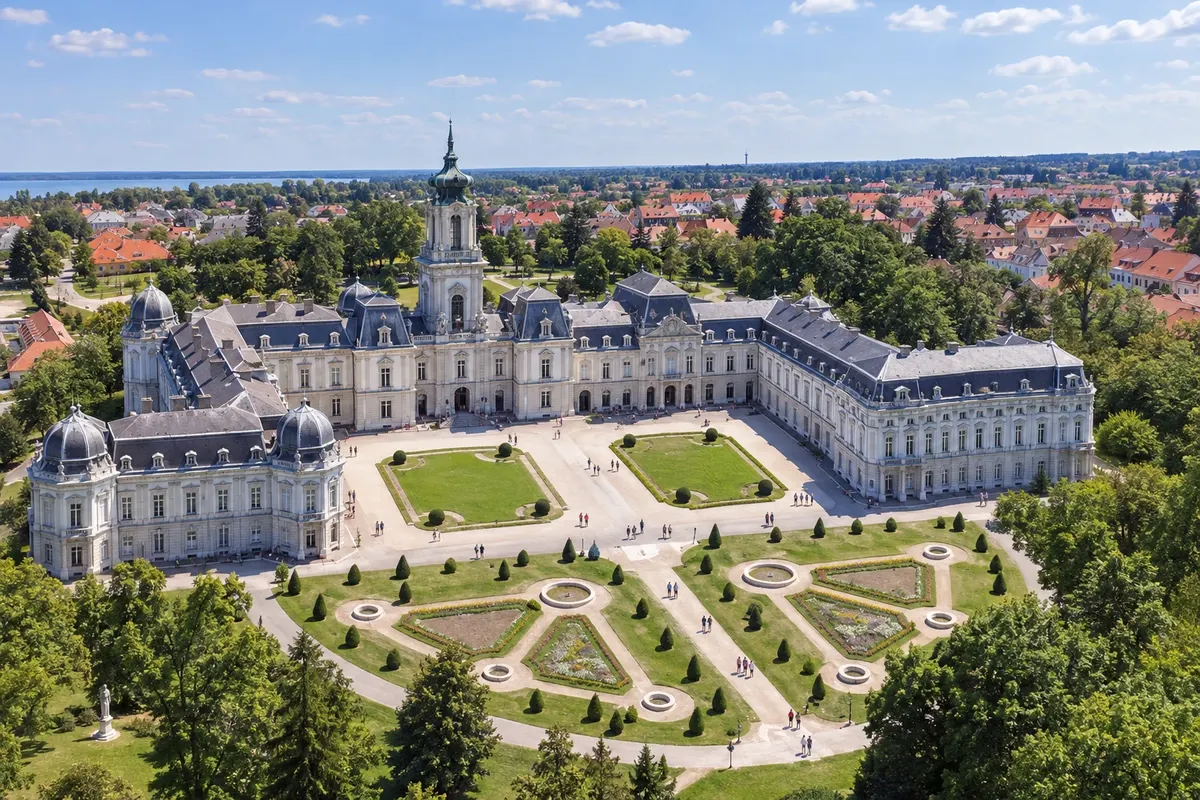
Keszthely combines the Festetics Palace and its park with the lake’s history presented at the Balatoni Múzeum. The town center links those two references in a town on the western edge of the Balaton, near the Hévíz thermal area.
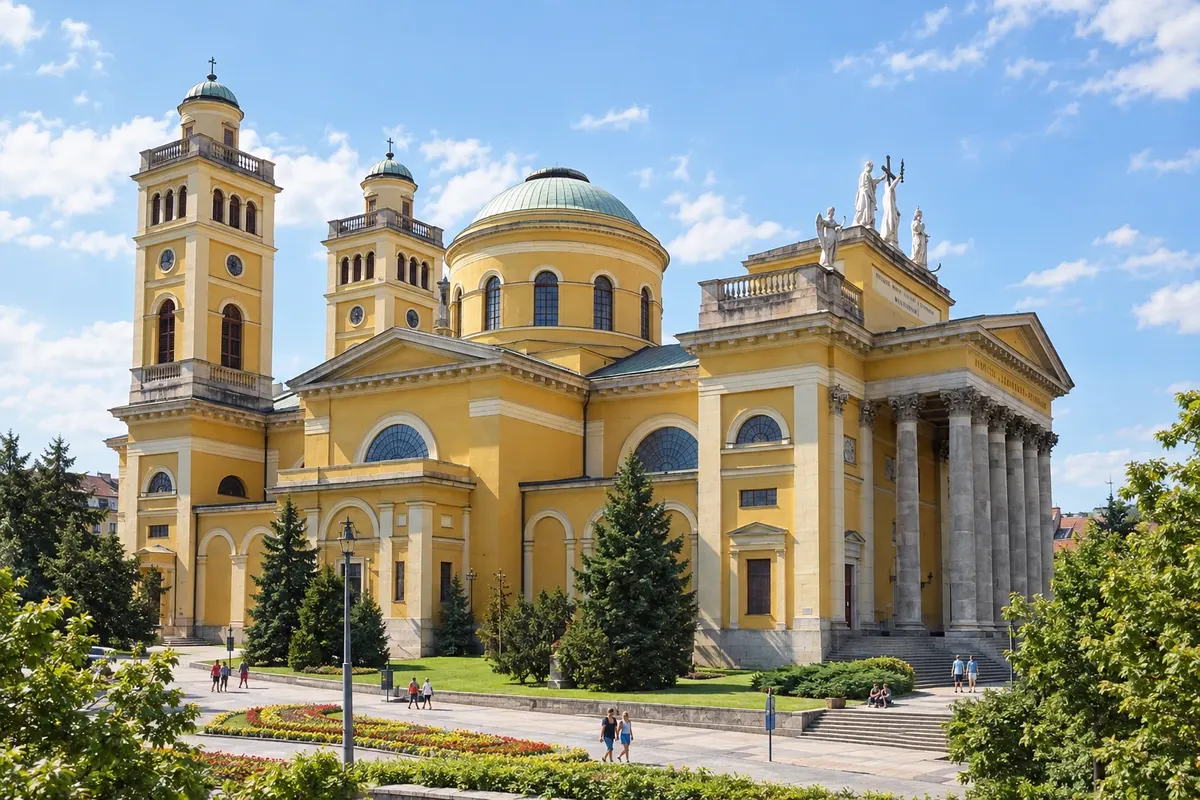
Eger combines the castle above the center, a neoclassical basilica and the preserved minaret among the old streets. The city is the seat of Heves and a base to learn about northern Hungarian culture. Its core allows alternating walls, religious interiors and walks.
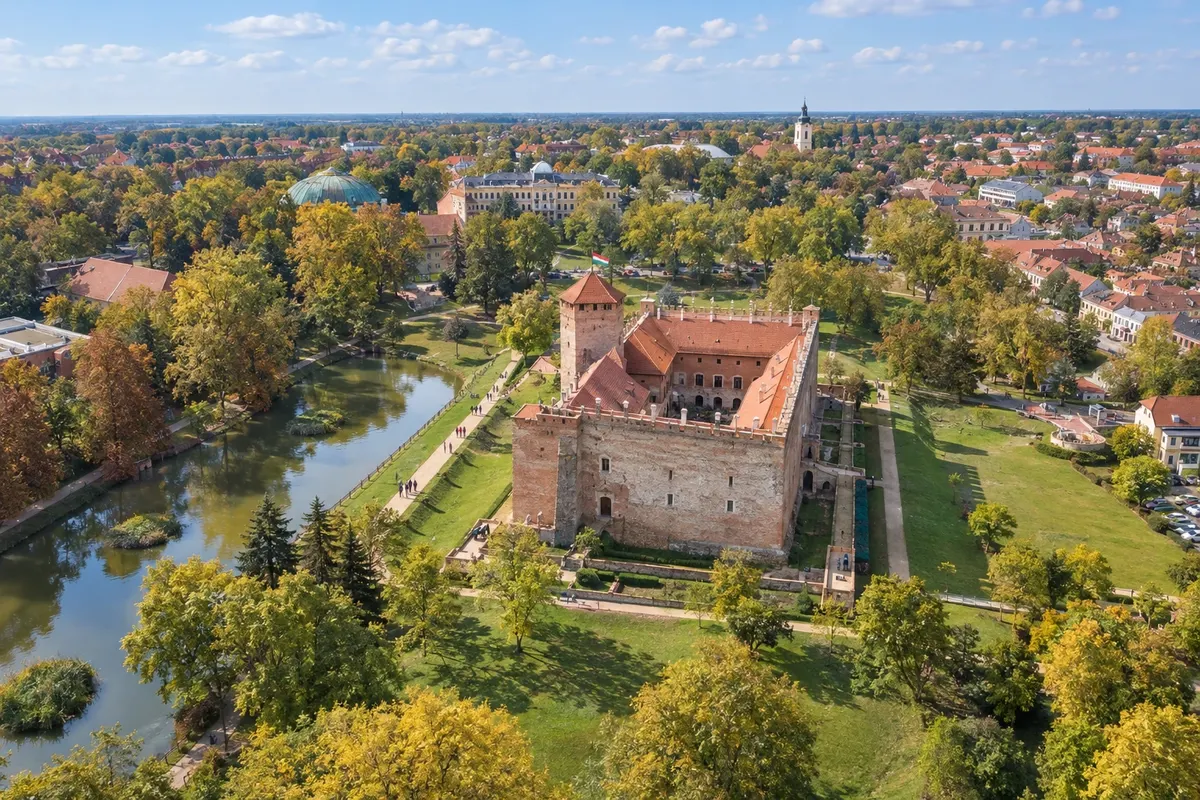
Gyula combines a Gothic brick castle, the Almásy Palace and a thermal bath complex around the park. The three programs have different access and pacing. The town is a stop in southeastern Hungary, close to the county seat of Békés.
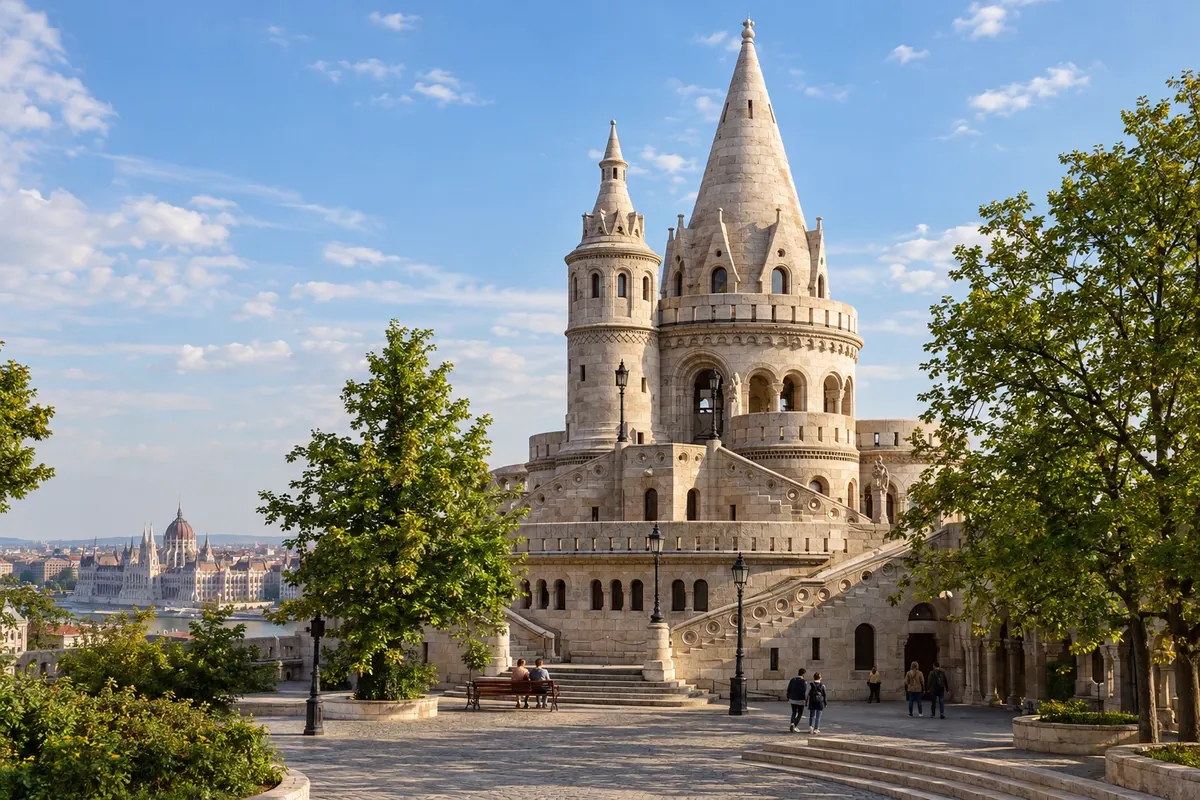
The Danube separates Buda’s hills from Pest’s plain. The Parliament, the Chain Bridge and the Fisherman’s Bastion orient the route. Matthias Church, St. Stephen’s Basilica, the Great Synagogue and the Opera display distinct interiors. the National Museum and the Museum of Fine Arts and the Széchenyi baths round out the visit.
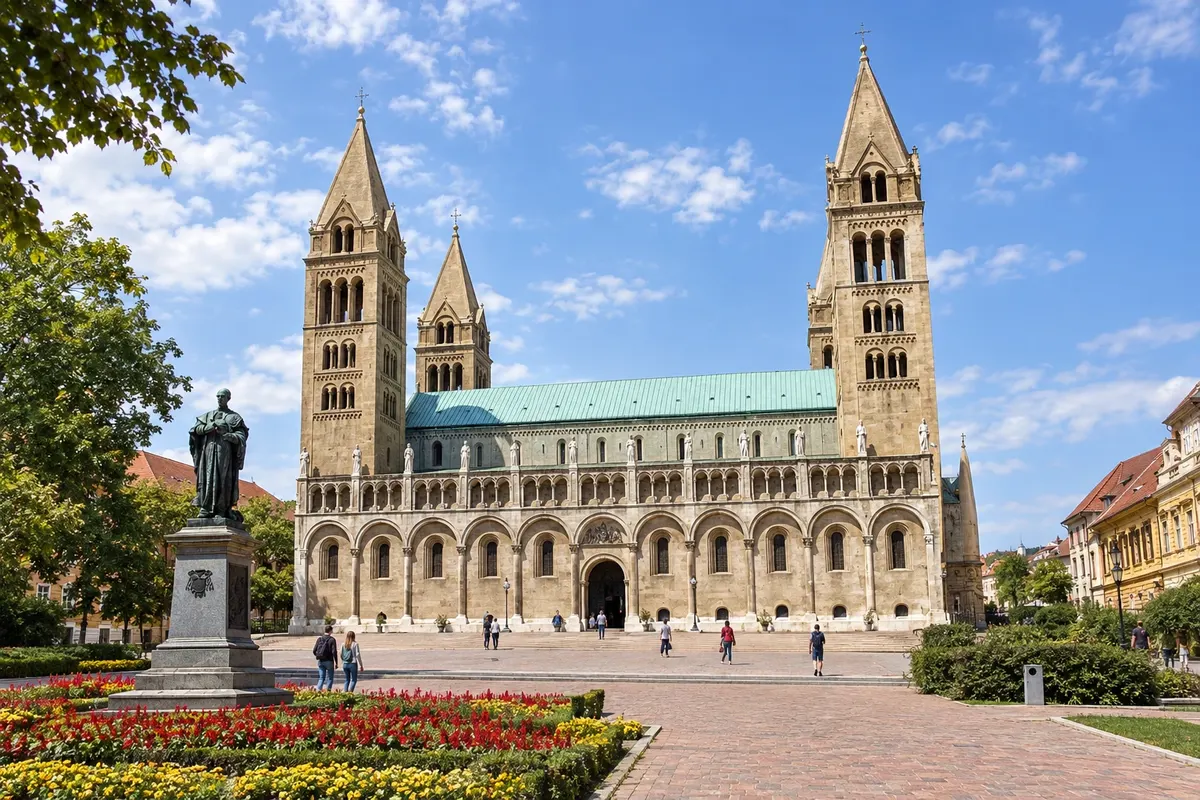
Pécs brings together the early-Christian necropolis of Sopianae, the four-towered cathedral and the old mosque on Széchenyi Square. The Zsolnay Cultural Quarter adds industrial heritage and ceramic collections. As the seat of Baranya, it is possible to combine these layers in two days.
Győr is the seat of Győr-Moson-Sopron and a river junction in western Hungary. On the Káptalandomb hill, the cathedral and the bishop’s castle structure the visit. The old centre allows complementing interiors with walks and views by the water.
Or browse by county
Still deciding?
Get to know the regions and discover everything they bring together.