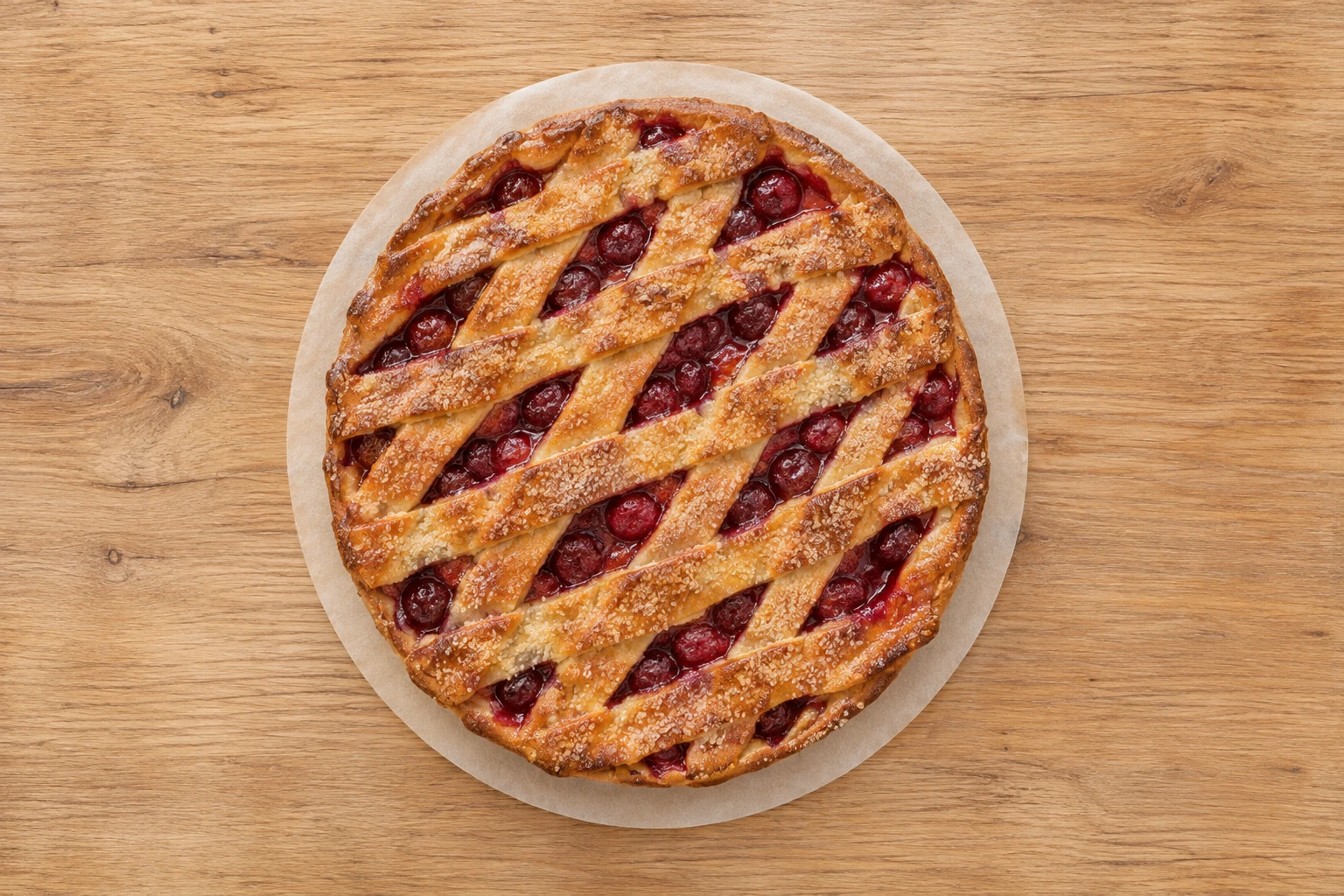
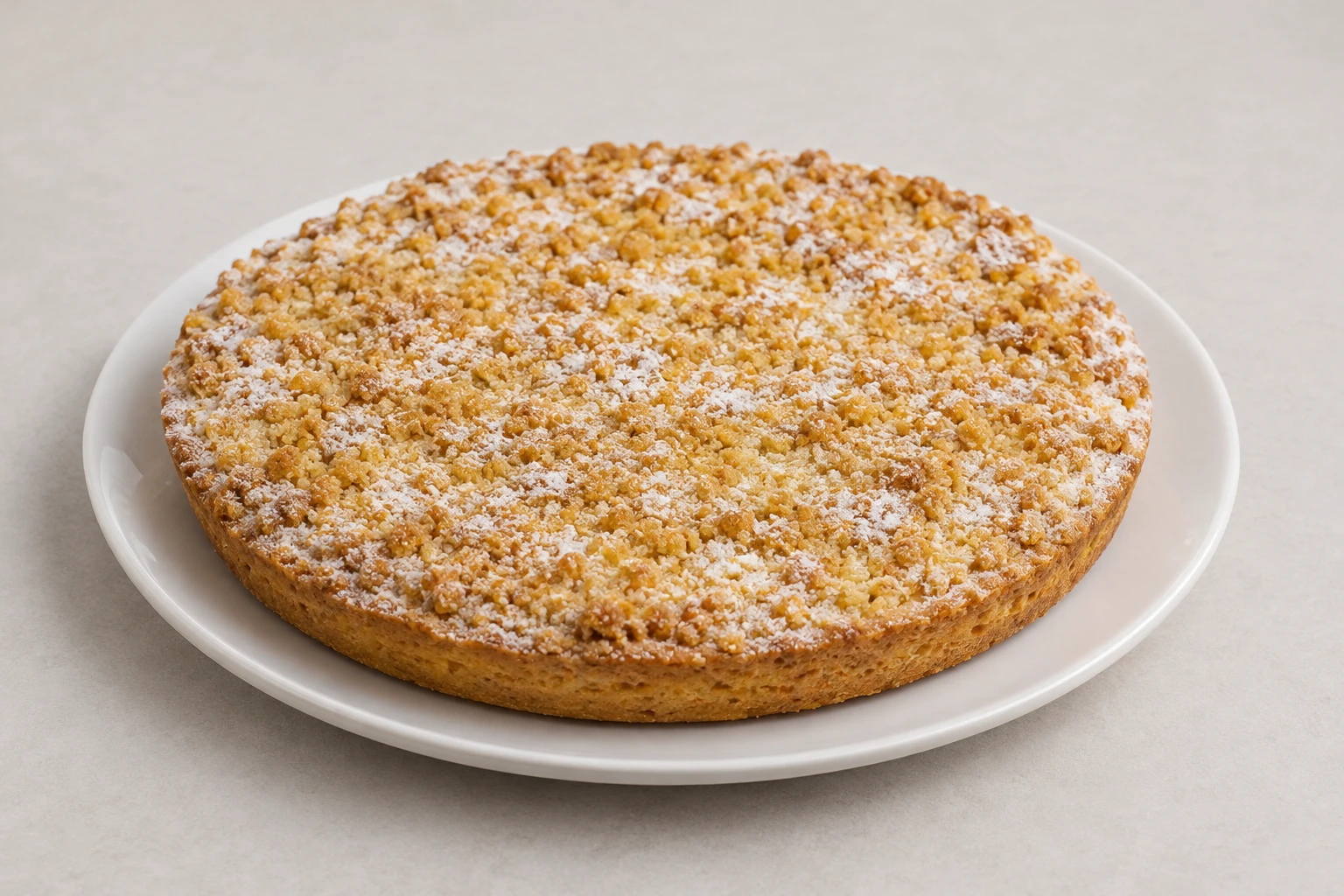
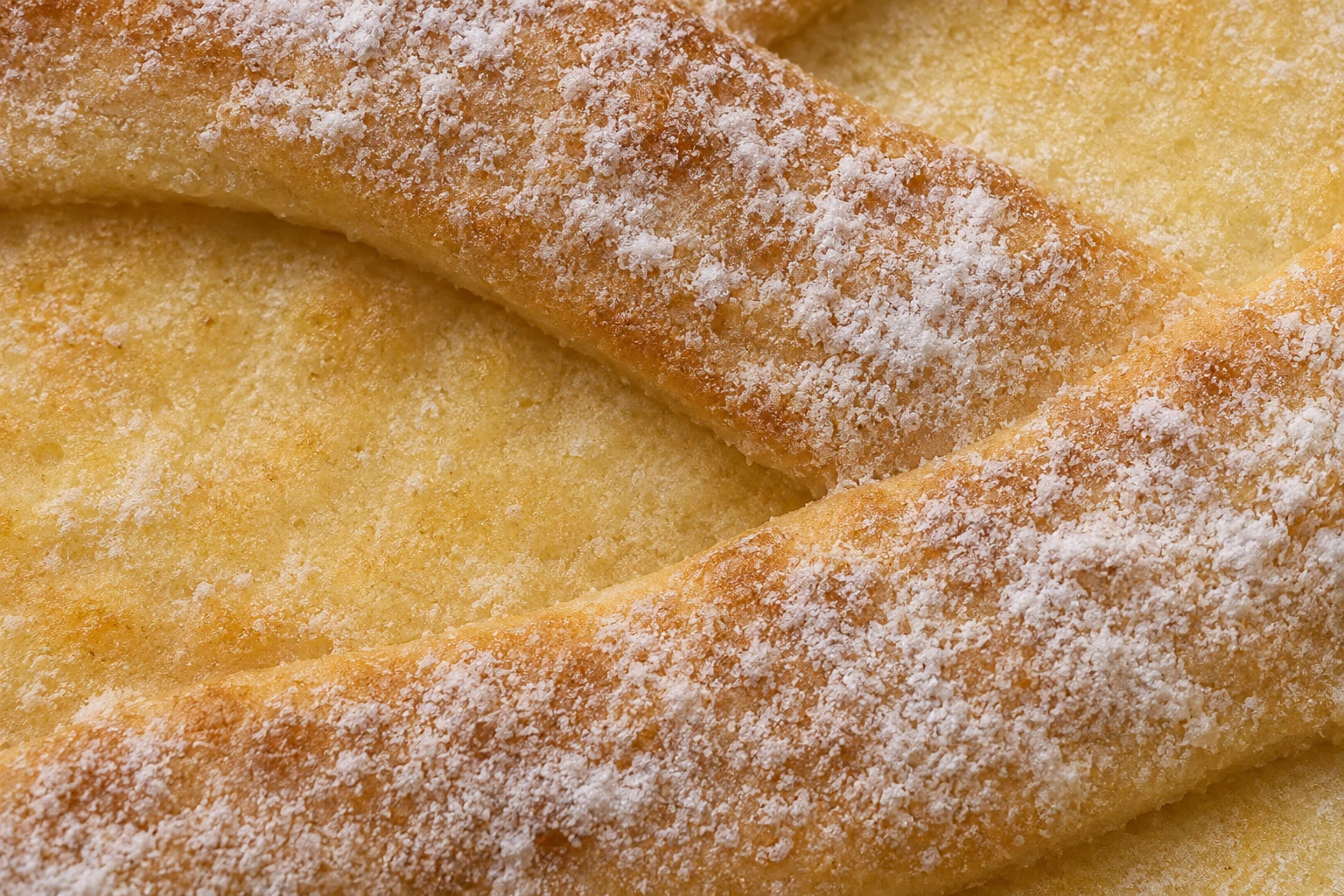
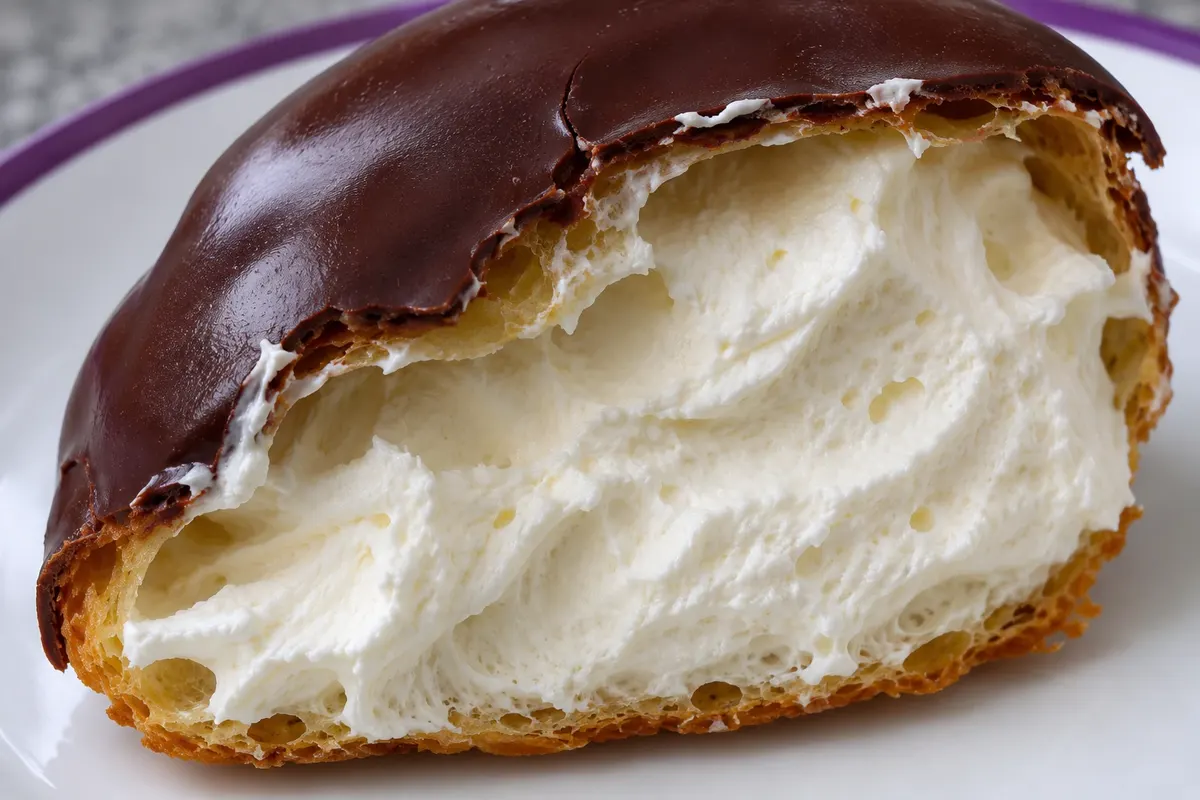
The Limburgse vlaai is a round sweet tart made with a thin fermented dough and a generous filling, baked until golden. Fillings can be fruit, such as cherry, apricot, plum or apple, rice pudding (rijstevlaai), custard, semolina or fresh cheese, or a combination. Often it is finished with a dough lattice or a sugar-and-butter streusel on top.
The tradition is old in both Limburgs — the Dutch and the Belgian provinces that share the same name. Flemish public television traces its origins to at least the 12th century. For a long time it was a luxury reserved for feast days; today it’s the sweet served at birthdays, family celebrations and visits, and is sold in bakeries throughout the province.
In January 2024 the European Commission registered the Limburgse vlaai as a Protected Geographical Indication, after more than seven years of procedure led by the Netherlands and Flanders. Only vlaai baked in the Limburg provinces of the Netherlands and Belgium may use the name, according to the specification rules. Among those rules: dough no thicker than about one centimeter after baking, sale only until the day after production, no freezing and no whipped cream on top.
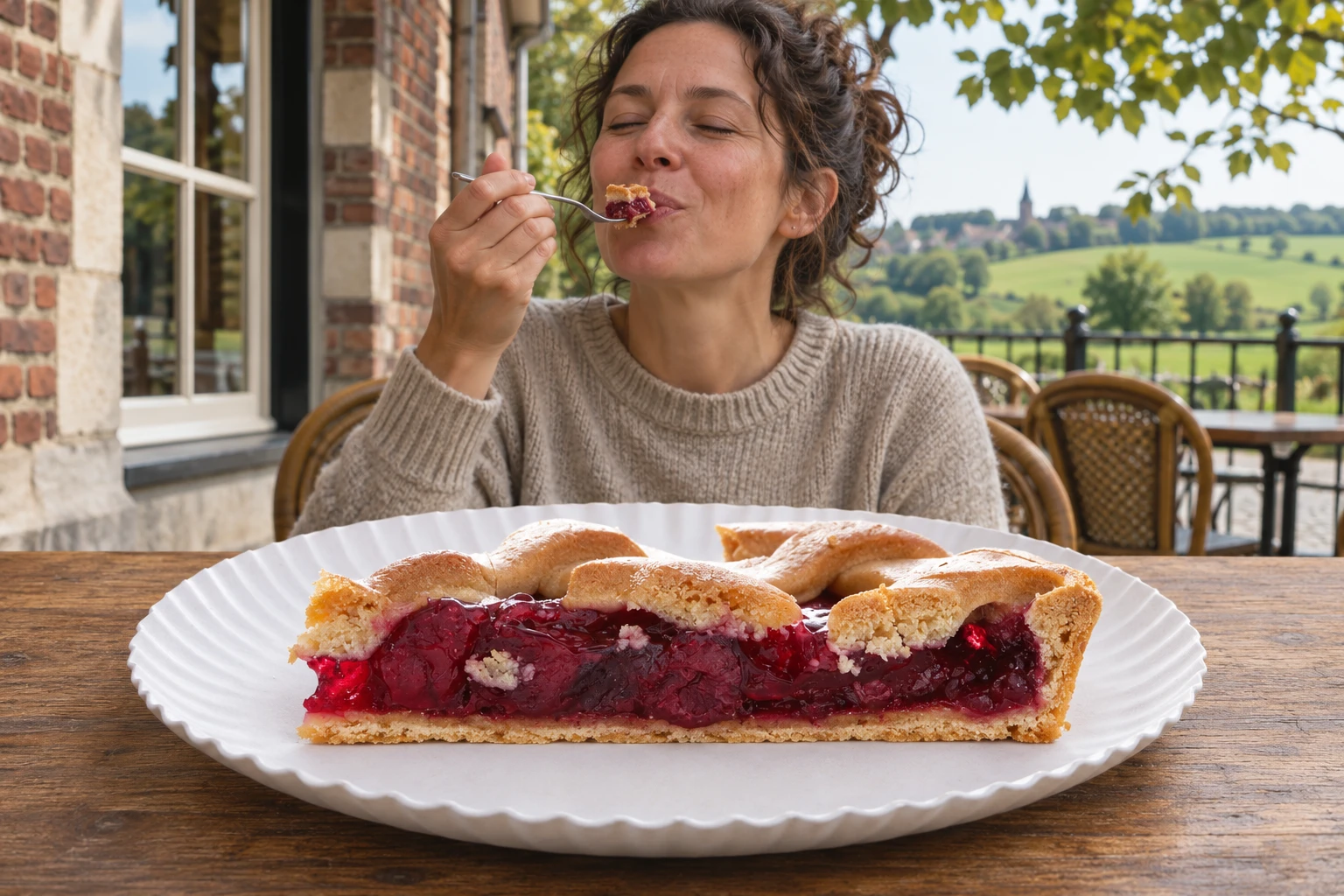
A Limburg saying sums up the ideal: dun van leer, dik van smeer — thin dough, thick filling. The fruit may come from outside the region; what the protection guarantees is the place and the way of making it.
The vlaai is sold whole or in slices, and the most common size serves a family. In Limburg it is common to bring a vlaai as a gift when visiting someone.


 Brazil
 Argentina
 Bolivia
 Chile
 Colombia
 Ecuador
 Guyana
 French Guiana
 Falkland Islands (Malvinas)
 Paraguay
 Peru
 Suriname
 Uruguay
 Venezuela
 Germany
 Austria
 Belgium
 Croatia
 Denmark
 Spain
 Finland
 France
 Greece
 Hungary
 Ireland
 Iceland
 Italy
 Luxembourg
 Norway
 Poland
 Portugal
 the United Kingdom
 the Czech Republic
 Sweden
 Switzerland
 Turkey
 Canada
 the United States
 Mexico
 the Dominican Republic
 South Africa
 Australia
 Fiji
 New Zealand
 Papua New Guinea