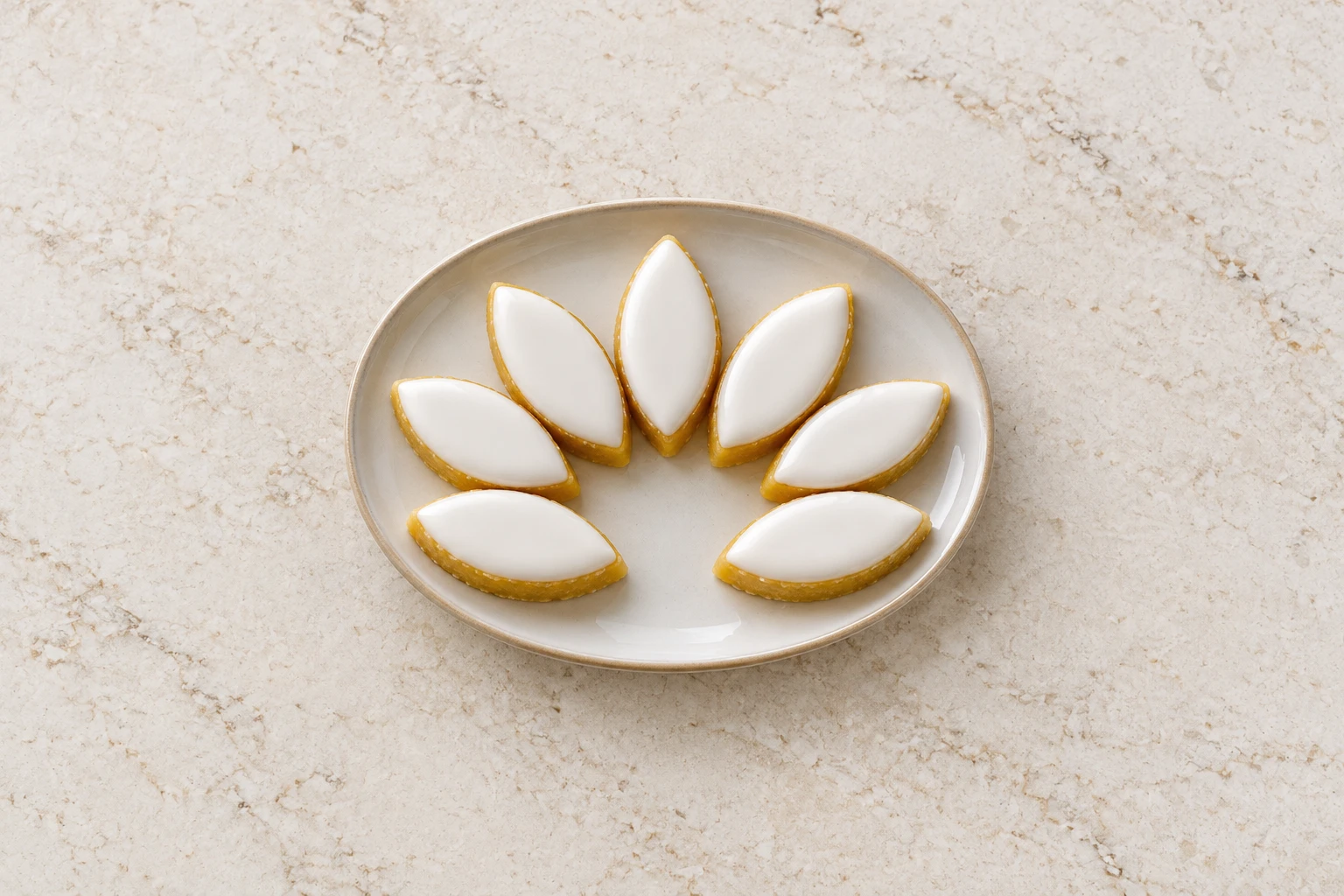
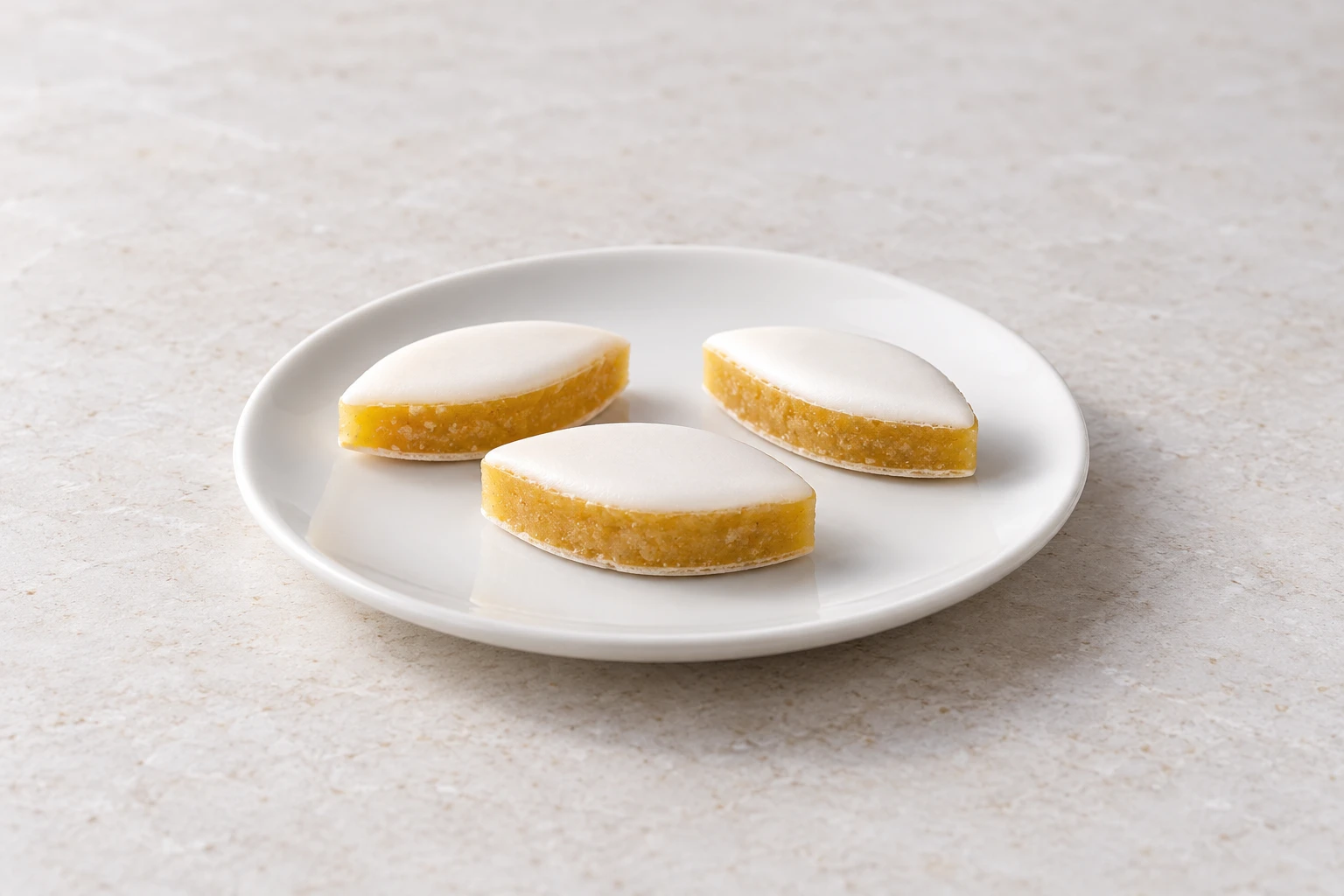
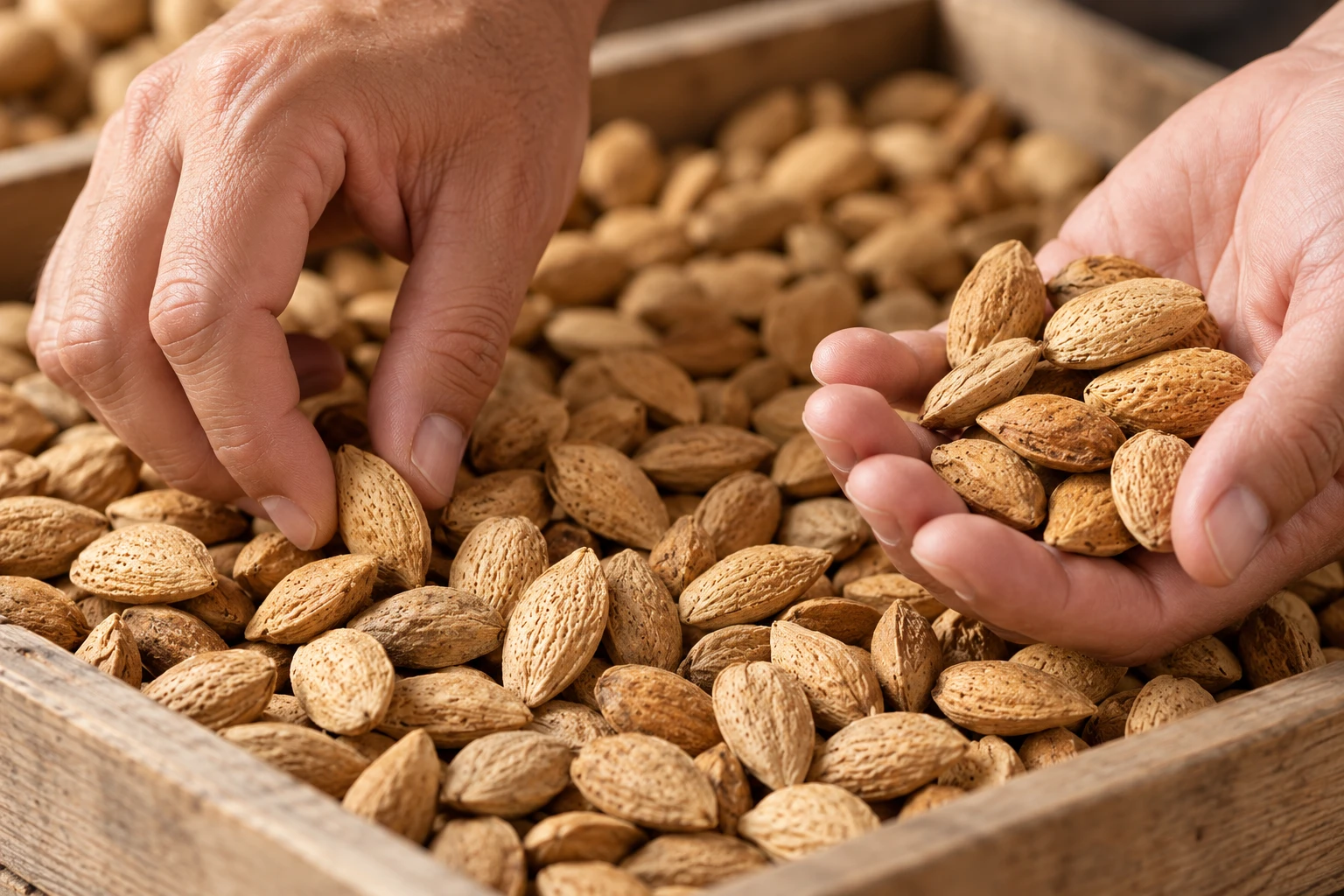
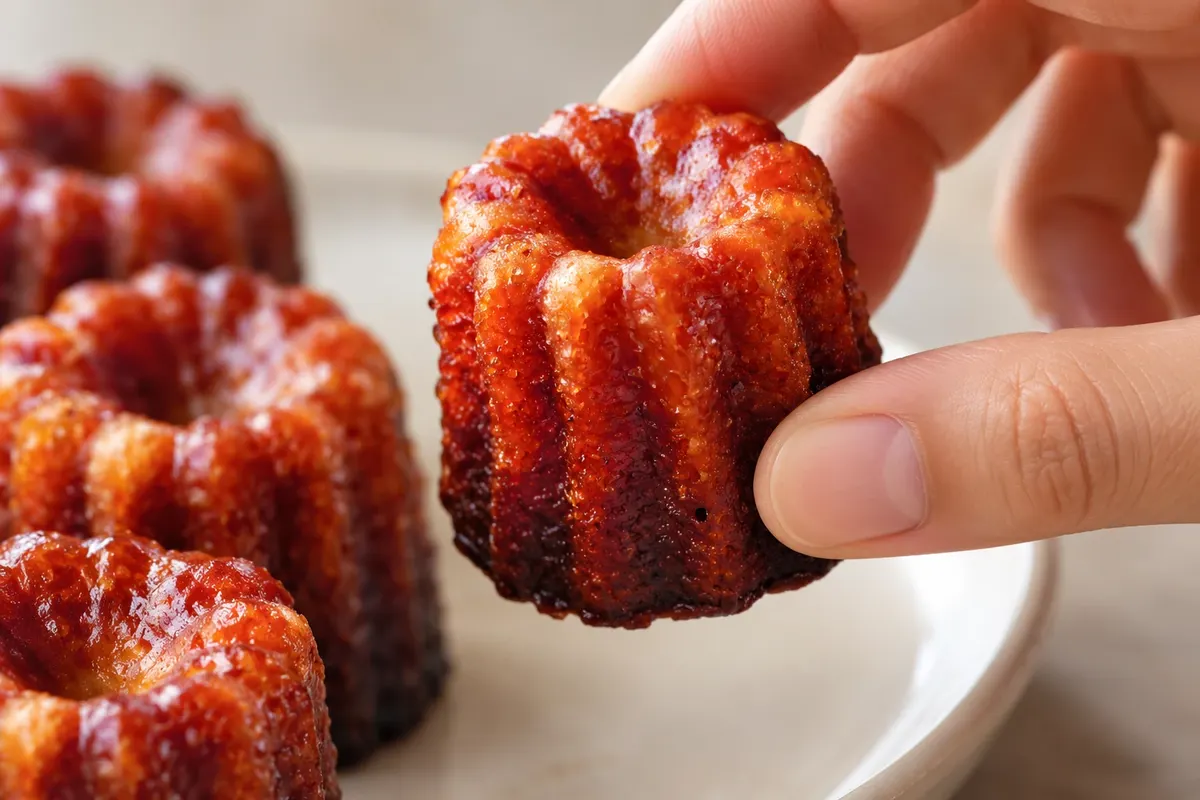
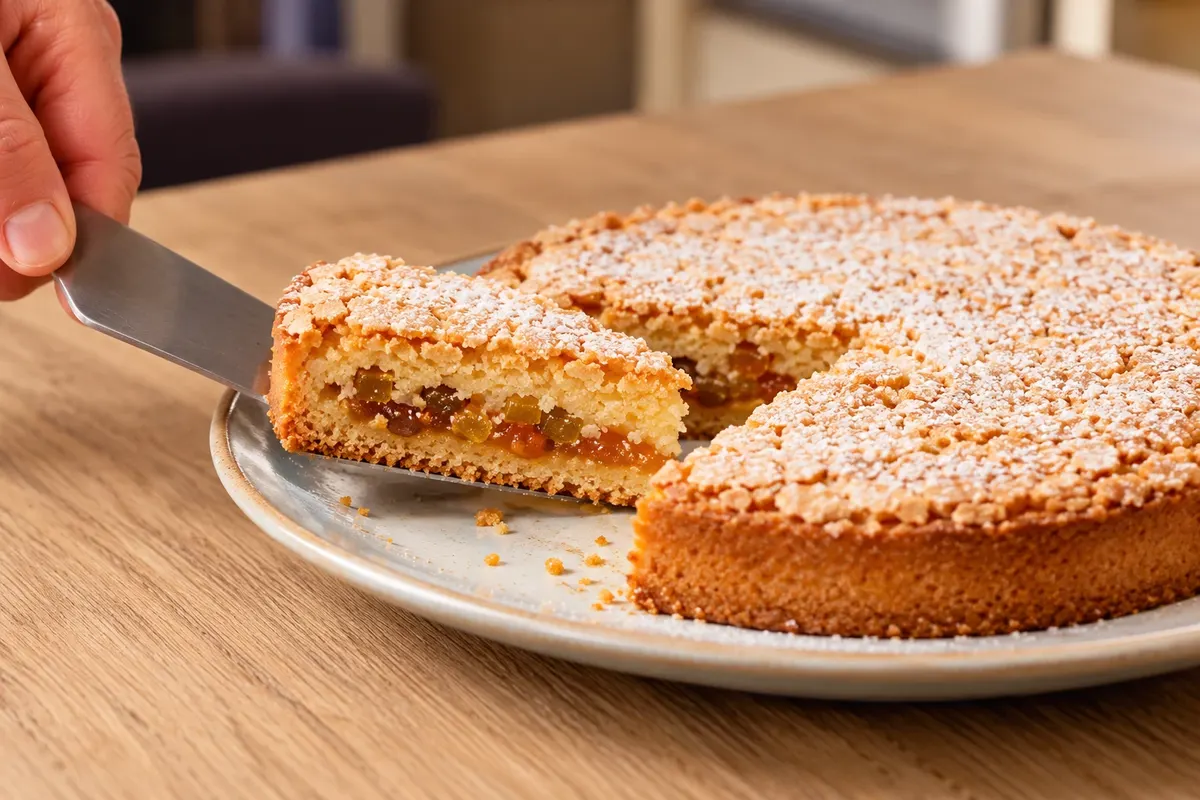
The calisson d'Aix is a small sweet shaped like a navette, an elongated diamond with rounded ends. The paste is made from finely ground almonds mixed with candied melon and orange peel, sometimes scented with orange blossom. It is spread over a thin wafer sheet and covered with a white layer of royal icing made of egg white and sugar.
The origin of the sweet is unknown. A 12th-century Latin text already mentions a calisone, an almond-and-flour cake similar to marzipan. Aix tradition links the calisson to King René, count of Provence in the 15th century: the legend says that at his marriage to Jeanne de Laval in 1454 the bride tasted the sweet and smiled, and that the name came from a Provençal phrase uttered on that occasion. It is a legend.
The calisson is part of the thirteen sweets served at the end of the Christmas supper in Provence, alongside dried fruits, pompe à l'huile and others. The city of Aix regards it as part of its living heritage.
Aix producers formed an association to defend the name calisson d'Aix and applied for a protected geographical indication; the application went through several stages over the years.


 Brazil
 Argentina
 Bolivia
 Chile
 Colombia
 Ecuador
 Guyana
 French Guiana
 Falkland Islands (Malvinas)
 Paraguay
 Peru
 Suriname
 Uruguay
 Venezuela
 Germany
 Austria
 Belgium
 Croatia
 Denmark
 Spain
 Finland
 Greece
 the Netherlands
 Hungary
 Ireland
 Iceland
 Italy
 Luxembourg
 Norway
 Poland
 Portugal
 the United Kingdom
 the Czech Republic
 Sweden
 Switzerland
 Turkey
 the United States
 Mexico
 the Dominican Republic
 South Africa
 Australia
 Fiji
 New Zealand