

 Brazil
 Argentina
 Bolivia
 Chile
 Colombia
 Ecuador
 Guyana
 French Guiana
 Falkland Islands (Malvinas)
 Paraguay
 Peru
 Suriname
 Uruguay
 Venezuela
 Germany
 Austria
 Belgium
 Croatia
 Denmark
 Slovakia
 Slovenia
 Spain
 Finland
 France
 Greece
 the Netherlands
 Hungary
 Ireland
 Iceland
 Italy
 Luxembourg
 Norway
 Poland
 Portugal
 the United Kingdom
 the Czech Republic
 Sweden
 Switzerland
 Turkey
 Canada
 Mexico
 the Dominican Republic
 South Africa
 Australia
 Fiji
 New Zealand
 Papua New Guinea
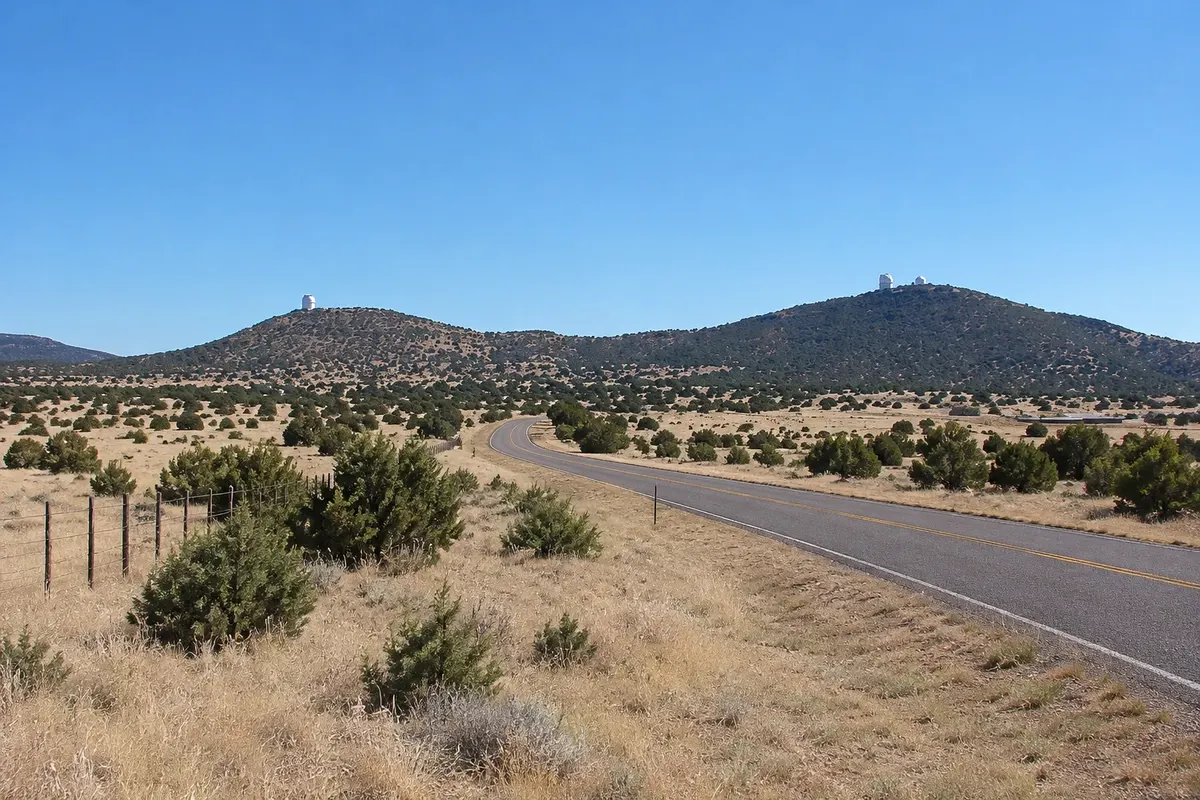
Observatory · Alpine, Texas
McDonald Observatory
The University of Texas astronomical observatory in the Davis Mountains, at about 2,000 meters, with a visitor center, telescope tours and nighttime star‑viewing programs.
Illustrative images. The pictures in this guide are illustrations based on the real place, not photographs, and may differ from it.



Discover
About McDonald Observatory
The McDonald Observatory of the University of Texas sits atop Mount Locke in the Davis Mountains, at about 2,000 meters. It was chosen for the dark, dry skies of West Texas—among the darkest in the United States—and has been operating since the 1930s.
The visitor center has exhibits about astronomy and the observatory’s telescopes. During the day, guided tours take you into the domes of some of the large research telescopes, and there are solar‑viewing programs.
At night, Star Parties bring visitors outdoors to view the sky with the naked eye and through smaller telescopes, with guides pointing out constellations. Night programs often sell out, and the sky needs to be clear for observing.
Before you go
Practical information
Cidade Turismo reviews its information regularly, but something may have changed. Check with the place before planning your trip.
How much time to set aside
Two to three hours, day or night.
Best time
On moonless, cloudless nights for observing; the sky is usually clearer in autumn and winter.
How to get there
About 70 km from Alpine via TX‑118, and about 25 km from Fort Davis. The road climbs the mountain.
Tip
Book night programs in advance and bring warm clothing: mountain nights are usually cold.
Official website
Get your questions answered
Frequently asked questions about McDonald Observatory
Do I need to reserve the McDonald Observatory night program?
Yes, it’s recommended: Star Parties often sell out. Check dates on the website.
How far is Alpine from the McDonald Observatory?
About 70 km, around a one‑hour drive.
What can you do during the day at the McDonald Observatory?
Visit the visitor center, take the guided tour of the telescopes, and attend the solar‑viewing program.