Ajdovi žganci
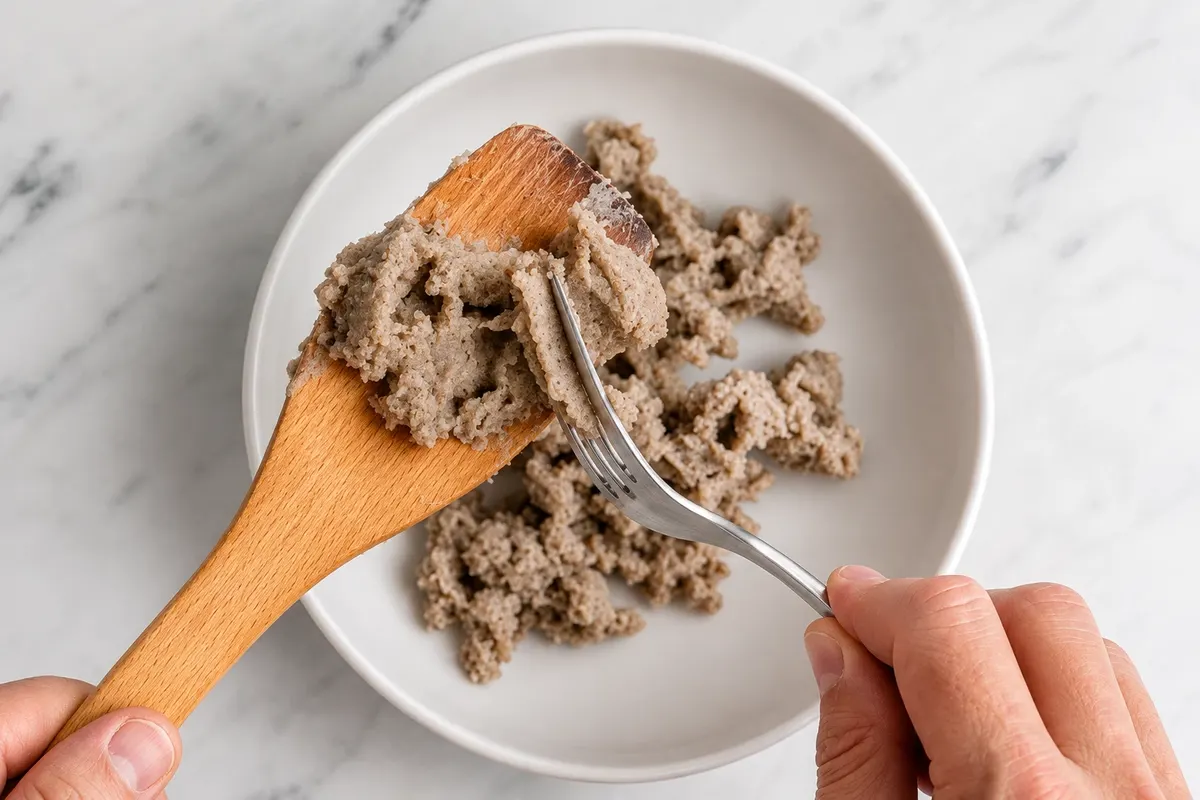
Buckwheat flour cooked in water and fluffed into small clumps with a fork, served with pork cracklings. For a long time it was the everyday food of the central and alpine regions, and it is considered a national Slovenian dish.
Flavors · Slovenia
Sweet leavened dough, rolled out very thin, filled, rolled up and baked in a round pan with a hole in the middle. It is the festive pastry of Slovenian celebrations, with fillings of walnuts, tarragon, raisins or honey.
Traditional sweet from Slovenia
Also known as: potica; orehova potica (de nozes); pehtranova potica (de estragão); povitica
Illustrative images. The pictures in this guide are illustrations based on the real place, not photographs, and may differ from it.
Click a photo to enlarge it.
Slovenska potica — Slovenia
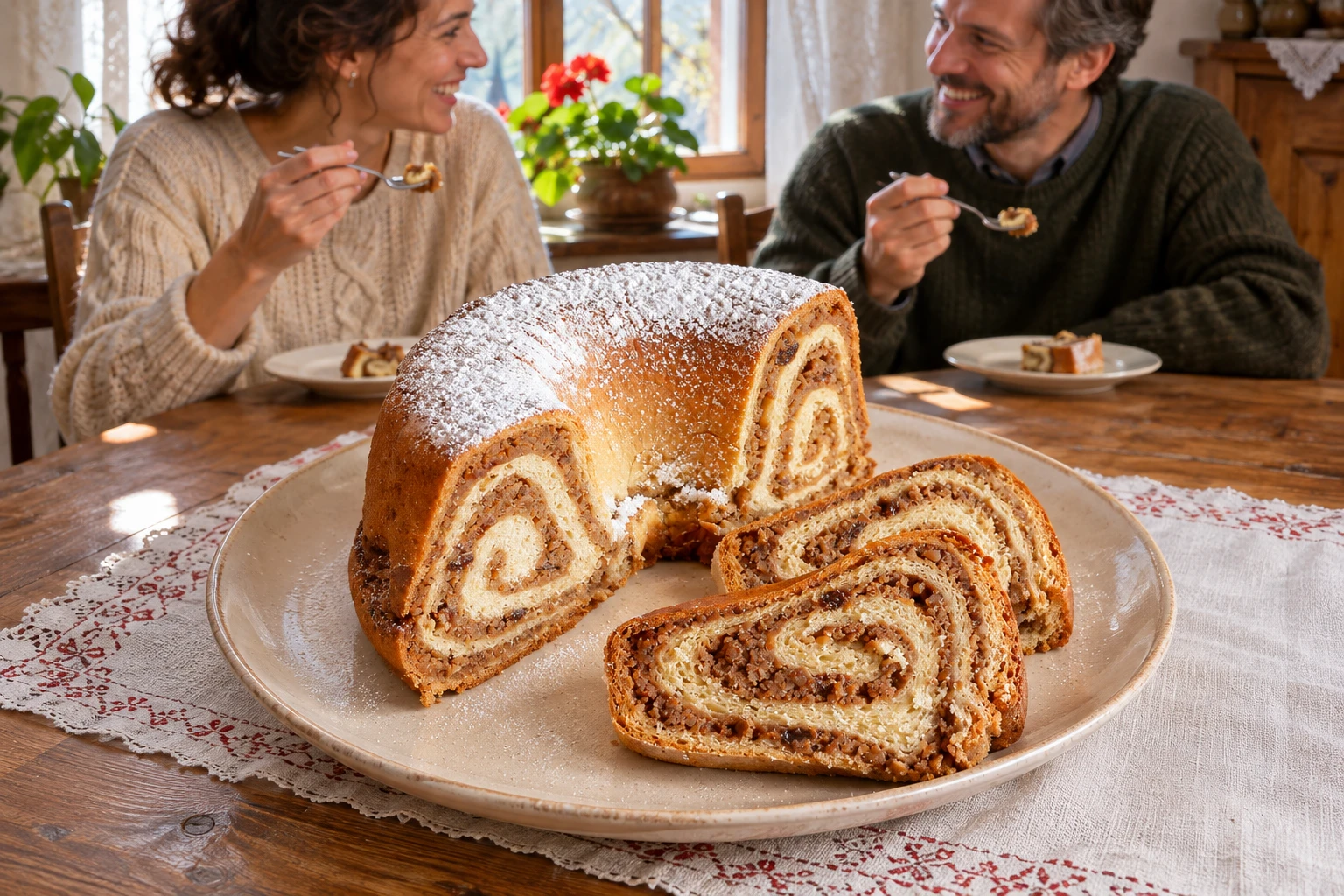
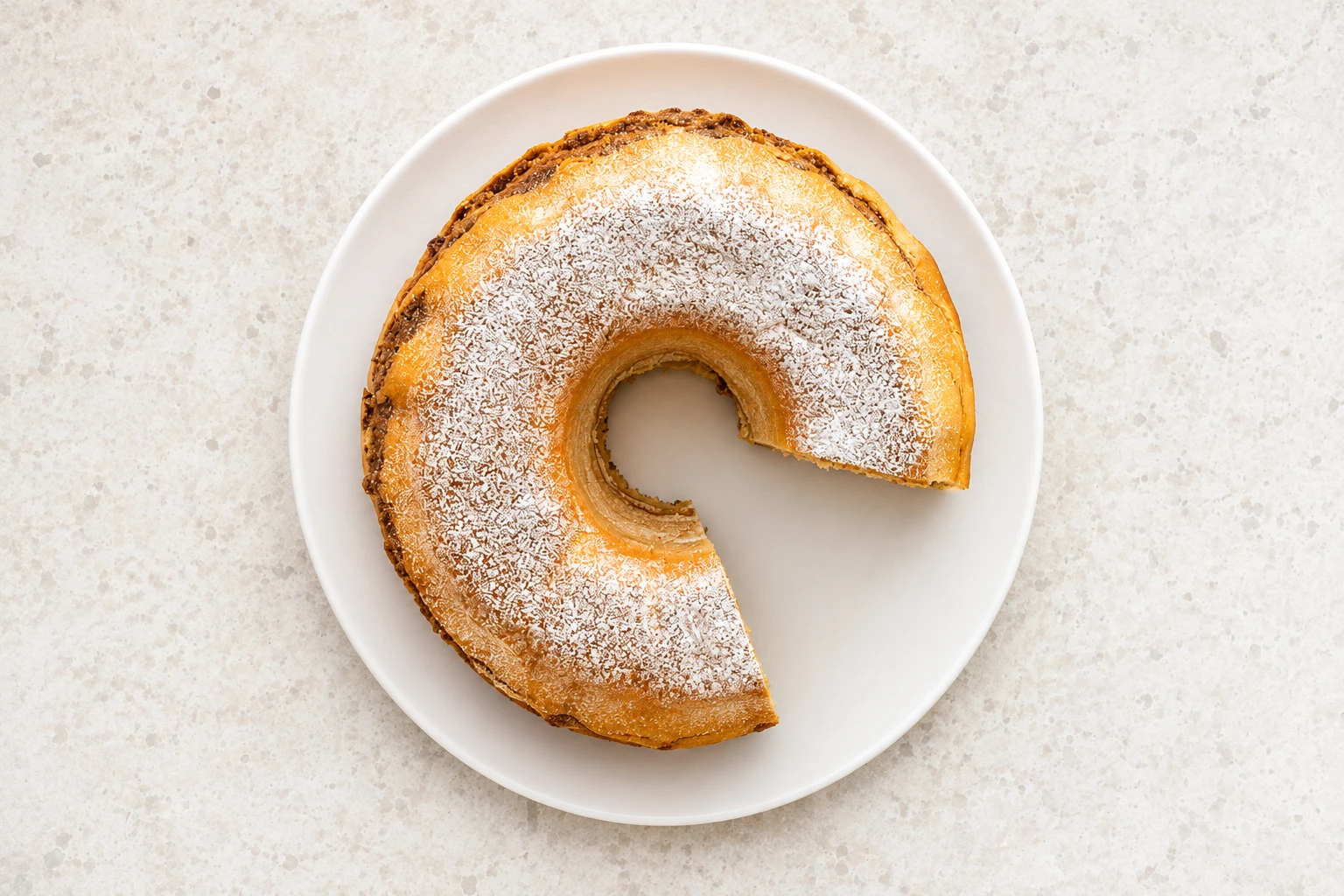
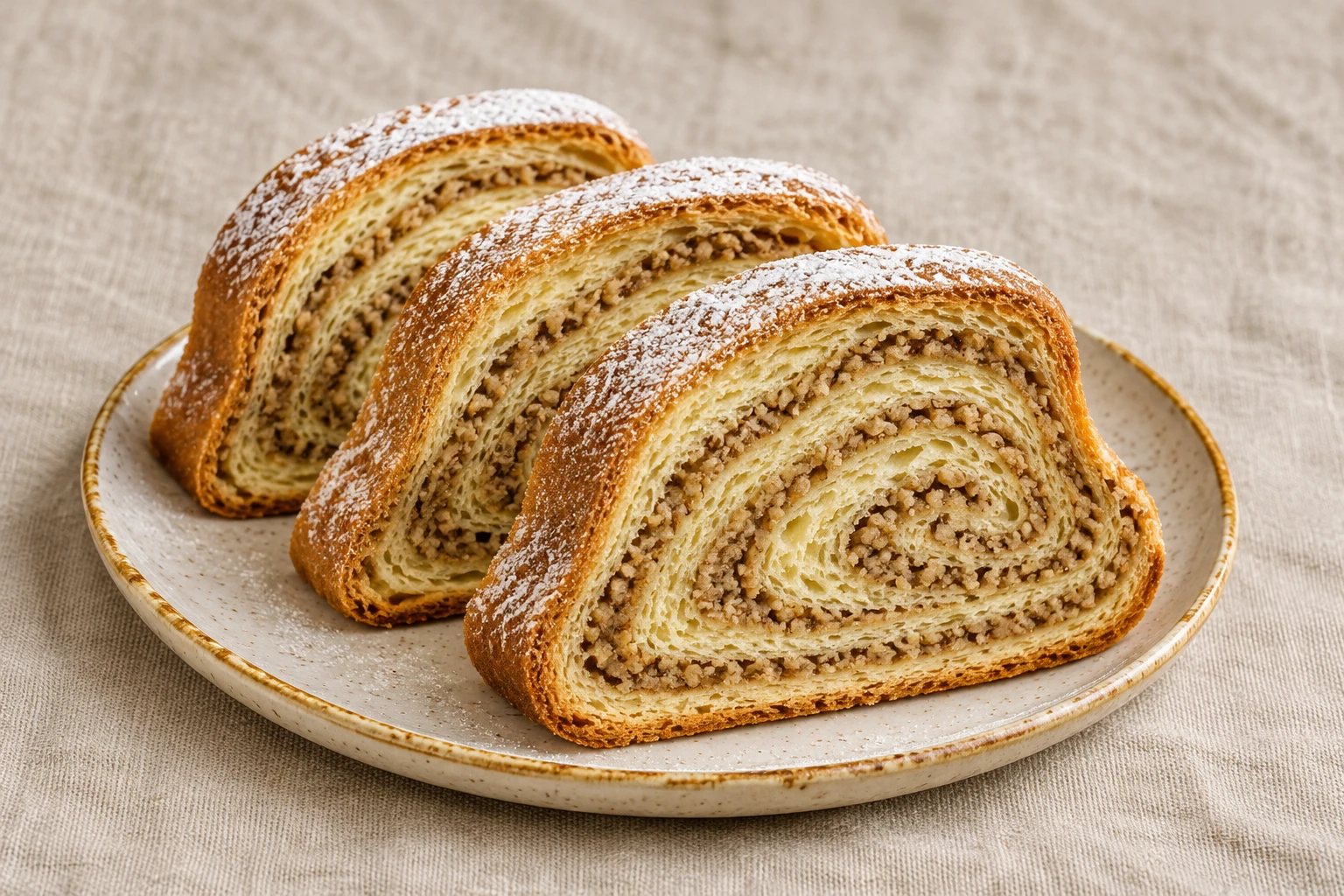
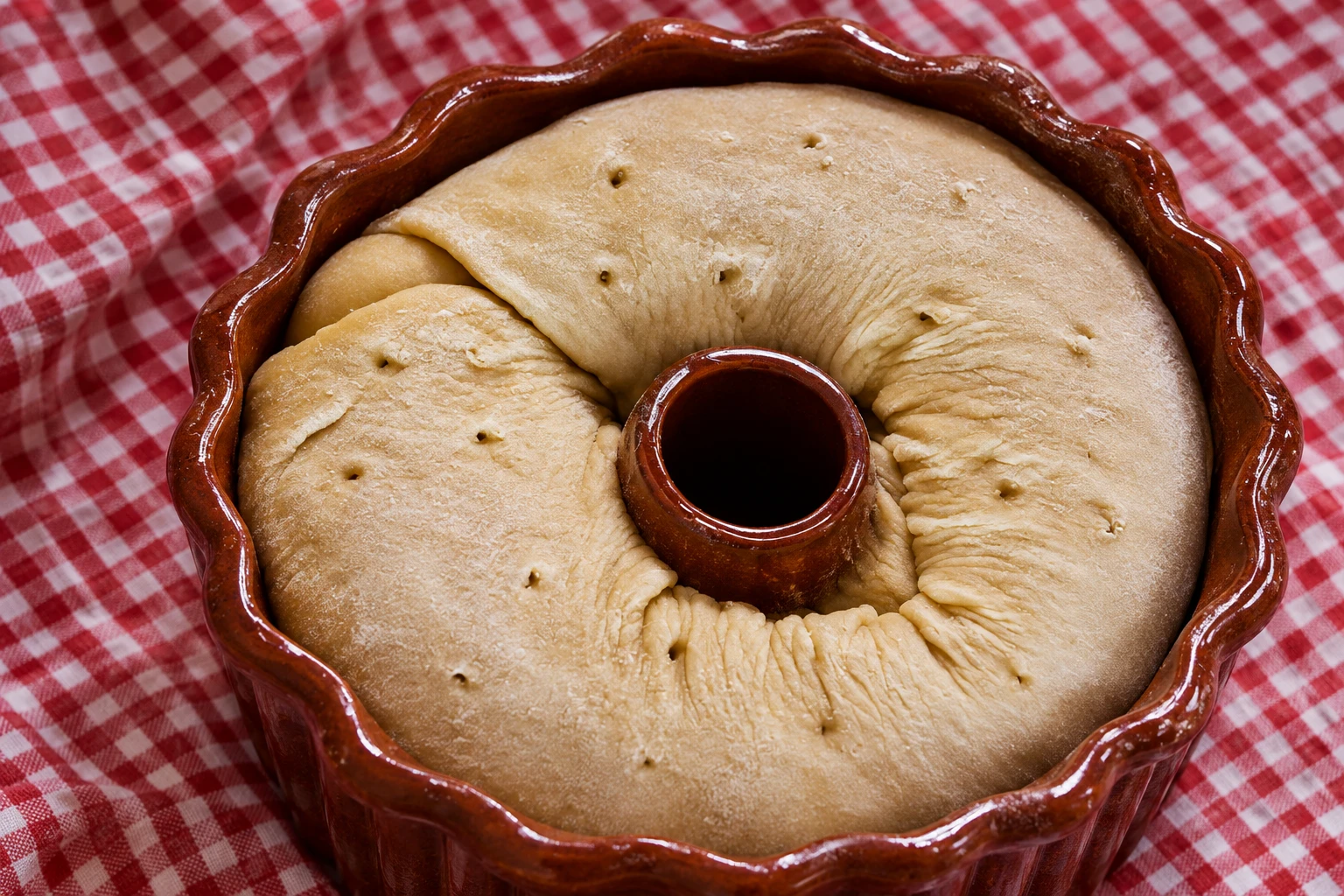
Potica is a richer leavened dough made with eggs, milk and butter, rolled out very thin on a cloth, covered with the filling and rolled up. The log is placed in a tall round pan with a cone in the middle, called a potičnik, and comes out of the oven in the shape of a ring. When sliced, each piece shows the spiral of dough and filling, which is the pastry’s hallmark. The name likely comes from old words such as povitica, which meant something rolled.
The most popular filling is walnut, but the intangible heritage record of the Ministry of Culture points to tarragon as the country’s most characteristic filling, and honey as one of the oldest. There are also poticas with raisins, fresh curd cheese, poppy seeds and pork cracklings, and sources mention dozens of different fillings. When the rolled dough is baked in straight pieces instead of the round pan, it is called štruklji.
The oldest known recipe appears in the book The Glory of the Duchy of Carniola by Johann Weikhard von Valvasor, from 1689. Since 2021, slovenska potica has been registered in the European Union as a traditional speciality guaranteed, which protects the recipe and the way of preparing it, and in the same year the preparation of potica was inscribed in the national intangible heritage register.
Potica is made throughout the country, almost always for festive days. It is never missing from the Christmas table or the Easter basket, and also appears at weddings and baptisms. Many families keep their ceramic pan and their recipe, passed down from generation to generation.

Slovenia
Festive pastry prepared across the country; preparation inscribed in the national intangible heritage register.
Dough: wheat flour, yeast, milk, eggs, butter, sugar and salt. Most common filling: ground walnuts with sugar, honey, milk or cream. Other traditional fillings: tarragon with fresh curd cheese, raisins, honey, poppy seeds.
Sliced, at room temperature, as a dessert or with coffee. It is usually served whole on the festive table and sliced at the moment of serving.
Festive pastry: Christmas, Easter, weddings, baptisms and other family celebrations.
Your questions
The most popular is walnut. Tarragon is considered the most characteristic for Slovenia and honey one of the oldest. There are also versions with raisins, fresh curd cheese and poppy seeds.
On festive days: potica is never missing from the Christmas table or the Easter basket, and it also appears at weddings, baptisms and other family celebrations.
Yes. Since 2021 slovenska potica has had the Traditional Speciality Guaranteed designation, which protects the recipe and the method of preparation.
Flavors of Slovenia

Buckwheat flour cooked in water and fluffed into small clumps with a fork, served with pork cracklings. For a long time it was the everyday food of the central and alpine regions, and it is considered a national Slovenian dish.

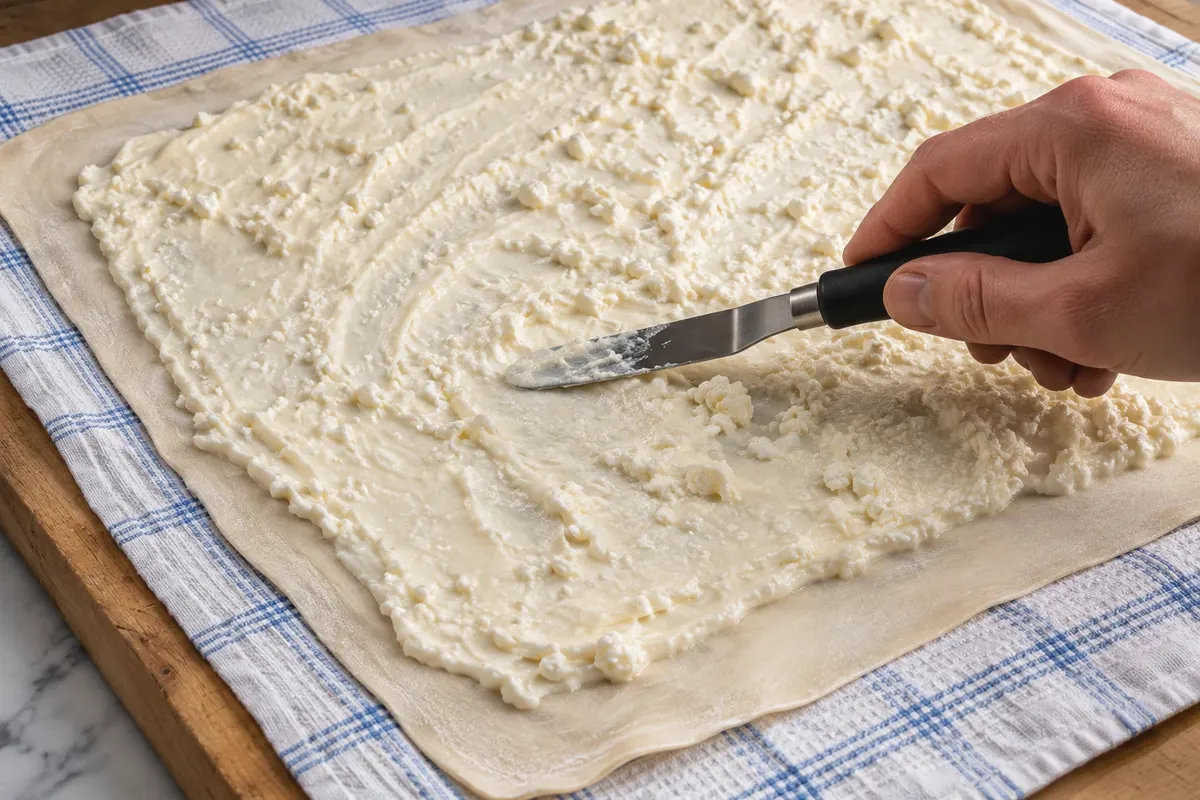
Thin dough rolls filled and cooked in water, steamed, or baked. They come in sweet and savory versions, with fillings such as fresh cottage cheese, tarragon, walnuts, apple and dozens of others, and are found in all regions of Slovenia.

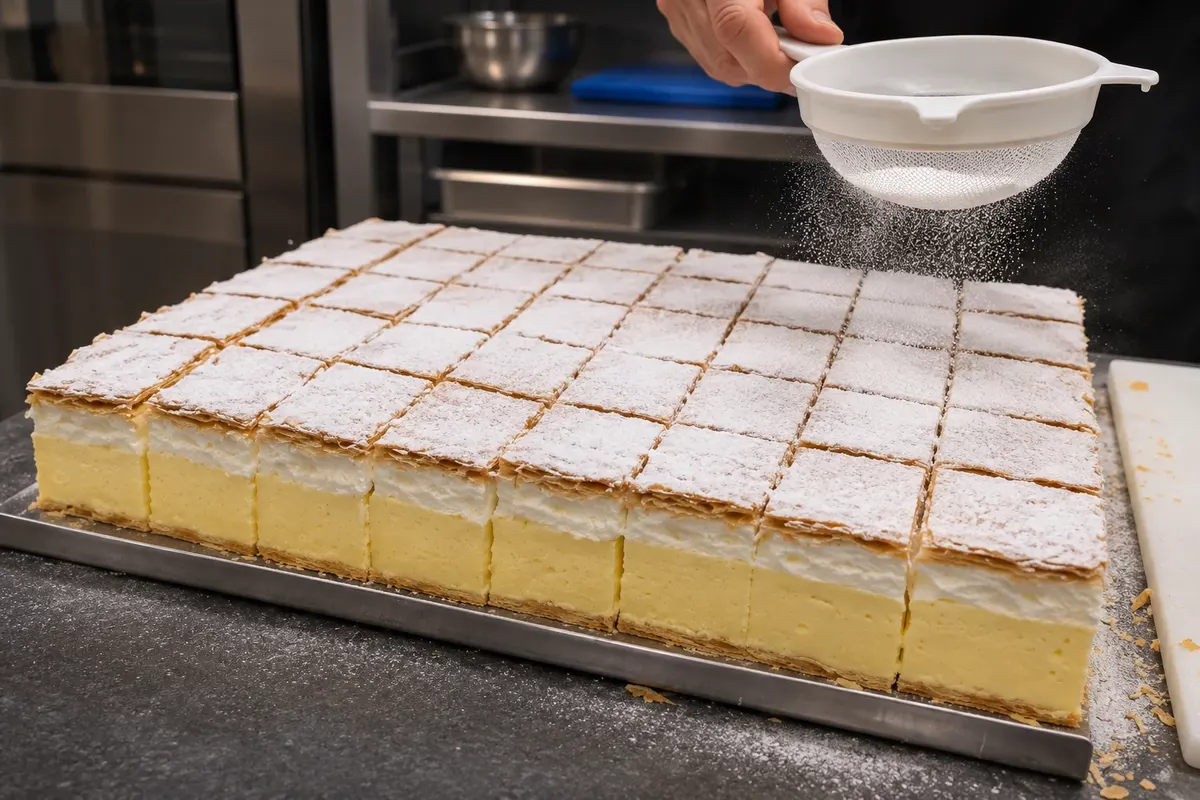
Sweet square from Bled: a puff pastry base, a tall layer of vanilla custard, another of whipped cream, and a thin pastry sheet on top, dusted with powdered sugar. It has been made by the lakeside since 1953.

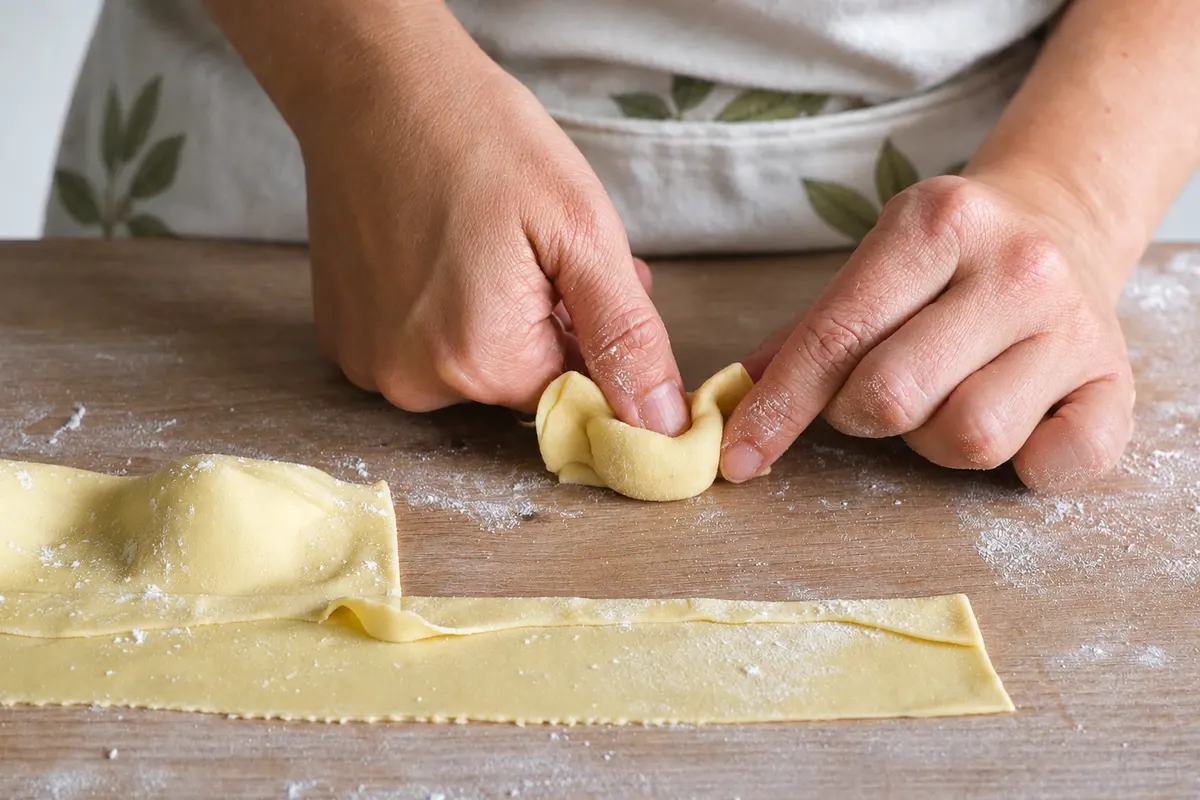
Small dumplings filled with potato, onion, bacon, and herbs, shaped like a little hat, from the old mining town of Idrija. The traditional accompaniment is bakalca, a lamb stew with vegetables.

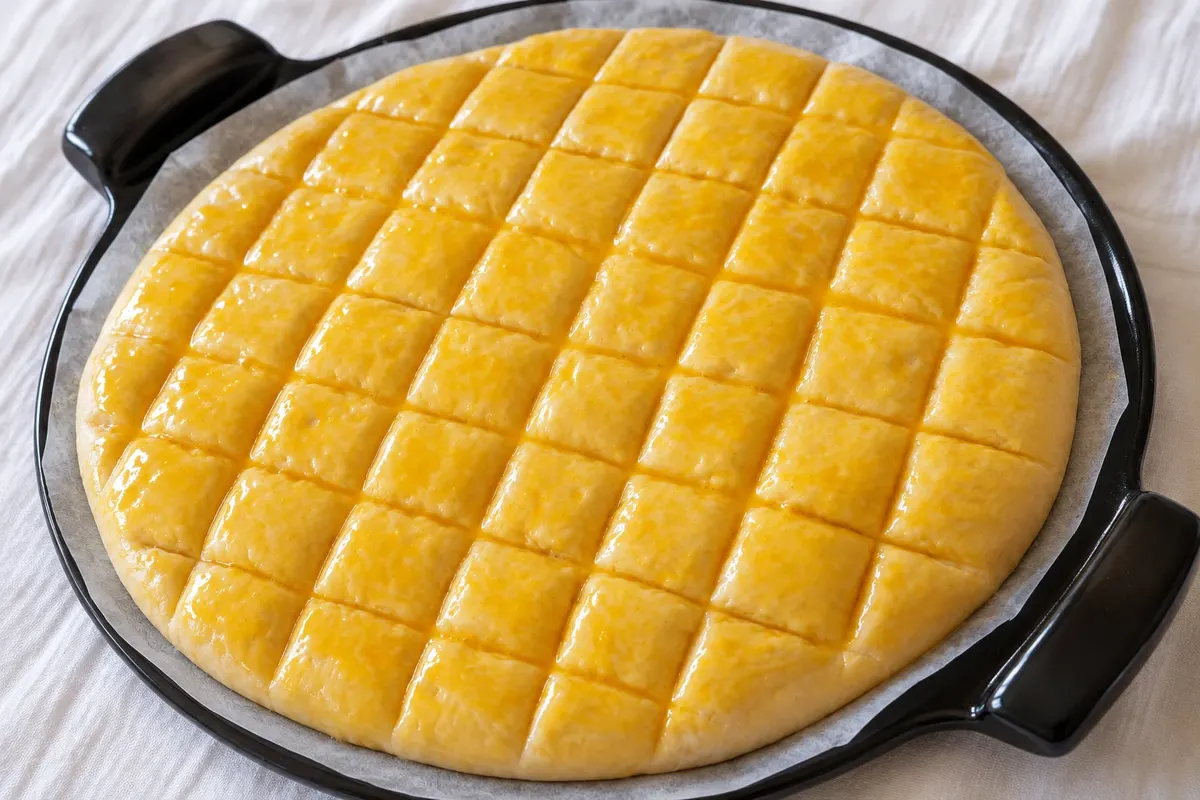
Round, flat bread from Bela krajina in southeastern Slovenia, brushed with egg, caraway and coarse salt, and marked with a grid of score lines. It is eaten warm, broken by hand, never cut with a knife.

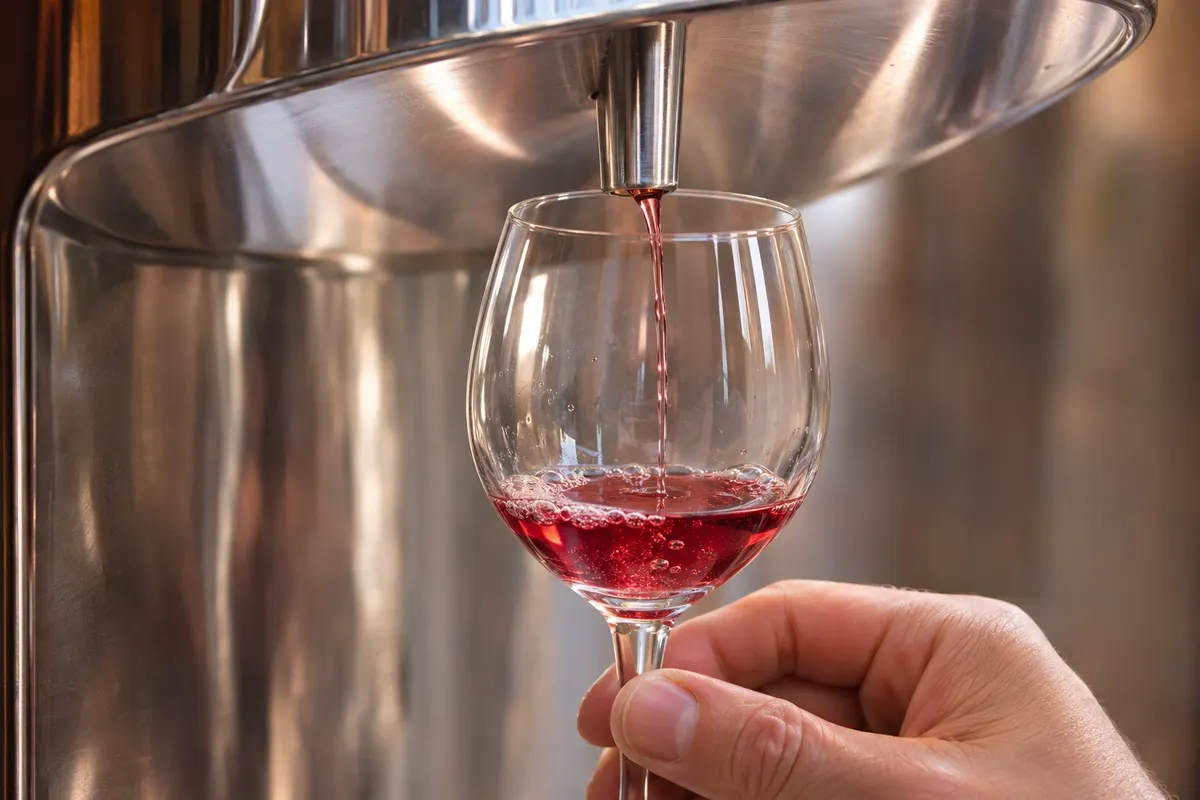
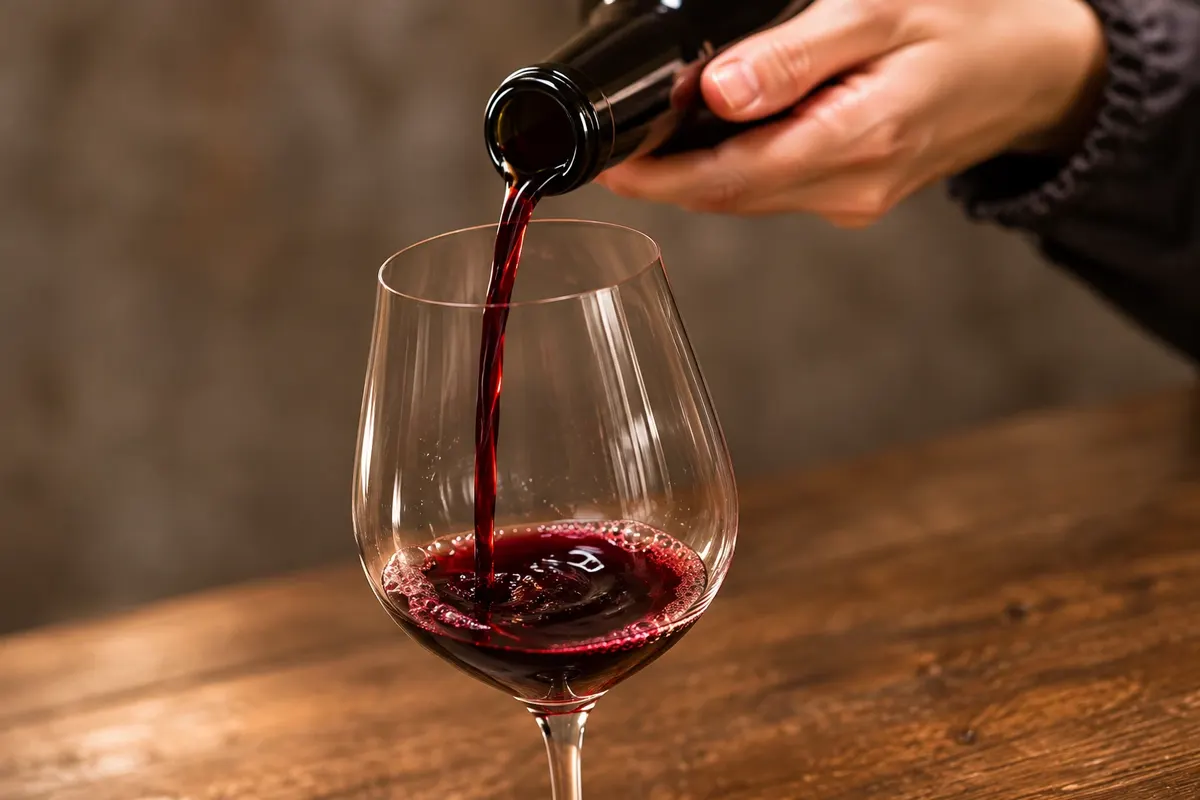
Light, acidic wine from Dolenjska in southeastern Slovenia, made by a required blend of red and white grapes, with low alcohol content. It has the recognized traditional designation PTP and is the region’s everyday wine.

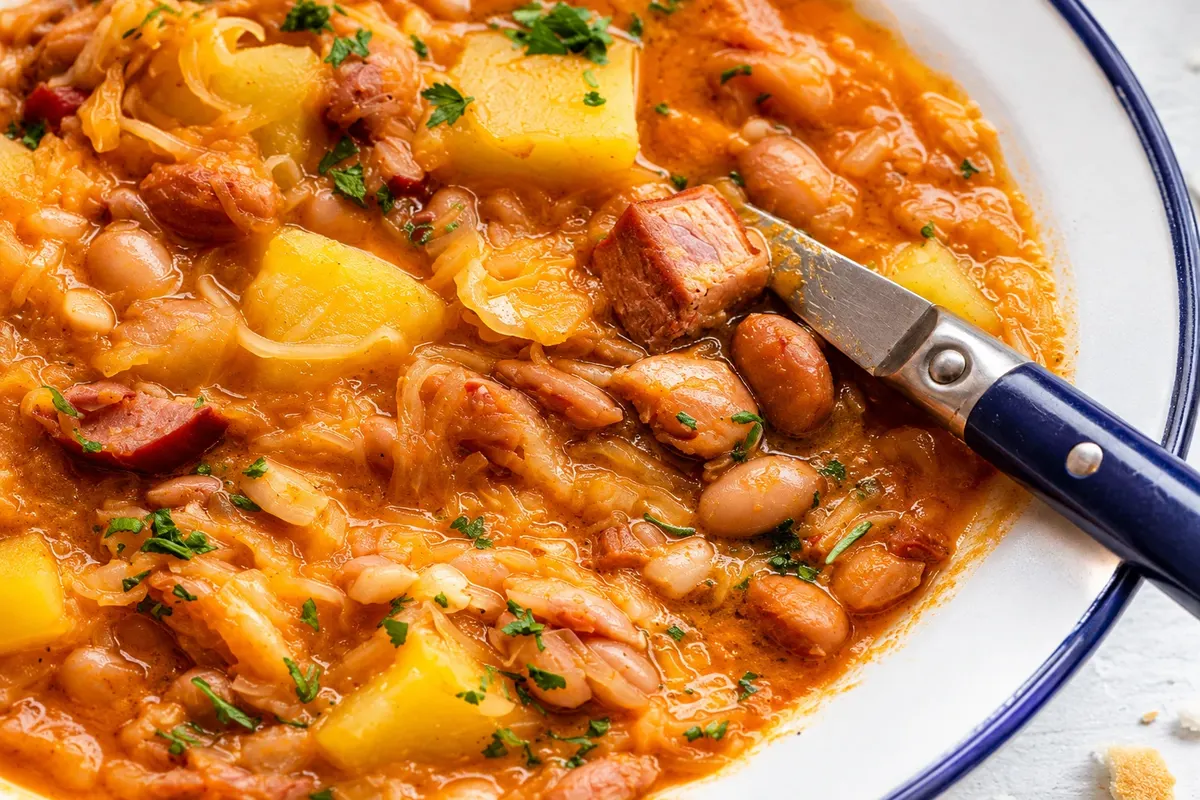
Thick soup of beans, potatoes and sauerkraut or fermented turnip, cooked with smoked pork. It’s the spoon food of western Slovenia, and the Karst version, with sauerkraut and potatoes, is the best known.

Dark, acidic red wine from the Karst plateau, made only with the refošk grape grown in the region’s red soil. It has Slovenia’s recognized traditional designation PTP and pairs with the ham and dishes of the Karst.

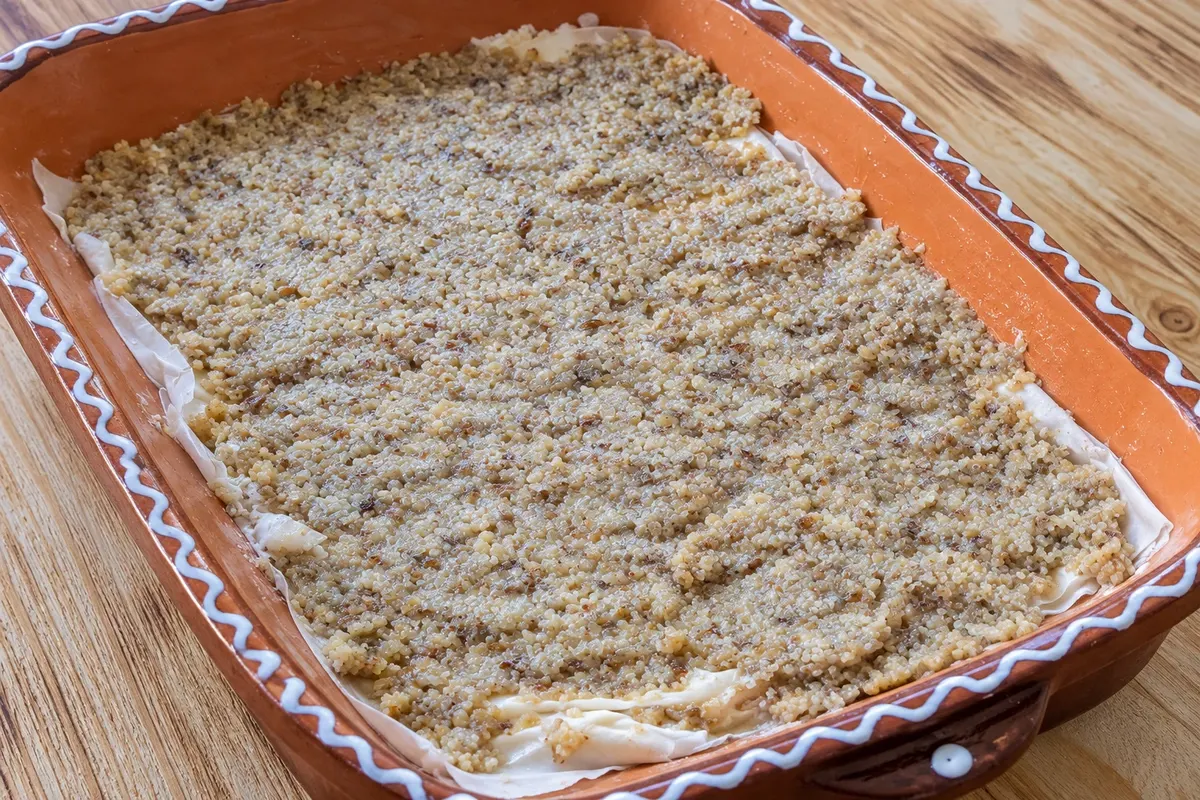
Layered Prekmurje cake from northeastern Slovenia: on a shortcrust base, sheets of stretched dough alternate four fillings — poppy seeds, fresh curd cheese, walnuts and apple — topped with cream.