Siwa
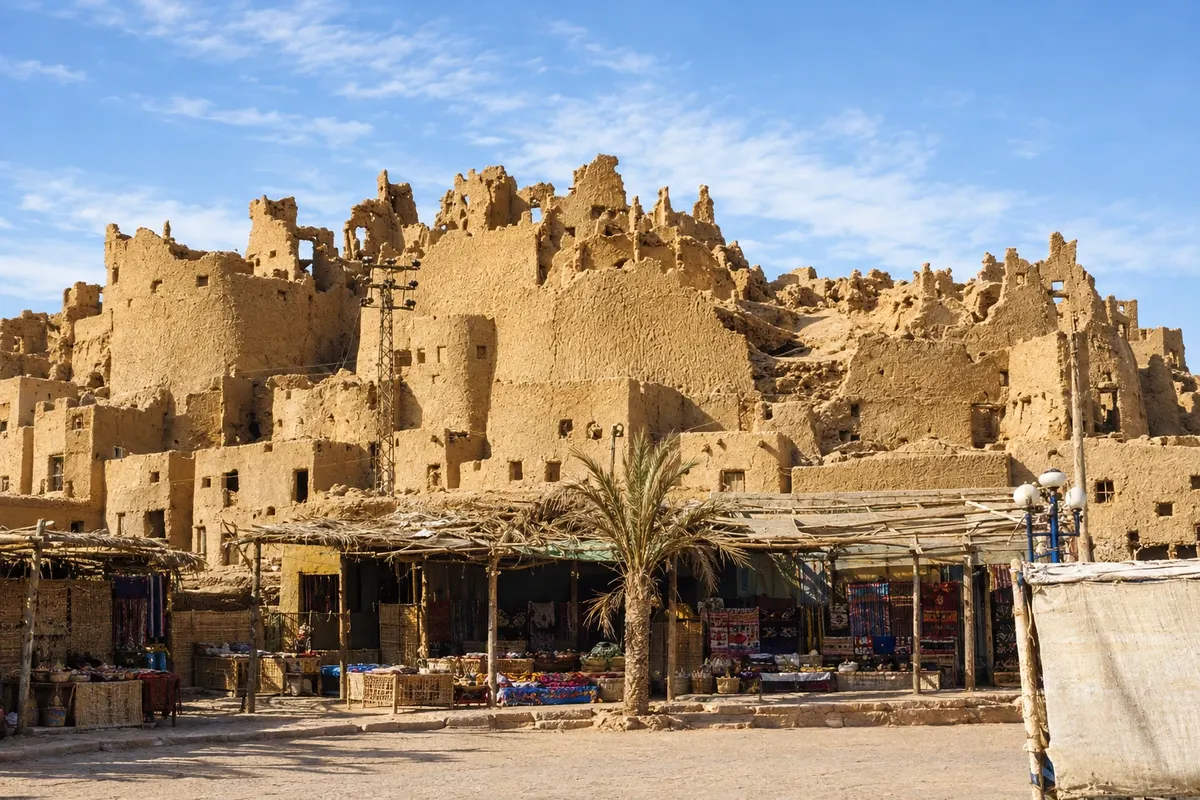
Oasis town that grew around the ruins of Shali, with a market square, streets of mud-brick and karshif houses, and donkey-drawn carts. A few kilometers away are the ancient sites, springs and the oasis’s salt lakes.
Matrouh · Egypt
The oasis of Siwa, with the old town of Shali, the Oracle of Amun, Cleopatra’s Spring and the tombs of Gebel al‑Mawta, and the clear-water beaches of Marsa Matruh on the Mediterranean.
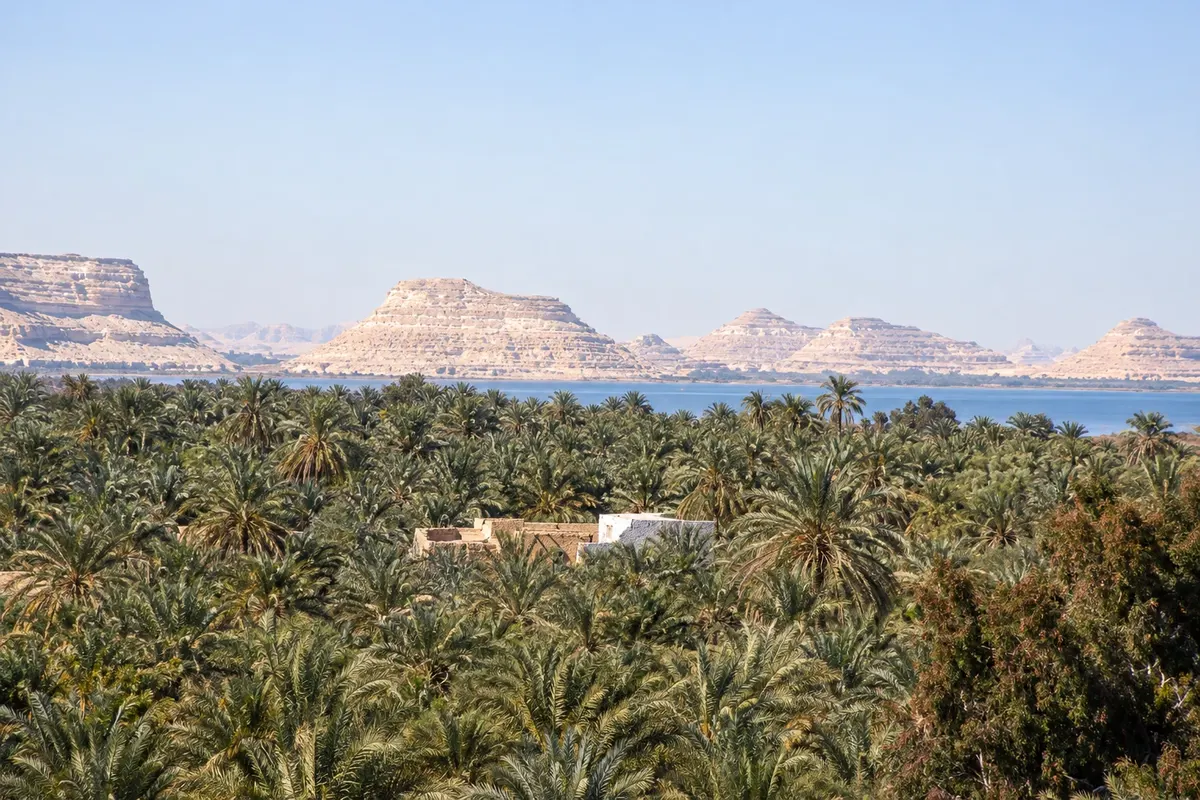
In the photo: Palm groves and Siwa lake, with light-colored escarpments in the background.
Illustrative images. The pictures in this guide are illustrations based on the real place, not photographs, and may differ from it.
Get to know the place
Siwa is an oasis in the Western Desert, about 300 km south of the Mediterranean and near the Qattara Depression, in an area below sea level with palm groves, olive trees, springs and salt lakes. Locals also speak Siwi, a language of Berber origin, and preserve distinctive customs such as houses made of mud and salt, embroidered crafts, and the harvesting of dates and olives.
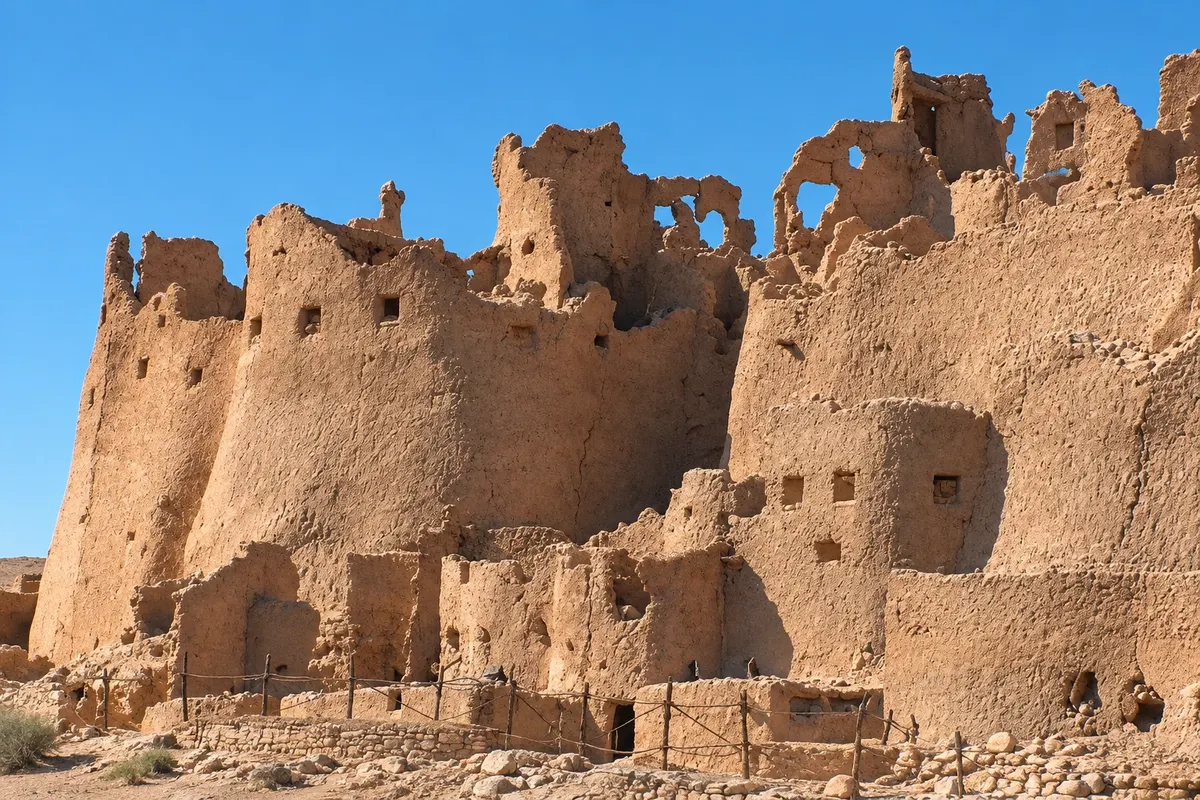
At the center of the town stand the ruins of Shali, the old karshif fortress, destroyed by rain in 1926. Nearby are the hill of Aghurmi, where Alexander the Great consulted the Oracle of Amun, bathing springs and the Gebel al‑Mawta necropolis.
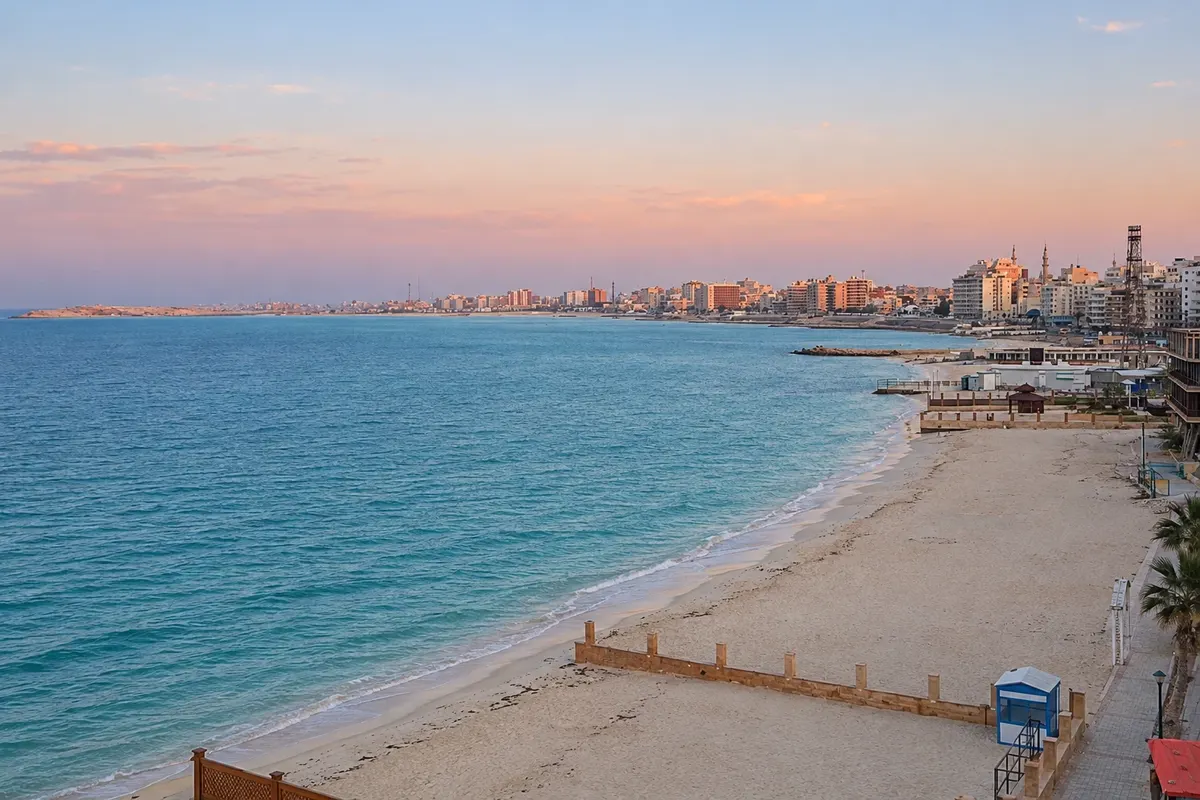
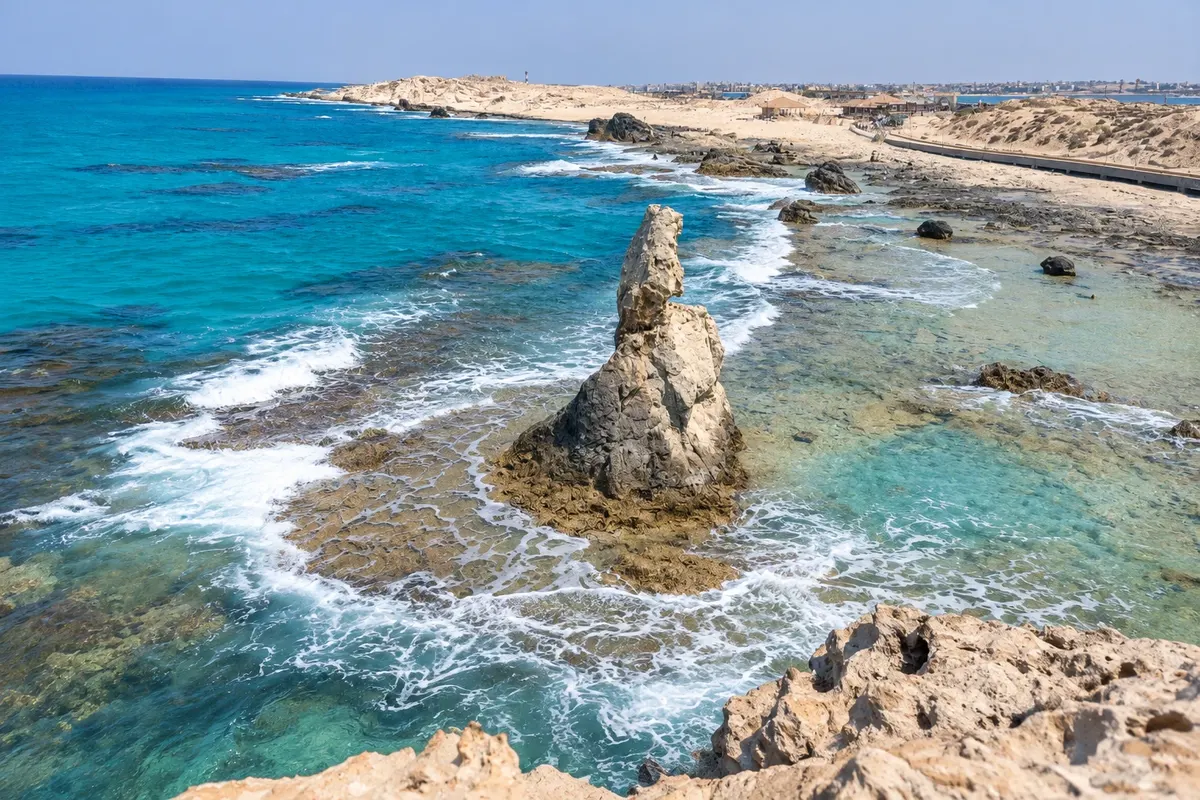
Marsa Matruh, on the coast, is the provincial capital. In Antiquity it was called Paraetonium; the town has white-sand beaches and blue‑turquoise water, like Agiba, popular with Egyptian holidaymakers in summer, and the Rommel Museum, located in a cave used during World War II.
Marsa Matruh is the gateway to Siwa: the road to the oasis leaves the city to the south, crossing the desert.
This destination brings together 2 cities: Siwa, Marsa Matruh.

One destination, many paths
Start with one city or combine several in your itinerary.
Dados cartográficos: © OpenStreetMap contributors, via Wambacher / geoBoundaries (ODbL 1.0). Adapted by Cidade Turismo.
✈ Marsa Matruh International Airport (MUH), in Marsa Matruh · 305 km to Siwa
The arrival city is Siwa. The road to the oasis leaves from Marsa Matruh and crosses about 300 km of desert, served by buses and cars with drivers. Marsa Matruh has an airport (MUH), with flights from Cairo mainly in summer, and is about 290 km from Alexandria via the coastal road.
Suggested arrival point: Siwa
Oasis town that grew around the ruins of Shali, with a market square, streets of mud-brick and karshif houses, and donkey-drawn carts. A few kilometers away are the ancient sites, springs and the oasis’s salt lakes.
A port city on Egypt’s western coast, halfway between Alexandria and the border. In Antiquity it was called Paraetonium and was a transit port for Egyptian grain bound for Rome. It has a bay with calm water and white‑sand beaches, like Agiba to the west, popular with Egyptian holidaymakers in summer, and is the starting point of the road to Siwa.
The local experience
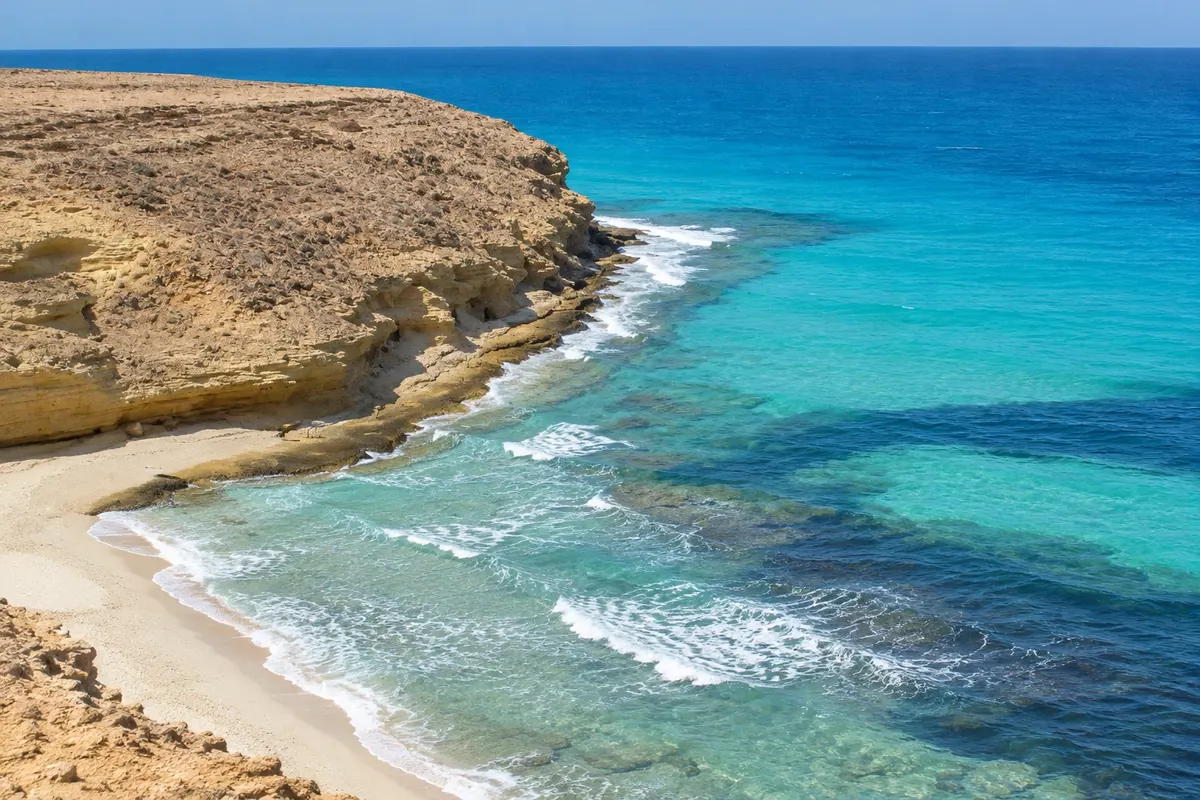
A beach in a cove about 28 km west of Marsa Matruh, with limestone cliffs, natural caves and blue‑turquoise water. It is one of Matrouh’s most popular beaches in summer.
Ruins of the ancient fortified town of Siwa, built of mud and salt over a rock outcrop in the center of the oasis, abandoned in the 20th century after heavy rains. From the top you can see the whole oasis.
A natural pool in a seafront rock, west of Marsa Matruh bay, where seawater enters through openings in the stone. Tradition connects the place with Queen Cleopatra.
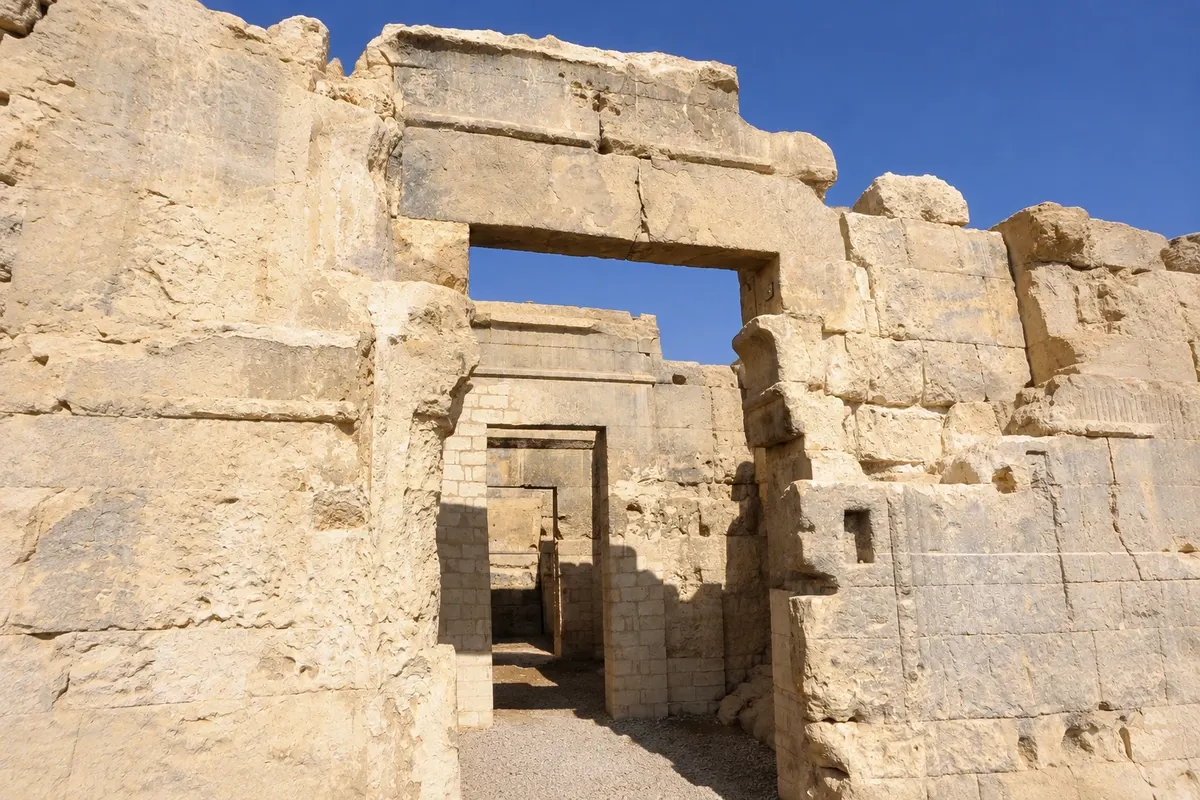
Ruins of the Temple of the Oracle of Amun on Aghurmi hill, about 4 km from Siwa’s center, where Alexander the Great is said to have consulted the oracle in 331 BCE.
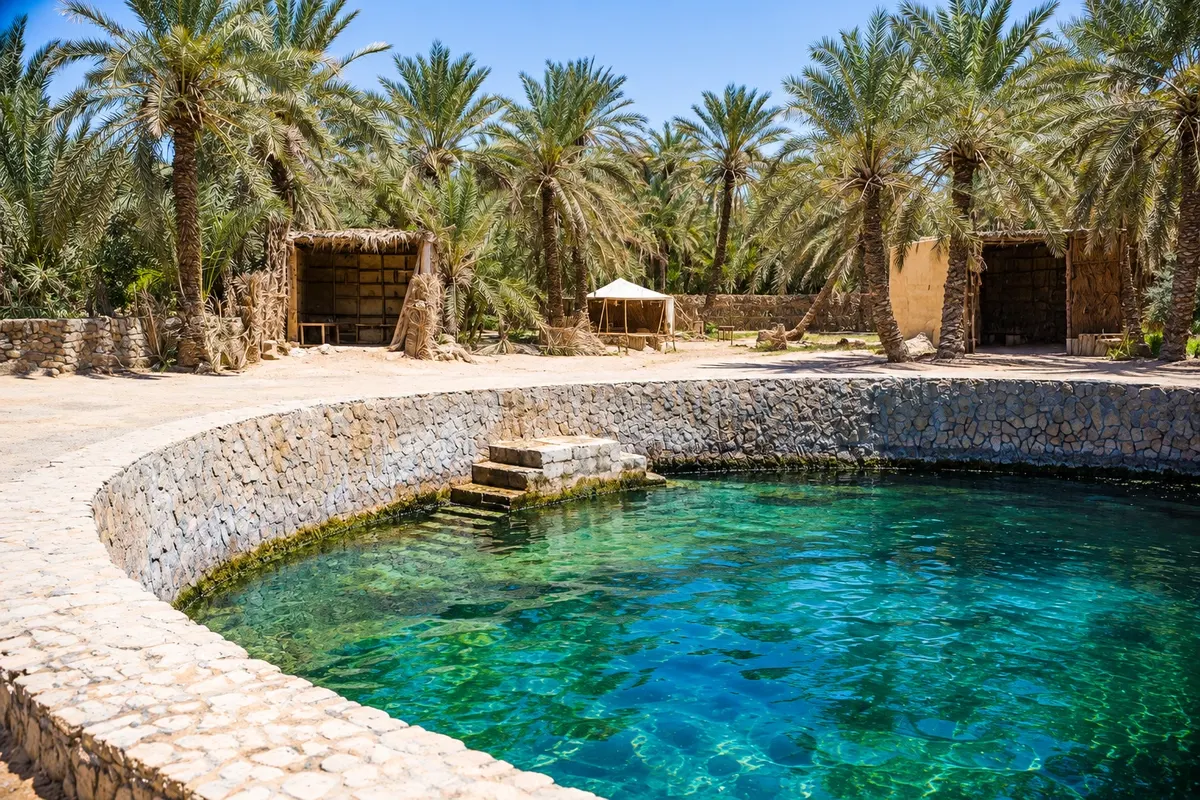
Natural spring in Siwa, in a stone pool surrounded by palms, where locals and visitors bathe. Tradition links the name to Queen Cleopatra.
A small military museum in a cave cut into the rock on the east side of Marsa Matruh bay, associated with Field Marshal Erwin Rommel during the North African campaign of World War II.
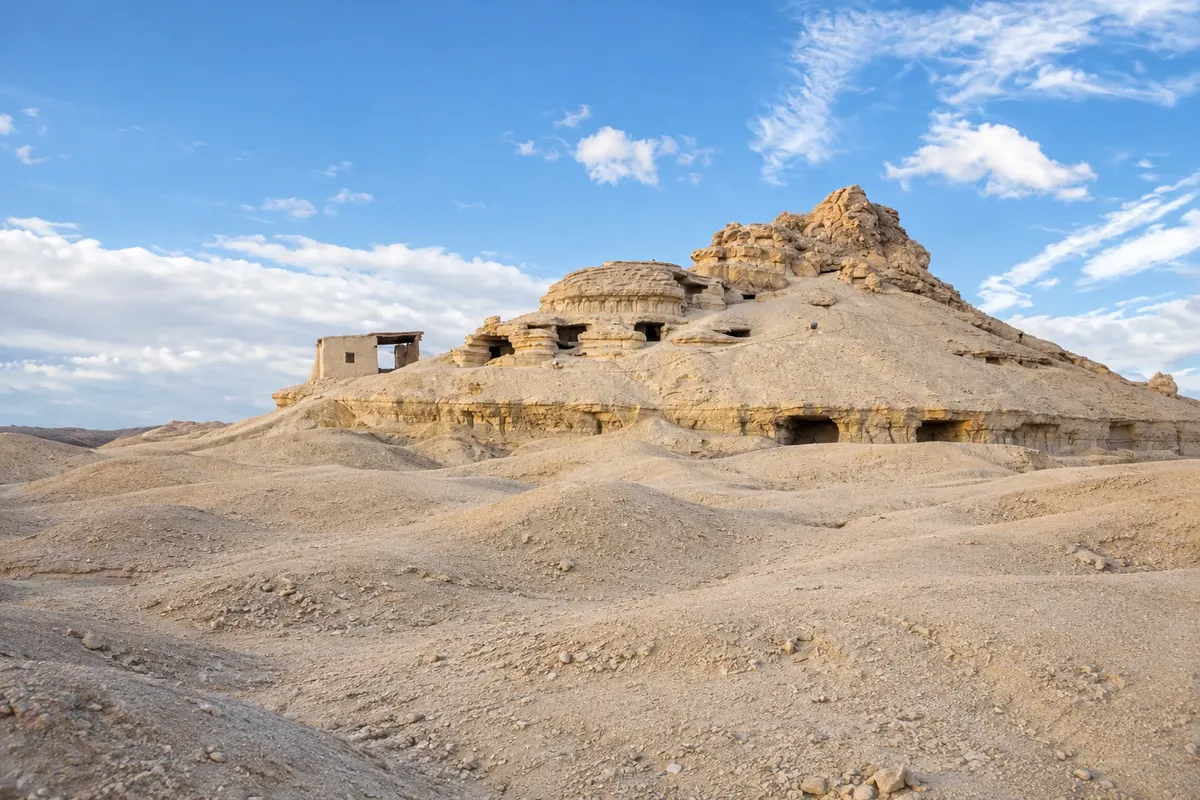
Hill north of Siwa with dozens of rock-cut tombs, some with Greco-Roman period paintings such as the tomb of Si-Amun. From the top you can see the town and the palm groves.
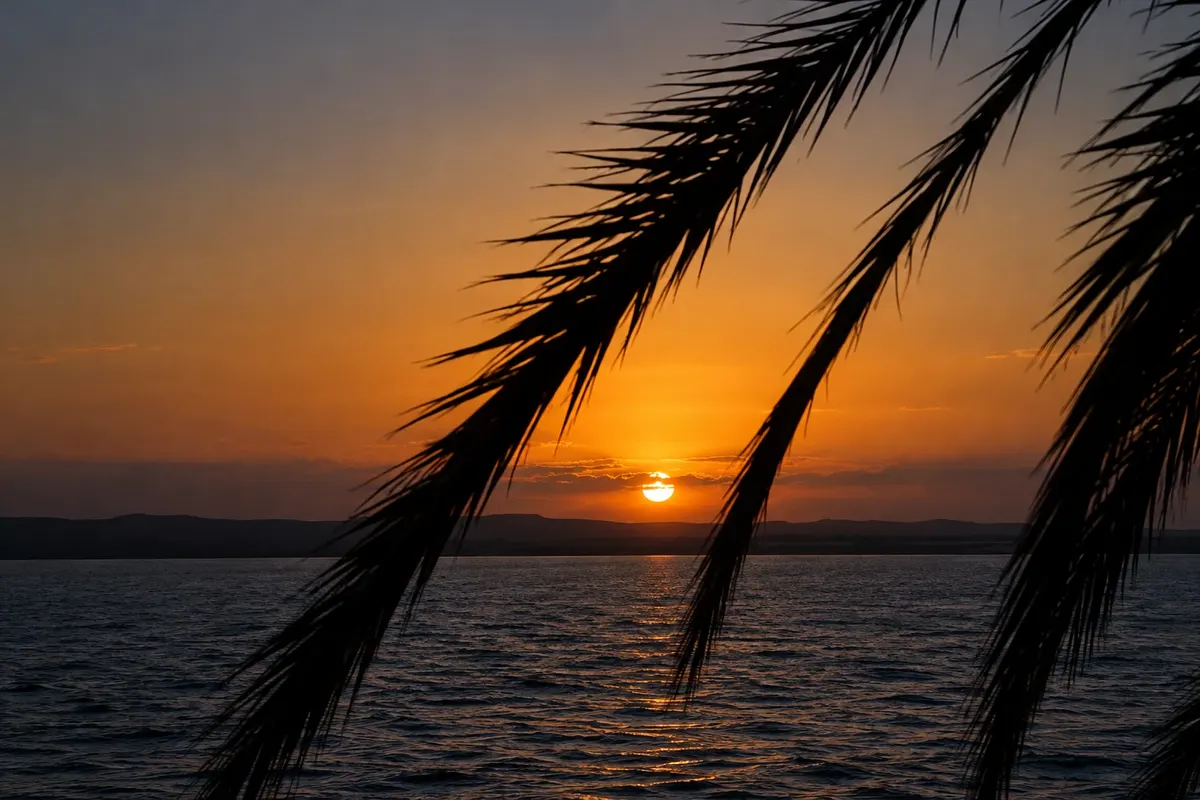
A palm island on the edge of one of Siwa’s salt lakes, connected to the mainland by a causeway, visited in the late afternoon to watch the sunset over the lake and the desert.
Before you go
A little planning leaves more time to enjoy the journey.
In Siwa, days are most pleasant from October to April; in summer the heat is intense, and in winter the nights are cold. The date harvest, between September and November, is an important time in the oasis. In Marsa Matruh, the beach season runs from June to September.
The seasons shown are the most usual ones; nature doesn't always follow the calendar.
Three to four days in Siwa, plus one day in Marsa Matruh. From Cairo or Alexandria, add a day of road travel each way.
In Siwa there are hotels and guesthouses made of mud and salt (karshif) in the town and the palm groves, some near the salt lakes and Cleopatra’s Spring. In Marsa Matruh, hotels line the bay and the beaches west of town.
Take your trash with you, follow the signs and support local businesses. In natural areas, follow the visiting guidelines.
Get your questions answered
By road, from Marsa Matruh: about 300 km across the desert, by bus or with a driver. From Cairo, the trip goes via Alexandria or the North Coast and takes the whole day.
Three to four days, for Shali, the Oracle of Amun, Gebel al‑Mawta, Cleopatra’s Spring, the salt lakes and Fatnas Island, without rushing. Add one day in Marsa Matruh.
Not for the town. For Aghurmi, Cleopatra’s Spring and Fatnas, use a bicycle, cart, taxi or driver; longer excursions are done with a local guide.
From October to April, with mild days. In summer the heat is very strong; in winter, nights are cold. The date harvest runs from September to November.
Yes. Marsa Matruh’s beaches, such as Agiba, have clear, calm water for much of the summer; the bathing season is from June to September.