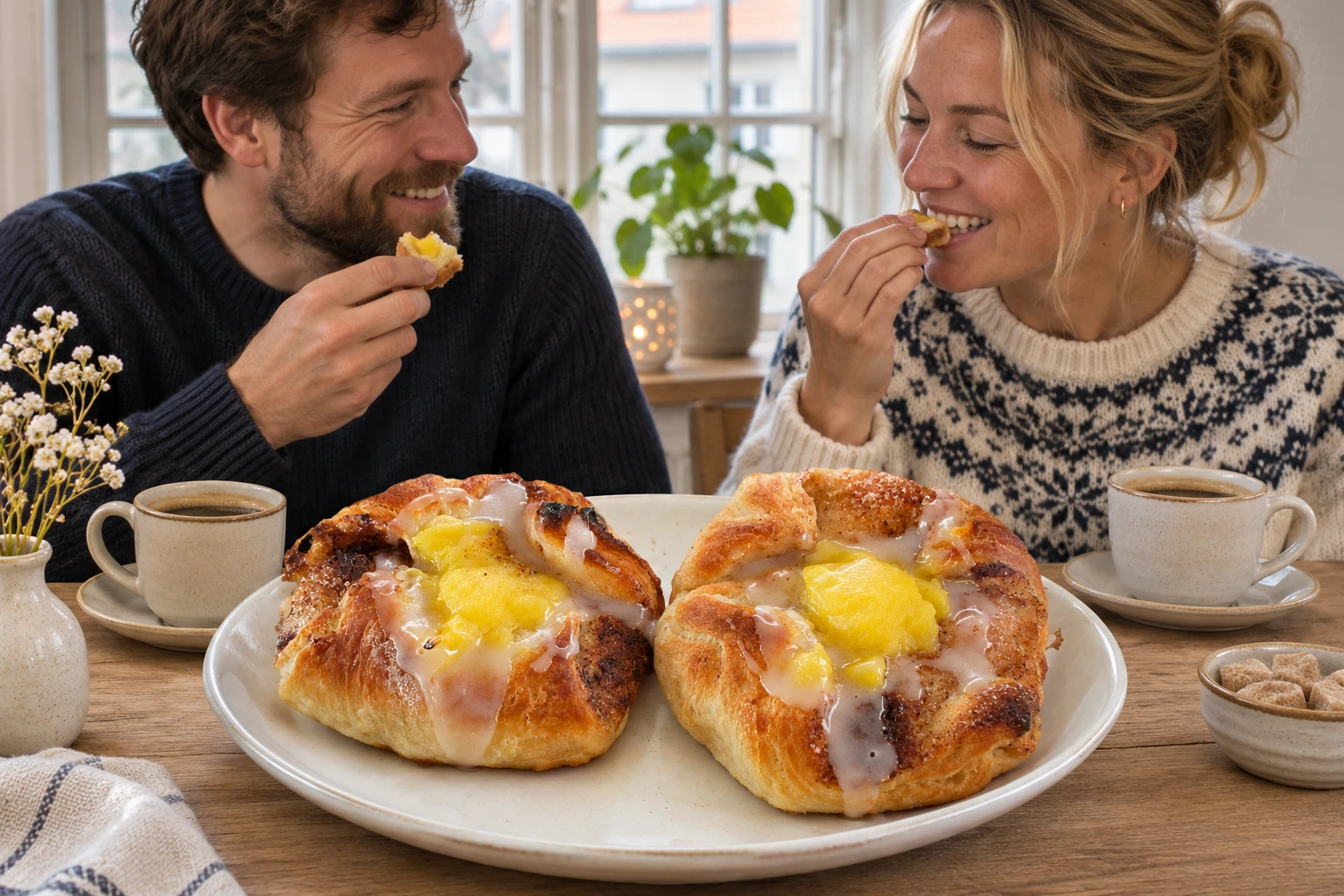
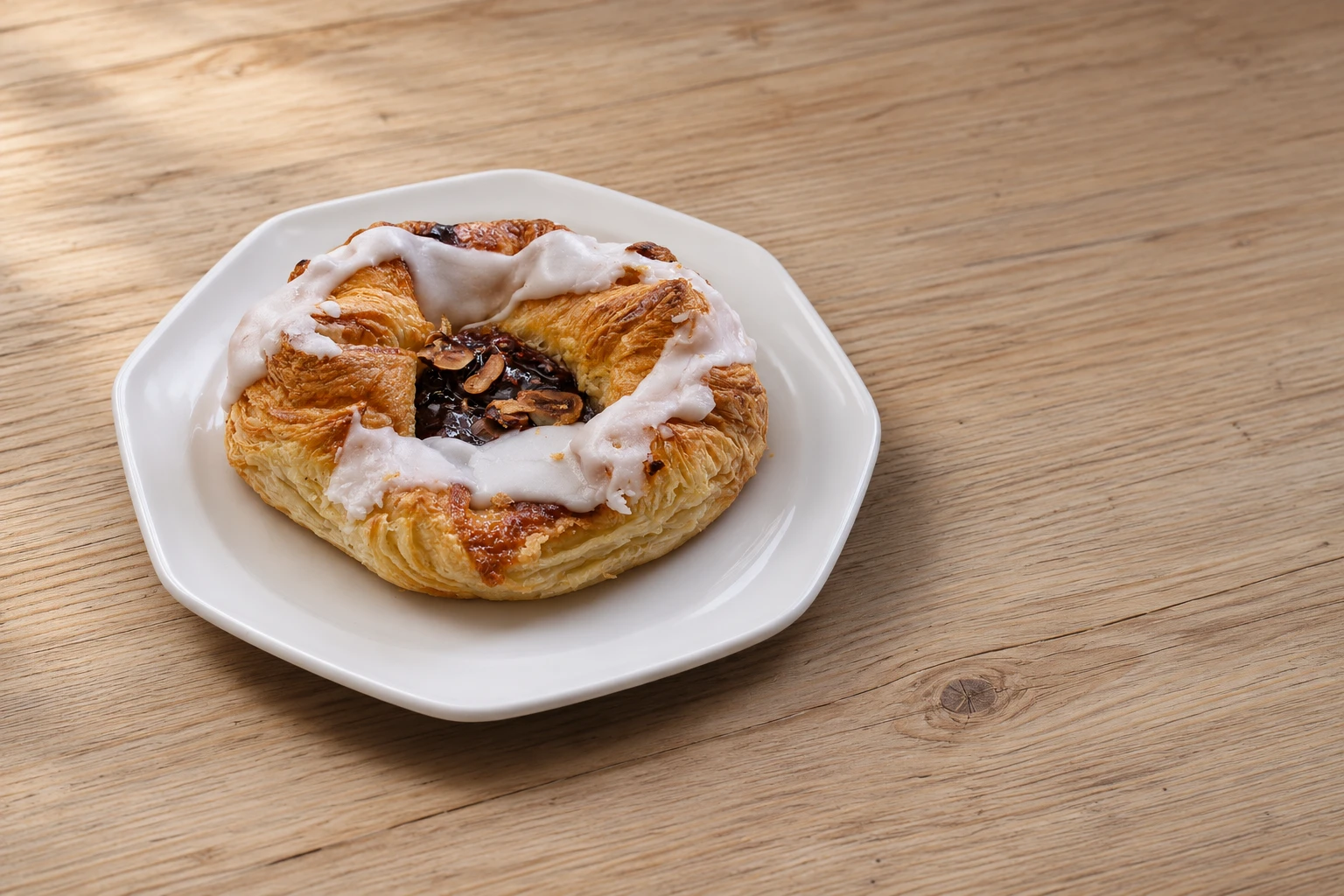
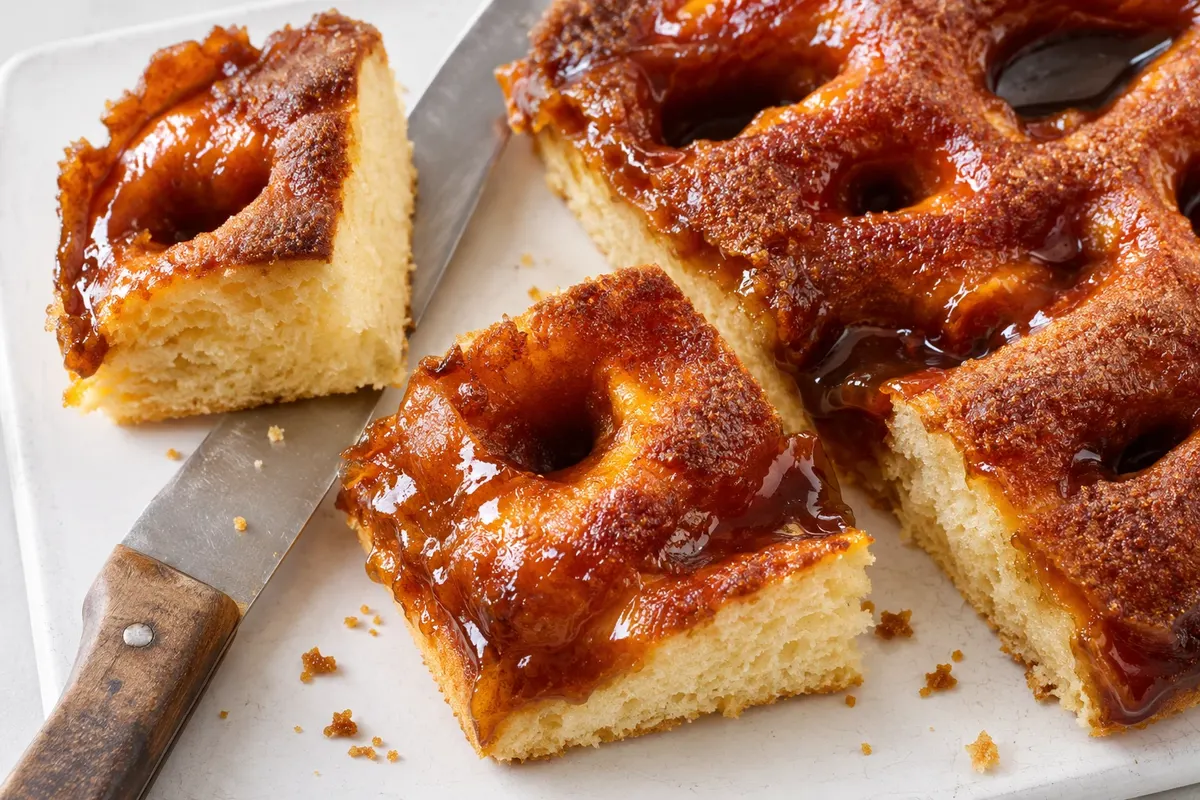
Wienerbrød, literally “Viennese bread,” is the Danish name for a family of sweet pastries made from the same base: a yeast dough folded and rolled multiple times with butter until thin layers form. The shape, filling and topping give each piece its name: the snegl, a cinnamon-rolled snail; the spandauer, an envelope with custard in the center; the kringle, in the shape of a bow; and the stænger and borgmesterstang braids, filled with a mixture of almond paste, sugar and butter.
In the 1840s the confectioner Niels Christian Albeck, who had worked in Austria, opened the country’s first Viennese bakery on Købmagergade with the help of staff from the Vienna region. The novelty became popular and reached the breakfast table of King Christian VIII. One widely told version attributes the arrival of the technique to Viennese bakers hired during a bakers’ strike in 1850.
Around the same time, iron stoves with ovens became common in homes, and families began baking their own bread. To avoid losing customers, bakeries focused on pastries, and wienerbrød spread. One of the earliest classic recipes appears in an 1852 cookbook, calling for yeast dough and butter folded several times.
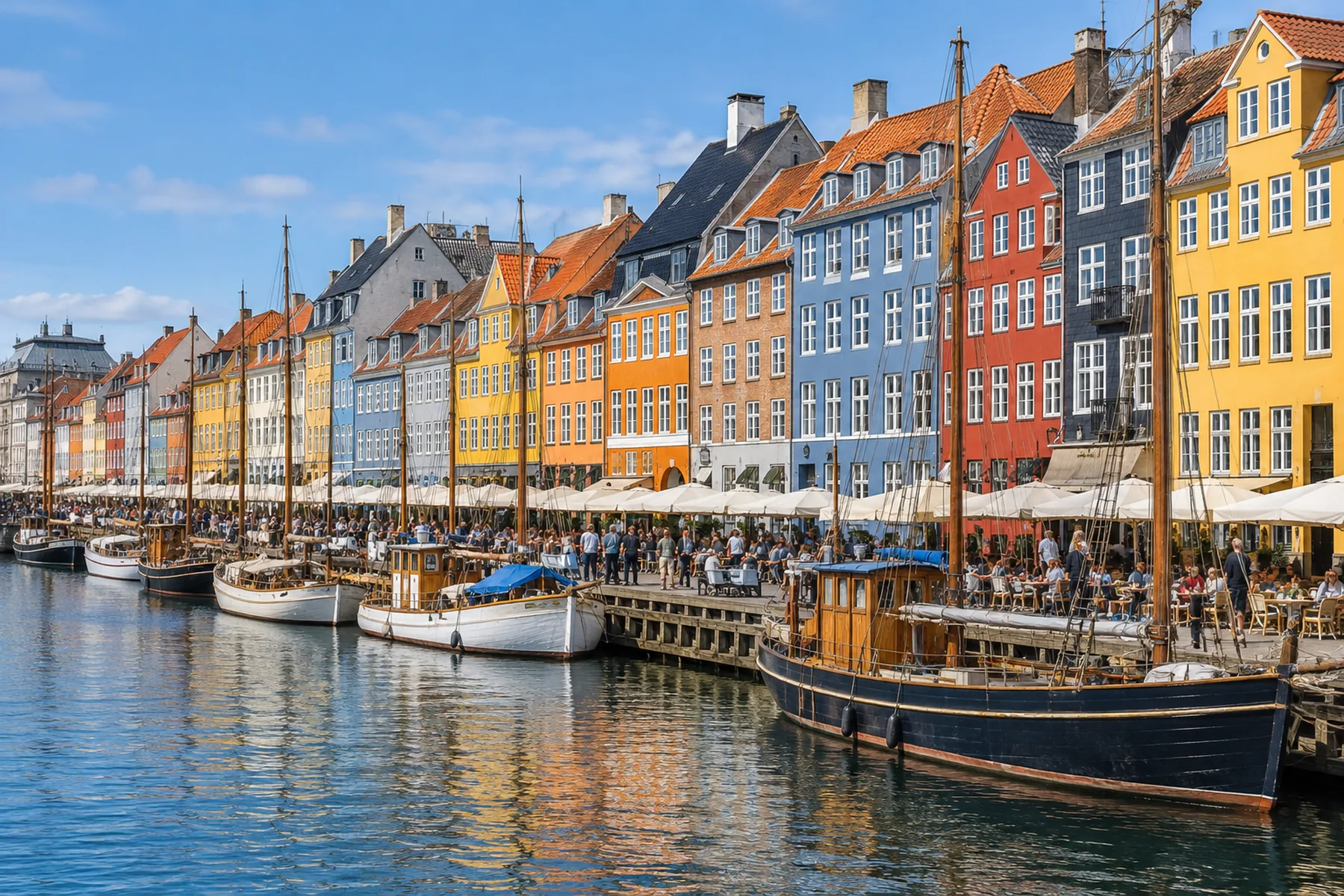
The name shows the round trip: in Denmark the pastry is from Vienna; in Vienna it’s called Kopenhagener or Dänischer Plunder; and elsewhere in the world it became simply Danish. In Copenhagen there is a tradition of the onsdagssnegl, the Wednesday cinnamon snail.
Wienerbrød is sold in every Danish bakery early in the morning, and for a long time it was the centerpiece of Sunday breakfast. Part of that custom comes from when bakeries put a free piece in the bag of rolls as a bonus.


 Brazil
 Argentina
 Bolivia
 Chile
 Colombia
 Ecuador
 Guyana
 French Guiana
 Falkland Islands (Malvinas)
 Paraguay
 Peru
 Suriname
 Uruguay
 Venezuela
 Germany
 Austria
 Belgium
 Croatia
 Spain
 Finland
 France
 Greece
 the Netherlands
 Hungary
 Ireland
 Iceland
 Italy
 Luxembourg
 Norway
 Poland
 Portugal
 the United Kingdom
 the Czech Republic
 Sweden
 Switzerland
 Turkey
 Canada
 the United States
 Mexico
 the Dominican Republic
 South Africa
 Australia
 Fiji
 New Zealand
 Papua New Guinea