Æbleskiver
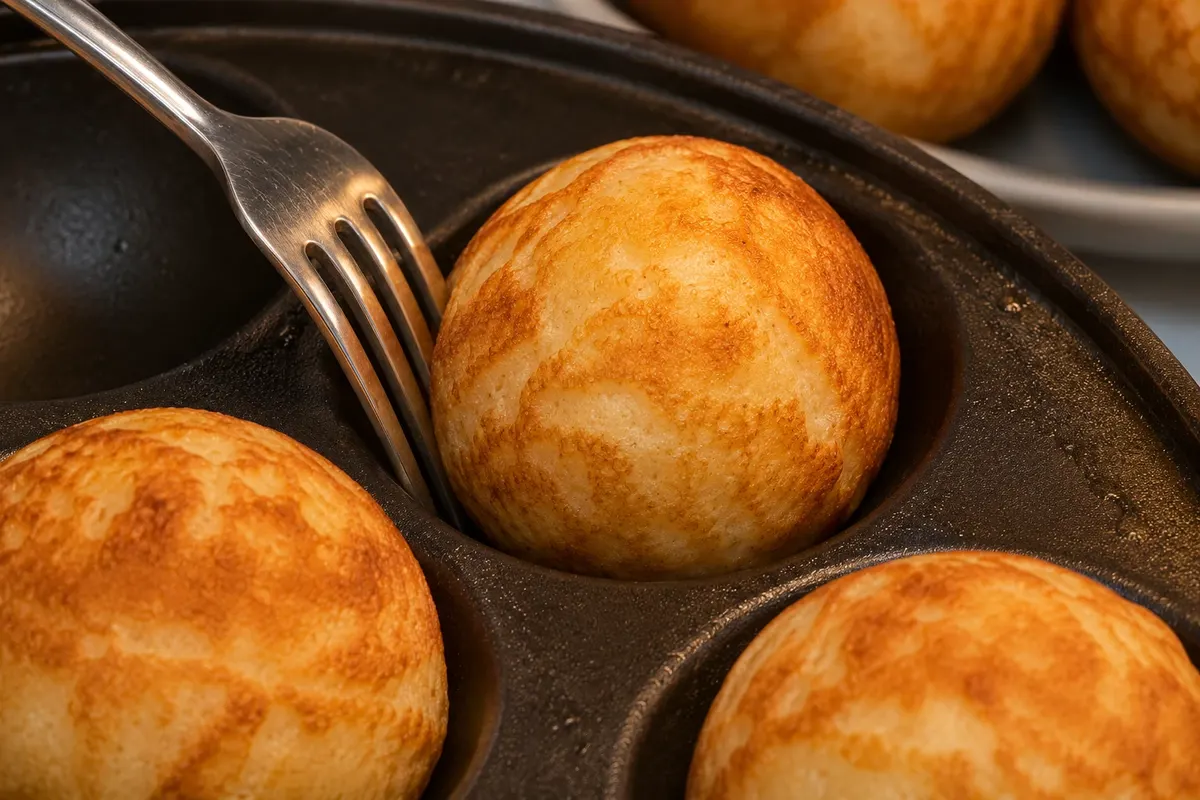
Soft little dough balls fried in a cast-iron pan with round cavities and served with powdered sugar and jam. Despite the name, which means apple slices, they generally do not contain apple: they are the Danish Advent and Christmas sweet.
Flavors · Denmark
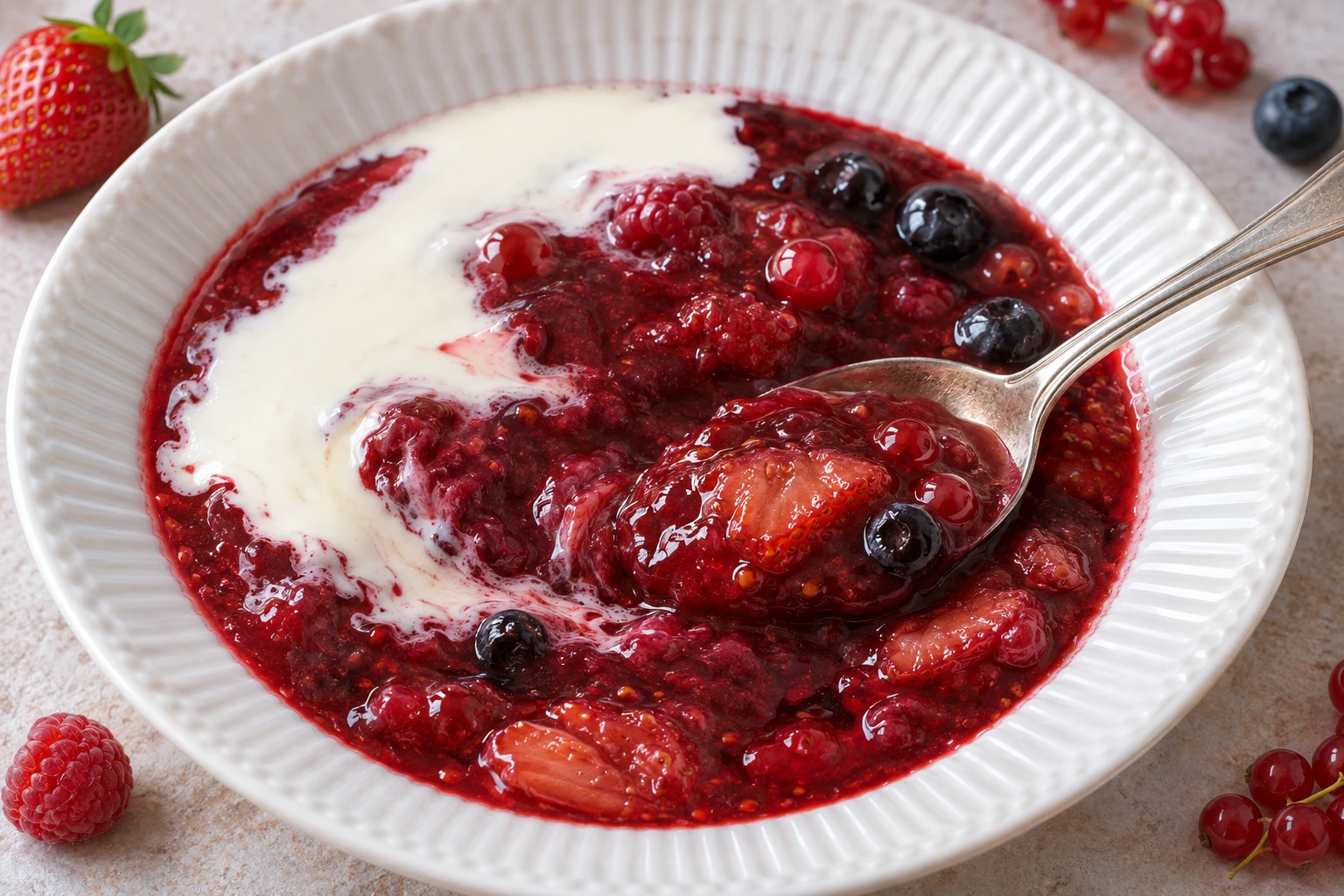
Thickened compote of red fruits such as strawberry, raspberry, currant and cherry, served cold with cream or milk. It’s the classic Danish summer dessert, and the name is famously hard to pronounce.
Traditional sweet from Denmark
Also known as: rødgrød, rød grød med fløde
Illustrative images. The pictures in this guide are illustrations based on the real place, not photographs, and may differ from it.
Click a photo to enlarge it.
Rødgrød med fløde — Denmark
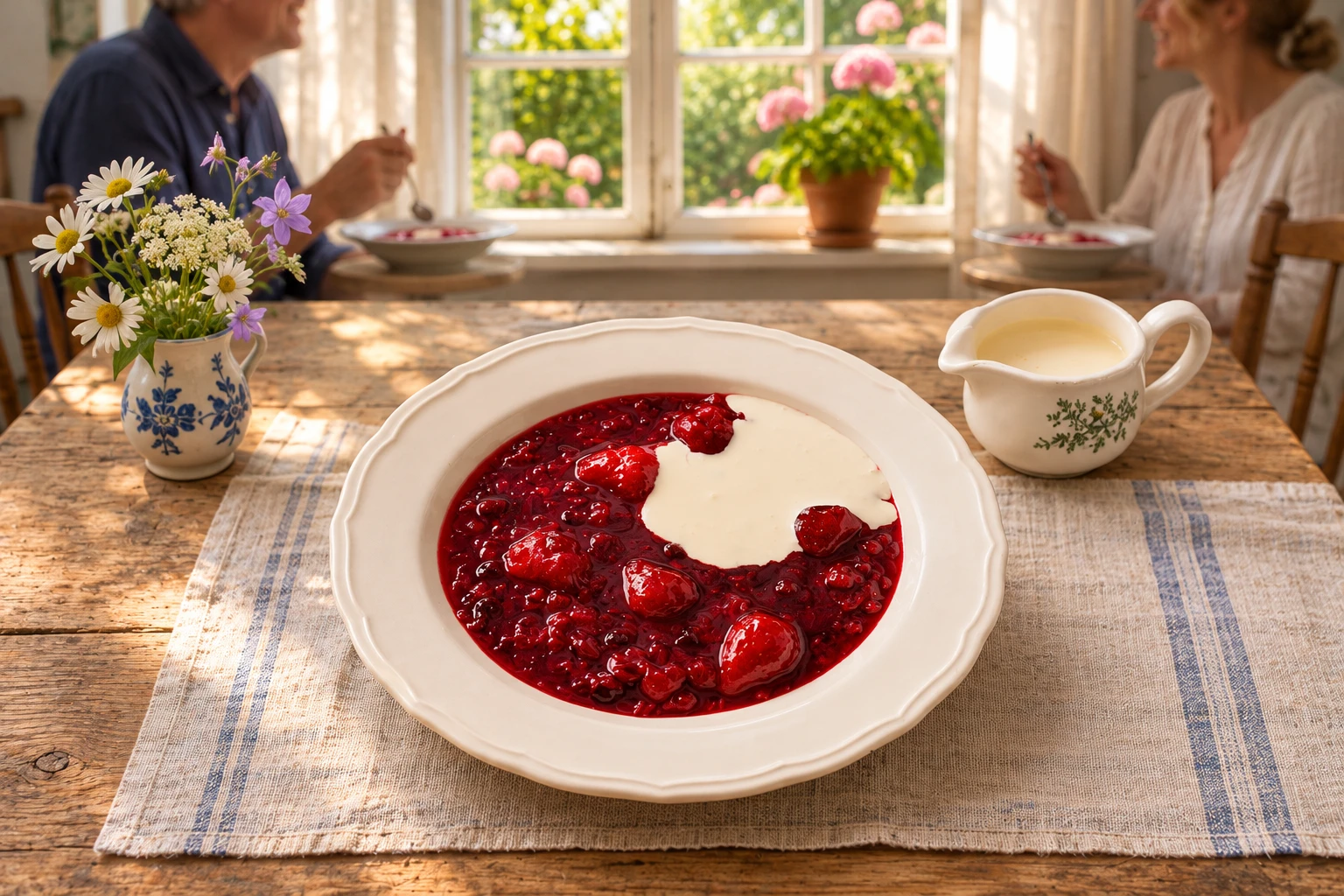
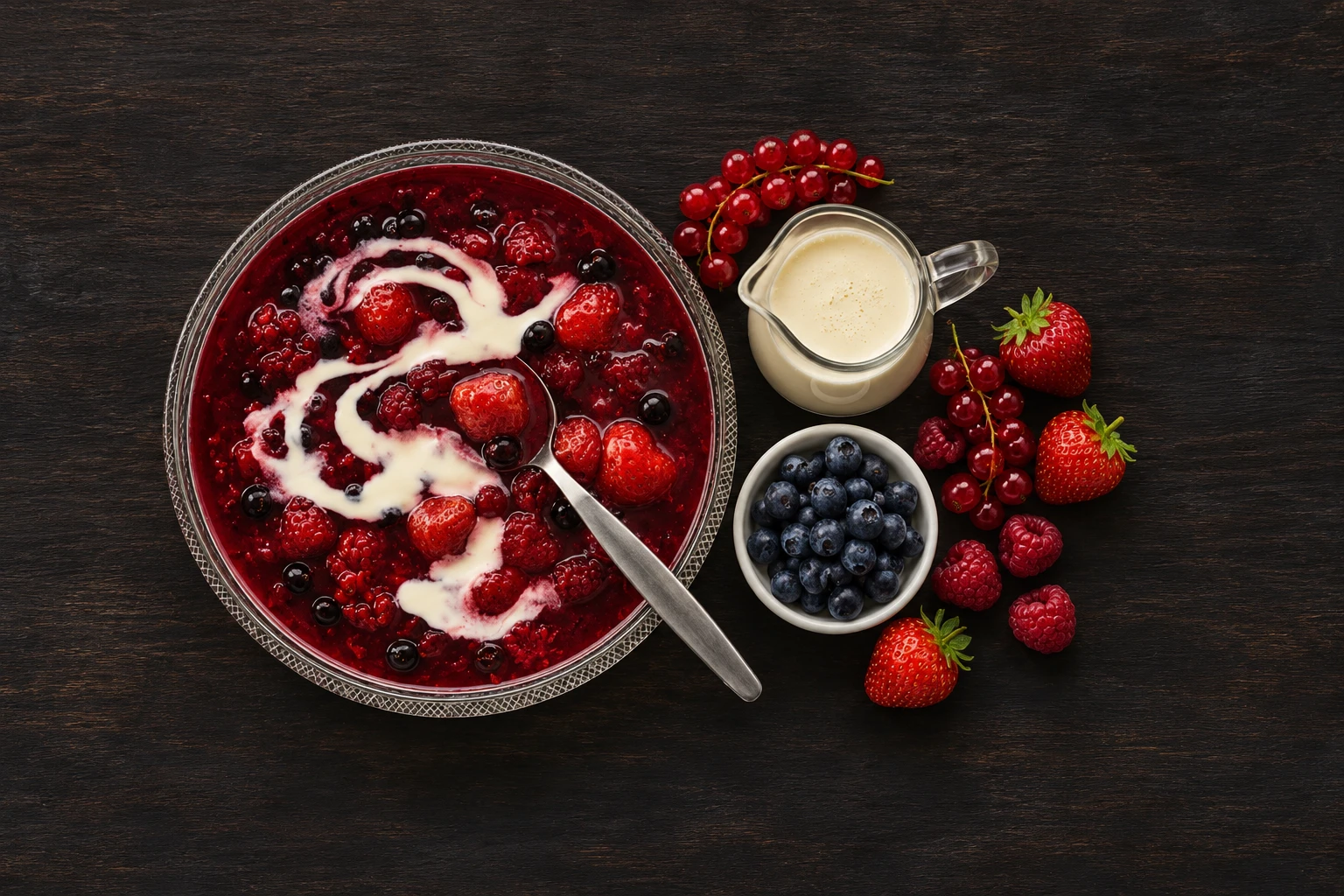
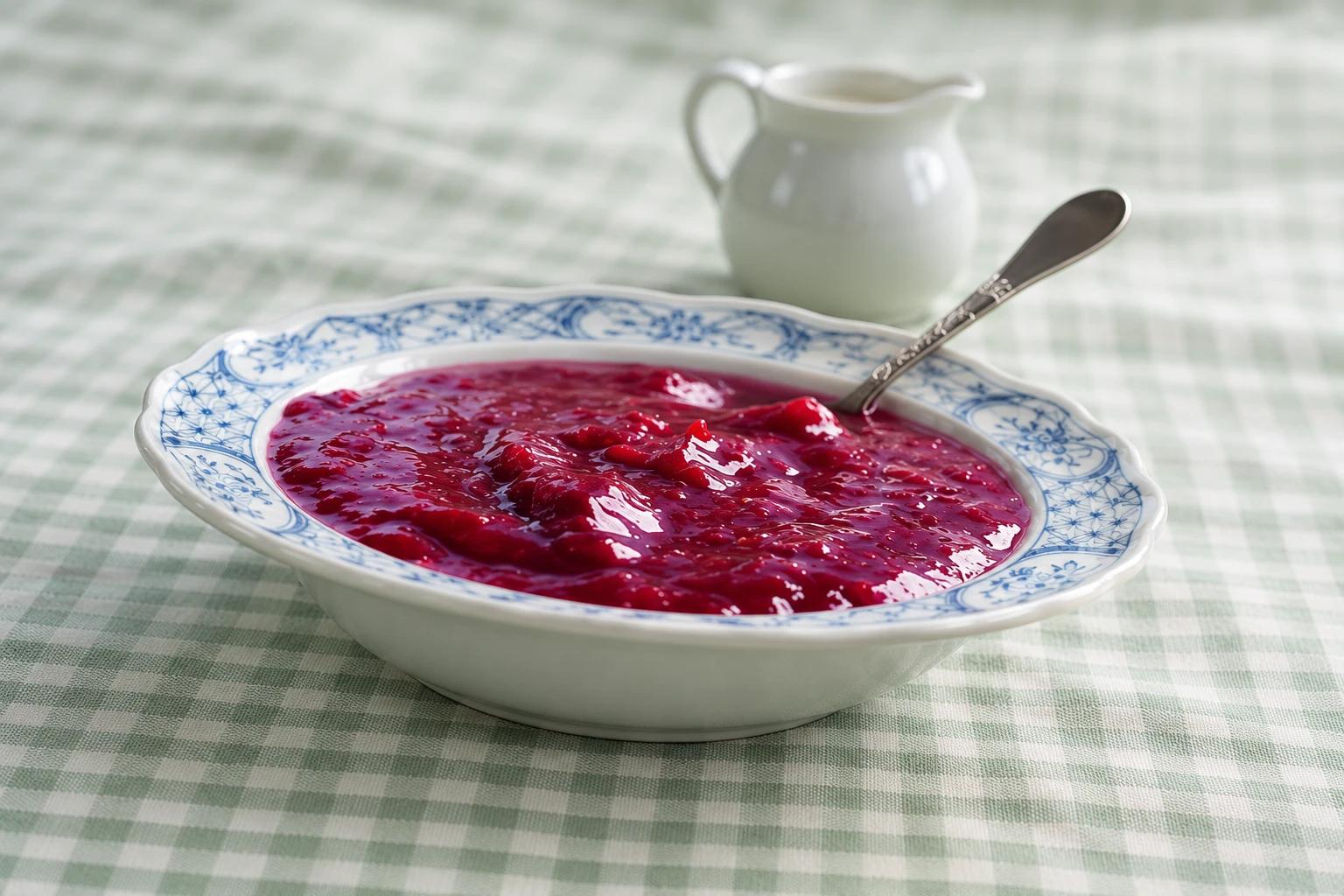
Rødgrød is a compote of red fruits: strawberries, raspberries, currants, cherries, and sometimes rhubarb. The fruits are briefly boiled in water with sugar, and the liquid is thickened with potato starch until it reaches a soft-cream consistency. Once cold, it’s served in a bowl with cold cream (fløde) or milk on top.
The recipe is old but has changed a lot. Early cookbooks already include rødgrød, but in the 17th century it was made without fruit: the main ingredient was red wine, hence the name red grød, with rice flour, sugar, cinnamon, cardamom, almonds and lemon. It was food for the elite.
In the second half of the 19th century, with iron stoves and cheaper beet sugar, wine gave way to red fruits, especially cherries. Cherry rødgrød was served at country celebrations, especially weddings, in large dishes, and the cream was added to each plate before it reached the guest.
The name became a pronunciation test. Rødgrød med fløde combines Danish sounds that are hard for learners, and Danes often ask foreigners to try saying it.
It’s a June-to-August dessert, when red fruits are in season, but it can be made with frozen fruit year-round.

Denmark
A summer dessert from across the country.
Red fruits (strawberry, raspberry, currant, cherry, sometimes rhubarb), water, sugar and potato starch; cold cream or milk for serving.
Cold, in a bowl, with cream or milk on top.
A summer dessert, in the red-fruit season, from June to August.
Your questions
A cream of cooked and thickened red fruits, eaten cold with a drizzle of cream. It’s the country’s typical summer dessert.
The phrase combines Danish sounds that don’t exist in many languages, and it turned into a playful pronunciation test for foreigners.
No. In the 17th century it was made with red wine and spices; red fruits were introduced in the second half of the 19th century.
Flavors of Denmark

Soft little dough balls fried in a cast-iron pan with round cavities and served with powdered sugar and jam. Despite the name, which means apple slices, they generally do not contain apple: they are the Danish Advent and Christmas sweet.

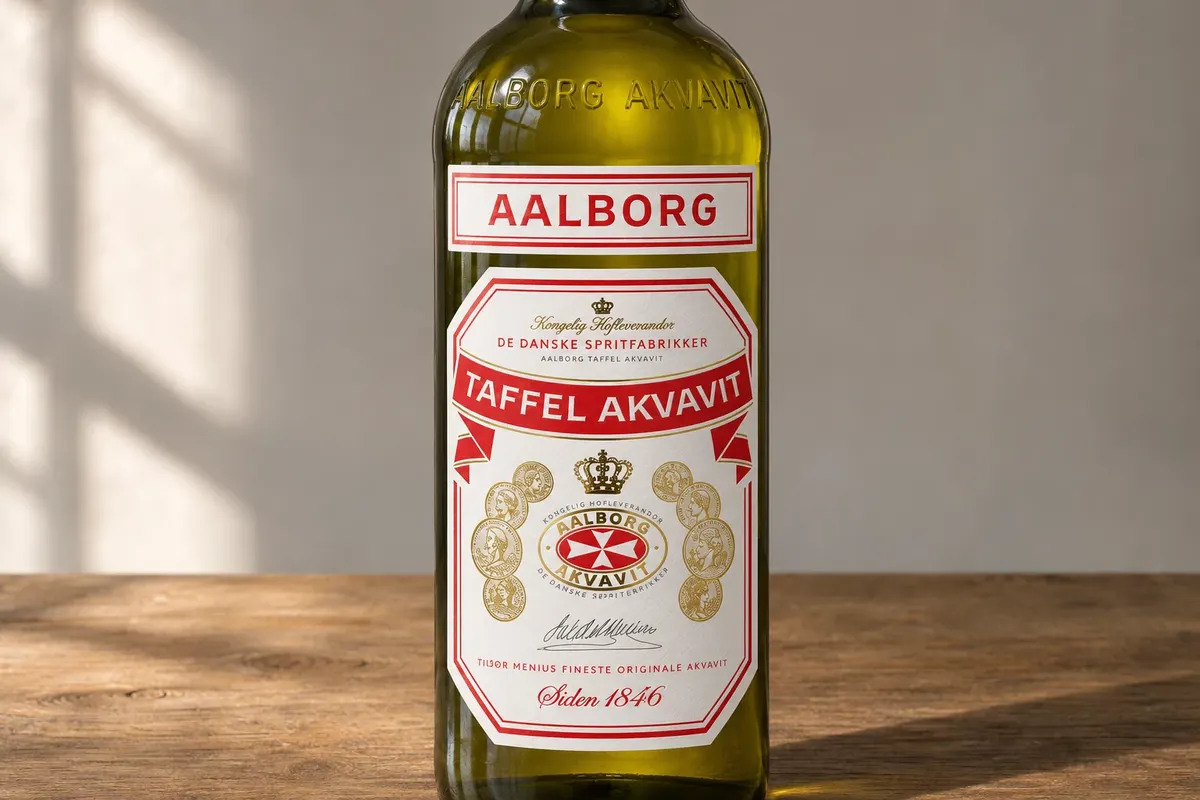
Nordic spirit flavored with caraway and, sometimes, dill, served chilled in small glasses at Danish celebratory lunches, alongside herring and beer. In Denmark, the drink’s industrial history is linked to Aalborg.

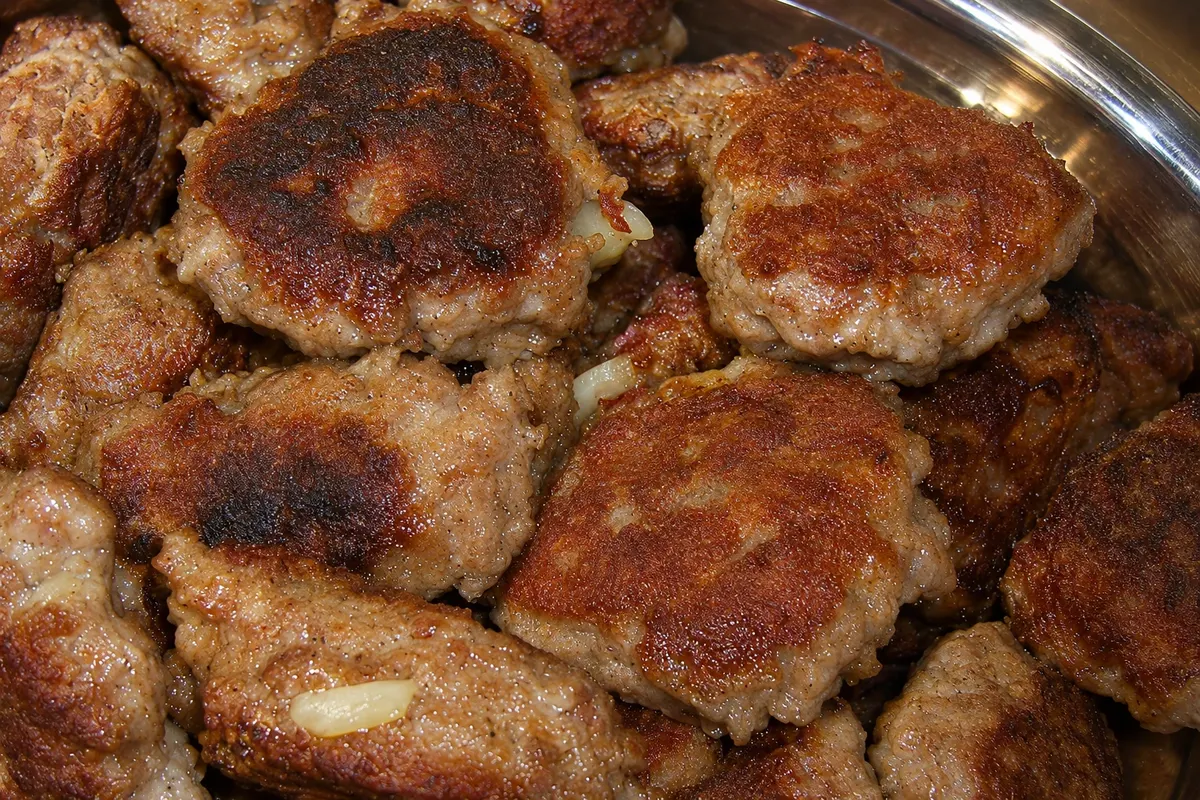
Flattened meat patties made from ground meat, typically half pork and half veal, fried in butter until a crust forms. They are homestyle food across Denmark, served with potatoes, a dark gravy and pickles or cabbage.

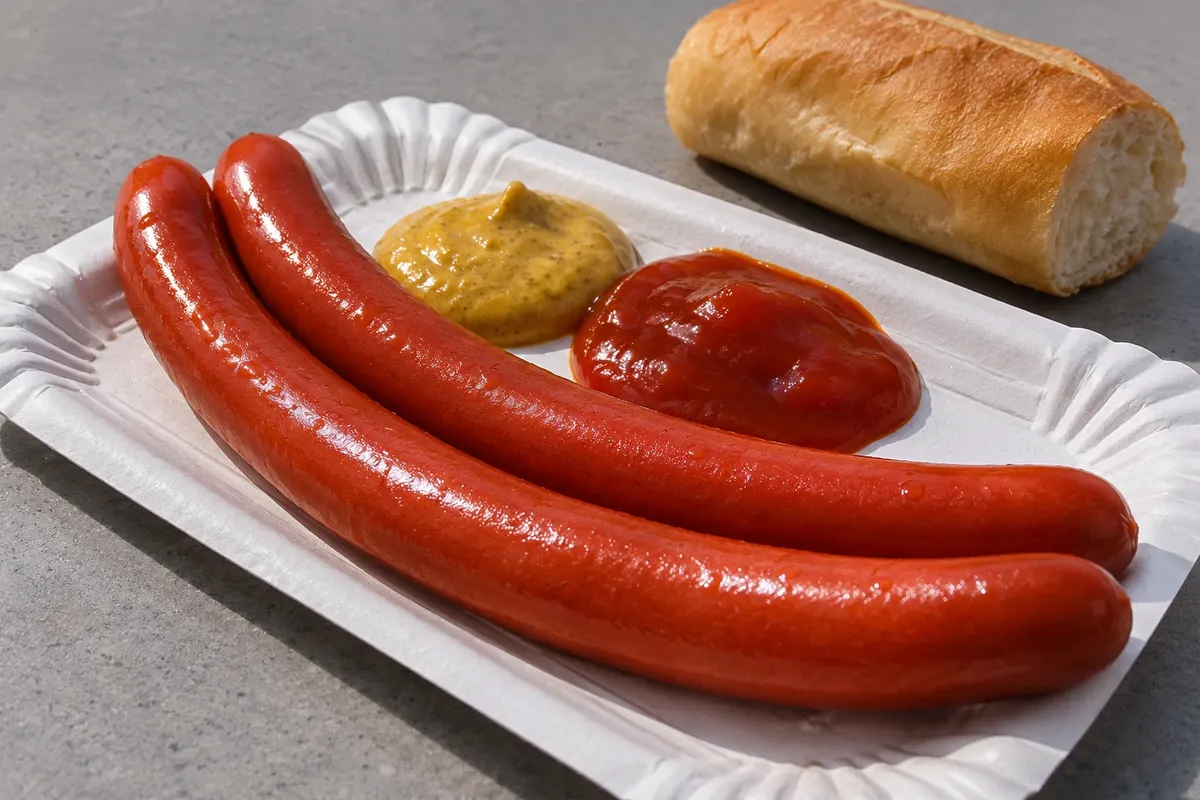
Hot sausages served in a bun from the pølsevogne, the hot‑dog carts that have operated in Danish cities since 1921, with mustard, ketchup, remoulade, fried onion and pickled cucumber slices. The first carts appeared in Copenhagen.

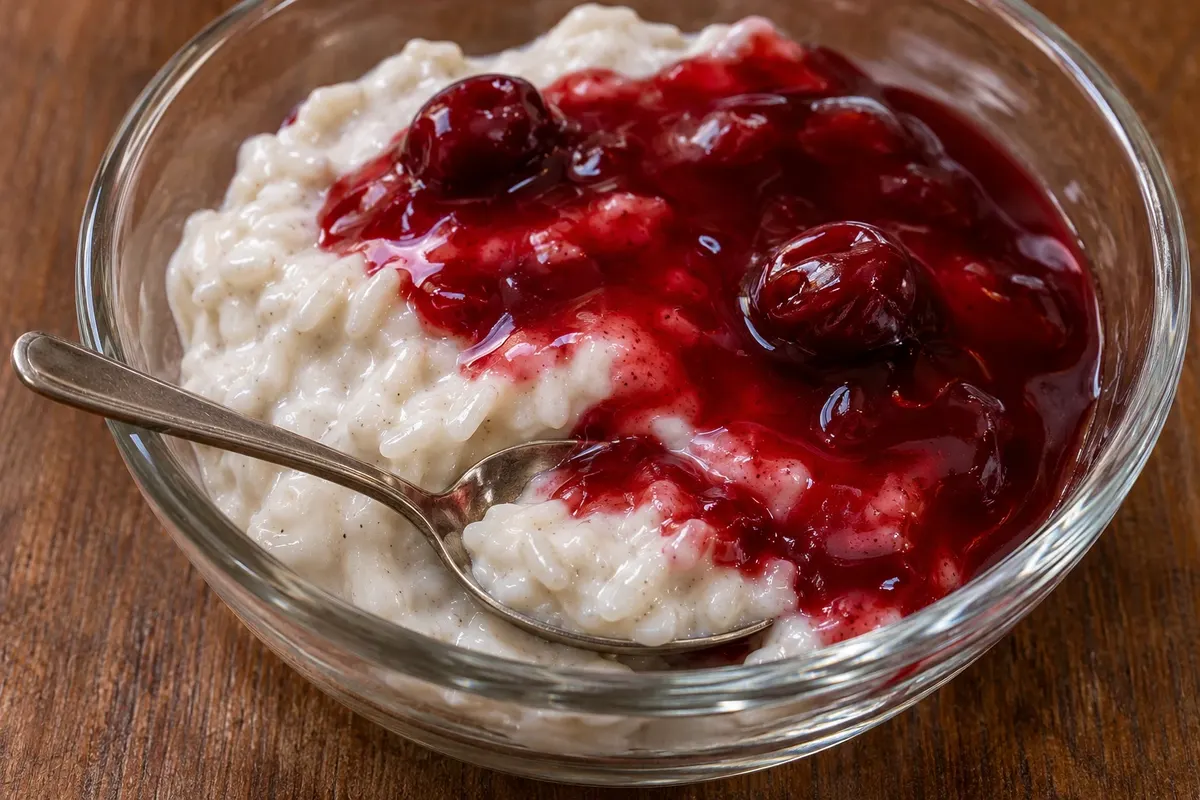
Cold rice pudding with whipped cream, chopped almonds and vanilla, served with warm cherry sauce at the end of the Christmas dinner. A whole almond is hidden in the serving dish, and whoever finds it receives a gift.

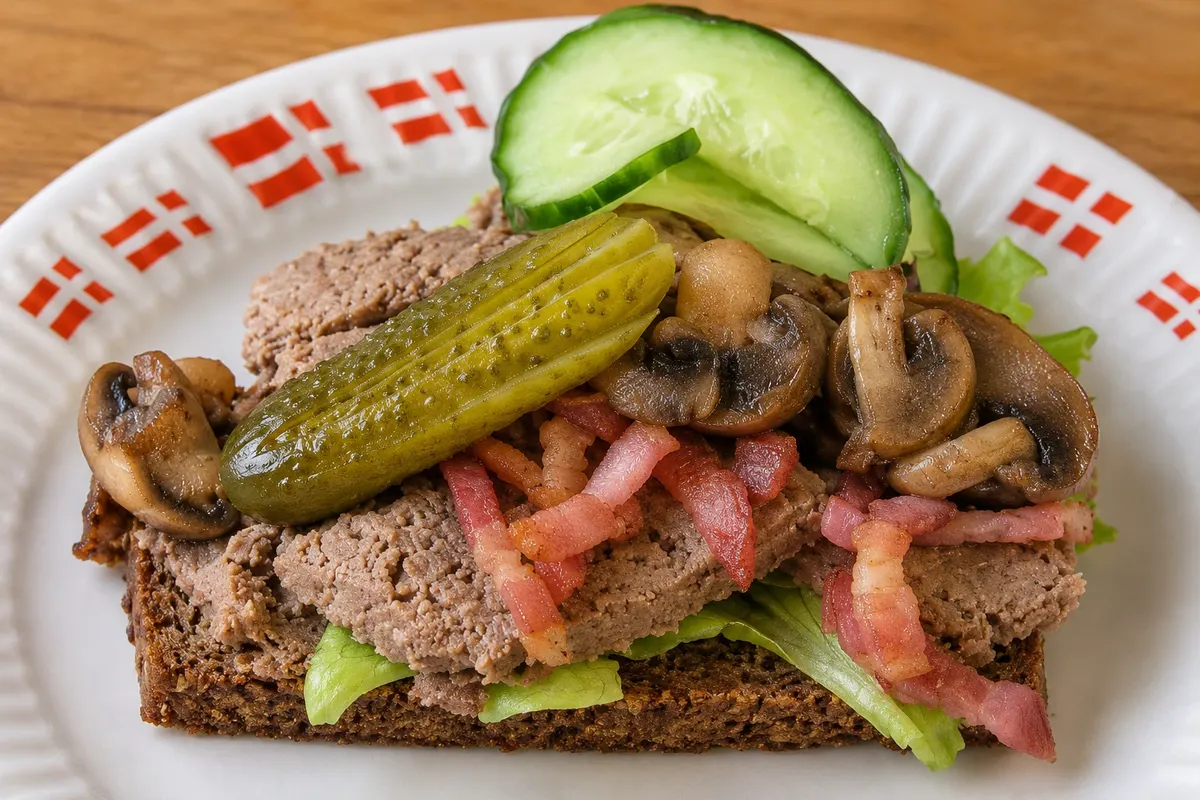
A slice of rye bread with butter and a generous, carefully arranged topping, eaten with fork and knife. It’s Denmark’s traditional lunch, and the tall, decorated version became famous in Copenhagen restaurants in the late 19th century.

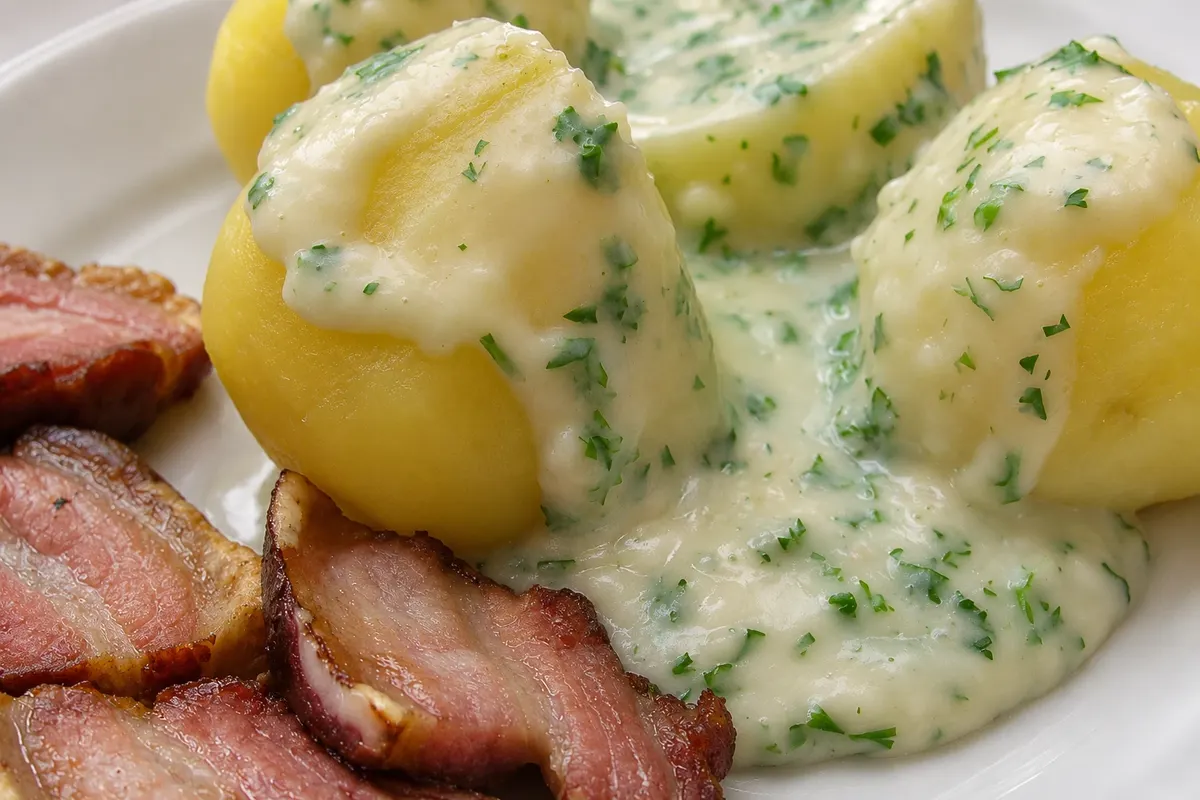
Slices of pork belly fried until crispy, served with boiled potatoes and a white parsley sauce. It was chosen as Denmark’s national dish in a vote held by the Ministry of Food in 2014.

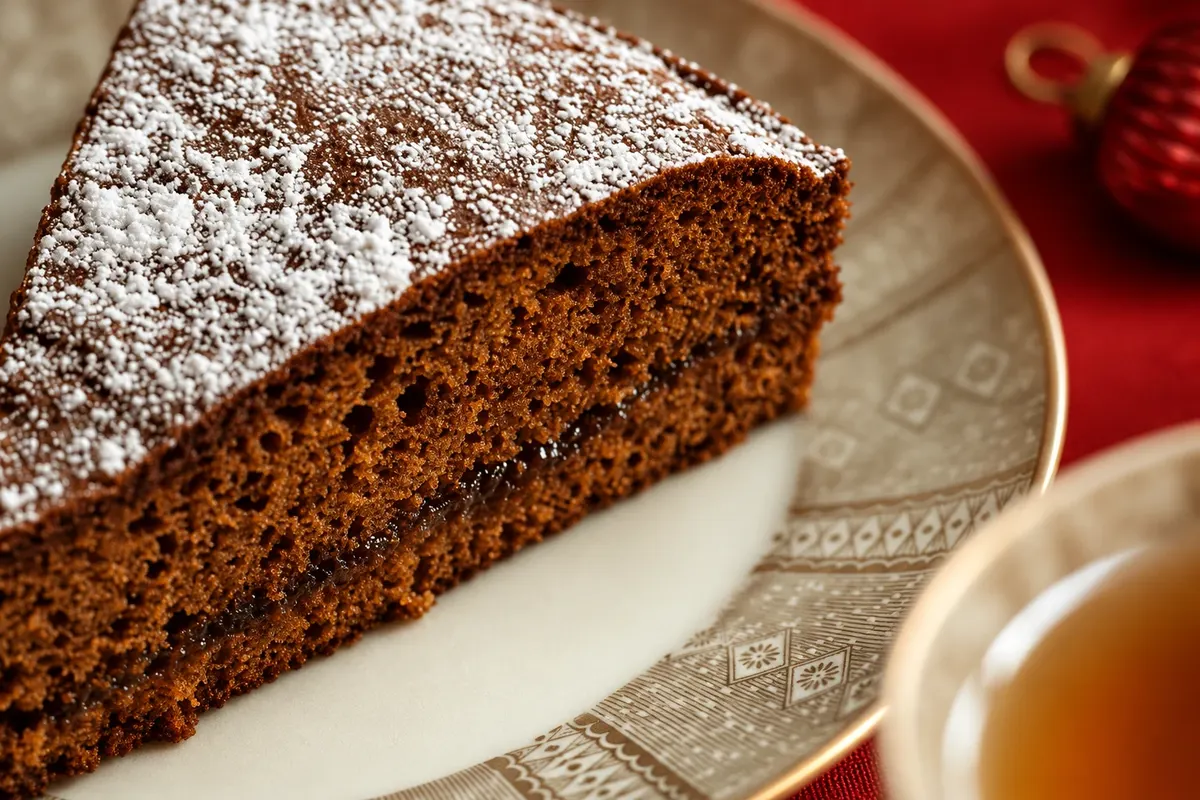
Honey and spice cakes made from a dough that rests for months before baking, often coated in chocolate. They have been produced in Christiansfeld, the Moravian Church town, since 1783, with recipes kept secret.

Sweet yeast pastries with layers of butter, shaped as a snail, bow, braid or envelope, filled with custard, remonce or fruit. The first Viennese bakery in Denmark opened in Copenhagen in the 1840s, and the city became associated with the pastry the world calls Danish pastry.

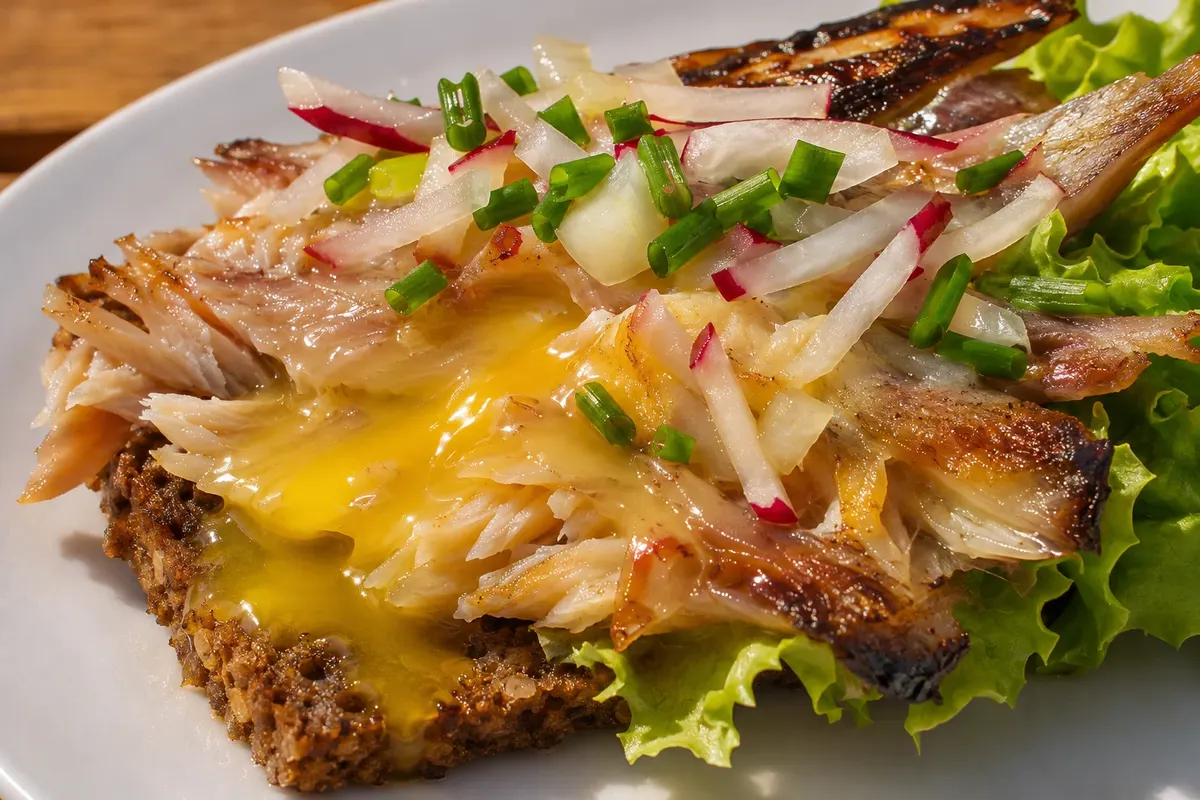
Rye bread with smoked herring, raw egg yolk, radish, chives and onion: the smokehouses’ dish from Bornholm. The name means sun over Gudhjem, and the yolk plays the role of the sun over the village where the island’s first smokehouse opened.

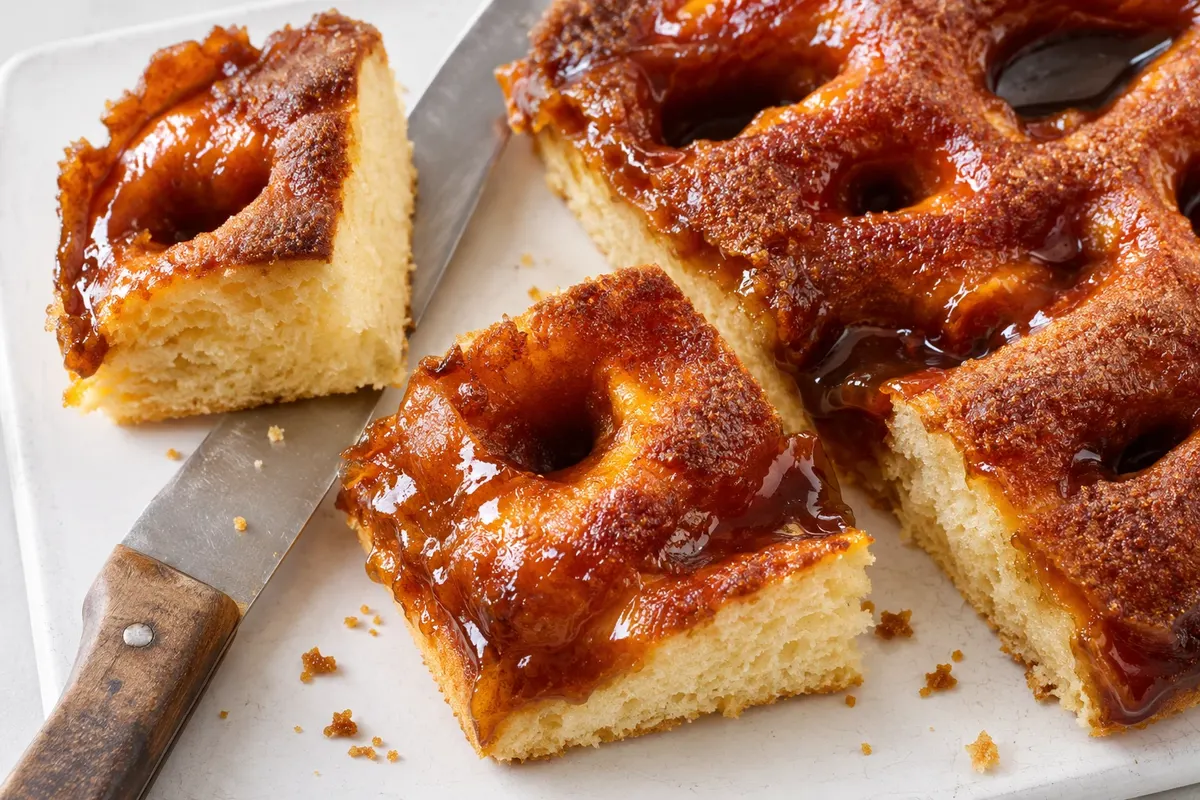
Soft yeast cake topped with a layer of melted butter and brown sugar that forms syrupy pools on the surface. It is regarded as the cake of Fyn, and the earliest records are from Odense, in 1830.