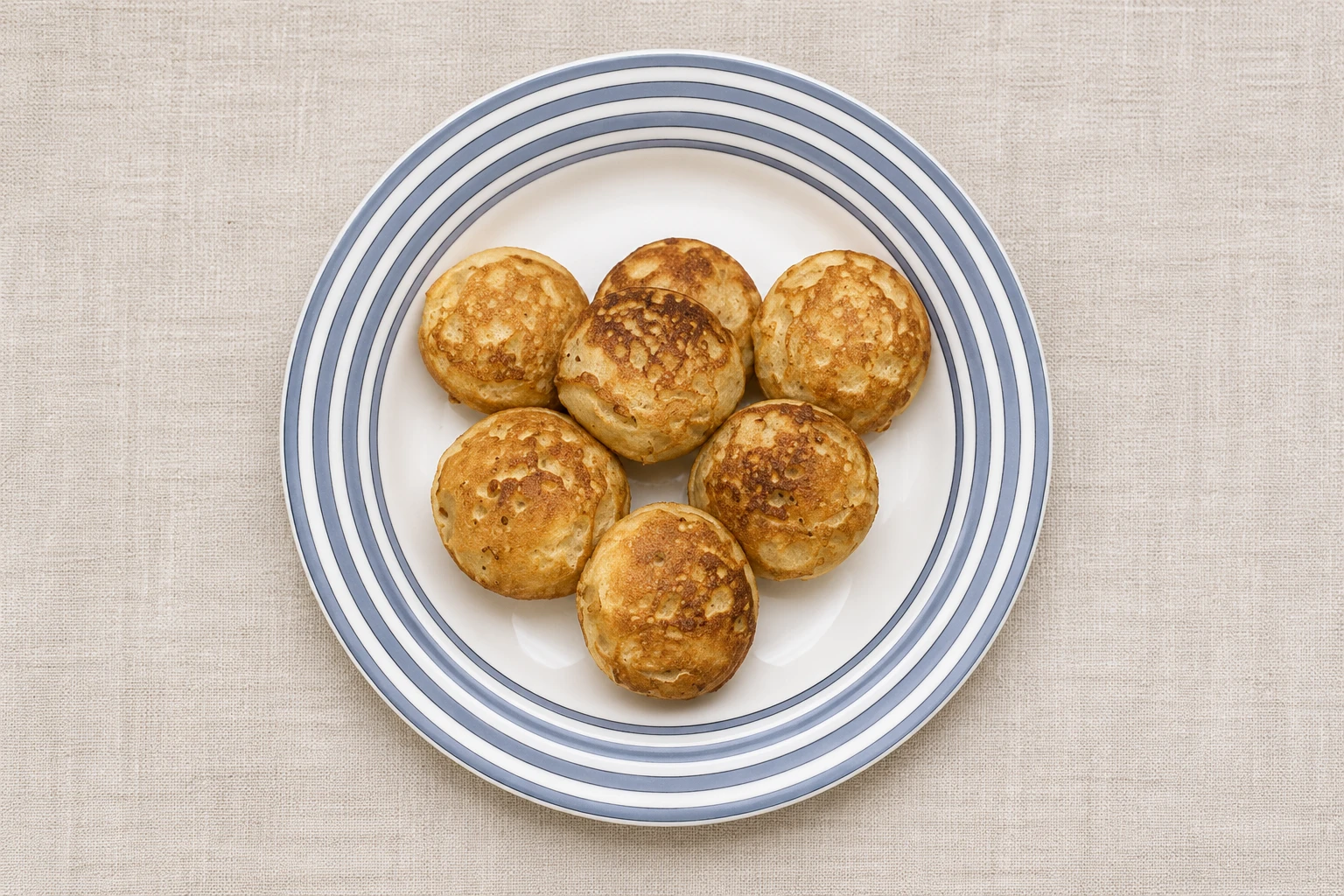
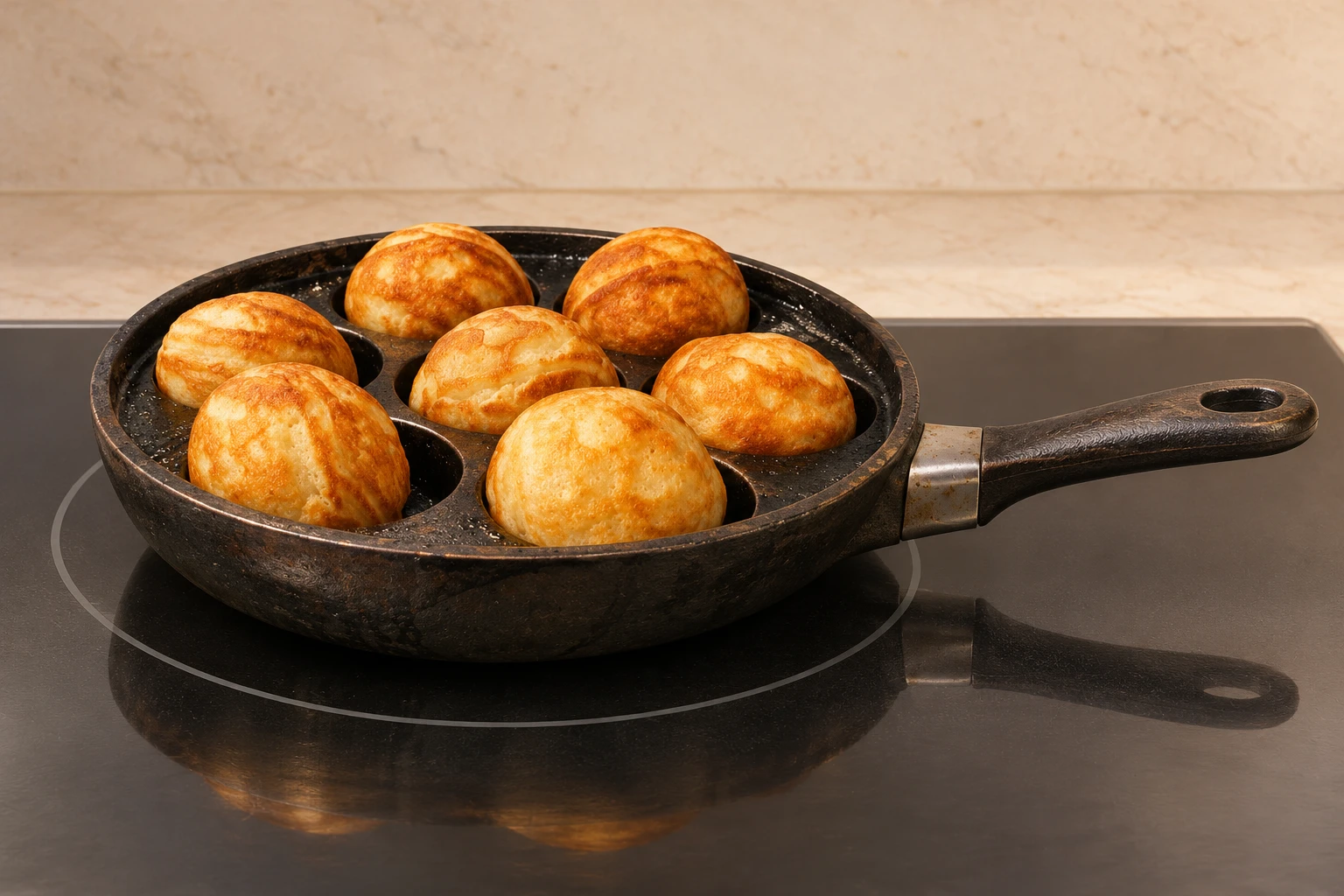
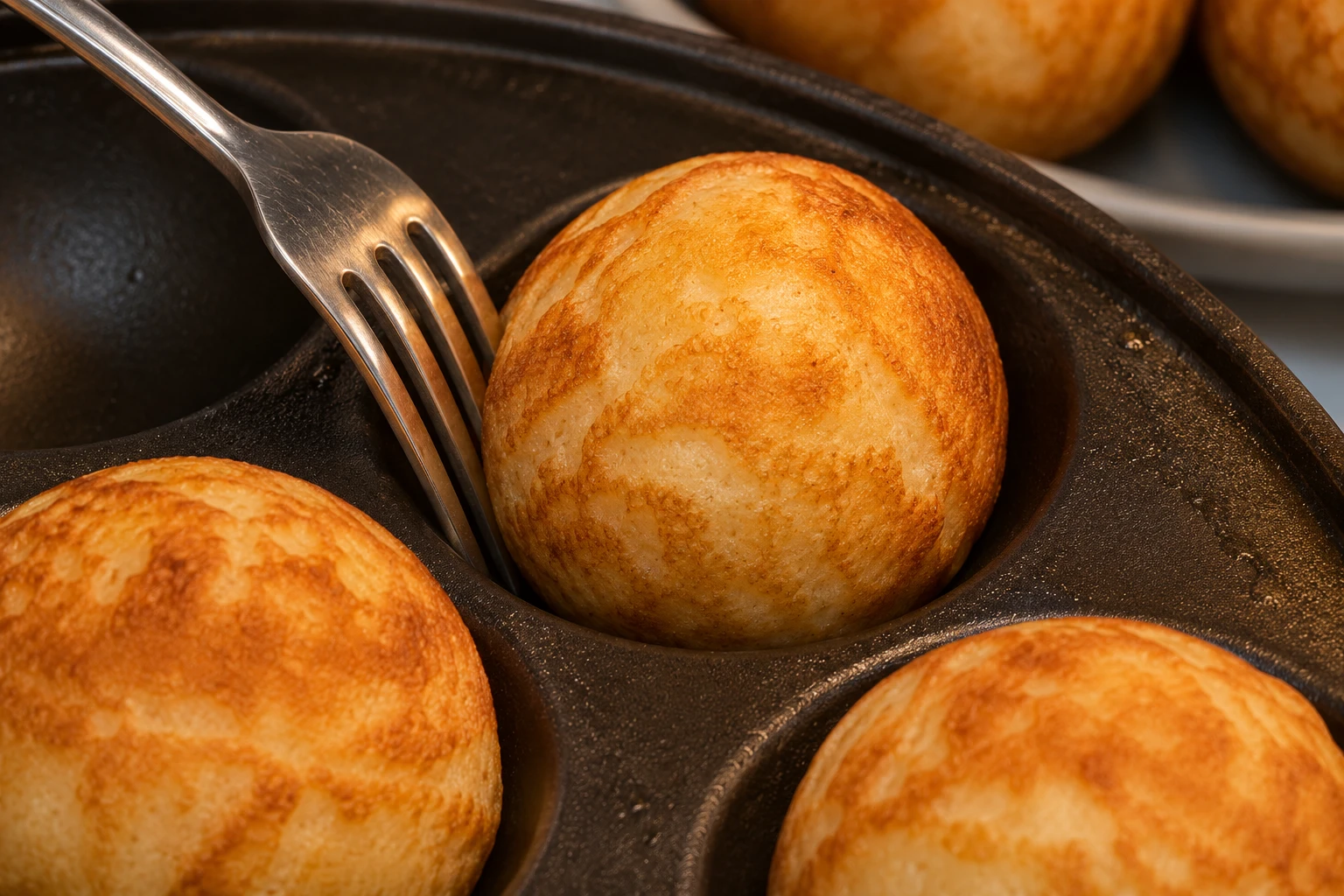
Æbleskiver are balls about the size of a golf ball, golden on the outside and fluffy inside. The batter is made with flour, milk or buttermilk, eggs and a little sugar, sometimes cardamom. They are cooked in an æbleskive pan, a cast-iron skillet with hemispherical cavities, and turned with a knitting needle or skewer to form the round shape.
The name means apple slices, and the history explains why. The original æbleskive was a slice of apple dipped in thin batter and fried, and 18th-century cookbooks already include several recipes of that kind. With the spread of the specialized pan in the early 19th century, the balls baked in the pan became common, and the apple fell out of use.
The word appears in an 1866 Christmas poetry book, Peters Jul, with an illustration of the balls being turned in the pan.
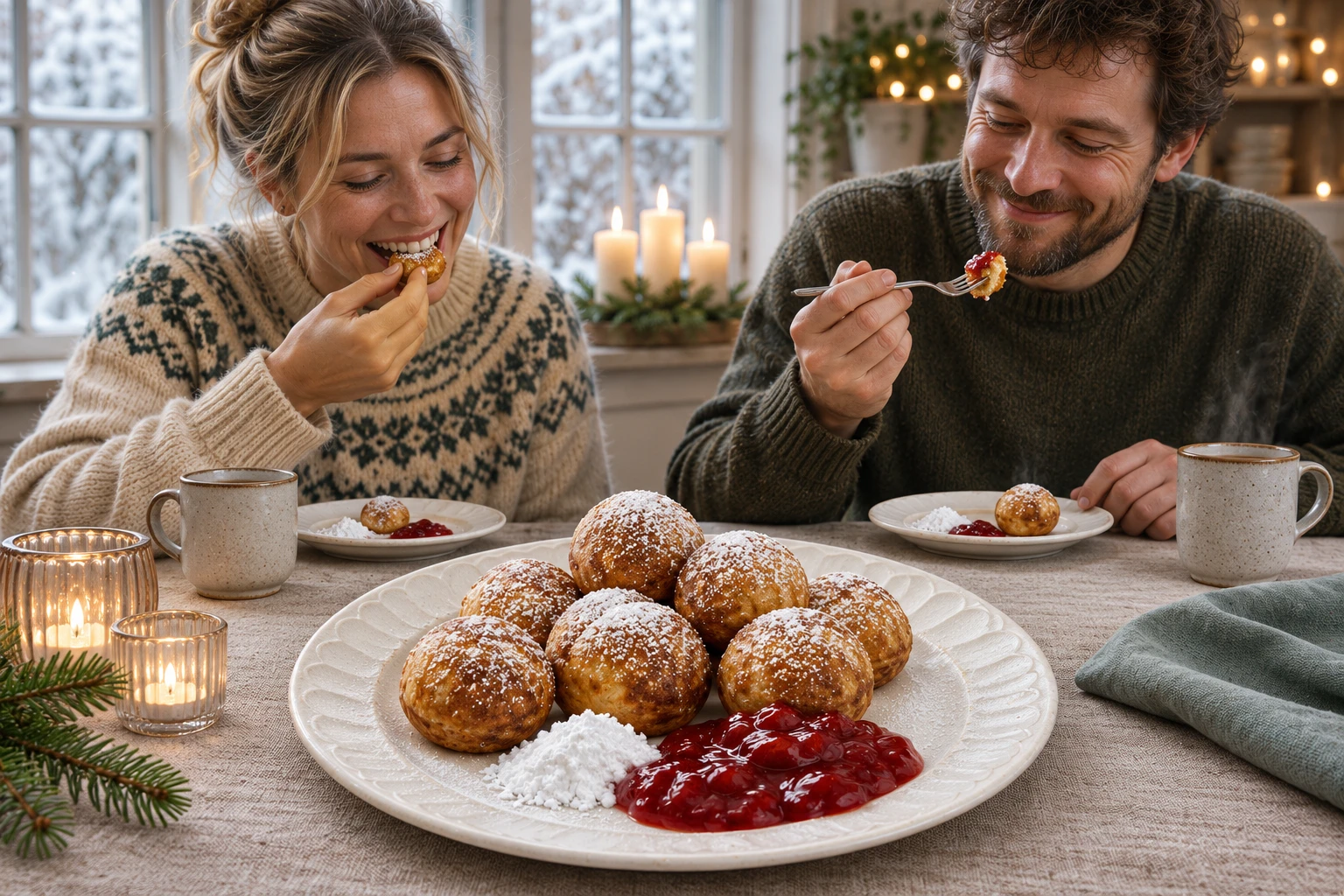
Æbleskiver are the Advent treat: they appear at family gatherings, office and school parties, and Christmas markets, often served with gløgg, the spiced hot wine. They are also sold ready-made to heat at home.
They are served hot, dusted with powdered sugar, with a bowl of jam on the side for dipping.


 Brazil
 Argentina
 Bolivia
 Chile
 Colombia
 Ecuador
 Guyana
 French Guiana
 Falkland Islands (Malvinas)
 Paraguay
 Peru
 Suriname
 Uruguay
 Venezuela
 Germany
 Austria
 Belgium
 Croatia
 Spain
 Finland
 France
 Greece
 the Netherlands
 Hungary
 Ireland
 Iceland
 Italy
 Luxembourg
 Norway
 Poland
 Portugal
 the United Kingdom
 the Czech Republic
 Sweden
 Switzerland
 Turkey
 Canada
 the United States
 Mexico
 the Dominican Republic
 South Africa
 Australia
 Fiji
 New Zealand
 Papua New Guinea