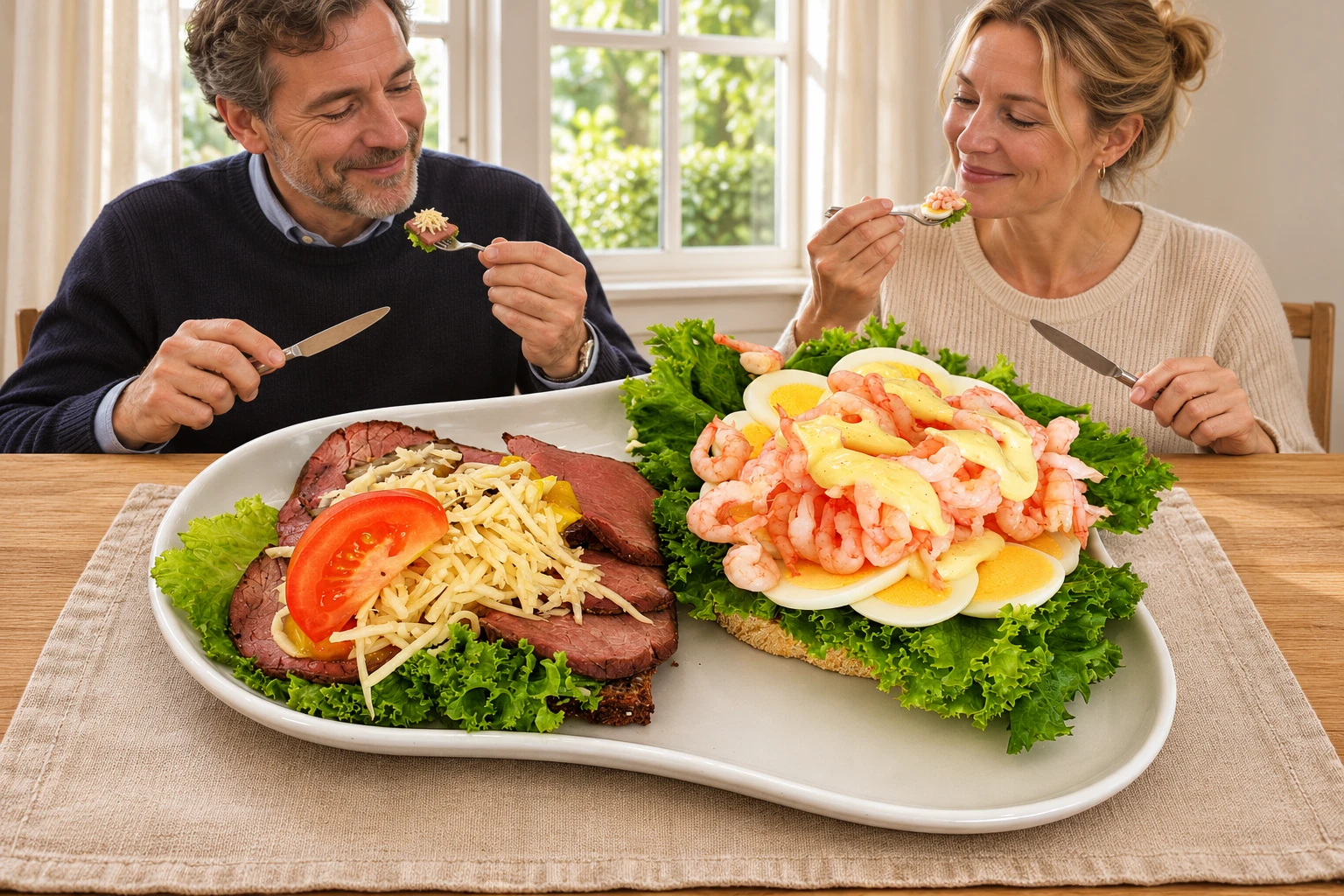
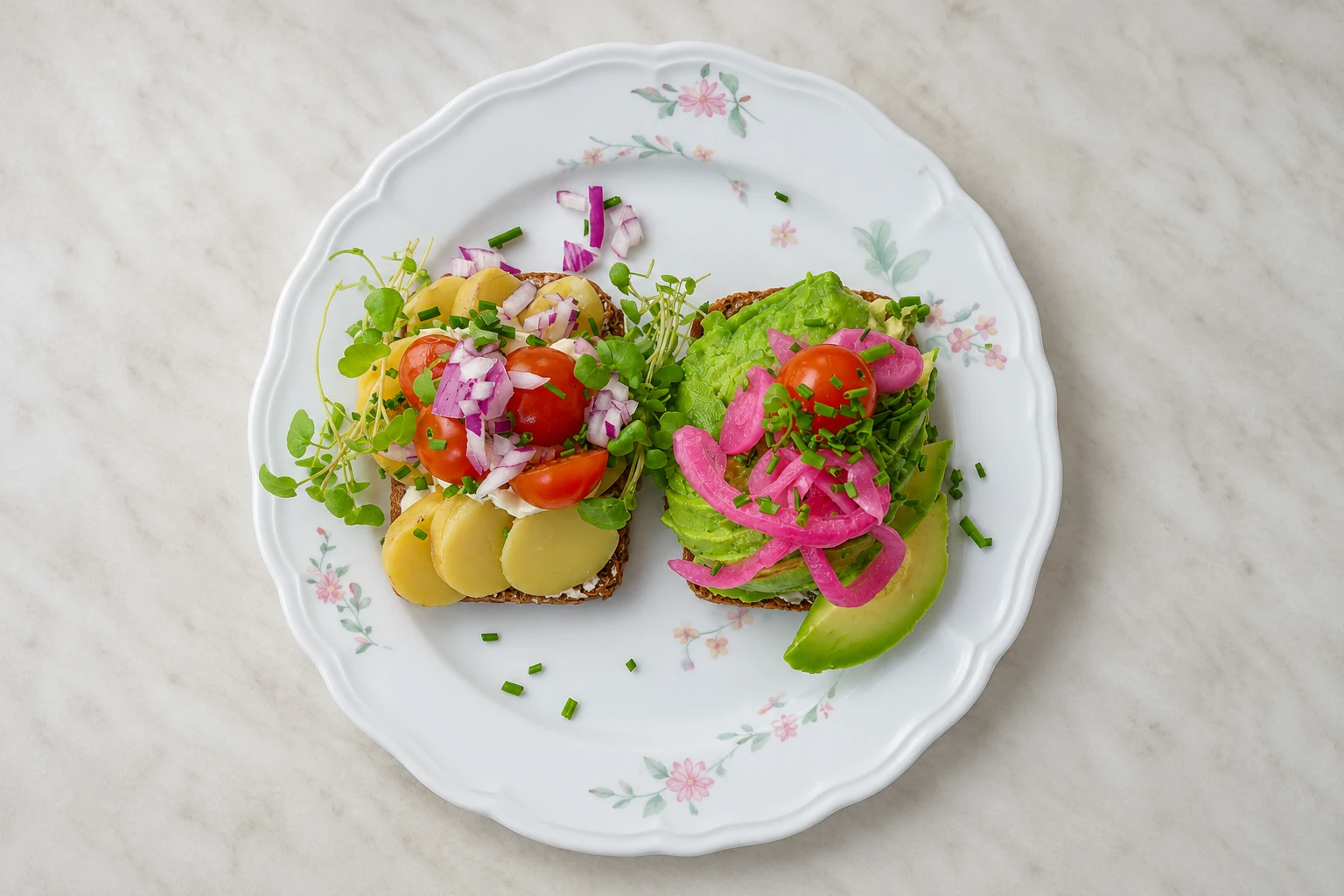
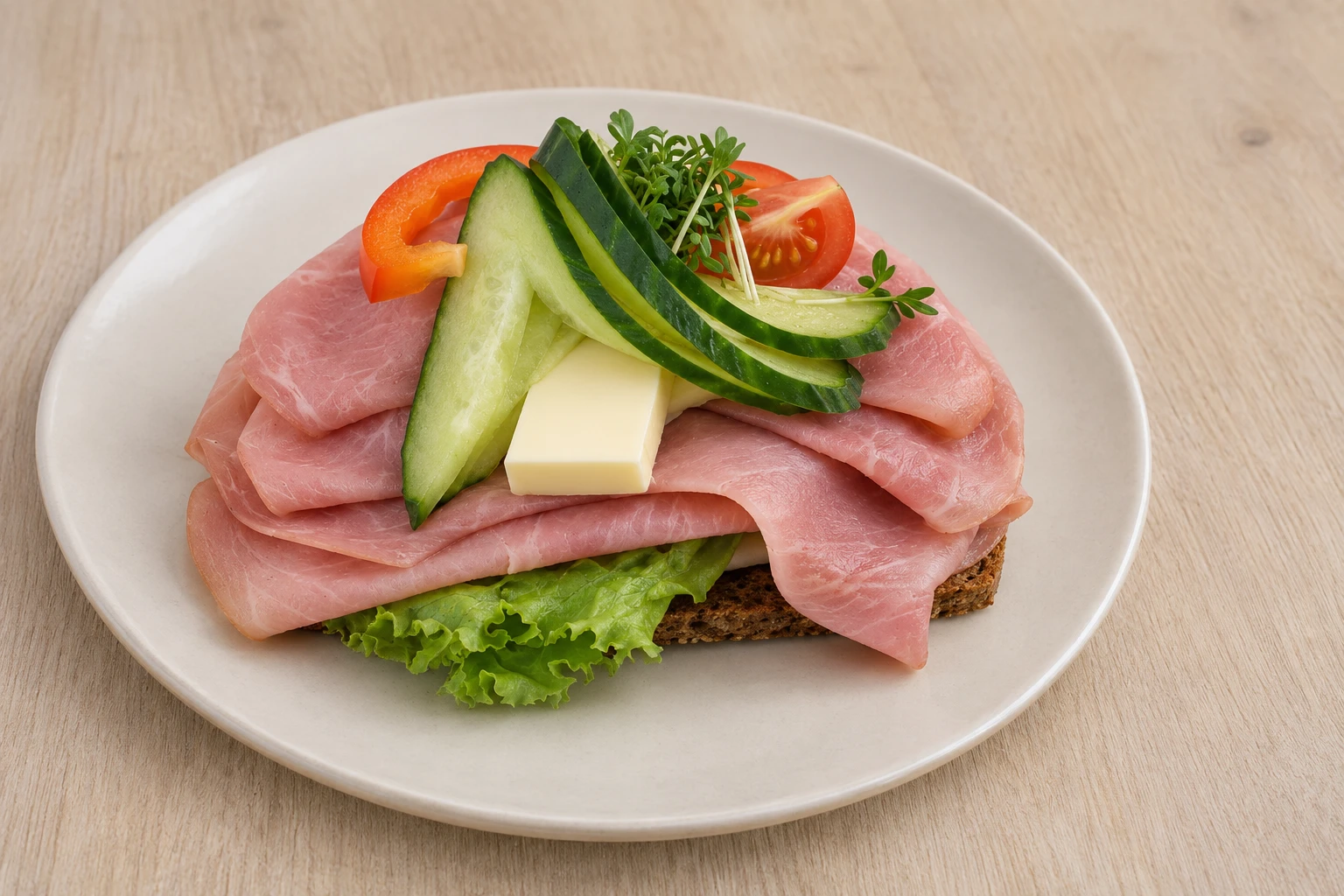
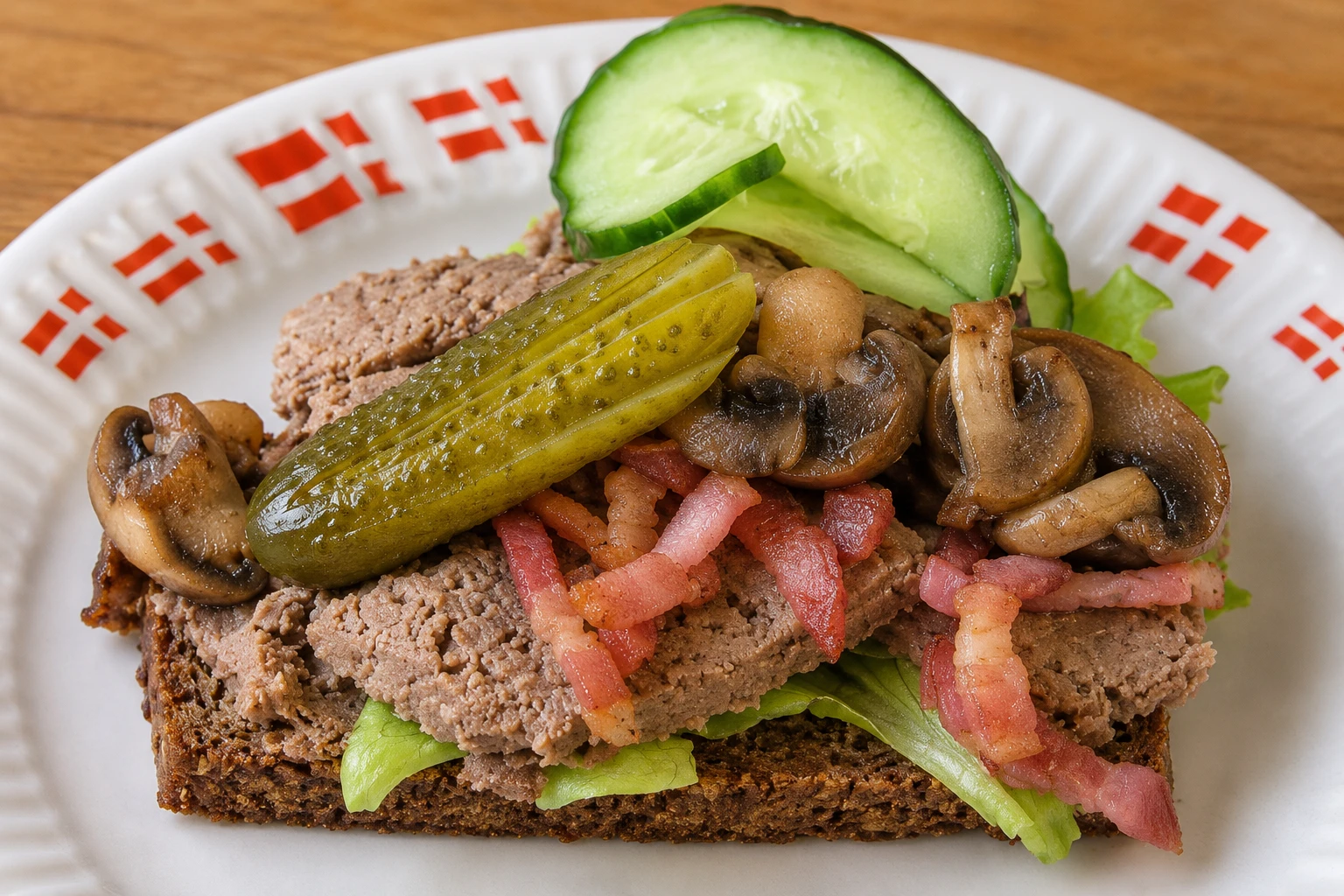
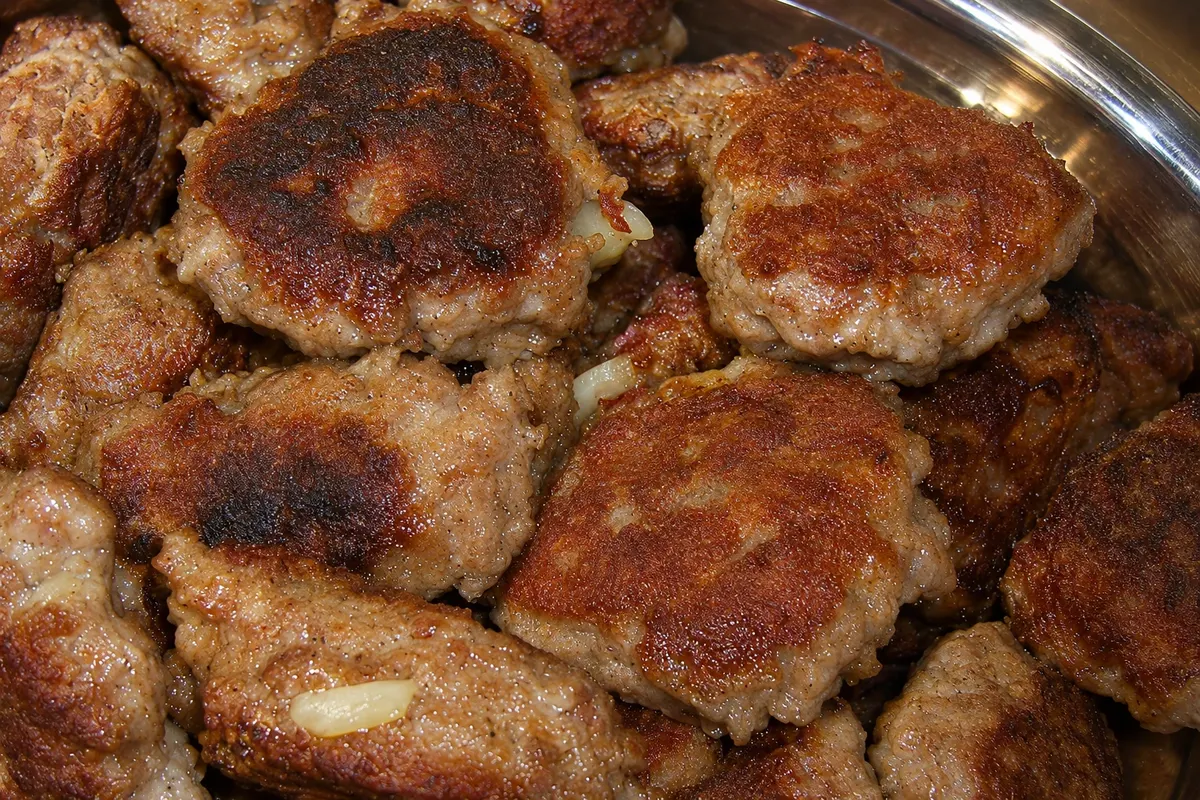
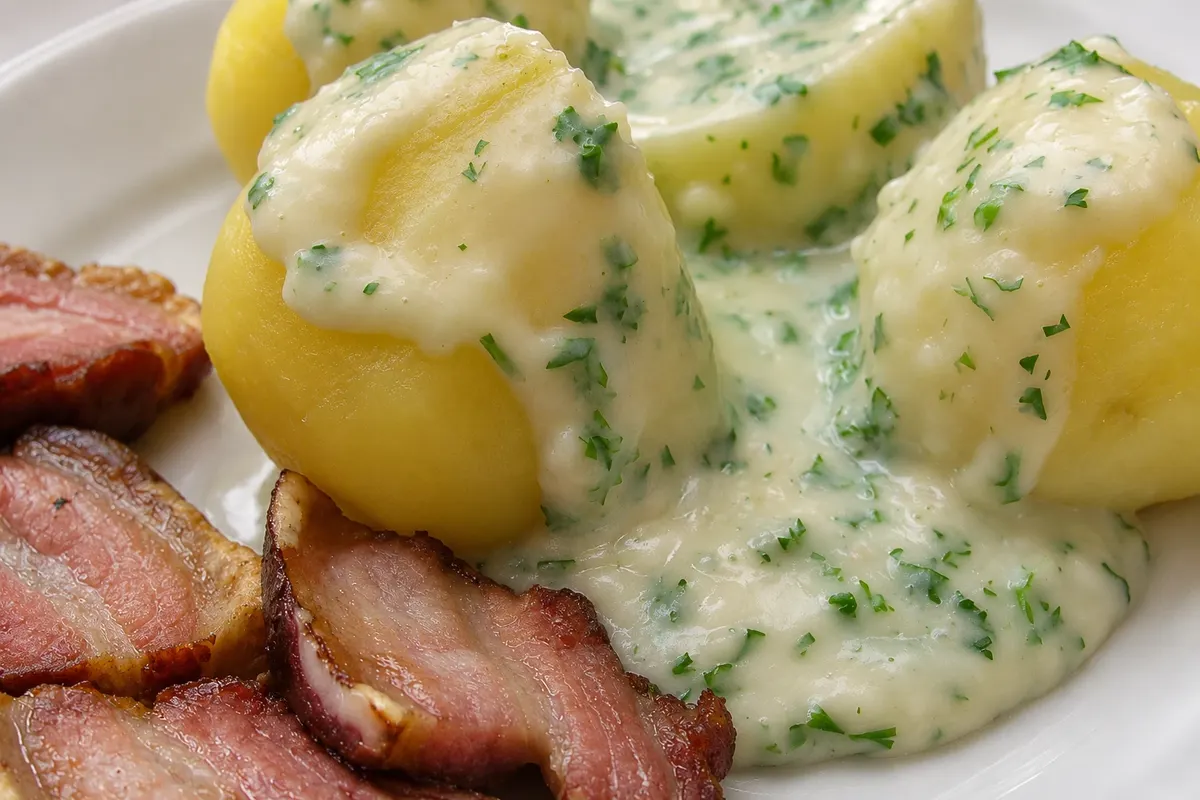
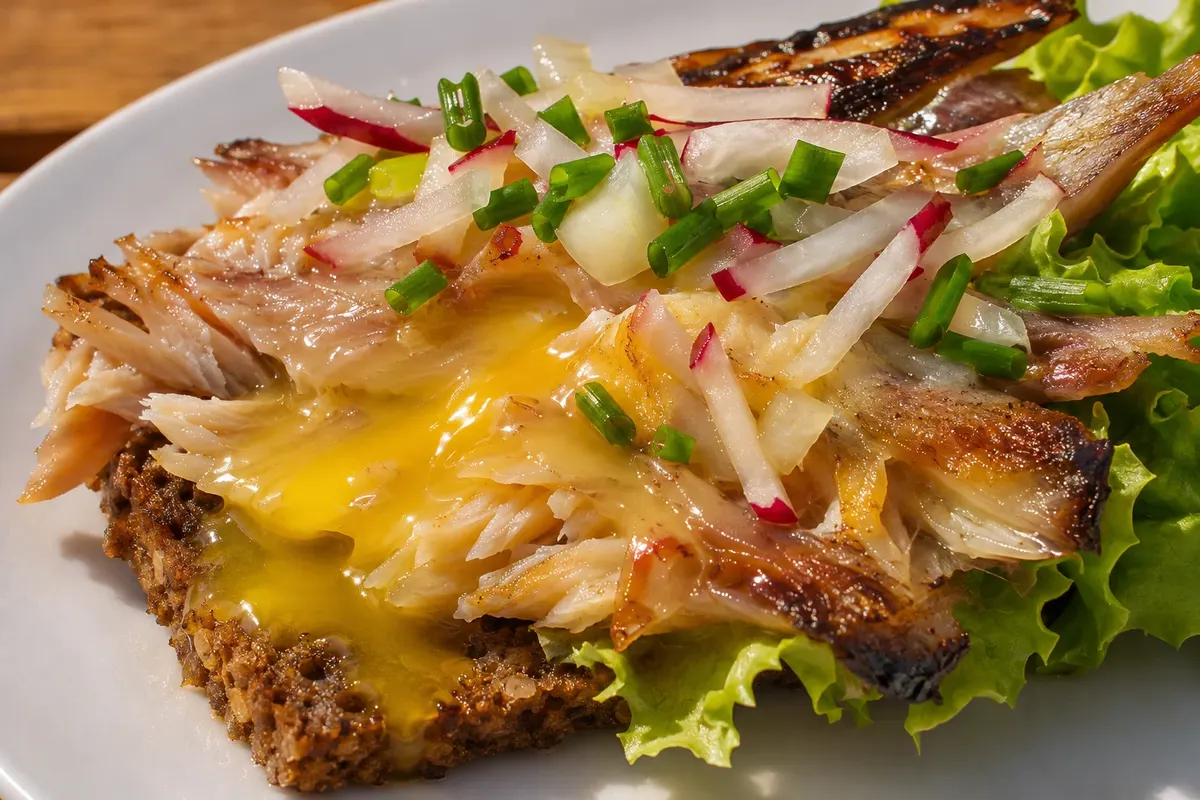
Smørrebrød means buttered bread. The base is almost always a thin slice of rugbrød, the dark, dense rye bread, spread with butter or fat. On top goes a topping that can be simple or elaborate: pickled herring, boiled egg and shrimp, roast beef with horseradish, leverpostej (liver pâté) with pickles, frikadeller with red cabbage, flæskesteg with cabbage and plum.
Smørrebrød is an essential part of the country’s food culture, eaten by all social classes, especially at lunchtime. For a long time it was just a bread-and-butter or lard snack. In the late 19th century the tall, decorated smørrebrød was born: in 1883 Louise Nimb introduced at her restaurant in Copenhagen’s Tivoli a menu where customers ticked the pieces they wanted.
The restaurateur Oskar Davidsen made the dish famous worldwide. His establishment in Copenhagen, opened in the late 19th century, became renowned in the 1930s for a smørrebrød list 1.4 meters long with about 170 varieties. In recent decades chefs have reinvented the dish with more vegetables and new techniques.
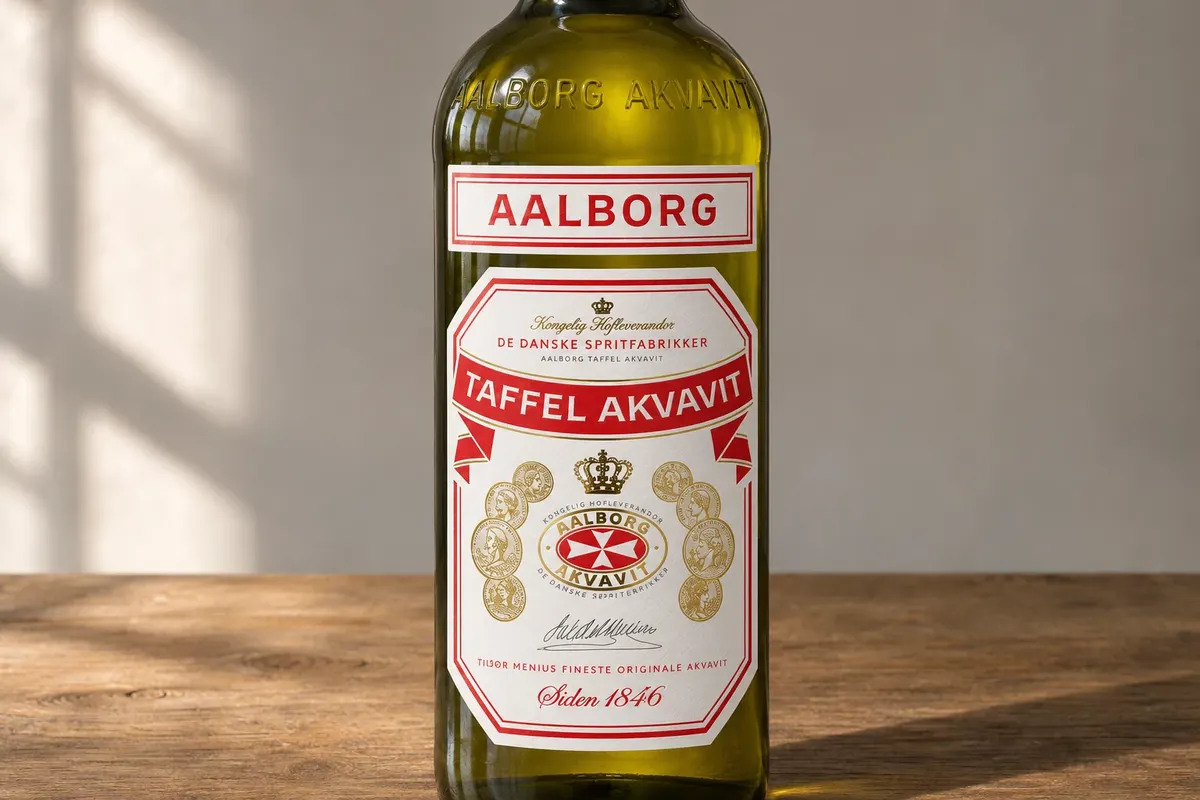
Each piece is eaten with fork and knife, and a festive lunch can include several of them, accompanied by beer and snaps.
Smørrebrød is served in homes, cafés and restaurants throughout Denmark. At Christmas, the julefrokost, the year‑end lunch, brings together the most traditional toppings.


 Brazil
 Argentina
 Bolivia
 Chile
 Colombia
 Ecuador
 Guyana
 French Guiana
 Falkland Islands (Malvinas)
 Paraguay
 Peru
 Suriname
 Uruguay
 Venezuela
 Germany
 Austria
 Belgium
 Croatia
 Spain
 Finland
 France
 Greece
 the Netherlands
 Hungary
 Ireland
 Iceland
 Italy
 Luxembourg
 Norway
 Poland
 Portugal
 the United Kingdom
 the Czech Republic
 Sweden
 Switzerland
 Turkey
 Canada
 the United States
 Mexico
 the Dominican Republic
 South Africa
 Australia
 Fiji
 New Zealand
 Papua New Guinea