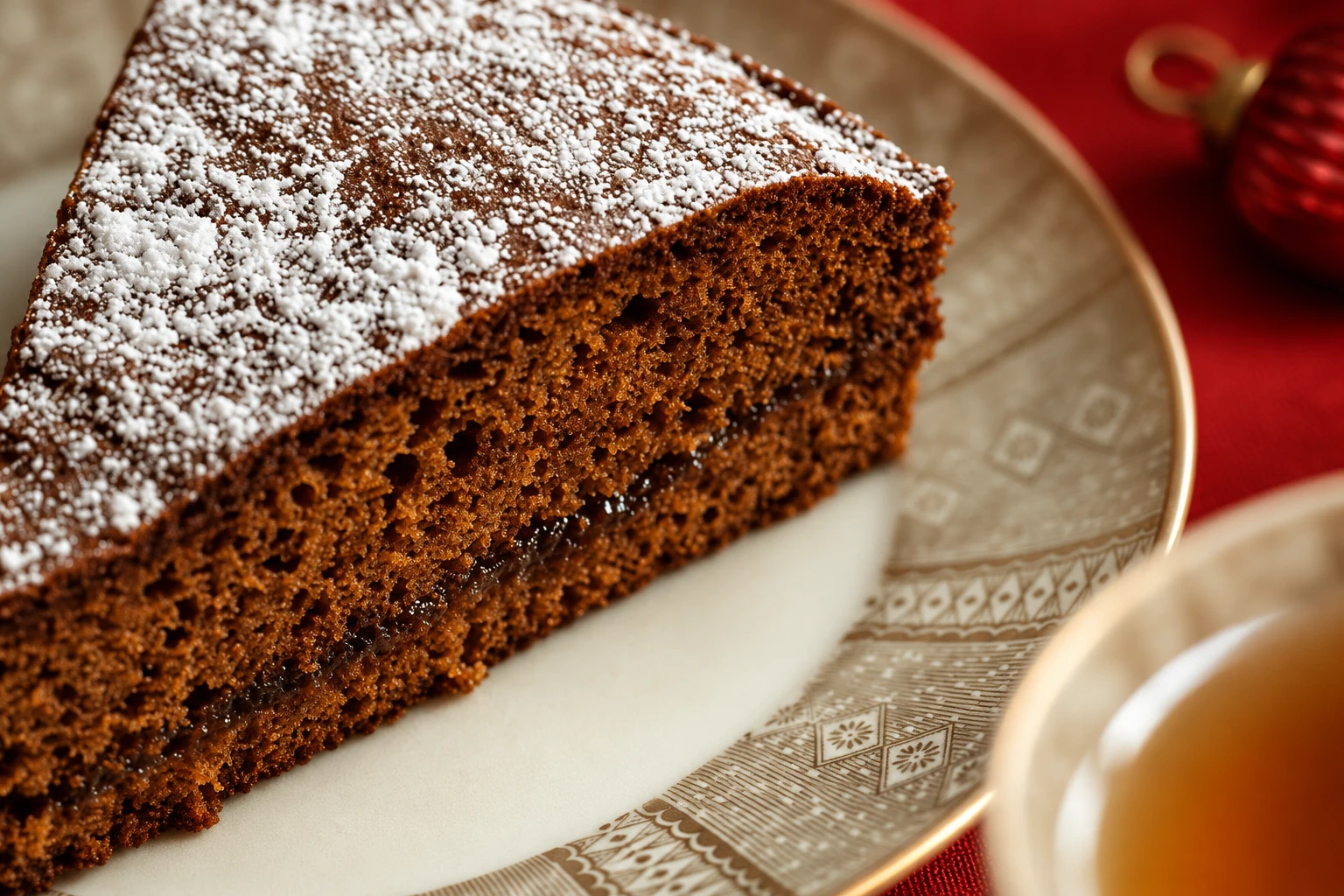
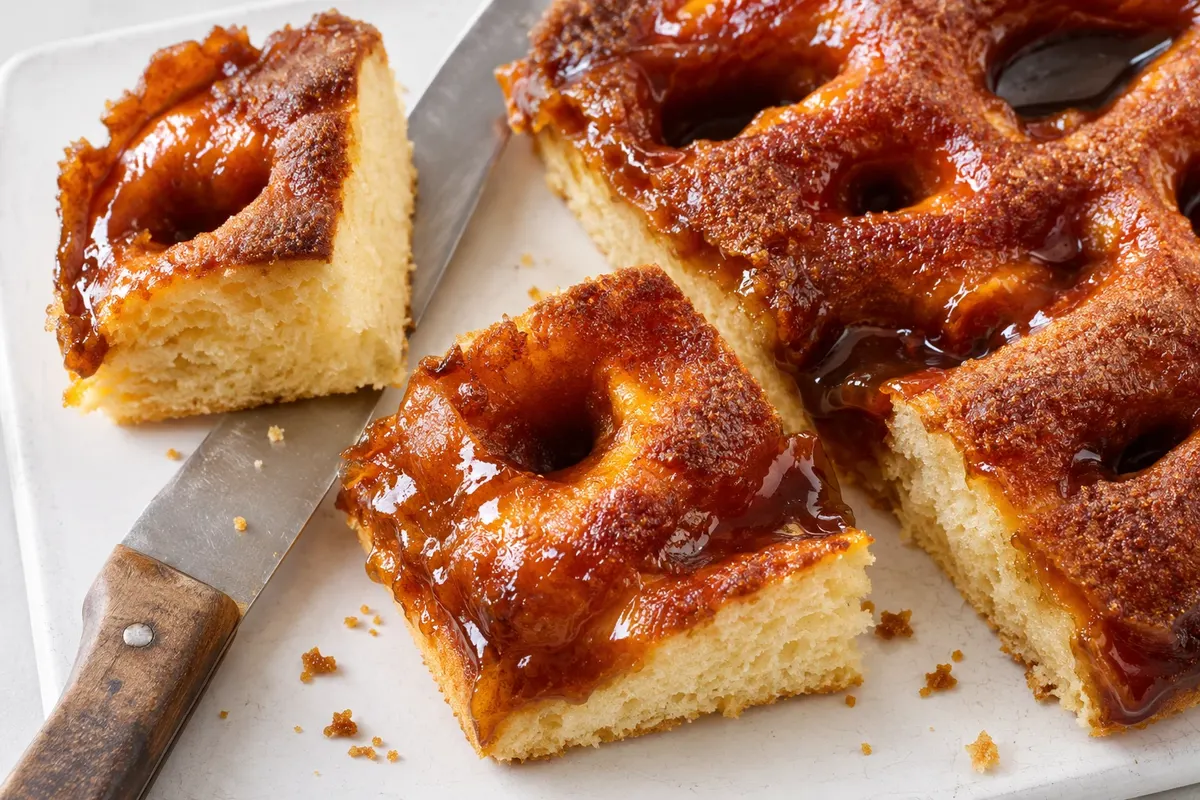
Honningkager are honey and spice cakes: wheat flour, honey, cinnamon, ginger, nutmeg, clove and cardamom, with traditional leavening agents like potash. The classic dough begins with a pre-dough (fordej) of honey and flour that must mature for at least one month, preferably longer; during this time some starch converts and the cake becomes lighter. Only afterwards are the egg yolks and spices added.
Christiansfeld was founded in 1773 by the Moravian Church (Brødremenigheden), a Protestant community from the Herrnhut region in Saxony. The community organized the town’s trades, and among them was confectionery. Honningkager arrived in Denmark together with Christiansfeld at the end of the 18th century, and the town has produced them since 1783.
The town’s bakers became famous for their honningkager and the old recipes remain secret. The very technique of the matured dough is attributed to Christiansfeld’s early confectioners. To this day, many Danes associate the sweet with the town.
Christiansfeld, with its yellow brick houses and red roofs, was inscribed as a UNESCO World Heritage Site in 2015, and the inscription was celebrated with a giant honningkage. The town centre has bakeries that sell cakes made locally.
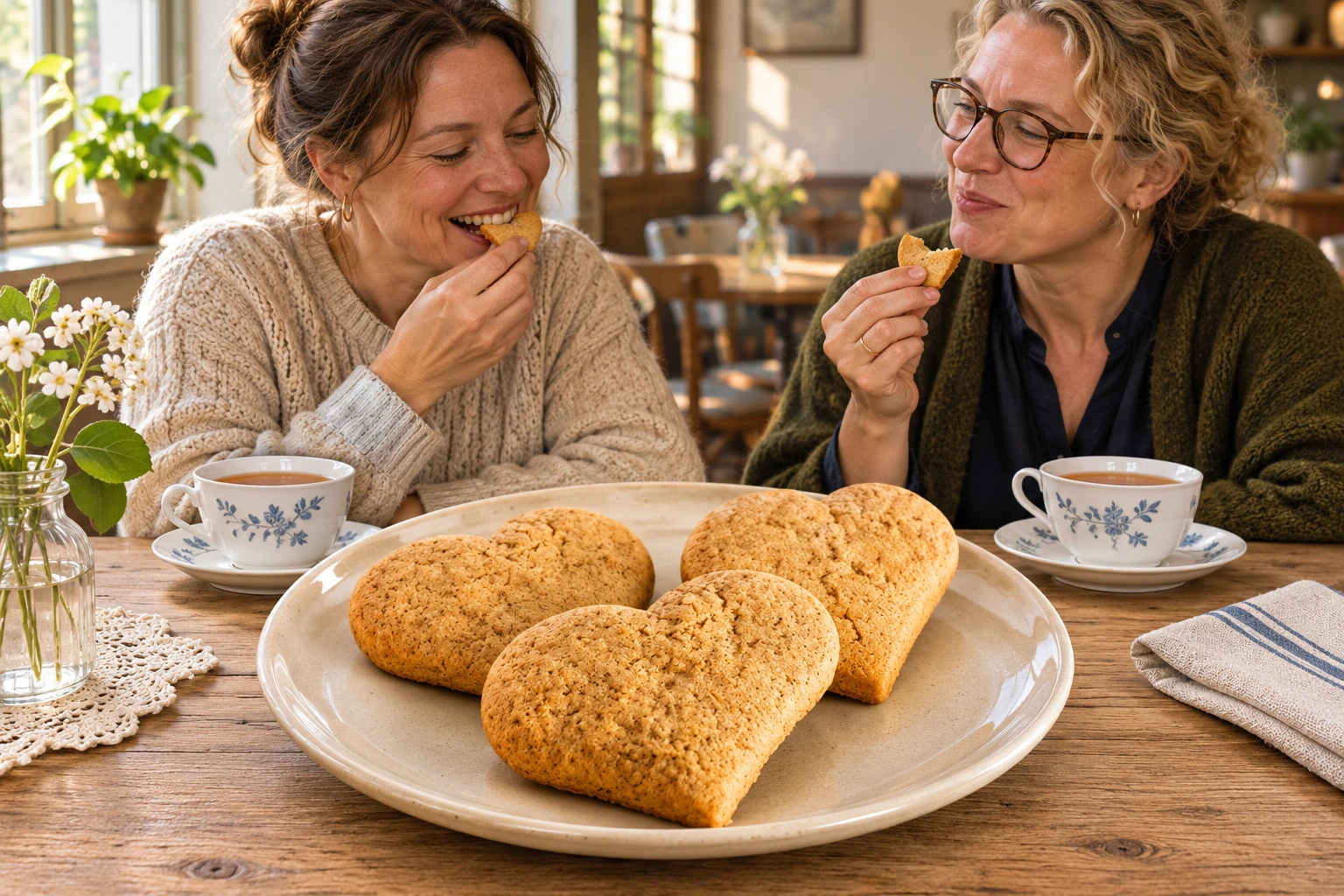
Honningkager come in heart shapes or in slices, coated with chocolate or icing. Throughout Denmark, decorated honey hearts are hung on the Christmas tree.


 Brazil
 Argentina
 Bolivia
 Chile
 Colombia
 Ecuador
 Guyana
 French Guiana
 Falkland Islands (Malvinas)
 Paraguay
 Peru
 Suriname
 Uruguay
 Venezuela
 Germany
 Austria
 Belgium
 Croatia
 Spain
 Finland
 France
 Greece
 the Netherlands
 Hungary
 Ireland
 Iceland
 Italy
 Luxembourg
 Norway
 Poland
 Portugal
 the United Kingdom
 the Czech Republic
 Sweden
 Switzerland
 Turkey
 Canada
 the United States
 Mexico
 the Dominican Republic
 South Africa
 Australia
 Fiji
 New Zealand
 Papua New Guinea