Bandeja paisa
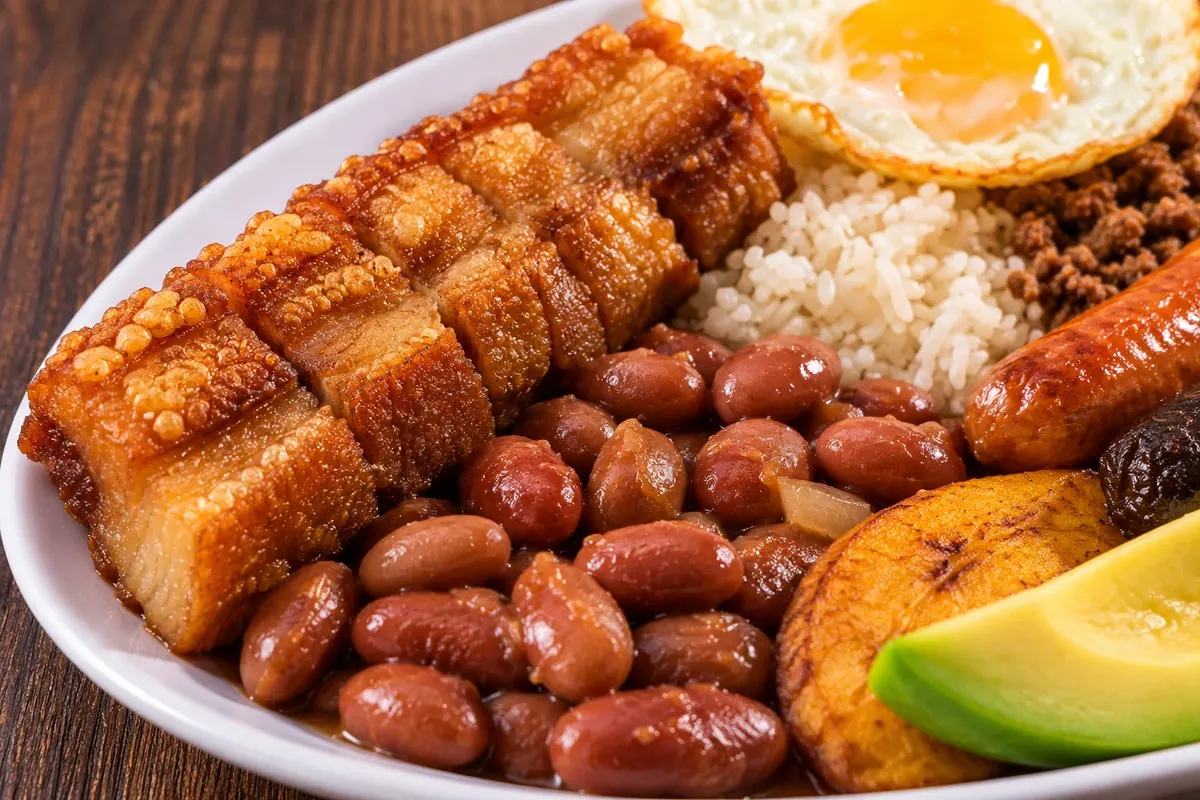
Hearty dish from the paisa region: red beans, rice, ground beef, chicharrón (pork crackling), chorizo, fried egg, ripe plantain, arepa and avocado, served on a large platter. It is the dish most associated with Antioquia.
Flavors · Colombia
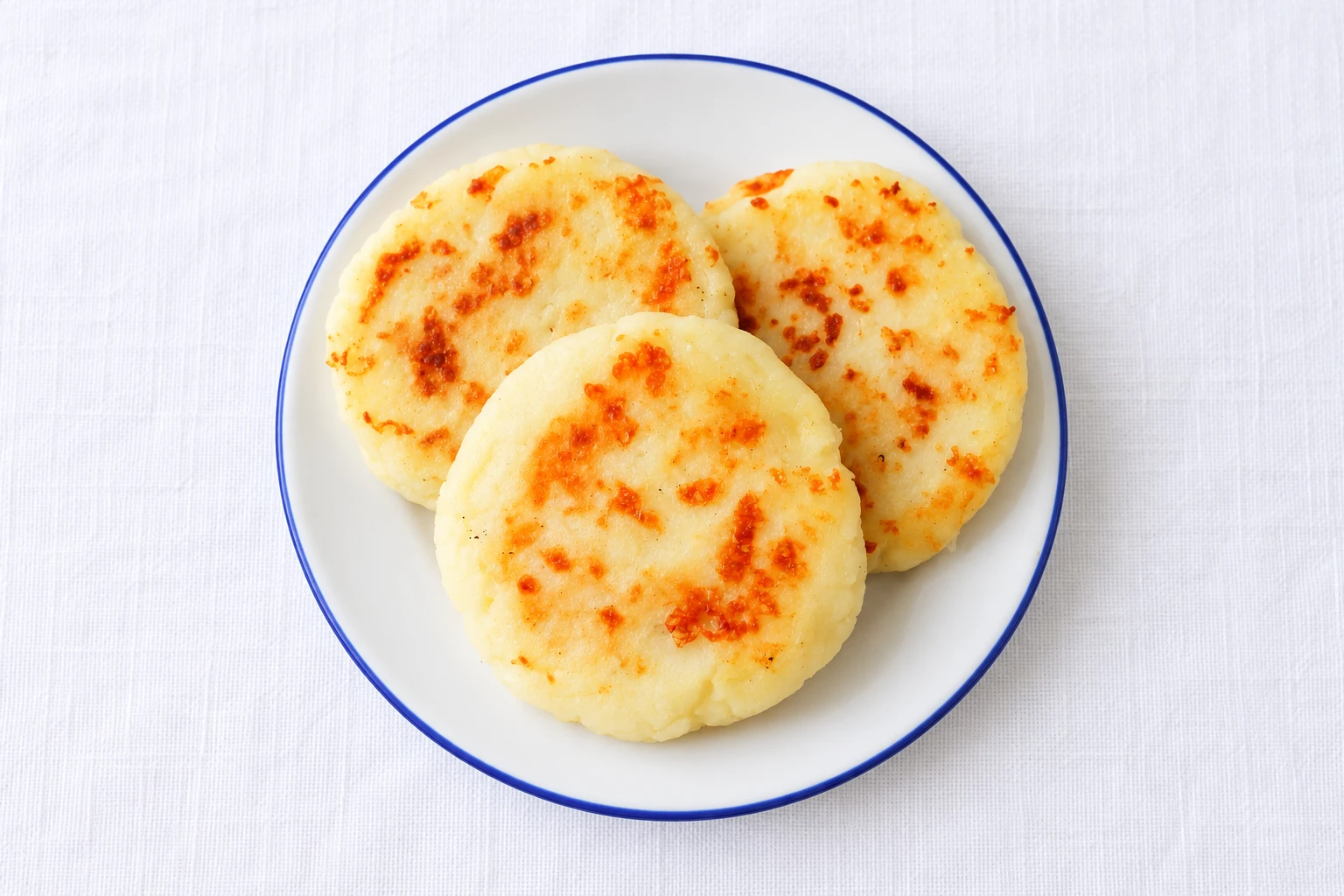
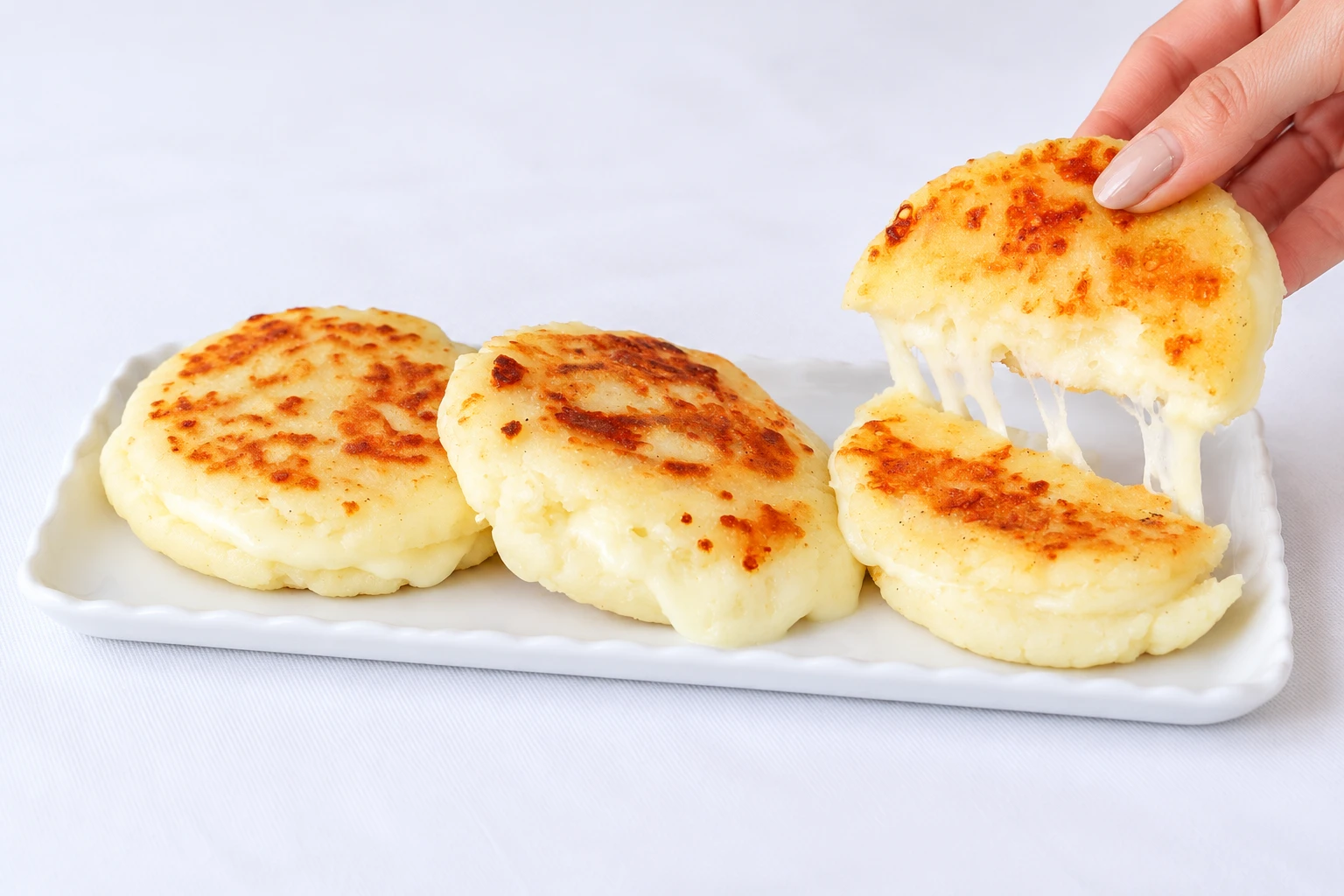
Round corn dough, baked, grilled or fried, whose shape and recipe change in each region of Colombia: thin and unsalted in Antioquia, sweet and with cheese in Boyacá, fried with an egg in the Caribbean. It accompanies almost every meal in the country.
Traditional dish from Colombia
Illustrative images. The pictures in this guide are illustrations based on the real place, not photographs, and may differ from it.
Click a photo to enlarge it.
Arepa — Colombia
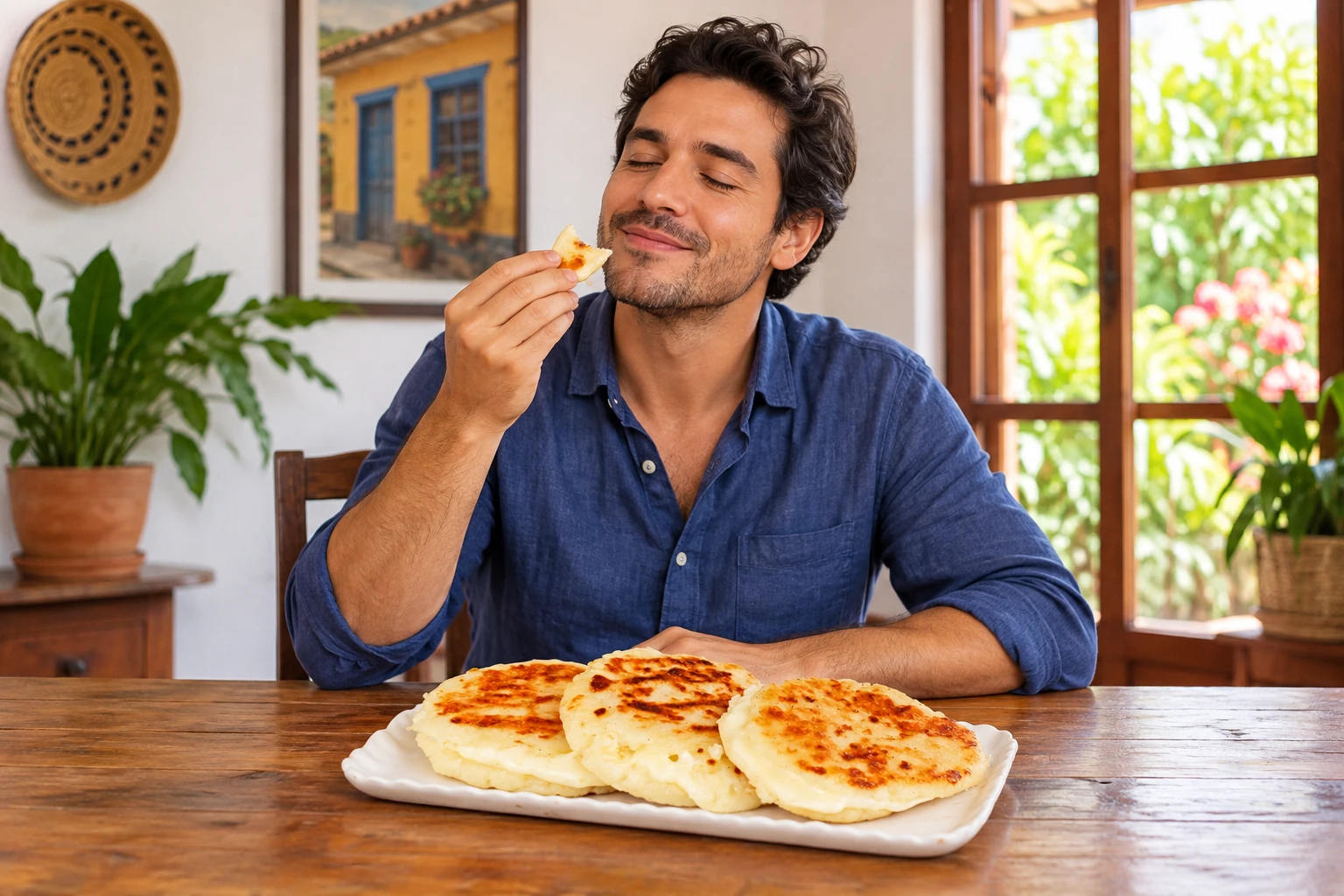
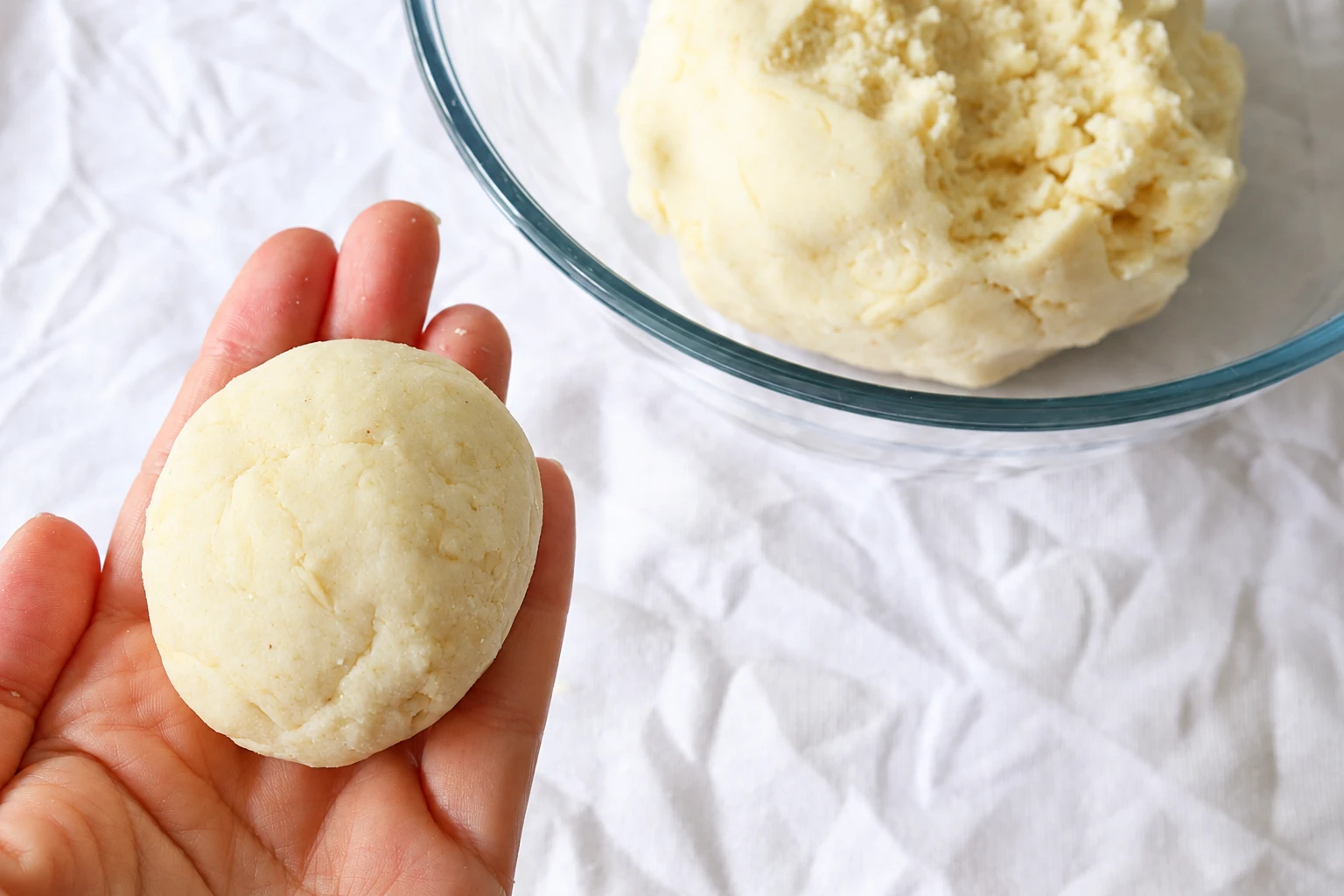
In Colombia, the arepa goes with the food. It sits beside breakfast eggs, broths, beans, roasted meat and hot chocolate, taking the place of bread. The dough is made from corn, white or yellow, cooked and ground or in flour, mixed with water and salt, and sometimes with cheese or butter. Arepas are cooked on a griddle or grill, over charcoal, until they develop a light crust; many are simply brushed with butter and salt, or split open and filled with cheese. Each region has its own version, and many people say the best is the one from their own land.
There are many variations. In Antioquia and the Coffee Axis, the arepa paisa is thin, made from white corn, almost unsalted, eaten at every meal. In Boyacá, the arepa boyacense is thicker and slightly sweet, made with yellow corn and wheat flour, with cheese inside. The arepa de choclo, made from grated green corn, is sweet and topped with melted cheese. In the Santanderes, the arepa santandereana includes ground pork crackling in the dough. On the Caribbean coast, the arepa de huevo is fried twice, with a whole egg inside. There are also cheese arepas, cassava arepas, peeled-corn arepas and many others.
The history begins before Colombia. The peoples who cultivated corn in the territory, such as the Muisca of the high plateau, already made corn doughs and breads cooked over fire, and colonial New Granada records document corn as a staple of the diet. The arepa is also a point of contention with Venezuela, where it is likewise a daily food. Experts note that it predates the borders of the two countries; what changes is how it is used. In Colombia, it is primarily a side dish and the everyday bread.
The country is discussing giving the arepa legal recognition. On May 12, 2026, the Sixth Commission of the Chamber of Representatives approved in first debate Bill 412 of 2025, which proposes declaring the arepa an intangible cultural heritage of the nation, creating a national day, recognizing the municipality of Ramiriquí, in Boyacá, as the national capital of the arepa and organizing a registry of traditional producers. The bill’s procedure shows a favorable opinion for the second debate in the Chamber; the proposal still needs to complete votes in Congress before becoming law. Ramiriquí hosts the International Festival of Corn, Sorbo and the Arepa.

Colombia
The arepa is found in all regions of Colombia, each with its own recipe, and it originated before current borders. No single city concentrates its identity; Ramiriquí is noted for the festival and the bill.
White or yellow corn (cooked and ground, or in flour), water and salt; depending on the region, cheese, butter, wheat flour, green corn, pork crackling or egg.
Alongside other dishes, in place of bread, with butter and salt or cheese; or split open and filled. The arepa de huevo and other Caribbean varieties are eaten alone, as a street snack.
Every day, at breakfast, lunch and dinner; on the streets, at stalls and markets; in Ramiriquí, at the arepa festival.
Your questions
Many. Among the best known are the arepa paisa, thin and unsalted, from Antioquia; the boyacense, sweet and with cheese; the arepa de choclo, made from green corn; the arepa santandereana, with pork crackling in the dough; and the arepa de huevo, fried and with an egg inside, from the Caribbean coast.
Both countries claim it. For scholars, it originated among peoples who cultivated corn long before Colombia and Venezuela existed. In Colombia, it is mainly a side dish for meals, serving as bread.
Bill 412 of 2025 proposes that recognition. Approved in first debate in May 2026, it has a favorable opinion for the second debate in the Chamber and still needs to complete votes in Congress before becoming law.
The municipality in Boyacá hosts the International Festival of Corn, Sorbo and the Arepa, and Bill 412 of 2025 proposes recognizing it as the national capital of the arepa.
Flavors of Colombia

Hearty dish from the paisa region: red beans, rice, ground beef, chicharrón (pork crackling), chorizo, fried egg, ripe plantain, arepa and avocado, served on a large platter. It is the dish most associated with Antioquia.

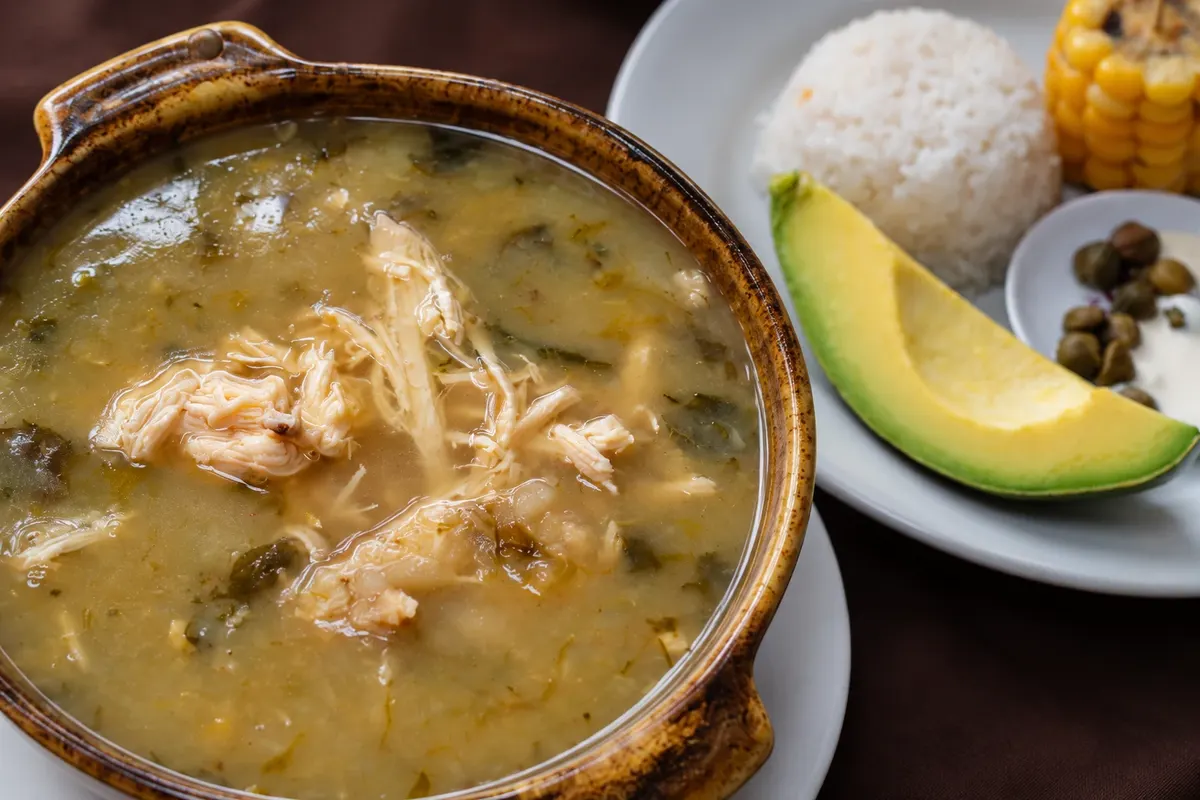
Thick soup of shredded chicken, three types of potato and corn, scented with guascas. It is the dish most associated with Bogotá and is served with capers, cream, and avocado.

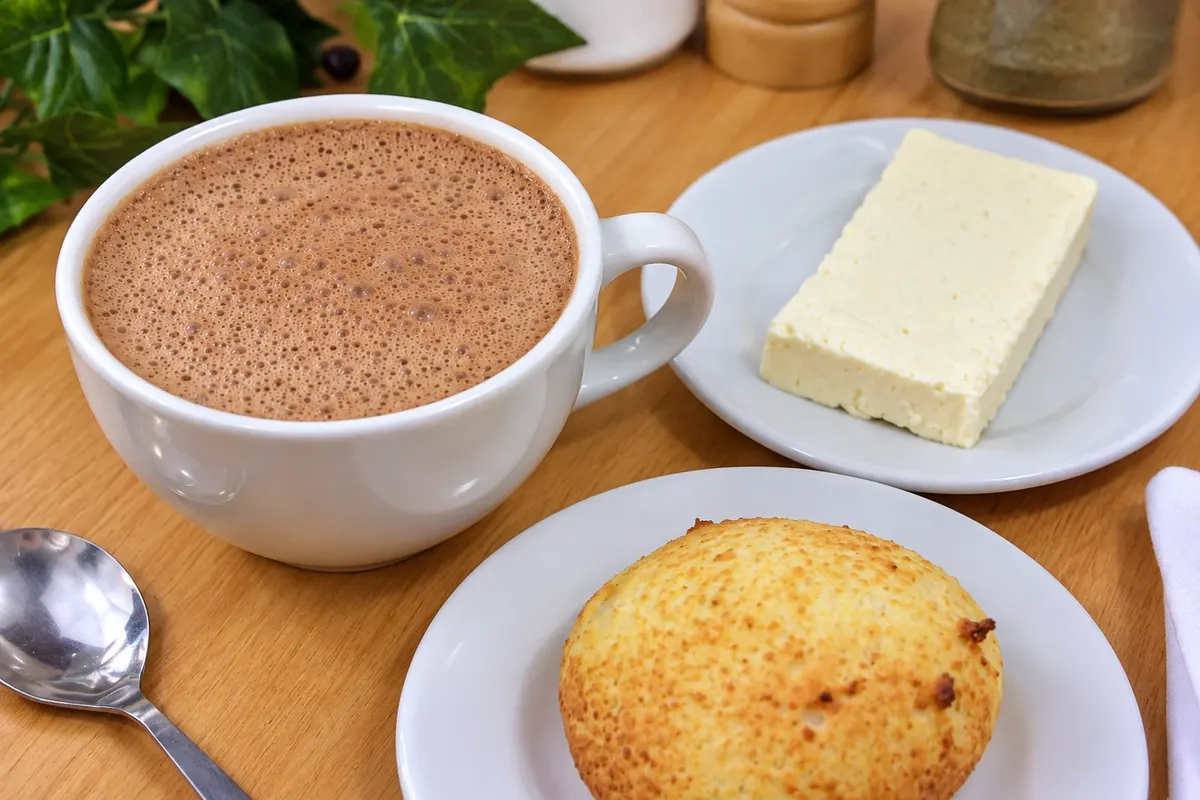
Thick hot chocolate, made with water or milk, served with fresh cheese placed inside the cup to melt, and with almojábana or bread. It is part of Bogotá’s onces.

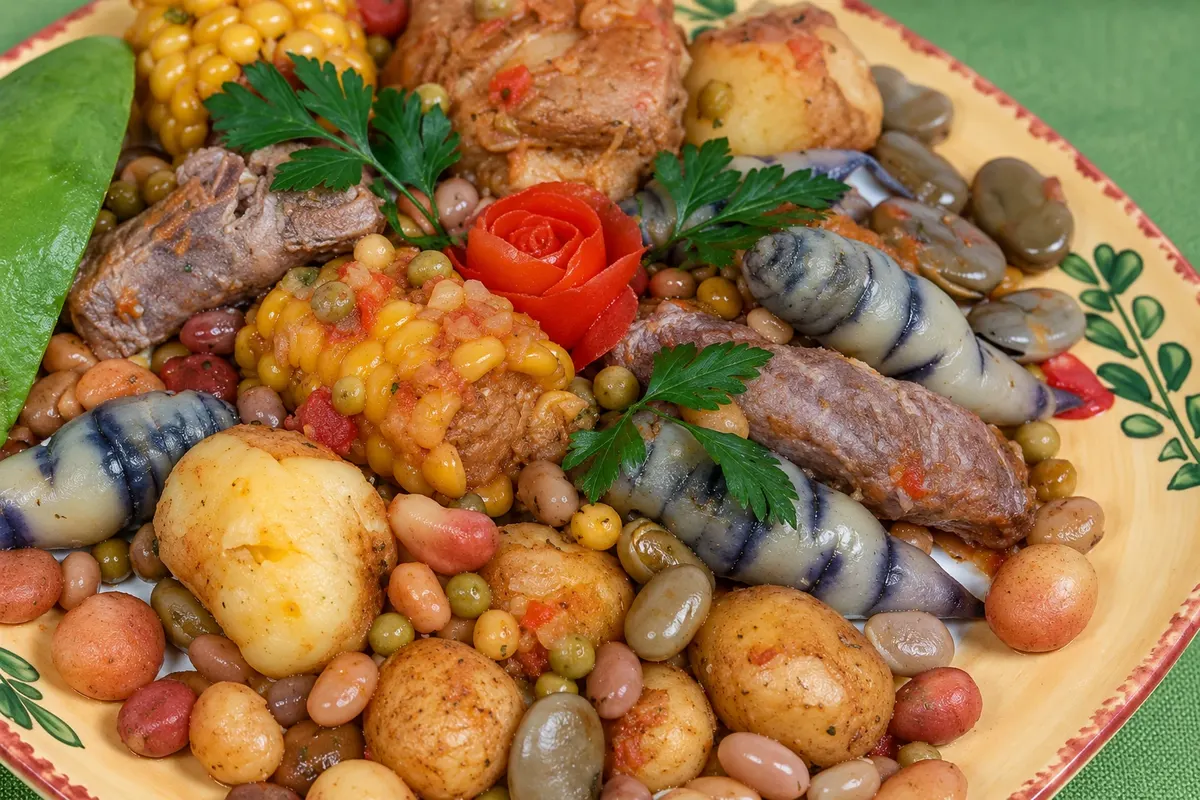
Meat stew with native Andean tubers such as cubios, chuguas and ibias, as well as potatoes, corn, fava beans and peas. Radio Nacional calls it an emblematic dish of Boyacá.

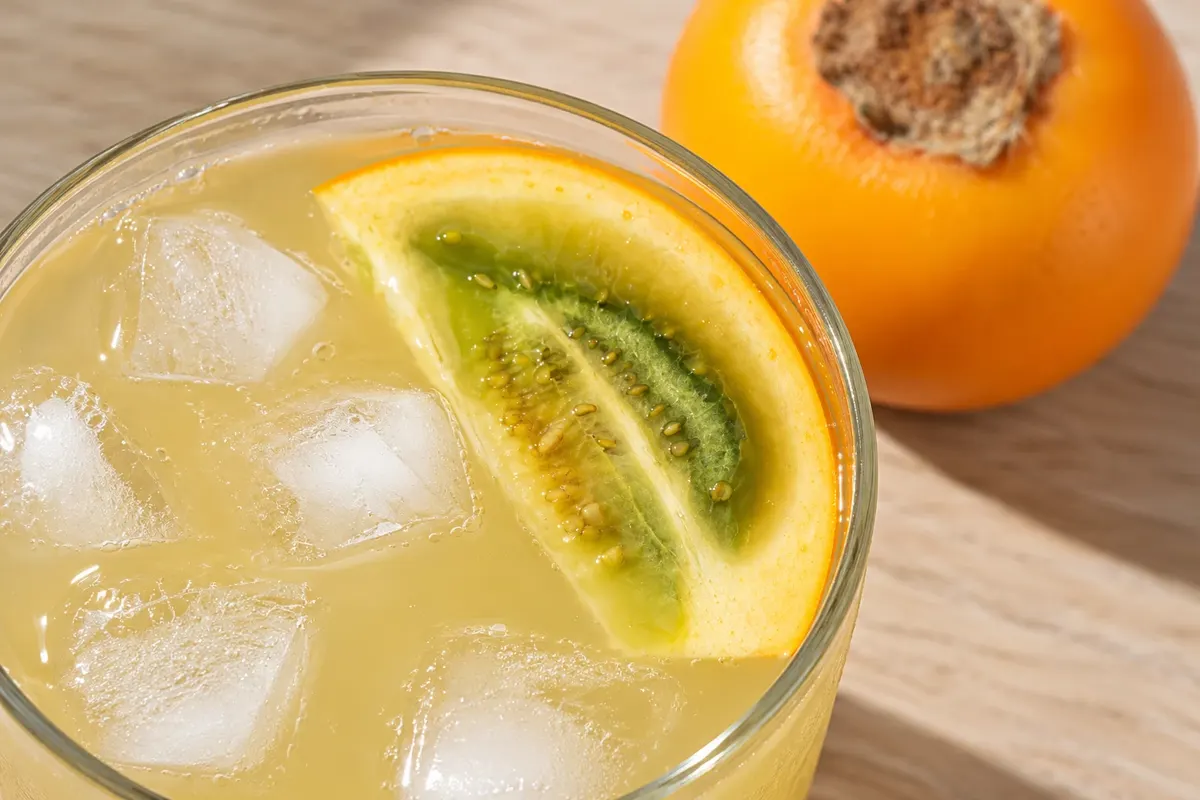
Iced lulo refresher made with chopped and mashed lulo, lime, sugar, water and ice. The Cali city government calls it the city’s emblematic drink; it’s served with fried snacks from the Valle del Cauca.

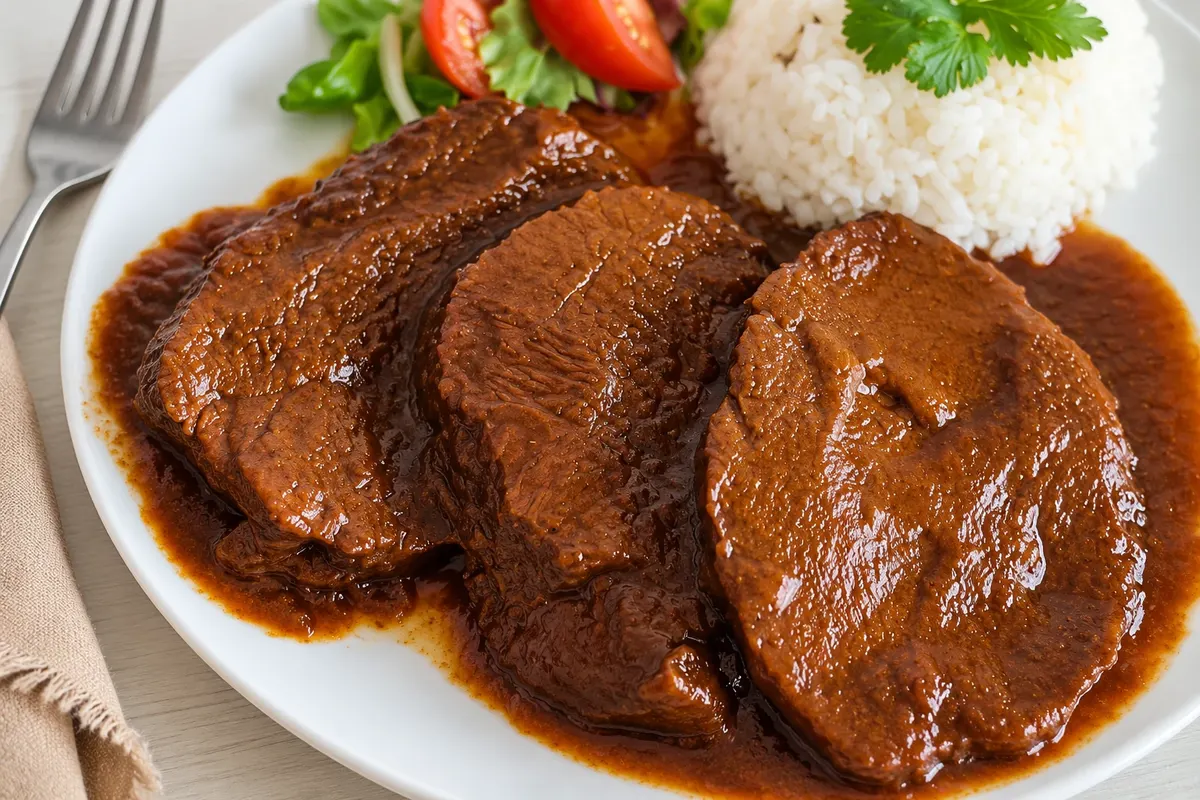
Beef slowly cooked in a dark, slightly sweet sauce with spices and a mild heat. Cartagena’s press calls it an emblematic flavor of the city; it comes with coconut rice and patacones.

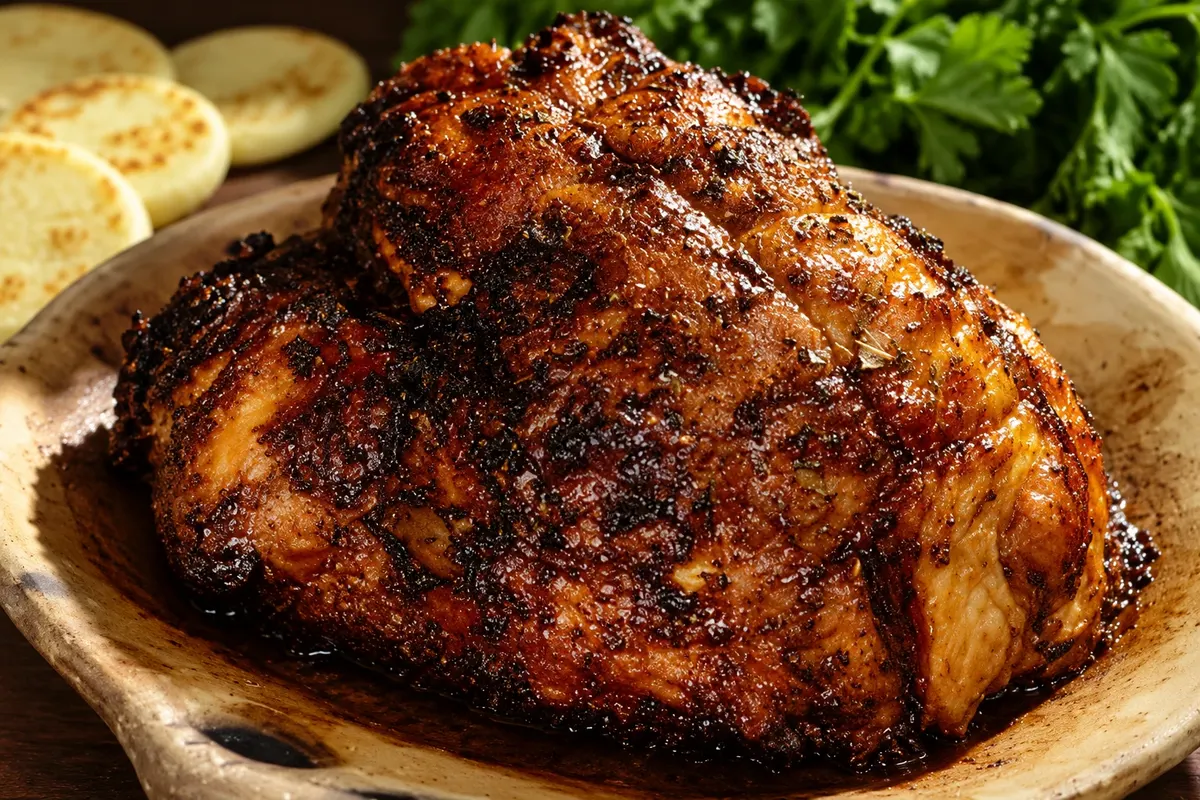
Pork marinated for at least a day in bitter orange, beer, onion, garlic and herbs, then roasted in a clay oven. It’s the dish of the San Pedro festivities in Huila, served with insulso, arepa and cassava.

Meat and offal from young goat cooked with salt and then fried until golden, sometimes with the animal’s blood. A dish of Wayuu tradition, offered to visitors who arrive at the rancherías of La Guajira.

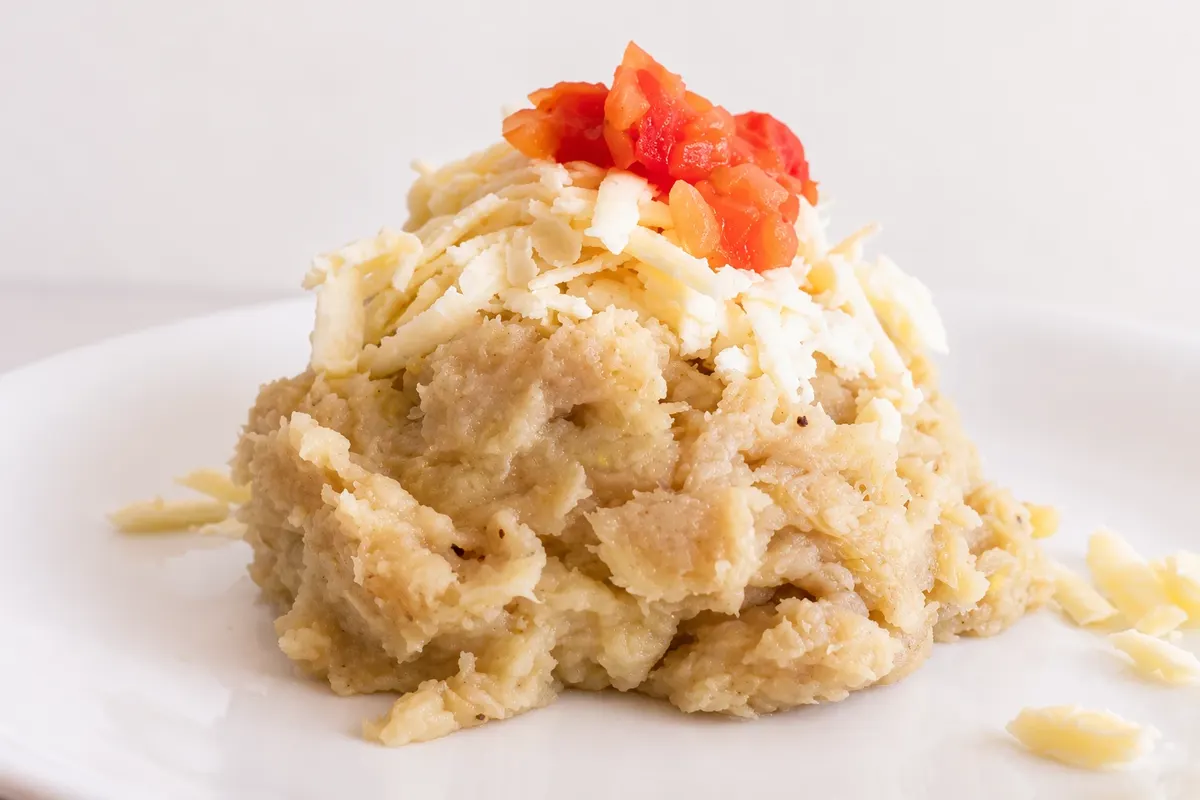
Mashed green guineo banana with butter and costeño cheese, sometimes topped with a sauté of tomato and onion. It is the typical breakfast of the banana-growing area of Magdalena and of Santa Marta.

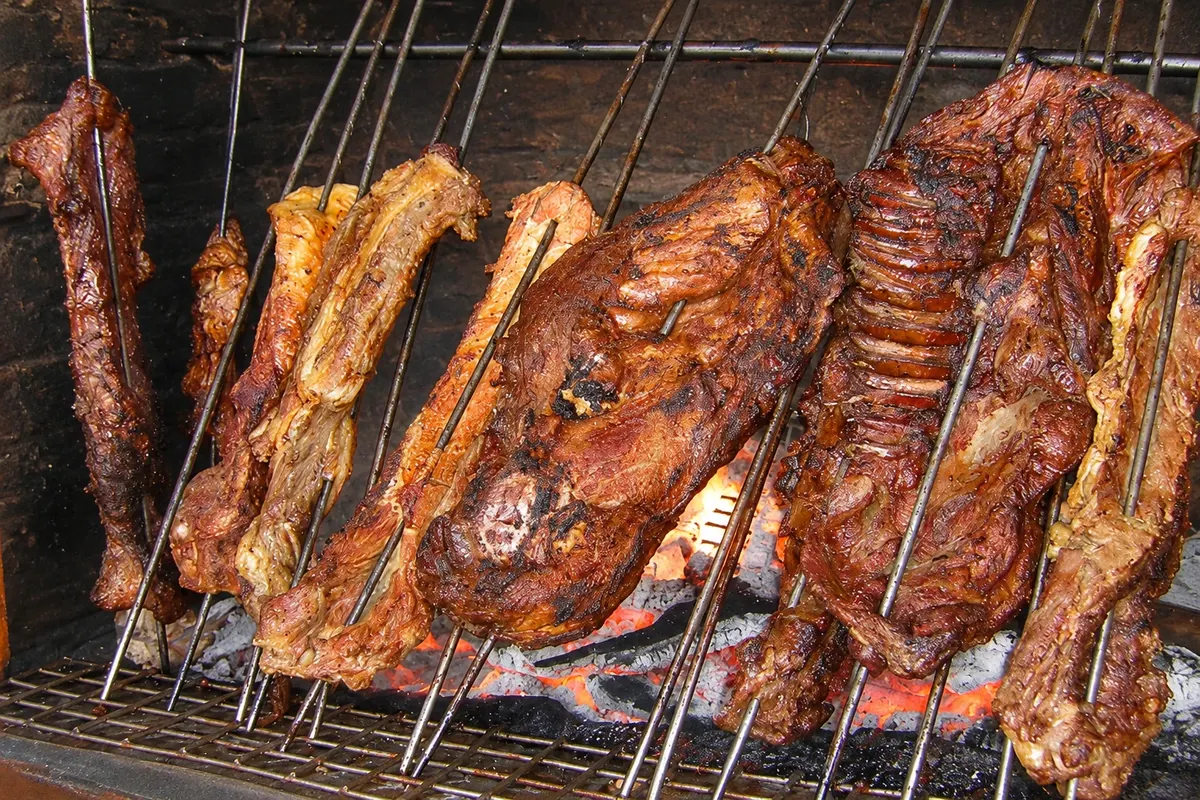
Milk-fed steer slowly roasted on stakes around the fire, seasoned only with salt. It is the dish of the Llanos Orientales and the best-known specialty of Meta, served with cassava, plantain, and potato.

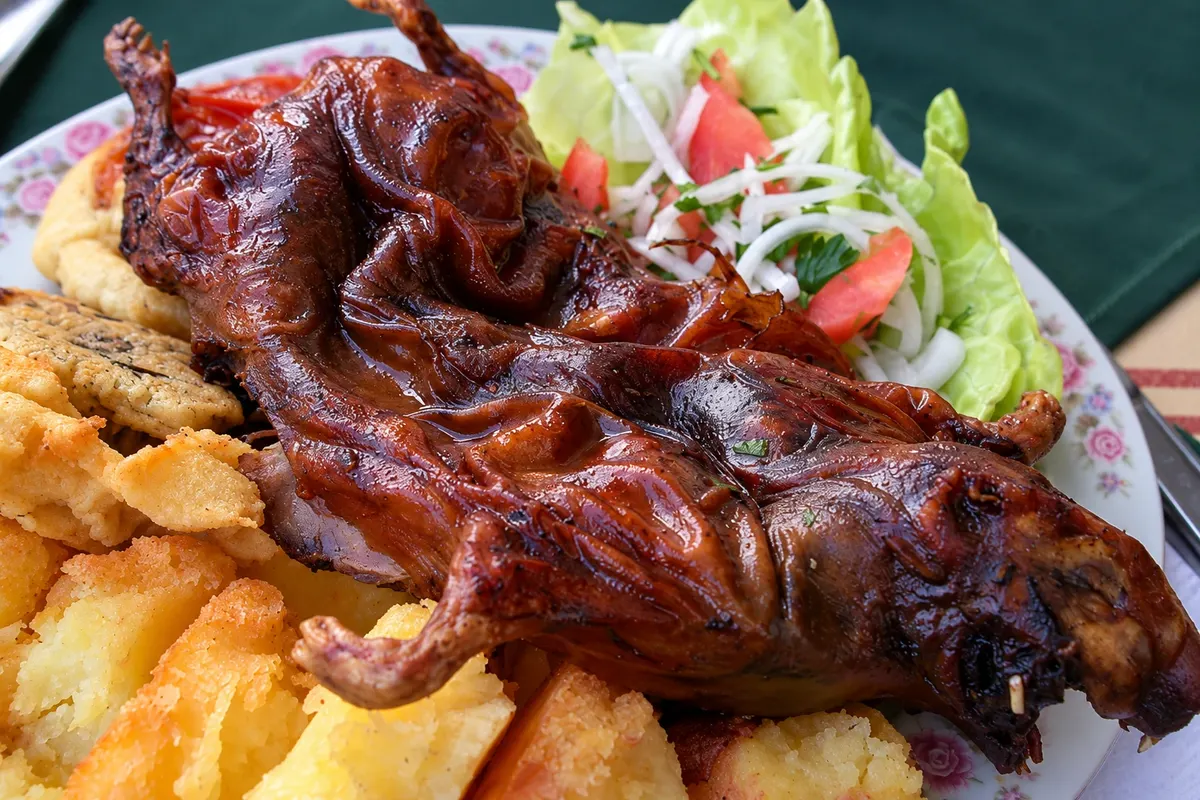
Cuy seasoned with salt, garlic and onion and roasted whole over coals, turning on a spit. A festive dish in families from Nariño, served with potatoes and a peanut chili sauce.

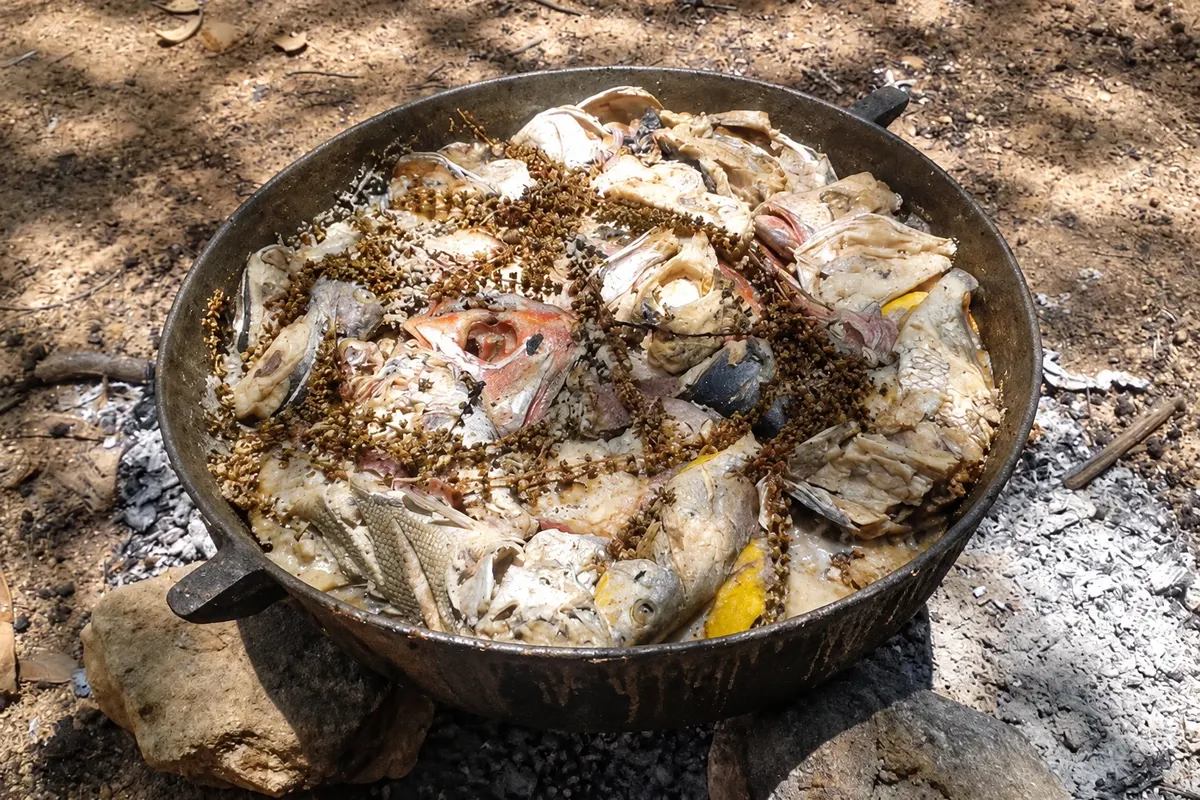
Stew in coconut milk with fish or conch, salted pig tail, green plantain, cassava, yam, breadfruit and dumplings. The ICBF calls it a traditional dish of the islands of San Andrés and Providencia.

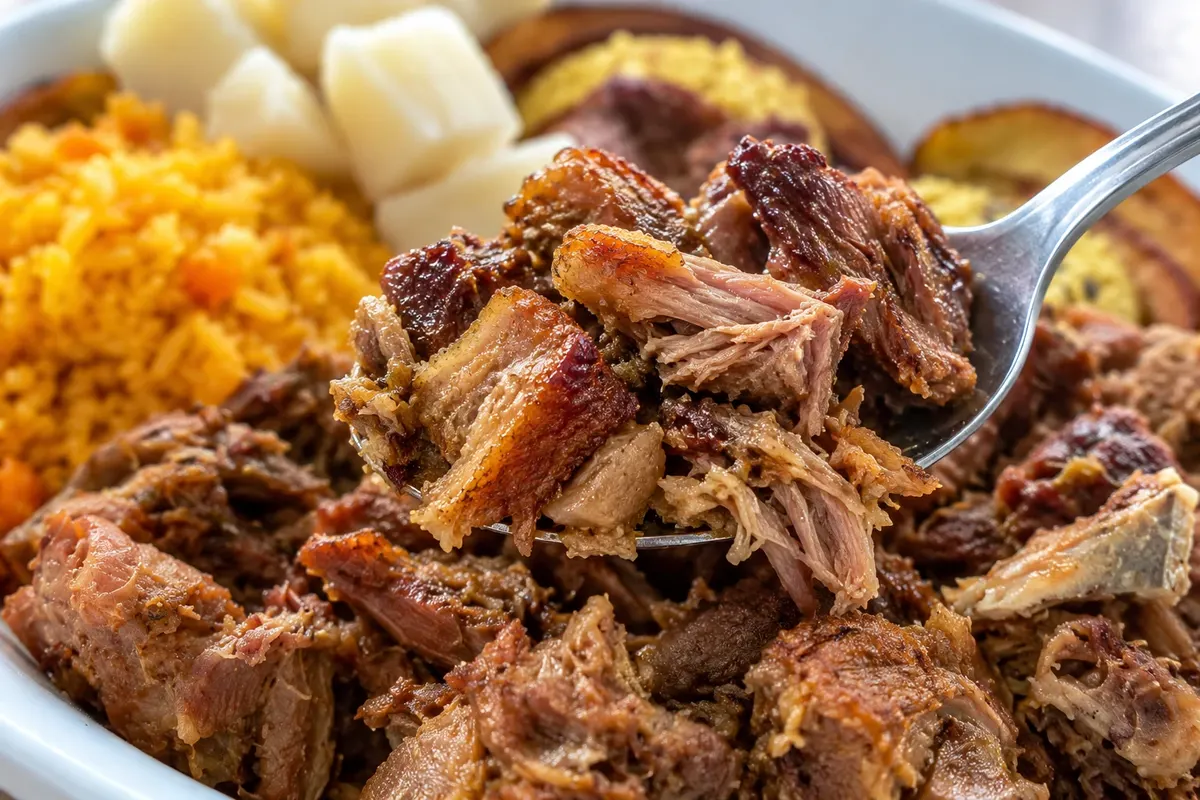
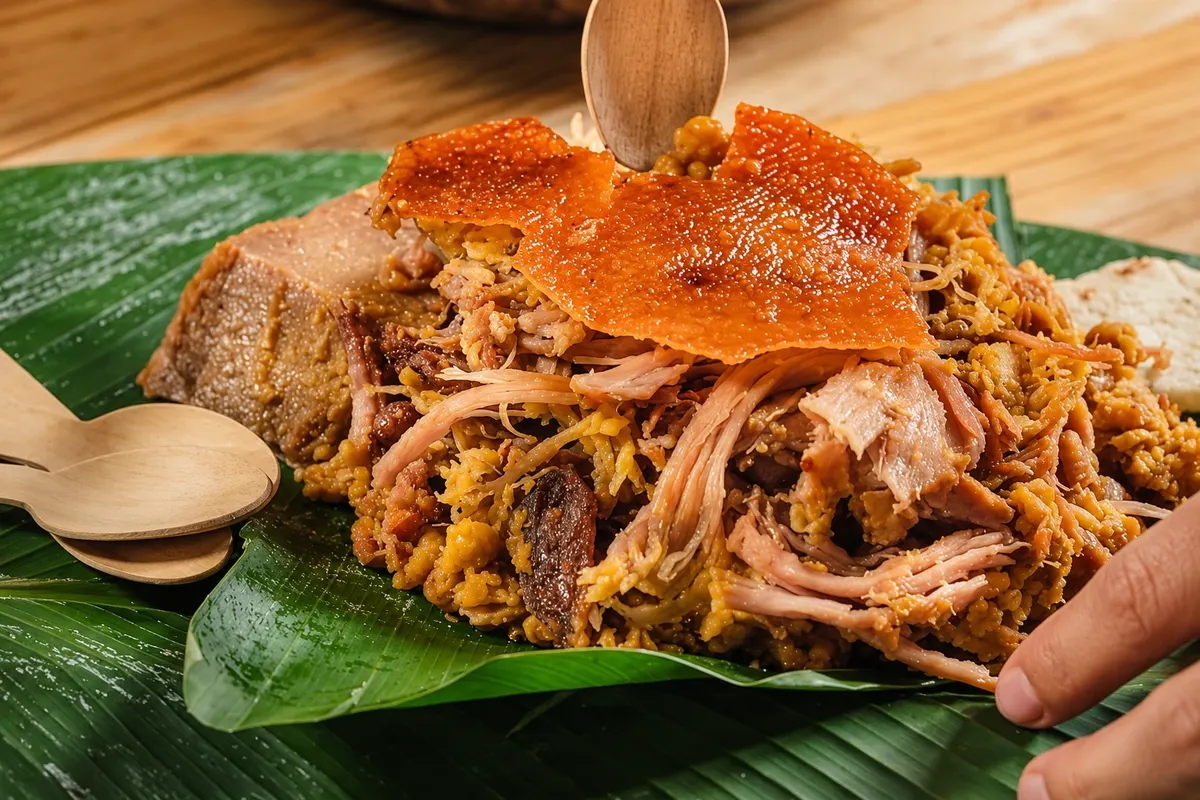
A whole pig stuffed with its own seasoned meat and dried yellow peas, roasted for hours until the skin becomes crispy. It is Tolima’s proudest dish, served with insulso.