

 Brazil
 Argentina
 Bolivia
 Chile
 Colombia
 Ecuador
 Guyana
 French Guiana
 Falkland Islands (Malvinas)
 Paraguay
 Peru
 Suriname
 Uruguay
 Venezuela
 Germany
 Austria
 Belgium
 Croatia
 Denmark
 Slovakia
 Slovenia
 Spain
 Finland
 France
 Greece
 the Netherlands
 Hungary
 Ireland
 Iceland
 Italy
 Luxembourg
 Norway
 Poland
 Portugal
 the United Kingdom
 the Czech Republic
 Sweden
 Switzerland
 Turkey
 Bermuda
 the United States
 Mexico
 the Dominican Republic
 South Africa
 Egypt
 Australia
 Fiji
 New Zealand
 Papua New Guinea
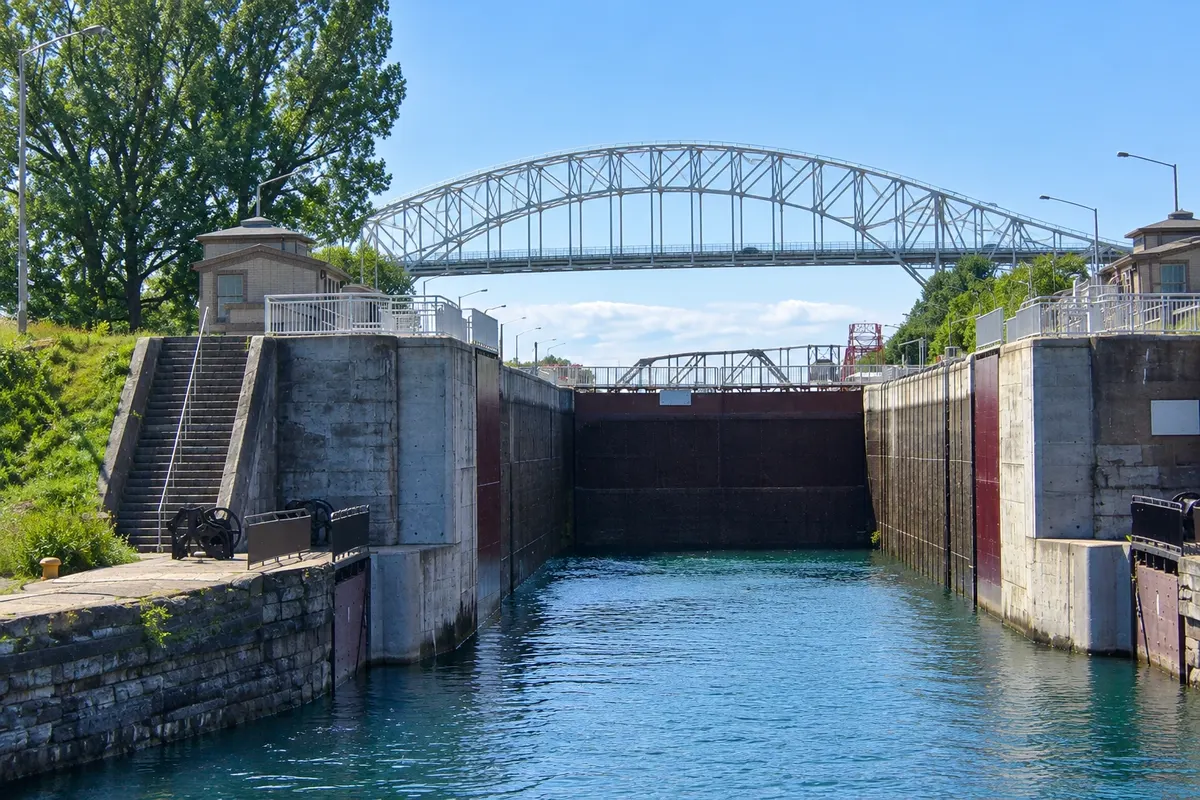
Historic site · Sault Ste. Marie, Ontario
Sault Ste. Marie Canal National Historic Site
Canal and 1895 lock on the St. Marys River, the world’s first electrically powered lock, with trails on the neighbouring island by the rapids.
Illustrative images. The pictures in this guide are illustrations based on the real place, not photographs, and may differ from it.



Discover
About Sault Ste. Marie Canal National Historic Site
The Sault Ste. Marie Canal opened in 1895 to carry ships from Lake Huron to Lake Superior without running the rapids of the St. Marys River. At the time, the lock was one of the largest in the world and was the first to be powered by electricity. It handled ships loaded with grain, ore and timber.
Today bulk freighters use the locks on the American side, while the Canadian lock serves pleasure craft and small boats. The canal’s red-stone buildings—such as the powerhouse and the office—have been preserved, and the site is a national historic site.
A footbridge over the lock leads to South St. Marys Island and Whitefish Island, with trails along the rapids, where the Ojibwe people fished whitefish for centuries.
Before you go
Practical information
Cidade Turismo reviews its information regularly, but something may have changed. Check with the place before planning your trip.
How much time to set aside
One to two hours.
Best time
June to October, when the lock is operating and boats pass through.
How to get there
At the end of Canal Drive, about 1 km west of downtown Sault Ste. Marie.
Tip
Take the Whitefish Island trail, which runs along the rapids and offers views of the international bridge.
Official website
Get your questions answered
Frequently asked questions about Sault Ste. Marie Canal National Historic Site
When was the Sault Ste. Marie Canal built?
1895.
Why is the Sault Ste. Marie lock historic?
It was the world’s first lock powered by electricity.
Do large ships still pass through the Canadian lock?
No; it serves pleasure boats. Freighters use the locks on the American side.