Arancina
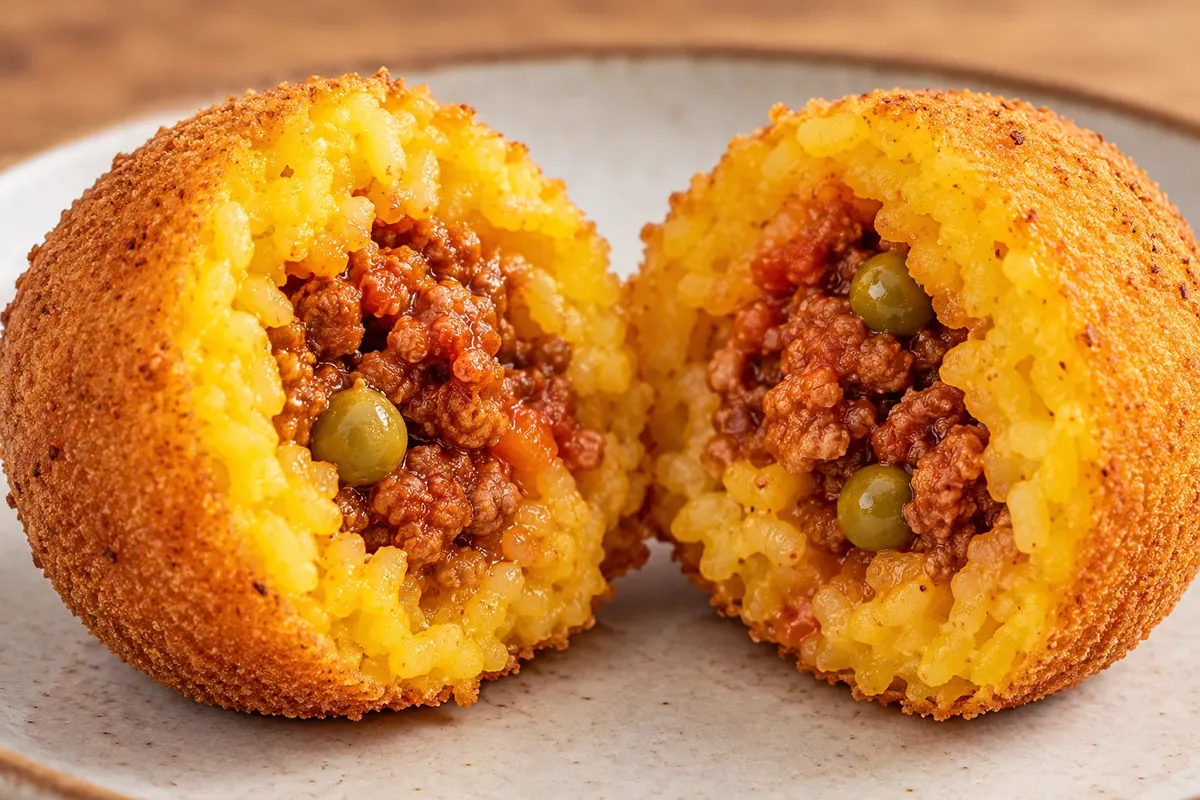
A Palermo l’arancina è tonda come un’arancia: riso allo zafferano con un ripieno, impanato e fritto. È la specialità di Santa Lucia, il 13 dicembre, quando la tradizione palermitana vuole che si rinunci a pane e pasta.
Antartide
Festività popolare · Palermo
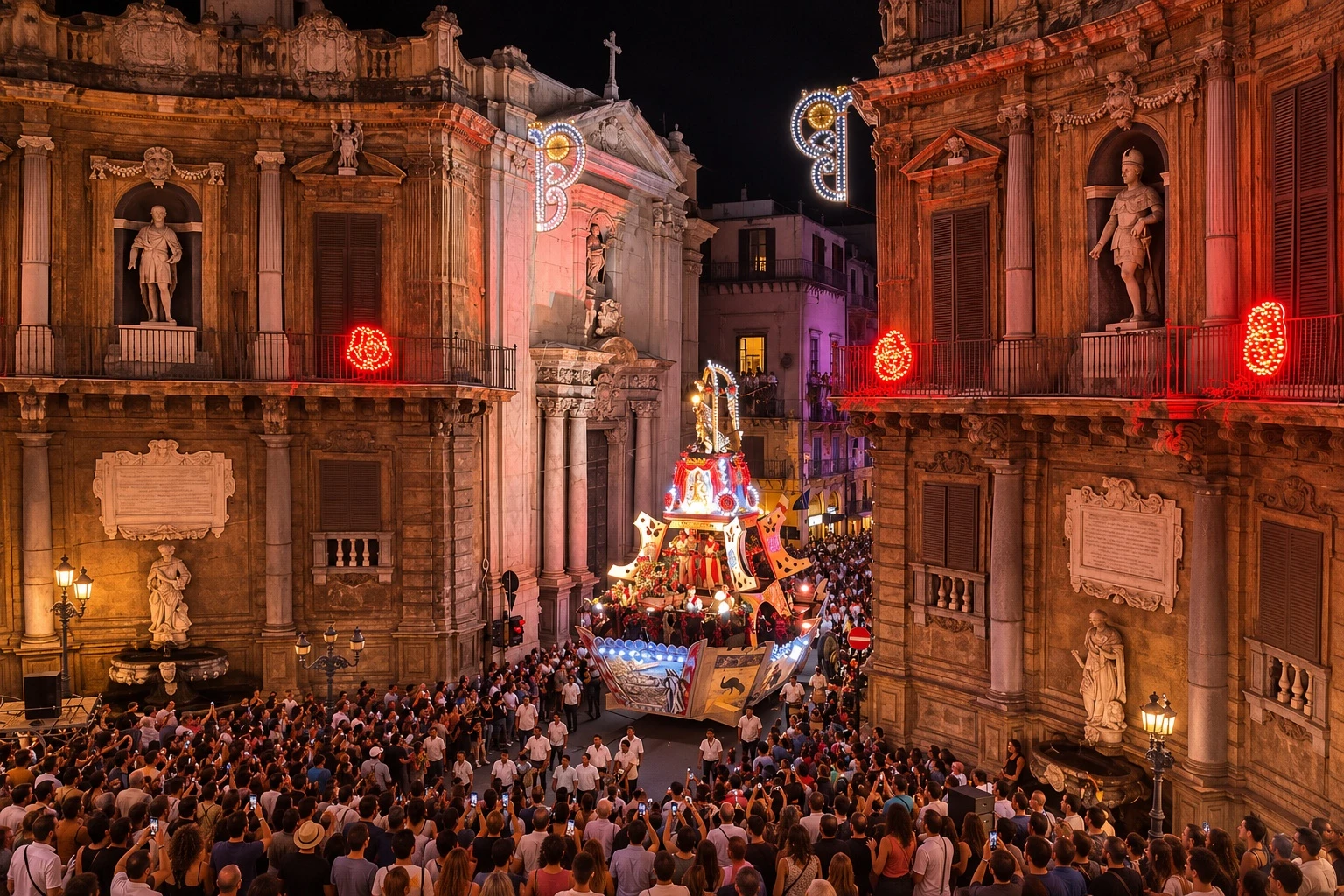
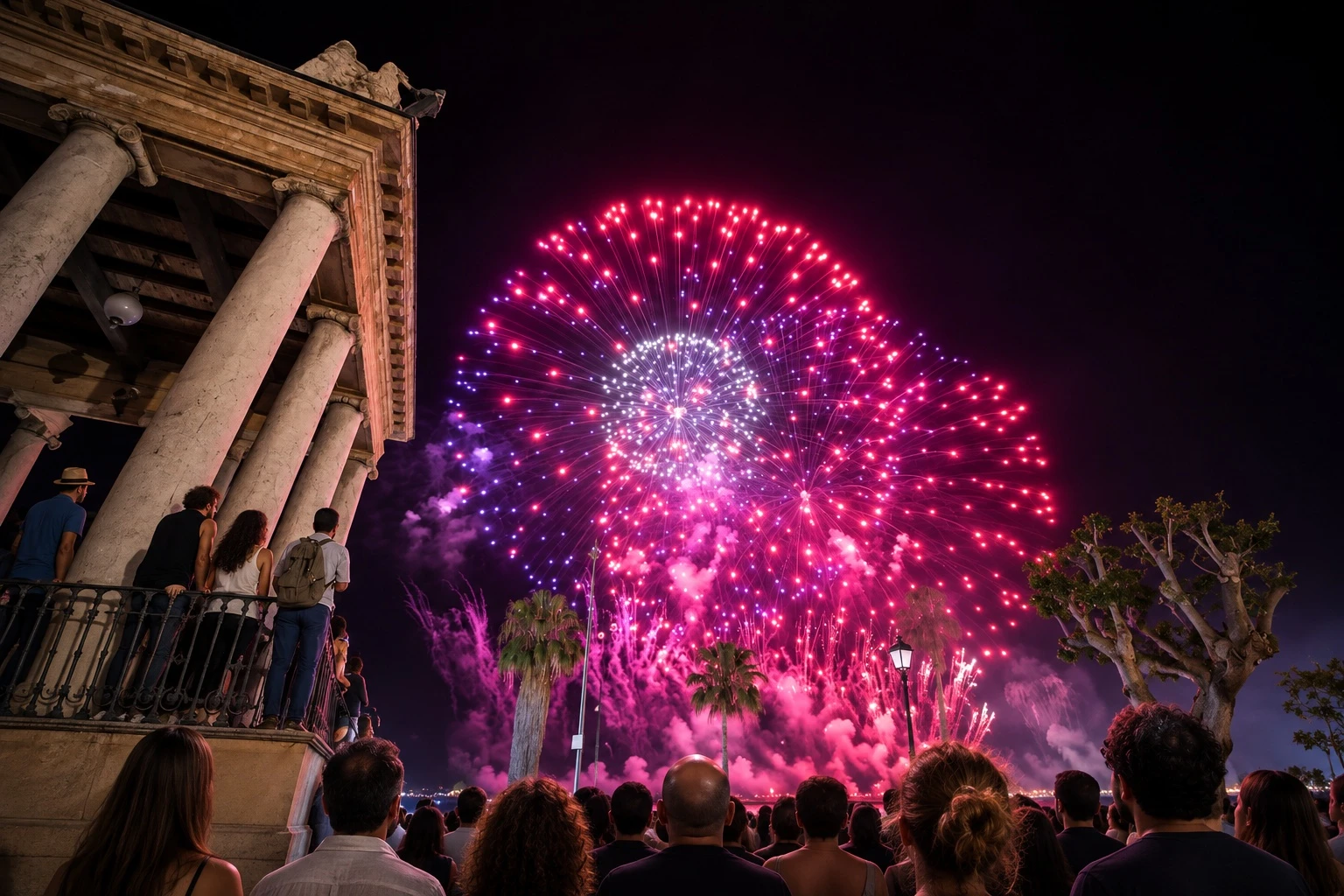
On the night of July 14, Palermo honors Saint Rosalia, known as the Santuzza, whom tradition credits with ending the plague. A triumphal float carries her statue along the Cassaro, the city’s oldest street, amid crowds, music, and performances. The night ends with fireworks over the sea.
Nella foto: Palermo
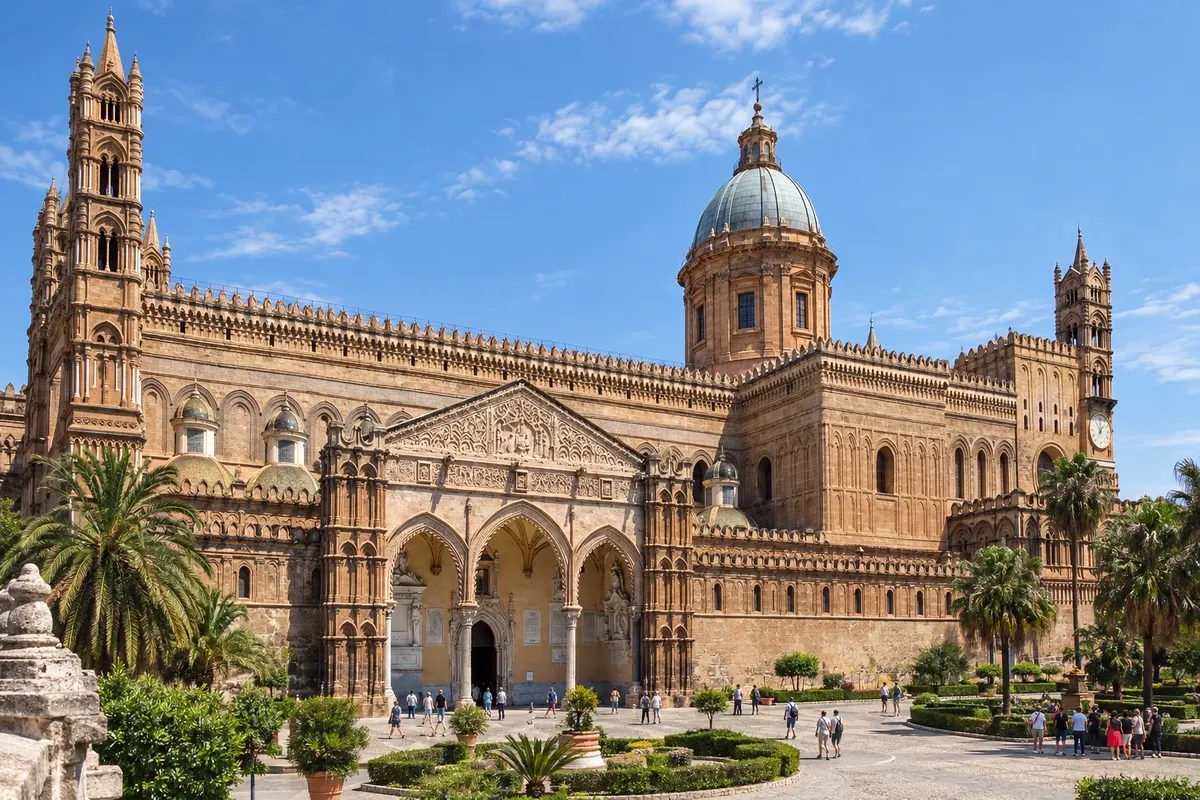
Illustrazioni dei luoghi. Le immagini di questa guida riproducono i luoghi reali attraverso illustrazioni. Alcuni particolari possono differire da quelli che vedrai sul posto.
Faccia clic sulla foto per ingrandirla.
Feast of Saint Rosalia — Palermo
July 10–15. The main procession takes place on the night of July 14.
luglio
Le date variano di anno in anno. Prima di partire conviene verificare quelle dell’edizione in programma.
La manifestazione
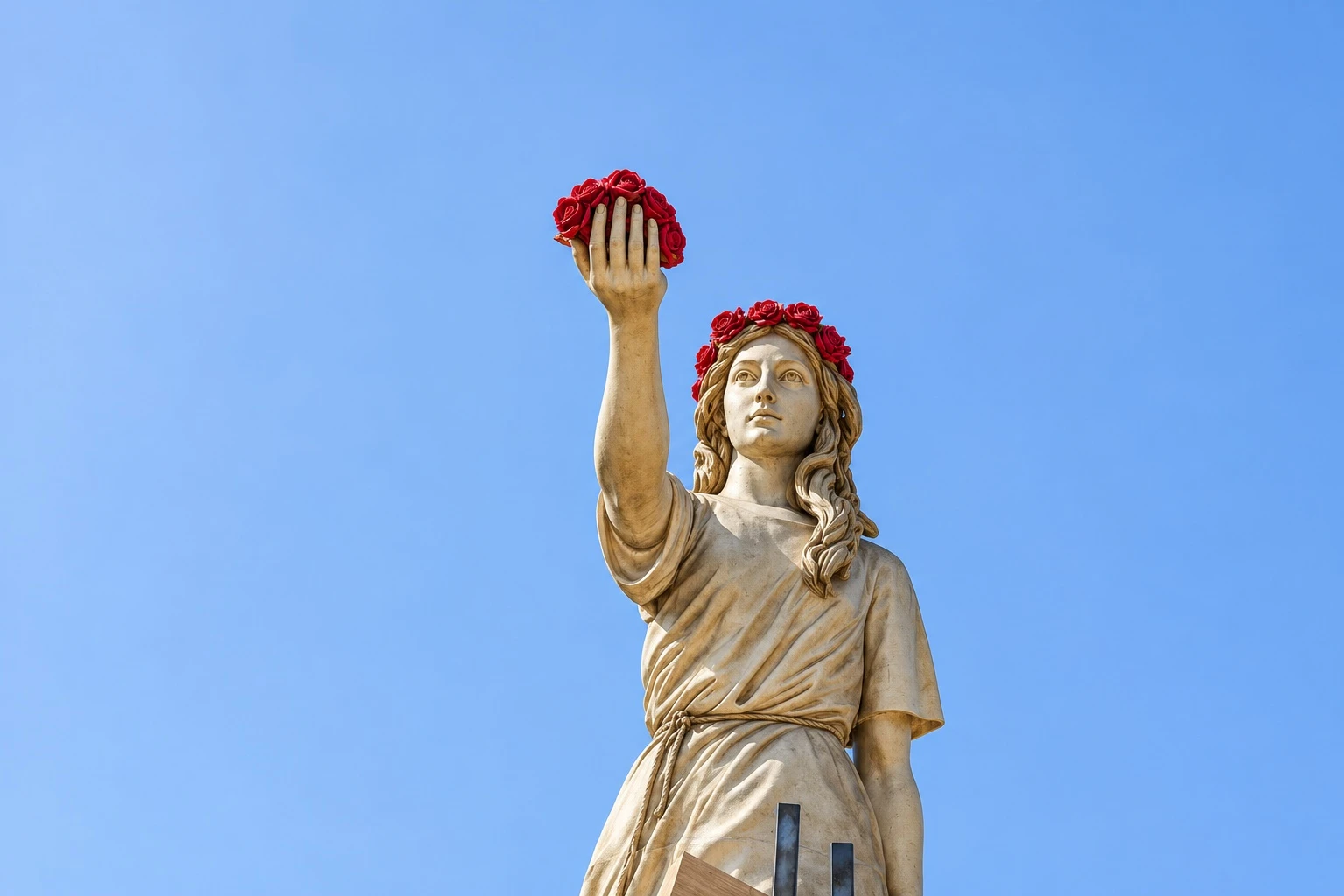
Saint Rosalia, known as the Santuzza, is Palermo’s patron saint. In 1624, while the plague gripped the city, her remains were found in a cave on Mount Pellegrino, which rises above Palermo. According to tradition, carrying her remains in procession through the streets freed Palermo from the plague. The city has celebrated its patron saint with the Festino ever since the following year.
The festival spans several days in July, but its highlight is the night of July 14. A triumphal float, with a new design each year, carries the saint’s statue from the Norman Palace to the sea along the Cassaro, the city’s old main street, now called Via Vittorio Emanuele. The procession stops at the cathedral, the Quattro Canti, and Porta Felice, with music, actors, acrobats, and projections along the way. It ends around midnight with a grand fireworks display on the waterfront at the Foro Italico.
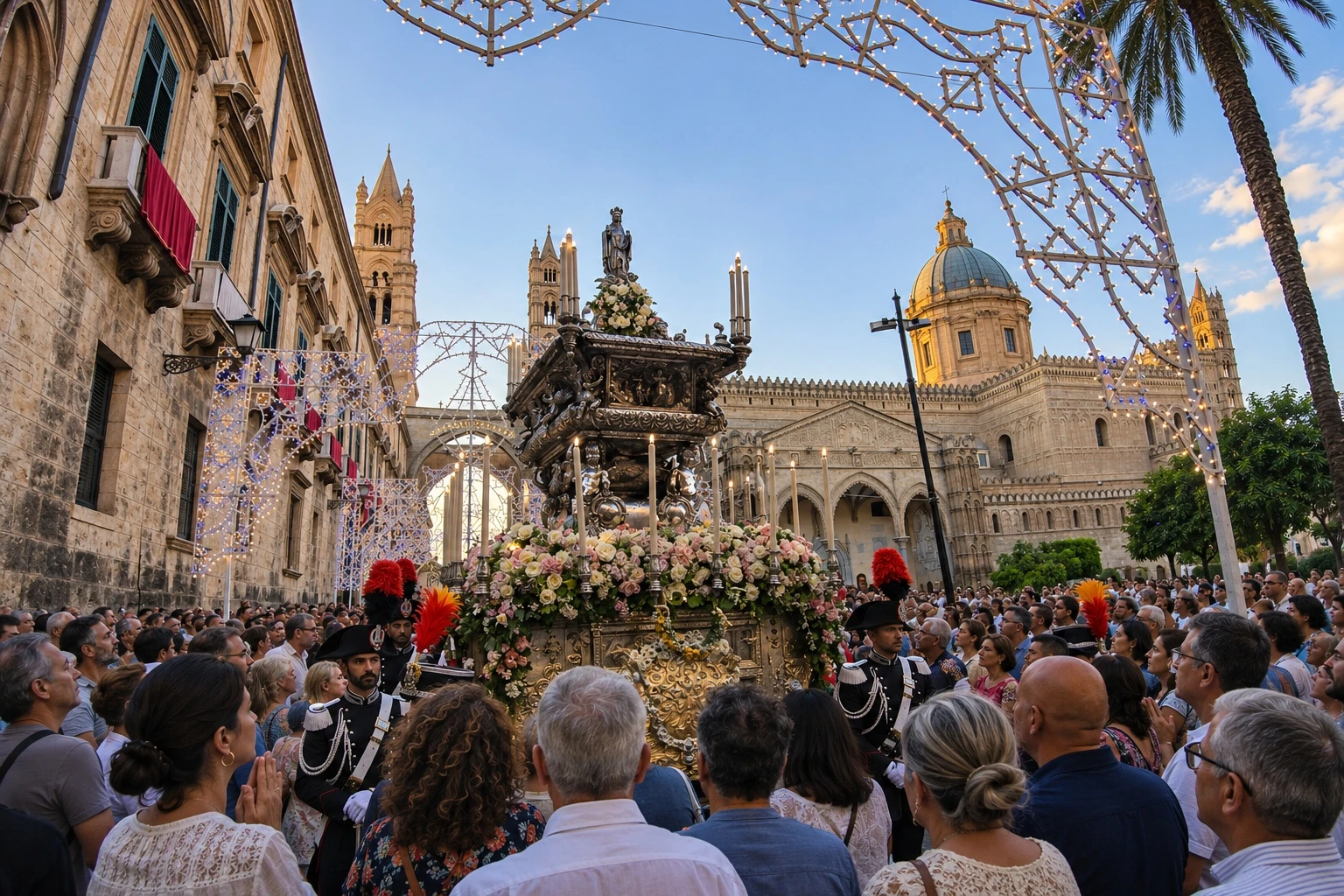
On July 15, the religious celebrations continue with a procession carrying the saint’s relics, which are kept in a silver urn in the cathedral. The pilgrimage on foot up to the sanctuary on Mount Pellegrino takes place on a separate date, September 4.
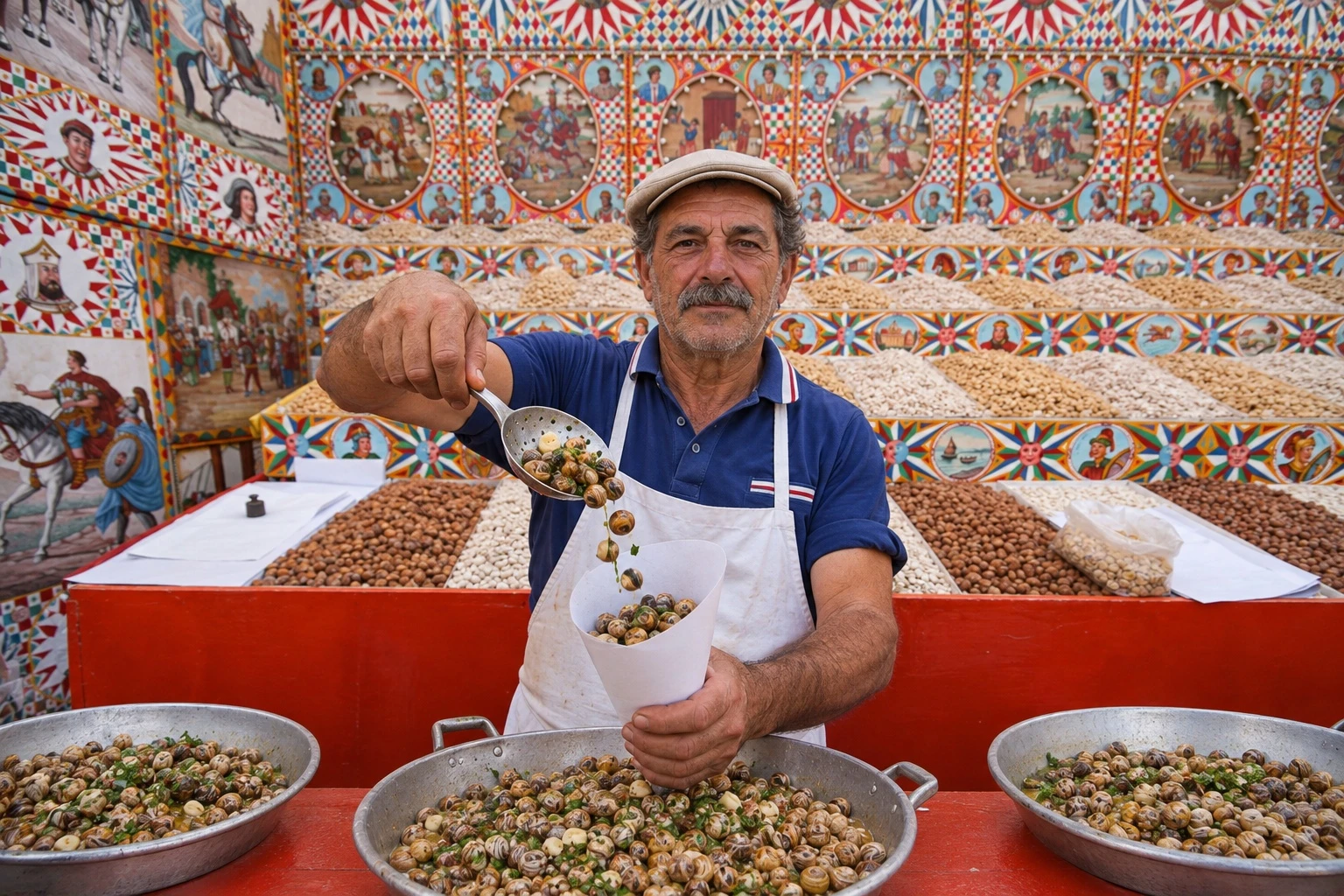
Along the route, vendors sell festival street foods such as babbaluci, small snails seasoned with garlic and parsley, as well as watermelon and calia e simenza, roasted chickpeas and pumpkin seeds.
It’s worth the trip to experience Palermo on its biggest night, when the whole city takes to the streets to follow its saint.

The procession with the triumphal float along the Cassaro on the night of July 14. The stops at the Quattro Canti and Porta Felice. The late-night fireworks at the Foro Italico. The procession carrying the saint’s relics on July 15.
Choose a spot along the route and arrive early, as the city center gets crowded. Bring water: July is very hot in Palermo. Try the babbaluci and other festival street foods at the stalls.
Babbaluci, small snails with garlic and parsley, are a Festino specialty. The stalls also sell watermelon and calia e simenza, roasted chickpeas and pumpkin seeds.
Check the Comune di Palermo website for this year’s program. Book your accommodations well in advance for July 14 and 15.
Sapori dell’Italia

A Palermo l’arancina è tonda come un’arancia: riso allo zafferano con un ripieno, impanato e fritto. È la specialità di Santa Lucia, il 13 dicembre, quando la tradizione palermitana vuole che si rinunci a pane e pasta.

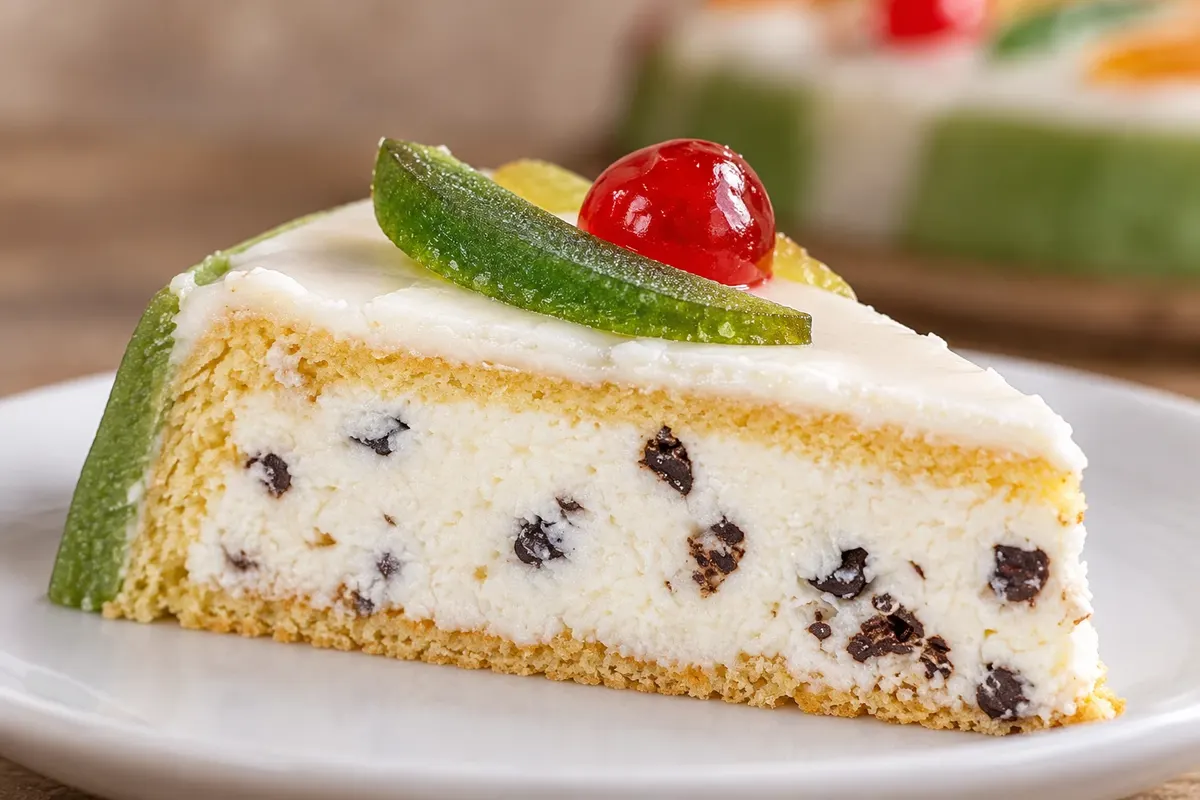
Nel dolce pasquale dei conventi palermitani si alternano pan di Spagna e crema di ricotta. La cassata è rivestita di pasta reale verde e decorata con glassa e frutta candita. I suoi strati raccontano epoche diverse della storia siciliana.

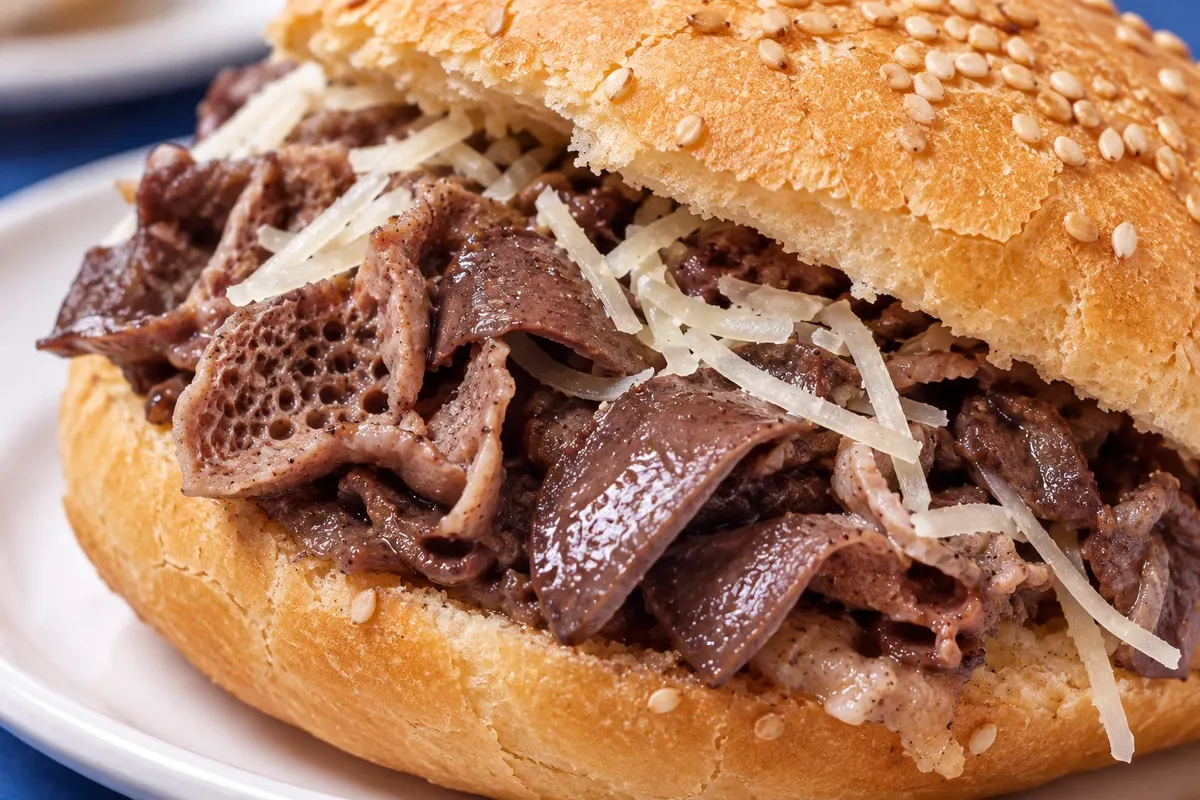
Panino morbido al sesamo con milza e polmone di vitello lessati e poi riscaldati nello strutto. Si ordina con il solo limone oppure con formaggio e ricotta. È il panino di strada più caratteristico di Palermo.
luglio
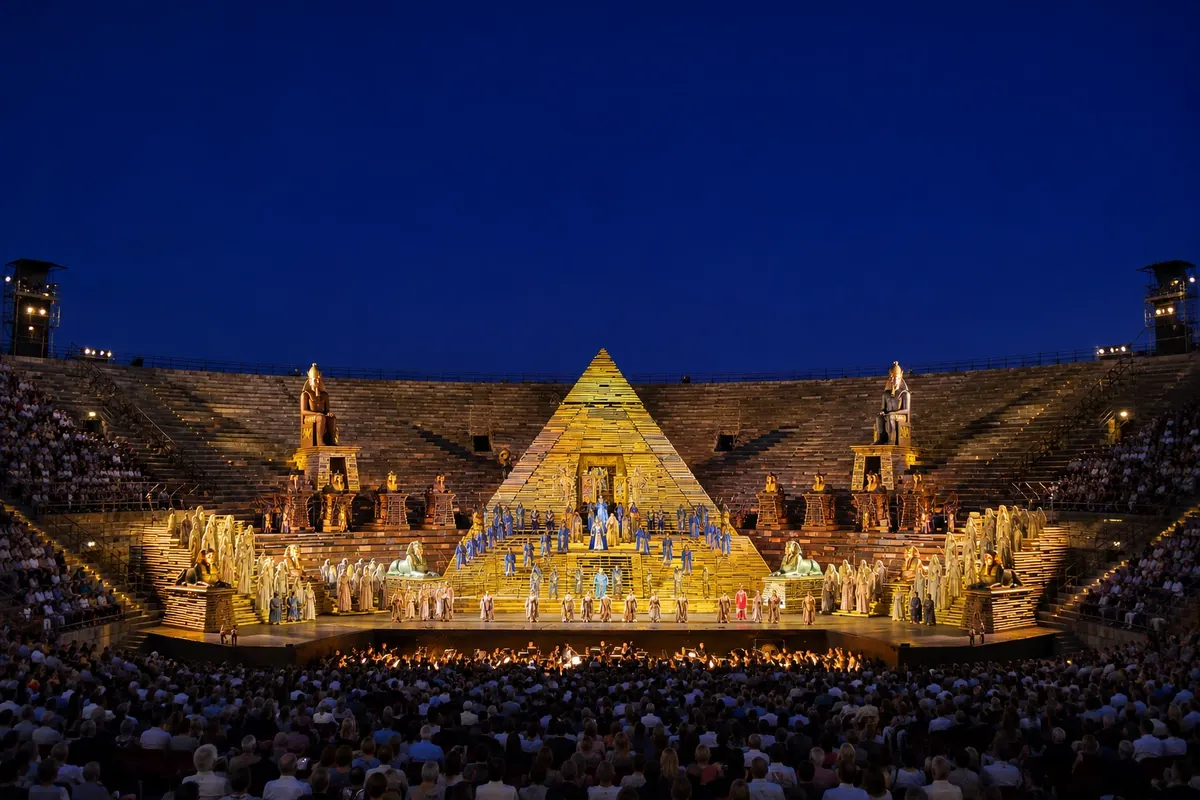
giugno/luglio/agosto/settembreJune through September, with evening performances.
Every summer, Verona’s Roman amphitheater hosts a season of open-air opera. Aida, the opera that opened the festival in 1913, is a mainstay of the program.
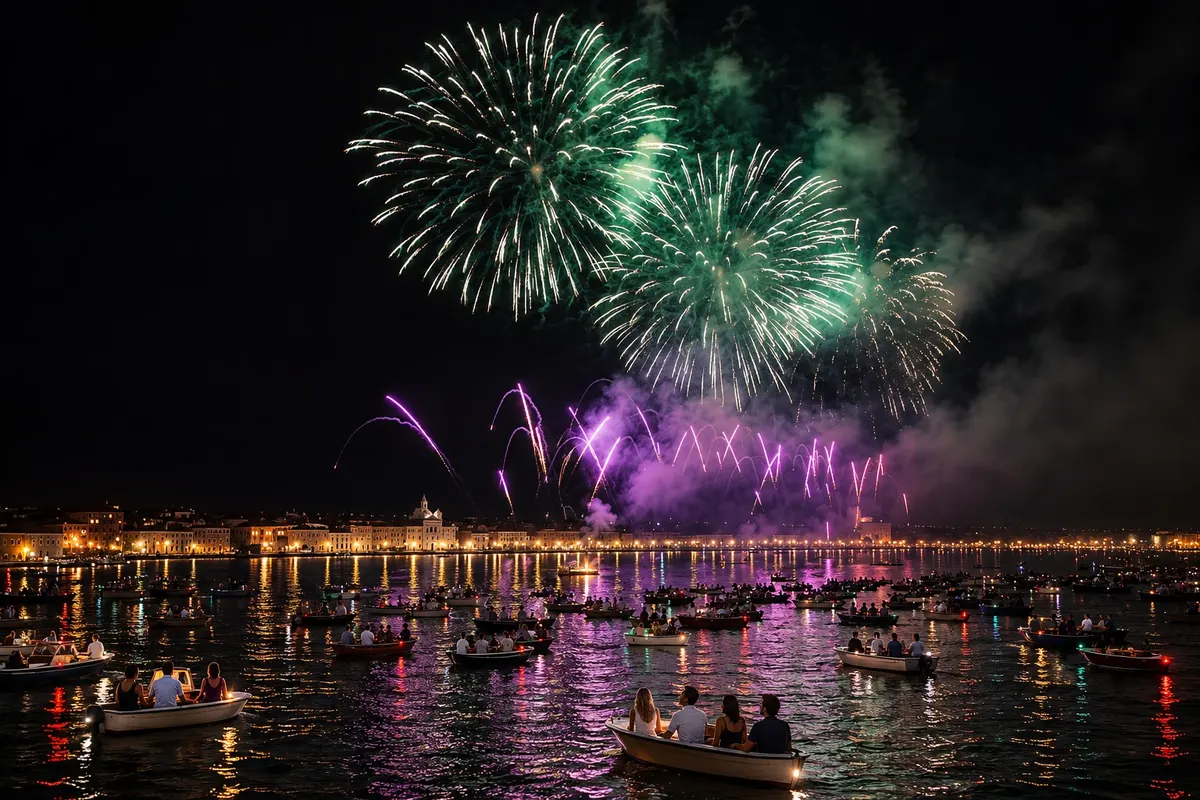
luglioThe third weekend in July: the fireworks are on Saturday night, and the religious celebration takes place on Sunday.
On the third weekend in July, Venice gives thanks for the end of the plague in 1577. A bridge of boats spans the Giudecca Canal to the Church of the Redeemer, residents dine aboard decorated boats in St. Mark’s Basin, and a grand fireworks display lights up the lagoon on Saturday night.
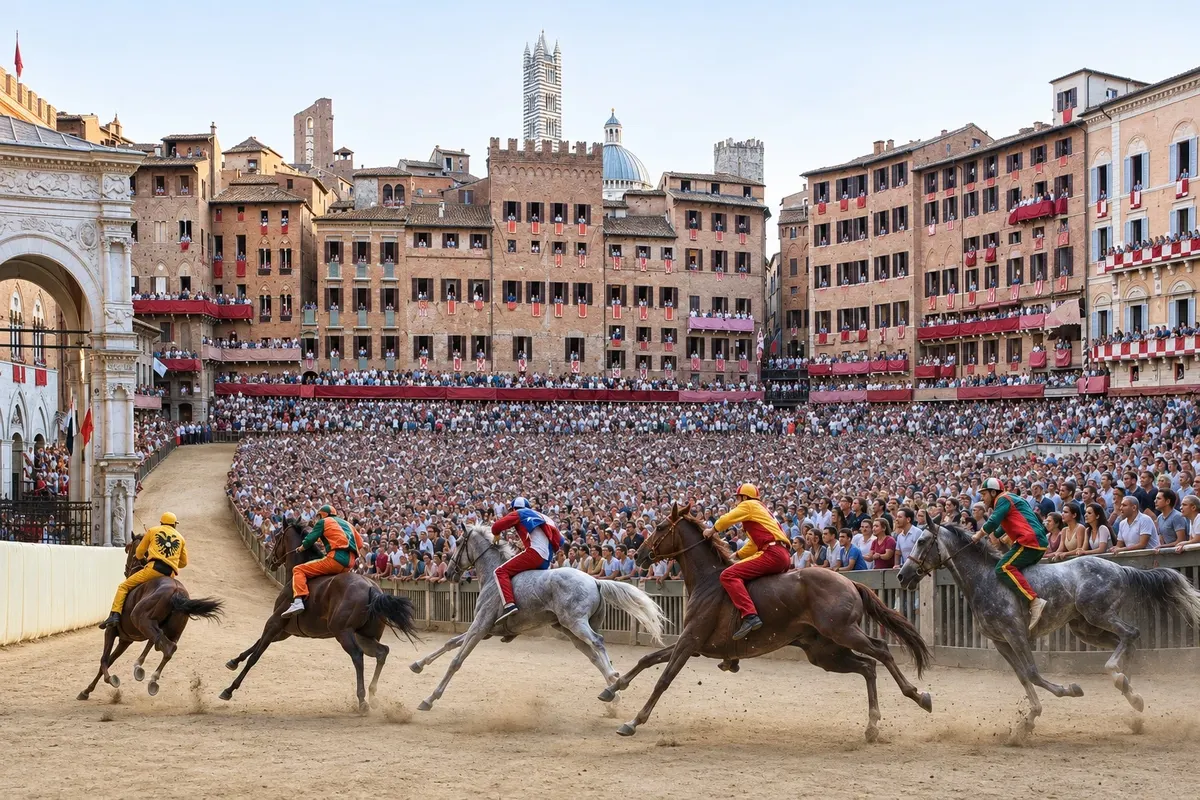
luglio/agostoJuly 2 and August 16, with preparations taking place over the three days before each race.
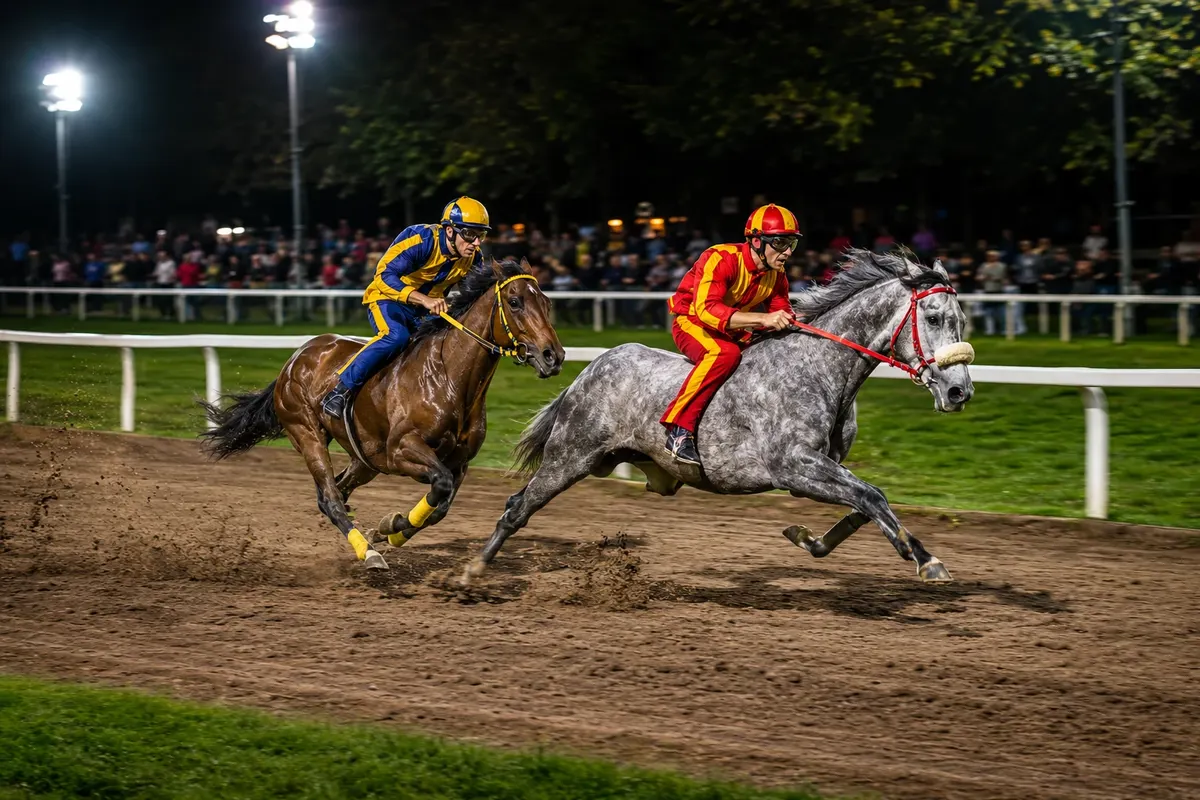
Twice a year, on July 2 and August 16, jockeys ride ten horses bareback around the Piazza del Campo in a three-lap race representing Siena’s contrade. It is Italy’s most famous historic horse race, and the city’s passion for it goes back centuries.
Risposte alle domande più comuni
July 10–15. The main procession with the triumphal float takes place on the night of July 14.
According to tradition, the saint’s remains were found on Mount Pellegrino in 1624, and carrying them in procession freed the city from the plague.
Small snails seasoned with garlic and parsley. They’re the signature dish on the night of the Festino.
in Italia · Feste ed eventi
gennaio/febbraio/marzoCirca due settimane e mezzo prima della Quaresima, tra fine gennaio e inizio marzo a seconda della Pasqua. La festa si conclude il martedì grasso.
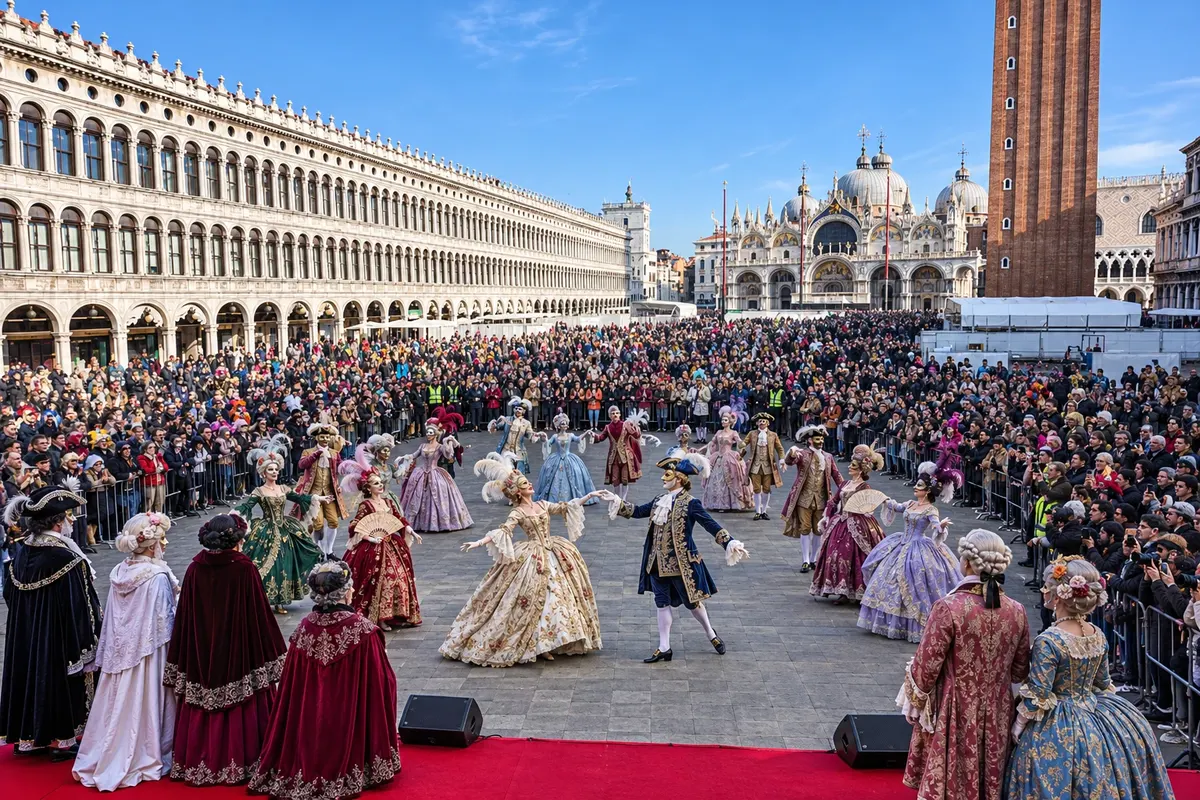
Nelle settimane prima del mercoledì delle Ceneri, tra calli e campi sfilano maschere e costumi d’epoca. Il programma comprende cortei sull’acqua, la Festa delle Marie e sfilate in piazza San Marco.
marzo/aprileOn Easter Sunday morning.
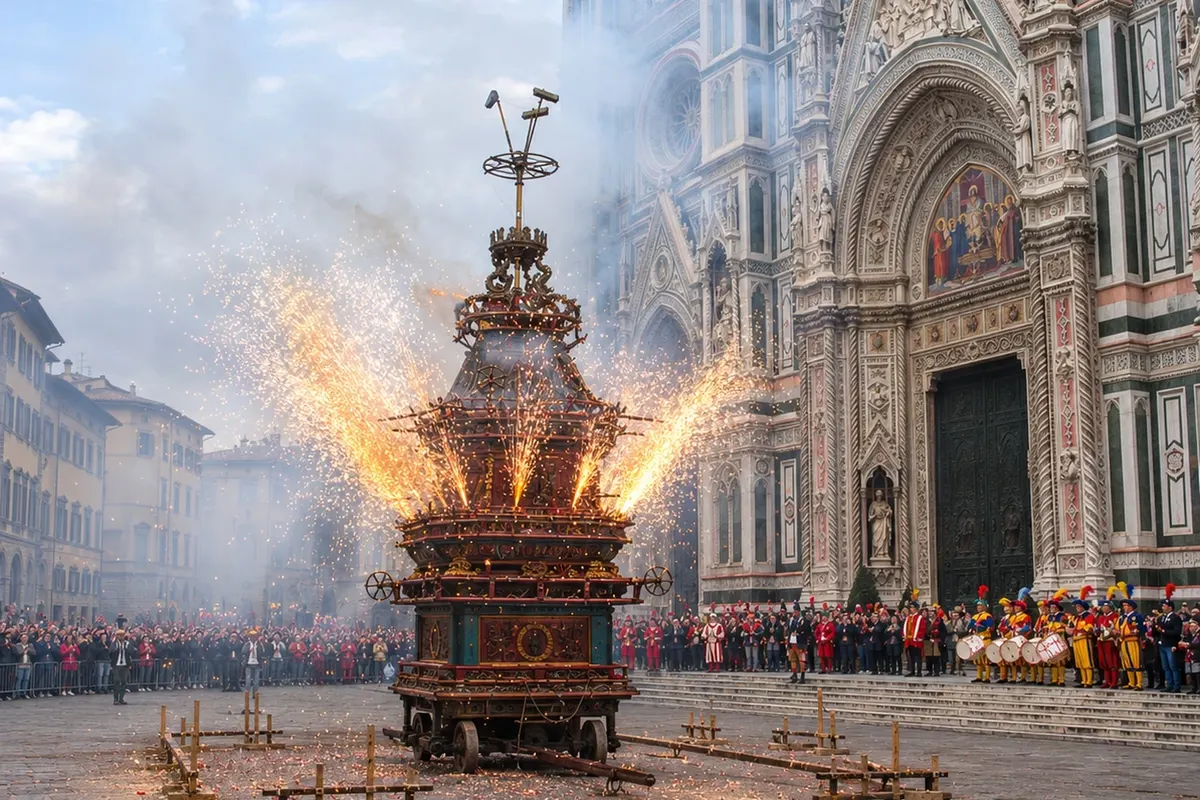
On Easter morning, a tall, ornate cart called the Brindellone is brought to the square in front of Florence Cathedral. During Mass, a mechanical dove is lit at the altar and travels along a wire to the cart, setting off a fireworks display in a tradition that dates back nine centuries.
maggioMay 1–4. The main procession takes place on May 1.
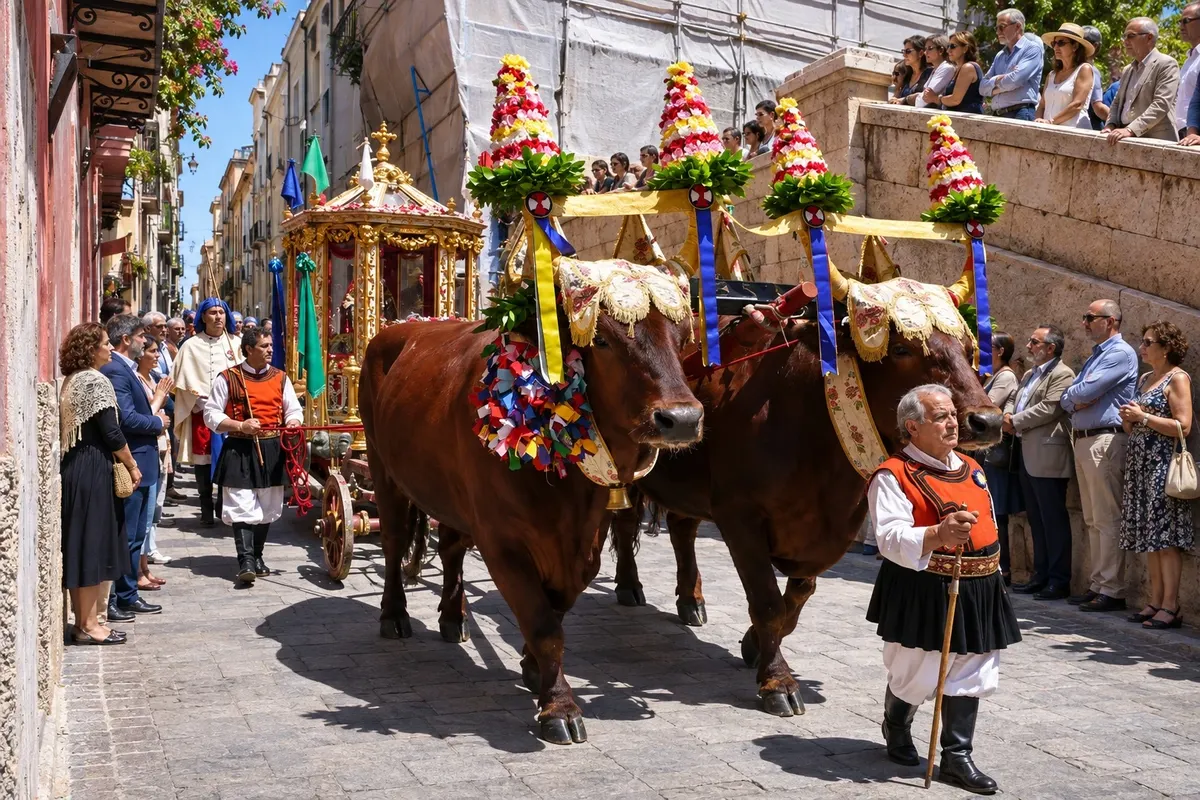
On May 1, Cagliari fulfills a vow it made during the plague of the 17th century. The statue of Sant'Efisio sets out in an ox-drawn carriage, accompanied by decorated carts, riders on horseback, and groups from across Sardinia wearing their traditional dress. The statue then continues on pilgrimage to Nora.
maggioThroughout May, with the races on the last weekend of the month.
In May, Ferrara’s eight districts, known as contrade, fill the city with Renaissance processions, flag-throwing displays and competitions. The festivities culminate in races in Piazza Ariostea on the last weekend of the month, part of a palio that the city describes as the oldest in the world.
giugnoIn June. The final is on June 24, the feast day of St. John, Florence’s patron saint.
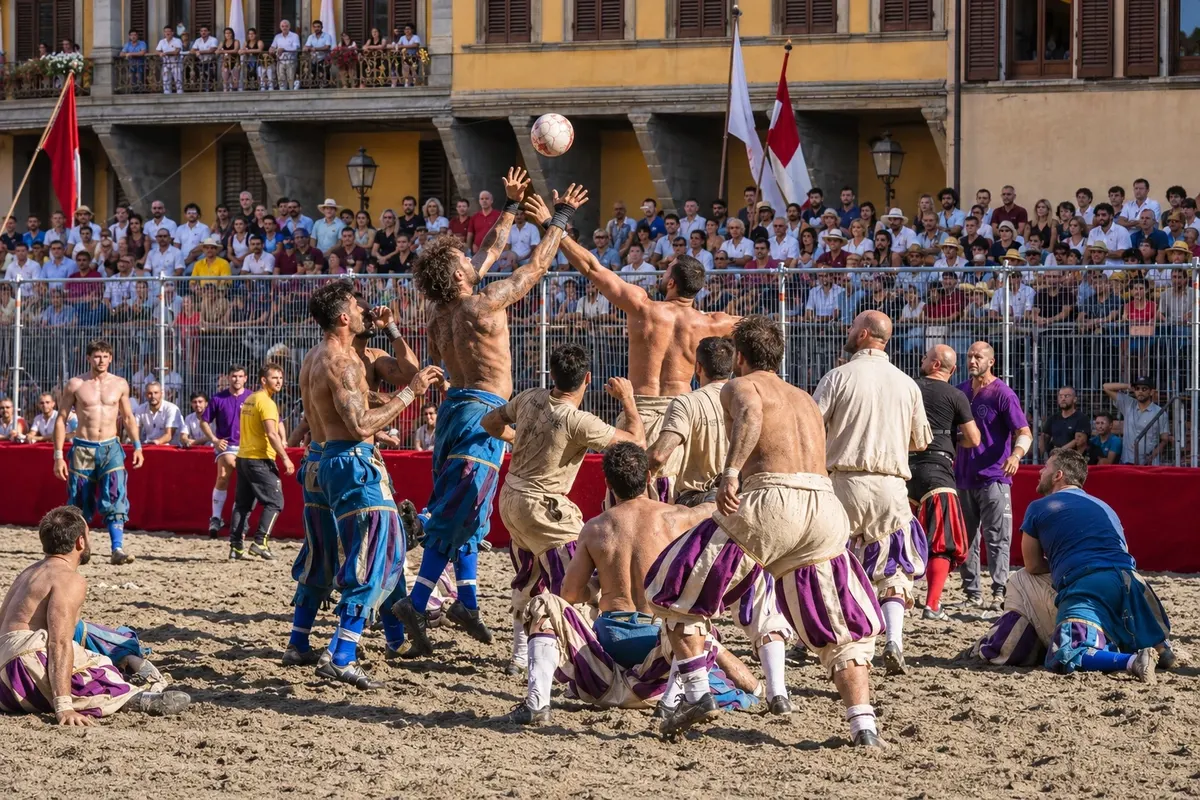
In June, Piazza Santa Croce in Florence becomes a sand arena for Calcio Storico, a Renaissance ball game played by the city’s four historic districts. The final takes place on the feast day of St. John, the city’s patron saint, and the celebrations end with fireworks that night.
settembreSeptember 19. The rite is also held on the Saturday before the first Sunday in May and on December 16.
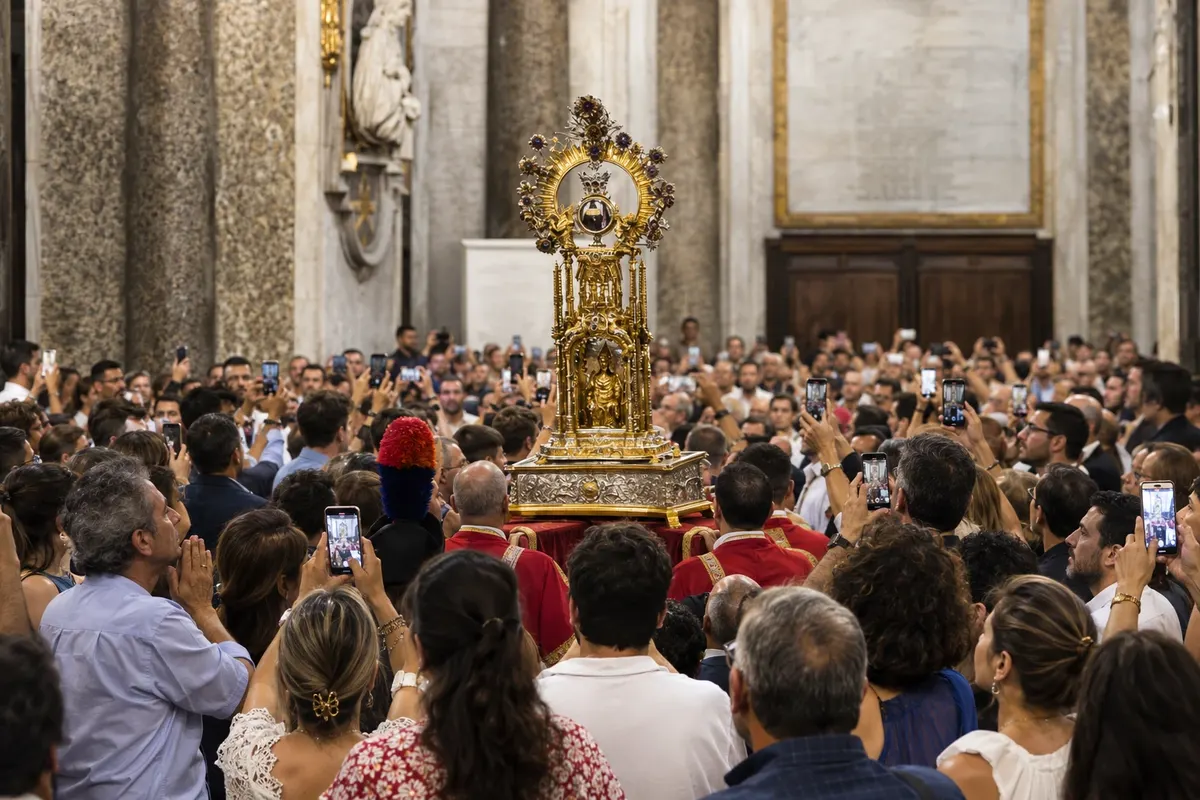
On September 19, Naples gathers at the cathedral to await the “miracle” of its patron saint, San Gennaro. When the blood kept in a vial appears to turn liquid, the archbishop holds the vial up for the faithful to see, and the whole city takes the news as a good omen.
Oltre la guida