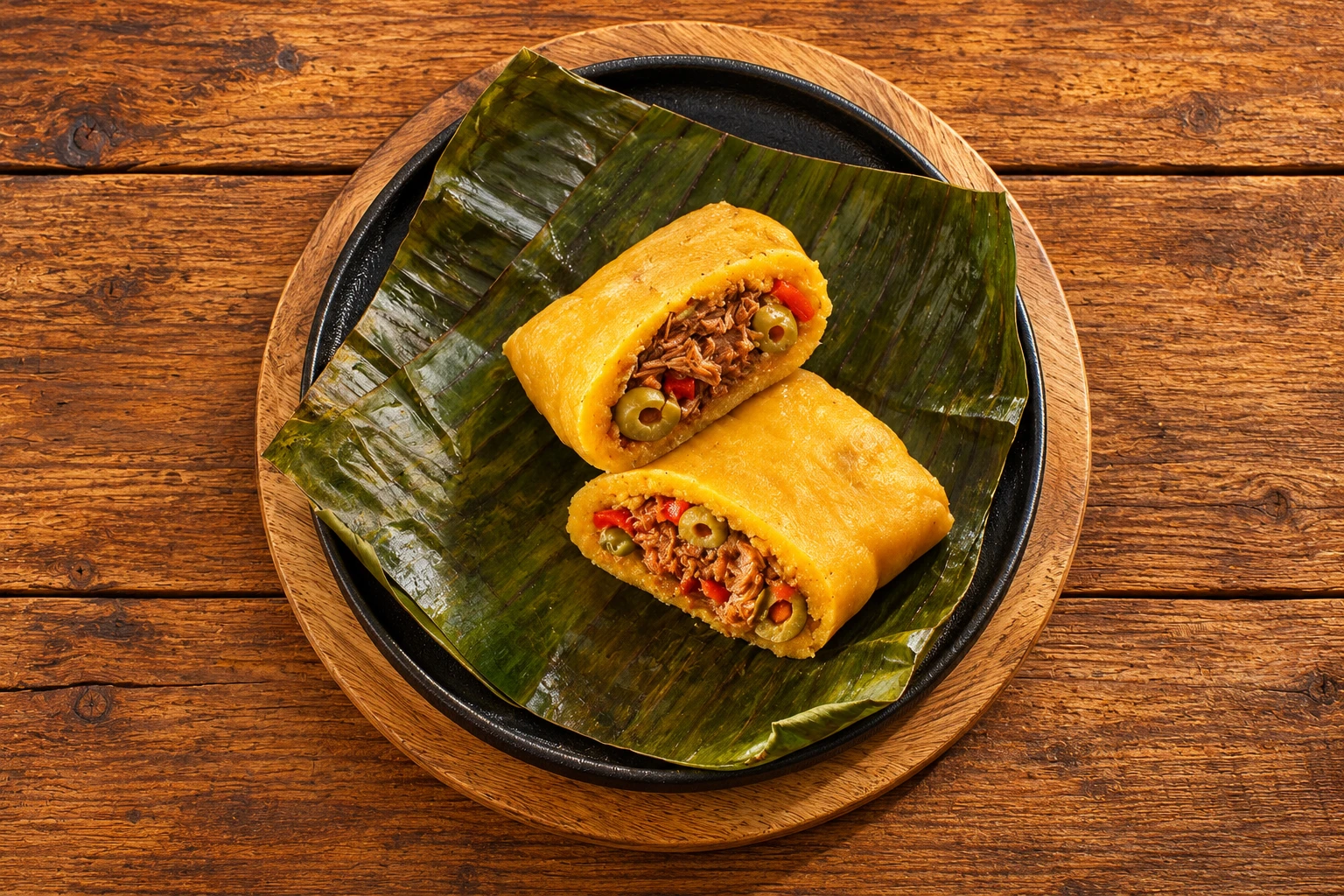
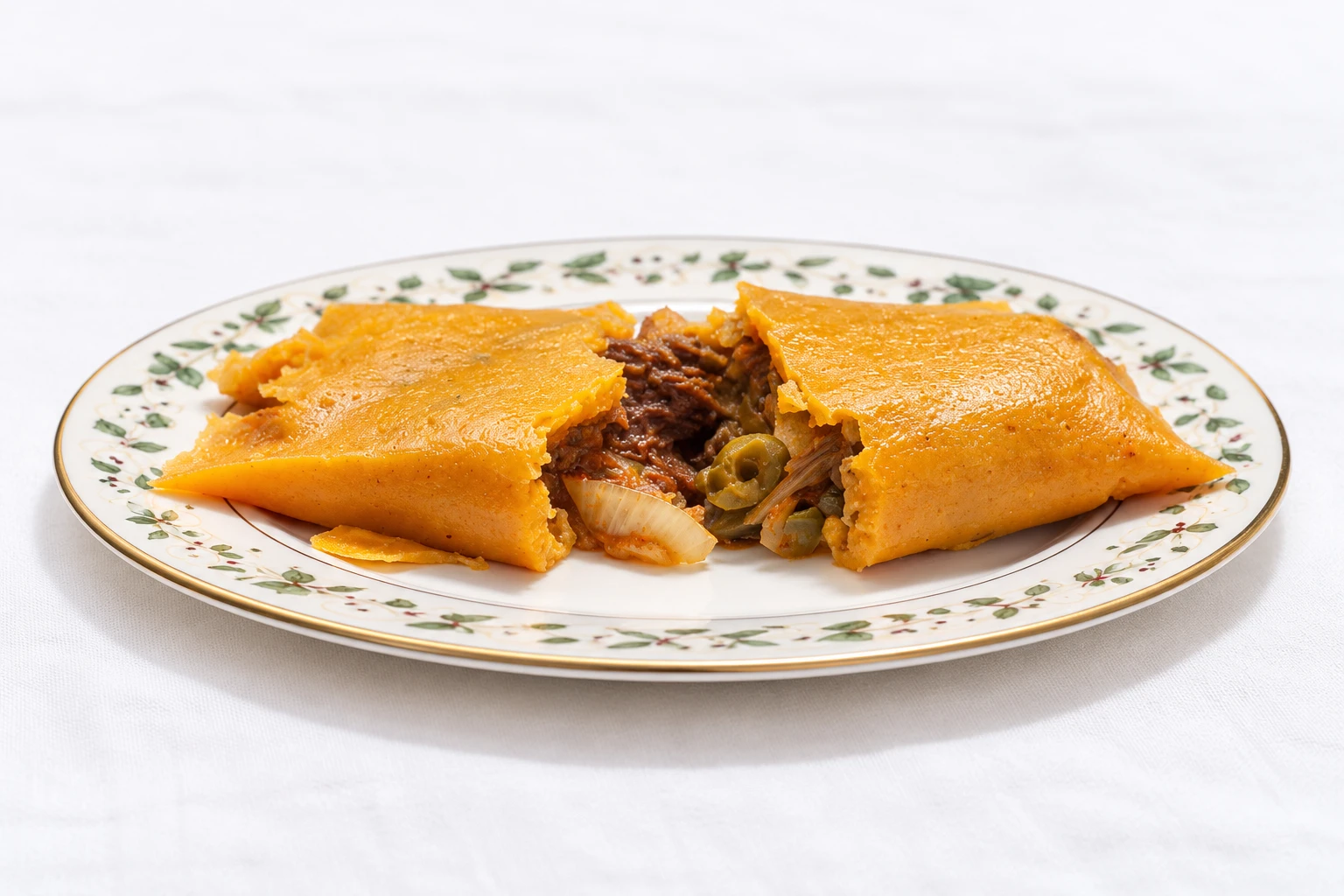
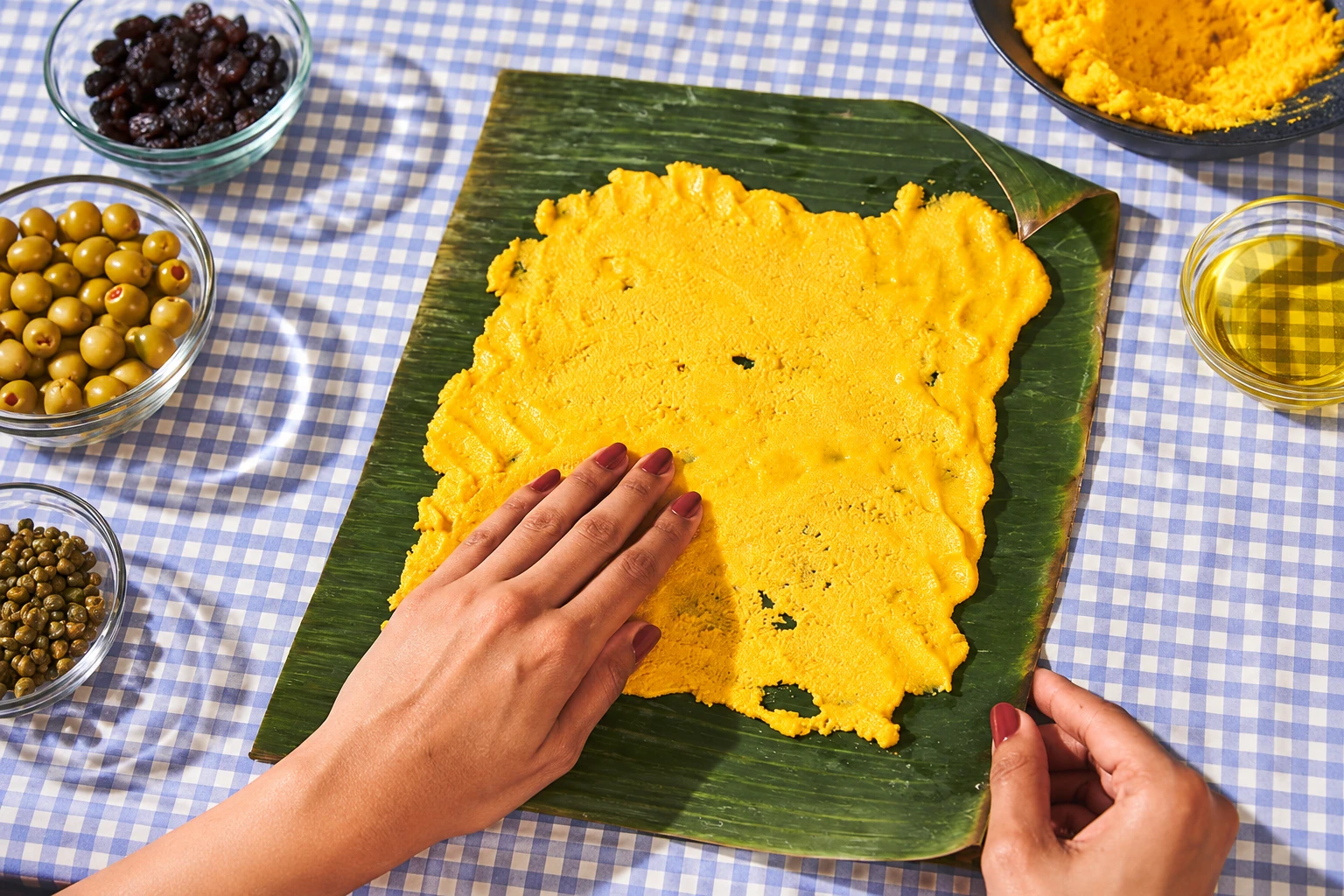
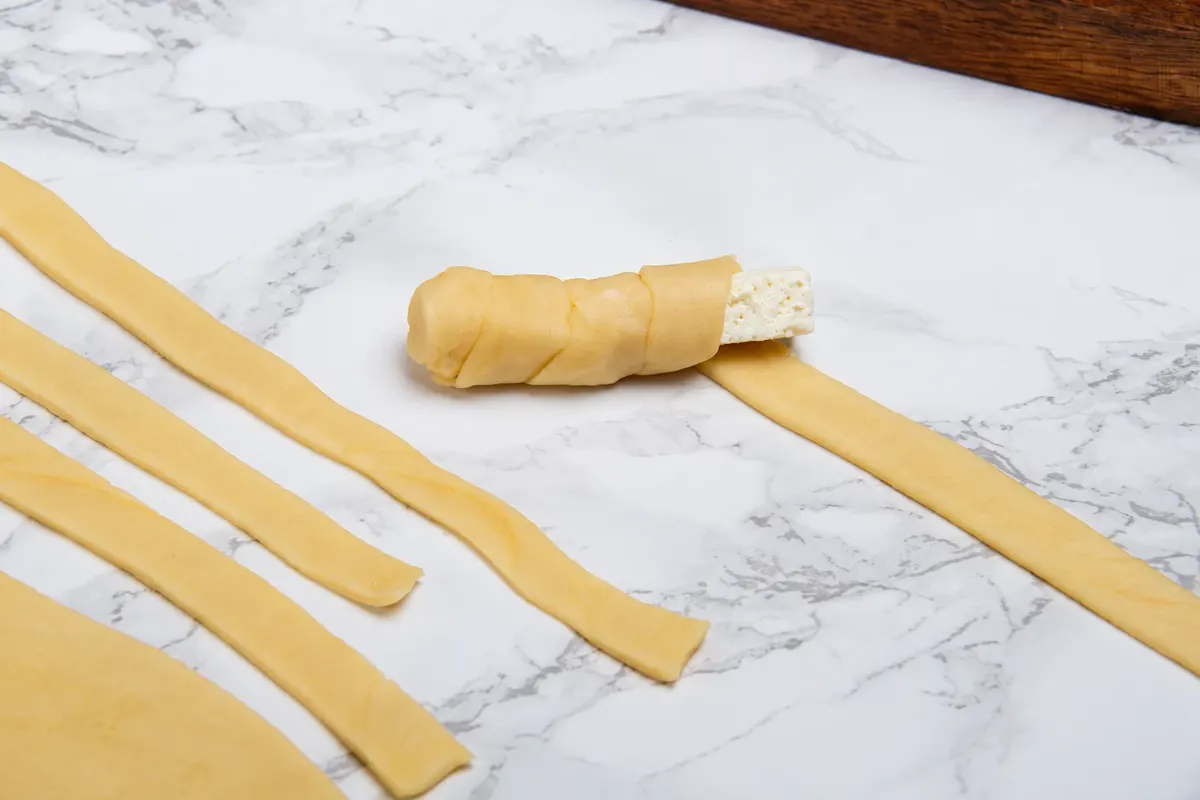
Hallaca is made in stages. First comes the guiso, a stew of beef, pork and chicken cooked with onion, garlic, bell pepper, leek, wine or panela and seasonings, which is usually ready the day before. Then the corn dough—cooked and ground corn dyed a yellow-orange with annatto (called onoto in Venezuela) and softened with broth and fat—is prepared. On a greased banana leaf a thin layer of dough is spread, the guiso and the garnishes are placed on top—olive, caper, raisin, strips of bell pepper and sometimes egg and almond—and everything is closed into a rectangular parcel, tied with string. Hallacas are boiled in water and keep for days.
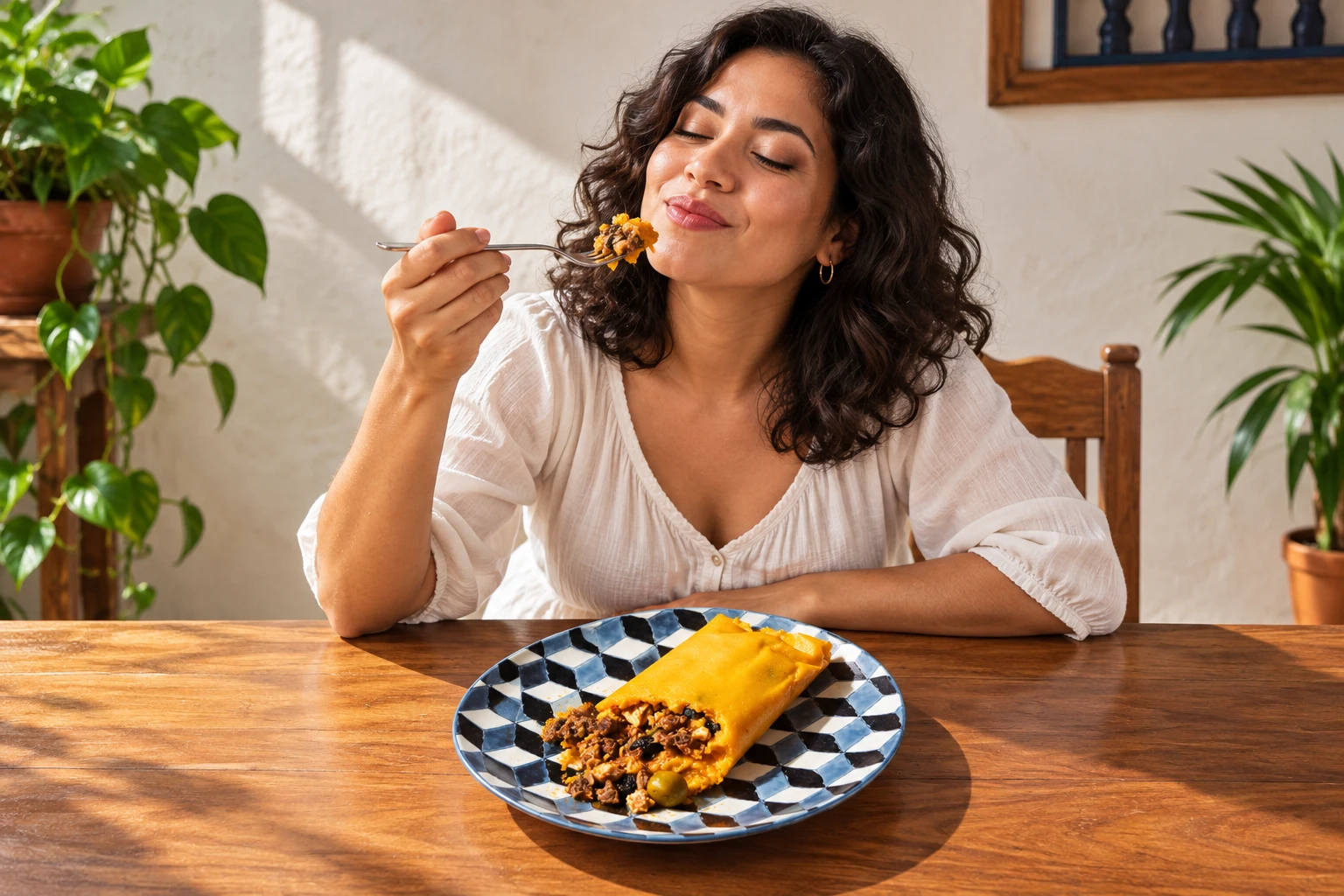
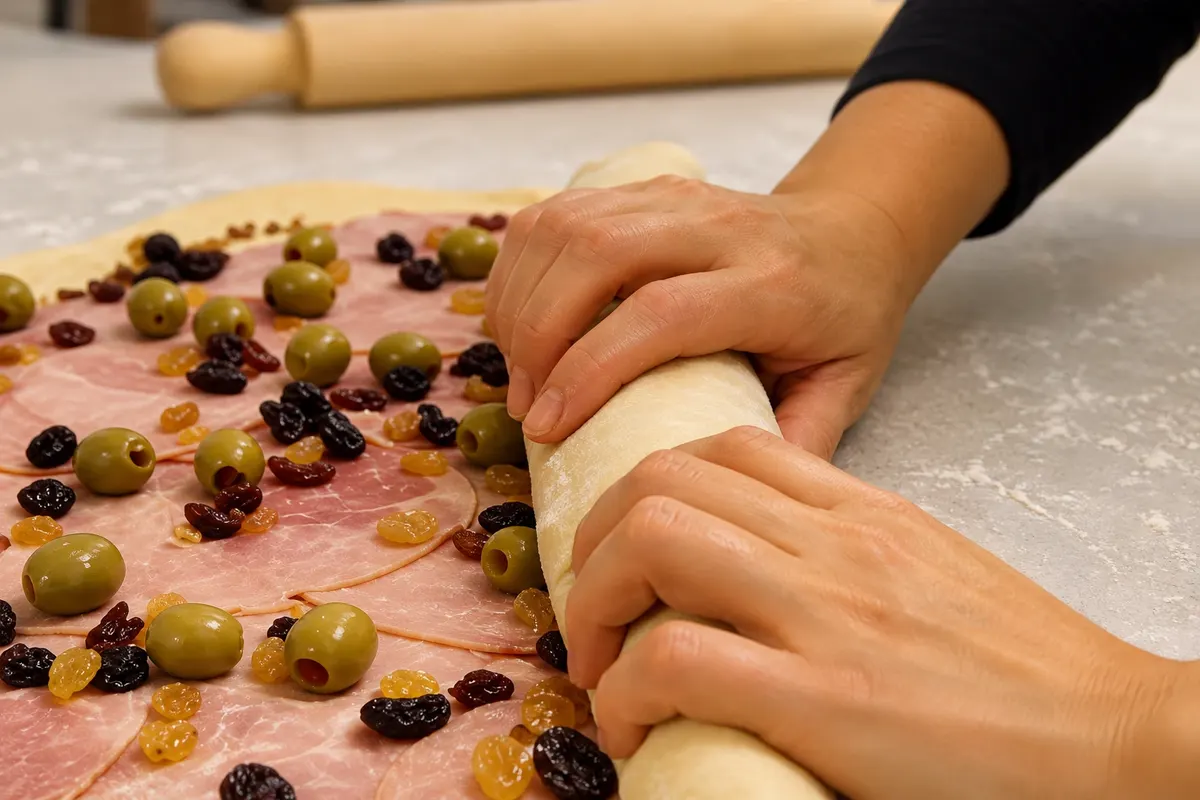
Making them is collective work. In December families gather to hallaquear: some cut and clean the leaves, others spread the dough, others put the filling, others tie. The recipe is passed from mother to daughter, and every household insists that its hallaca is the best. At the Christmas and New Year’s Eve dinners they share the table with pan de jamón, roast pork leg and a chicken-and-potato salad, and leftover hallacas are exchanged among neighbors and friends.
The hallaca sums up Venezuela’s cultural mixture. Nutritionist Maritza Landaeta-Jiménez, in a 2021 article in Anales Venezolanos de Nutrición, calls it a national dish and an expression of mestizaje: corn and the leaf come from indigenous tradition, the meats, olives, capers and raisins from Europe, and the technique of wrapping and cooking is close to other American and African preparations. There is no consensus on the name’s origin; one hypothesis cited by the author links it to an indigenous term meaning mixed thing. People of all social classes consume it at Christmas.
Each region has its own version. The Caracas recipe often uses three meats; in the Andes there are versions with different grains; in the east, with fish; in Zulia the dough is wrapped in another kind of leaf. In March 2026, the Venezuelan Ministry of Culture signed the nomination file for the hallaca to the UNESCO Representative List of the Intangible Cultural Heritage, with contributions from communities across the country, and in April the document was received by Venezuela’s delegation to the organization.


 Brazil
 Argentina
 Bolivia
 Chile
 Colombia
 Ecuador
 Guyana
 French Guiana
 Falkland Islands (Malvinas)
 Paraguay
 Peru
 Suriname
 Uruguay
 Germany
 Austria
 Belgium
 Croatia
 Denmark
 Spain
 Finland
 France
 Greece
 the Netherlands
 Hungary
 Ireland
 Iceland
 Italy
 Luxembourg
 Norway
 Poland
 Portugal
 the United Kingdom
 the Czech Republic
 Sweden
 Switzerland
 Turkey
 Canada
 the United States
 Mexico
 the Dominican Republic
 South Africa
 Australia
 Fiji
 New Zealand
 Papua New Guinea