
Drink · Lara
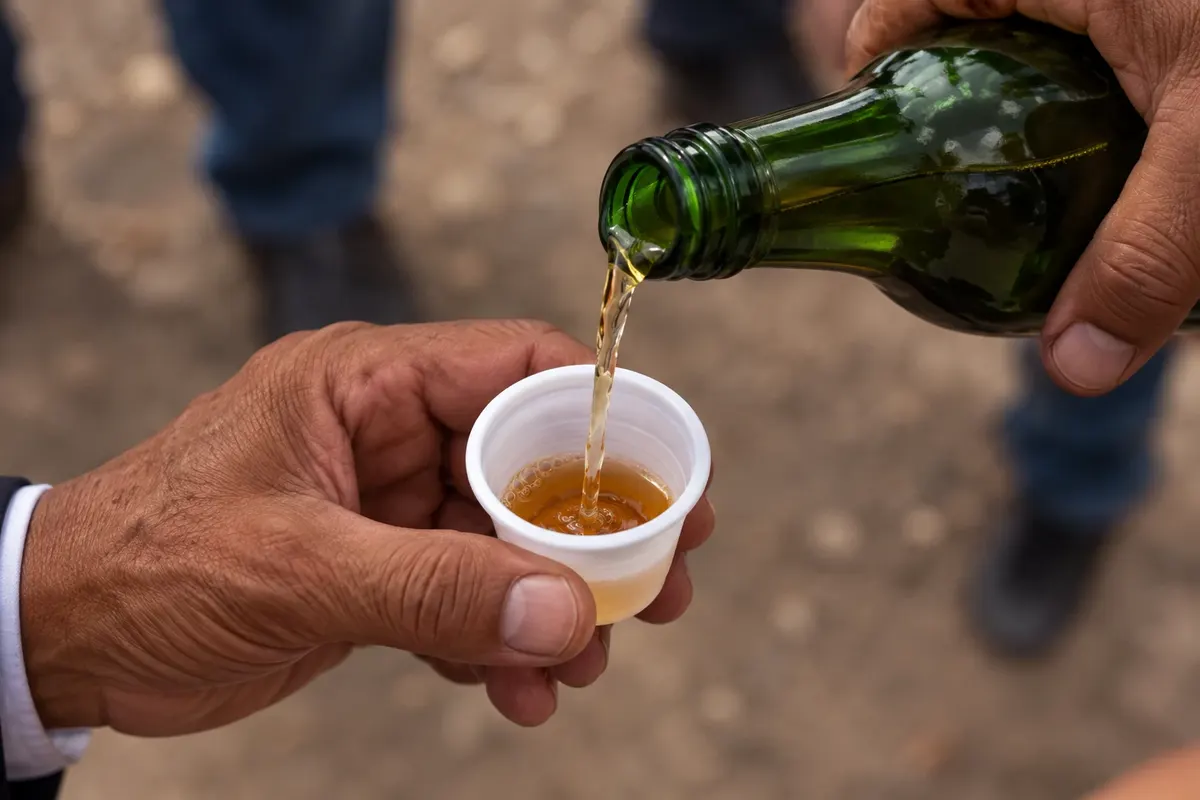
Cocuy larense
Artisanal distillate from the agave Agave cocui, made in the semi-arid region of Lara from cooked, fermented, and distilled piñas. It has a protected geographical indication in the state of Lara.

 Search
 Brazil
 Argentina
 Bolivia
 Chile
 Colombia
 Ecuador
 Guyana
 French Guiana
 Falkland Islands (Malvinas)
 Paraguay
 Peru
 Suriname
 UruguayVenezuela
 Germany
 Austria
 Belgium
 Croatia
 Denmark
 Spain
 Finland
 France
 Greece
 the Netherlands
 Hungary
 Ireland
 Iceland
 Italy
 Luxembourg
 Norway
 Poland
 Portugal
 the United Kingdom
 the Czech Republic
 Sweden
 Switzerland
 Turkey
 the United States
 Mexico
 the Dominican RepublicTurkey
 South Africa
 Australia
 Fiji
Flavors · Caracas
Bread made from a slightly sweet dough rolled with ham, raisins and olives — the Venezuelan Christmas bread. Miro Popić’s research places the first record in a December 1905 advertisement for a bakery in downtown Caracas.
Traditional dish from Caracas, Distrito Capital
Also known as: pan de jamon
Illustrative images. The pictures in this guide are illustrations based on the real place, not photographs, and may differ from it.

Click a photo to enlarge it.
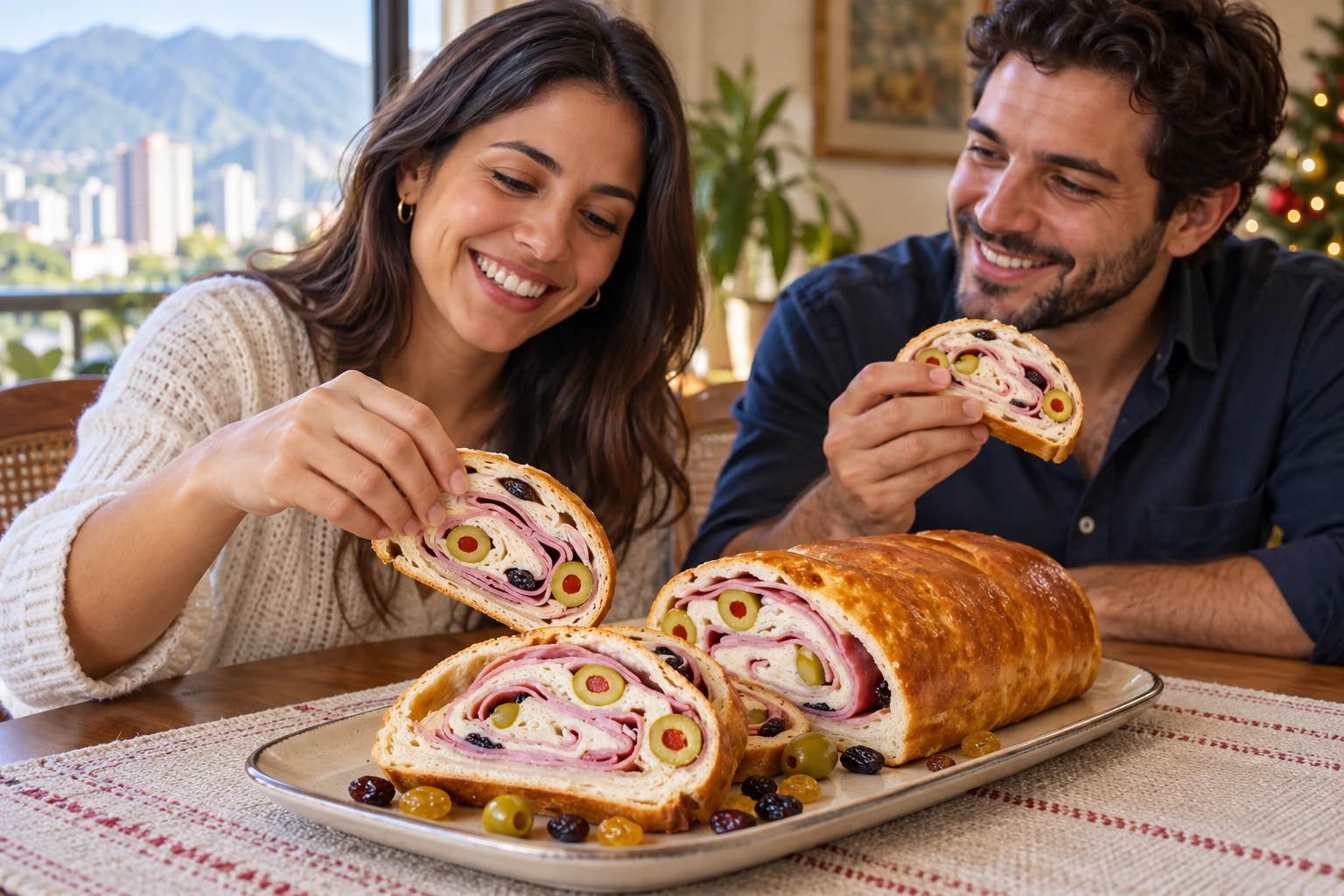
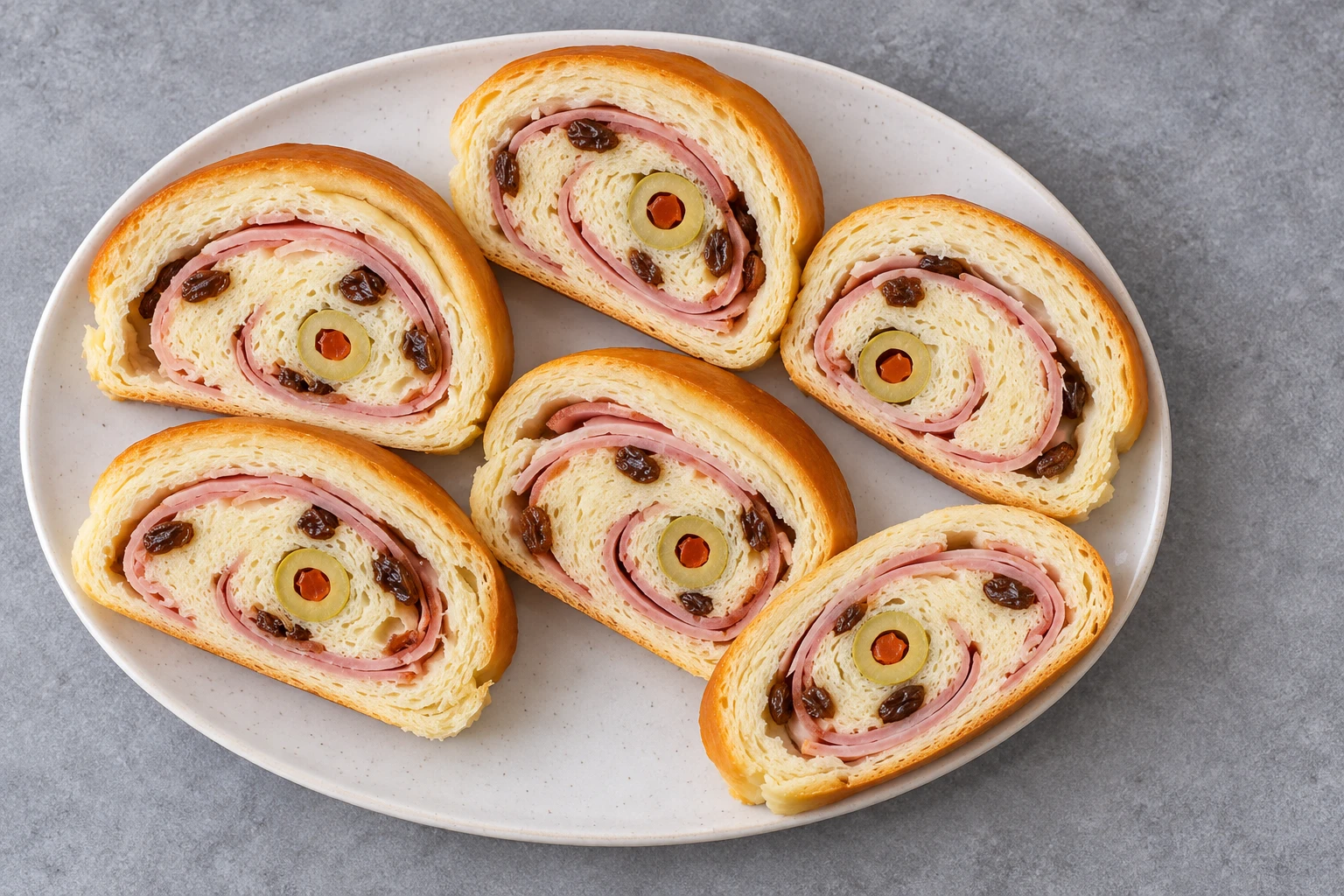
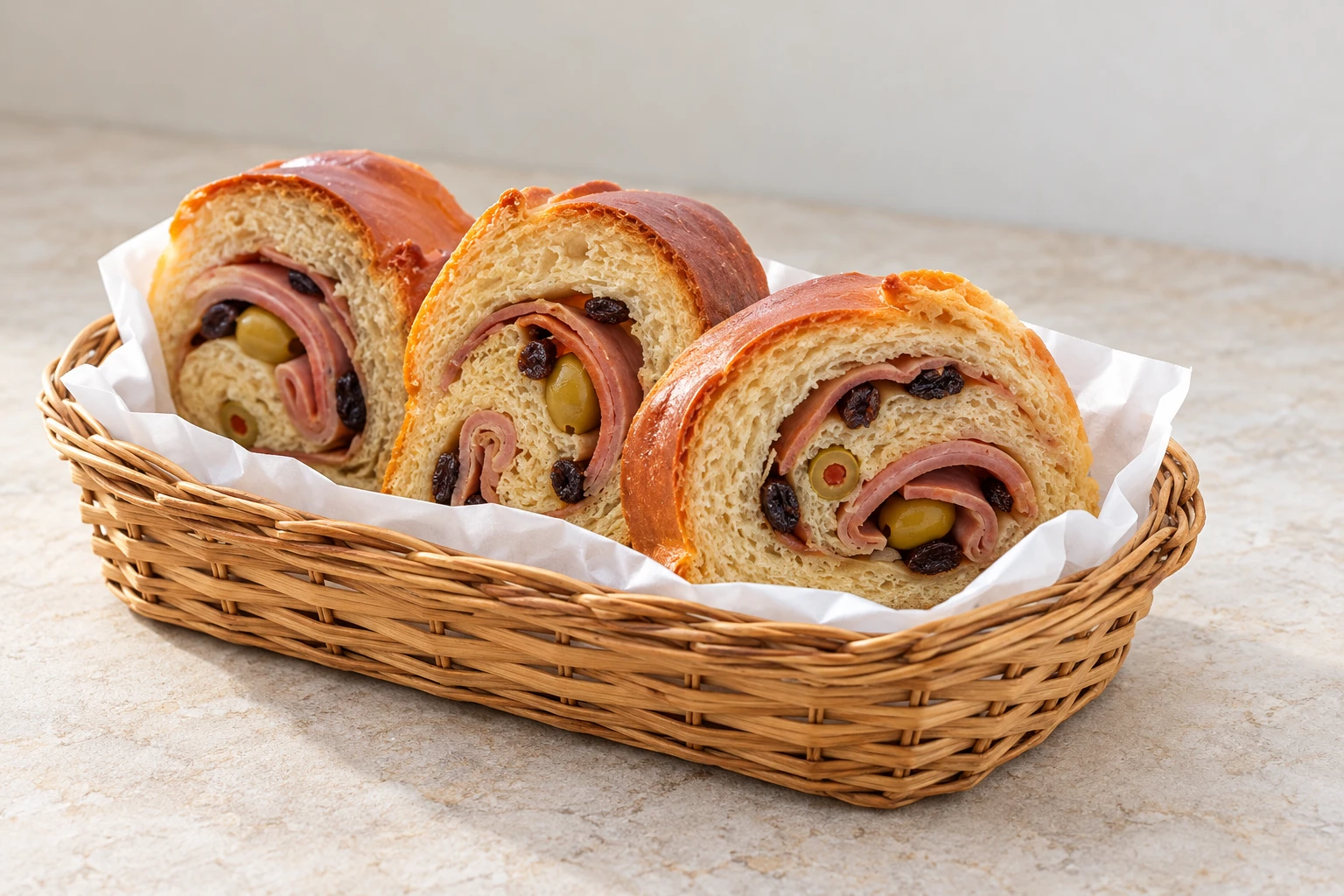
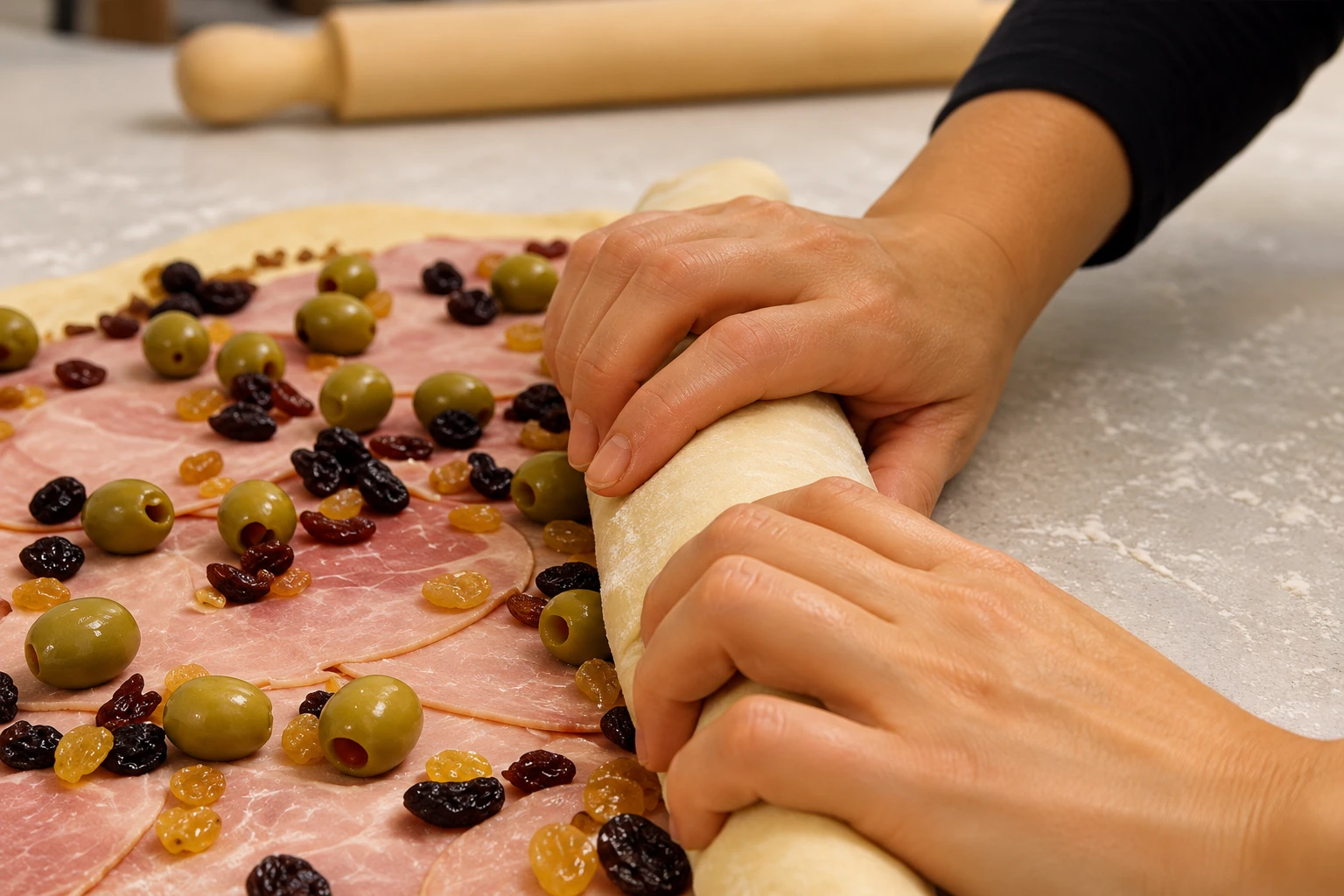
Pan de jamón — Caracas, Venezuela
Pan de jamón is a wheat bread made from a soft, slightly sweet dough, rolled out, topped with ham, raisins and olives, and rolled up like a jelly roll before baking. Sliced, it reveals a spiral of filling. It is Venezuela’s Christmas bread: it appears in bakeries in December and shares the table with the hallaca.
Few Venezuelan dishes have a known date and place of origin. Food journalist Miro Popić, author of a book dedicated to pan de jamón, found the first record in a December 1905 advertisement: a bakery on the corner of Gradillas in downtown Caracas offered "pan con jamón." The recipe made use of ham pieces left on the bone, wrapped in bread dough. By the following Christmas, other bakeries in the city were competing for customers with their own versions.
The filling developed over time. Around the 1920s, raisins and olives were added, and many family recipes included bacon. The sweet-and-salty combination, with papelón (unrefined cane sugar) in some doughs, brings together Caribbean and European flavors in a bread Venezuelans consider their own.
In the 1970s, according to Popić, Caracas restaurants began serving pan de jamón alongside hallaca, chicken salad and roast pork as part of the so-called plato navideño, which became the Christmas dinner for much of the country.
In December, bakeries bake hundreds of loaves per day for Christmas and New Year’s; outside the season, some make them to order. With Venezuelan emigration, pan de jamón began to be baked in bakeries in other countries as well.
Caracas , Distrito Capital
According to Miro Popić’s research, the first record of pan de jamón is a December 1905 advertisement for a bakery in downtown Caracas.
Slightly sweet wheat bread dough (in some recipes with papelón), cooked ham, raisins and olives, often stuffed with bell pepper; in many homes, bacon.
Sliced, at room temperature or lightly warmed. At the Christmas dinner it accompanies the hallaca, chicken salad and roast pork on the plato navideño. It is also eaten on its own for breakfast or as a snack.
Christmas and New Year’s, in December. Outside the season, some bakeries make it to order.
Your questions
In Caracas. Miro Popić’s research found the first record in a December 1905 advertisement for a bakery in the city center.
Slightly sweet bread dough, ham, raisins and olives; many recipes add bacon. The dough is rolled with the filling and baked.
Mainly at Christmas and New Year’s. At the dinner it accompanies the hallaca on the plato navideño.
Some bakeries make it to order year-round, but the season is December.
Flavors of Venezuela
Artisanal distillate from the agave Agave cocui, made in the semi-arid region of Lara from cooked, fermented, and distilled piñas. It has a protected geographical indication in the state of Lara.
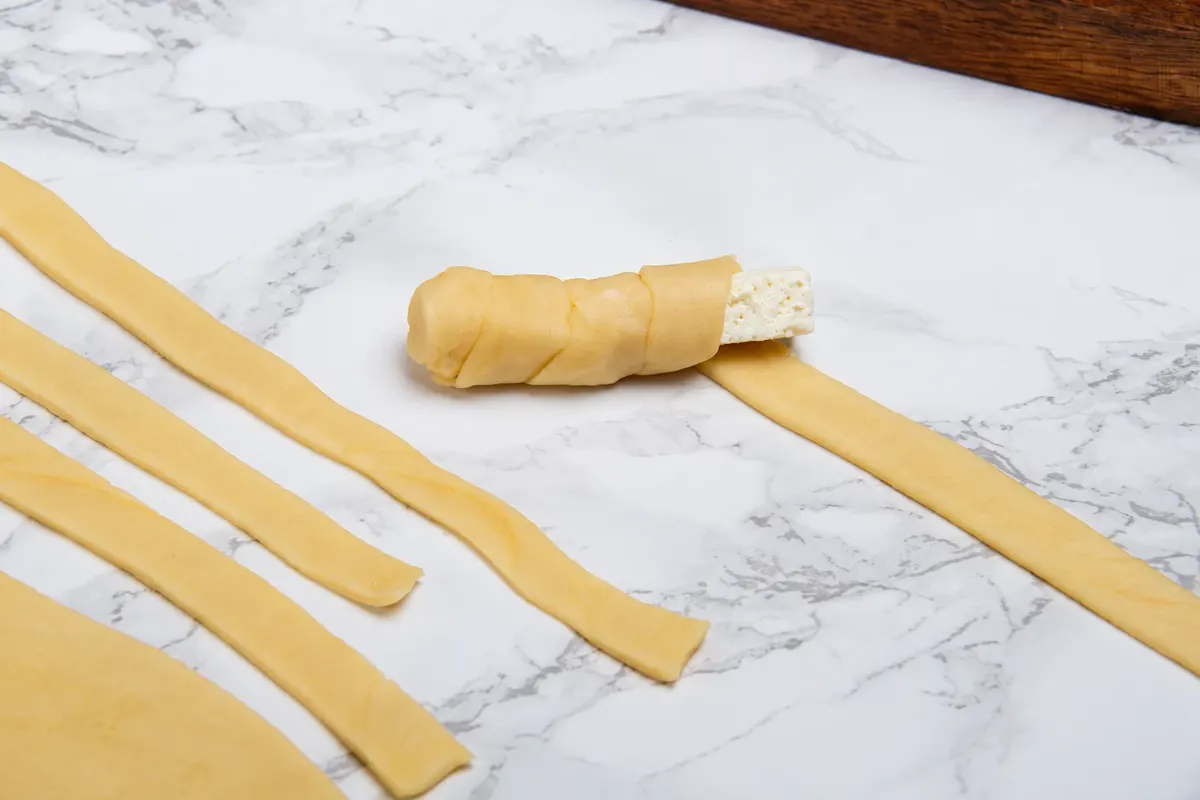
Stick of wheat dough wrapped around a stick of white cheese and fried until golden, found at almost every Venezuelan party. The most widespread version says it was born in Los Teques, which gives it its name.