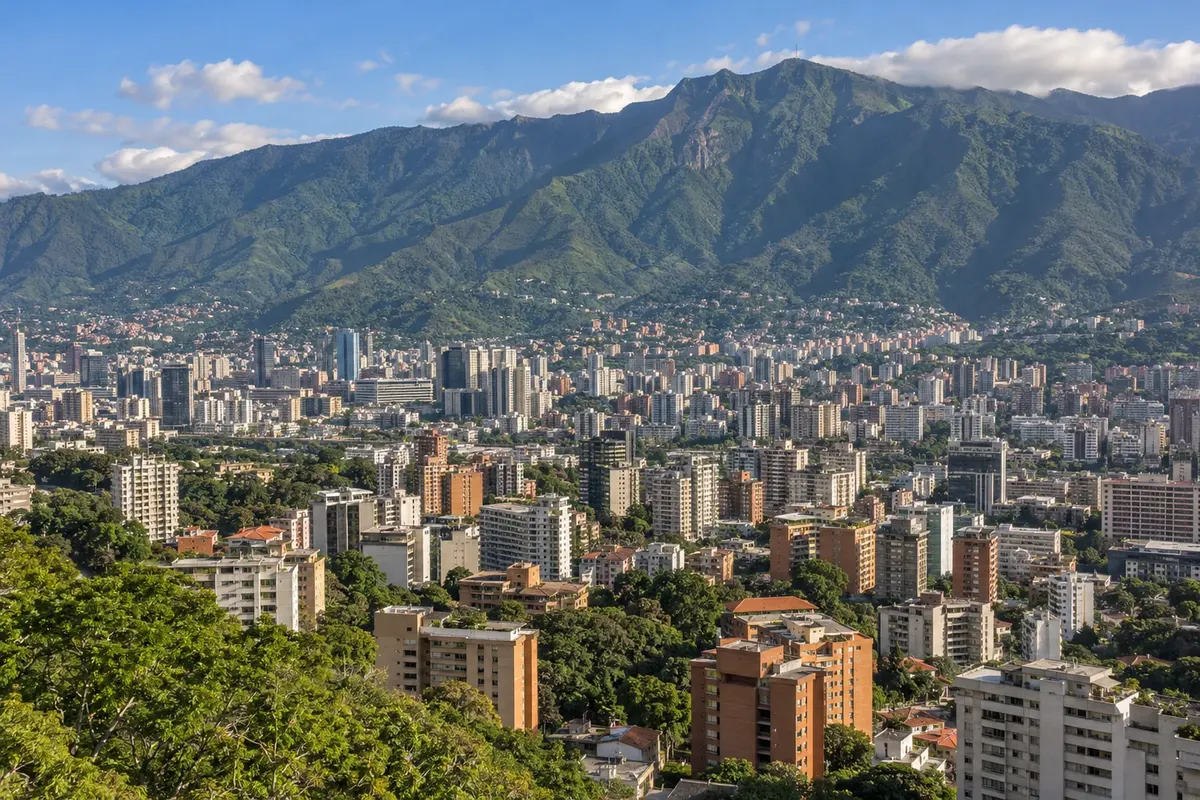
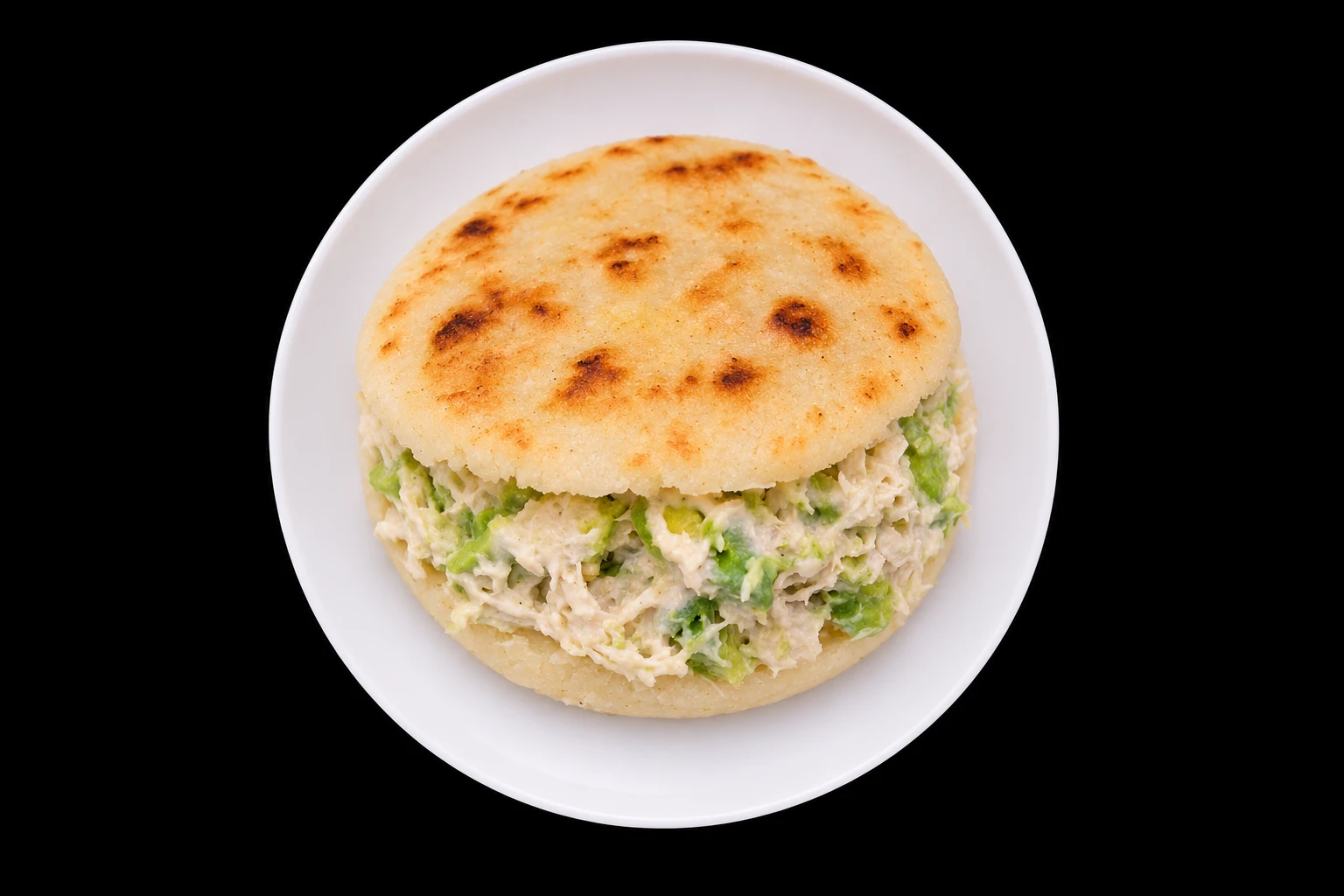
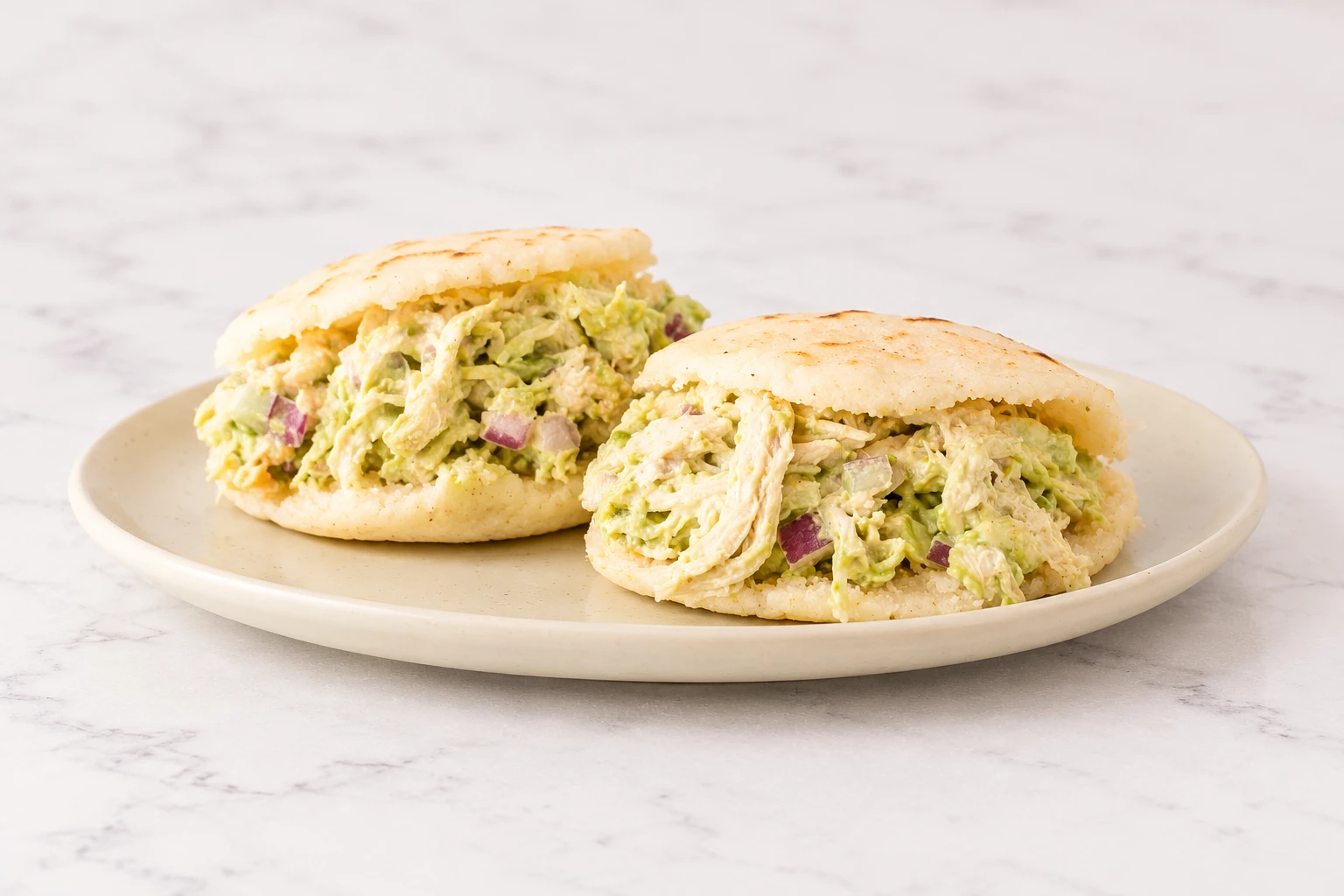
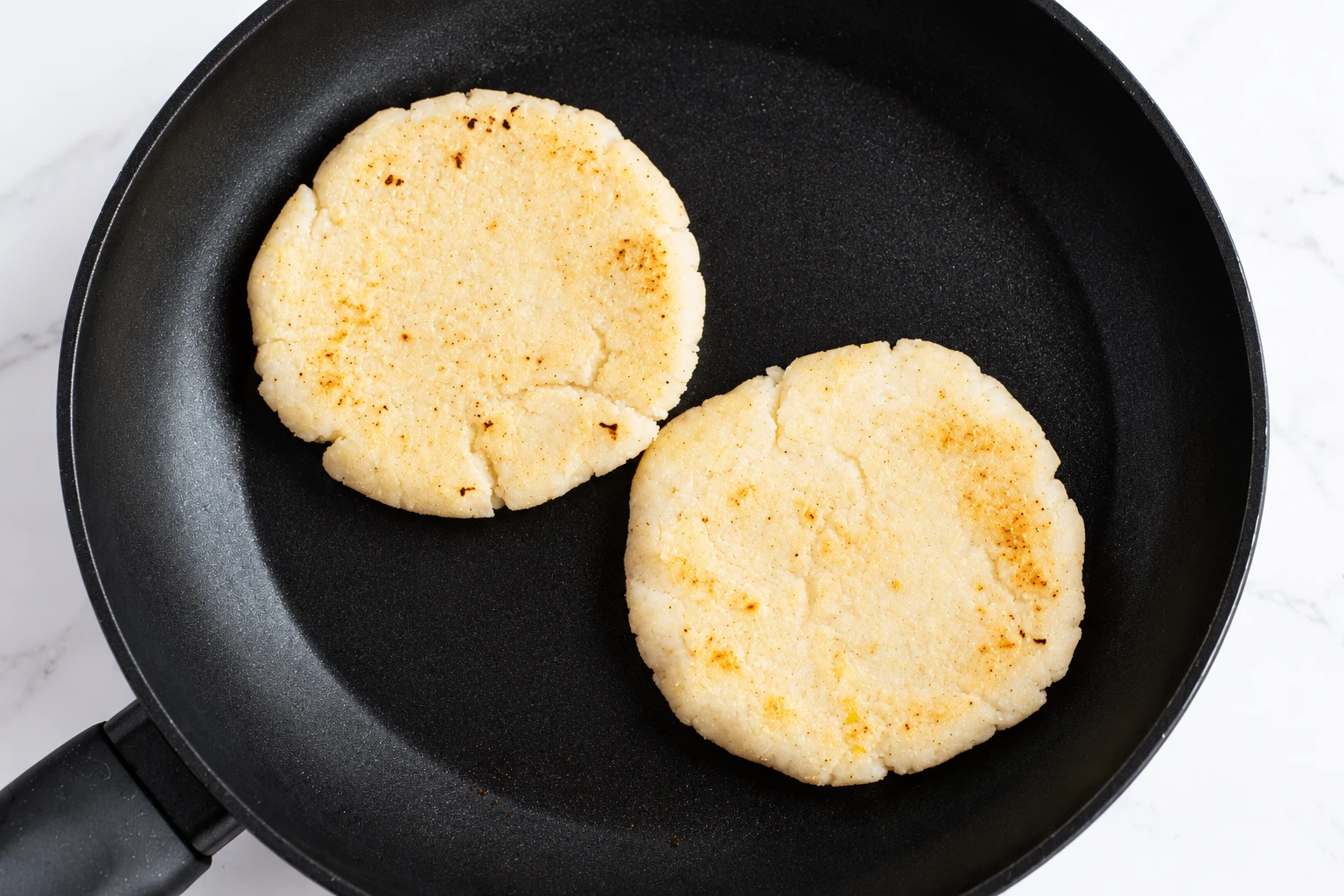
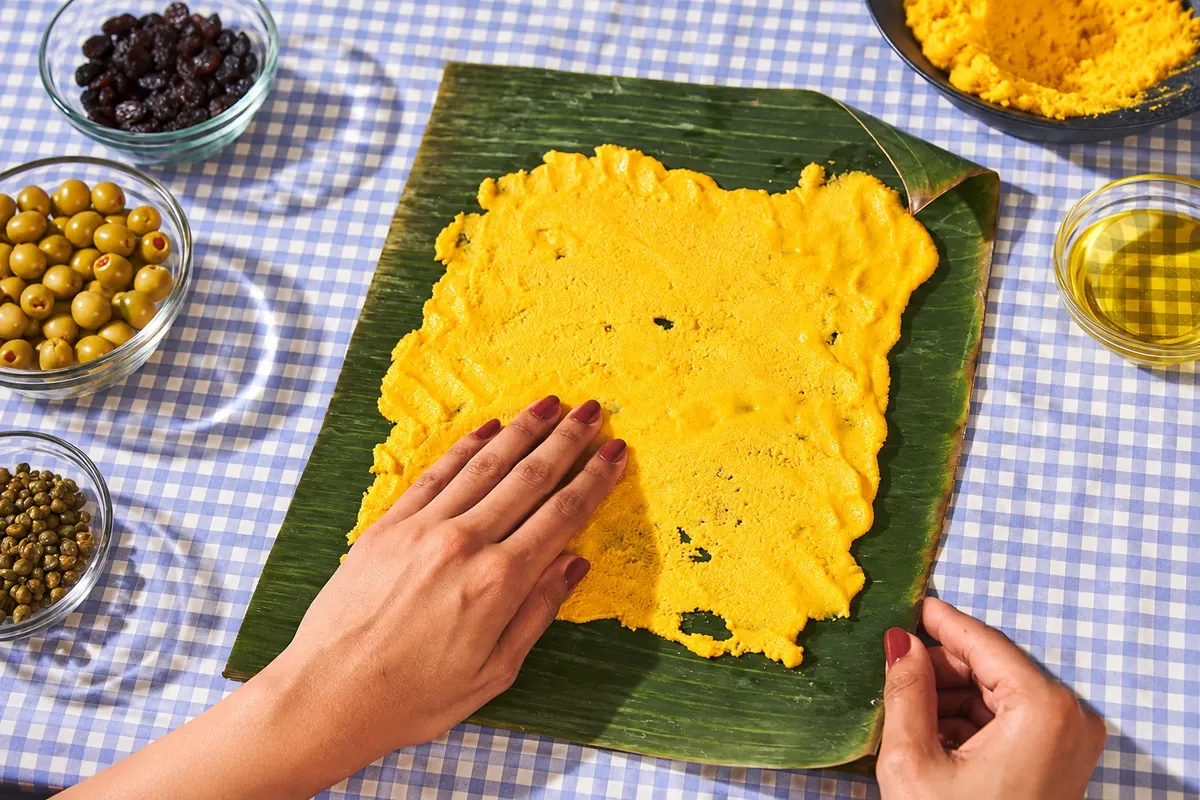
In Venezuela, the arepa is the everyday bread. The dough is made from white or yellow corn, today almost always pre-cooked corn flour mixed with water and salt; before industrial flour, corn was cooked and ground at home, in a mortar or mill. Discs a few centimeters thick are formed, cooked on the budare, the round iron or clay griddle, and finished in the oven or on embers until the crust becomes firm and hollow to the touch. There are also fried arepas. Hot, they are split open from the side with a knife and filled.
The fillings make up a national repertoire, and many have names. The reina pepiada contains shredded chicken with avocado and mayonnaise; the pelúa, shredded beef and yellow cheese; the dominó, black beans and grated white cheese; the catira, chicken with yellow cheese. There are arepas with just butter and cheese, with perico (scrambled eggs with tomato and onion), with cazón, a small stewed shark in the east, or with chicharrón. Areperas, snack bars dedicated to them, stay open late and serve from breakfast through the early hours.
The arepa comes from indigenous peoples who cultivated corn in the region long before the Europeans arrived. One explanation for the name, cited by Venezuelan historian Miguel Felipe Dorta, links the word to the term erepa, which the Cumanagotos, a people from the country’s east, used to refer to corn. The Timoto-cuicas, from the Venezuelan Andes, also processed corn into similar doughs.
The arepa is the subject of an old dispute with Colombia, where it is also an everyday food. Experts interviewed by Voice of America say it existed in the region before the two countries existed, which makes the question unanswered; the two territories, in fact, were part of the same state, Gran Colombia, between 1819 and 1831. In Venezuela, the arepa established itself as a main dish, split and filled. In 2024, the Venezuelan government submitted the Venezuelan arepa, with its preparation, consumption and role in family and public life, to UNESCO’s Representative List of the Intangible Cultural Heritage. With Venezuelan emigration, areperas have spread to cities in many countries.


 Brazil
 Argentina
 Bolivia
 Chile
 Colombia
 Ecuador
 Guyana
 French Guiana
 Falkland Islands (Malvinas)
 Paraguay
 Peru
 Suriname
 Uruguay
 Germany
 Austria
 Belgium
 Croatia
 Denmark
 Spain
 Finland
 France
 Greece
 the Netherlands
 Hungary
 Ireland
 Iceland
 Italy
 Luxembourg
 Norway
 Poland
 Portugal
 the United Kingdom
 the Czech Republic
 Sweden
 Switzerland
 Turkey
 Canada
 the United States
 Mexico
 the Dominican Republic
 South Africa
 Australia
 Fiji
 New Zealand
 Papua New Guinea