

 Brazil
 Argentina
 Bolivia
 Chile
 Colombia
 Ecuador
 Guyana
 French Guiana
 Falkland Islands (Malvinas)
 Paraguay
 Peru
 Suriname
 Uruguay
 Venezuela
 Germany
 Austria
 Belgium
 Croatia
 Denmark
 Spain
 Finland
 France
 Greece
 the Netherlands
 Hungary
 Ireland
 Iceland
 Italy
 Luxembourg
 Norway
 Poland
 Portugal
 the Czech Republic
 Sweden
 Switzerland
 Turkey
 Canada
 the United States
 Mexico
 the Dominican Republic
 South Africa
 Australia
 Fiji
 New Zealand
 Papua New Guinea
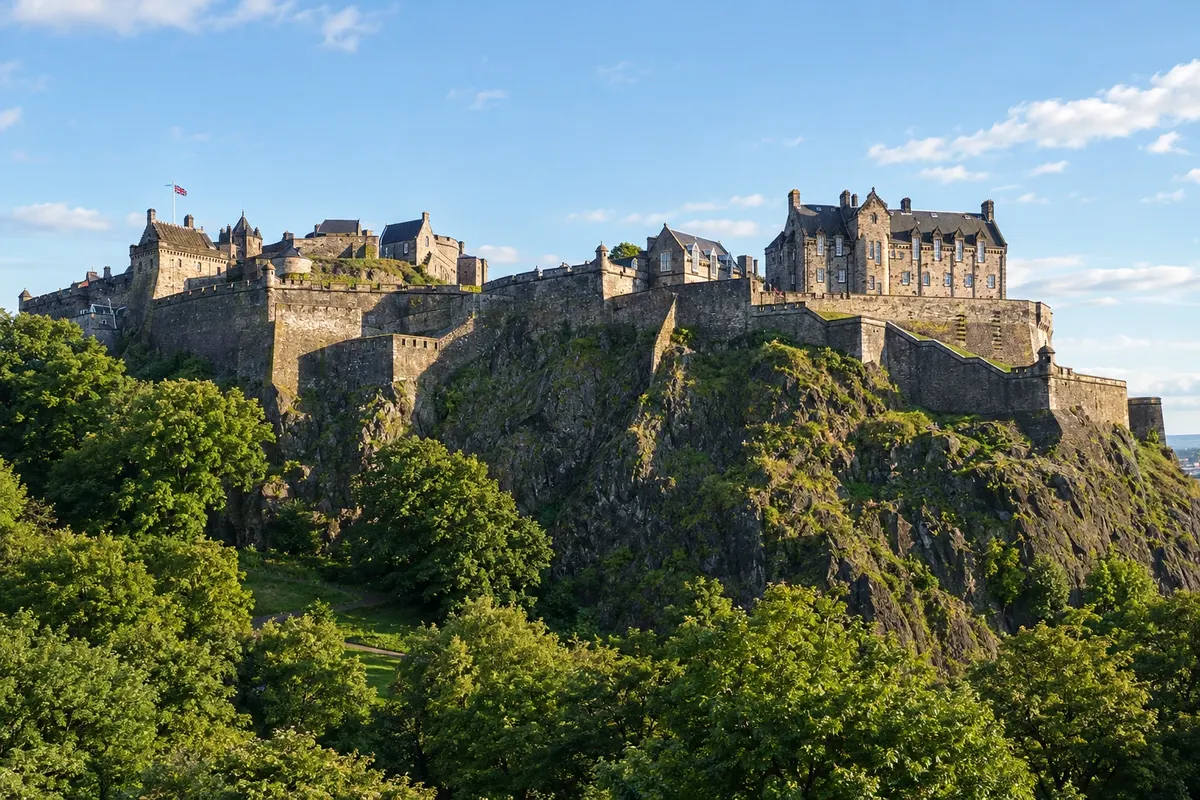
Culture · Edinburgh
Edinburgh Fringe
An open performing-arts festival where any artist who finds a stage can take part: for about three weeks in August, Edinburgh, the capital of Scotland, hosts thousands of theatre, comedy, dance, circus and music performances in theatres, concert halls, bars and adapted spaces, while street performers take over the Royal Mile.
In the photo: Edinburgh
Illustrative images. The pictures in this guide are illustrations based on the real place, not photographs, and may differ from it.

Click a photo to enlarge it.
Edinburgh Fringe — Edinburgh
In August, for about three weeks; exact start and end dates change each year.
August
Dates change every year: check this year's date before you travel.
The festival
What is Edinburgh Fringe
The Edinburgh Fringe, officially the Edinburgh Festival Fringe, is a performing-arts festival that fills Scotland’s capital for almost the entire month of August. Its defining idea is open access: there is no committee that selects the programme, and any artist or company that finds a venue willing to host them can perform. The result is a huge and varied programme, with thousands of shows, from well-known names to artists at the start of their careers.
The story began in 1947, when the city launched the Edinburgh International Festival to celebrate European cultural life after World War II. Eight theatre groups that hadn’t been invited turned up anyway and performed on their own, at the margins, or on the fringe, of the official festival, and that’s where the name Fringe came from. Others copied the idea in the following years, and in 1958 the Festival Fringe Society was created; it began publishing the programme and centralising ticket sales at a box office, while keeping the rule of not selecting who takes part. The society, a non-profit organisation, still keeps this structure and has its shop on the High Street in the Old Town.
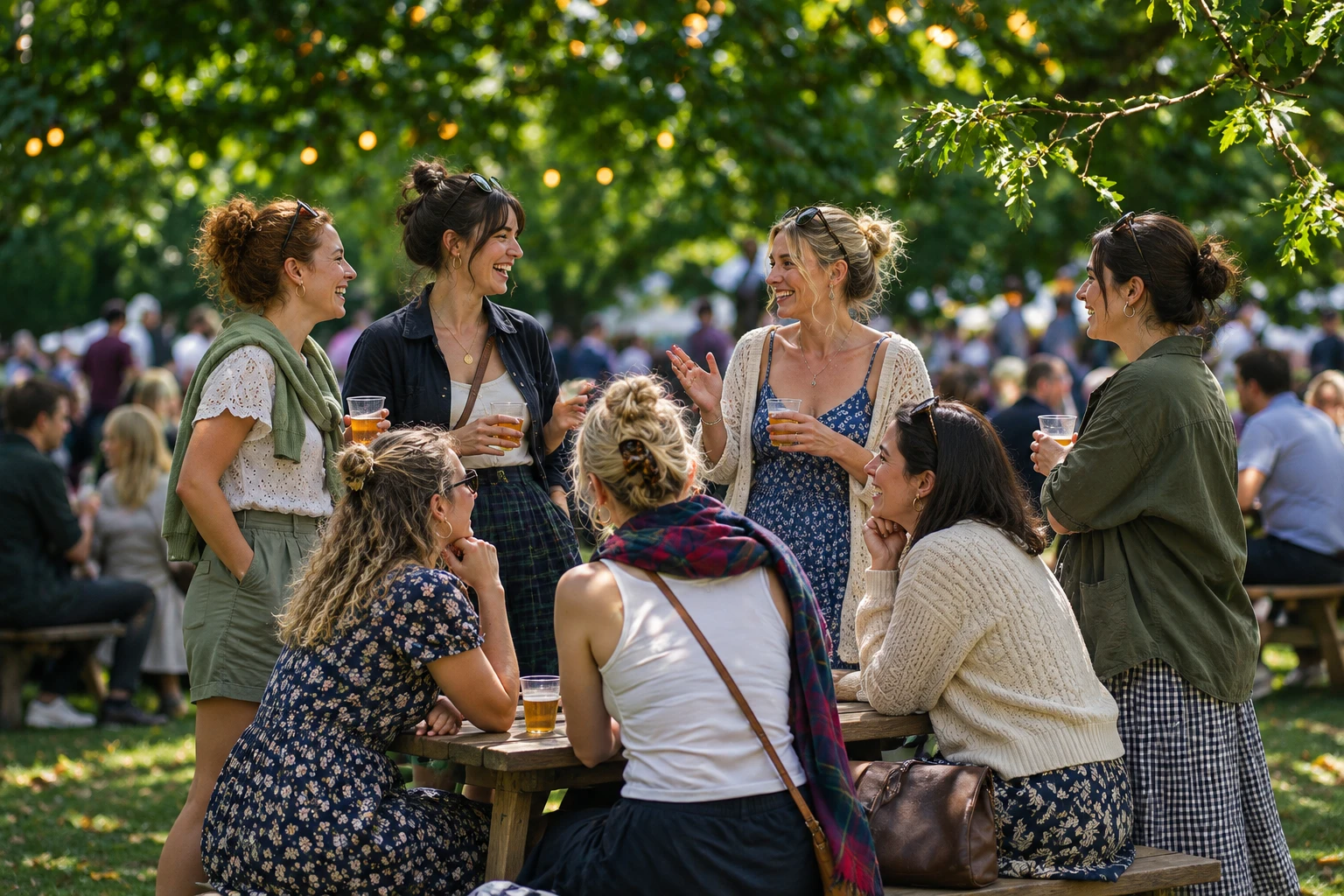
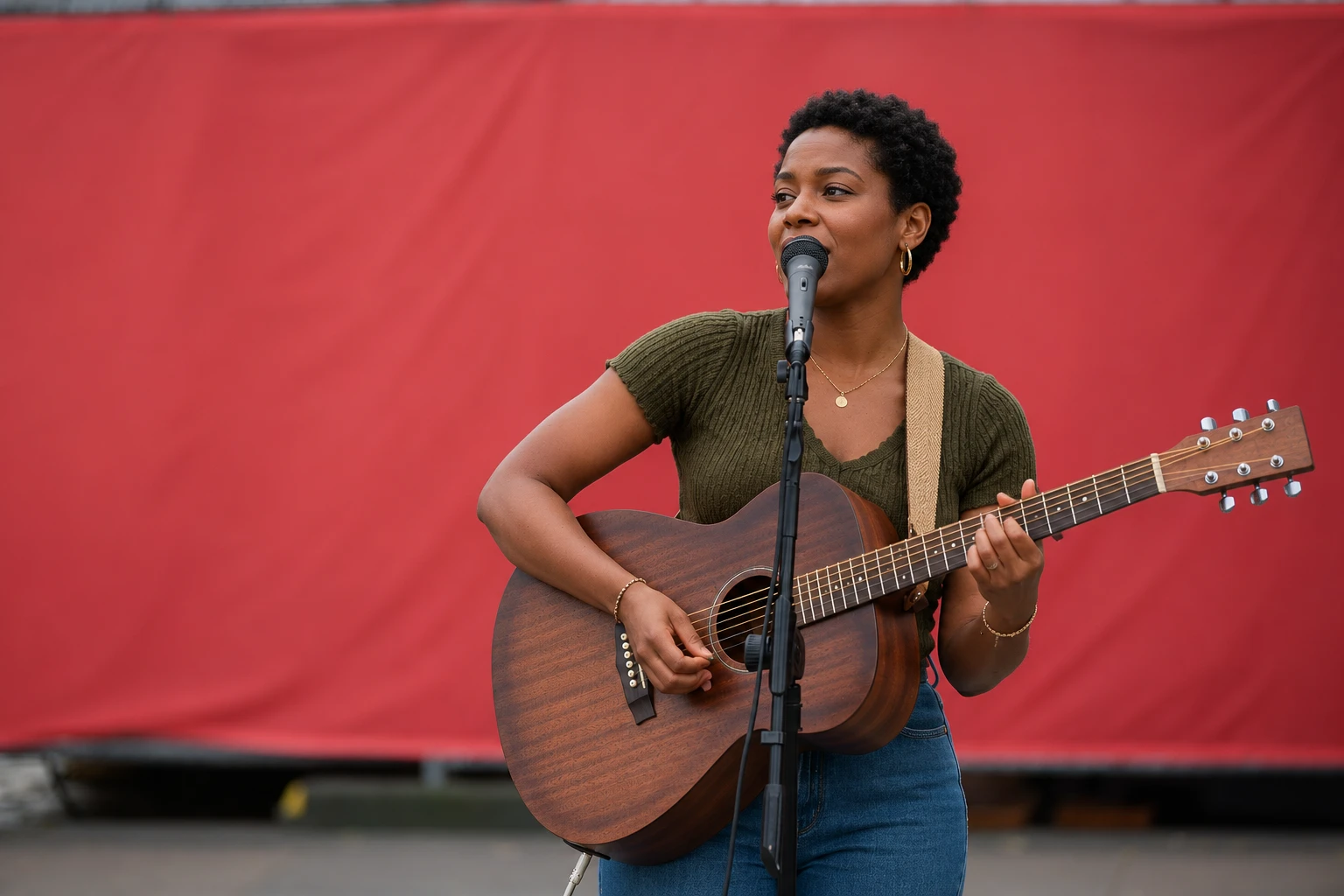
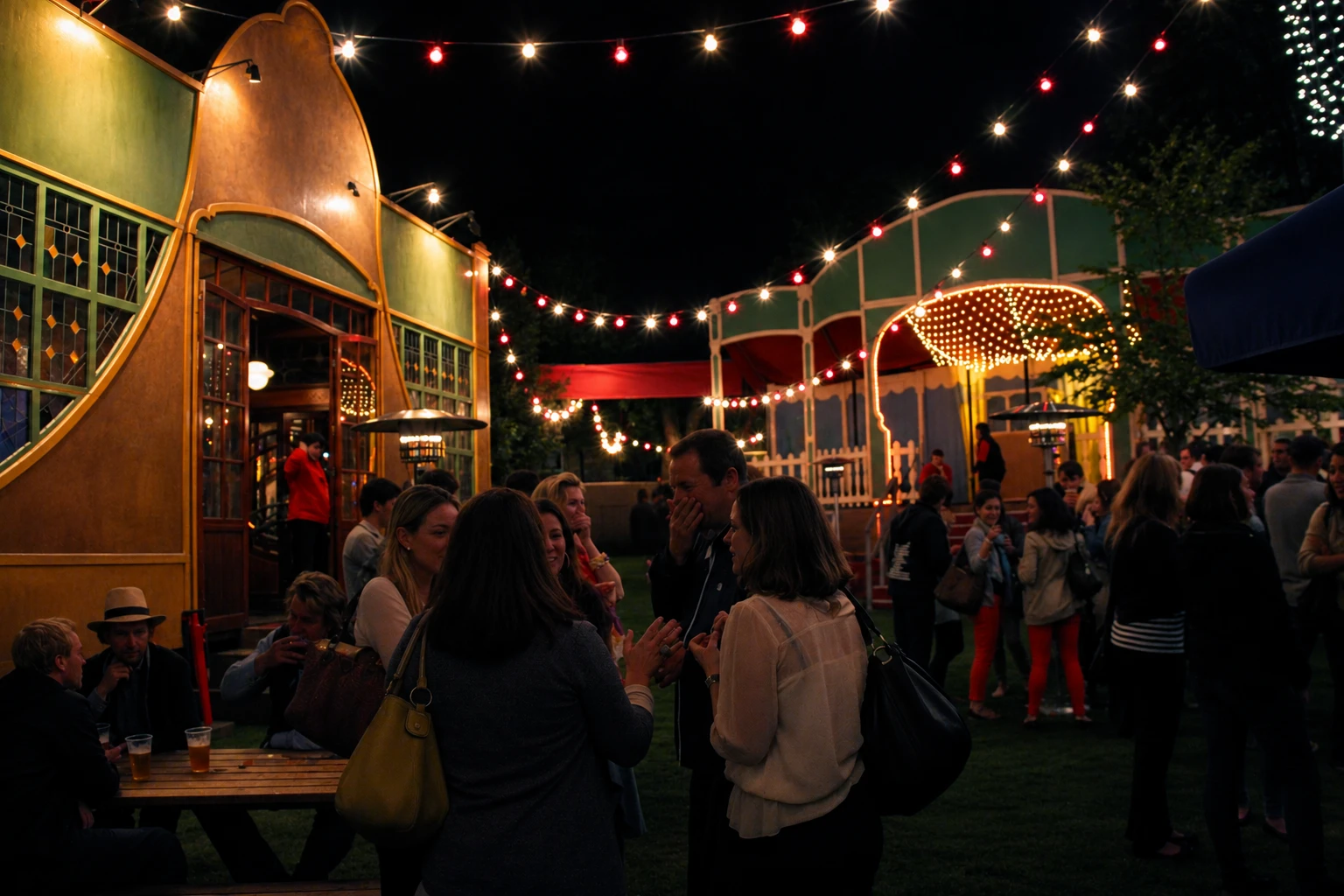
The programme covers theatre, comedy, dance, physical theatre, circus, cabaret, children’s shows, musicals, opera, music, spoken-word poetry and exhibitions. Venues range from theatres and concert halls to bars, parks, buses and adapted containers, spread across the Old Town, the New Town and other neighbourhoods. There are sessions from morning until after midnight, and anyone with a few days in the city can put together a schedule with several shows a day. Many venues operate only during the festival, and the list of shows keeps growing until the first days of August.
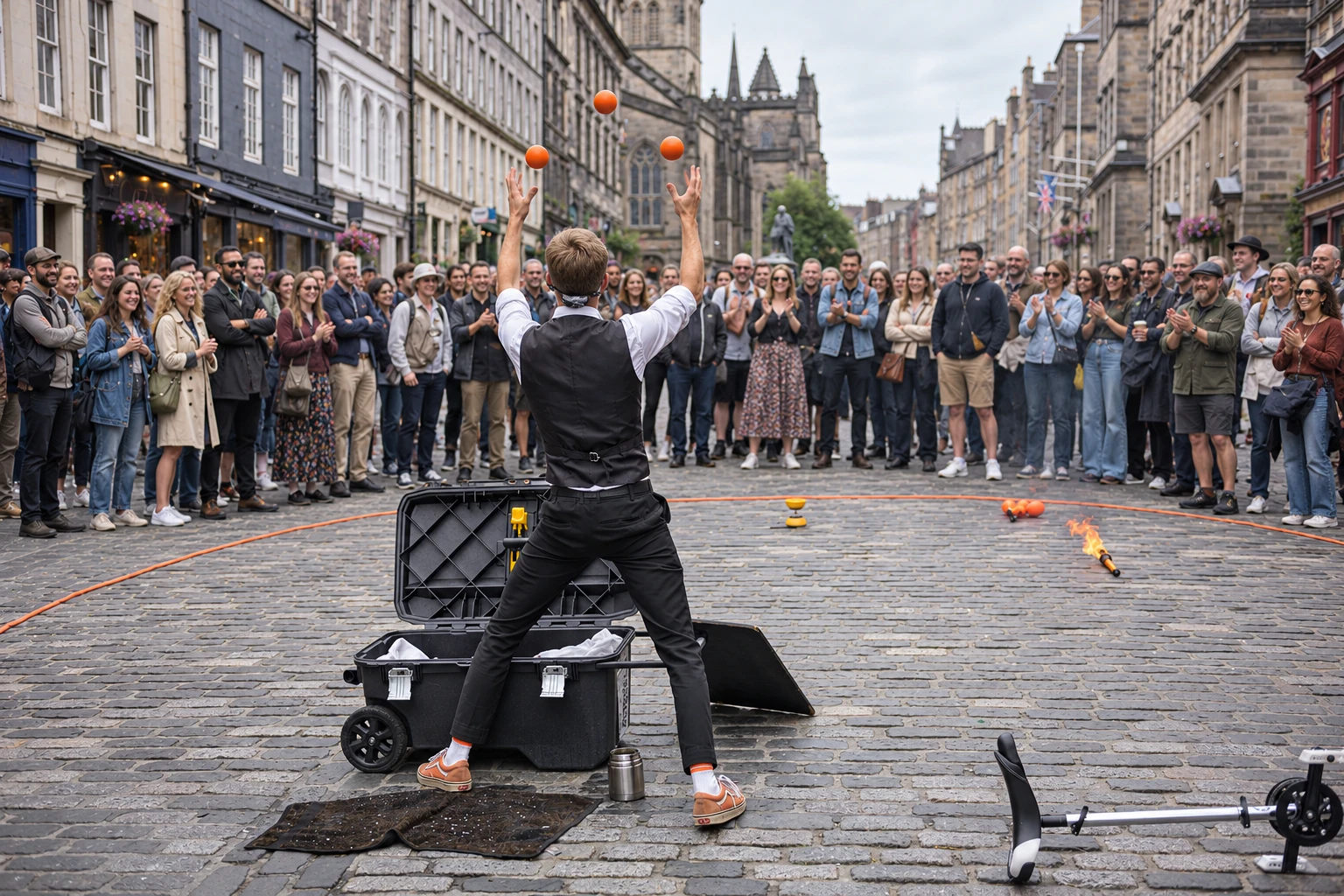
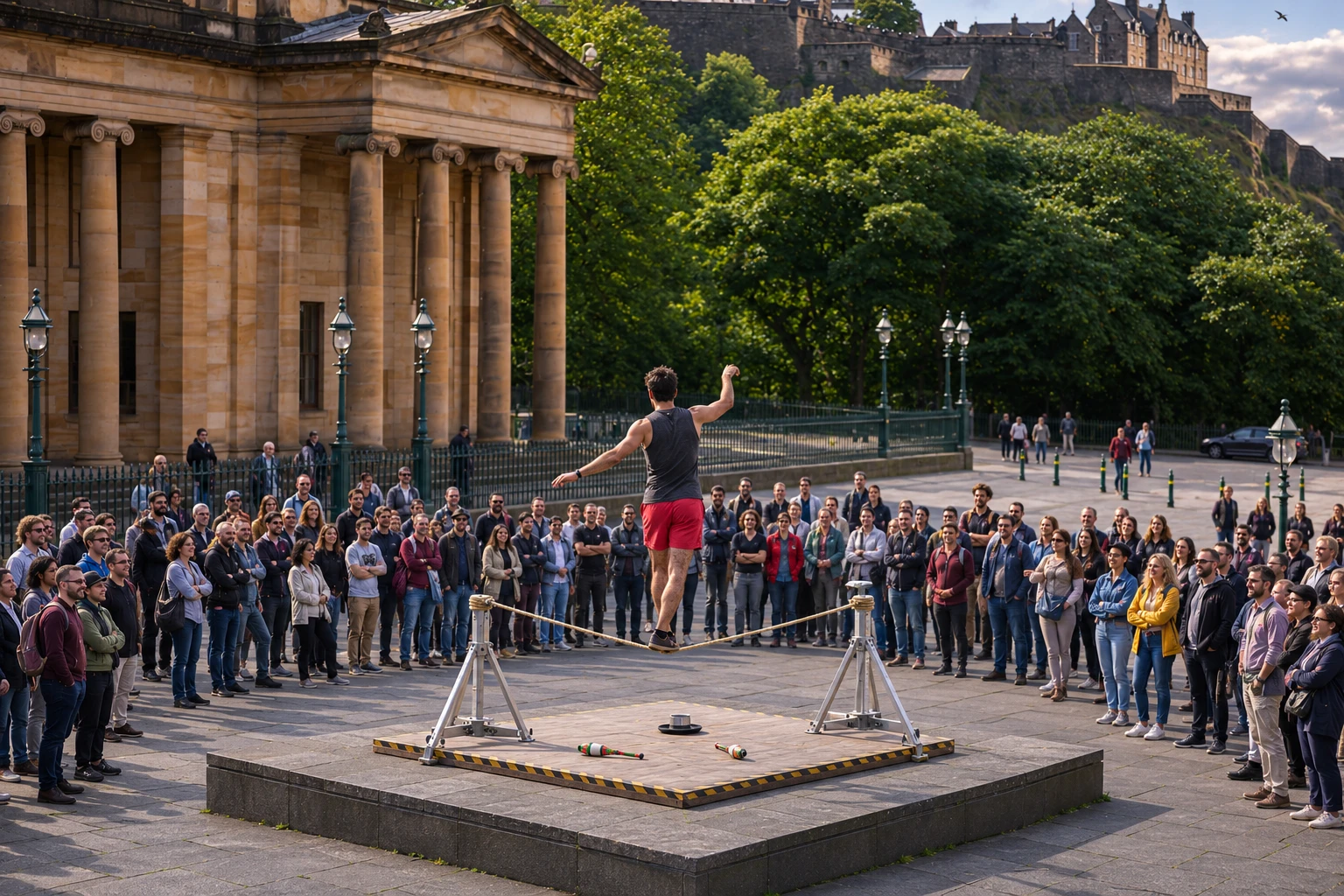
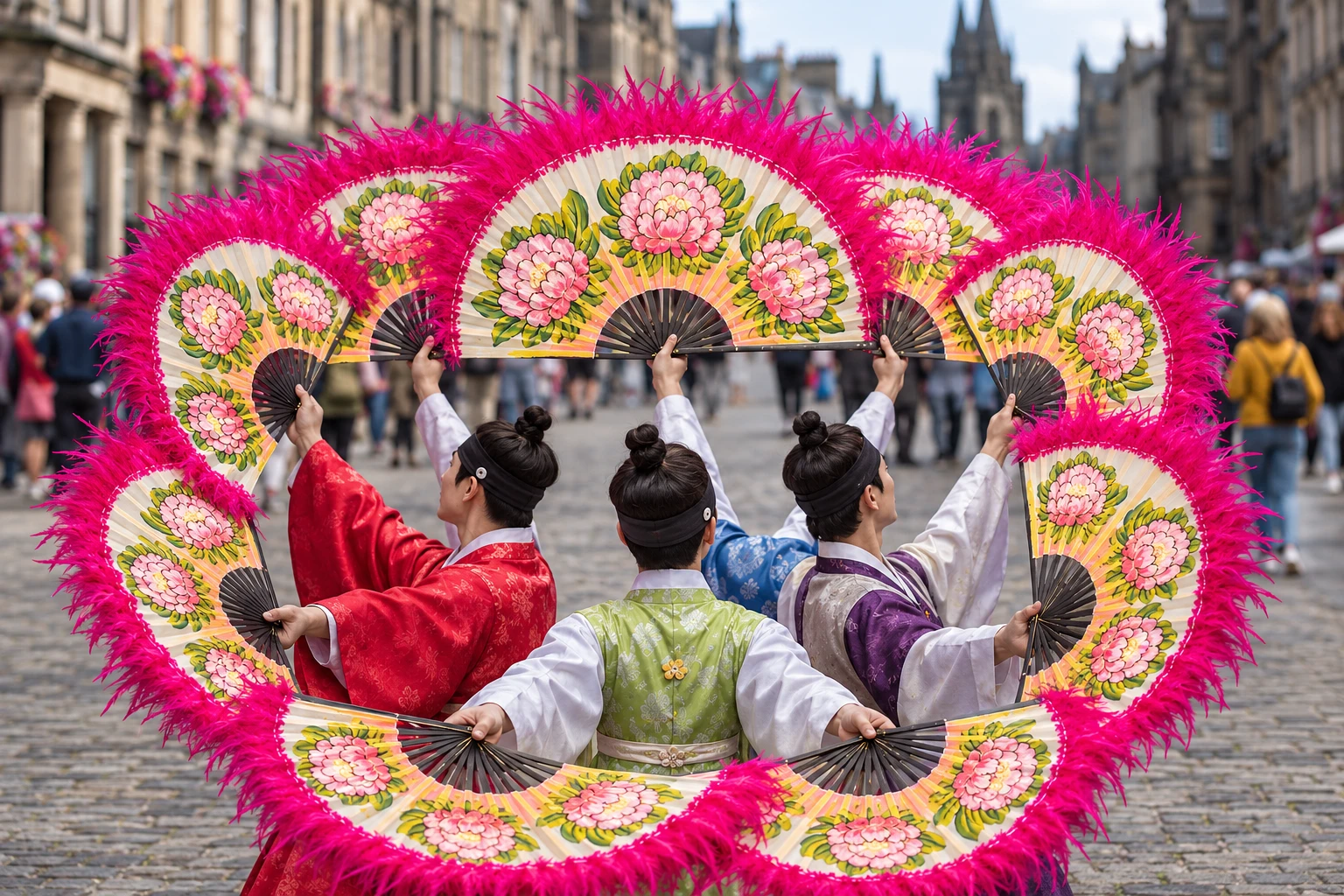
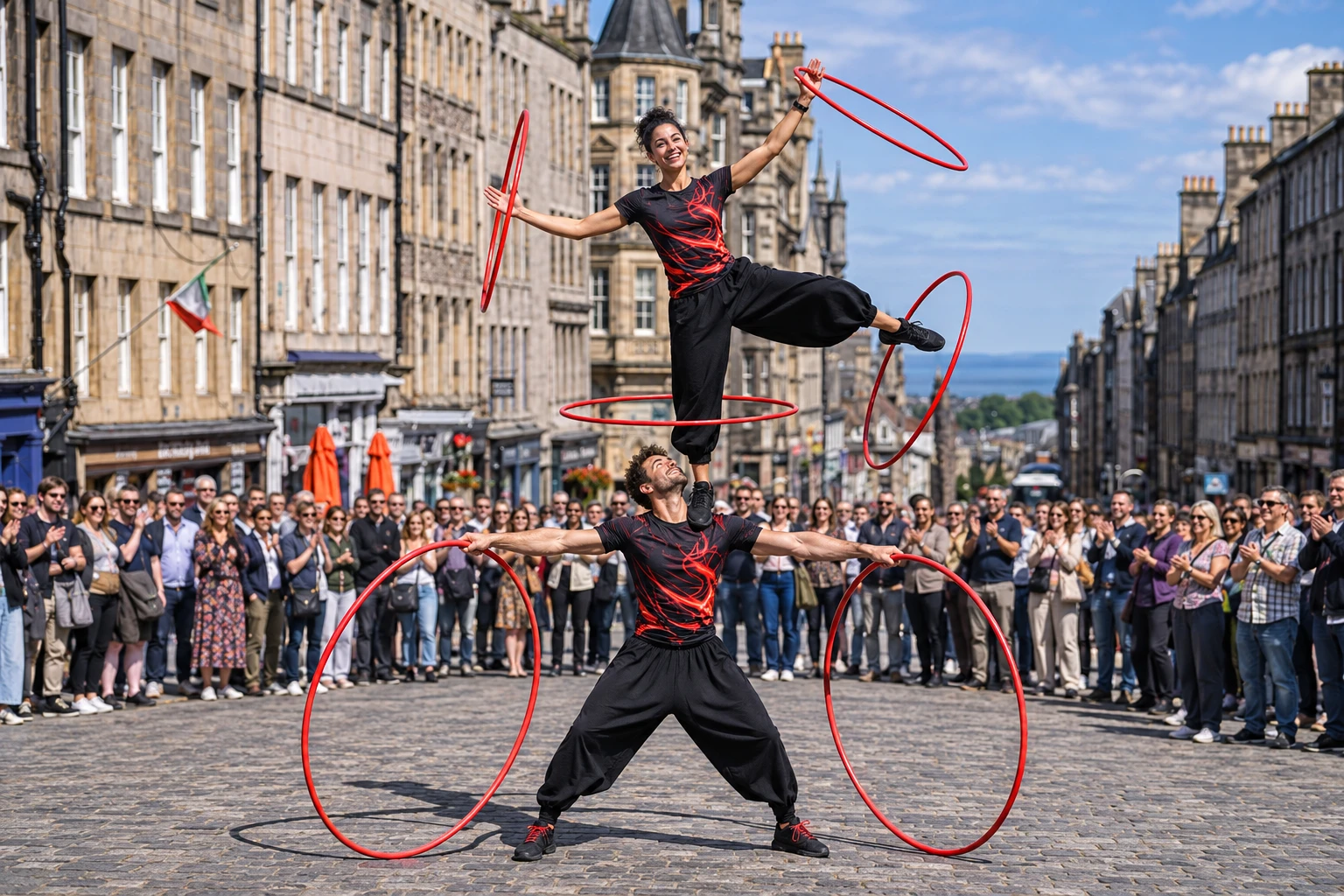
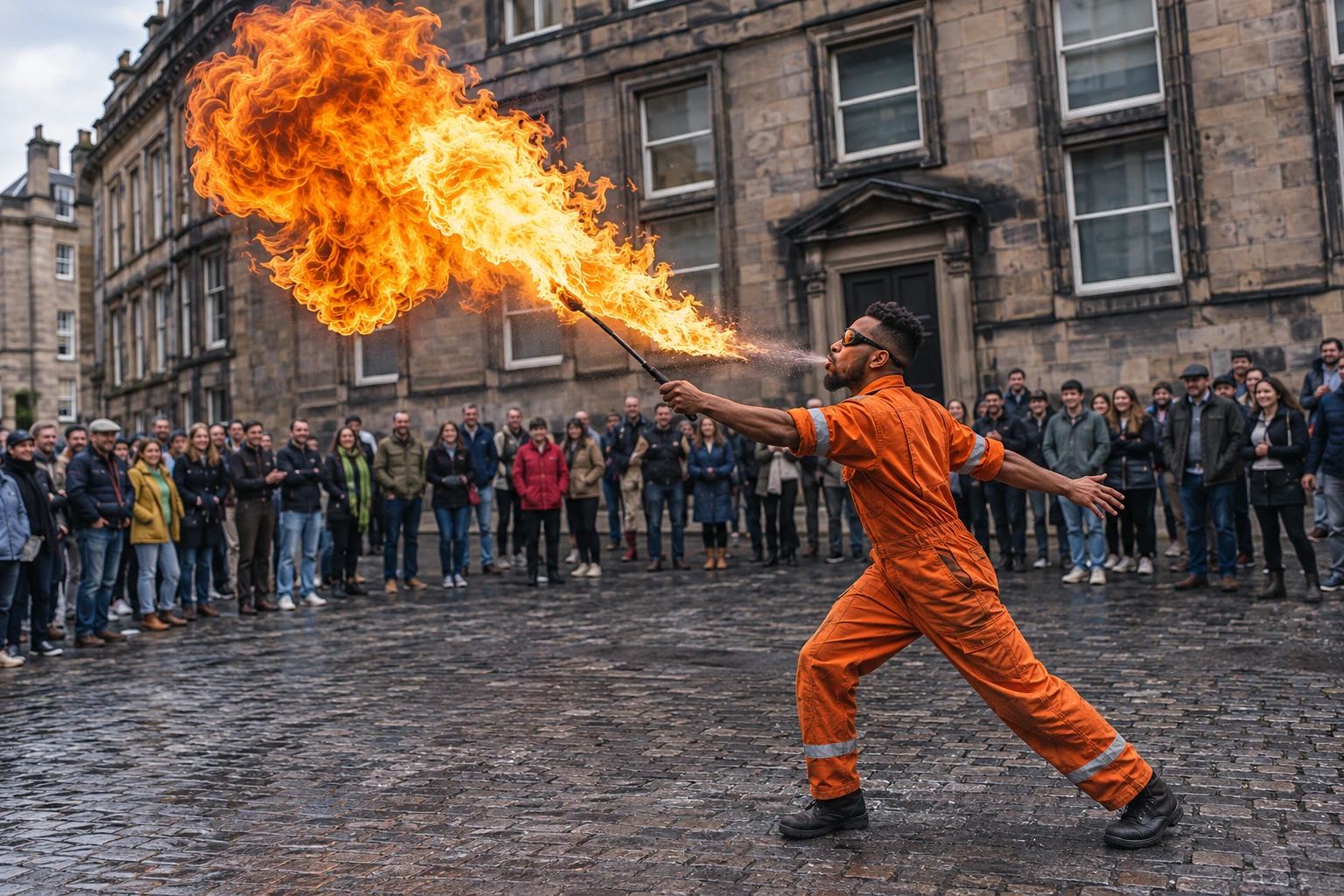
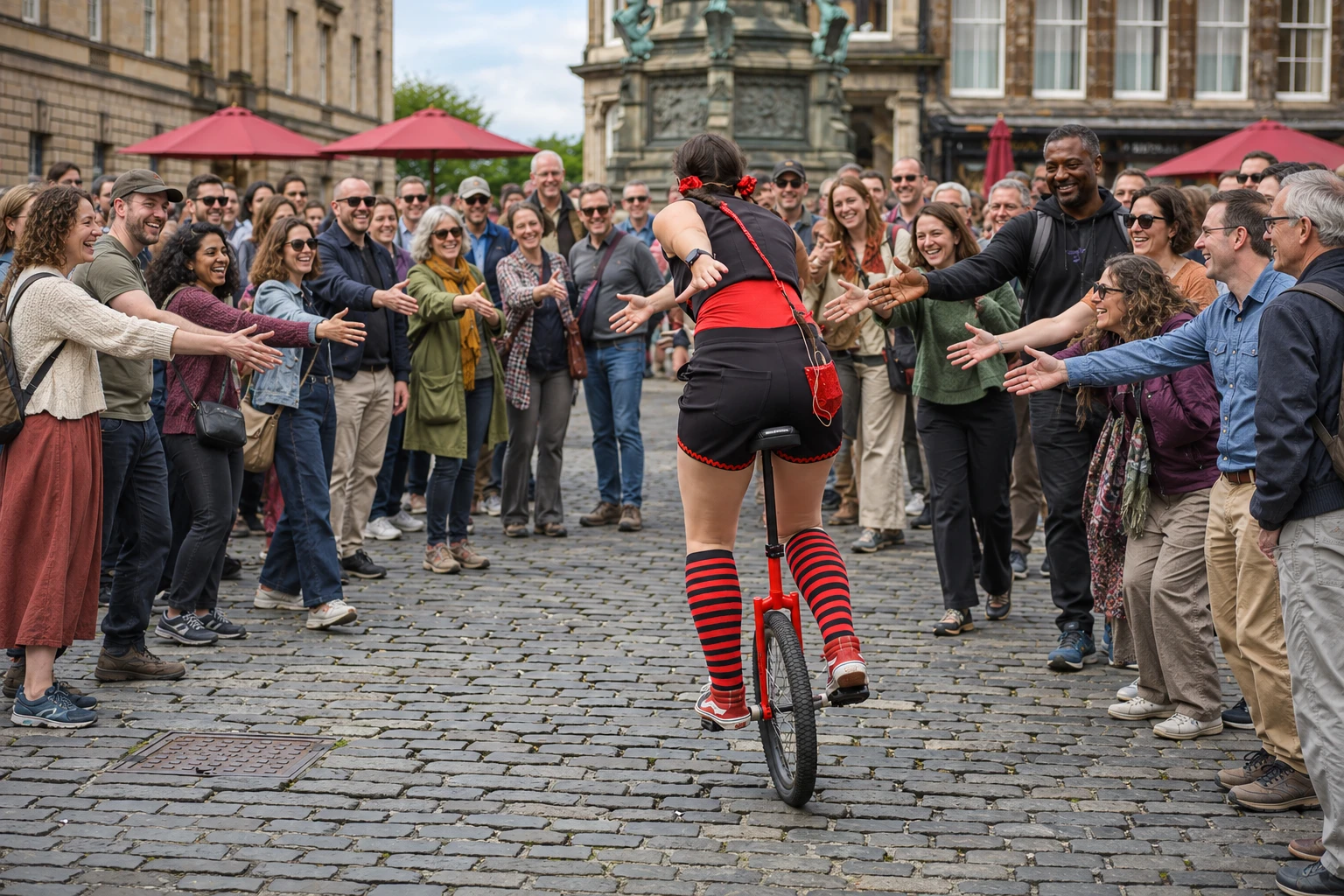
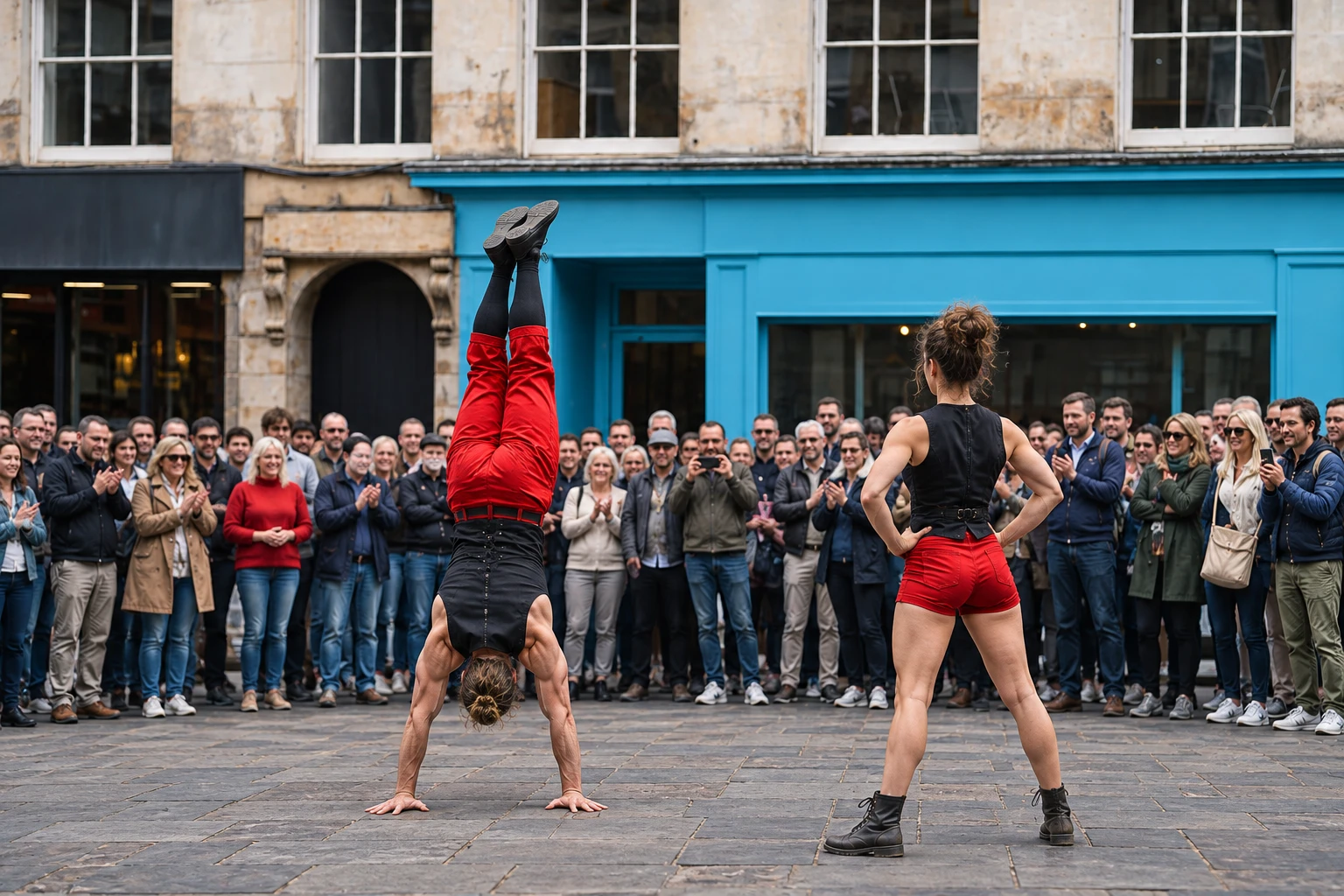
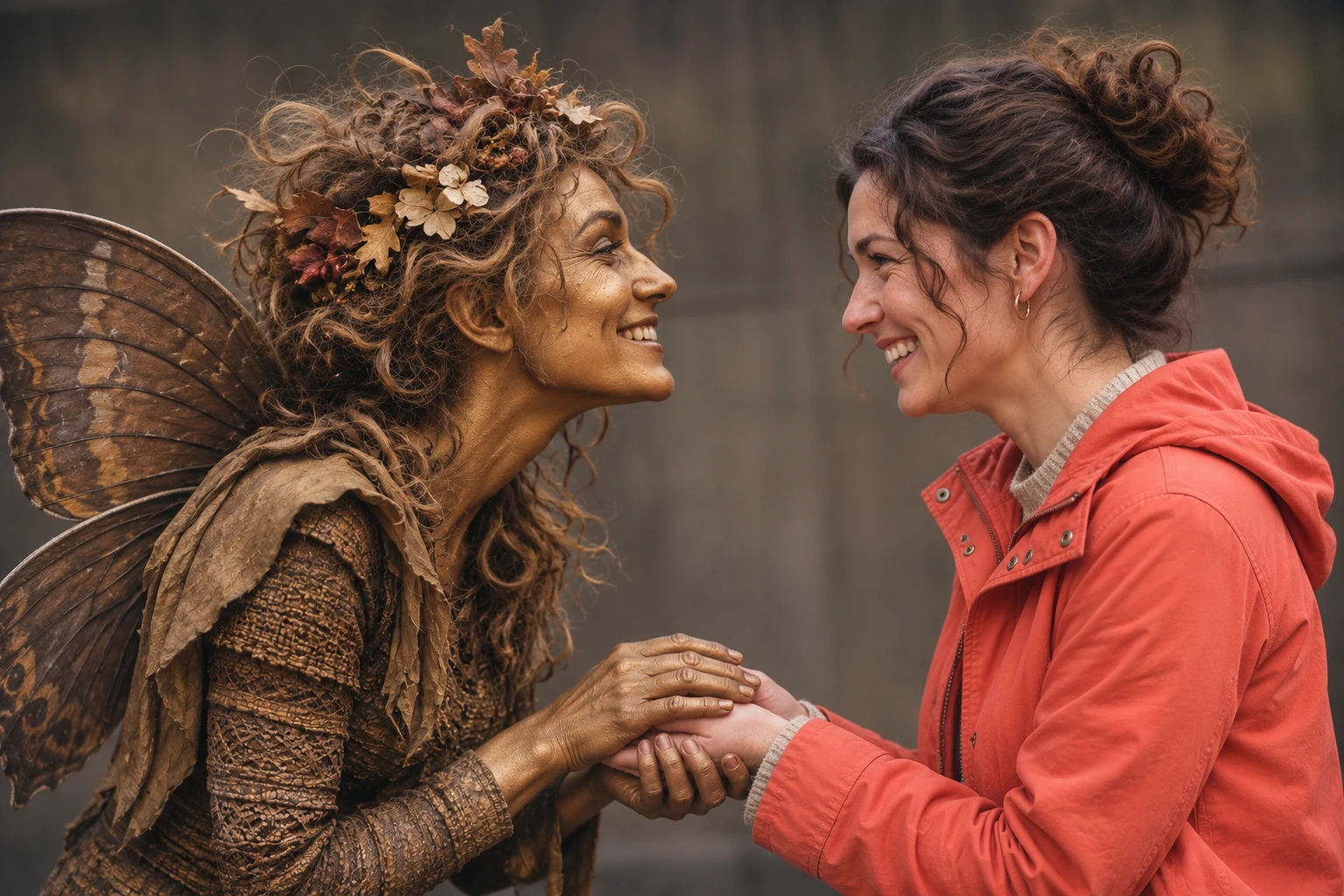
The Royal Mile is the festival’s visible heart. Along the stretch of the High Street between Cockburn Street and George IV Bridge, near St Giles’ Cathedral, and in squares such as Hunter Square, street performers take turns at spots drawn each morning: musicians, magicians, jugglers, acrobats and living statues perform for passersby and accept voluntary donations. Portrait and caricature artists also work there. Companies hand out flyers and perform extracts in the street, and in the late afternoon larger groups, such as bands, choirs and percussion ensembles, perform on the Mound, near Princes Street.
August in Edinburgh also brings other festivals, such as the International Festival, the Royal Edinburgh Military Tattoo at the castle, and the book and art festivals, and the whole city runs to the rhythm of performances. For visitors, the Fringe is a chance to spend days choosing shows, discover new artists and see Edinburgh full of people and stages on every corner.
What not to miss
An afternoon on the Royal Mile among street performers, living statues and companies giving extracts of their shows to draw a crowd. The late-afternoon performances on the Mound, with bands, choirs and percussion groups. On some days, the community stage next to St Giles’ Cathedral, by the Mercat Cross, featuring local schools and groups. At least one show by an unknown company chosen from the programme or recommended by someone in the queue: that’s the spirit of the festival. An evening of comedy, one of the genres with the largest number of shows. Unusual venues — bars, parks, buses and containers. The printed programme, picked up at the Fringe Shop on the High Street, to browse calmly and mark what to see. And, between performances, the city itself: the castle, Calton Hill and the Old Town’s alleyways plastered with posters.
How to enjoy it
Choose some shows you don’t want to miss in advance and leave room for discoveries. All registered shows are listed on the official website and the festival app, with filters by date, genre and venue; the app shows what starts soon near where you are and is usually released shortly before August. Tickets are electronic with QR codes; if you don’t have a phone you can print them at the box office. Many venues have unreserved seating and do not admit latecomers, so arrive before the start time and allow at least half an hour between shows, more if you have to change venue. From the first Wednesday of the festival, the Half Price Hut sells discounted same-day tickets. There are free-to-attend shows and pay-what-you-can performances; some require collecting a ticket in advance. Show listings include venue accessibility information, and there are adapted performances and a guide service for people with visual impairments. In the centre, walk or use public transport: the Old Town has hills and stairs, and the streets get crowded. The weather changes quickly in August; bring a light jacket and a raincoat.
Plan ahead
In August, Edinburgh attracts far more people than usual and central accommodation fills up early; book many months ahead, or consider neighbourhoods farther out and nearby towns with train service to Waverley Station, next to the Old Town. The full programme is usually released in stages between the start of the year and June; buy tickets early for the most sought-after shows. Check the official website for the dates for the year you’re visiting.
In the city
Make the most of Edinburgh
Your questions
Questions about Edinburgh Fringe
When does the Edinburgh Fringe take place?
Once a year, for much of August. Start and end dates vary by edition and are published in advance by the Edinburgh Festival Fringe Society.
What is the Edinburgh Fringe?
It’s an open-access festival: there’s no program selection, and anyone who finds a place to perform can take part. That’s why it brings together a very large number of plays, comedy shows, dance, circus and concerts, by both well-known and emerging artists.
How do I buy Fringe tickets?
Online or via the app, at the official box office, or directly at the venues. All tickets are digital with a QR code. For the same day, an official kiosk, the Half Price Hut, offers cheaper tickets starting in the first week.
Can I enjoy the Fringe without buying a ticket?
Yes. The street performers on the Royal Mile and the shows on the Mound are open to passersby, with voluntary contributions, and there are sessions with no admission charge or where each audience member decides how much to contribute at the end.
How far in advance should I book accommodation for the Fringe?
Many months in advance. In August the city receives many visitors at the same time because of multiple festivals, and central accommodation usually sells out early.