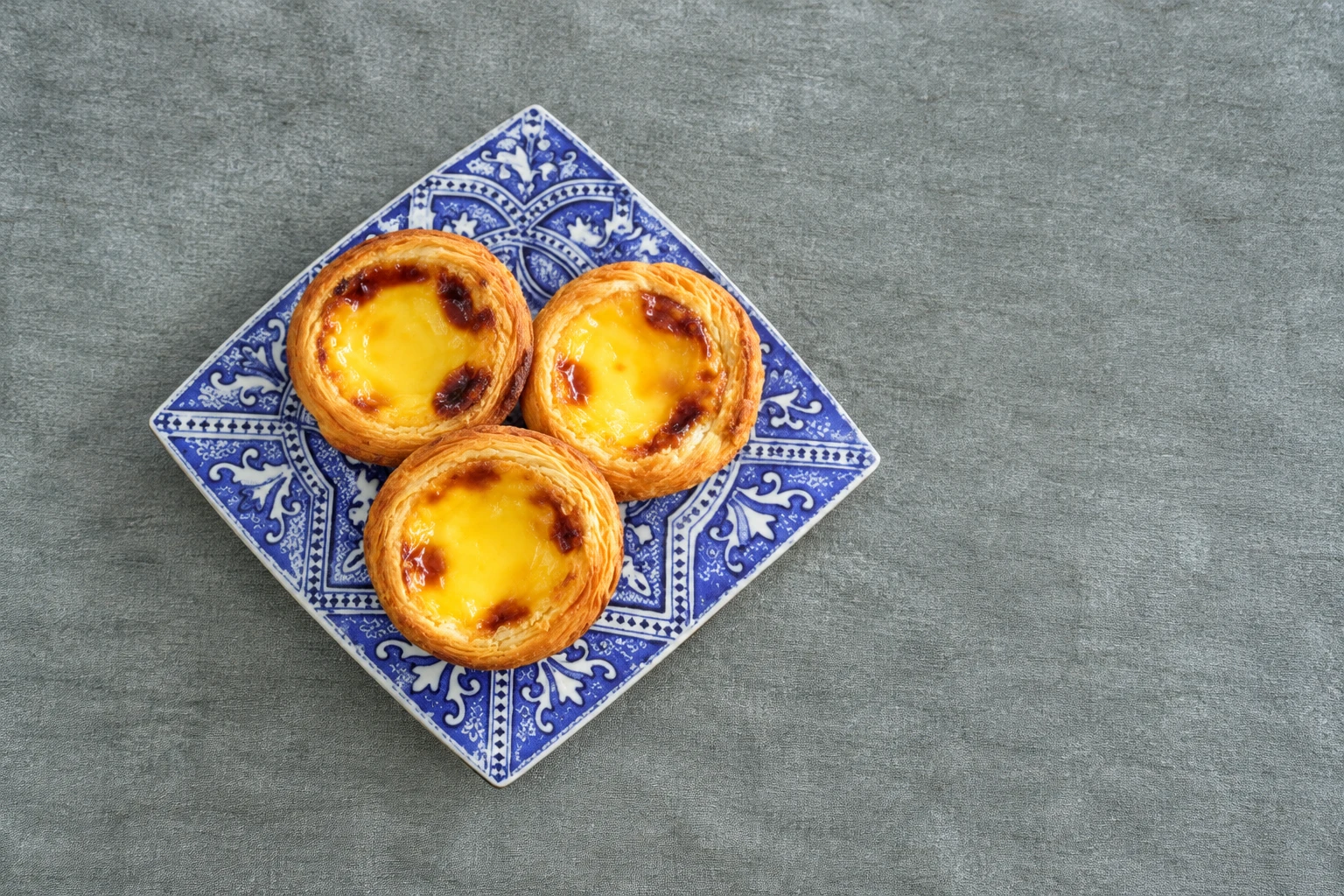
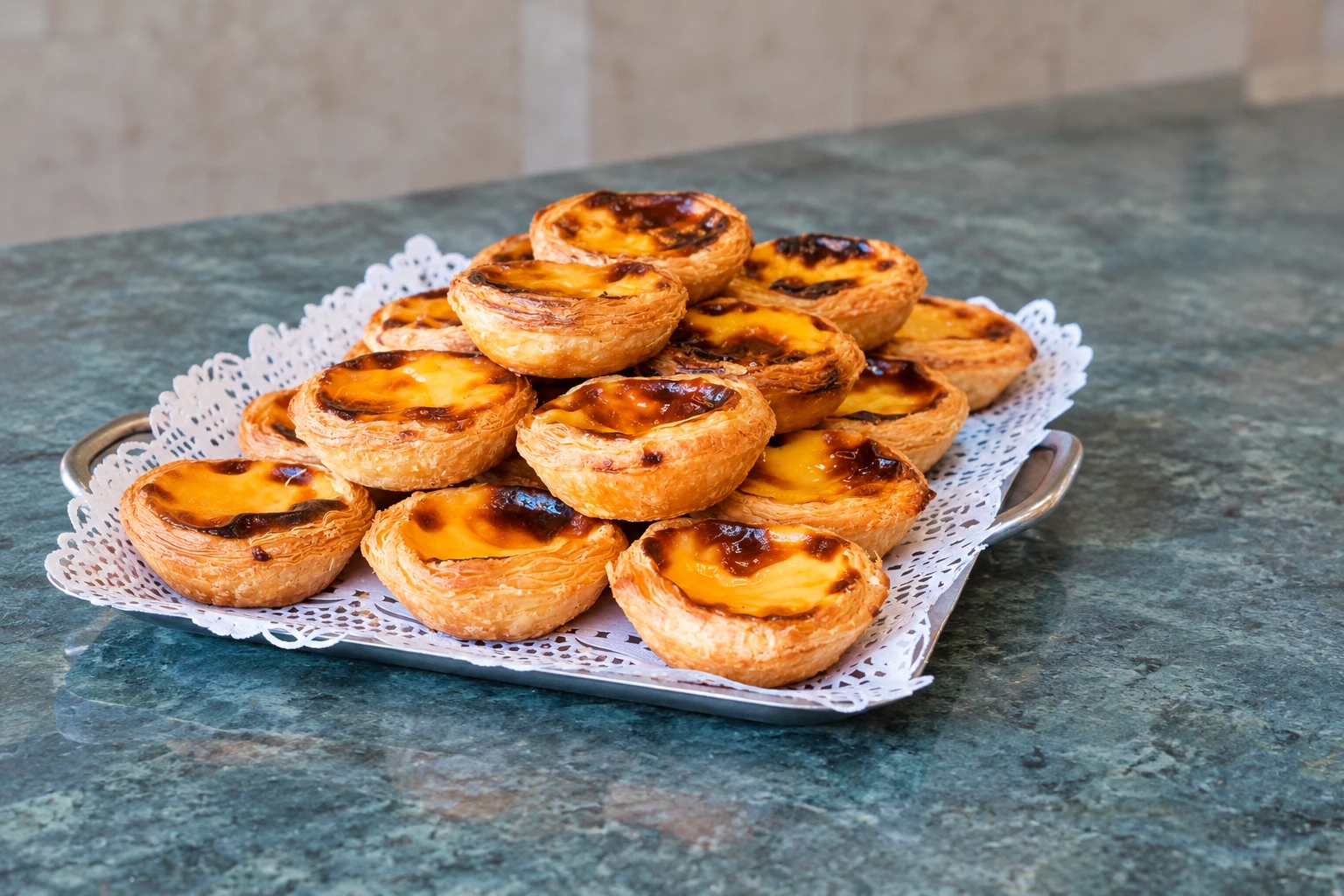
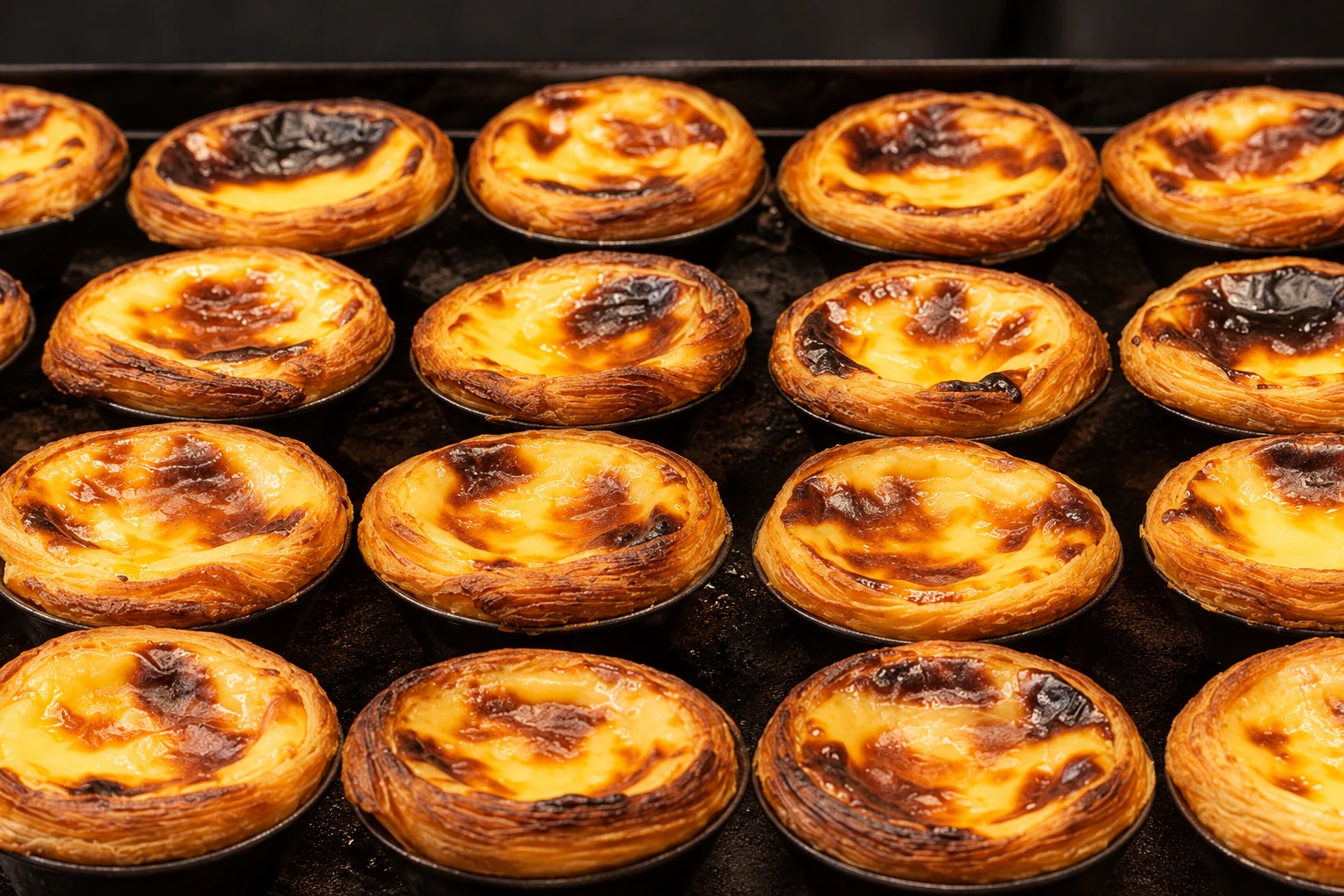
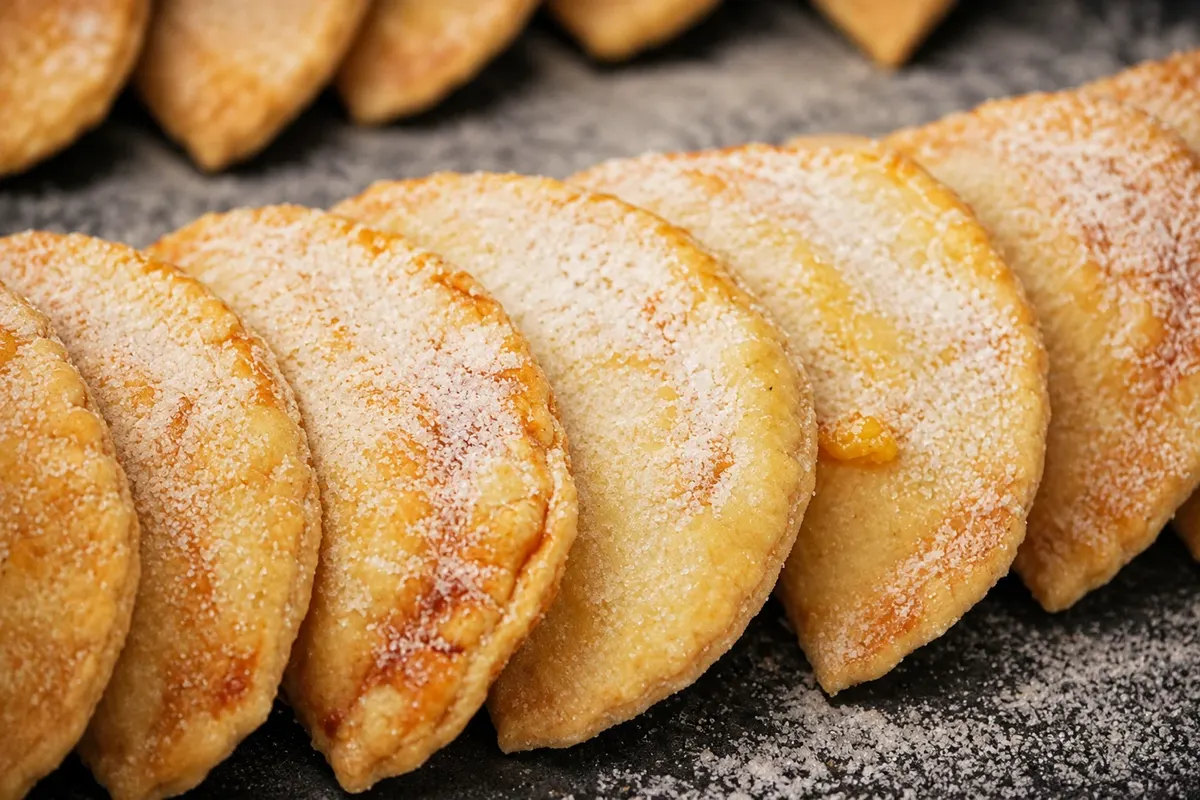
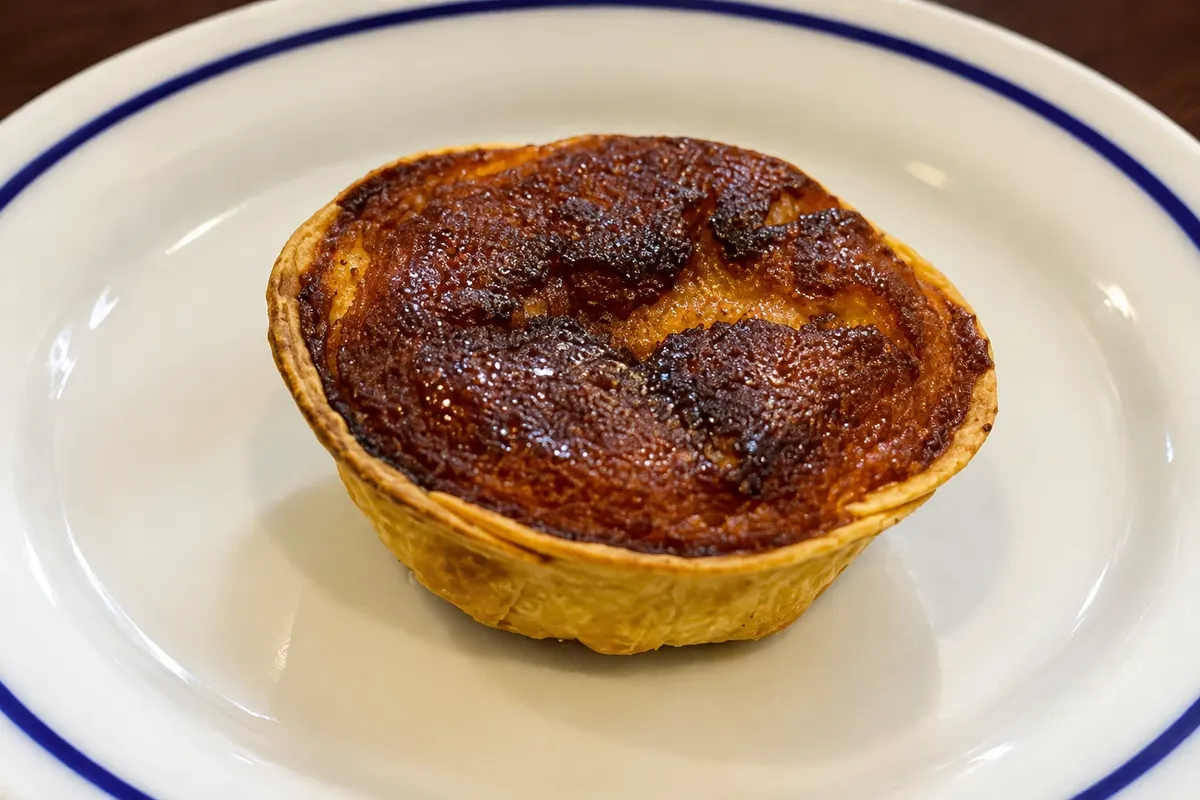
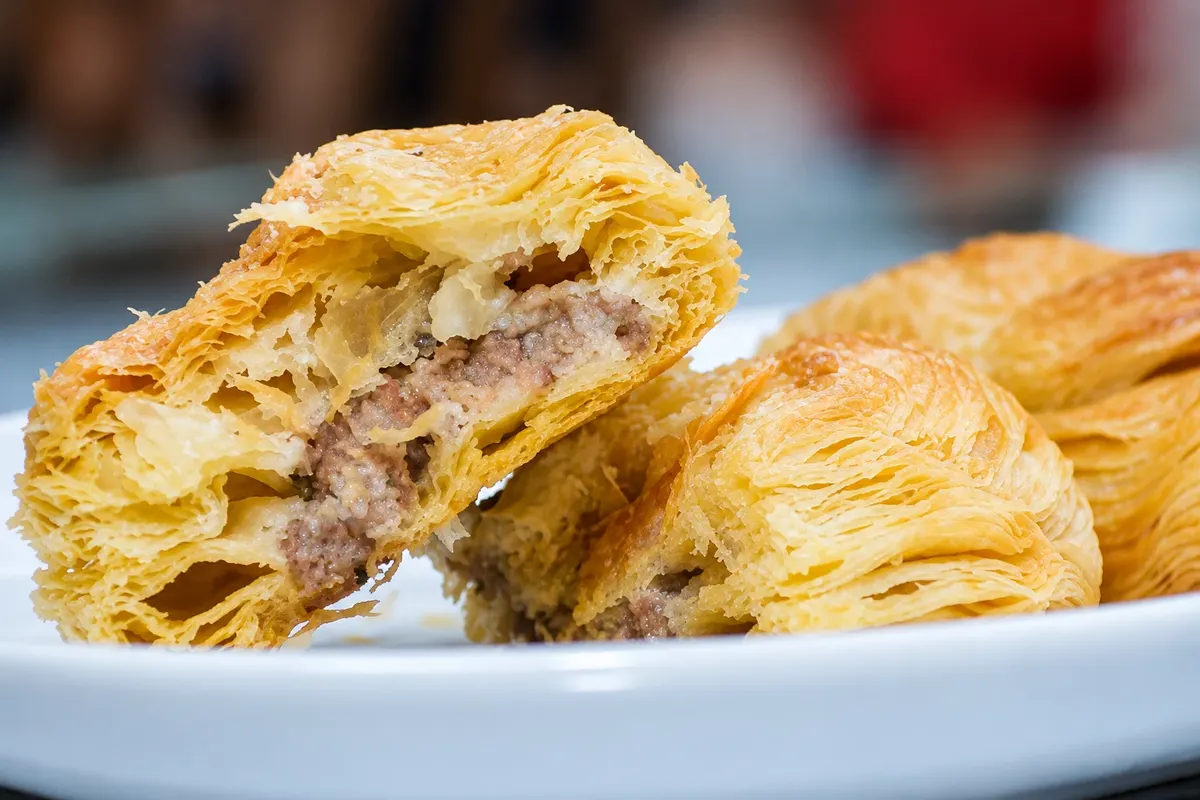
The pastel de nata is a small tart made of puff pastry, thin and crisp, filled with a custard of egg yolks, milk and sugar that is baked until it develops dark spots on top. Despite the name, many recipes do not use cream: the custard is made mainly from eggs and milk. It comes out of the oven with crisp pastry and a soft filling.
Lisbon's official tourism calls it the city's most emblematic sweet and notes that its roots lie in conventual confectionery. The most often-told tradition links the recipe to the Mosteiro dos Jerónimos in Belém. According to that version, after the dissolution of the religious orders in 1834, the recipe passed to a shop opened near the monastery in 1837, which still sells the pastries under the name Pastéis de Belém.
The origin is debated. A confectionery history researcher interviewed by RTP says the pastel de nata was not born in Belém and that the earliest Portuguese versions contained pine nuts. The association with Belém remains strong in the city's memory, and Belém became linked to the conventual recipe.
Pastel de nata is the name of the sweet, made in pastry shops across the country. Pastéis de Belém is the name used by a single shop, with its own recipe kept secret. In Lisbon, the two appear side by side on counters.
The Lisbon way to eat it is with the pastel still hot, sprinkled with cinnamon and sugar, preferably accompanied by a bica, as espresso is called in the city. It's eaten standing at the counter or seated on a terrace, at any time of day.


 Brazil
 Argentina
 Bolivia
 Chile
 Colombia
 Ecuador
 Guyana
 French Guiana
 Falkland Islands (Malvinas)
 Paraguay
 Peru
 Suriname
 Uruguay
 Venezuela
 Germany
 Austria
 Belgium
 Croatia
 Denmark
 Spain
 Finland
 France
 Greece
 the Netherlands
 Hungary
 Ireland
 Iceland
 Italy
 Luxembourg
 Norway
 Poland
 the United Kingdom
 the Czech Republic
 Sweden
 Switzerland
 Turkey
 the United States
 Mexico
 the Dominican Republic
 South Africa
 Australia
 Fiji