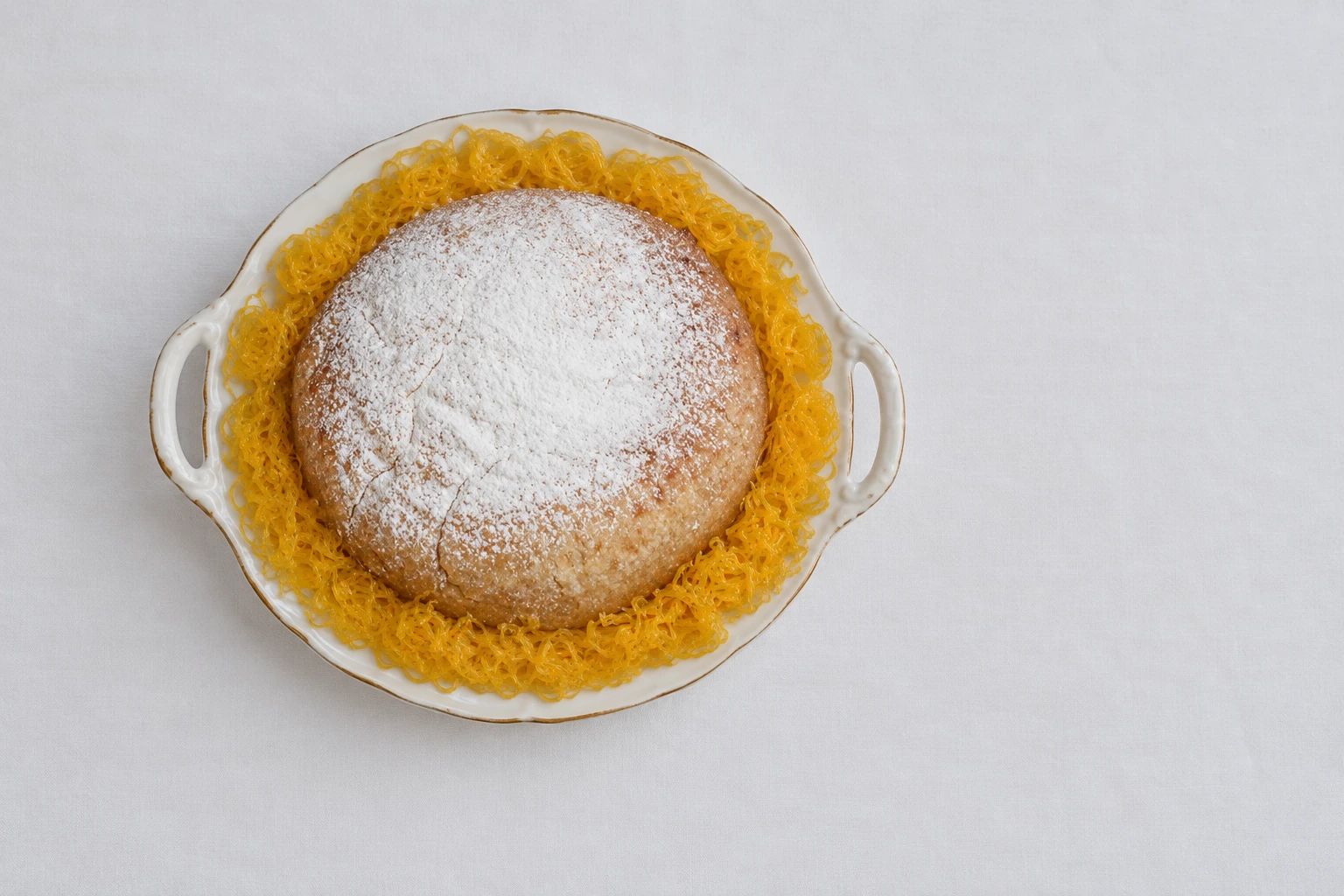
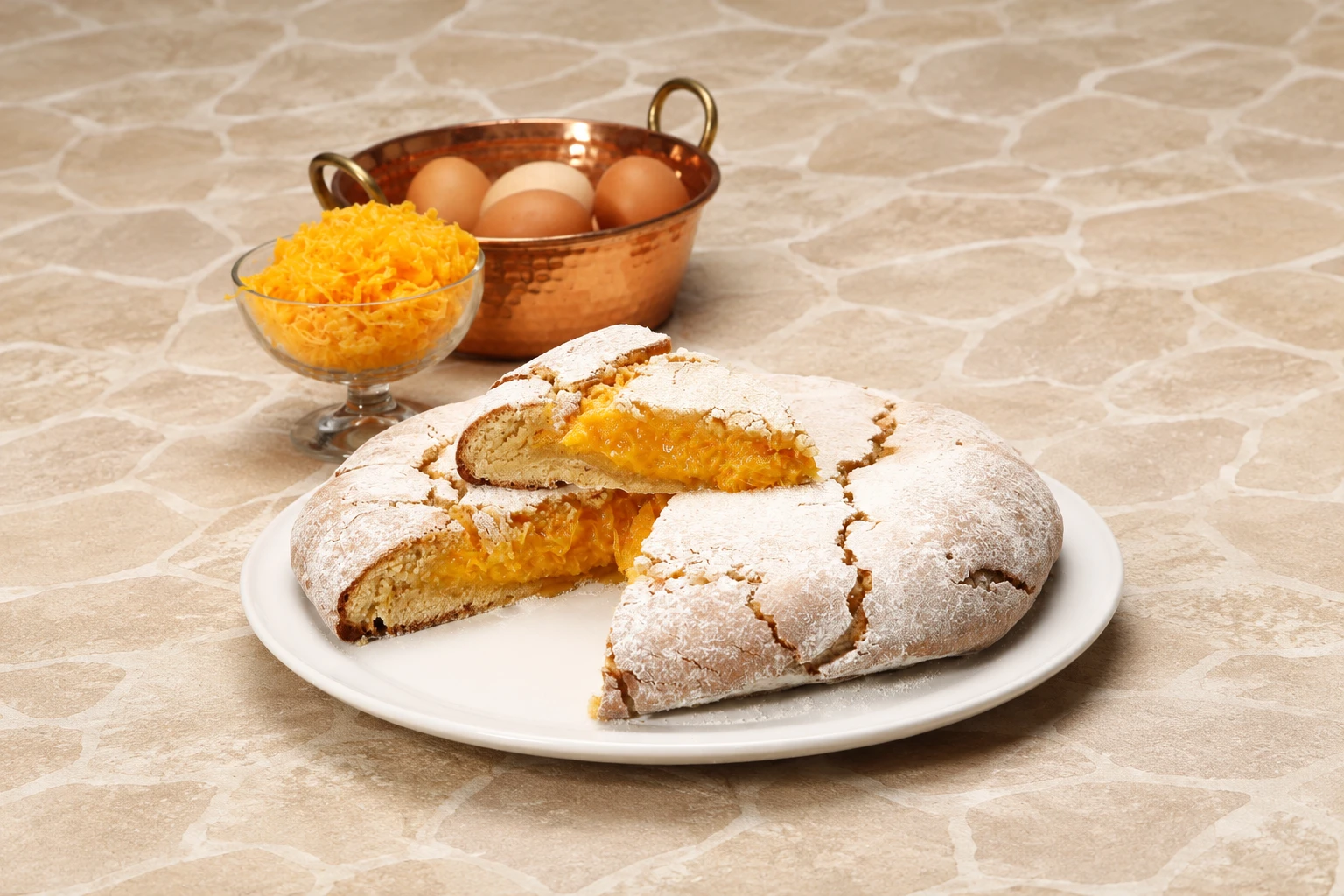
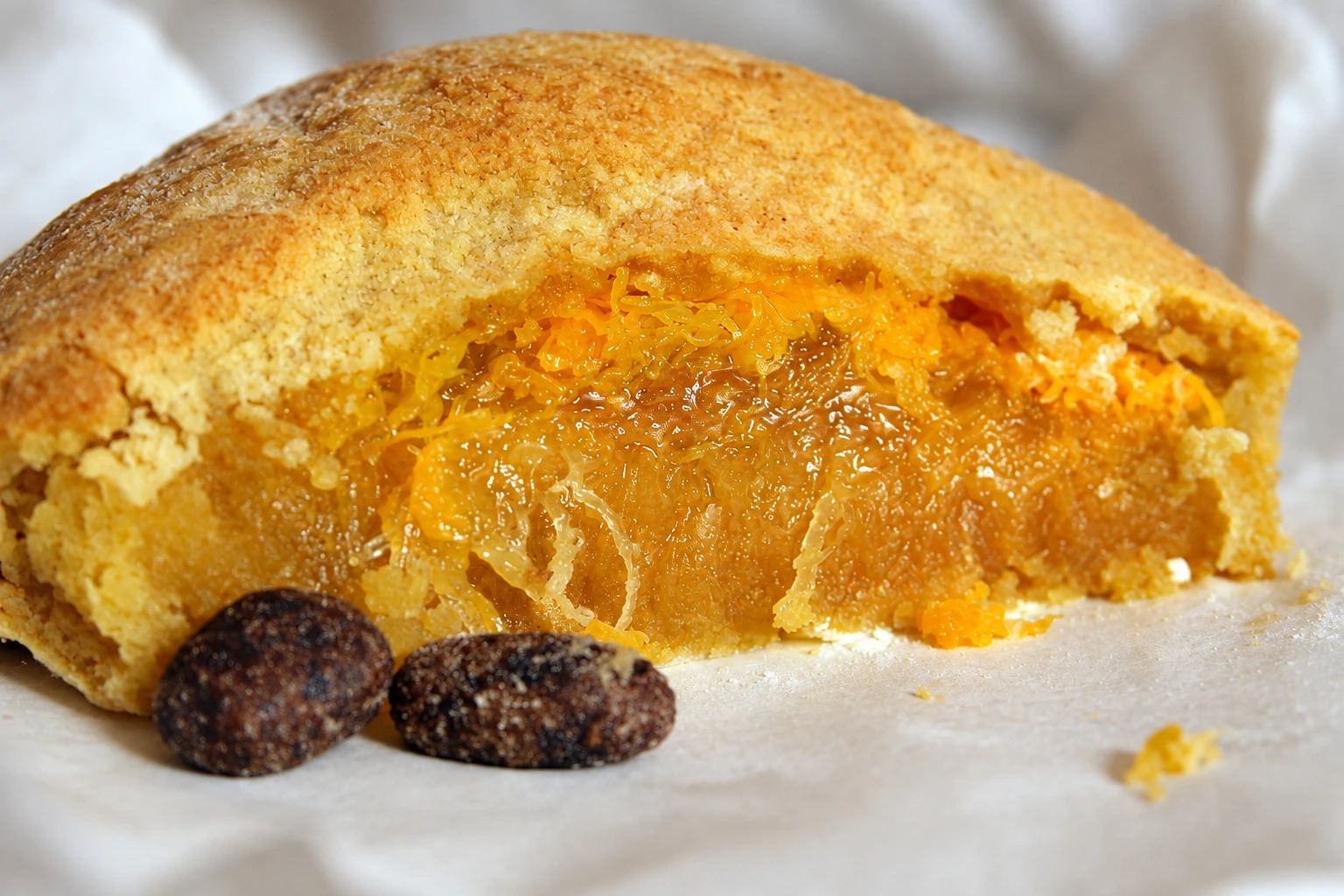
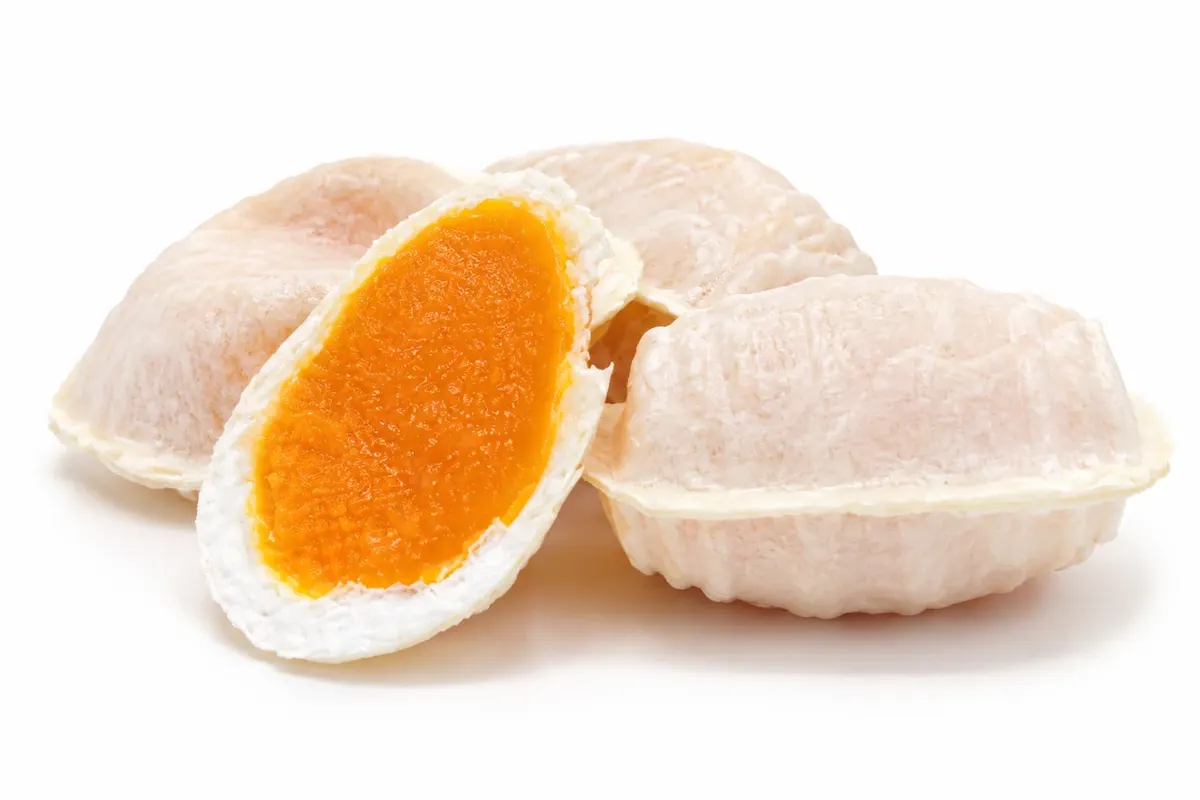
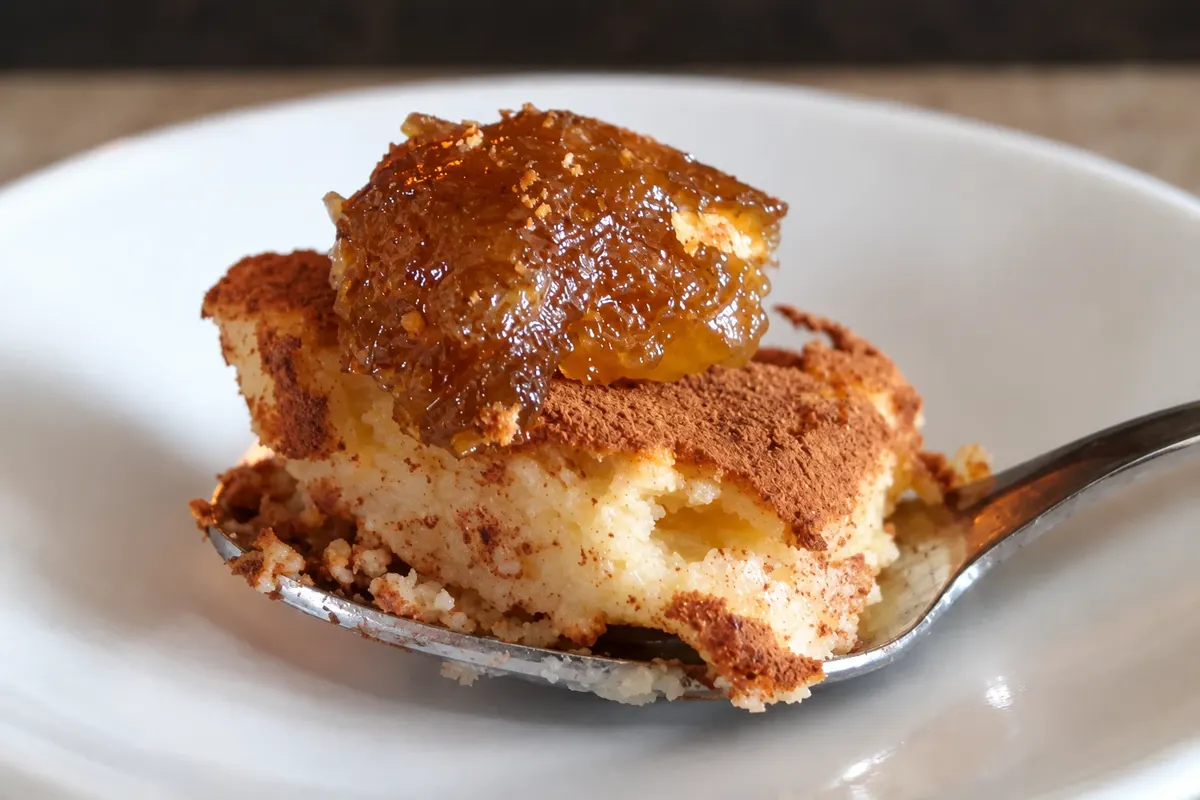
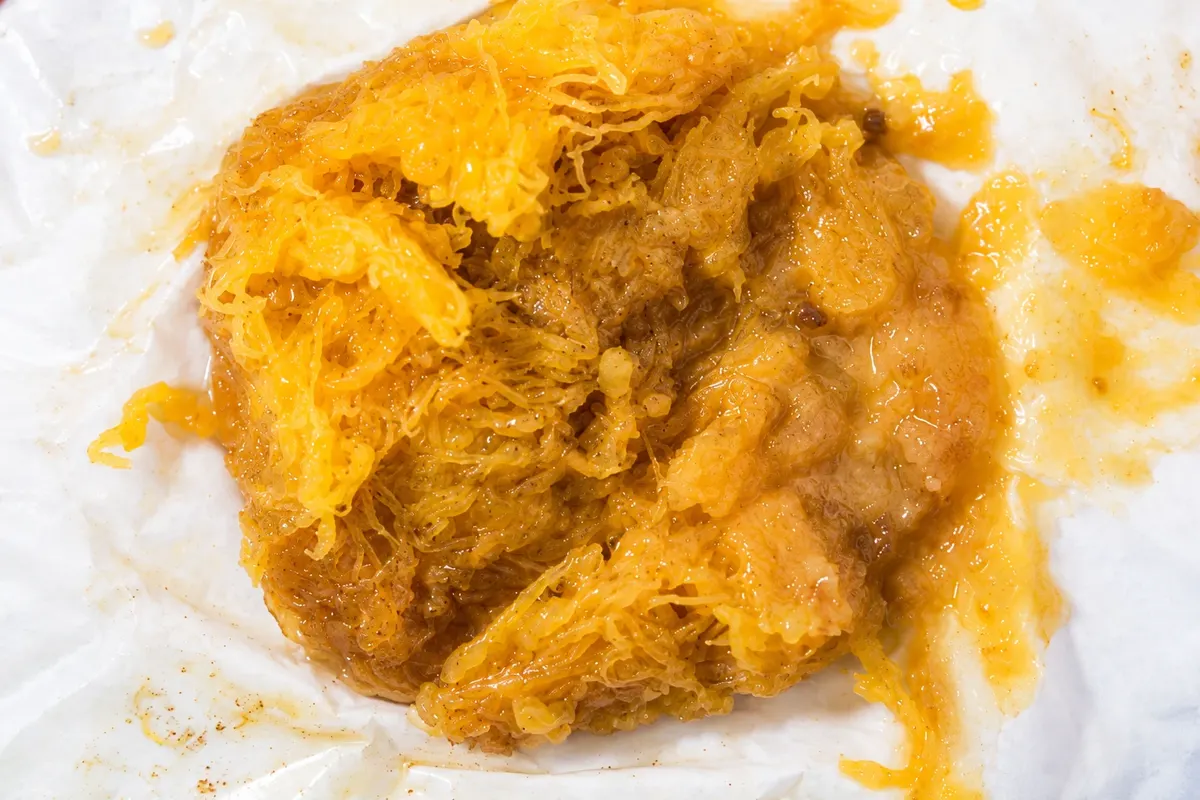
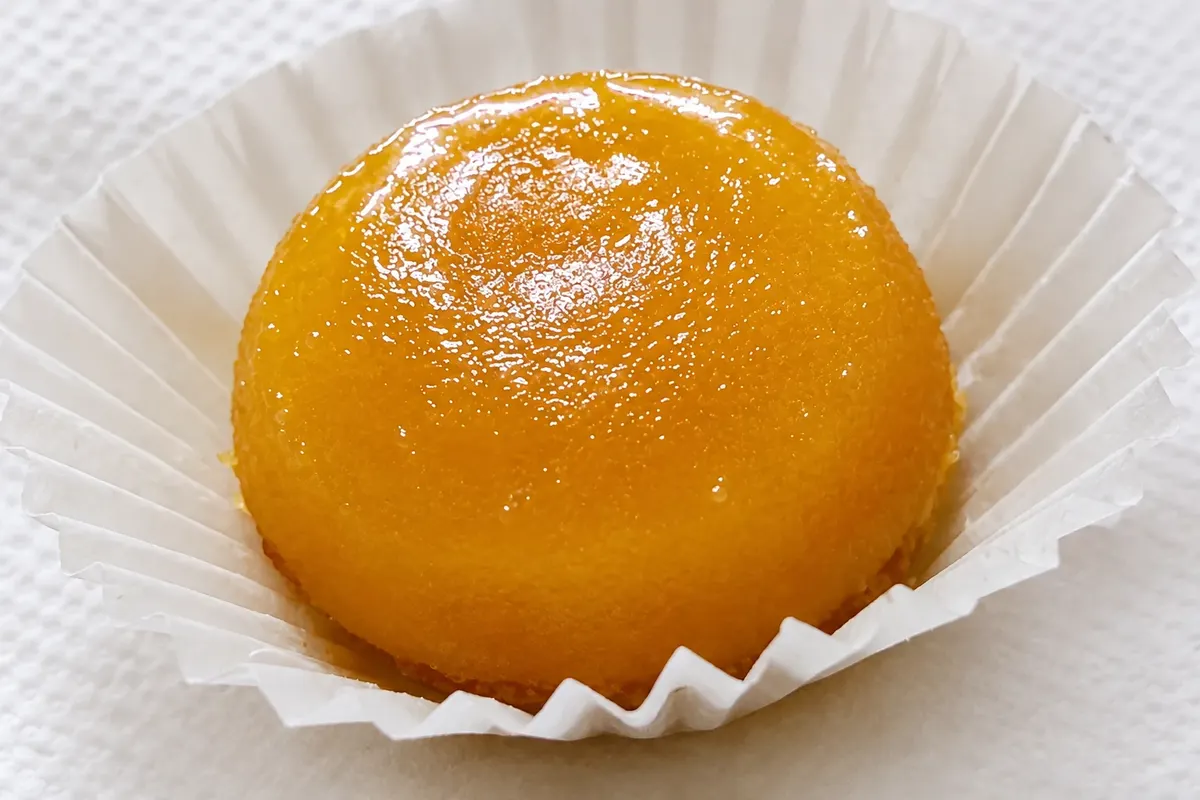
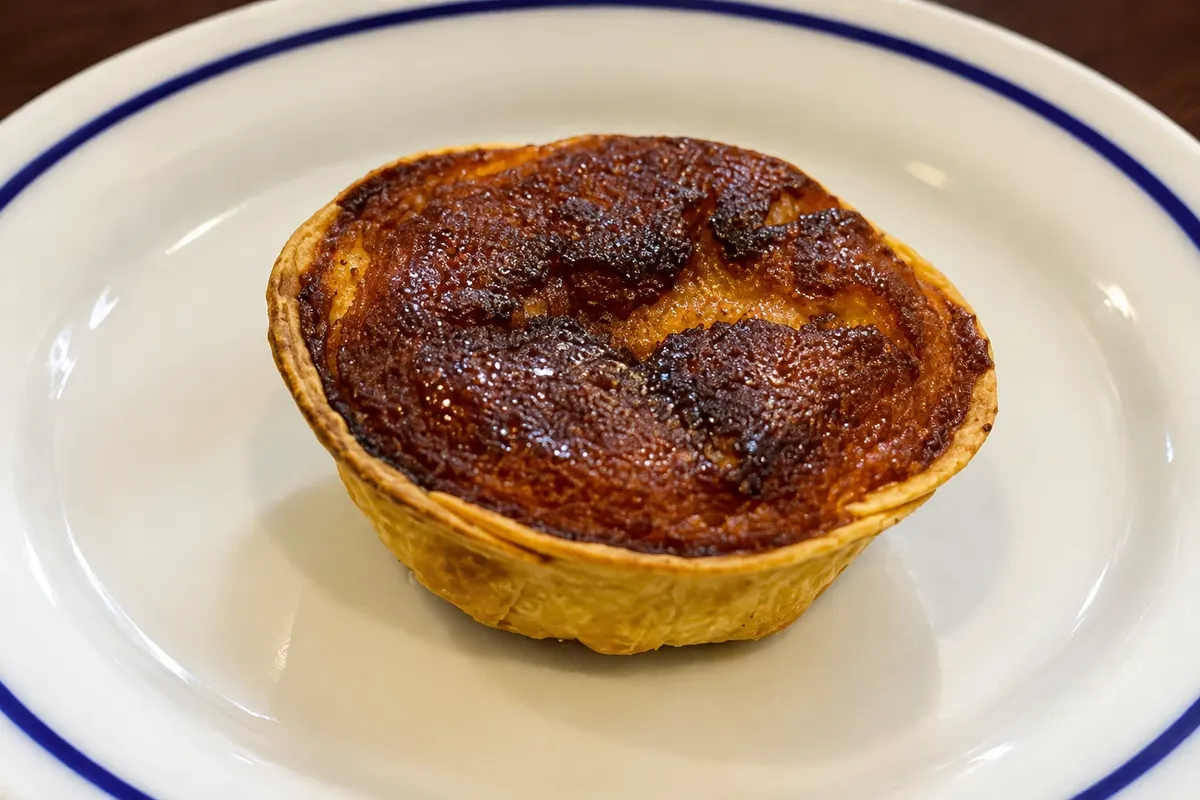
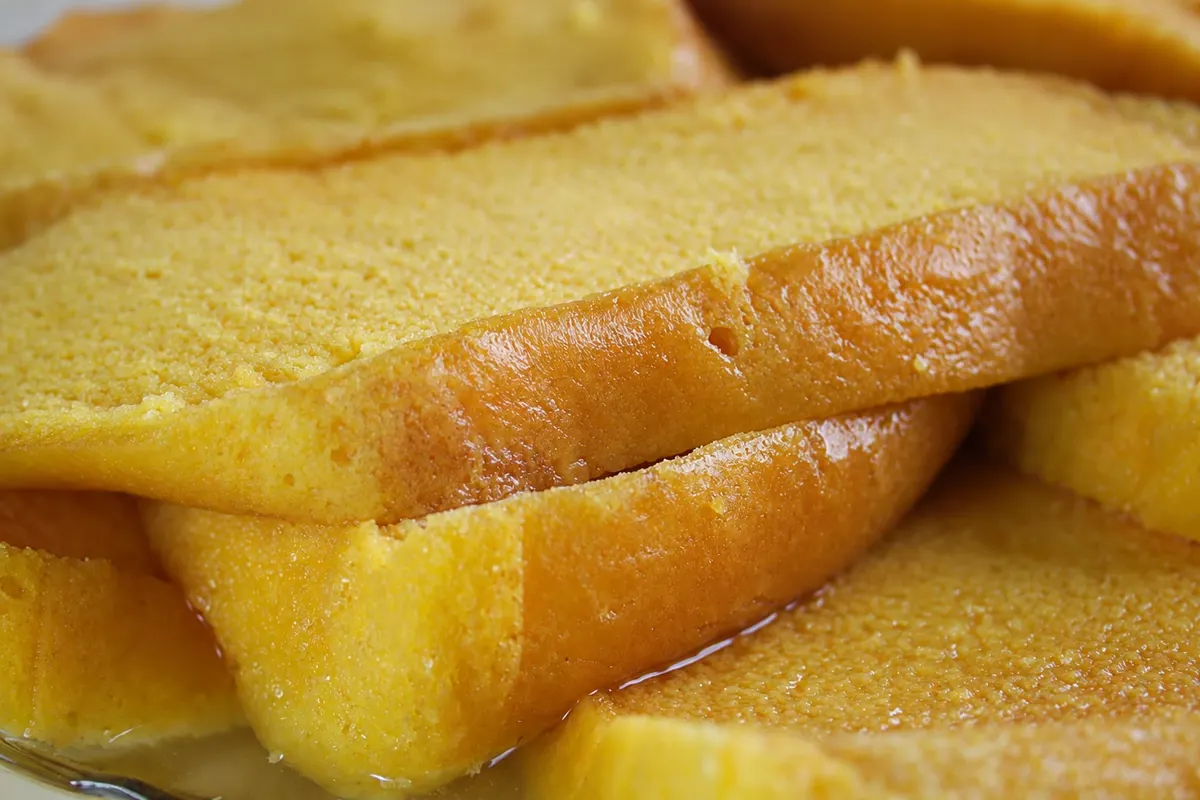
Pão de rala is shaped like an Alentejo loaf of bread, but it is a sweet. The dough is made from grated almond mixed with sugar syrup, with flour used as a handling aid. Inside it has layers of egg sweet, chila (pumpkin jam) and egg threads. On top it is browned in the oven.
The official catalog of Portuguese traditional products registers pão de rala as a sweet of Évora. The recipe is attributed to the Poor Clare nuns of the Convento de Santa Helena do Calvário in the city, and it is part of Alentejo conventual pastry, rich in eggs, almond and chila.
Legend has it that in the 16th century the young King D. Sebastião visited the convent on a hot June afternoon. The nuns, with nothing else to offer, supposedly served thin bread, olives and water. The king liked it and left a pension to the convent. In gratitude, the nuns created a sweet that imitates that snack: pão de rala, accompanied by marzipan olives darkened with cocoa. It is an origin story without documentary proof.
The marzipan olives continue to accompany the sweet in several pastry shops in Évora and are one of the marks of pão de rala. The sweet also appears in other parts of the Alentejo, with small variations.
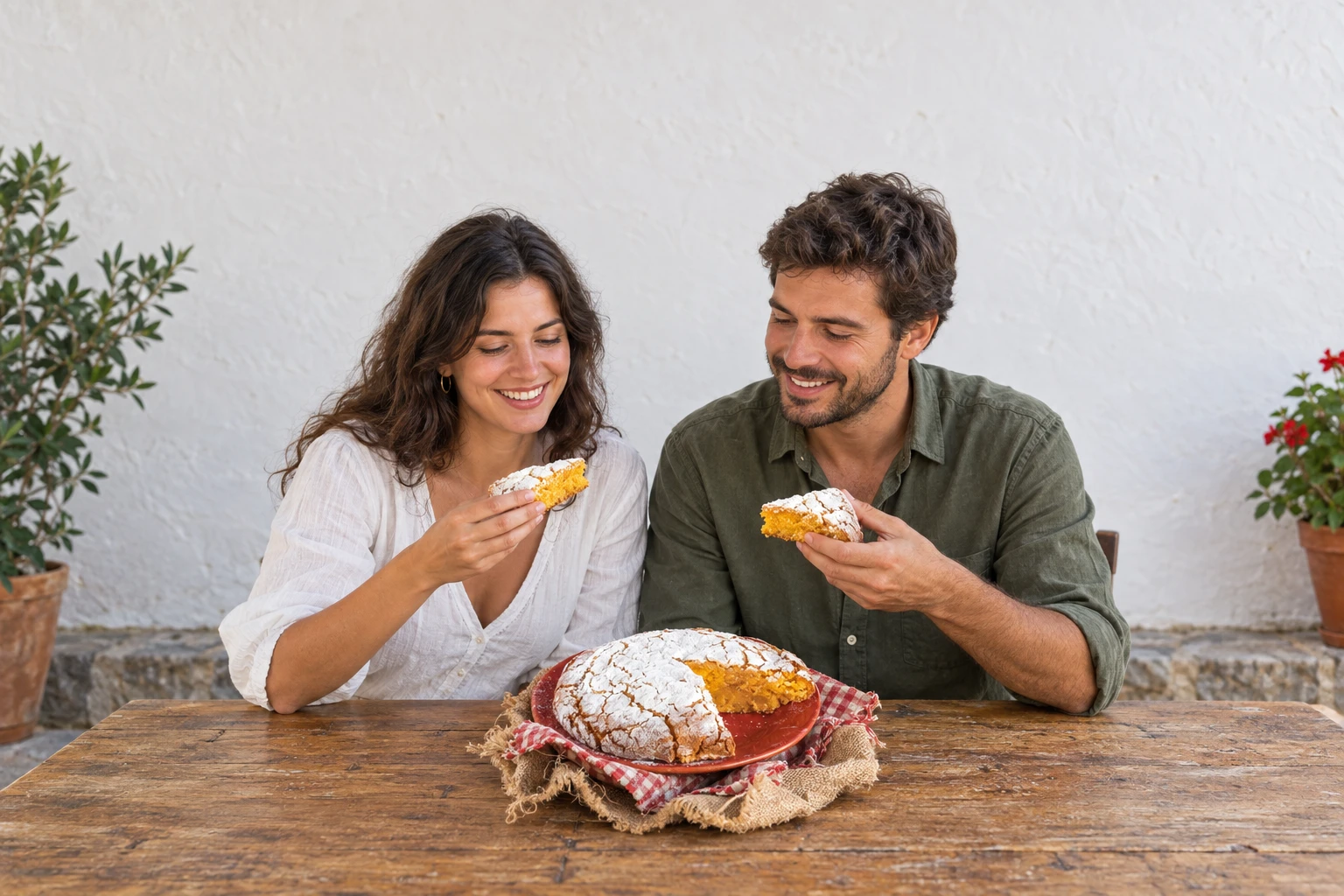
It is served in slices, at room temperature, as a dessert or with coffee.


 Brazil
 Argentina
 Bolivia
 Chile
 Colombia
 Ecuador
 Guyana
 French Guiana
 Falkland Islands (Malvinas)
 Paraguay
 Peru
 Suriname
 Uruguay
 Venezuela
 Germany
 Austria
 Belgium
 Croatia
 Denmark
 Spain
 Finland
 France
 Greece
 the Netherlands
 Hungary
 Ireland
 Iceland
 Italy
 Luxembourg
 Norway
 Poland
 the United Kingdom
 the Czech Republic
 Sweden
 Switzerland
 Turkey
 the United States
 Mexico
 the Dominican Republic
 South Africa
 Australia
 Fiji