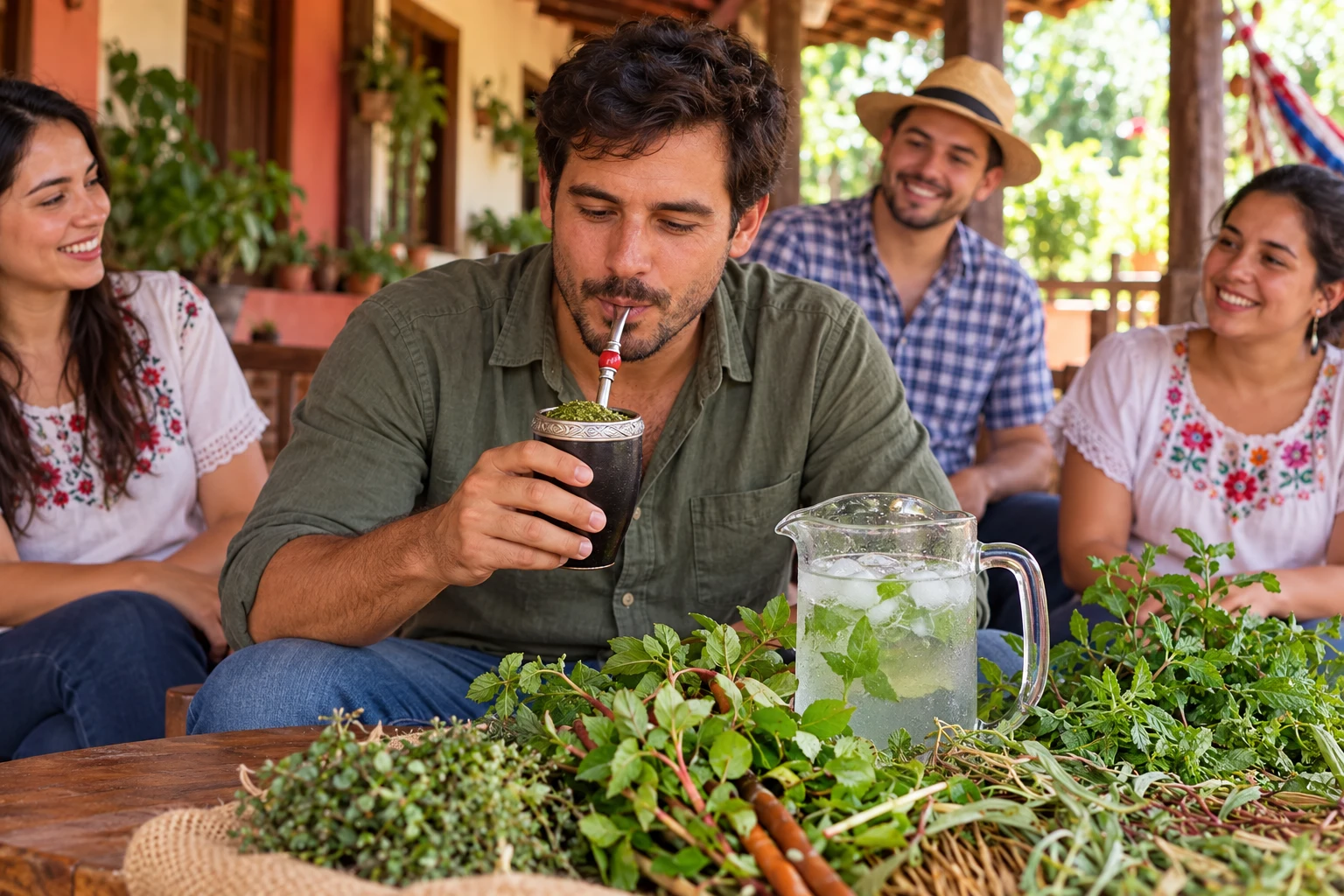
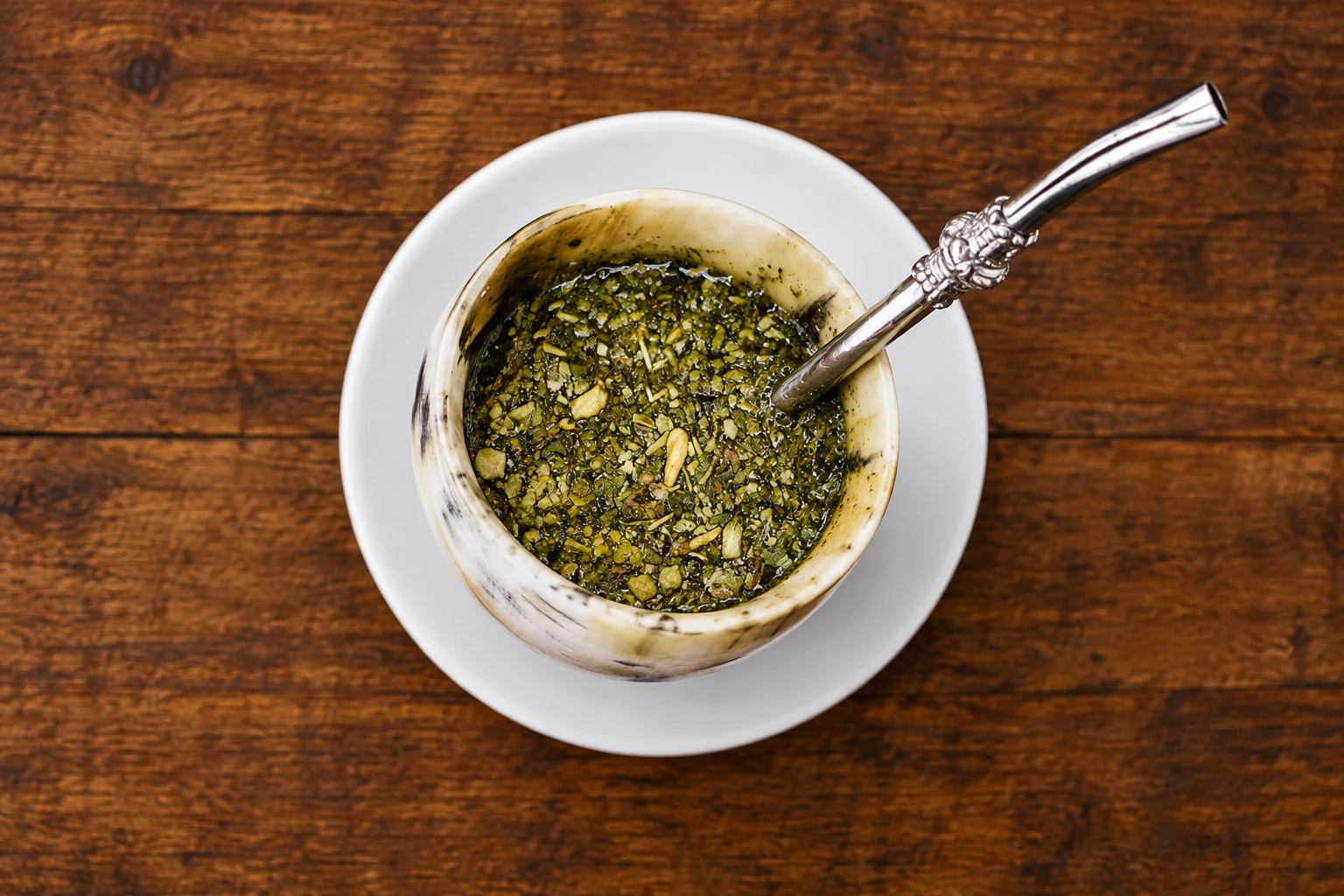
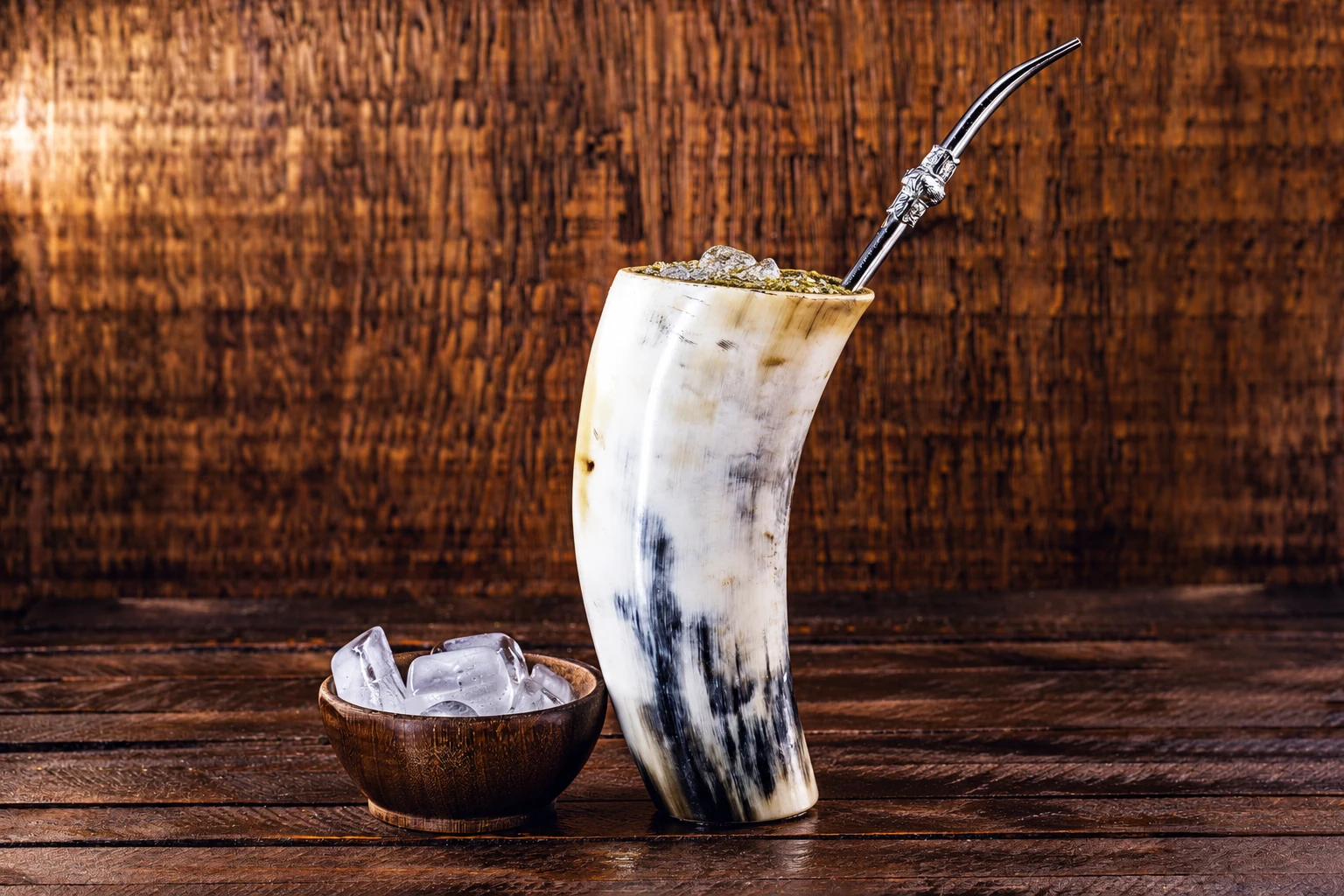
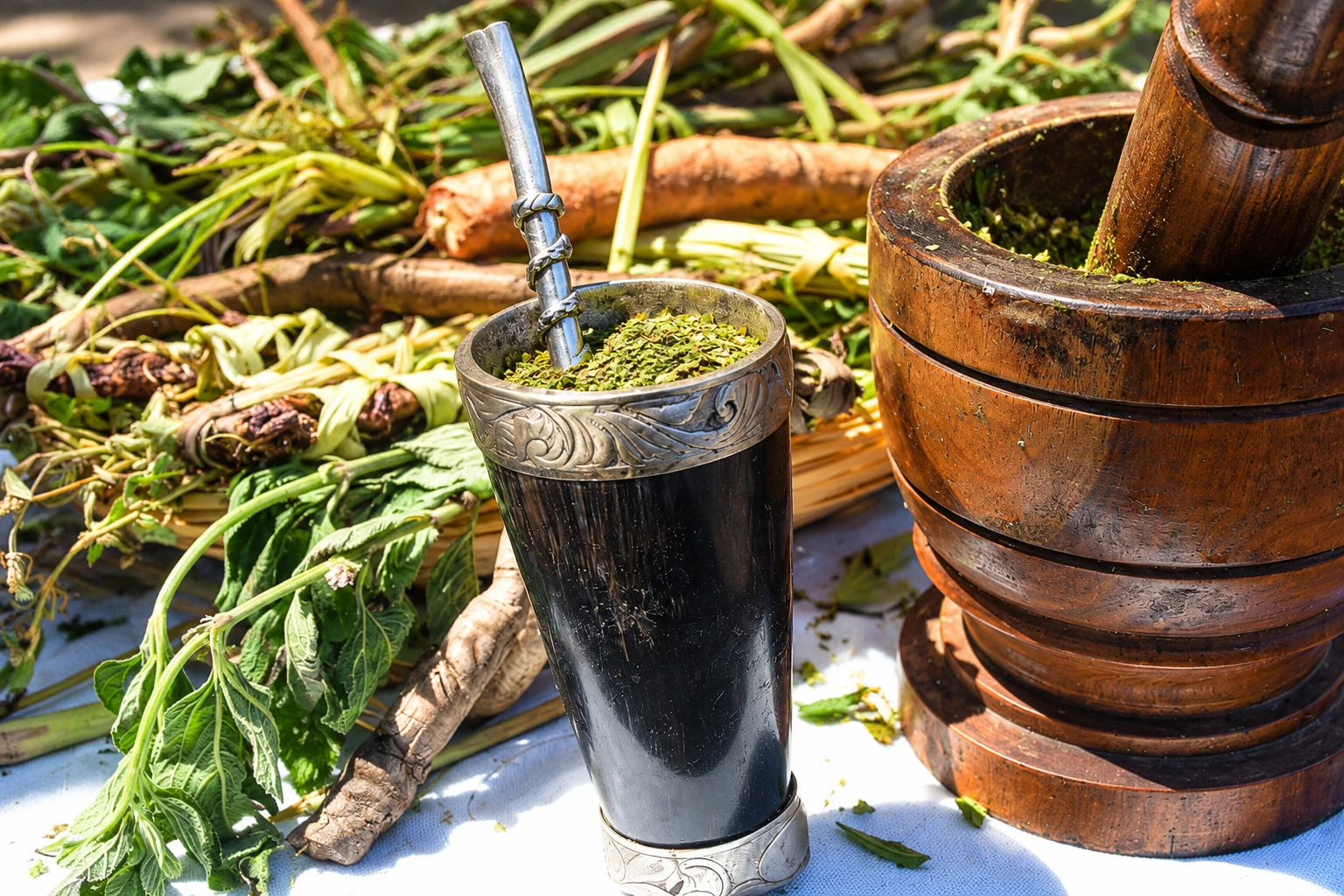
Tereré is prepared with yerba mate, like mate, but with cold water. The yerba goes into a guampa, a cup made of horn, wood, metal, or gourd, and the water comes from a thermos bottle filled with ice, often already mixed with herbs. It is drunk through the bombilla, the metal straw with a filter. The person serving fills the guampa, hands it to someone in the circle, receives it back and serves the next person, always in the same order. It is the drink of hot weather, present in homes, offices, squares, worksites and trips.
What distinguishes Paraguayan tereré are the pohã ñana, the “remedies of the forest” in Guarani: fresh herbs and roots pounded in the mortar and mixed into the water, such as menta-peperina, lemongrass (capim-limão), cedrón, coco (the leaf), burrito, jaguarete ka'a and many others. The combinations are part of traditional knowledge passed down from generation to generation, with women playing a central role. Yuyeras, herb sellers, pound the blends on the spot in markets and on street corners.
In 2020, the practices and traditional knowledge of tereré in the culture of the pohã ñana, an ancestral Guarani beverage in Paraguay, were inscribed on UNESCO’s Representative List of the Intangible Cultural Heritage of Humanity. It was the first Paraguayan element on the list. The dossier describes the practice as widespread throughout the territory, among people of all ages and backgrounds, and the National Secretariat of Culture highlights the transmission of knowledge since the 16th century.
Yerba mate is native to the region, and the custom of drinking it cold crossed borders. Tereré is also widely consumed in northeastern Argentina and in Mato Grosso do Sul, Brazil, where it arrived with workers and families from Paraguay and developed its own variations, sometimes with fruit juice. The UNESCO inscription is Paraguayan, but the tereré circle is shared across the three sides.


 Brazil
 Argentina
 Bolivia
 Chile
 Colombia
 Ecuador
 Guyana
 French Guiana
 Falkland Islands (Malvinas)
 Peru
 Suriname
 Uruguay
 Venezuela
 Germany
 Austria
 Belgium
 Croatia
 Denmark
 Spain
 Finland
 France
 Greece
 the Netherlands
 Hungary
 Ireland
 Iceland
 Italy
 Luxembourg
 Norway
 Poland
 Portugal
 the United Kingdom
 the Czech Republic
 Sweden
 Switzerland
 Turkey
 Canada
 the United States
 Mexico
 the Dominican Republic
 South Africa
 Australia
 Fiji
 New Zealand
 Papua New Guinea