



September/OctoberSerra Serata
Once a year, usually in September, sometimes in October.
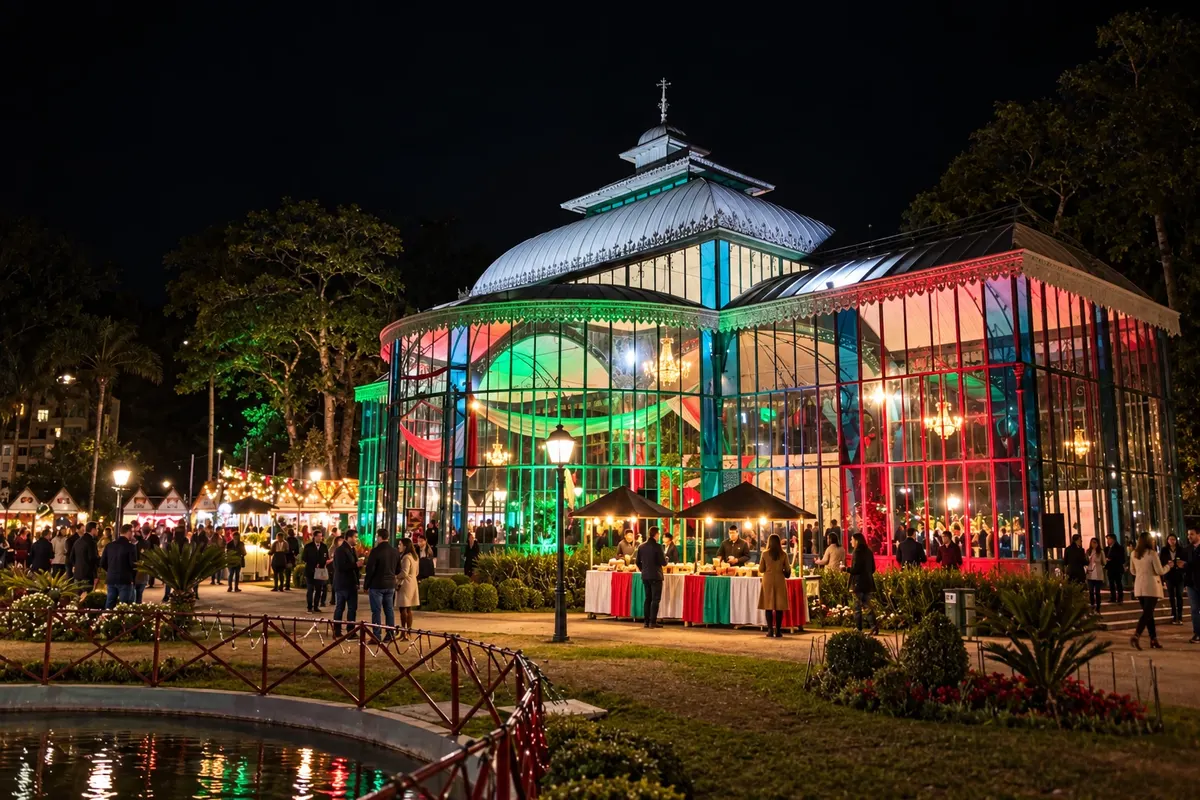
The Italian culture festival of Petrópolis at the Palácio de Cristal, with Italian food stalls, music, workshops and a masked ball.
Popular festival · Blumenau
The German-tradition festival in Blumenau, in the Itajaí Valley, featuring typical bands and folk dances at Parque Vila Germânica, parades on Rua XV de Novembro, draft beer and German food.
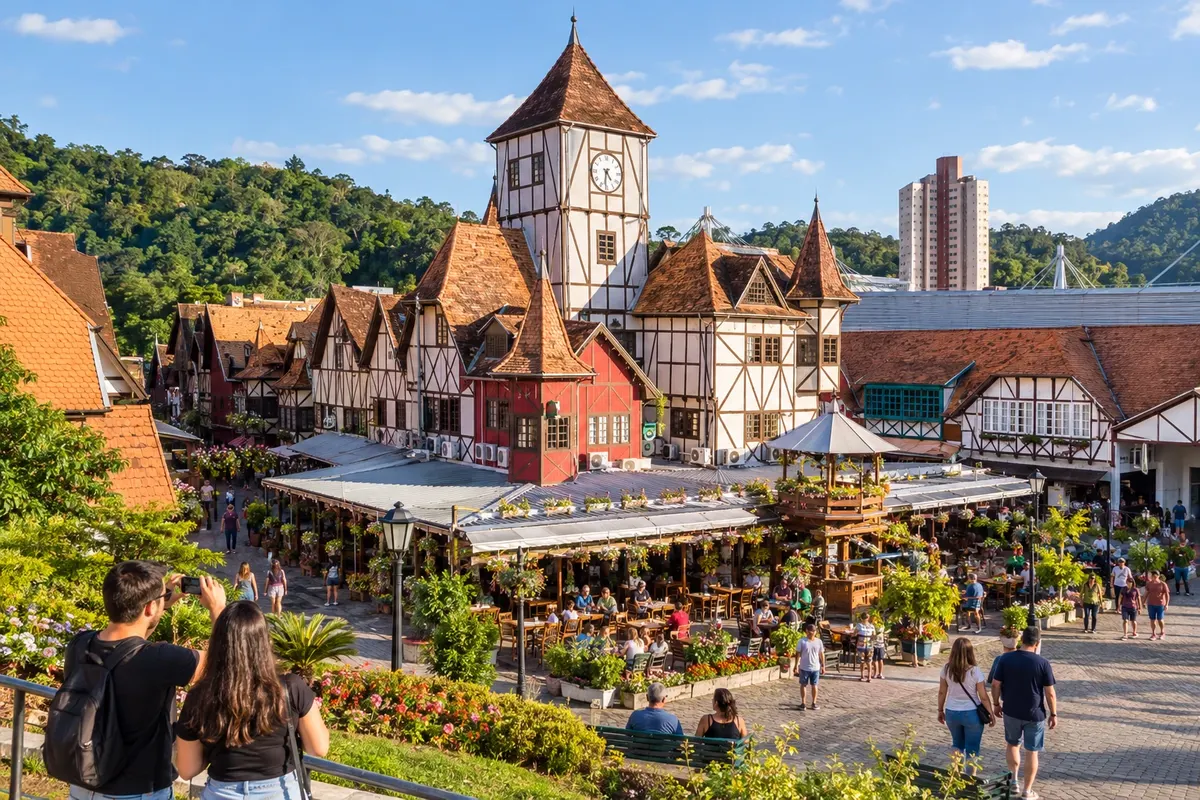
In the photo: Blumenau
Illustrative images. The pictures in this guide are illustrations based on the real place, not photographs, and may differ from it.
Click a photo to enlarge it.
Blumenau Oktoberfest — Blumenau
In October, for about three weeks, usually from the first to the last week of the month.
October
Dates change every year: check this year's date before you travel.
The festival
Blumenau Oktoberfest has been held since 1984 and celebrates the heritage of the German immigrants who founded the city in the 19th century in the Itajaí Valley. Inspired by Munich’s festival, it also had a practical goal: to lift the city and its economy after the major floods of 1983 and 1984. It became the best-known German-tradition festival in Brazil.
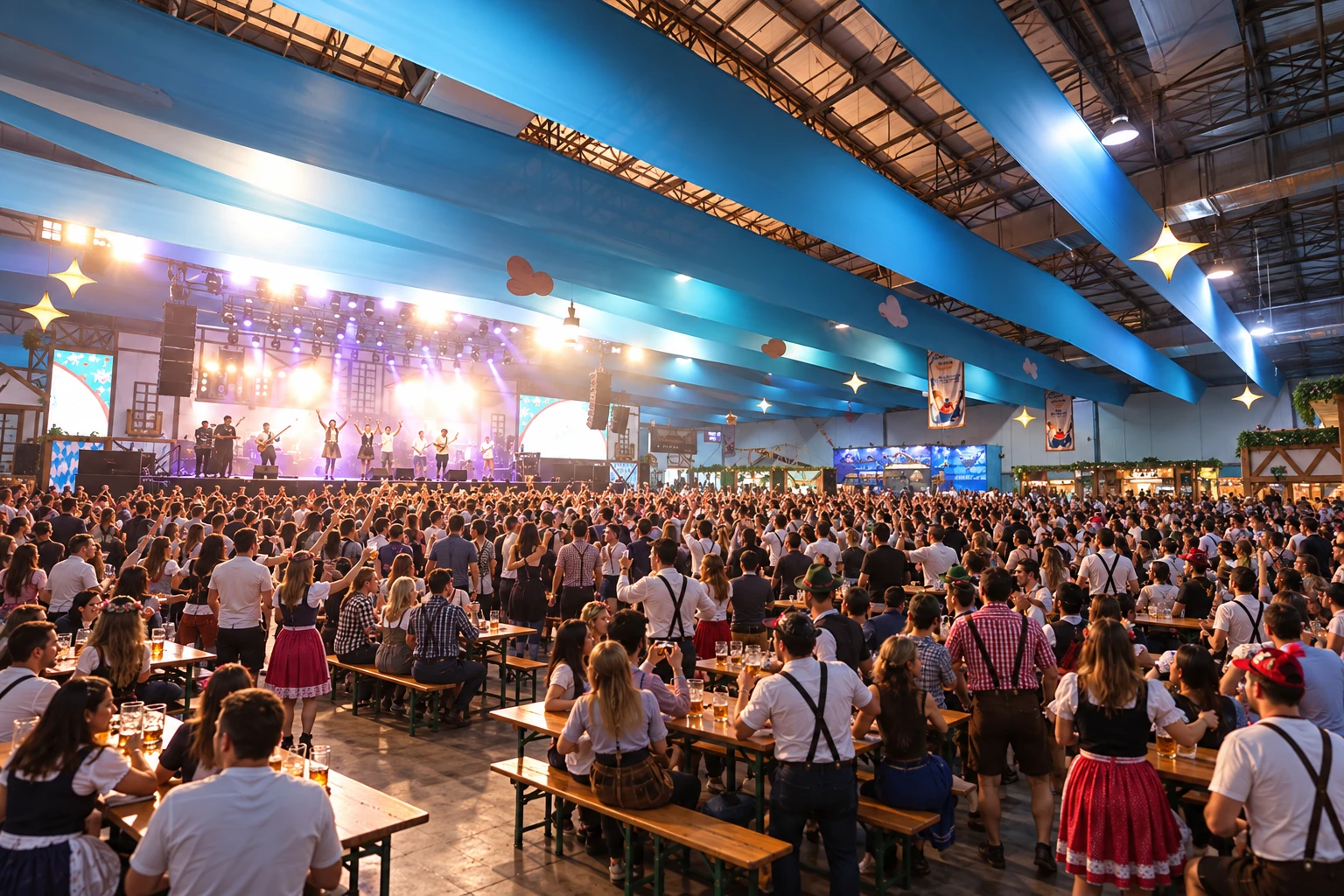
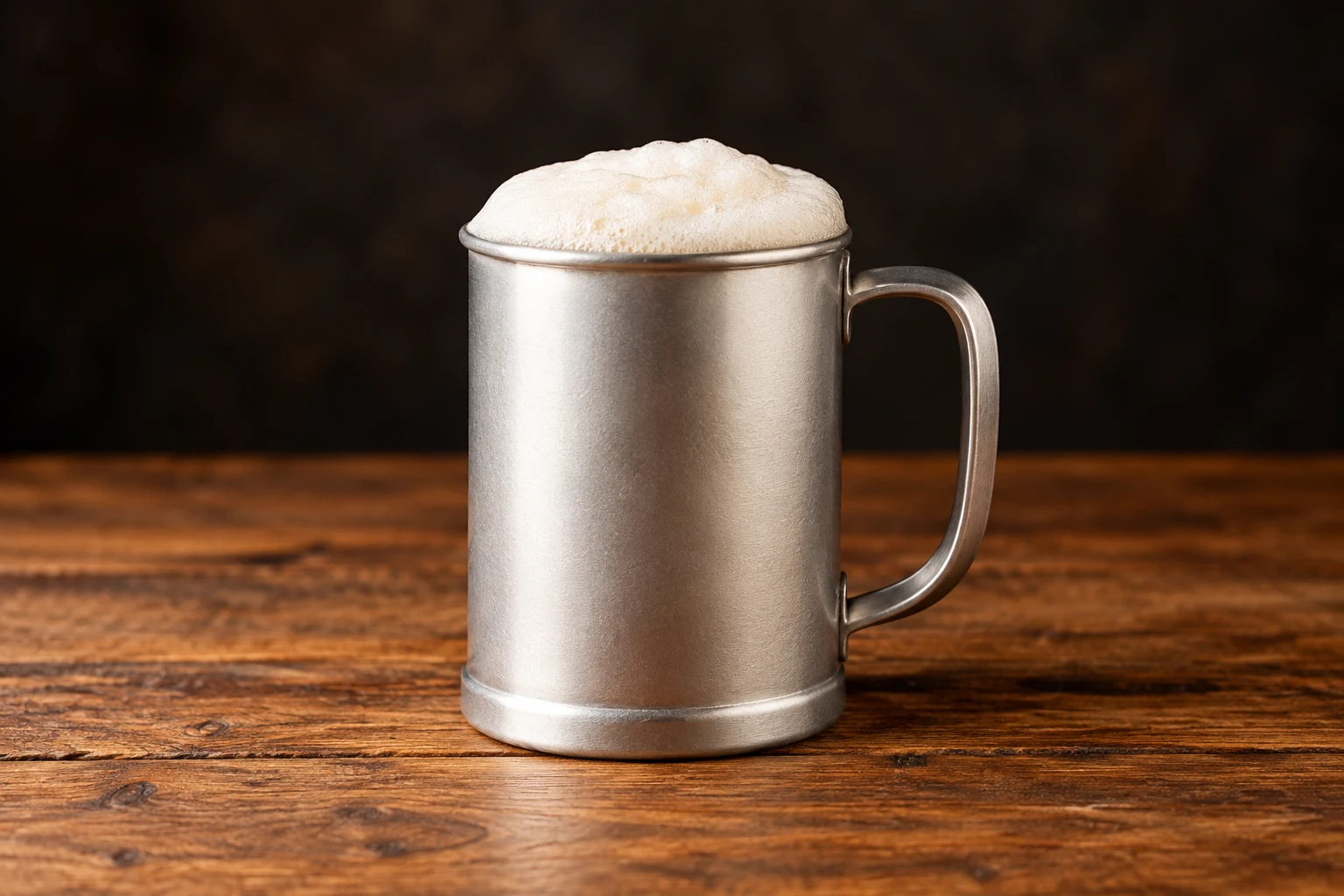
The venue is Parque Vila Germânica, a complex of pavilions and half-timbered style houses. Typical bands, German and Brazilian, play there with brass and accordion; folk groups perform traditional dances and wear traditional costumes; and the public dances inside the pavilions. Among the amusements is the Chope em Metro, a contest in which one drinks a one-meter glass as fast as possible — today served with nonalcoholic draft beer — the traditional costume contests and other competitions inspired by German customs.
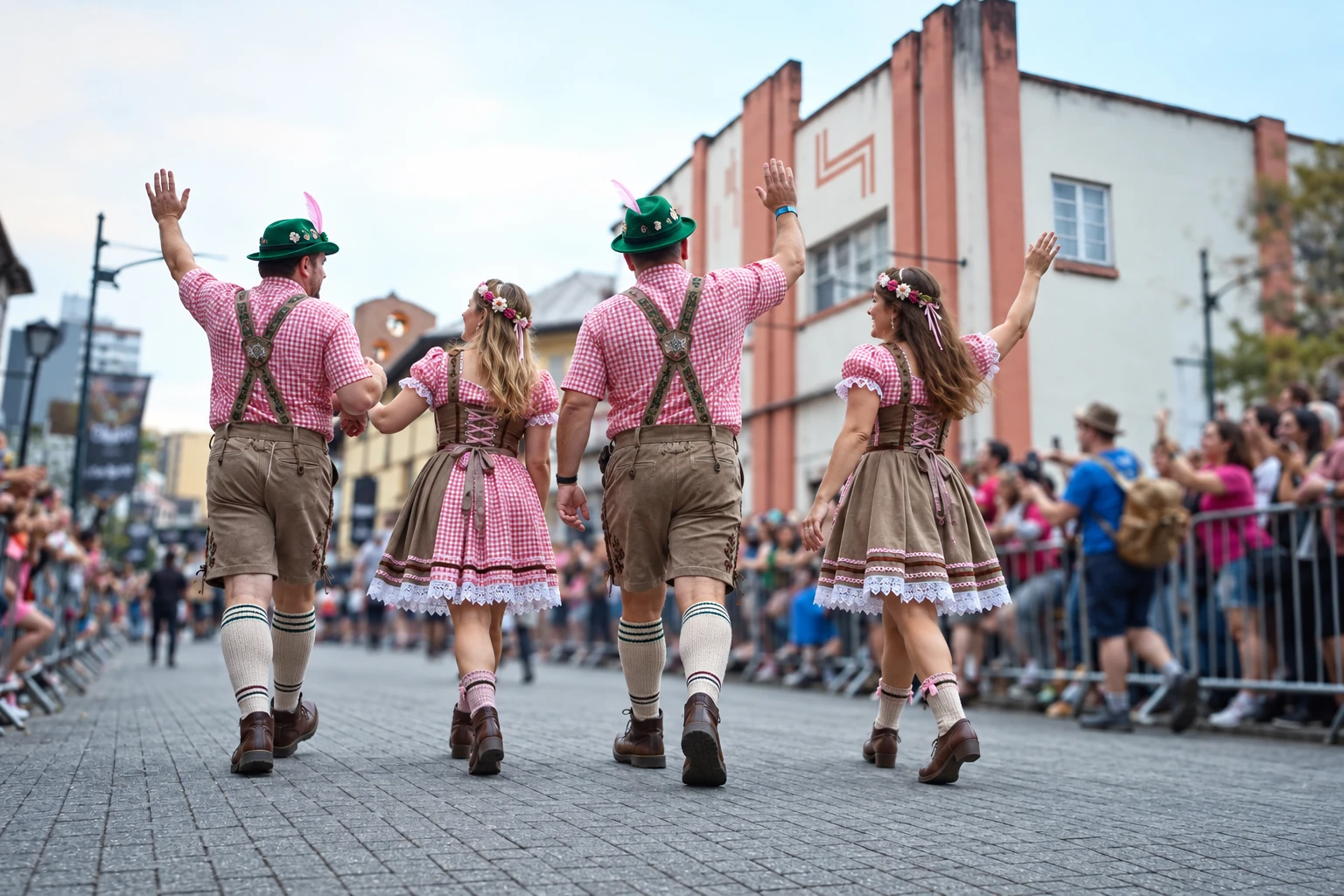
On designated days, the festival moves from the park to the streets. Official parades run along Rua XV de Novembro, the city center’s main street, with floats, bands, shooting and hunting societies, folk groups and thousands of participants in traditional dress. Throughout the month, the city is decorated with banners and shops adopt the festival atmosphere.
Oktoberfest is also a gateway to Santa Catarina’s European Valley, with Pomerode, Timbó and other towns of German and Italian settlement nearby. Beer appears as part of the region’s culture, which has many craft breweries.
An official parade on Rua XV de Novembro. An evening in the pavilions of Parque Vila Germânica with typical bands. The Chope em Metro and performances by folk groups.
Check the official website for the dates and times of the parades, which are few during the month, and arrive early on Rua XV to get a spot. Weekdays are calmer in the pavilions; weekends are busier. Avoid driving to the center on parade days, when streets are closed. Wear traditional costume if you want — many people do. October brings frequent rain in the Itajaí Valley; bring an umbrella.
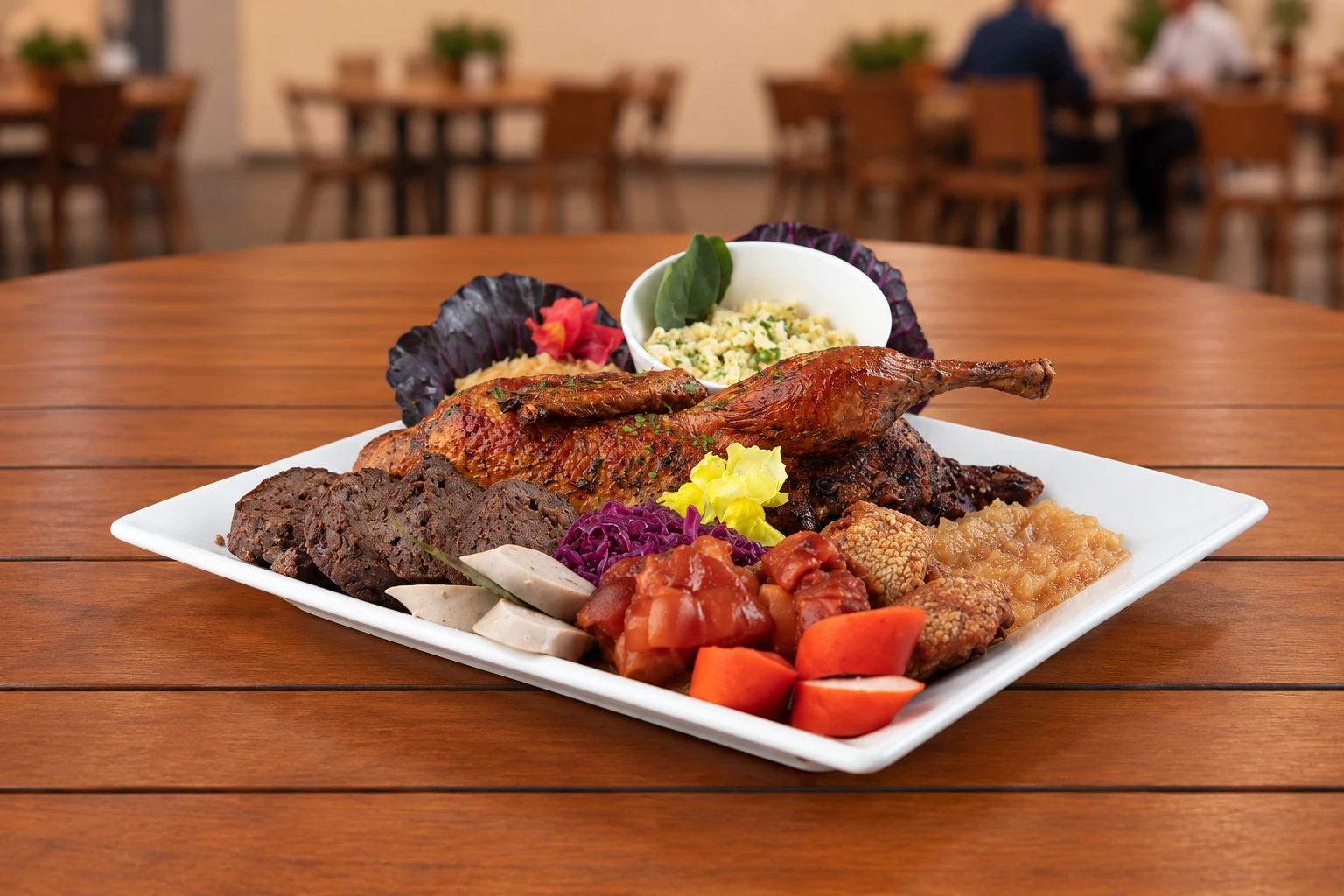
Eisbein (pork knuckle), stuffed marreco with red cabbage, sausages and sauerkraut, Kassler, pretzel, apfelstrudel and cuca; draft beer and local beers, in moderation.
Accommodation in Blumenau fills up on October weekends. Book in advance; Pomerode, Indaial and Balneário Camboriú, about an hour away, are alternatives.
In the city
October
September/OctoberOnce a year, usually in September, sometimes in October.
The Italian culture festival of Petrópolis at the Palácio de Cristal, with Italian food stalls, music, workshops and a masked ball.
OctoberOn the second Sunday of October, with the Trasladação on Saturday night and other processions on the preceding days; the celebration continues for another two weeks, until the Recírio.
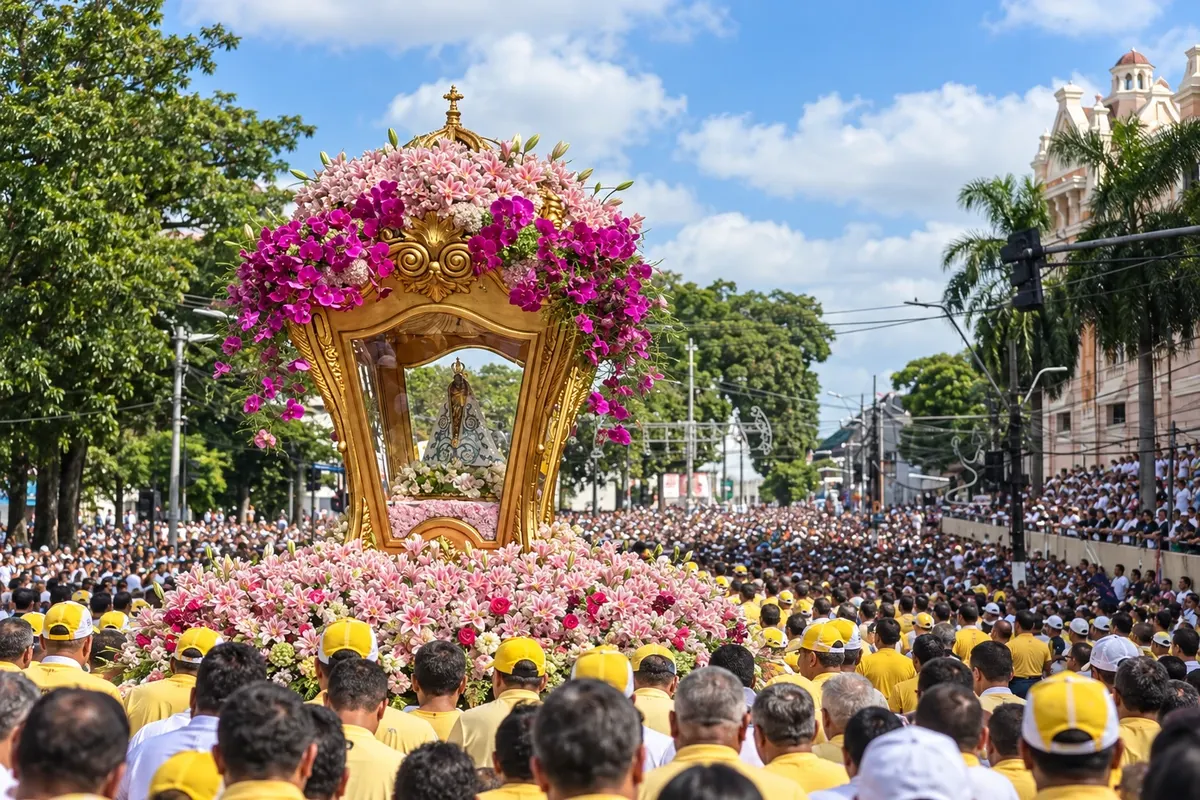
The great procession of Our Lady of Nazareth through the streets of Belém on the second Sunday of October, with the rope pulled by devotees, the flower-covered berlinda, and the Círio lunch with maniçoba and duck in tucupi.
OctoberOn Sundays in October, the month of the sanctuary’s patron saint.
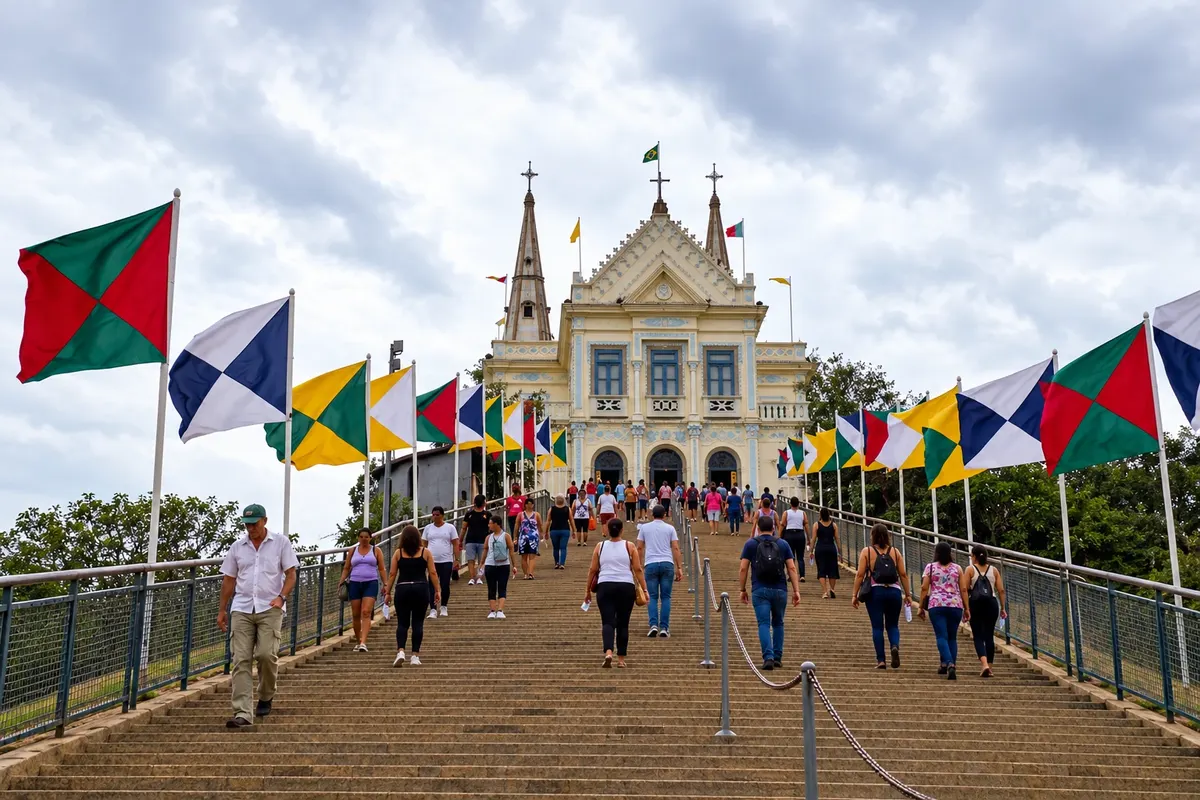
The Feast of Our Lady of Penha, held at the sanctuary atop the rock in Rio’s North Zone, features masses, processions and the 382-step staircase.
Your questions
In October, for about three weeks. Each edition’s dates are published on the official website.
At Parque Vila Germânica in Blumenau. The official parades go along Rua XV de Novembro in the city center.
It’s a traditional contest at Blumenau Oktoberfest in which participants drink, as quickly as possible, a one-meter-long glass. Today it is done with nonalcoholic draft beer.
Festivals and events in Brazil
OctoberUsually in the first half of October, for about ten days.
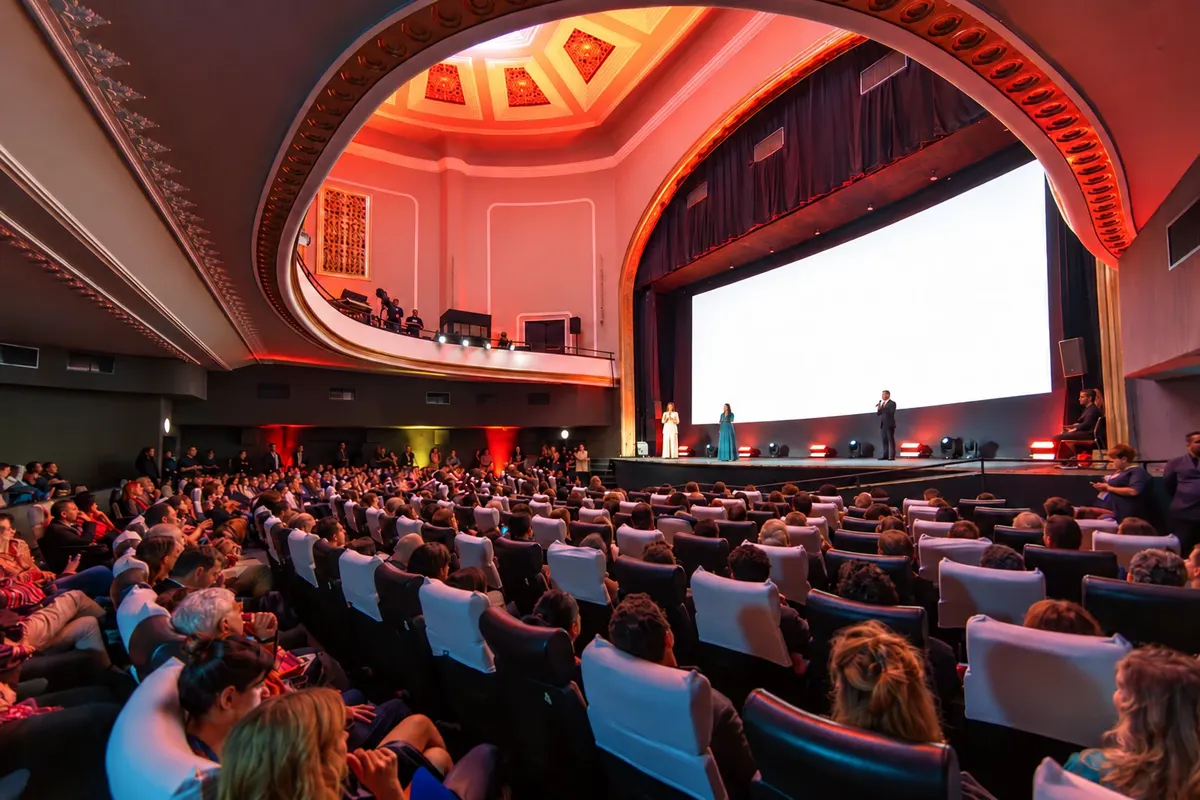
The international film festival of Rio de Janeiro, featuring hundreds of Brazilian and foreign films in theaters across several neighborhoods of the city.
October/November/December/JanuaryFrom late October to mid‑January, for more than two and a half months, covering Christmas and New Year’s Eve.
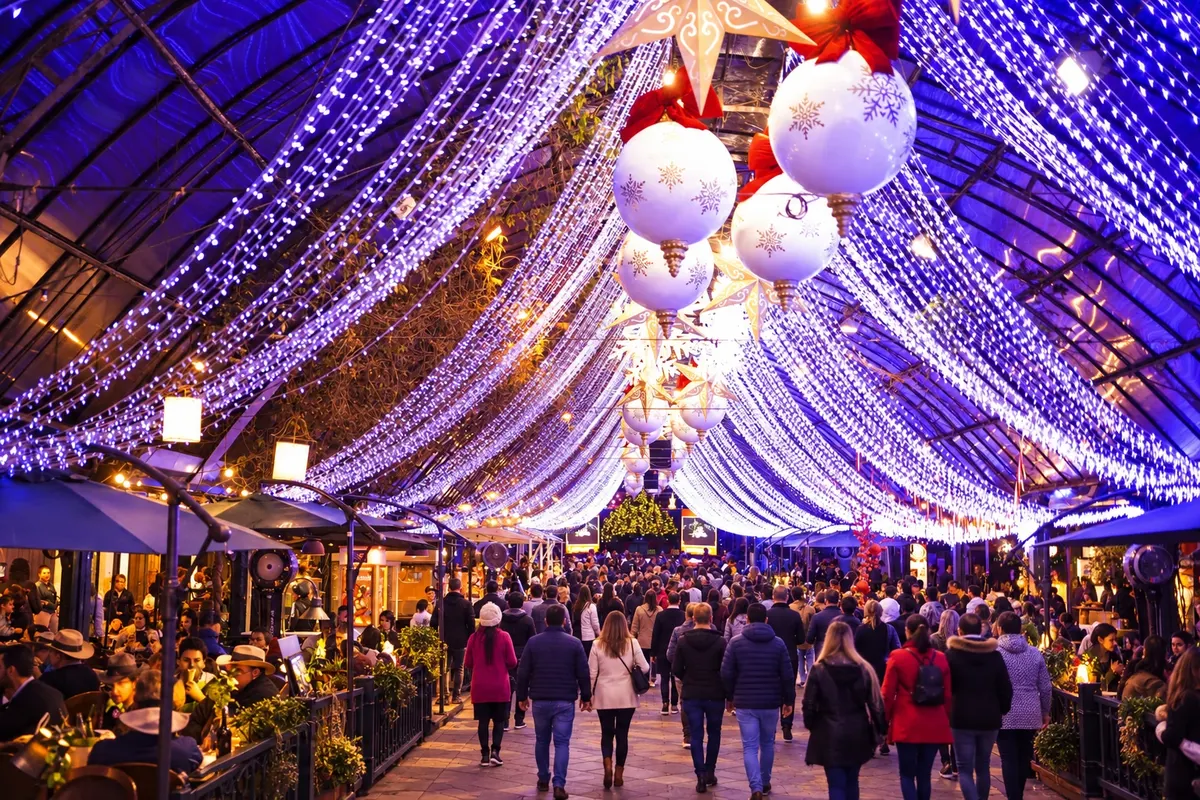
Gramado’s Christmas season in the Serra Gaúcha, with the town lit up, parades and Christmas shows, choir concerts and a Christmas village in the downtown area.
October/NovemberOnce a year, across two consecutive weekends between late October and early November.
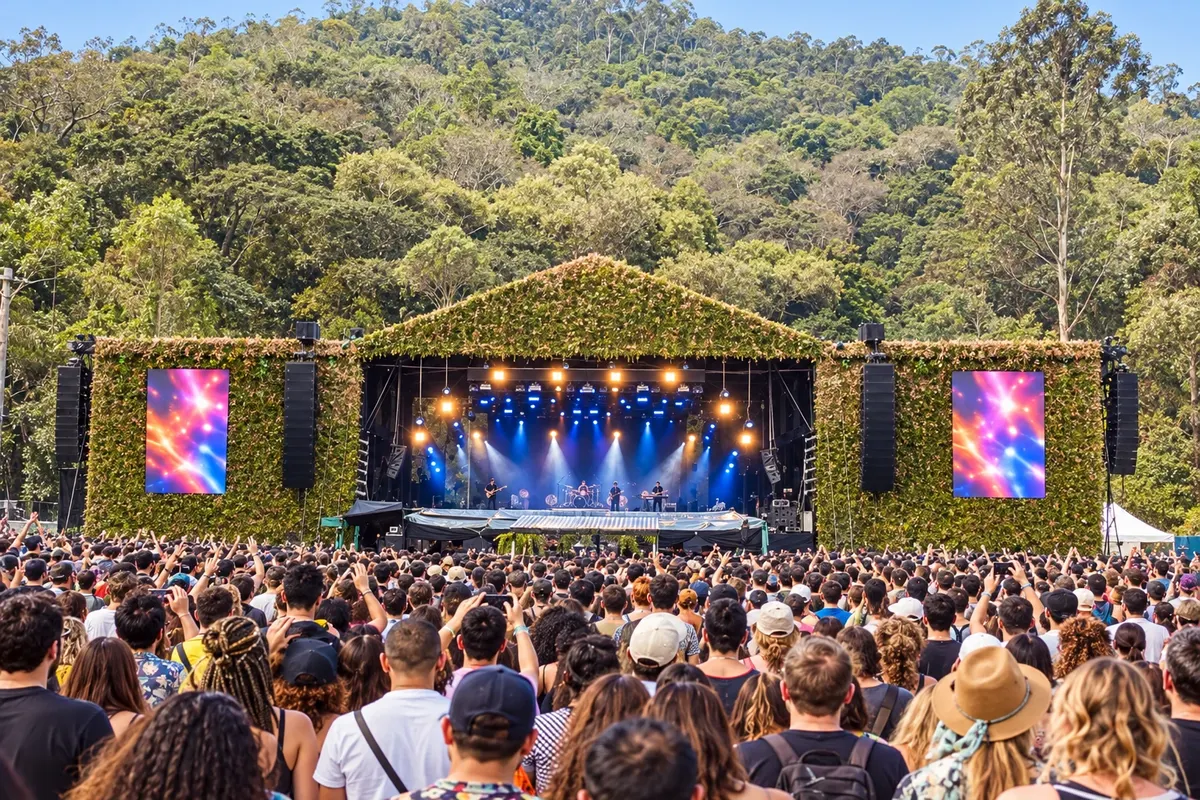
Itaipava’s music and arts festival, held in the mountains of Petrópolis, featuring multiple stages, Brazilian and international artists, and outdoor programming.
JanuaryOn January 20, the day of the city’s patron saint, which is a municipal holiday in Rio de Janeiro.
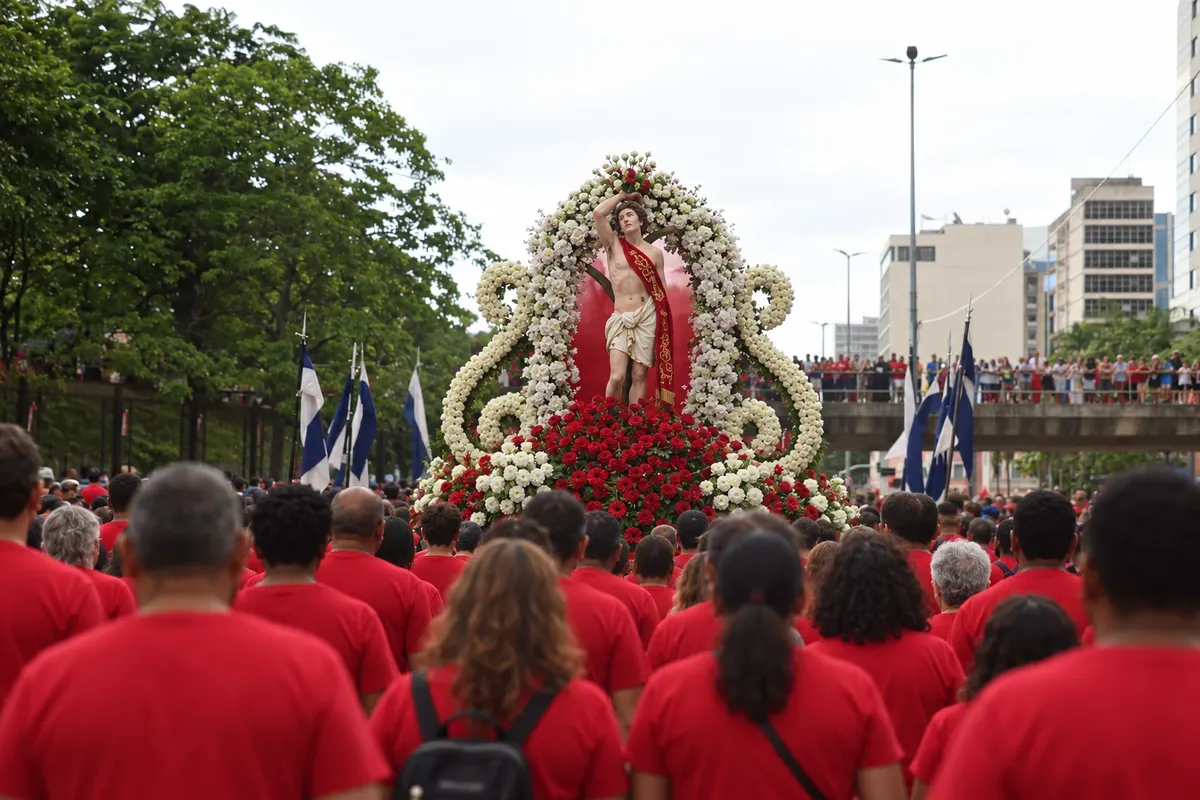
The patron saint’s day in Rio de Janeiro, with masses and the procession that carries the saint’s image from Tijuca to the Metropolitan Cathedral in the downtown area.
JanuaryOn the Thursday before the second Sunday after Epiphany (January 6), which is the Sunday of the Feast of the Lord of Bonfim; therefore it always takes place in January, usually on the second or third Thursday of the month.
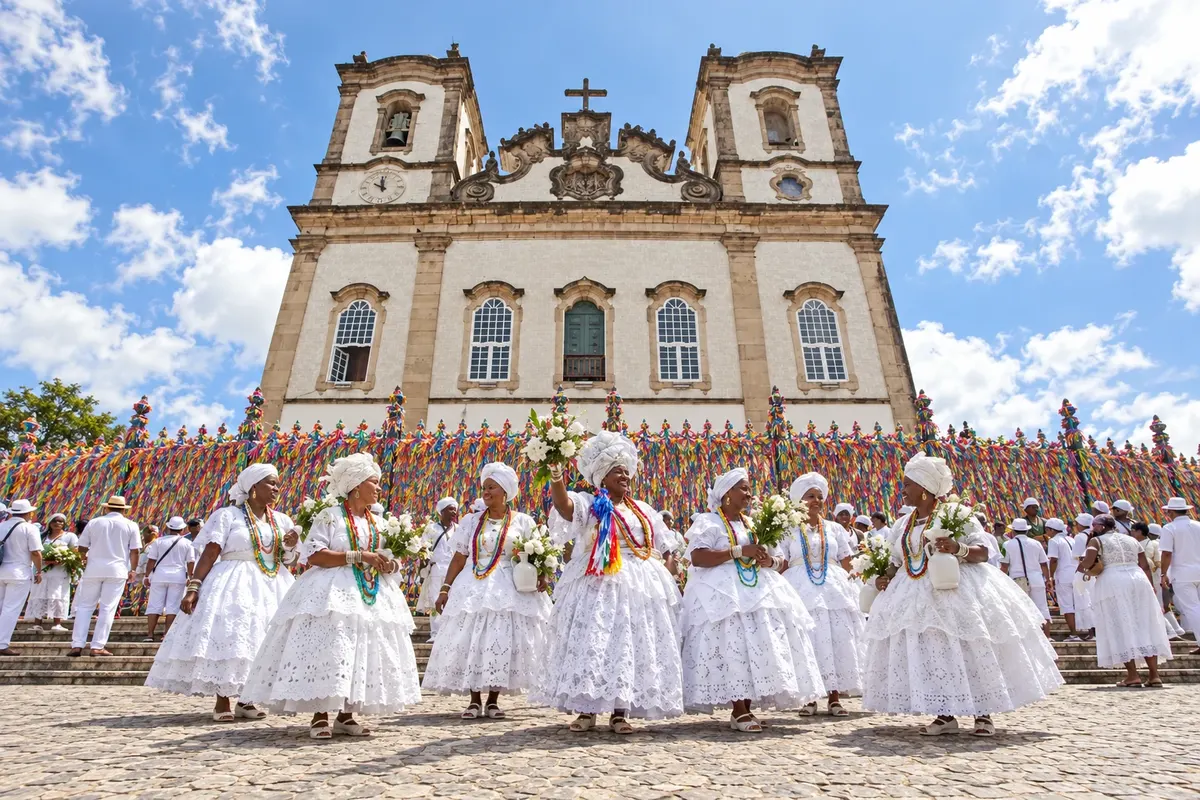
A walking procession of several kilometers from Cidade Baixa to the Sacred Hill in Salvador, where baianas dressed in white wash the steps of the Basilica of the Senhor do Bonfim with scented water.
February/MarchFrom Saturday to Carnival Tuesday, beginning with the departure of the Homem da Meia-Noite at midnight between Saturday and Sunday; Carnival falls in February or March, depending on Easter.
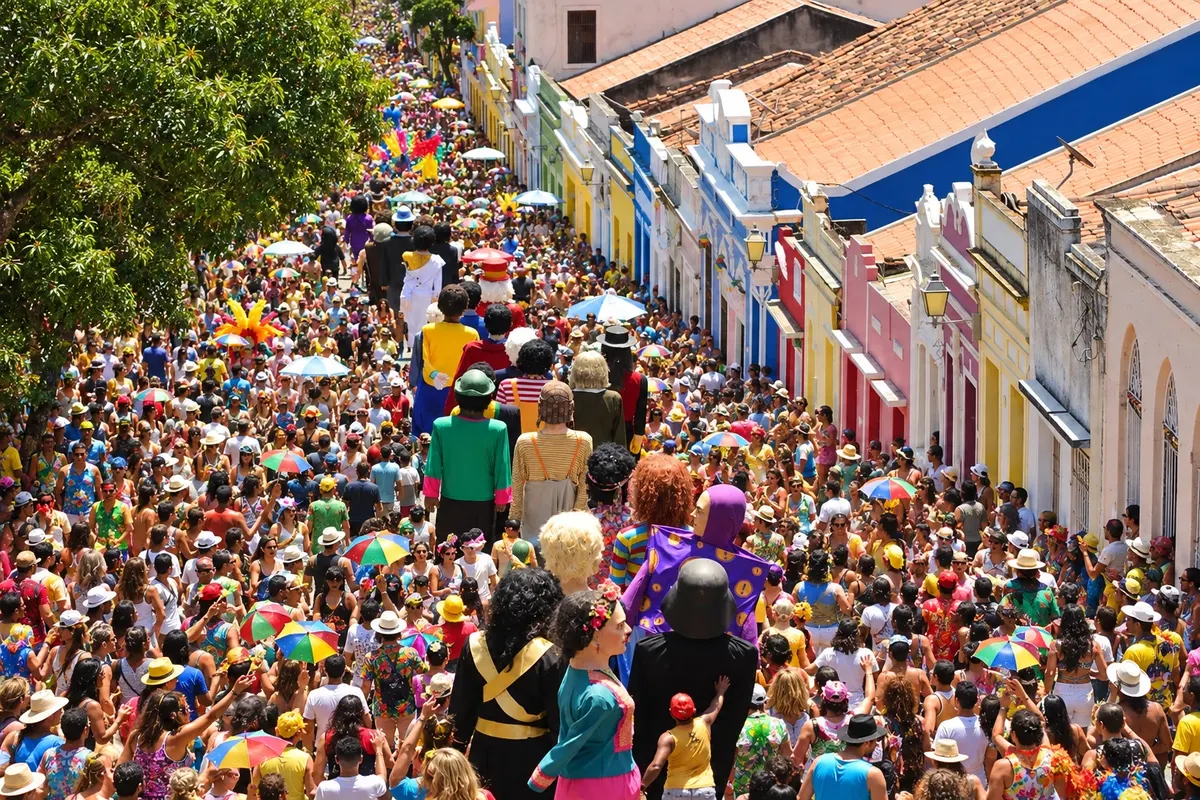
The party on the cobbled hills of Olinda’s historic center, a World Heritage site: blocks and troças without a trio elétrico, frevo orchestras on foot and giant puppets, led by the Homem da Meia-Noite.