
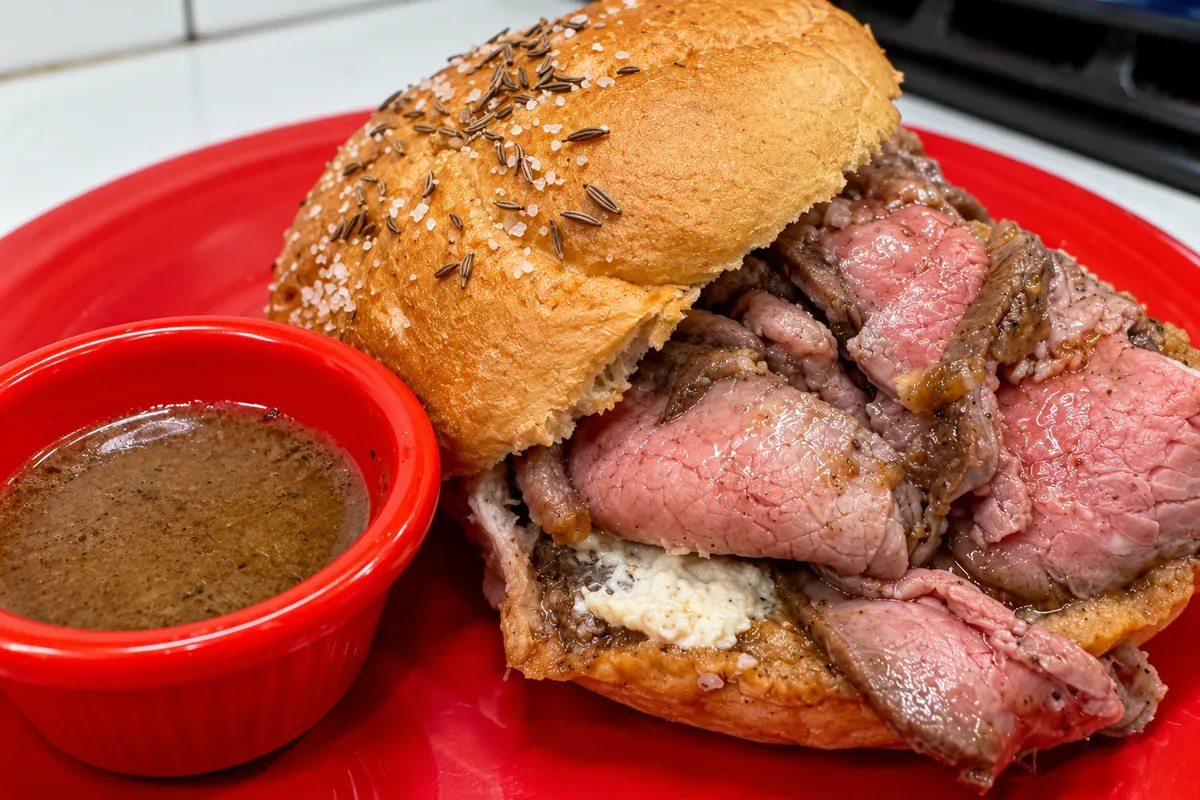
Dish · Buffalo
Beef on weck
Rare roast beef sandwich on kummelweck roll, topped with coarse salt and caraway, with horseradish and the roll dipped in the roast jus. It’s a tavern specialty from Buffalo, older than the chicken wings.

 Search
 Brazil
 Argentina
 Bolivia
 Chile
 Colombia
 Ecuador
 Guyana
 French Guiana
 Falkland Islands (Malvinas)
 Paraguay
 Peru
 Suriname
 Uruguay
 Venezuela
 Germany
 Austria
 Belgium
 Croatia
 Denmark
 Spain
 Finland
 France
 Greece
 the Netherlands
 Hungary
 Ireland
 Iceland
 Italy
 Luxembourg
 Norway
 Poland
 Portugal
 the United Kingdom
 the Czech Republic
 Sweden
 Switzerland
 Turkey
 Canadathe United States
 Mexico
 the Dominican RepublicTurkey
 South Africa
 Australia
 Fiji
 New Zealand
 Papua New Guinea
Flavors · the United States
Ground beef shaped into a patty, grilled or cooked on a griddle and served inside a round bun. Several American cities claim the sandwich's origin, and it became one of the foods most associated with the United States.
Traditional dish from the United States
Also known as: burger, hambúrguer, hamburger sandwich
Illustrative images. The pictures in this guide are illustrations based on the real place, not photographs, and may differ from it.

Click a photo to enlarge it.
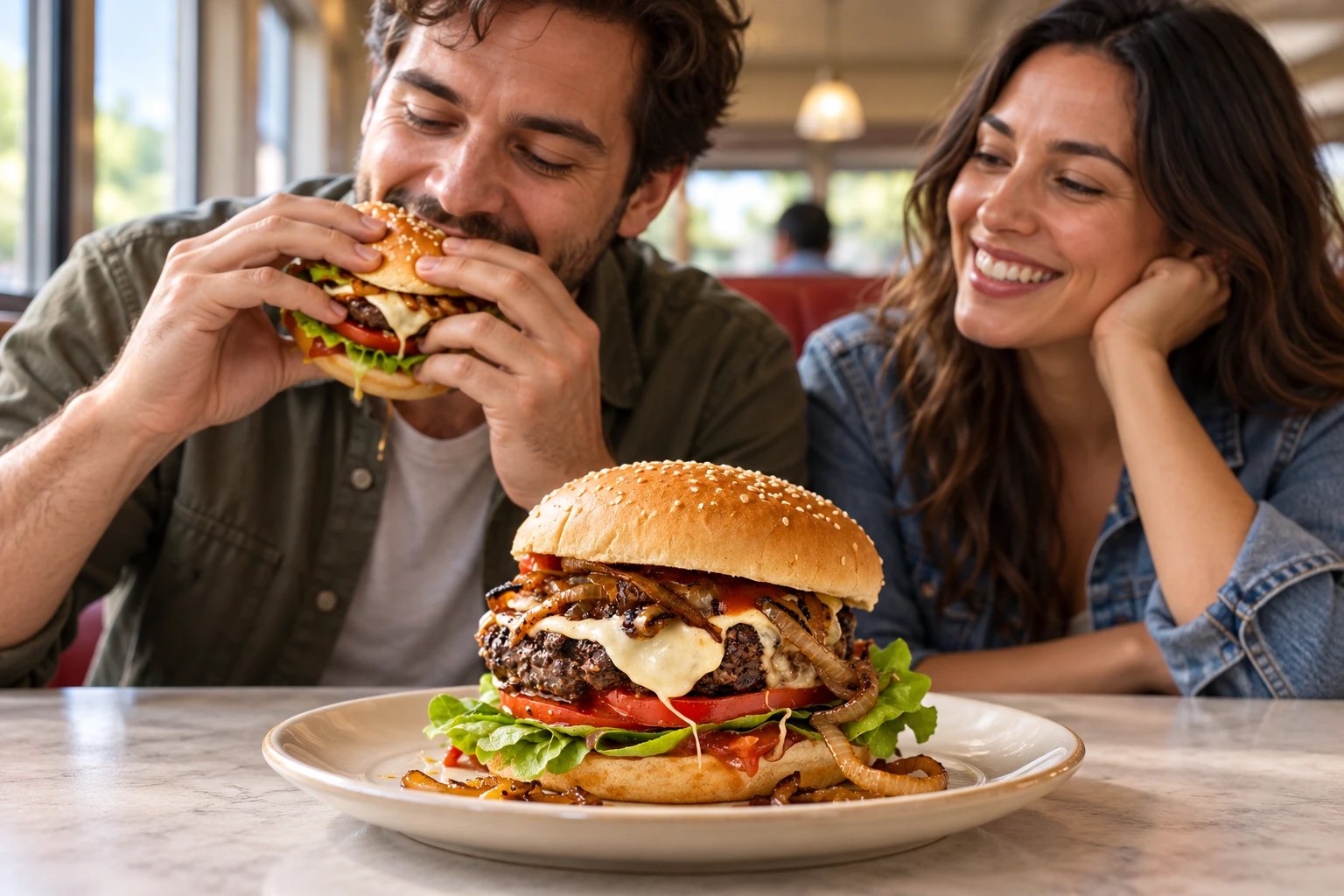
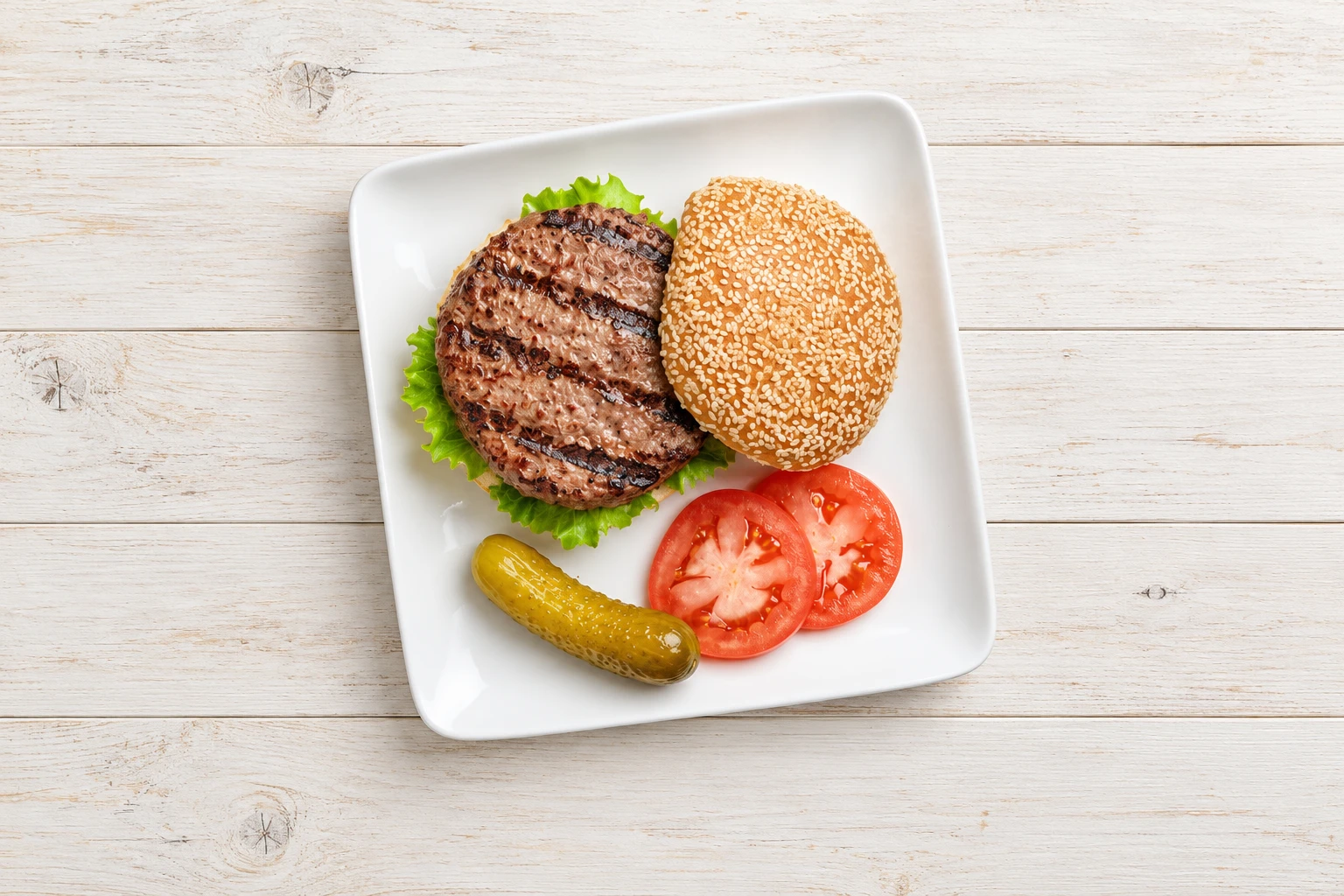
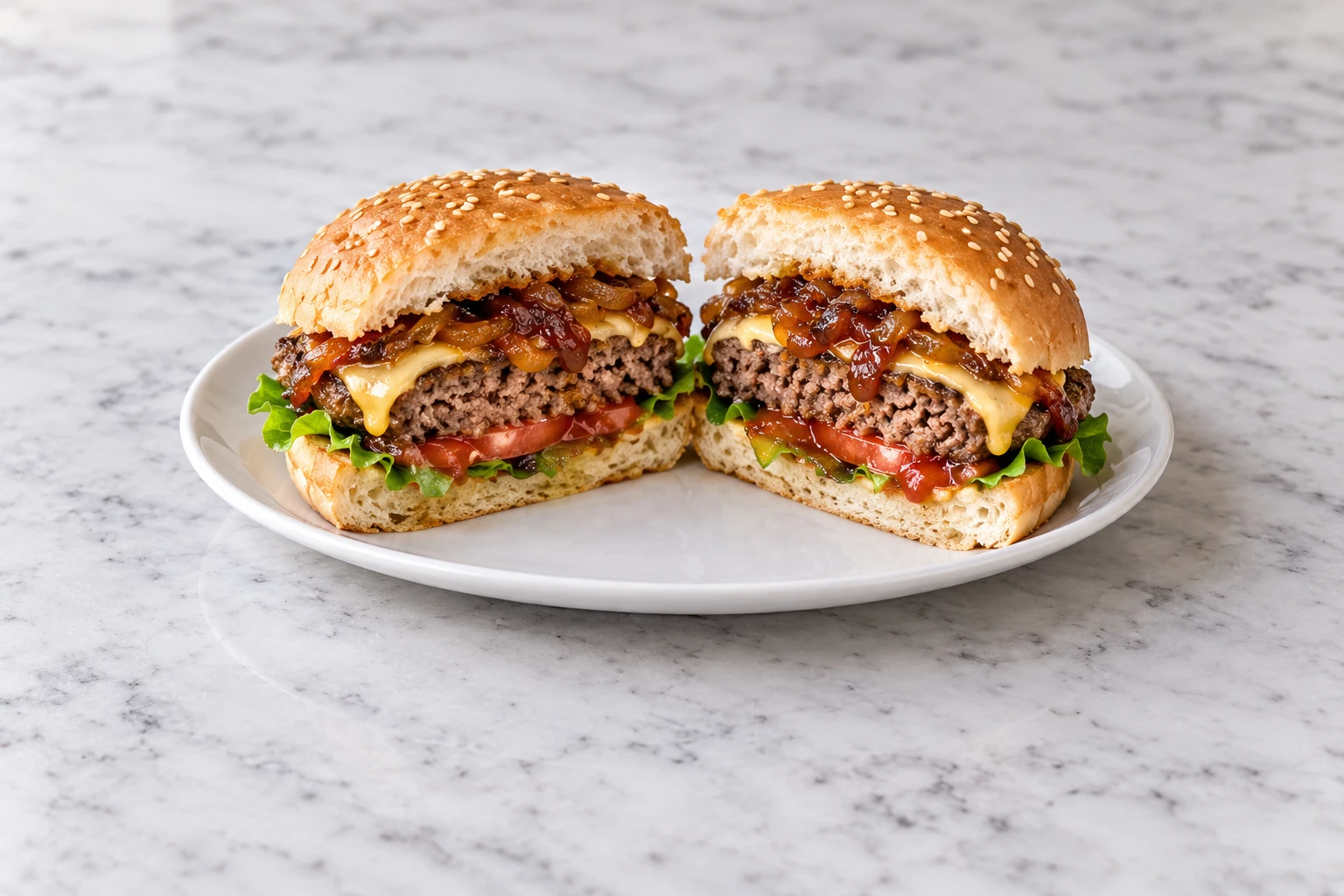
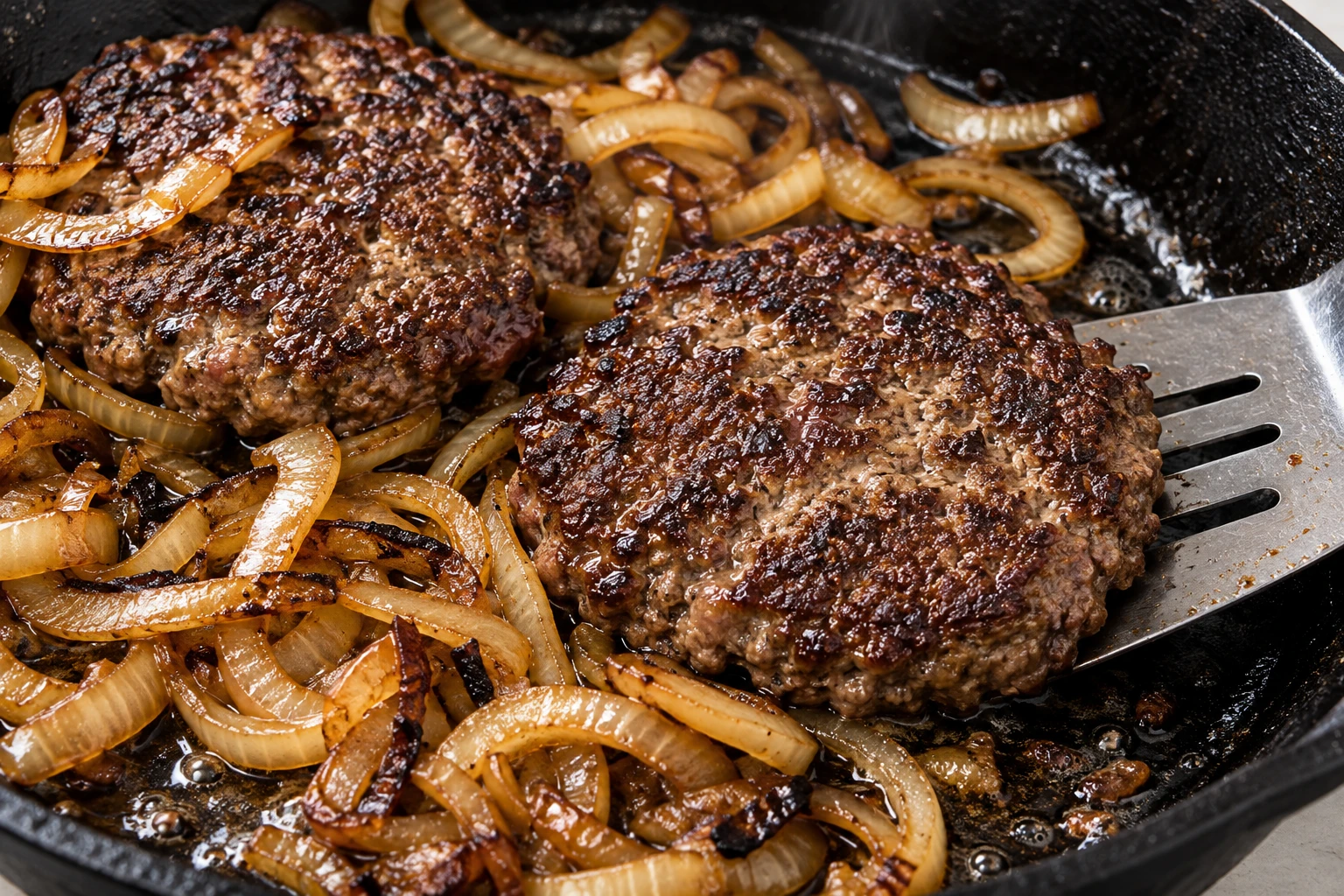
Hamburger — the United States
The hamburger is ground beef formed into a patty and cooked on a grill or griddle, served between two halves of a bun. The name comes from the Hamburg steak, the minced meat that German immigrants brought to the United States in the 19th century. When it was placed inside a bun and sold at counters, carts, and fairs, it became one of the foods most associated with the country.
The sandwich’s origin is contested among several towns. The Library of Congress, in its Local Legacies program, recorded Louis' Lunch in New Haven, Connecticut, as a Connecticut legacy, where Louis Lassen, according to his family, served grilled minced beef between two slices of toasted bread to a hurried customer in 1900. The record documents the local tradition without settling the dispute over the origin.
Other towns tell different stories. Athens, Texas, credits cook Fletcher Davis, who is said to have sold ground-beef sandwiches in the late 19th century, and the Texas legislature passed a resolution in 2007 supporting that version. Seymour, Wisconsin, claims to be the hamburger’s home because of Charlie Nagreen, who allegedly flattened meatballs inside a bun at a fair in 1885. Akron, Ohio, cites the Menches brothers, who reportedly improvised the sandwich at a fair around the same time. Historians consider that none of these versions has definitive proof.
That is why the hamburger represents the whole country rather than a single town: it arose from multiple local traditions and spread across all the states with roadside diners, lunch counters, and fast-food chains in the 20th century. Today it is served in many different ways, from the simplest—just meat and bread—to versions piled with cheese, lettuce, tomato, onion, pickles, and sauces.
the United States
Several American towns dispute the sandwich’s origin; it spread to all states and became a food of the entire country.
Ground beef, salt and pepper; round bun. Common toppings: cheese, lettuce, tomato, onion, pickles, ketchup, mustard.
Eaten with the hands, hot, assembled in the bun. It usually comes with french fries. The meat’s doneness can be requested in many places.
Year-round food, found in diners, restaurants, and backyard barbecues, especially in summer and on the July 4th holiday.
Your questions
The origin is disputed. The Library of Congress recorded Louis' Lunch in New Haven, Connecticut, where the sandwich is said to have been served in 1900. Athens, Texas; Seymour, Wisconsin; and Akron, Ohio each have their own versions.
From the Hamburg steak, the minced meat that German immigrants brought to the United States in the 19th century.
A cheeseburger is a hamburger with a slice of cheese melted on top of the patty.
Flavors of the United States
Rare roast beef sandwich on kummelweck roll, topped with coarse salt and caraway, with horseradish and the roll dipped in the roast jus. It’s a tavern specialty from Buffalo, older than the chicken wings.
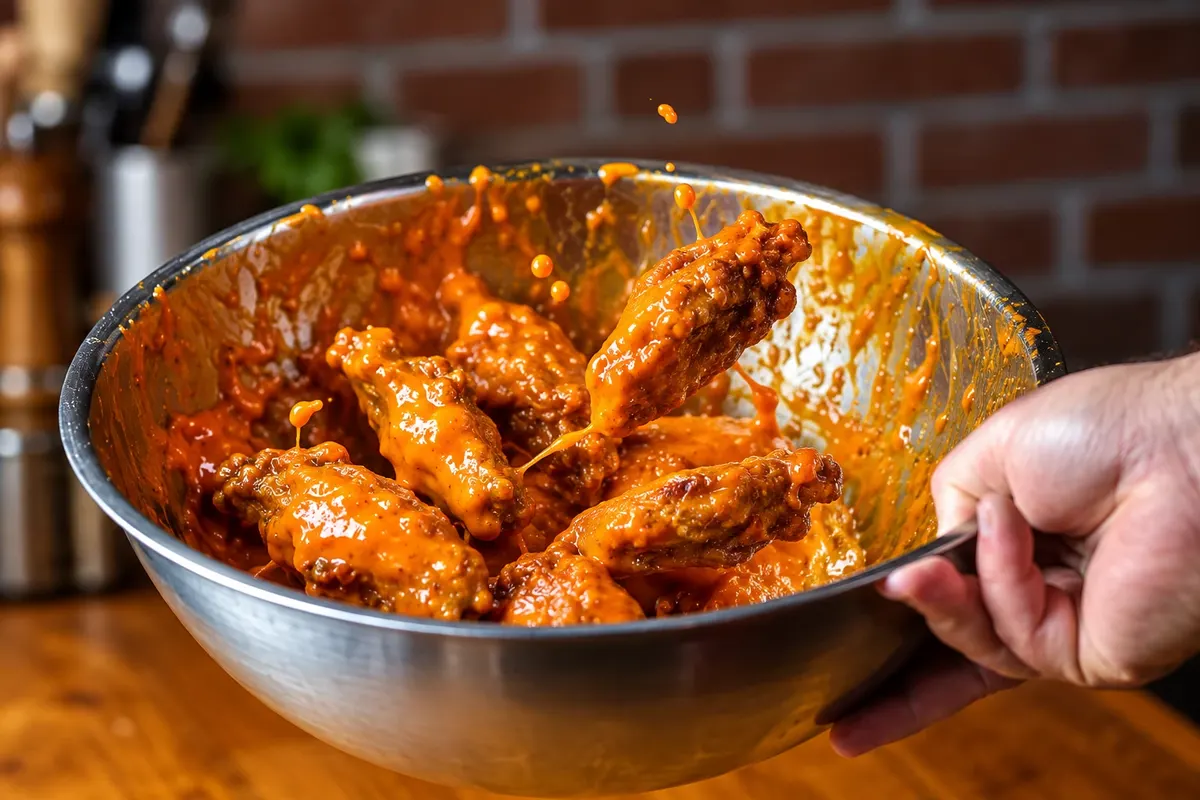
Fried chicken wings not breaded and coated in a hot pepper and butter sauce, served with celery and blue cheese dressing. They were created in Buffalo in 1964, according to the most accepted version.

Thick date shake with vanilla ice cream, with a caramel-like flavor. It originated at roadside date shops in California’s Coachella Valley.
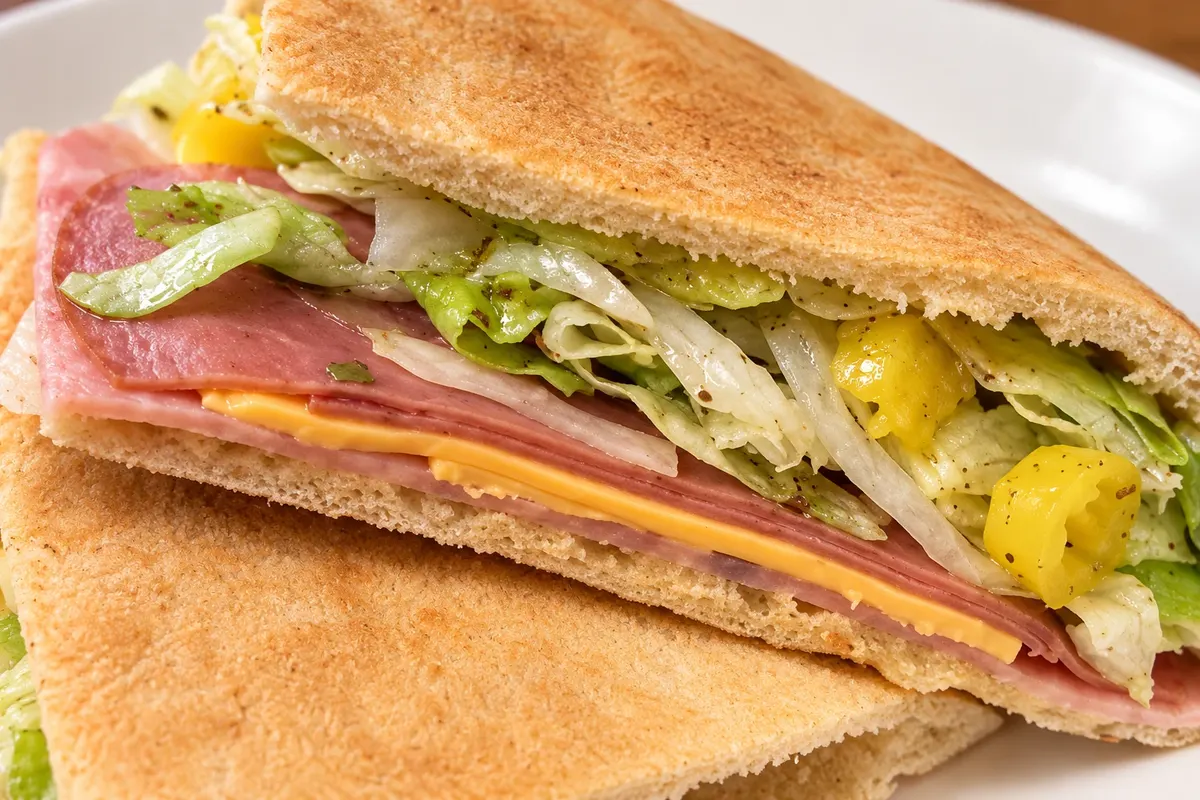
Pita bread with ham, salami and mortadella, salad and a tangy dressing. It originated with the city’s Arab immigrants and is often served with tabbouleh and cherry limeade.
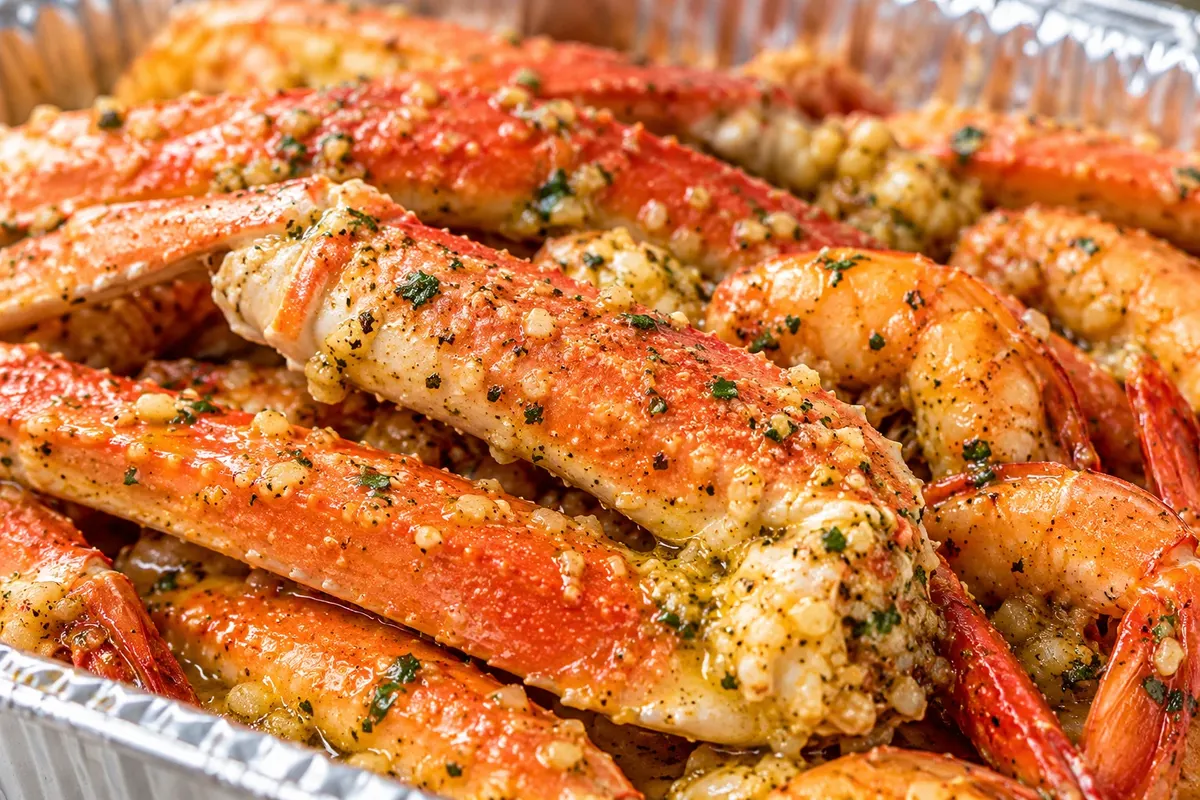
Blue crab cooked and covered in garlic butter, served with sausage, corn, potato and egg. A variation of the Gullah Geechee–rooted seafood boil, with dozens of specialist restaurants in Jacksonville.

Whiskey made with at least 51% corn and aged in new charred oak barrels. The United States Congress recognized it in 1964 as a distinctive product of the country, and Kentucky concentrates most of its production.
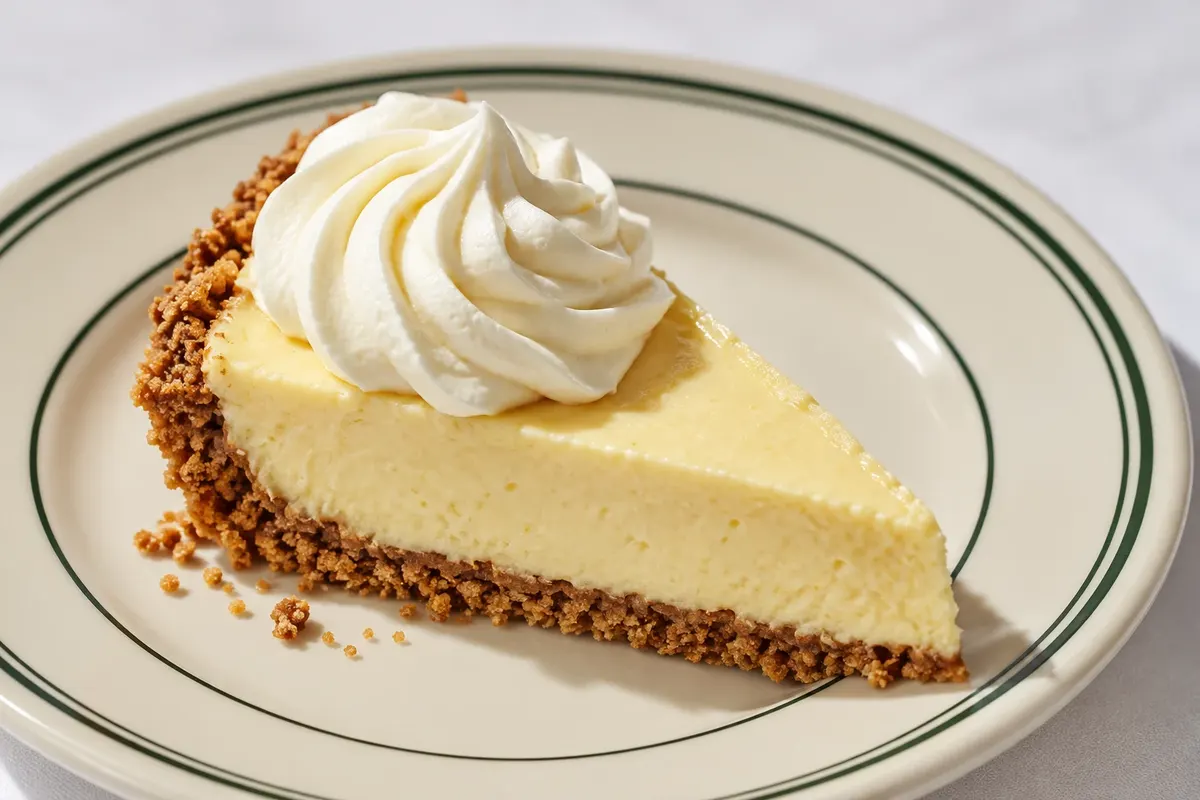
Key lime pie, made with the small yellow Key lime, condensed milk and egg yolks on a cookie crust. Associated with Key West since the late 19th century, it is the official pie of Florida.
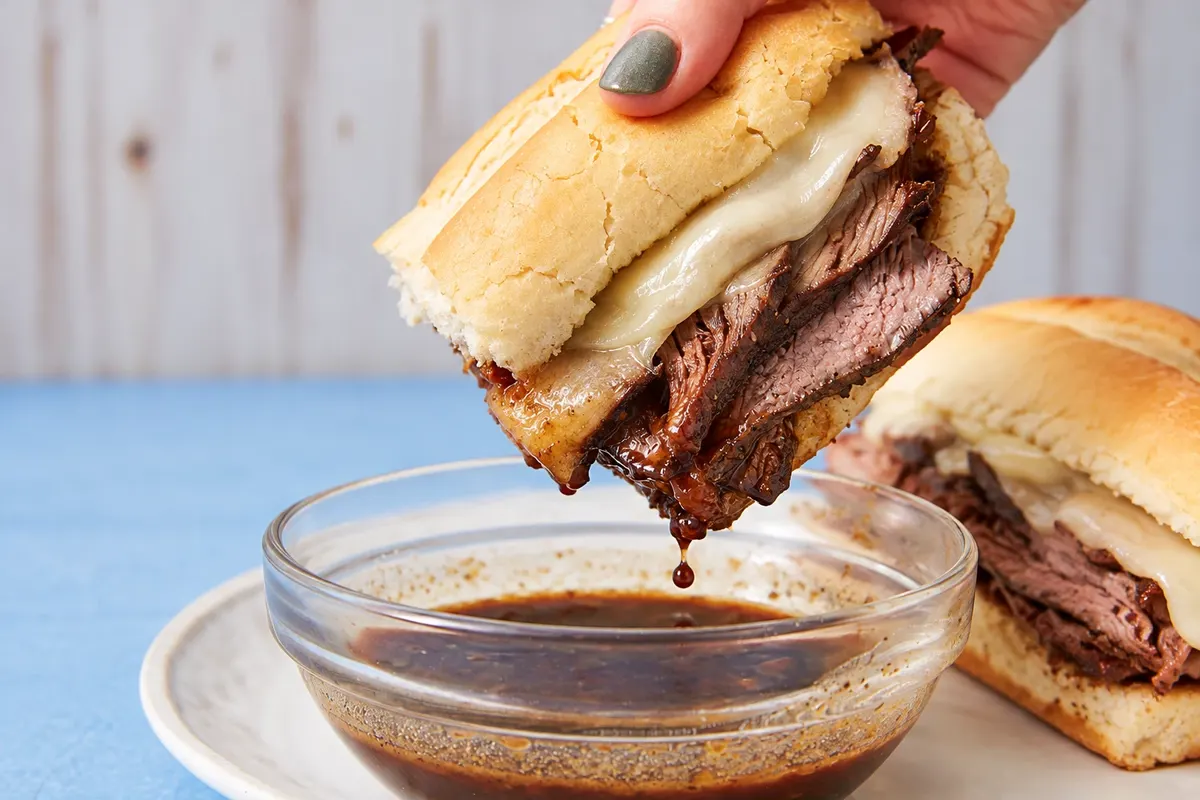
Sliced roast beef sandwich on French bread, with the bread dipped in the roast’s jus. Two downtown Los Angeles establishments, opened in 1908, claim its invention.

Cuban coffee: a short, strong espresso sweetened during preparation, with a sugar foam on top. It’s the everyday coffee of Miami’s Cuban community, served in small cups at café windows.
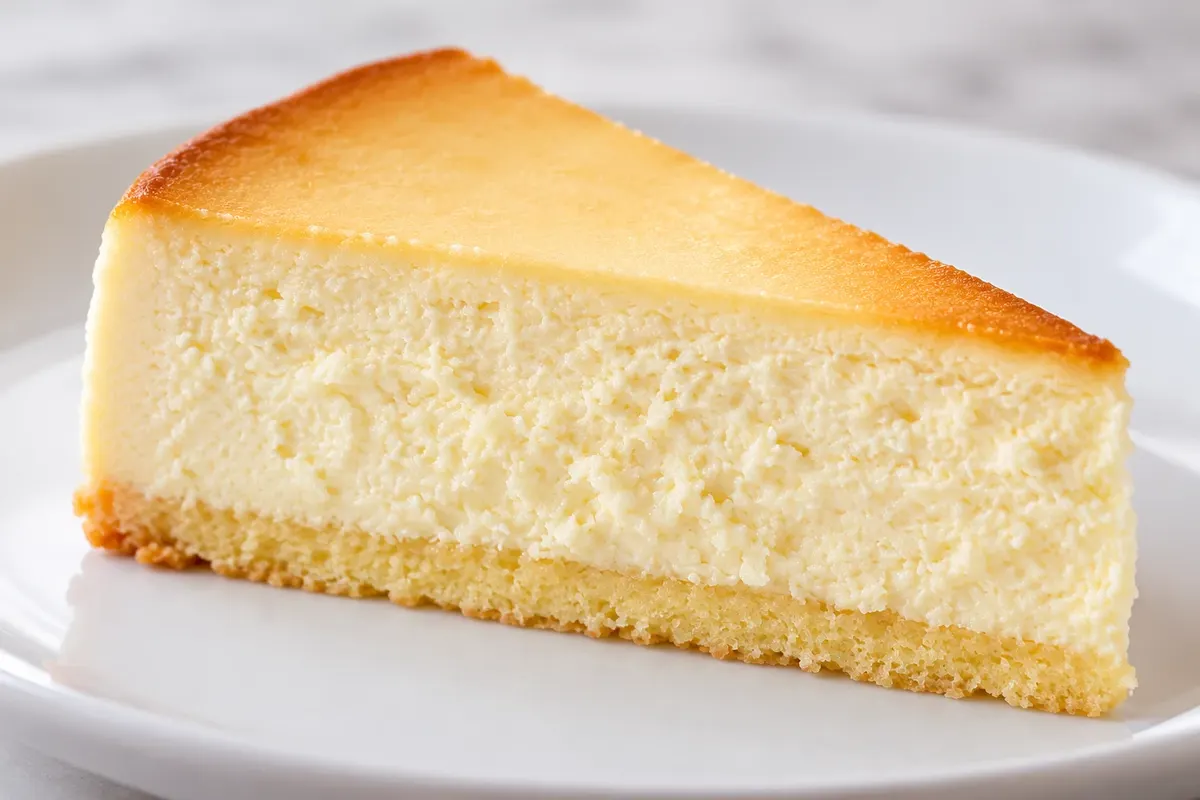
Dense, creamy tart made with cream cheese, eggs and cream on a cookie crust, served without topping.
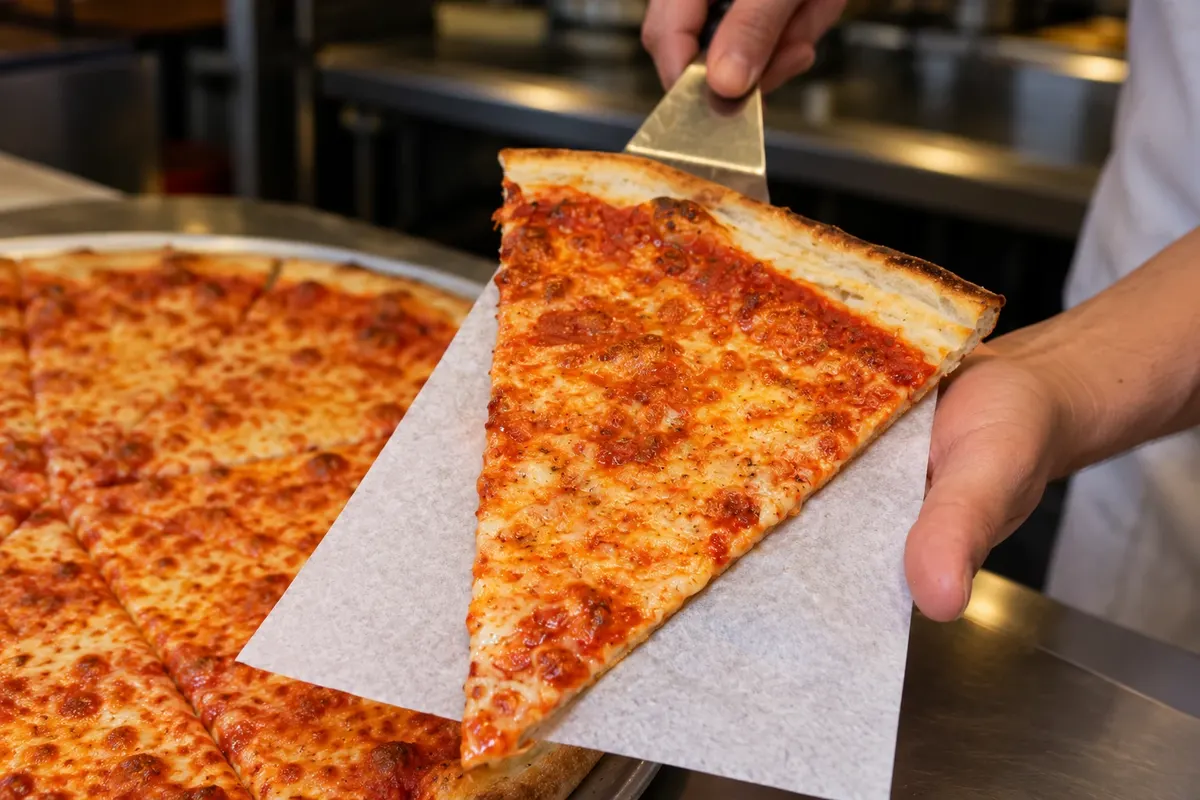
Large pizza with a thin, crisp yet flexible crust, thin enough to fold a slice in half. It originated among Neapolitan bakers in New York and is sold by the slice throughout the city.
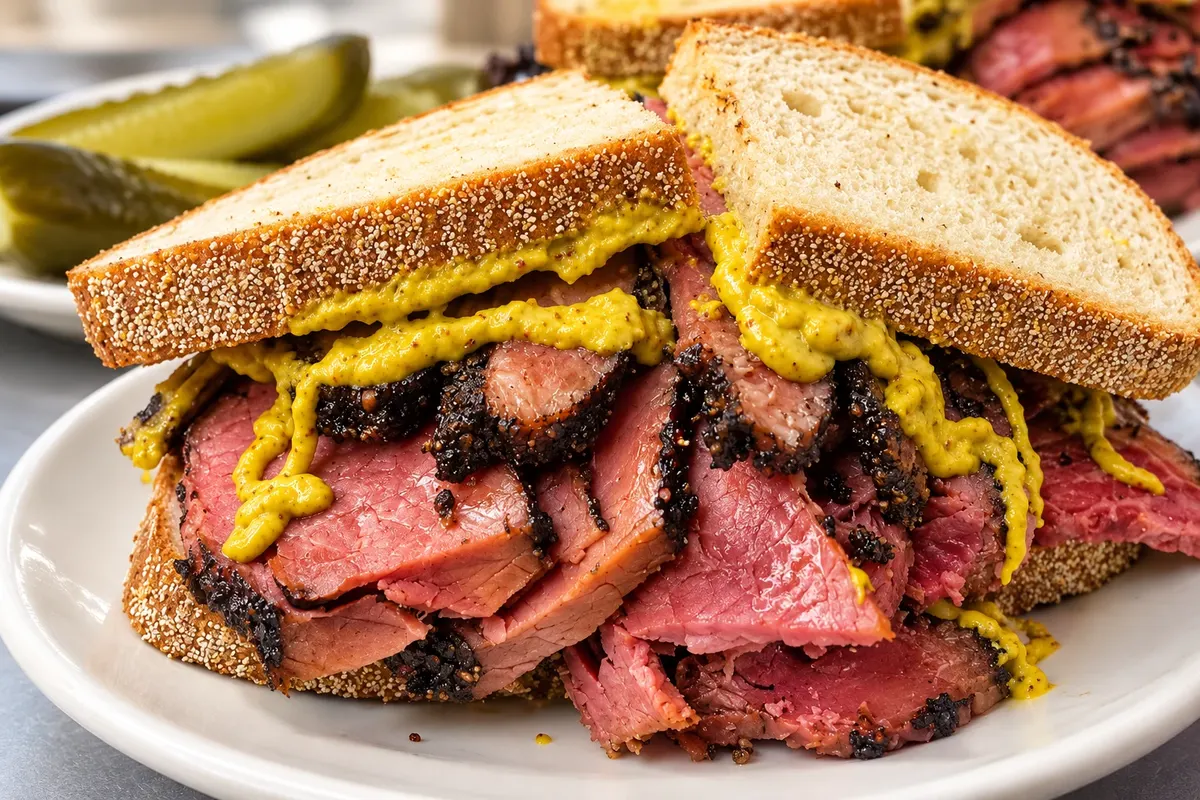
Pastrami sandwich: cured, seasoned and smoked beef, hot-sliced on rye bread with mustard. It’s the sandwich of New York’s Jewish delicatessens.
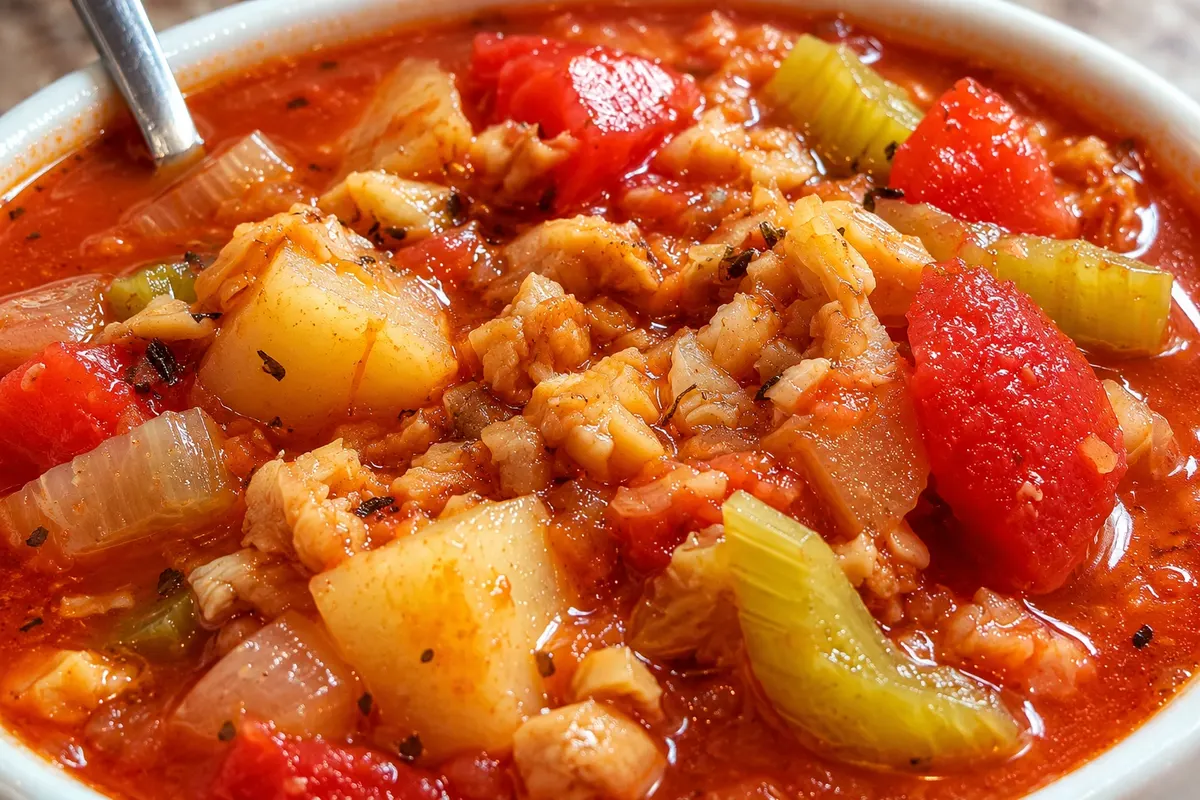
Clam and potato chowder in a tomato broth, with bacon and the sweet heat of datil pepper. A family recipe from descendants of Menorcan settlers in Saint Augustine.
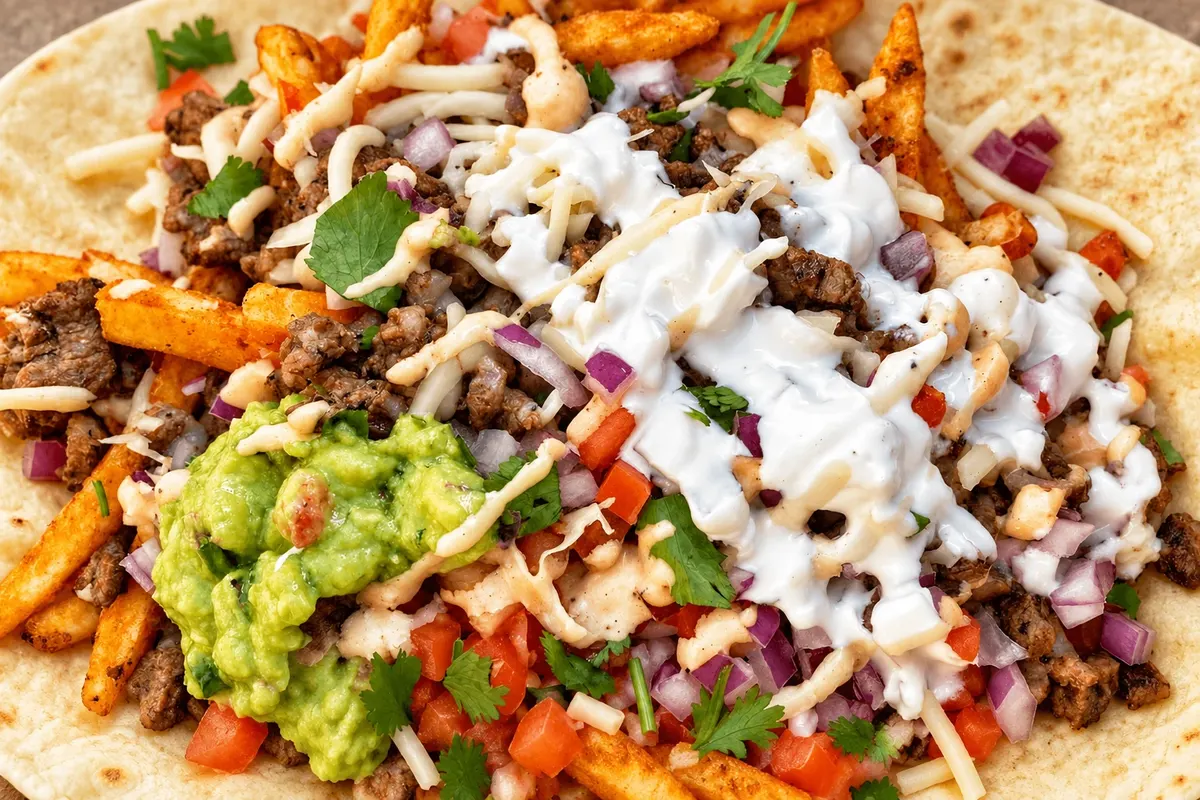
Carne asada burrito with French fries inside, cheese, pico de gallo, sour cream and guacamole. San Diego’s tourism authority presents it as a creation of the city from the 1980s.
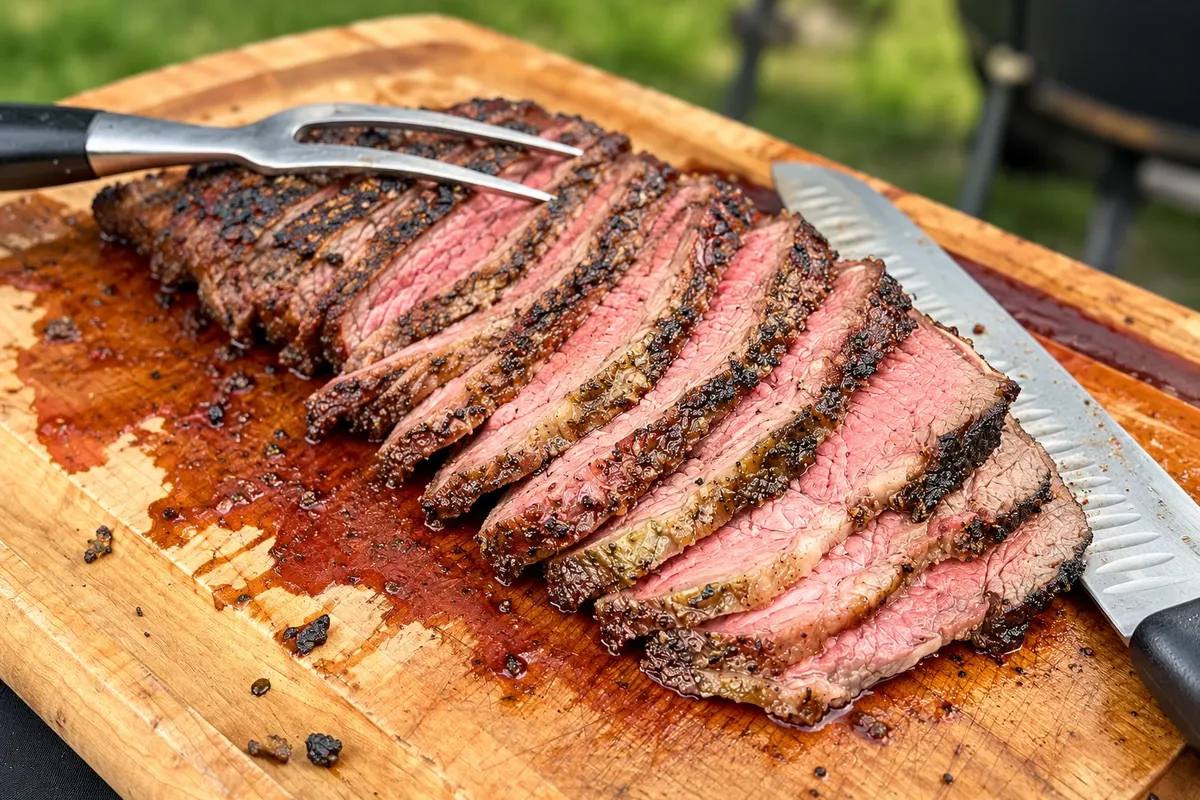
Beef barbecue seasoned with salt, pepper and garlic and roasted over oak coals, served with pinquito beans, salsa, toasted bread and salad. The Santa Maria Valley chamber of commerce registered the menu in 1978.
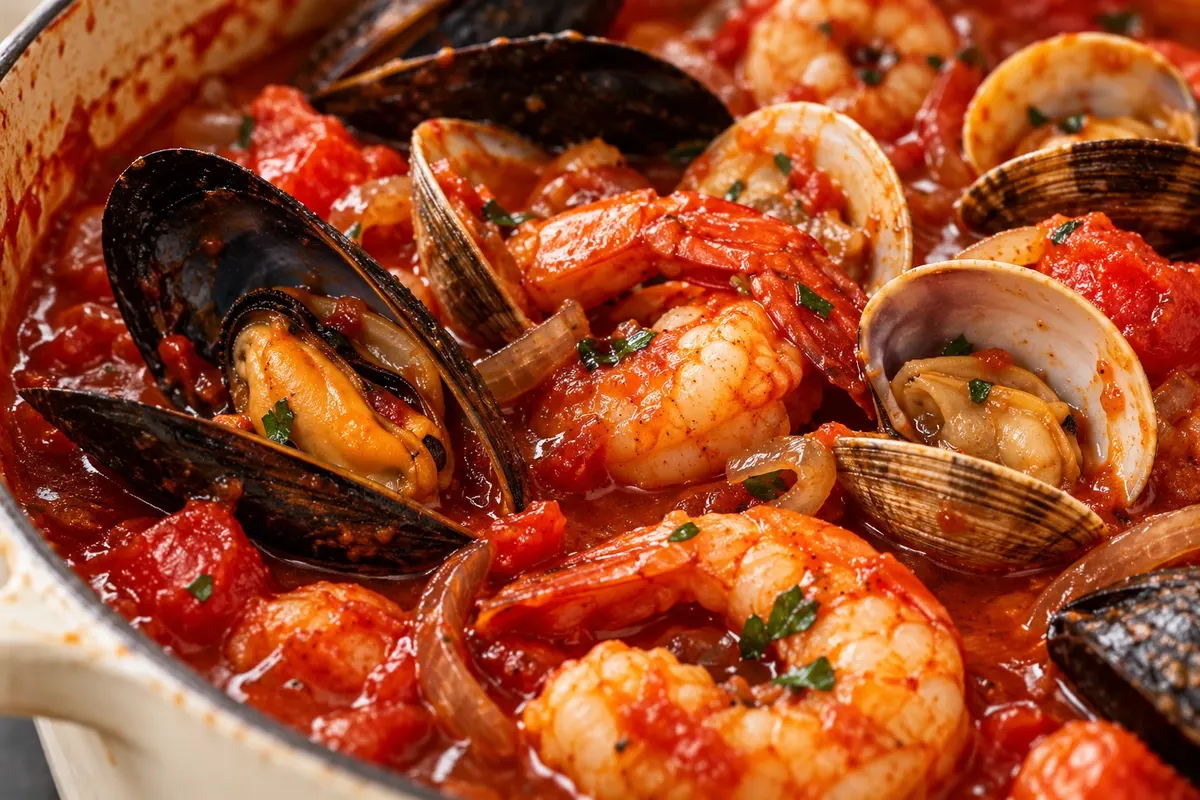
Stew of fish and seafood in a tomato-and-wine broth, created in the 19th century by Italian fishermen, mostly from Genoa, on the San Francisco pier. It is served with bread for dipping into the broth.
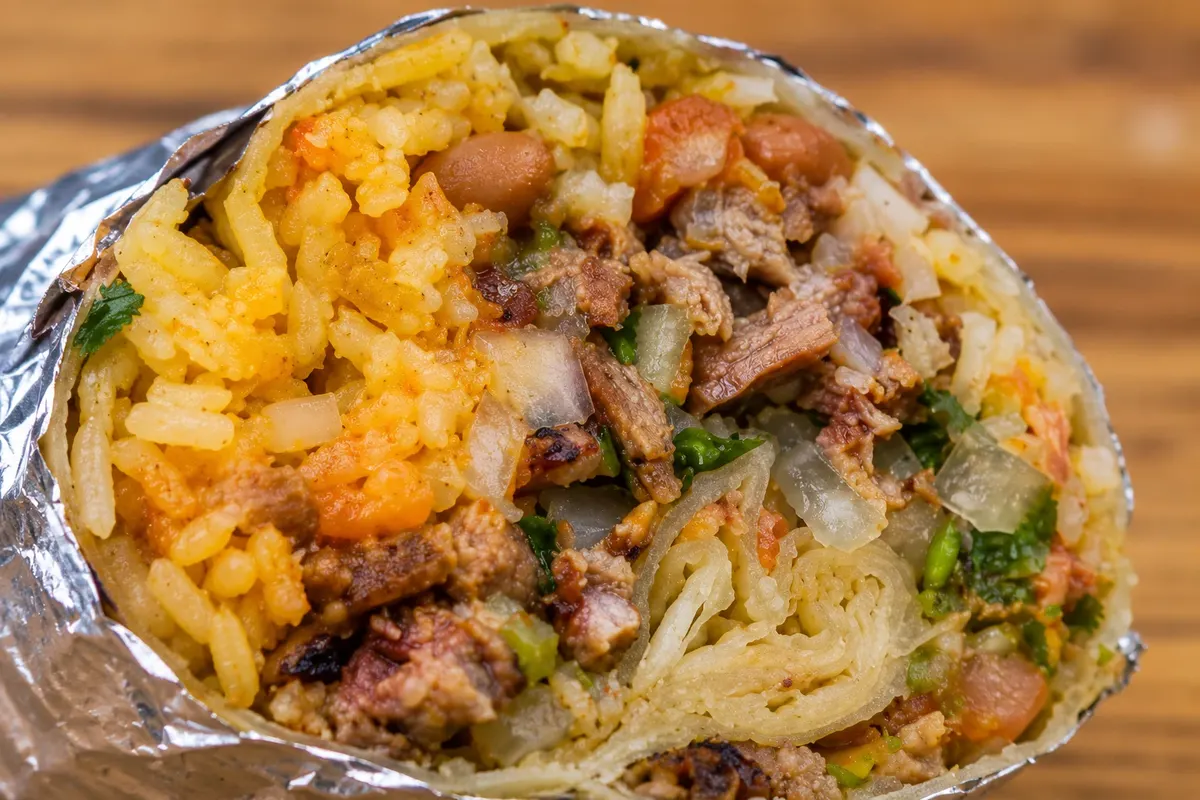
Large burrito made with a flour tortilla, filled with meat, rice, beans, salsa and sour cream, wrapped in aluminum foil. It originated in the taquerías of the Mission neighborhood in San Francisco in the 1960s.
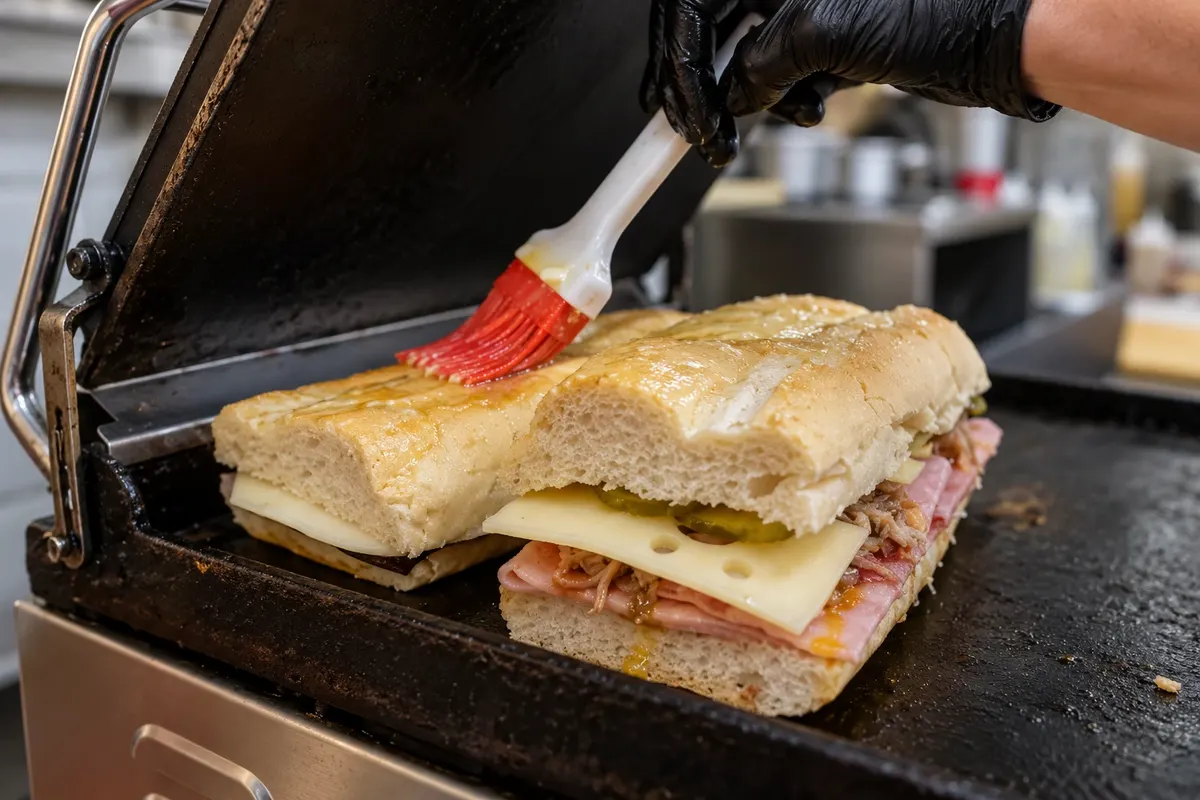
Cuban sandwich made with Cuban bread, roasted pork, ham, Swiss cheese, pickles and mustard, pressed on a griddle. In Tampa it also includes salami. The City Council declared it the city’s signature sandwich in 2012.
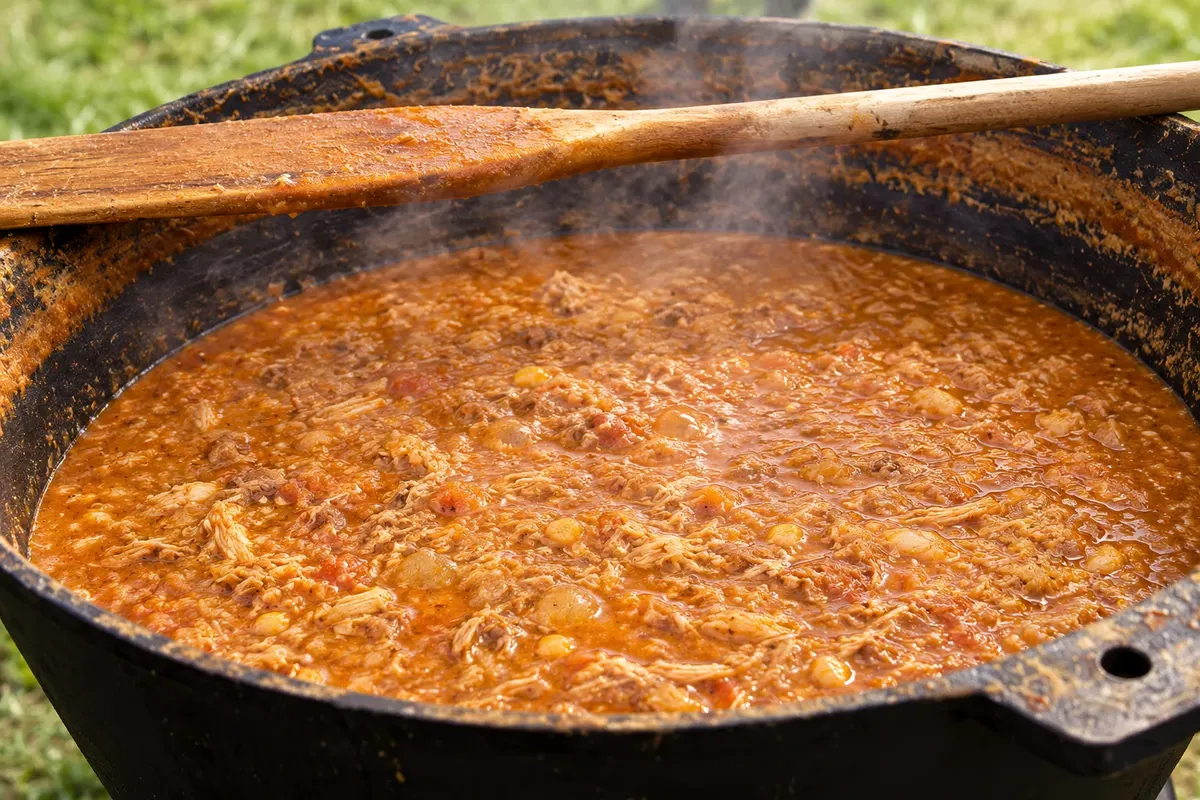
Thick stew of chicken, lima beans, corn and tomato, cooked for hours in iron pots. The Virginia General Assembly points to Brunswick County as the place of origin, in a long-standing dispute with Georgia.
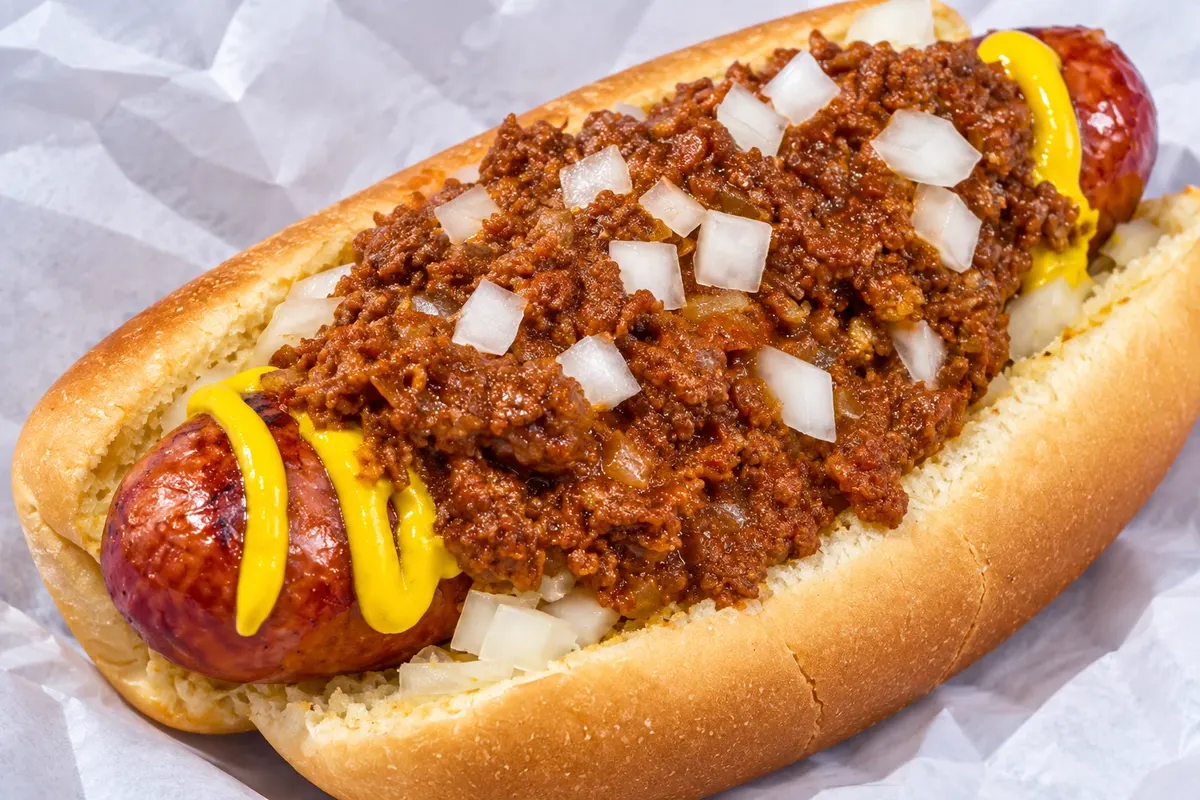
A sausage thicker and spicier than the hot dog, smoked and grilled, served in bread with chili, onion and mustard. Washington’s tourism agency calls it the city’s signature dish.