

 Brazil
 Argentina
 Bolivia
 Chile
 Colombia
 Ecuador
 Guyana
 French Guiana
 Falkland Islands (Malvinas)
 Paraguay
 Peru
 Suriname
 Uruguay
 Venezuela
 Germany
 Austria
 Belgium
 Croatia
 Denmark
 Slovakia
 Slovenia
 Spain
 Finland
 France
 Greece
 the Netherlands
 Hungary
 Ireland
 Iceland
 Italy
 Luxembourg
 Norway
 Poland
 Portugal
 the United Kingdom
 the Czech Republic
 Sweden
 Switzerland
 Turkey
 Canada
 Mexico
 the Dominican Republic
 South Africa
 Australia
 Fiji
 New Zealand
 Papua New Guinea
Museum · Minneapolis, Minnesota
Mill City Museum
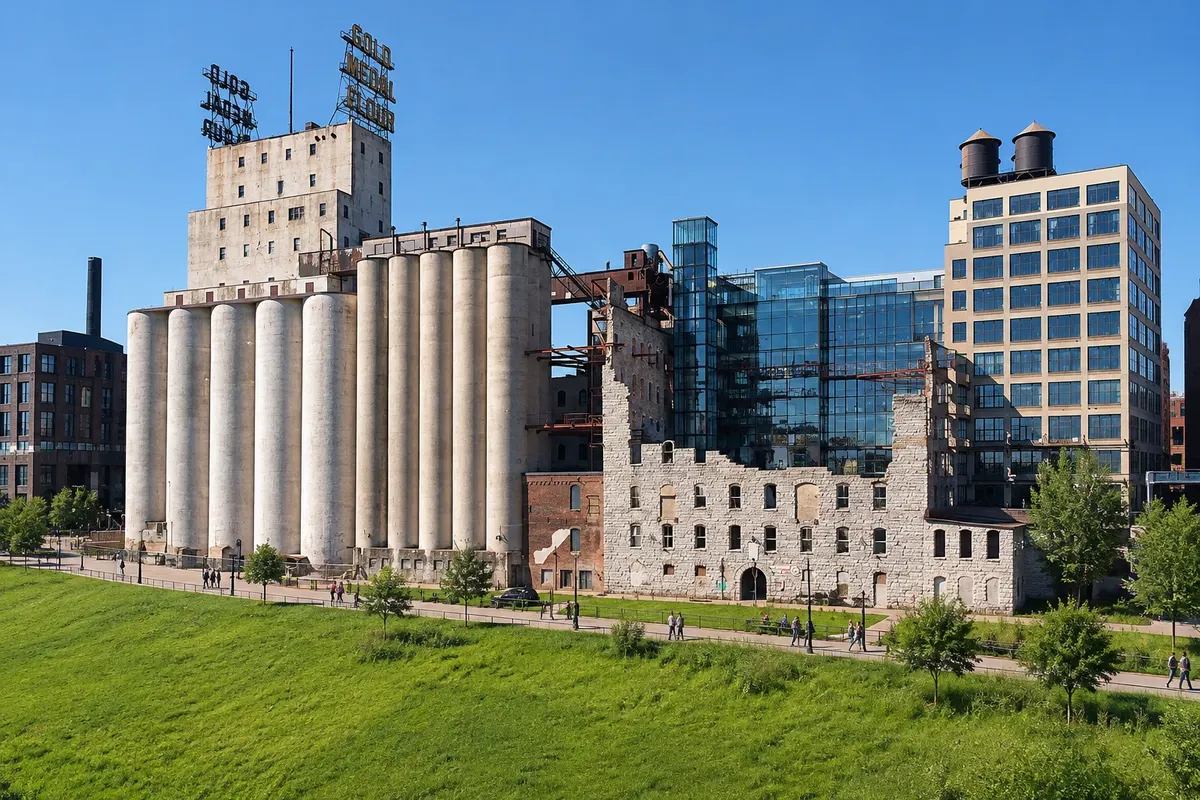
Museum inside the ruins of the Washburn A Mill, once the world’s largest flour mill, with a panoramic elevator and a riverside lookout.
Illustrative images. The pictures in this guide are illustrations based on the real place, not photographs, and may differ from it.



Discover
About Mill City Museum
Mill City Museum was built within the ruins of the Washburn A Mill, which in the late 19th century was the world’s largest flour mill and spawned the Gold Medal brand. The mill closed in 1965 and was nearly destroyed by fire in 1991; the surviving stone walls enclose an open-air courtyard and the museum building, which opened in 2003.
The main attraction is the Flour Tower, a freight elevator that rises and descends through the mill’s floors while voices and sets tell the workers’ stories. Exhibits show how wheat from the plains became flour and how mills powered by the falls helped the city grow, and a demonstration kitchen prepares recipes.
From the ninth-floor observation deck you get views of the Stone Arch Bridge, the falls and the river.
Before you go
Practical information
Cidade Turismo reviews its information regularly, but something may have changed. Check with the place before planning your trip.
How much time to set aside
One and a half to two hours.
Best time
On open days, Thursday through Sunday; in the morning, before tour groups arrive.
How to get there
On the west bank of the river, downtown Minneapolis, a few minutes’ walk from the Stone Arch Bridge.
Tip
Check opening days on the website, as the museum is not open every day. Combine your visit with the Stone Arch Bridge.
Official website
Get your questions answered
Frequently asked questions about Mill City Museum
What is the Flour Tower at the Mill City Museum?
A freight elevator that travels the floors of the old mill while telling its history.
Is the Mill City Museum open every day?
No, it is open some days of the week; check the website.
What can you see from the Mill City Museum overlook?
The Stone Arch Bridge, Saint Anthony Falls and the Mississippi River.