

 Brazil
 Argentina
 Bolivia
 Chile
 Colombia
 Ecuador
 Guyana
 French Guiana
 Falkland Islands (Malvinas)
 Paraguay
 Peru
 Suriname
 Uruguay
 Venezuela
 Germany
 Austria
 Belgium
 Croatia
 Denmark
 Slovakia
 Slovenia
 Spain
 Finland
 France
 Greece
 the Netherlands
 Hungary
 Ireland
 Iceland
 Italy
 Luxembourg
 Norway
 Poland
 Portugal
 the United Kingdom
 the Czech Republic
 Sweden
 Switzerland
 Turkey
 Canada
 Mexico
 the Dominican Republic
 South Africa
 Australia
 Fiji
 New Zealand
 Papua New Guinea
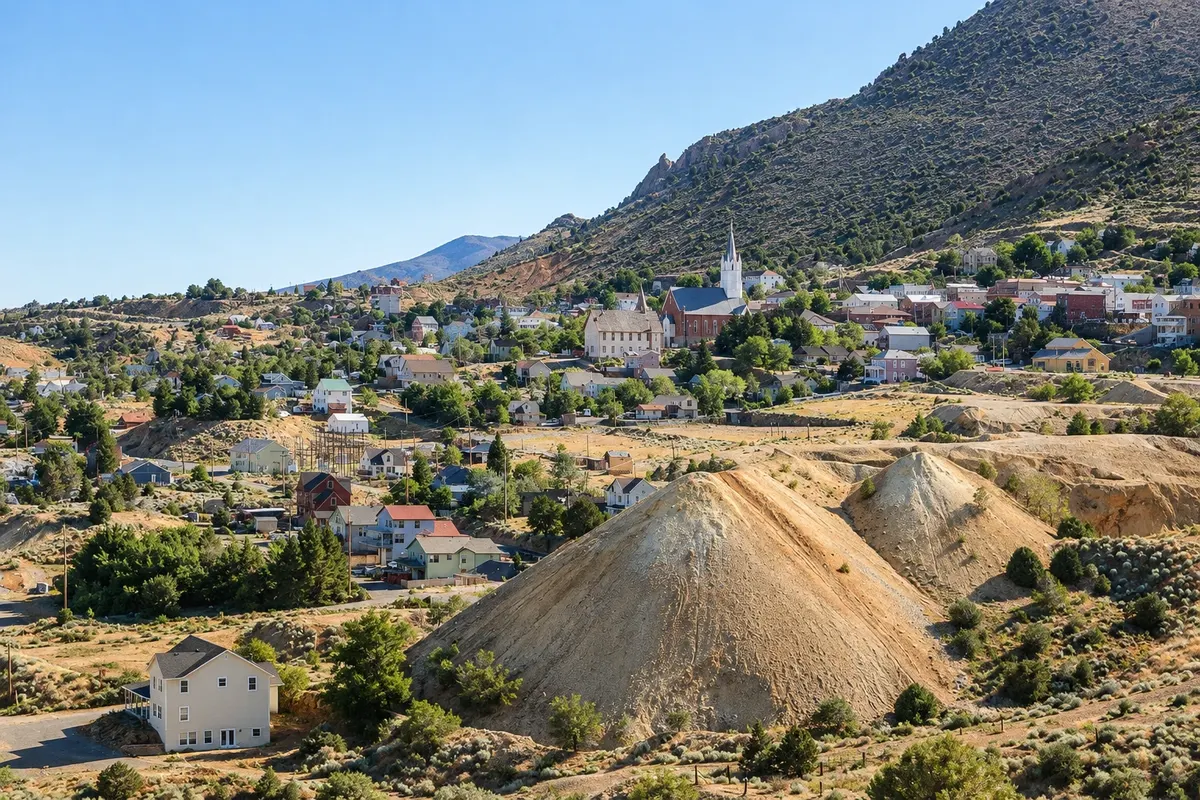
Historic town · Reno, Nevada
Virginia City
Silver rush town of the 1860s about 40 km from Reno, with wooden sidewalks, saloons, churches and mines, protected as a national historic landmark.
Illustrative images. The pictures in this guide are illustrations based on the real place, not photographs, and may differ from it.



Discover
About Virginia City
Virginia City was founded in 1859 with the discovery of the Comstock Lode, one of the largest silver deposits in the United States. In the 1870s it reached tens of thousands of residents and was one of the richest towns in the West. Writer Mark Twain worked there as a journalist and adopted his pen name at that time.
The main street, C Street, has wooden sidewalks, 19th-century facades, saloons, shops and small museums. Churches, mansions and the old courthouse reflect the wealth of the era. The entire town is part of a national historic district.
You can visit a mine with a guide, a historic cemetery on the hillside and ride the steam train of the former Virginia & Truckee Railroad, which operates part of the year. The town sits at about 1,900 meters, on a slope with views over the desert.
Before you go
Practical information
Cidade Turismo reviews its information regularly, but something may have changed. Check with the place before planning your trip.
How much time to set aside
Half a day.
Best time
From May to October, when the train and most museums operate; winter can bring snow on the road.
How to get there
About 40 km from Reno, via US-395 and NV-341, which climbs the mountains in switchbacks. Parking is available throughout the town.
Tip
Check the steam train and mine tour schedules, which vary by season.
Official website
Get your questions answered
Frequently asked questions about Virginia City
How far is Reno from Virginia City?
About 40 km, roughly a 40-minute drive.
What is there to see in Virginia City?
The main street with wooden sidewalks and saloons, churches and mansions, a mine with a guide, the cemetery and the steam train.
Why is Virginia City famous?
For the silver rush of the Comstock Lode in the 1860s and 1870s, and for being where Mark Twain worked as a journalist.