

 Brazil
 Argentina
 Bolivia
 Chile
 Colombia
 Ecuador
 Guyana
 French Guiana
 Falkland Islands (Malvinas)
 Paraguay
 Peru
 Suriname
 Uruguay
 Venezuela
 Germany
 Austria
 Belgium
 Croatia
 Denmark
 Slovakia
 Slovenia
 Spain
 Finland
 France
 Greece
 the Netherlands
 Hungary
 Ireland
 Iceland
 Italy
 Luxembourg
 Norway
 Poland
 Portugal
 the United Kingdom
 the Czech Republic
 Sweden
 Switzerland
 Turkey
 Canada
 Mexico
 the Dominican Republic
 South Africa
 Australia
 Fiji
 New Zealand
 Papua New Guinea
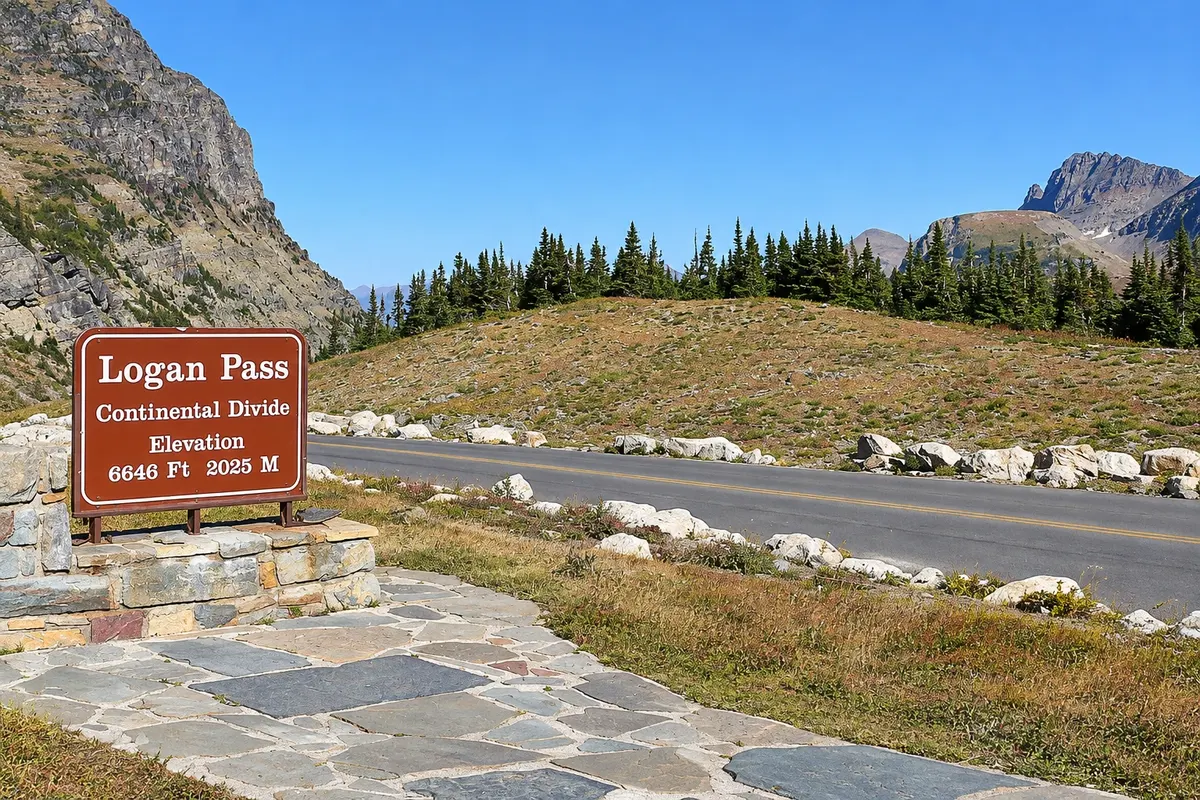
Mountain pass · West Glacier, Montana
Logan Pass
The highest point on the Going-to-the-Sun Road, on the Continental Divide at 2,026 meters, with trails to the Hidden Lake overlook and the Highline.
Illustrative images. The pictures in this guide are illustrations based on the real place, not photographs, and may differ from it.


Discover
About Logan Pass
Logan Pass is the highest point on the Going-to-the-Sun Road, at 2,026 meters, where it crosses the Continental Divide. It sits between Clements and Pollock peaks in alpine meadows that bloom from late July through August.
From the pass visitor center the trail to the Hidden Lake overlook departs—about 4.5 km round trip, partly on boardwalks—leading to a view of the lake framed by rock walls. Mountain goats and bighorn sheep frequently appear on the trail and in the meadows. The Highline, longer, follows the Garden Wall slope, with narrow sections next to the cliff.
Snow often covers trails into July, and the pass parking lot fills early on summer days.
Before you go
Practical information
Cidade Turismo reviews its information regularly, but something may have changed. Check with the place before planning your trip.
How much time to set aside
From two hours to half a day.
Best time
Mid-July to early September, early morning. Wildflowers typically peak from late July through August.
How to get there
On the Going-to-the-Sun Road, about 50 km from the west entrance, by car or via park shuttles.
Tip
Bring a jacket even in summer, and keep distance from mountain goats. Early in the season check whether the trail still has snow.
Official website
Get your questions answered
Frequently asked questions about Logan Pass
Which trail to do at Logan Pass?
The Hidden Lake overlook trail, about 4.5 km round trip, is the shorter and most popular. The Highline is longer and more exposed.
When are the Logan Pass trails free of snow?
Generally from mid-July; check trail conditions on the park’s website.
Can you reach Logan Pass by bus?
Yes, in summer, on park buses that run from Apgar and from St. Mary.