

 Brazil
 Argentina
 Bolivia
 Chile
 Colombia
 Ecuador
 Guyana
 French Guiana
 Falkland Islands (Malvinas)
 Paraguay
 Peru
 Suriname
 Uruguay
 Venezuela
 Germany
 Austria
 Belgium
 Croatia
 Denmark
 Slovakia
 Slovenia
 Spain
 Finland
 France
 Greece
 the Netherlands
 Hungary
 Ireland
 Iceland
 Italy
 Luxembourg
 Norway
 Poland
 Portugal
 the United Kingdom
 the Czech Republic
 Sweden
 Switzerland
 Turkey
 Canada
 Mexico
 the Dominican Republic
 South Africa
 Australia
 Fiji
 New Zealand
 Papua New Guinea
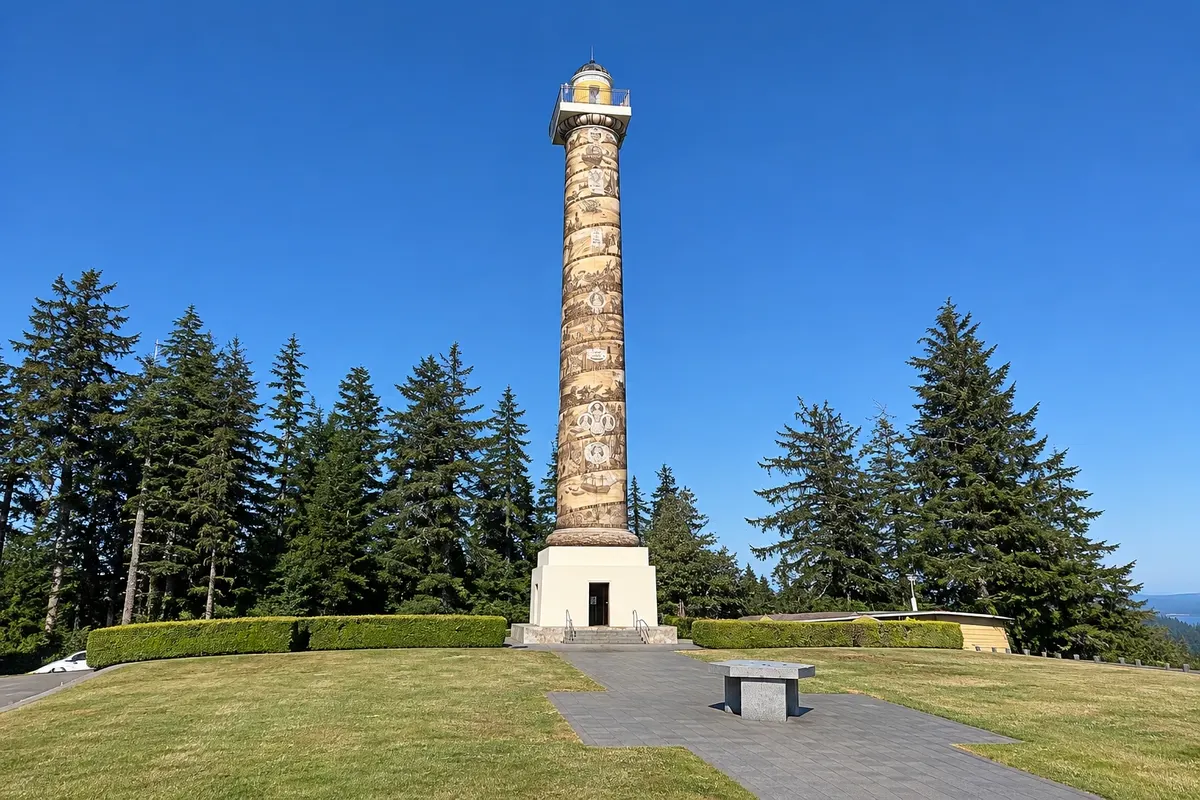
Monument · Astoria, Oregon
Astoria Column
A 38-meter concrete tower from 1926 atop Coxcomb Hill, with a spiral painted frieze about the region’s history and an internal stairway to an observation deck.
Illustrative images. The pictures in this guide are illustrations based on the real place, not photographs, and may differ from it.



Discover
About Astoria Column
The Astoria Column was dedicated in 1926 on top of Coxcomb Hill, about 180 meters above sea level. Inspired by Trajan’s Column in Rome, it stands 38 meters tall and features a spiral frieze that depicts episodes of the region’s history, from the Chinook people to the arrival of fur traders and the railroad.
The painting was done using the sgraffito technique, in which layers of colored mortar are scratched to form the figures. The column has undergone several restorations to protect the artwork from coastal wind and rain.
A 164-step spiral staircase rises inside to an observation deck at the top, with views of the Columbia’s mouth, the Astoria–Megler Bridge, the mountains and the ocean. A local tradition is to launch small wooden gliders from the top of the tower.
Before you go
Practical information
Cidade Turismo reviews its information regularly, but something may have changed. Check with the place before planning your trip.
How much time to set aside
30 minutes to an hour.
Best time
On clear days, preferably in the morning or late afternoon; the wind at the top is often strong.
How to get there
On top of Coxcomb Hill, about 3 km from downtown, up a road that climbs the residential hills. Parking is paid.
Tip
The stairway is narrow and steep. Occasional closures for maintenance happen; check before you go.
Official website
Get your questions answered
Frequently asked questions about Astoria Column
Can you climb the Astoria Column?
Yes, by an interior staircase of 164 steps up to the viewpoint at the top. During maintenance periods the climb may be closed; check before you go.
What does the Astoria Column painting represent?
A spiral frieze with episodes from the region’s history, from the Indigenous peoples to the fur traders and the railroad.
Do you have to pay to visit the Astoria Column?
You pay for parking at the top of the hill; check the current rates.