

 Brazil
 Argentina
 Bolivia
 Chile
 Colombia
 Ecuador
 Guyana
 French Guiana
 Falkland Islands (Malvinas)
 Paraguay
 Peru
 Suriname
 Uruguay
 Venezuela
 Germany
 Austria
 Belgium
 Croatia
 Denmark
 Slovakia
 Slovenia
 Spain
 Finland
 France
 Greece
 the Netherlands
 Hungary
 Ireland
 Iceland
 Italy
 Luxembourg
 Norway
 Poland
 Portugal
 the United Kingdom
 the Czech Republic
 Sweden
 Switzerland
 Turkey
 Canada
 Mexico
 the Dominican Republic
 South Africa
 Australia
 Fiji
 New Zealand
 Papua New Guinea
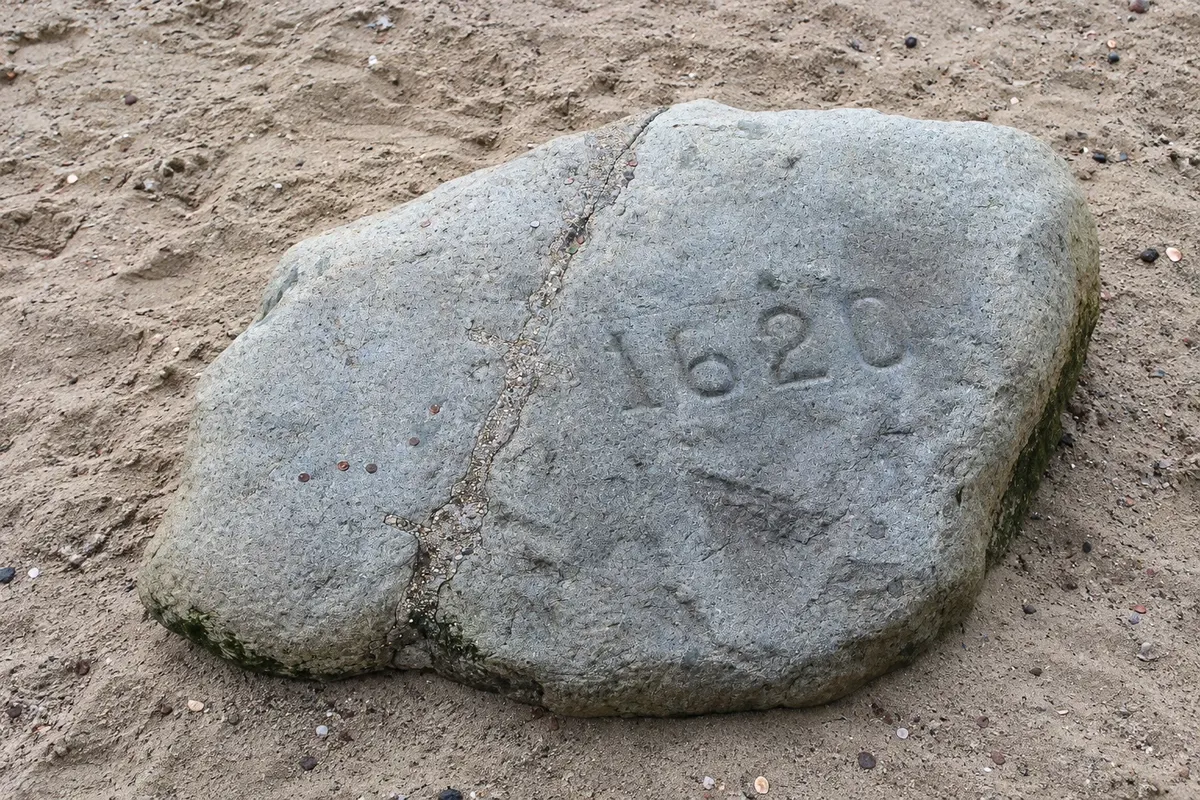
Historic monument · Plymouth, Massachusetts
Plymouth Rock
The granite stone traditionally pointed to as the pilgrims’ landing place in 1620, protected by a neoclassical portico on the waterfront.
Illustrative images. The pictures in this guide are illustrations based on the real place, not photographs, and may differ from it.


Discover
About Plymouth Rock
Plymouth Rock is a granite stone that, according to a tradition recorded more than a century later, marks the spot where the Mayflower pilgrims first set foot when they arrived in December 1620. Contemporary accounts do not mention the stone, but it became a symbol of the colony’s founding.
The rock was broken and moved several times since the 18th century. Fragments were taken as souvenirs, and the remaining portion bears the date 1620 carved into it. Since 1921 it has been sheltered under a granite portico in a Greek style on the water’s edge at Pilgrim Memorial State Park.
From the portico balustrade you can see the stone on the sand. The park has a waterfront promenade, a short walk from the Mayflower II.
Before you go
Practical information
Cidade Turismo reviews its information regularly, but something may have changed. Check with the place before planning your trip.
How much time to set aside
About 20 minutes.
Best time
At any time of day; at low tide the stone is more exposed.
How to get there
It’s on Water Street, on Plymouth’s downtown waterfront.
Tip
Combine it with the Mayflower II a few steps away, and the climb up Cole's Hill just above.
Official website
Get your questions answered
Frequently asked questions about Plymouth Rock
Is Plymouth Rock really the pilgrims’ landing site?
It is a tradition recorded more than a century later; 1620 accounts do not mention the stone.
Where is Plymouth Rock located?
Under a granite portico on Plymouth’s waterfront in Pilgrim Memorial State Park.
How long does a visit to Plymouth Rock take?
About 20 minutes.