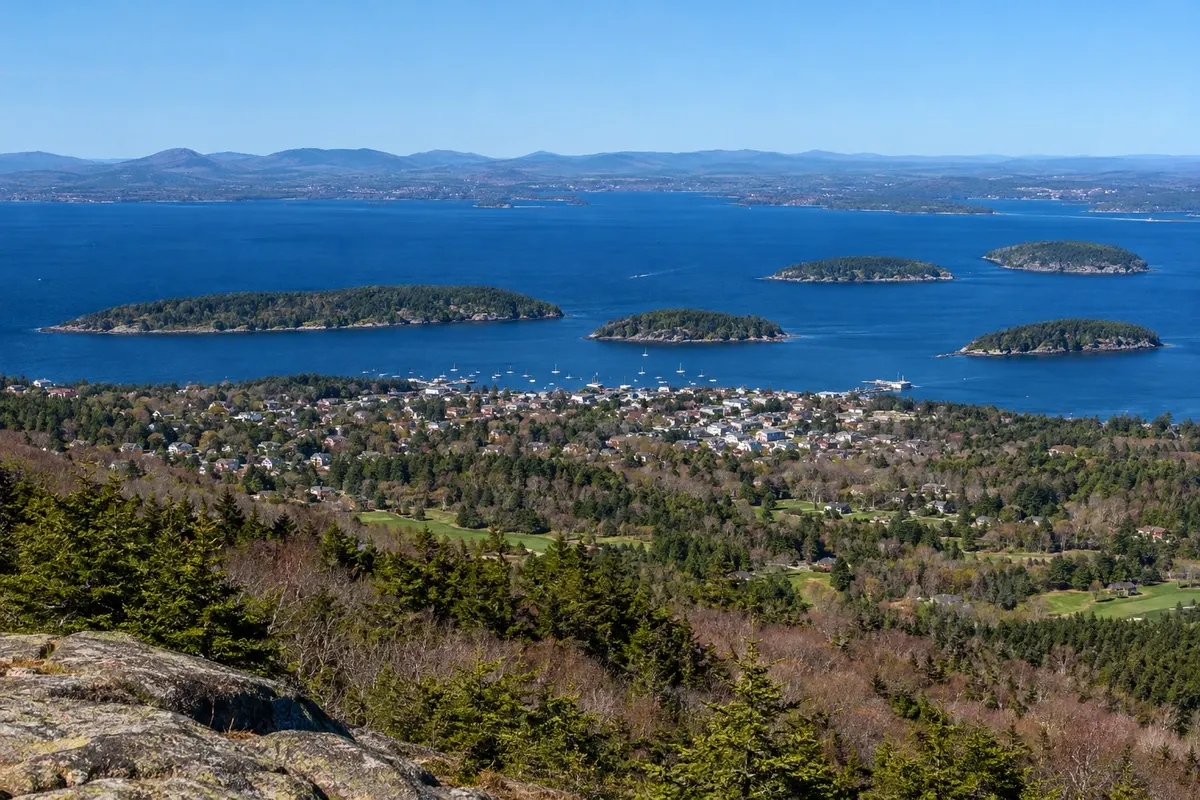
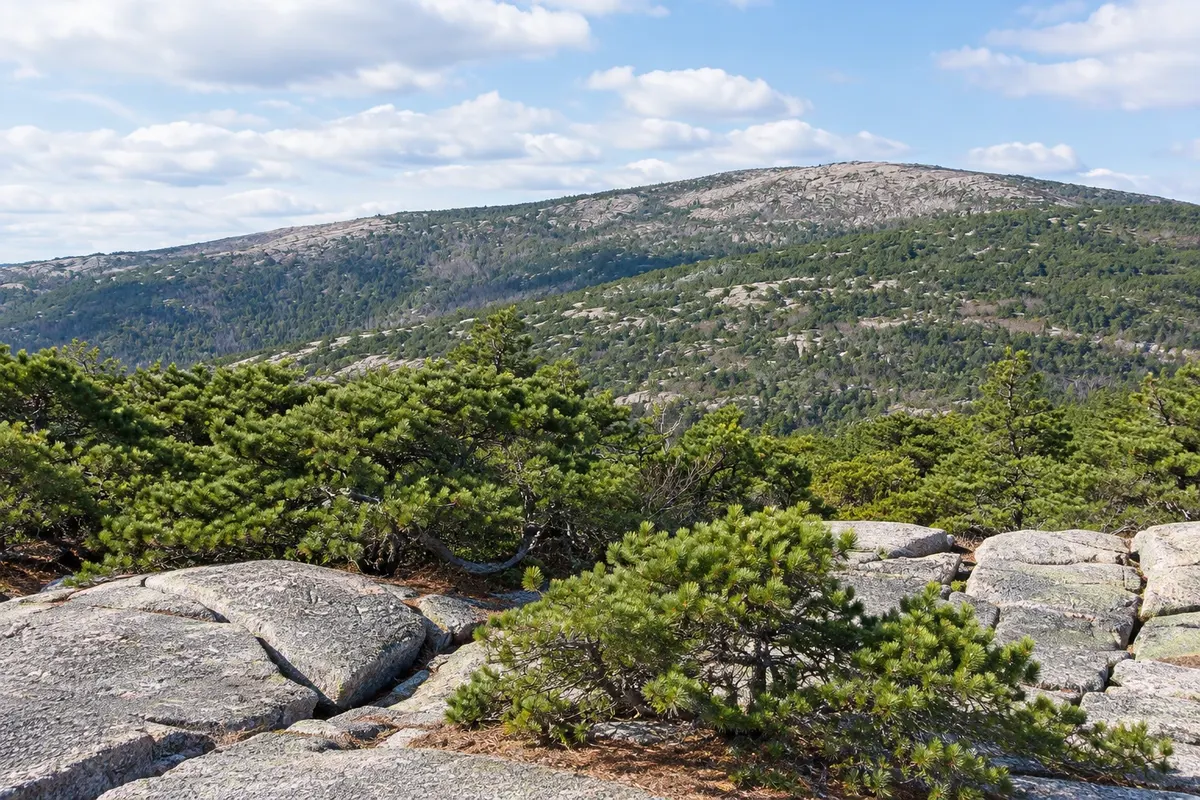
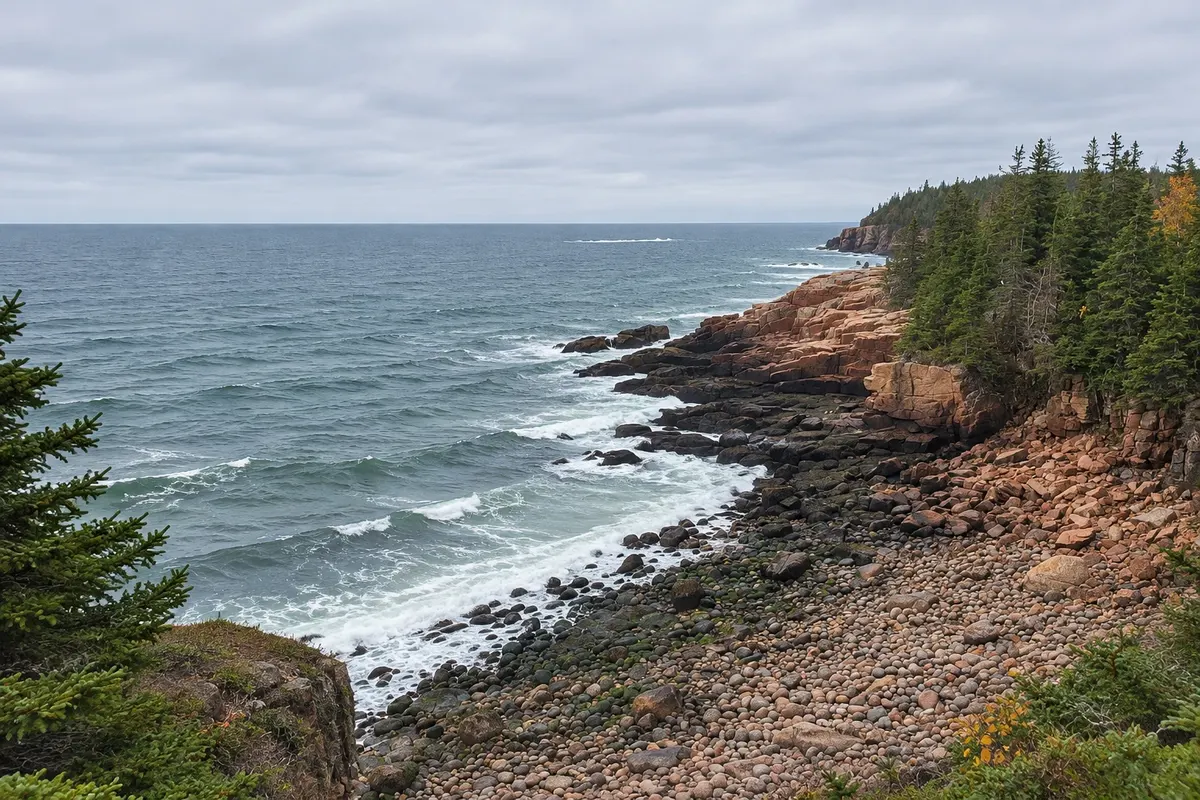
Acadia National Park covers about half of Mount Desert Island on the coast of Maine, as well as part of the Schoodic Peninsula, Isle au Haut, and smaller islets. Established in 1916 as a national monument and given its current name in 1929, it was the first national park east of the Mississippi River and combines, in a compact area, rounded granite mountains, valleys carved by glaciers, lakes, and a rocky coastline battered by the sea.
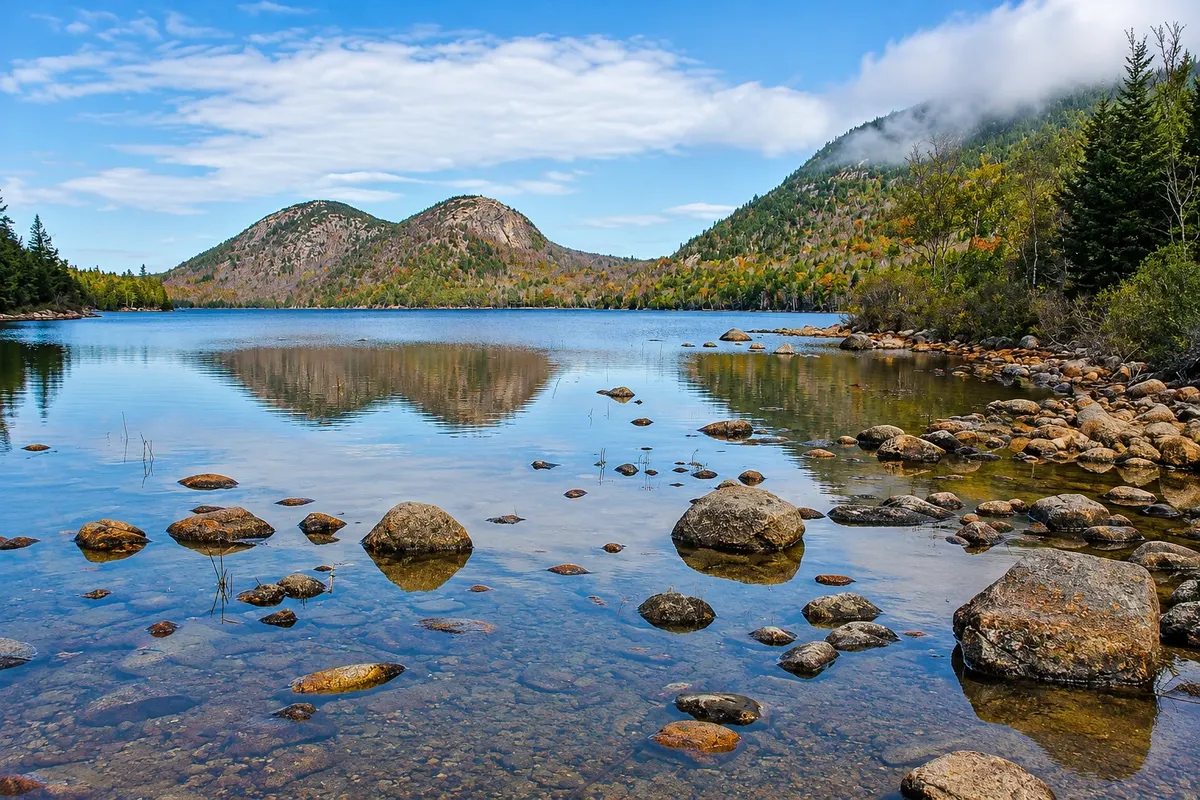
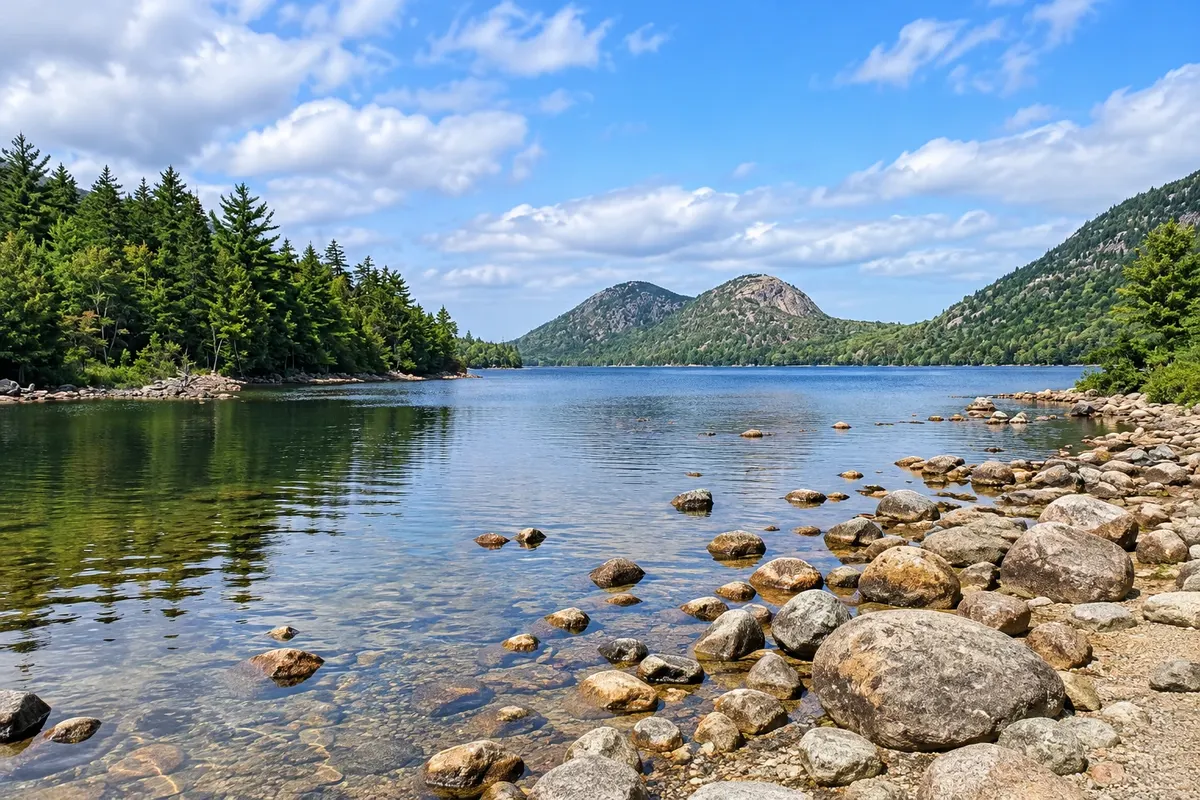
The Park Loop Road, a 43 km route that is mostly one-way, links the park’s best-known spots: Sand Beach, formed by fragments of shells, the fissure at Thunder Hole, the cliffs of Otter Cliff, Jordan Pond, and the road that climbs to Cadillac, the highest point on the country’s East Coast. In the island’s interior, the gravel carriage roads built by John D. Rockefeller Jr. with stone bridges are now used by hikers and cyclists.
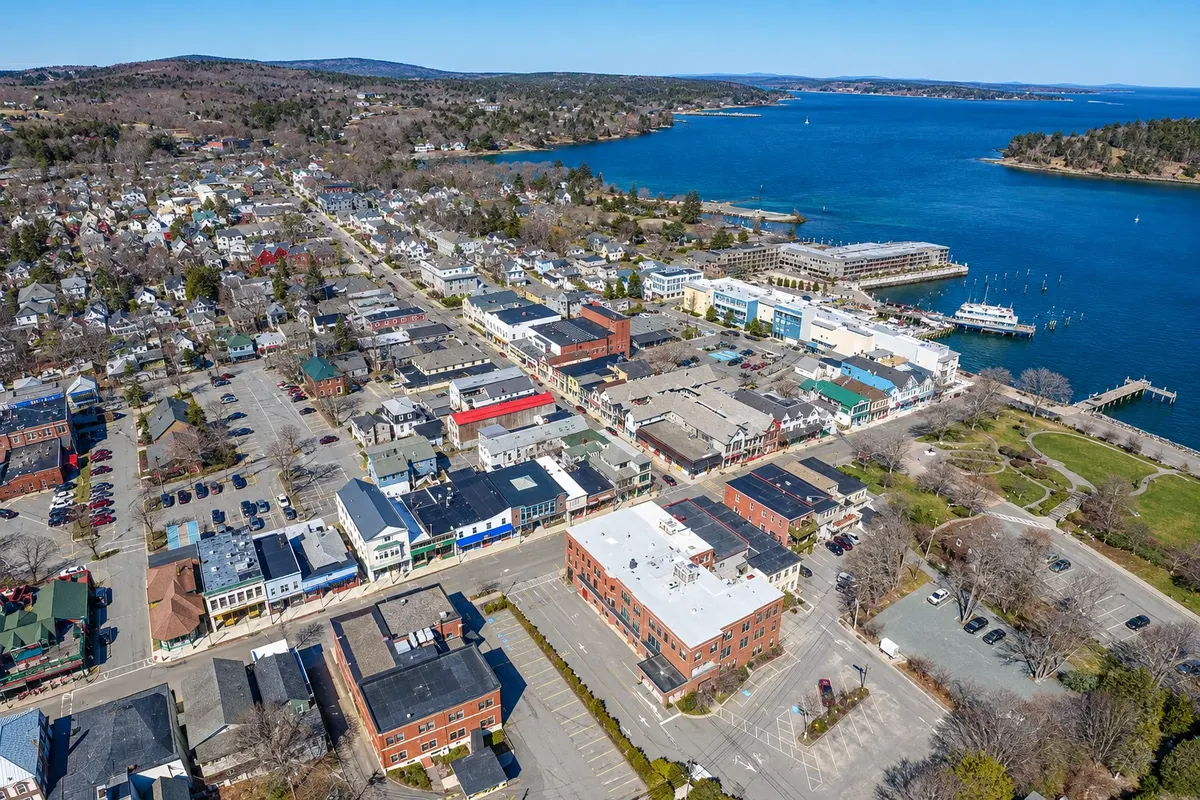
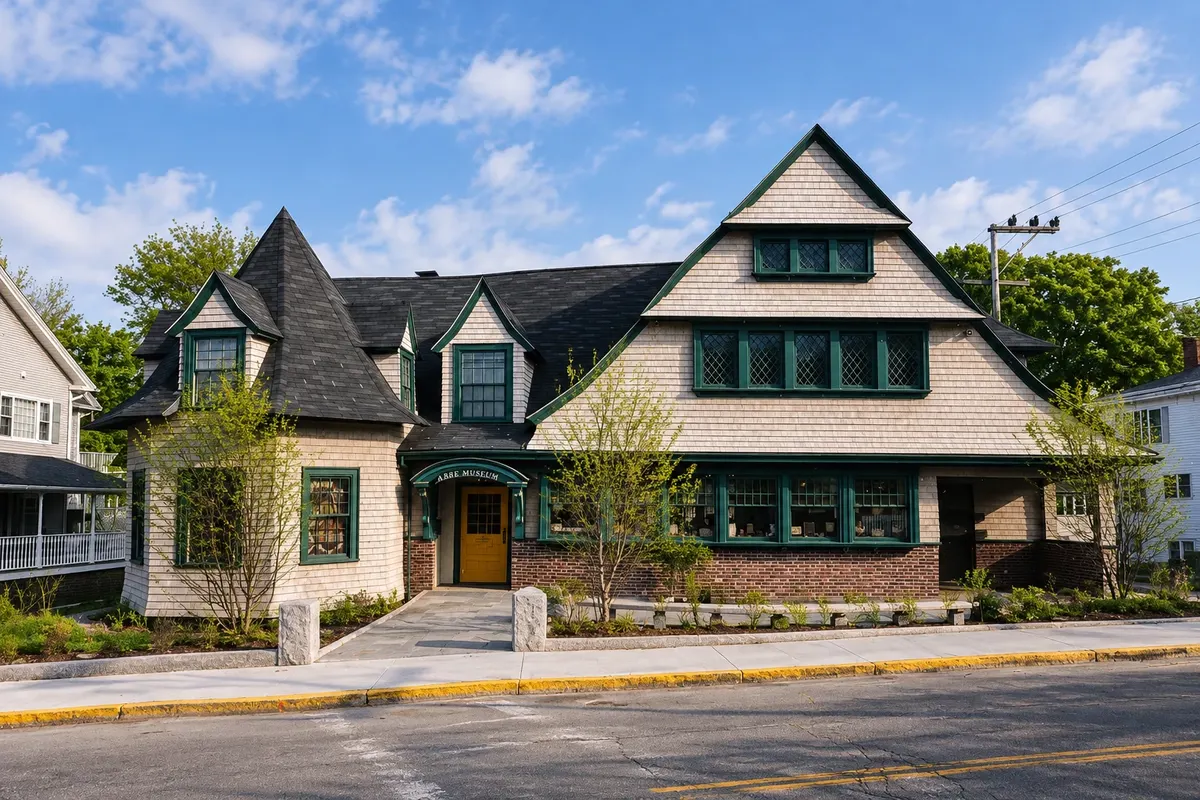
Bar Harbor, on the island’s east coast, is the village that serves as base. It grew in the 19th century when painters attracted summer visitors and wealthy families built summer mansions; a 1947 fire destroyed much of that architecture. Today the village has a compact center, the Shore Path, the Abbe Museum dedicated to the Wabanaki peoples, and at low tide a sandbar that can be walked to Bar Island.
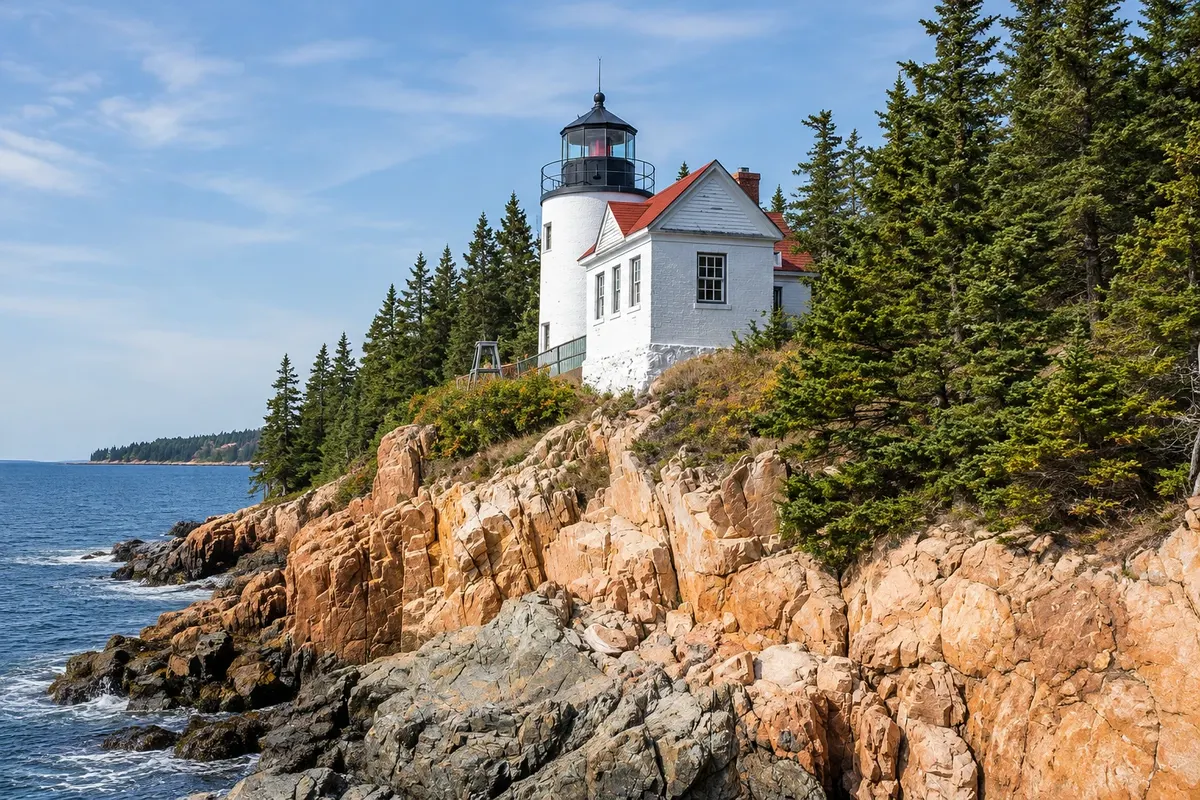
On the island’s quieter west side are the villages of Southwest Harbor and Bass Harbor, where Bass Harbor Head Light perches on the rocks. The island is connected to the mainland by a bridge at Trenton, about 30 km from Bar Harbor.
This destination brings together 1 city: Bar Harbor.


 Brazil
 Argentina
 Bolivia
 Chile
 Colombia
 Ecuador
 Guyana
 French Guiana
 Falkland Islands (Malvinas)
 Paraguay
 Peru
 Suriname
 Uruguay
 Venezuela
 Germany
 Austria
 Belgium
 Croatia
 Denmark
 Slovakia
 Slovenia
 Spain
 Finland
 France
 Greece
 the Netherlands
 Hungary
 Ireland
 Iceland
 Italy
 Luxembourg
 Norway
 Poland
 Portugal
 the United Kingdom
 the Czech Republic
 Sweden
 Switzerland
 Turkey
 Canada
 Mexico
 the Dominican Republic
 South Africa
 Australia
 Fiji
 New Zealand
 Papua New Guinea