

 Brazil
 Argentina
 Bolivia
 Chile
 Colombia
 Ecuador
 Guyana
 French Guiana
 Falkland Islands (Malvinas)
 Paraguay
 Peru
 Suriname
 Uruguay
 Venezuela
 Germany
 Austria
 Belgium
 Croatia
 Denmark
 Slovakia
 Spain
 Finland
 France
 Greece
 the Netherlands
 Hungary
 Ireland
 Iceland
 Italy
 Luxembourg
 Norway
 Poland
 Portugal
 the United Kingdom
 the Czech Republic
 Sweden
 Switzerland
 Turkey
 Canada
 the United States
 Mexico
 the Dominican Republic
 South Africa
 Australia
 Fiji
 New Zealand
 Papua New Guinea
Natural park · Piran, Obalno-kraška
Sečovlje Salina Nature Park
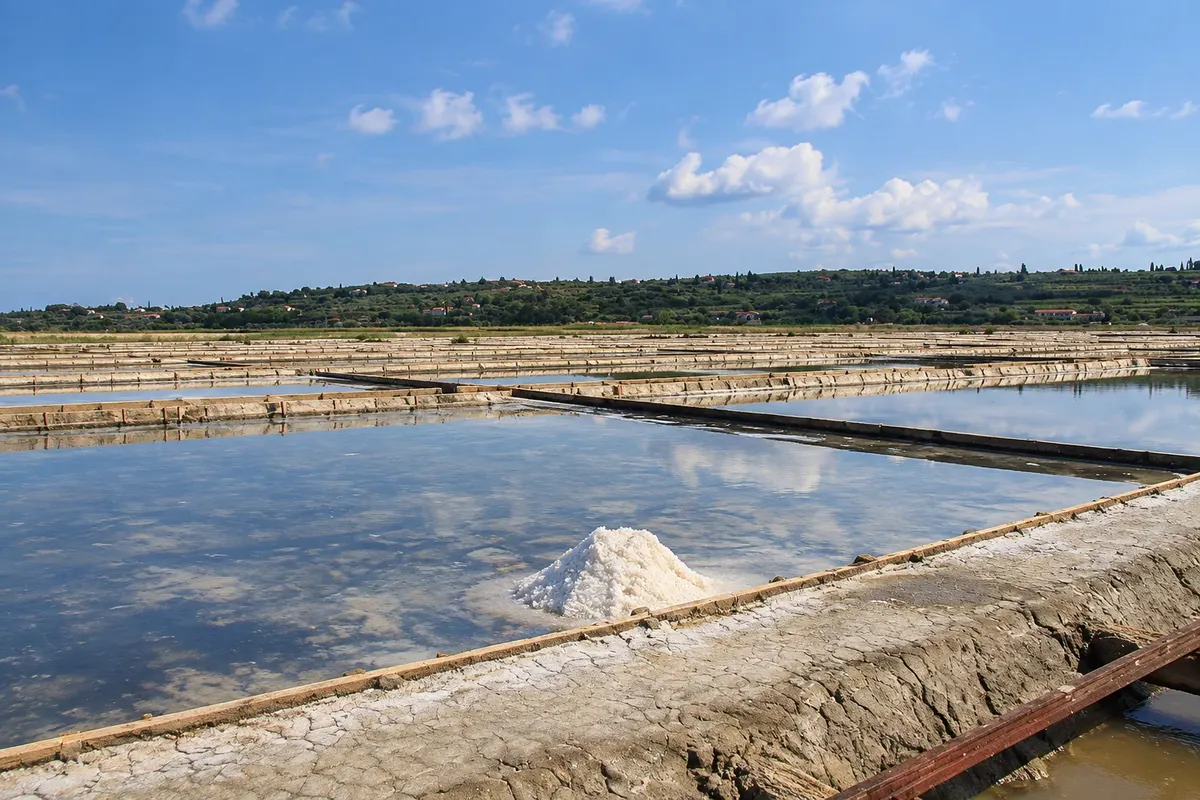
The Sečovlje salt pans, next to the border with Croatia, where salt is still produced by hand using medieval methods. The natural park has channels, levees, birds and a salt museum in the old salt-workers’ houses.
Illustrative images. The pictures in this guide are illustrations based on the real place, not photographs, and may differ from it.

Discover
About Sečovlje Salina Nature Park
The Sečovlje salt pans (Sečoveljske soline) cover about 750 hectares at the mouth of the Dragonja River, in Slovenia’s far southwest, next to the border with Croatia. Salt has been produced there since the Middle Ages, and the natural park, created in 2001, protects the salt pans, the channels and the levees, as well as an important area for birds: around 290 species have been recorded.
The park has two parts. In Lera, to the north, salt is still produced by hand using wooden squeegees on a layer of algae and minerals called petola, which keeps the salt clean; harvesting usually runs from late spring to late summer. In Fontanigge, to the south, are the abandoned salt-workers’ houses and the Salt-Making Museum, in a restored house on the Giassi canal.
The paths along the levees are flat and can be walked or cycled. A ticket is required to enter the park. To reach Fontanigge you pass through the Slovenian border post, so you must carry travel documents.
Salt, fleur de sel and salt-pan mud are sold in the park shop and are used in Portorož spa treatments.
Before you go
Practical information
Cidade Turismo reviews its information regularly, but something may have changed. Check with the place before planning your trip.
How much time to set aside
Two to three hours for Lera; half a day if you include Fontanigge and the museum.
Best time
From June to September, to see the salt harvest in Lera, preferably in the morning or late afternoon when the heat eases. In spring and autumn there are more migratory birds. The museum opens in season; check opening hours.
How to get there
Lera is about 5 km from Portorož, up the hill from Seča on the road to the Sečovlje border post, with parking by the entrance. To reach Fontanigge you cross the border post and follow an unpaved road along the Dragonja.
Tip
Bring a hat, sunscreen and water: there is no shade on the levees. If you go to Fontanigge, bring a passport or identity document.
Official website
Get your questions answered
Frequently asked questions about Sečovlje Salina Nature Park
Is salt still produced at the Sečovlje salt pans?
Yes, in the Lera part, by hand and using traditional methods. Harvesting usually runs from late spring to late summer.
Do you need a passport to visit the Sečovlje salt pans?
For the Fontanigge area, yes, because the route crosses the border post. For Lera, no.
Can you visit the Sečovlje salt pans by bicycle?
Yes, the paths on the levees are flat and can be walked or cycled.