Borovička
A clear or slightly yellowish brandy with a pronounced juniper aroma and flavor. It is the traditional distilled spirit of Slovakia; some regional varieties have protected geographical indication in the European Union.
Flavors · Bratislava
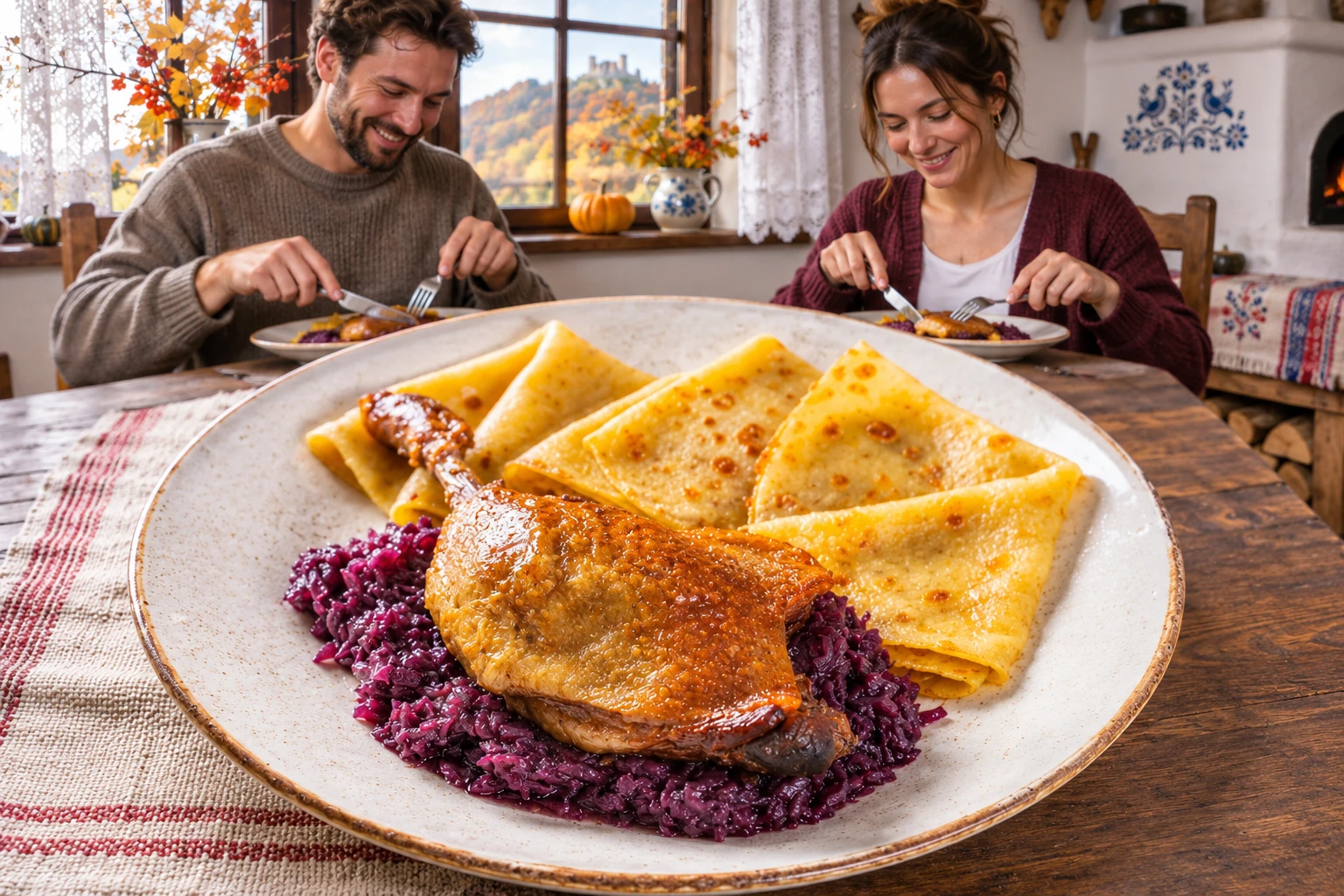
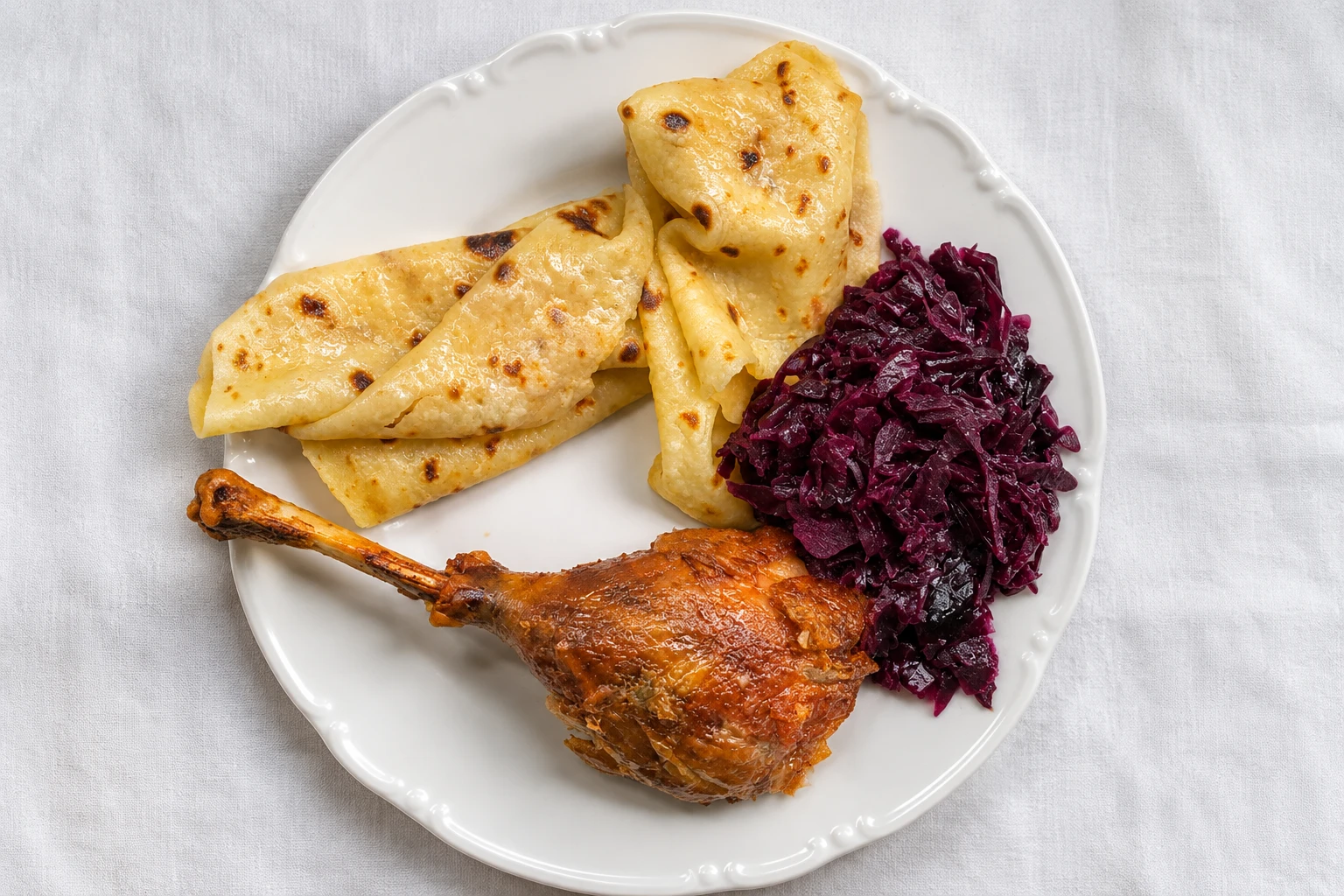
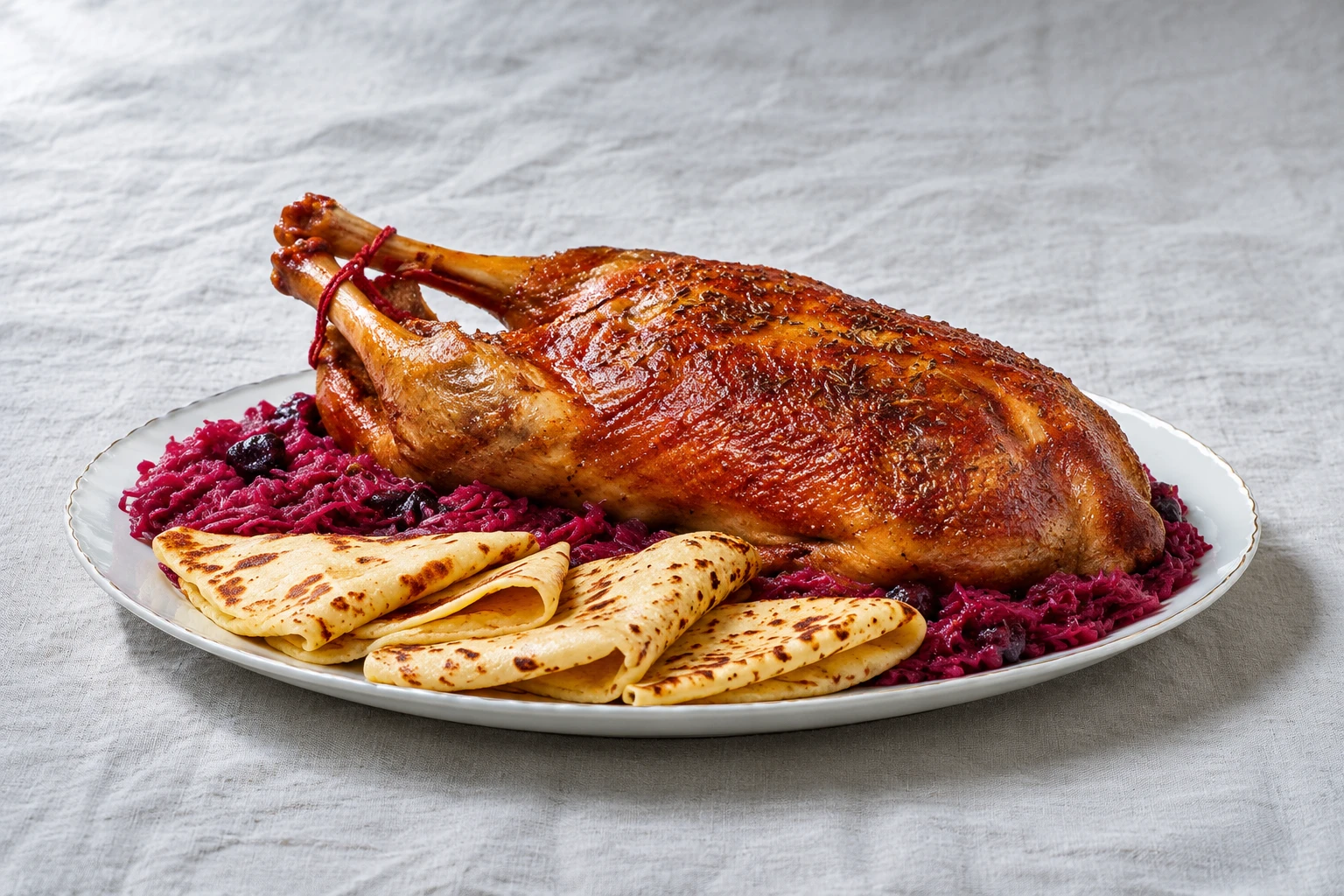
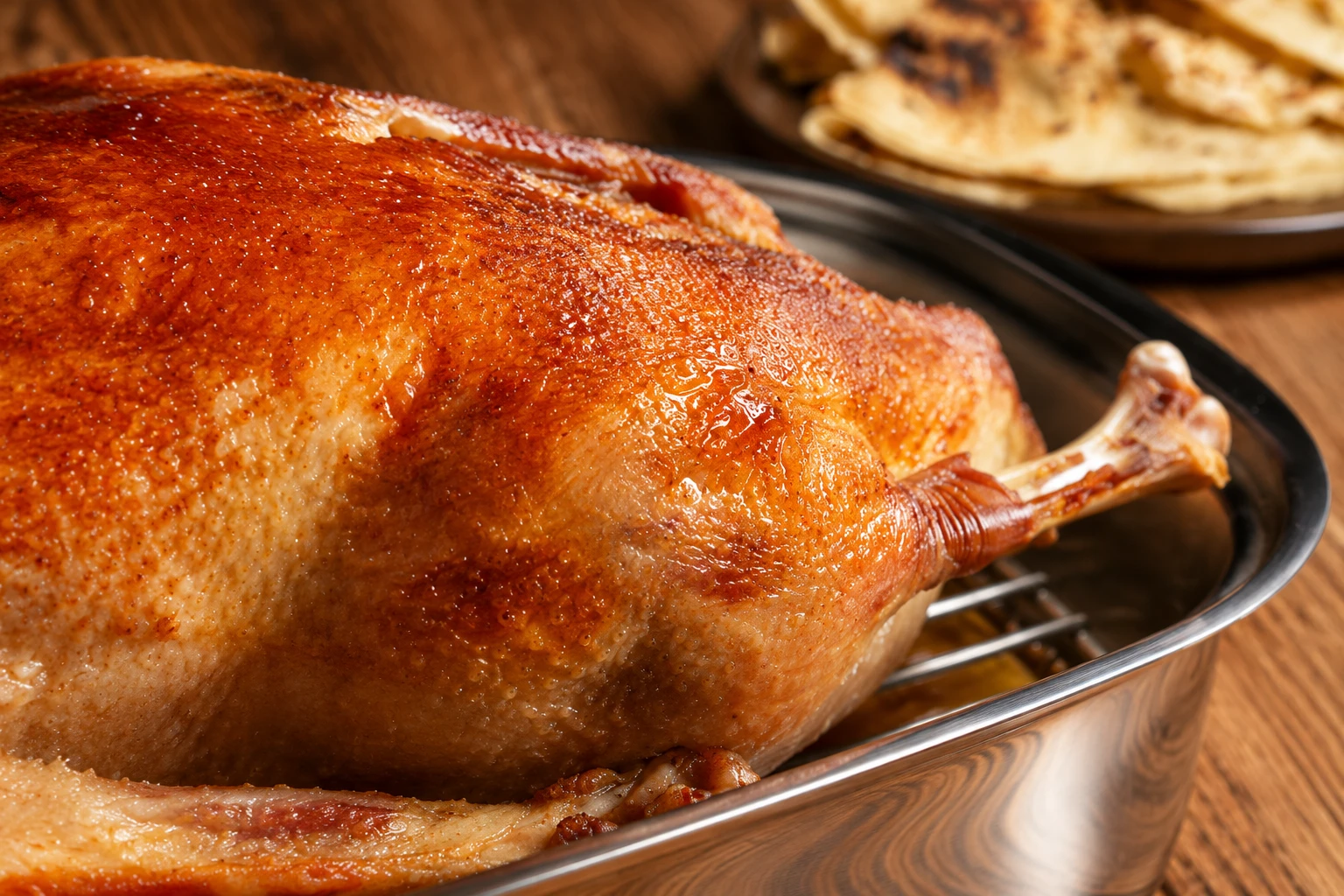
Goose slowly roasted until the skin is crispy, served with lokše — thin potato pancakes brushed with the roast fat — and braised red cabbage. It’s the autumn feast of the Bratislava region, famous in the village of Slovenský Grob.
Traditional dish from Bratislava
Also known as: ganso assado com lokše; husacie hody; grobská husacina; lokše
Illustrative images. The pictures in this guide are illustrations based on the real place, not photographs, and may differ from it.
Click a photo to enlarge it.
Pečená hus s lokšami — Bratislava, Slovakia
The goose is salted a few hours beforehand, placed in a clay roasting pan with a little water, and slow-roasted for hours until the skin browns and crisps. Accompanying it are lokše: a dough made from boiled potato and flour, rolled into thin discs and cooked on the dry griddle of the stove. While still hot, the lokše are brushed with goose fat and stacked. The dish is completed by braised sweet-and-sour red cabbage.
In the Bratislava region this is the meal of the husacie hody, the autumn goose banquets associated with the feast of Saint Martin on November 11. The village of Slovenský Grob, in the Pezinok district at the foot of the Small Carpathians and about 15 kilometers from Bratislava, has more than a century of tradition in breeding and preparing geese. The official portal of the Slovak public administration records that the village became known for raising geese and serving roast goose in private homes, a custom that continues.
The full banquet begins with goose broth and goose liver, continues with the roasted goose, lokše and cabbage, and finishes with sour cherry and poppy seed strudel. Lokše can also be served filled with goose liver. In the village’s and region’s restaurants, goose is often paired with wine from the Small Carpathians.

Bratislava
Autumn feast of the Bratislava region; the best-known tradition is that of the village of Slovenský Grob in the Pezinok district, which is not included in the guide.
Goose, salt and caraway (or cumin) for the roast; boiled potato, flour and salt for the lokše; red cabbage, onion, vinegar and sugar for the accompaniment.
Goose in pieces, with lokše folded at the side and the red cabbage. You eat it with fork and knife, and the lokše are used to soak up the roasting sauce.
Autumn banquets, especially around Saint Martin’s Day on November 11; served year-round in specialist restaurants.
Your questions
They are thin pancakes made from a dough of boiled potato and flour, cooked on the dry griddle of the stove and brushed with goose fat. They are the traditional accompaniment to roast goose.
The village of Slovenský Grob, near Bratislava, is the reference for this tradition; restaurants in Bratislava and the surrounding region also serve goose banquets, especially in autumn.
In autumn, especially around Saint Martin’s Day on November 11.
Flavors of Slovakia

A clear or slightly yellowish brandy with a pronounced juniper aroma and flavor. It is the traditional distilled spirit of Slovakia; some regional varieties have protected geographical indication in the European Union.

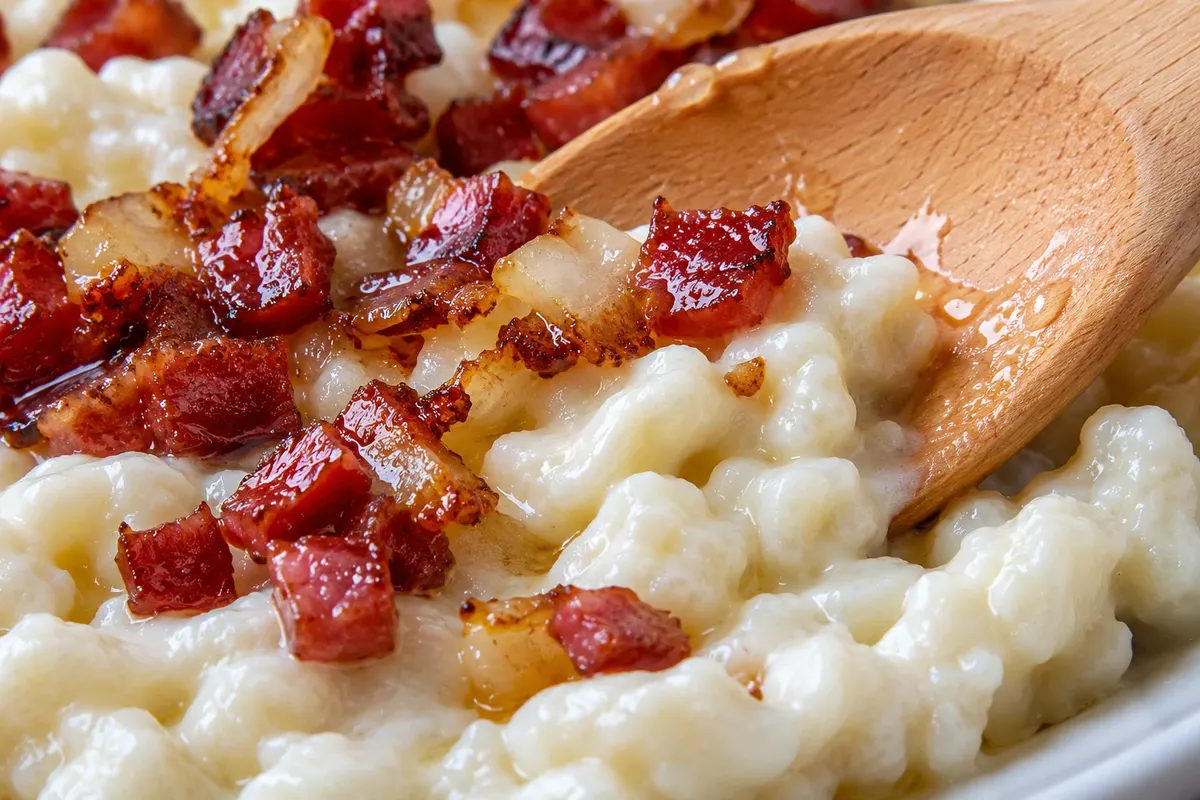
Small potato gnocchi mixed while still hot with bryndza, a soft salty sheep’s cheese, and topped with fried bacon. The official tourism board presents it as Slovakia’s national dish.

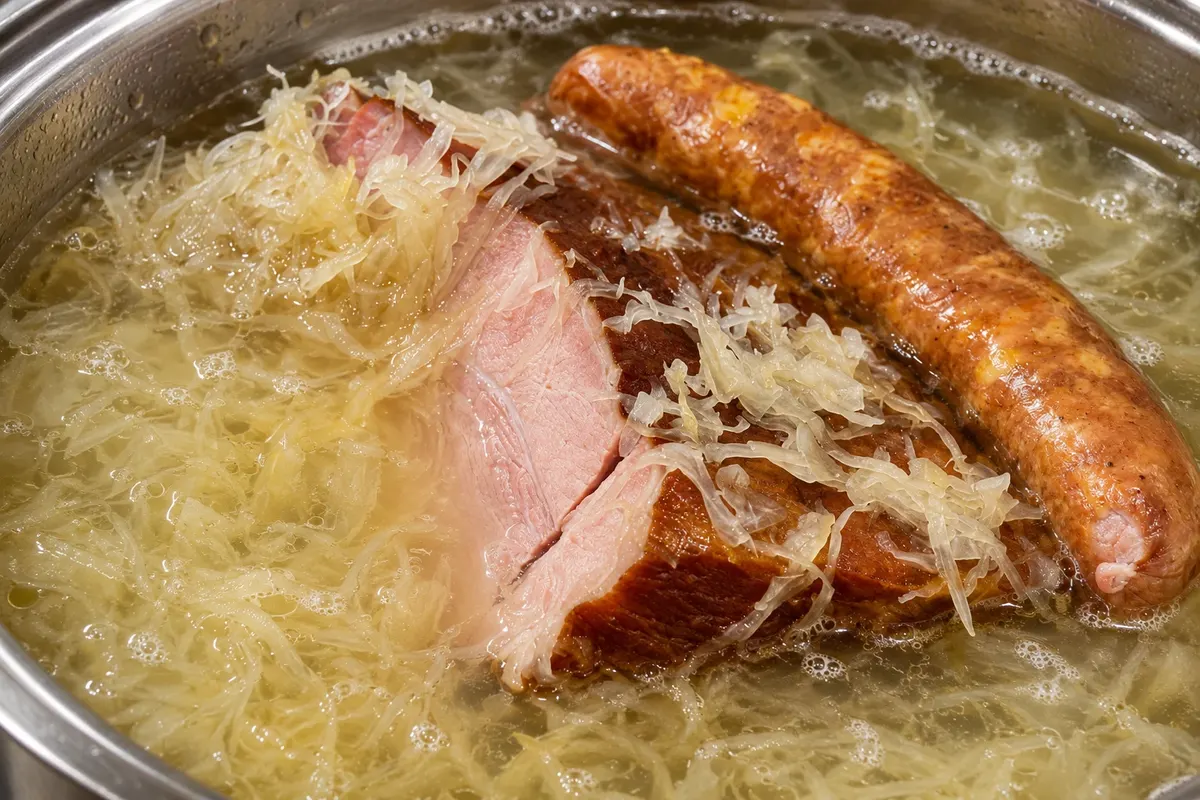
Thick sauerkraut soup with smoked sausage and pork, often with dried mushrooms. It’s Slovakia’s winter soup and the dish that starts the Christmas Eve dinner in many homes.

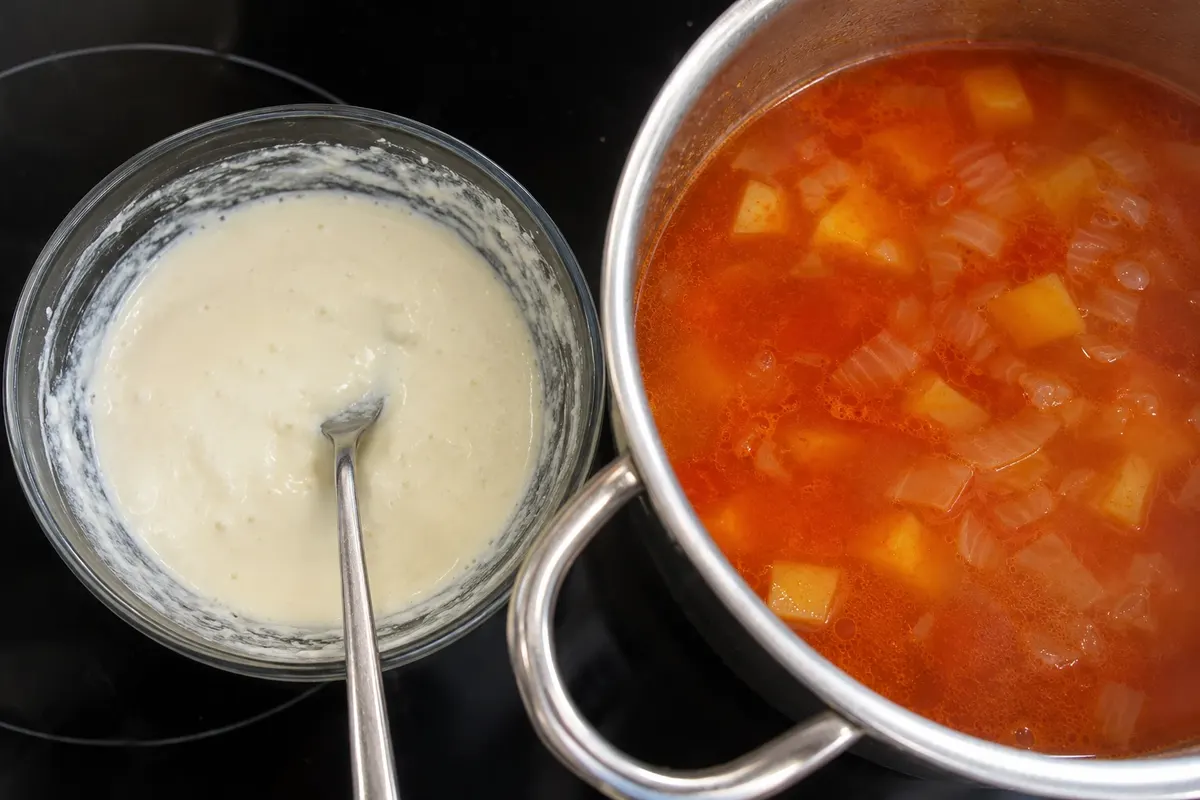
Shepherds’ soup made with bryndza, the soft salty sheep cheese, sometimes with potato, onion and bacon. It is traditional in the sheep-farming regions of central Slovakia and has won regional cooking contests.

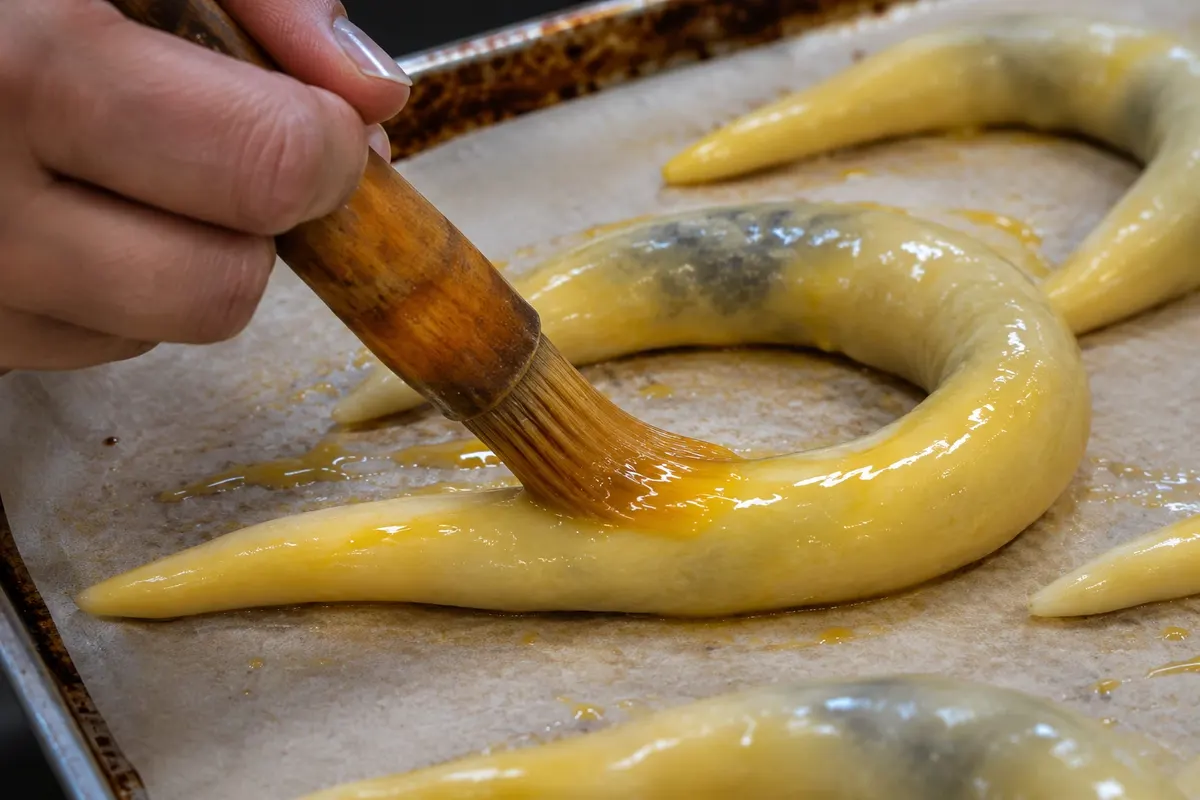
Thin, glossy pastry filled with walnuts or poppy-seed filling. The poppy-seed one is shaped like a horseshoe and the walnut one like the letter C. Registered in the European Union as a traditional speciality guaranteed.

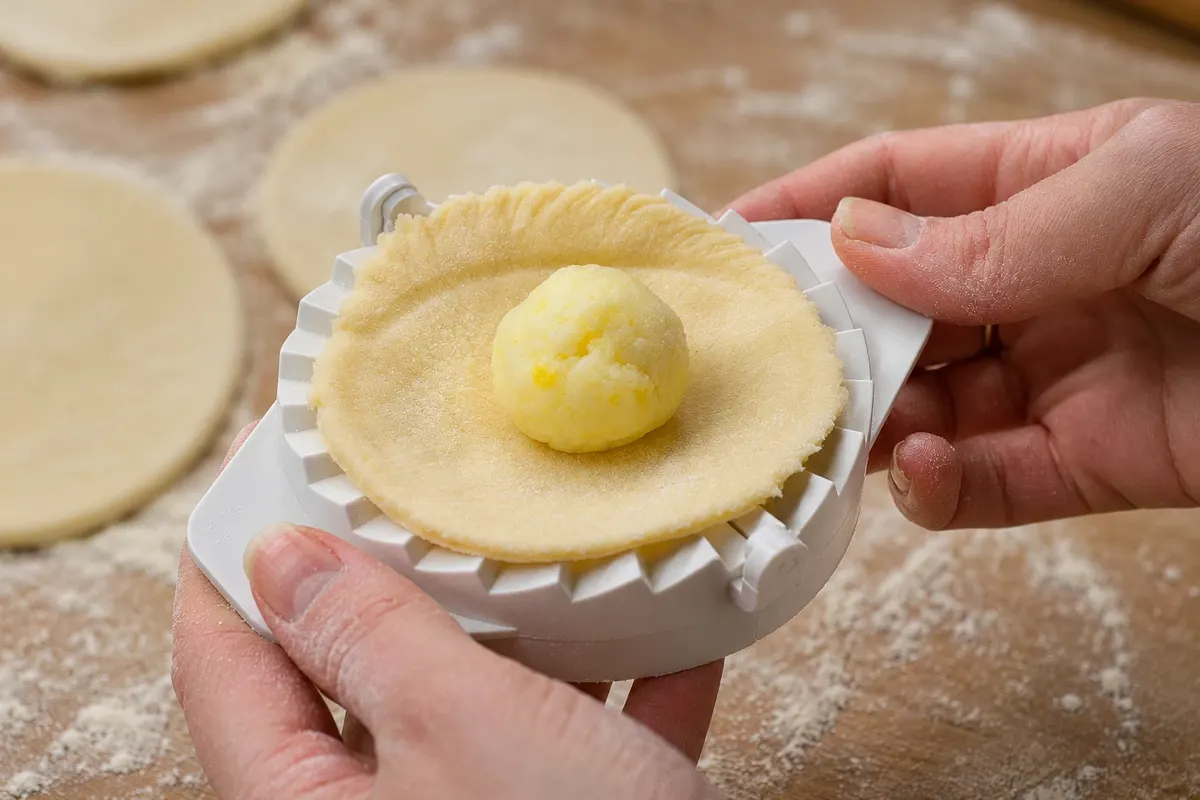
Dough dumplings boiled in water, filled with potato and bryndza, and served with fried bacon and sour cream. They are a traditional dish of eastern Slovakia, especially in the Šariš region around Prešov.

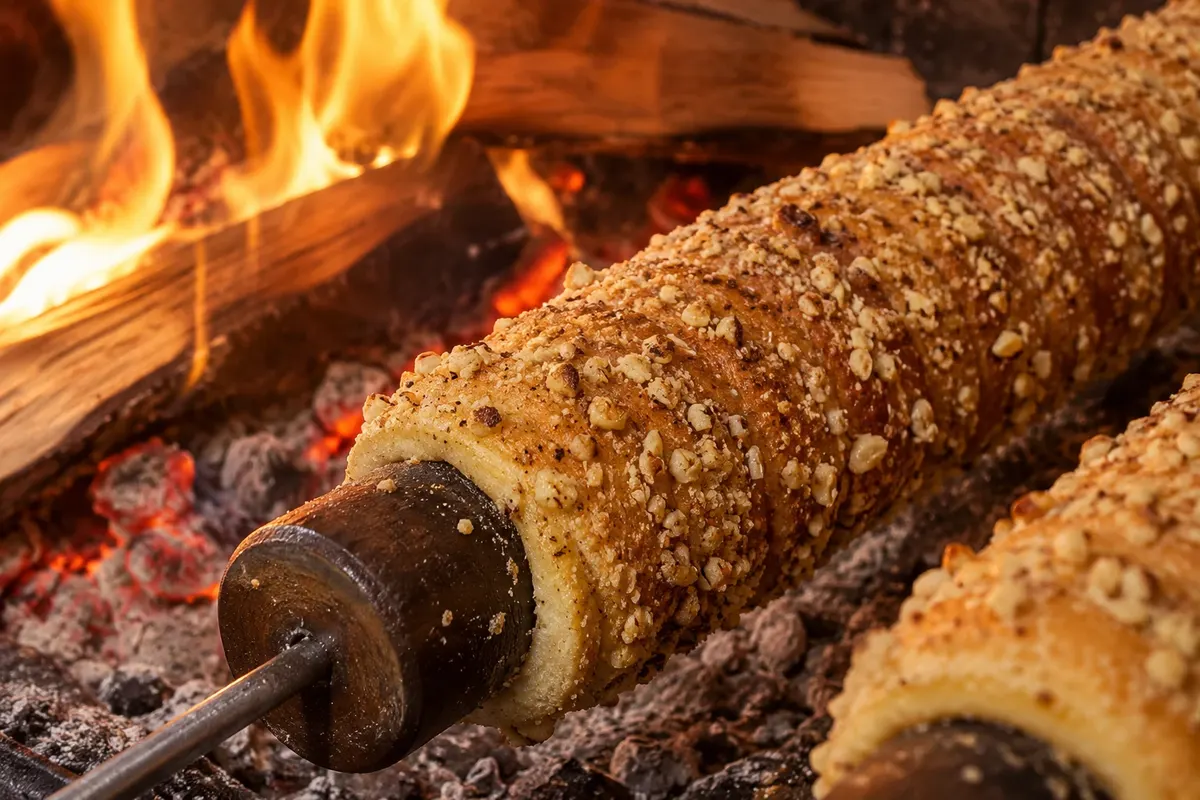
Sweet fermented dough rolled onto a wooden cylinder and roasted while rotated over heat, topped with dried fruits; afterwards it is dusted with sugar mixed with vanilla sugar. It is from Skalica and was the first Slovak product to receive a European Union protected geographical indication.