

 Argentina
 Bolivia
 Chile
 Colombia
 Ecuador
 Guyana
 French Guiana
 Falkland Islands (Malvinas)
 Paraguay
 Peru
 Suriname
 Uruguay
 Venezuela
 Germany
 Austria
 Belgium
 Croatia
 Denmark
 Slovakia
 Slovenia
 Spain
 Finland
 France
 Greece
 the Netherlands
 Hungary
 Ireland
 Iceland
 Italy
 Luxembourg
 Norway
 Poland
 Portugal
 the United Kingdom
 the Czech Republic
 Sweden
 Switzerland
 Turkey
 Canada
 the United States
 Mexico
 the Dominican Republic
 South Africa
 Australia
 Fiji
 New Zealand
 Papua New Guinea
Natural phenomenon · São Domingos do Capim, PA
Pororoca of the Capim River
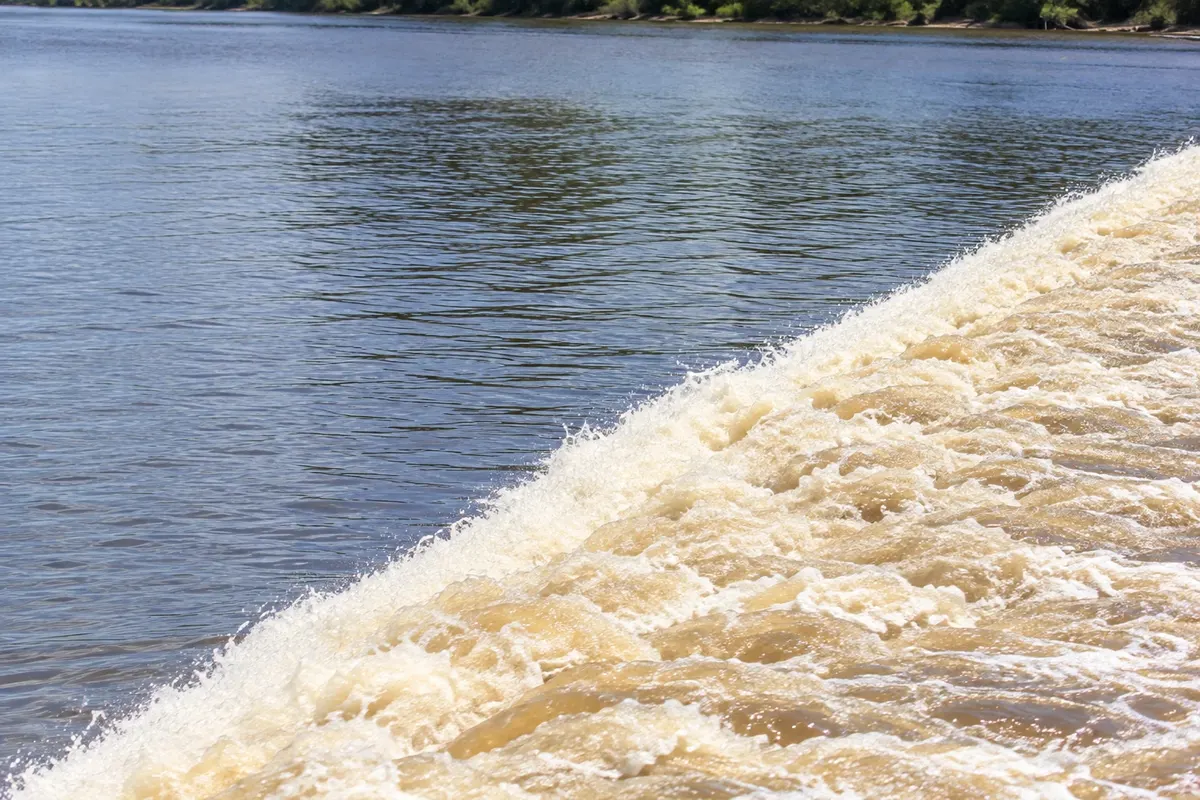
Wave formed by the Atlantic tide that rises up the Capim River against the current and passes in front of São Domingos do Capim, surfed by athletes at the Pororoca Festival.
Illustrative images. The pictures in this guide are illustrations based on the real place, not photographs, and may differ from it.



Discover
About Pororoca of the Capim River
The pororoca of the Capim River is the wave formed when the tide rises up the river against the current. Atlantic water enters through the Guajará Bay, flows past Belém, advances along the Guamá River and, near São Domingos do Capim, about 180 km from the sea, meets the descent of the Capim. The difference in level becomes a front of water that runs upstream with a roar.
The wave is larger on spring tides, at full and new moon, when the difference between high and low tide is greater. The strongest period runs from the start of the year until May, when rivers are full, and peaks usually occur in March and April. The Capim wave rarely exceeds two meters, but it lasts for long stretches.
Since the late 1990s surfers have ridden the Capim pororoca, and the Pororoca Festival brings together surfing, canoeing and endurance competitions, carimbó performances and Pará food stalls. There are attempts at records for most surfers on the same wave and night rides.
For those who just want to watch, the riverbank in front of the town is the most popular spot. First you hear the noise; then the wave arrives, lifts anchored boats and proceeds upstream.
Before you go
Practical information
Cidade Turismo reviews its information regularly, but something may have changed. Check with the place before planning your trip.
How much time to set aside
The wave’s passage lasts only a few minutes; allow 1 to 2 hours and arrive before the tide’s scheduled time.
Best time
In the first half of the year, between January and May, on spring tide days; March and April usually have the highest waves. The time changes daily with the tide; ask locally in town.
How to get there
The pororoca passes in front of the town, on the Capim River, near its meeting with the Guamá. From the bus station and downtown, walk to the riverbank.
Tip
Arrive well before the scheduled time, stay away from the edge and from anchored boats, and watch children: the wave lifts the water suddenly. Enter the river only with someone who knows the place.
Get your questions answered
Frequently asked questions about Pororoca of the Capim River
Why does the pororoca happen on the Capim River?
Because the Atlantic tide rises through Guajará Bay and the Guamá River and, near São Domingos do Capim, advances against the Capim’s current, forming a wave.
When is the Capim River pororoca larger?
On spring tide days, at new or full moon, in the first half of the year. March and April usually have the largest waves.
How long does the pororoca’s passage last?
The wave passes in a few minutes in front of the town, but continues upstream for long stretches. Arrive before the scheduled time so you don’t miss it.