

 Brazil
 Argentina
 Bolivia
 Chile
 Colombia
 Ecuador
 Guyana
 French Guiana
 Falkland Islands (Malvinas)
 Paraguay
 Peru
 Suriname
 Uruguay
 Venezuela
 Germany
 Austria
 Belgium
 Croatia
 Denmark
 Spain
 Finland
 France
 Greece
 the Netherlands
 Hungary
 Ireland
 Iceland
 Italy
 Luxembourg
 Norway
 Poland
 Portugal
 the United Kingdom
 the Czech Republic
 Sweden
 Switzerland
 Turkey
 the United States
 Mexico
 the Dominican Republic
 South Africa
 Australia
 Fiji
 New Zealand
 Papua New Guinea
Province · Alberta and the Prairies
Saskatchewan
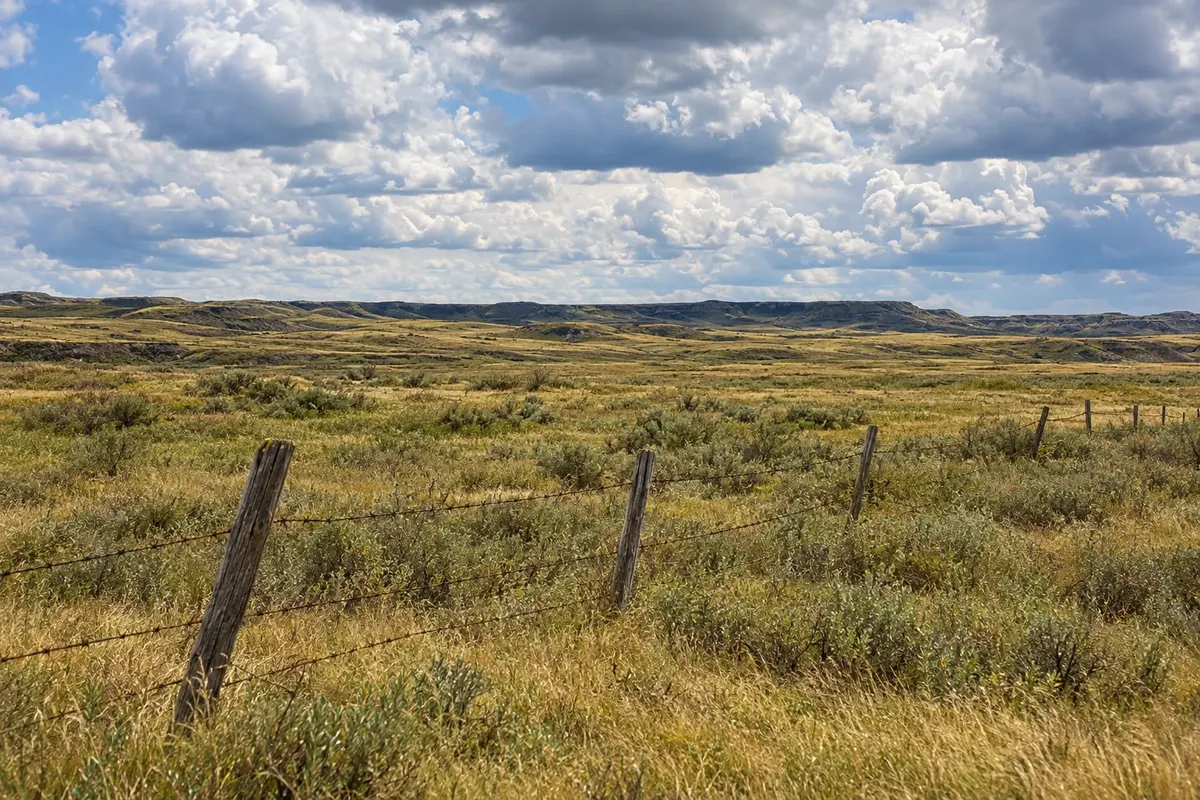
Prairies as far as the eye can see in the south and thousands of lakes in the north: Saskatoon and Wanuskewin, Regina and the history of the Royal Canadian Mounted Police, Grasslands National Park.
In the photo: Grasslands National Park, Saskatchewan
Illustrative images. The pictures in this guide are illustrations based on the real place, not photographs, and may differ from it.

The province
Get to know Saskatchewan
Saskatchewan sits in the heart of the Canadian prairies, between Alberta and Manitoba, with the United States border to the south. The southern region is made up of wheat fields, canola and pastures with wide horizons; the northern half is covered by boreal forest, rivers and thousands of lakes. Regina is the capital, and Saskatoon is the largest city.
Saskatoon spreads along the banks of the South Saskatchewan River, crossed by several bridges. A few kilometres away is Wanuskewin Heritage Park, with archaeological sites of the Plains nations, trails through the valley and a cultural centre featuring Indigenous dance, art and cuisine.
In Regina, Wascana Lake and its surrounding park encircle the Legislative Building. The city hosts the Royal Canadian Mounted Police training academy, and the RCMP Heritage Centre tells the story of the force, created to patrol the country’s west.
In the southwest, Grasslands National Park protects a stretch of native prairie, home to prairie dogs and very dark night skies. Cypress Hills, on the Alberta border, is an interprovincial park with forests atop the hills. In the north, Prince Albert National Park brings together canoeing lakes and the cabin of Grey Owl, a writer and conservationist.
Distances are large, and many people cross the province along the Trans-Canada Highway between Manitoba and Alberta. Small towns still keep wooden grain elevators, typical prairie structures, and summer festivals enliven Saskatoon and Regina.
When to go
Summer, from June to August, is warm and sunny, with long days, city festivals and the season for the northern lakes. September brings the harvest and golden fields. Winter, from November to March, is very cold, with temperatures that can fall below −30 °C, and in the north the aurora borealis often appears on dark, clear nights.
Getting there
Saskatoon (YXE) and Regina (YQR) have airports with flights to other Canadian cities and some destinations in the United States. By road, the Trans-Canada Highway passes through Regina, and the Yellowhead connects Saskatoon to Edmonton and Winnipeg. The long-distance train between Toronto and Vancouver crosses the province and stops in Saskatoon.
Your questions
Frequently asked questions about Saskatchewan
What is the best base for exploring Saskatchewan?
Saskatoon is the most common base: it has flights, a range of accommodation and is close to Wanuskewin and parks along the river. Regina, about three hours’ drive away, combines the Legislative Building, Wascana Lake and the RCMP Heritage Centre. For Grasslands and the lake country in the north, a car is necessary.
What is Wanuskewin Heritage Park?
It is a heritage site of the Plains nations beside the South Saskatchewan River, near Saskatoon, with evidence of occupation spanning thousands of years. It has valley trails, a cultural centre with art exhibits and programs in dance and cuisine, and a herd of bison reintroduced to the area.
Where can I see native prairie in Saskatchewan?
At Grasslands National Park, in the southwest of the province, near the United States border. The park has trails and gravel roads through grassy hills, prairie dog colonies and dark-sky areas for stargazing. Services are limited: bring water and fuel.
Does Saskatchewan observe daylight saving time?
No. Most of the province stays on UTC−6 year-round. Some border communities, such as Lloydminster, follow the time of the neighbouring province.