3 cities

 Search
 Brazil
 Argentina
 Bolivia
 Chile
 Colombia
 Ecuador
 Guyana
 French Guiana
 Falkland Islands (Malvinas)
 Paraguay
 Peru
 Suriname
 Uruguay
 Venezuela
 Germany
 Austria
 Belgium
 Croatia
 Denmark
 Spain
 Finland
 France
 Greece
 the Netherlands
 Hungary
 Ireland
 Iceland
 Italy
 Luxembourg
 Norway
 Poland
 Portugal
 the United Kingdom
 the Czech Republic
 Sweden
 Switzerland
 TurkeyCanada
 the United States
 Mexico
 the Dominican RepublicTurkey
 South Africa
 Australia
 Fiji
 New Zealand
 Papua New Guinea
Province · Alberta and the Prairies
Banff, Lake Louise and Jasper in the Rocky Mountains, Calgary and the Stampede, the dinosaurs of Drumheller and Edmonton, the capital, on the banks of the North Saskatchewan River.
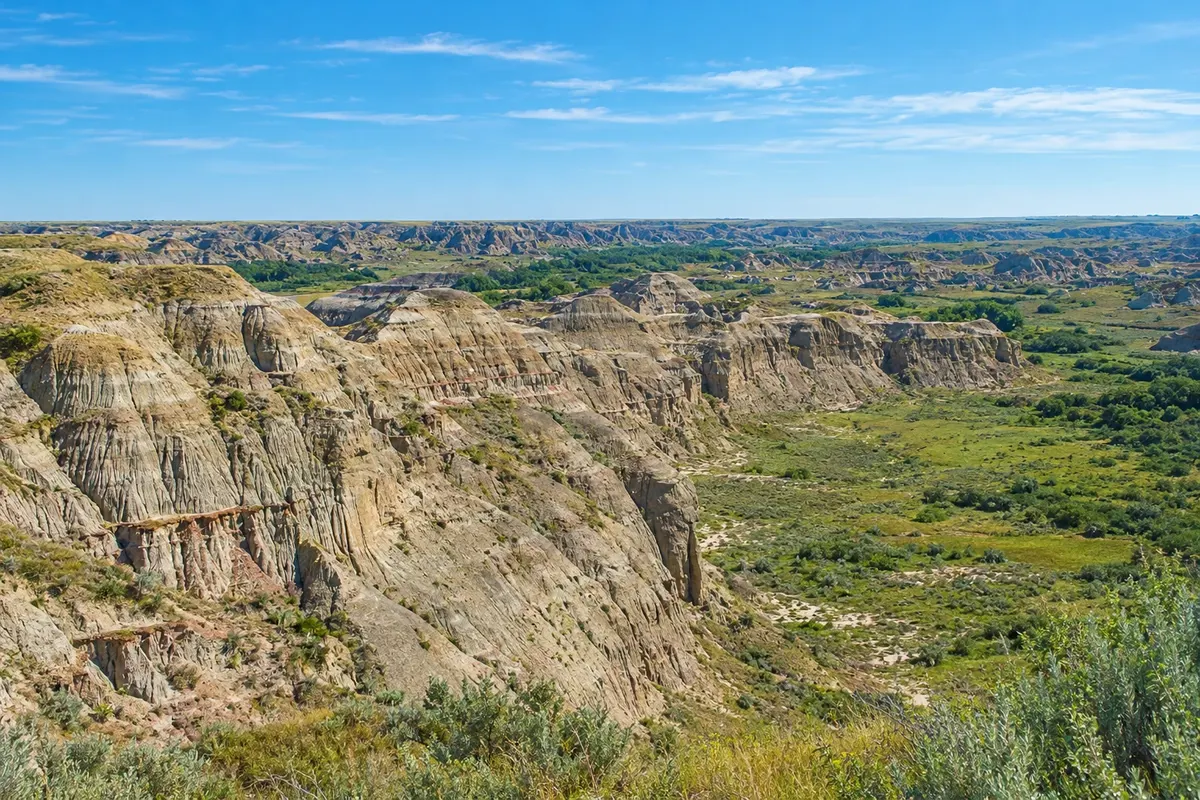
In the photo: Dinosaur Provincial Park, Alberta
Illustrative images. The pictures in this guide are illustrations based on the real place, not photographs, and may differ from it.

The province
Alberta lies between the Rocky Mountains to the west and the prairies to the east. To the south it borders the United States; to the north the boreal forest continues into the Northwest Territories. Edmonton is the capital, and Calgary is the largest city.
The national parks of Banff and Jasper, together with Yoho and Kootenay on the British Columbia side, form the Canadian Rocky Mountain Parks, a UNESCO World Heritage Site. Banff, created in 1885, is Canada’s oldest national park. Lake Louise and Moraine Lake, with their green‑blue waters at the foot of glaciers, are less than an hour’s drive from the town of Banff.
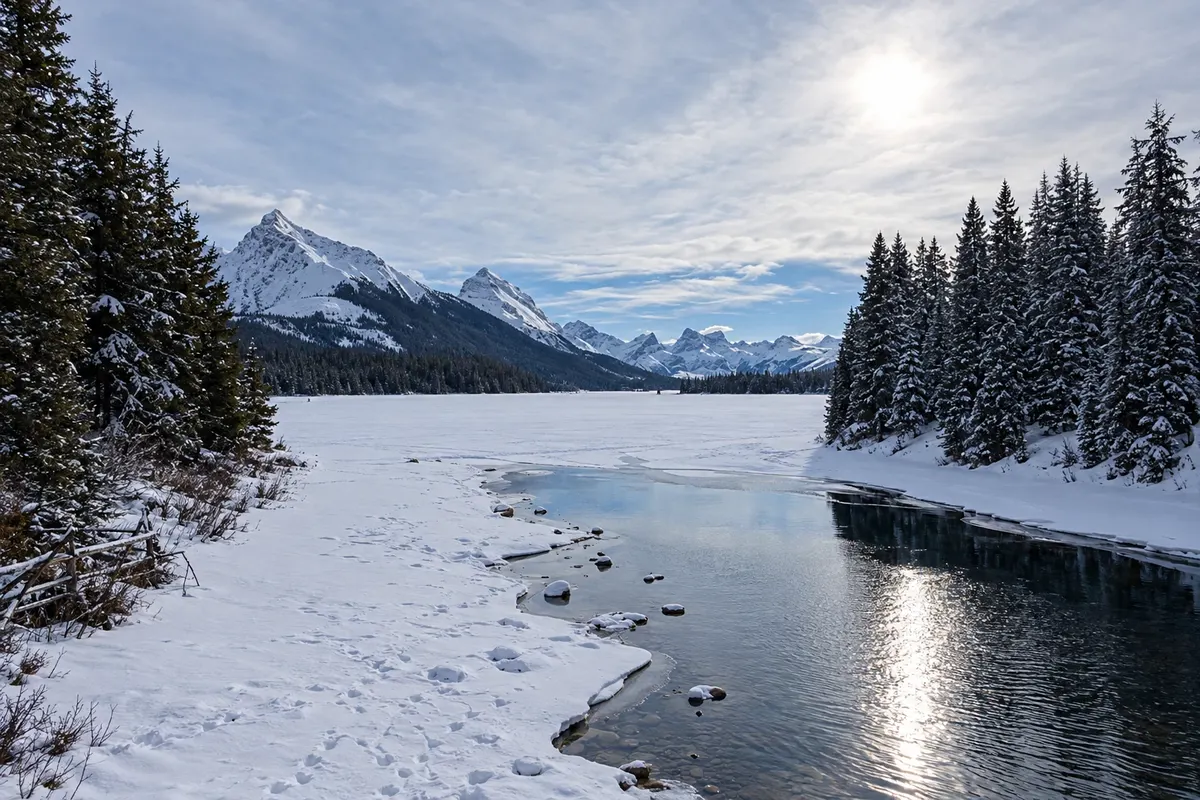
The Icefields Parkway links Lake Louise to Jasper for about 230 km, running among peaks, glaciers and lakes, and passes the Columbia Icefield, where the Athabasca Glacier descends close to the road. Jasper, farther north, is home to Maligne Lake and Maligne Canyon, and the park is a designated dark sky preserve.
Calgary, about 130 km from Banff, is the gateway to the Rockies. In July the Calgary Stampede brings together rodeos, parades and a large fair. Northeast of the city, the Drumheller valley, in the badlands, hosts the Royal Tyrrell Museum, dedicated to the dinosaur fossils found in the region.
Edmonton has an extensive park along the valley of the North Saskatchewan River and is close to Elk Island National Park, which has bison herds. In the south of the province, Waterton Lakes and Glacier in the United States form an international peace park, also a World Heritage Site, and Head‑Smashed‑In Buffalo Jump preserves the memory of bison hunting by the Plains peoples.
Destinations
Cities
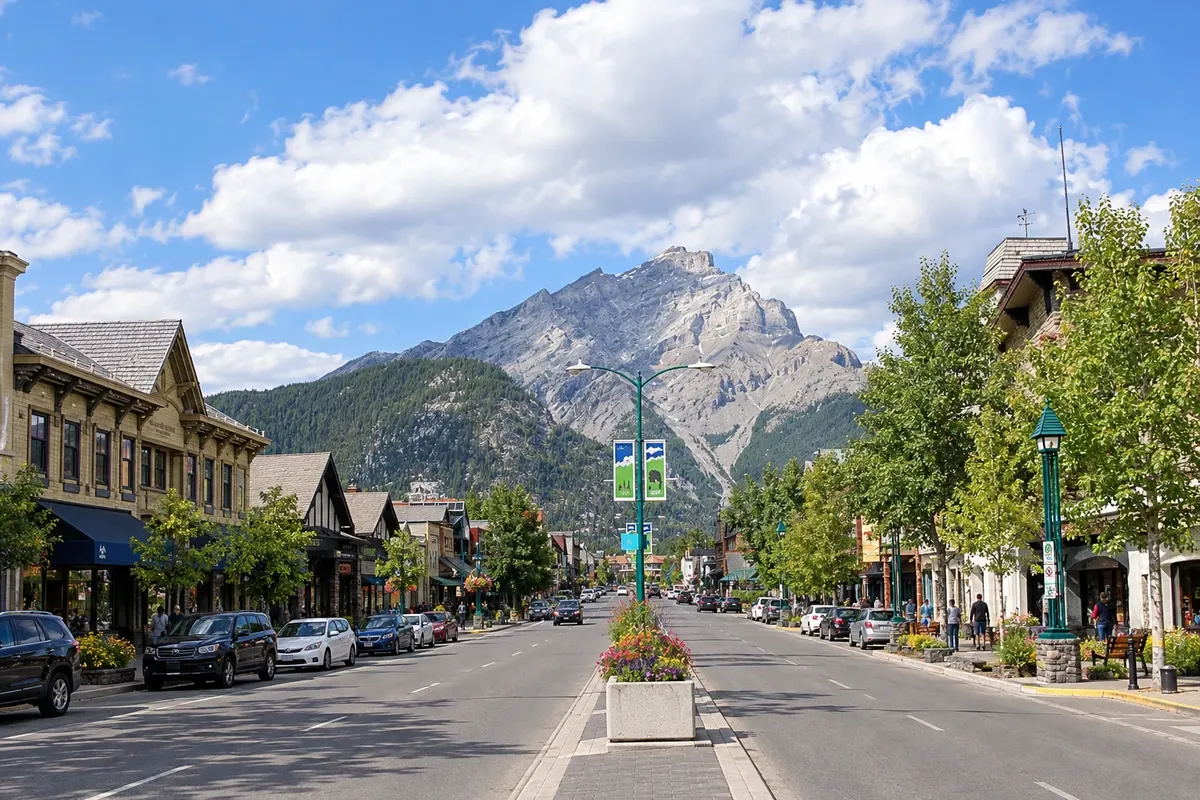
Town inside Banff National Park, in the Rocky Mountains, surrounded by Mounts Cascade, Rundle and Sulphur. It has the Sulphur Mountain gondola, the Upper Hot Springs, the Cave and Basin historic site where the park began, and the Bow River falls. Lake Minnewanka and Johnston Canyon are a few kilometers away.
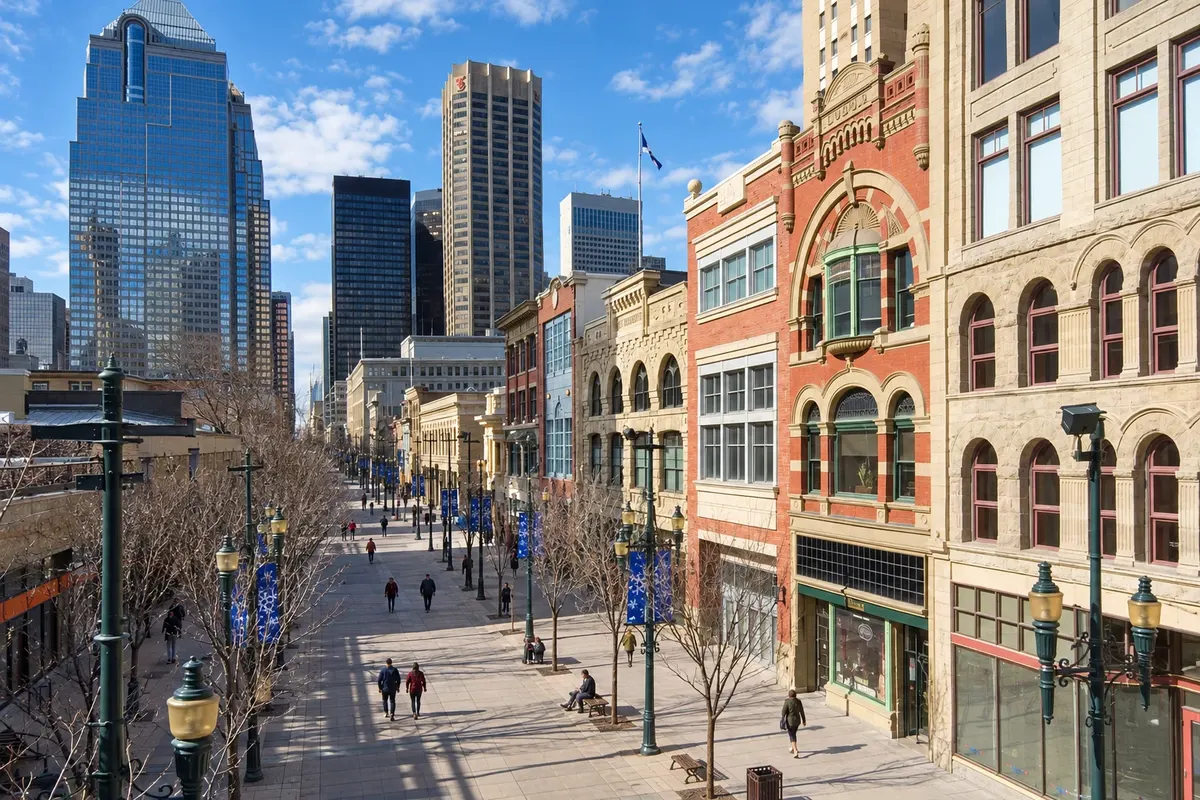
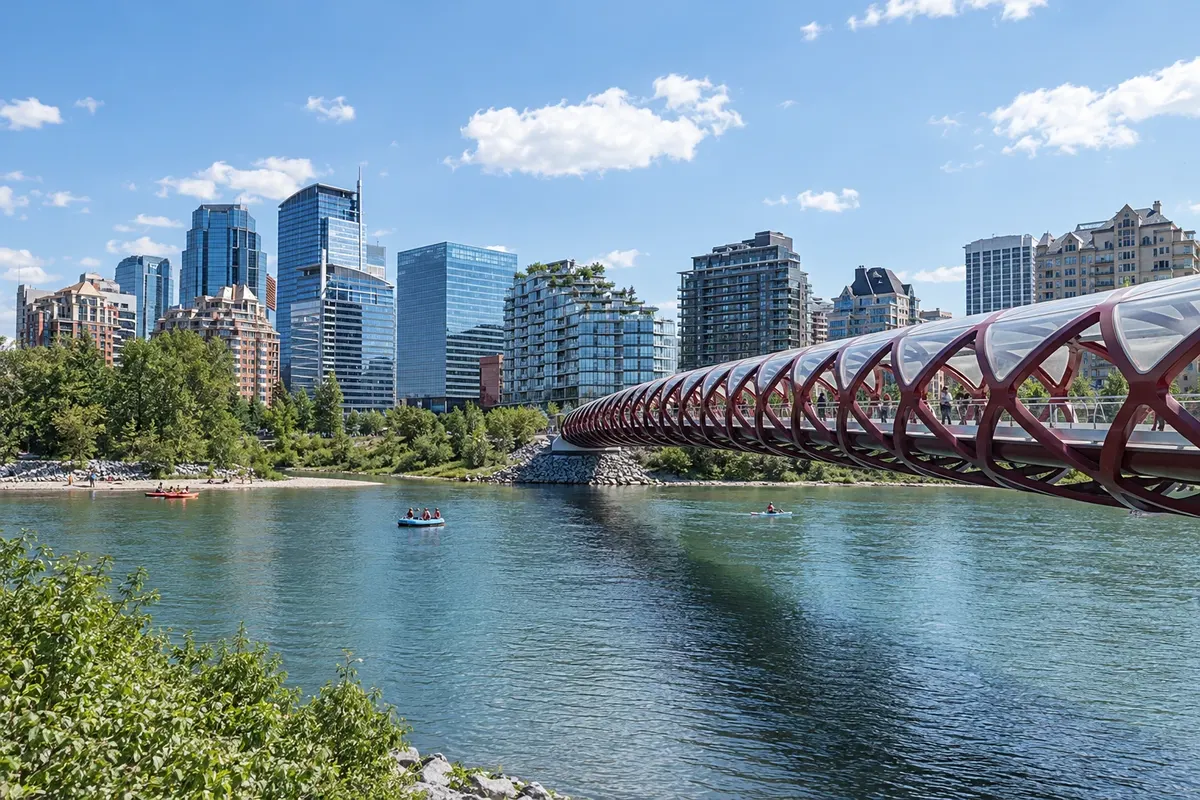
The largest city in Alberta, at the confluence of the Bow and Elbow rivers, with the Rockies on the horizon. It has the Calgary Tower, Stephen Avenue, Studio Bell, Prince’s Island Park, the zoo and Heritage Park, a historic western village. In July it hosts the Calgary Stampede.
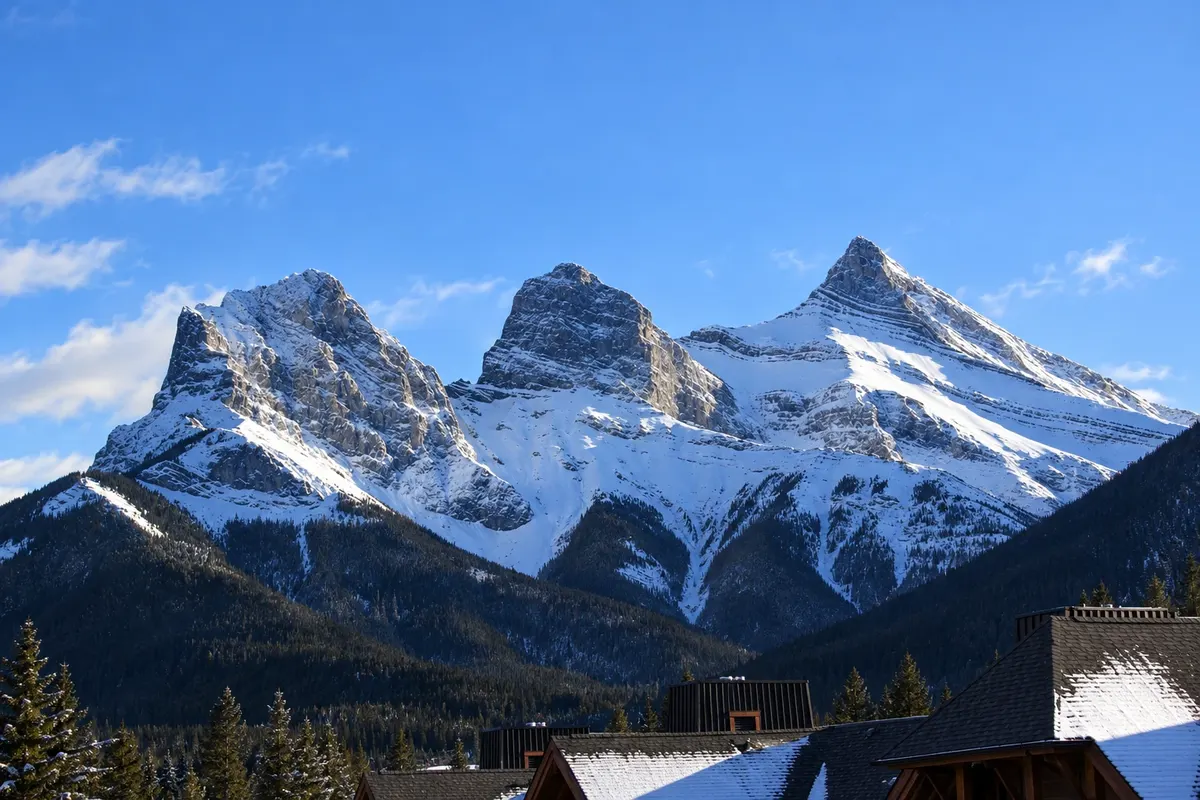
Mountain town in the Bow River valley, just outside Banff National Park, about 25 km from the town of Banff, at the foot of the Three Sisters peaks. It began as a coal-mining village and was a venue for events at the 1988 Winter Olympic Games. Trails include the Grassi Lakes and the Canmore Nordic Centre.
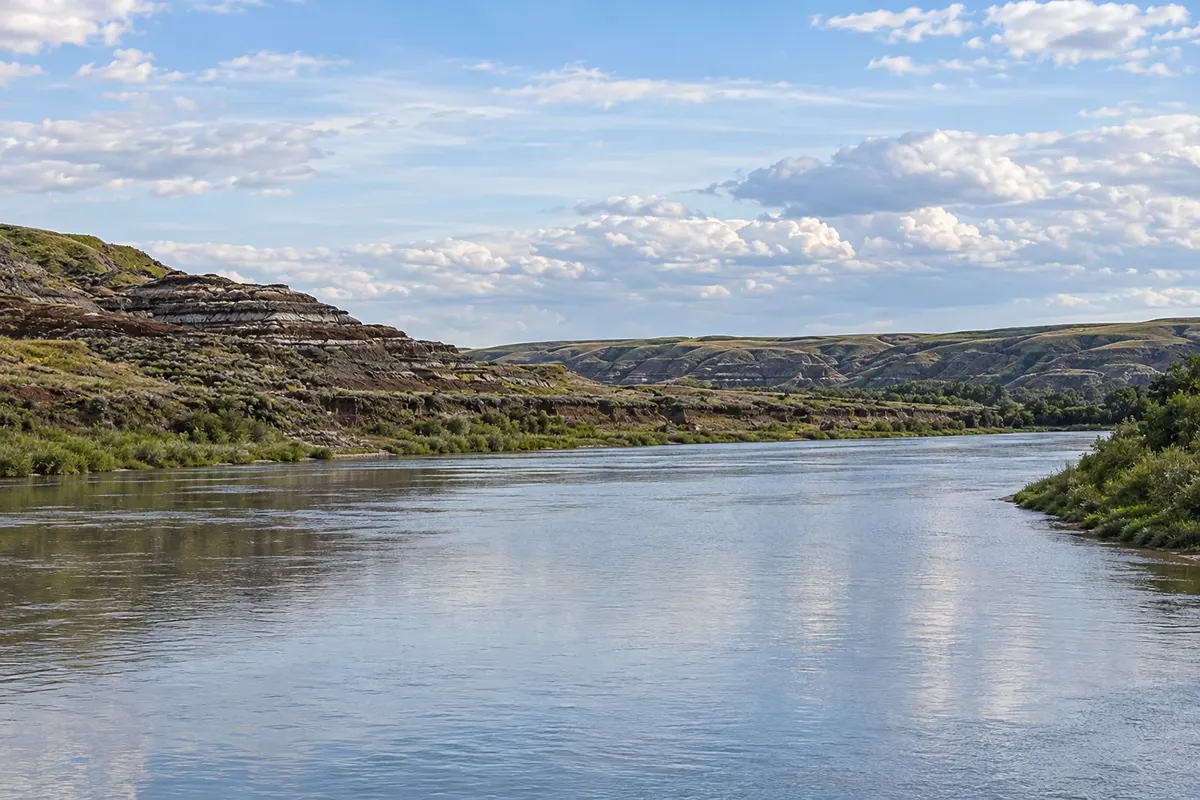
Town in the Red Deer River valley, in the middle of Alberta’s badlands, about 135 km from Calgary. It’s known for dinosaurs: it has the Royal Tyrrell Museum, one of the world’s largest paleontology museums, the Hoodoos sandstone pillars and Horseshoe Canyon, with layered, colorful slopes.
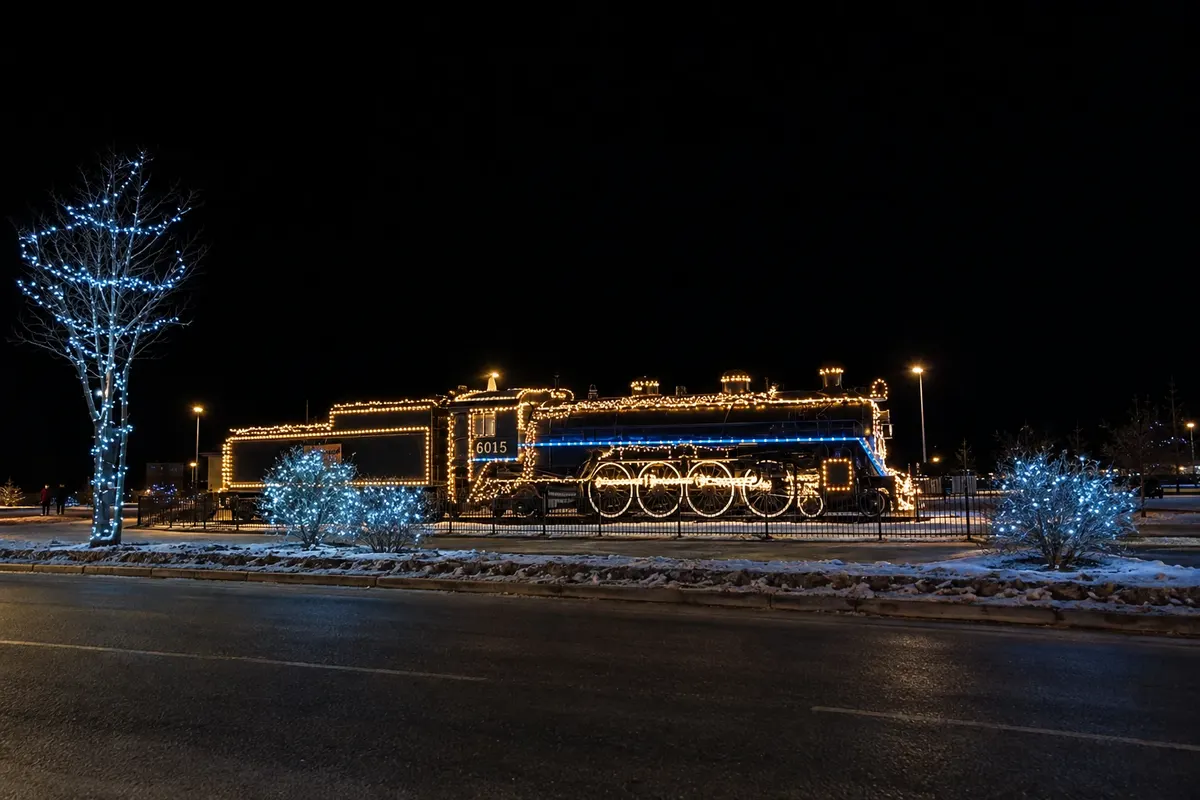
Town in the middle of Jasper National Park, in the Athabasca River valley. Nearby are the Whistlers Mountain SkyTram and Pyramid Lake; to the southeast, Maligne Lake; to the south, via the Icefields Parkway, Athabasca Falls and the Athabasca Glacier on the Columbia Icefield; to the north, the Miette hot springs.
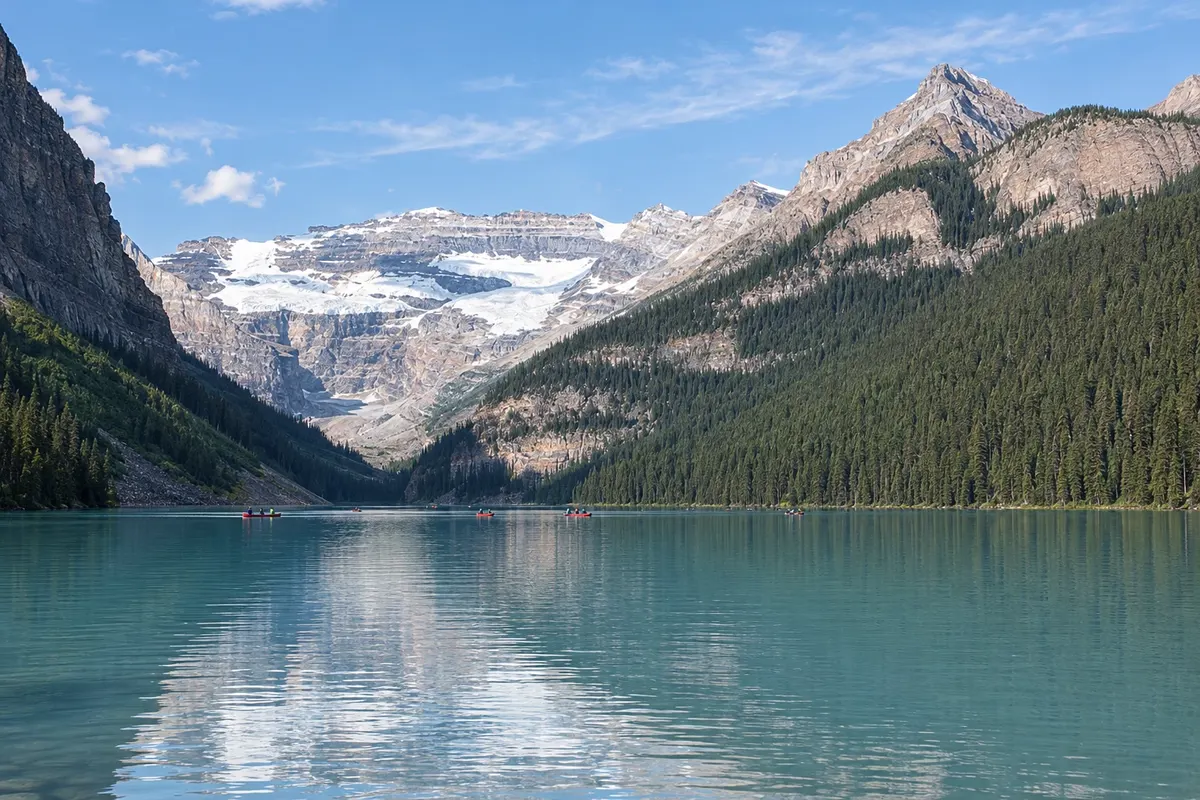
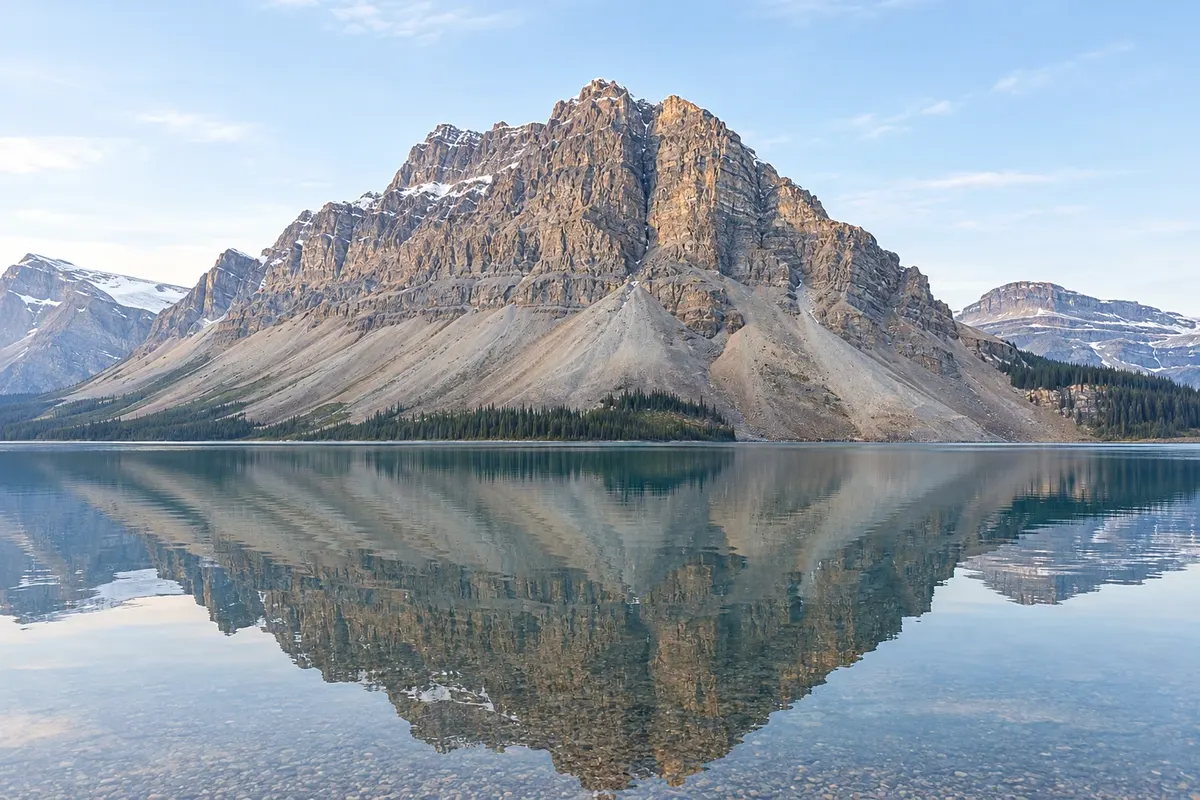
Village in Banff National Park, about 58 km from the town of Banff, providing access to Lakes Louise and Moraine, turquoise-green waters among glaciers. There is a gondola with views of the lakes and mountains, and it is the start of the Icefields Parkway, with Peyto Lake about 40 km away.
From June to September the roads and trails in the Rockies are open, and mountain lakes such as Lake Louise and Moraine Lake are usually ice‑free from mid‑June. July and August are the busiest months in the parks. Winter, from November to April, is ski season in Banff and Lake Louise and brings very cold conditions on the prairies, sometimes eased by warm chinook winds in Calgary.
The international airports in Calgary (YYC) and Edmonton (YEG) receive flights from other provinces, the United States and some cities in Europe and Mexico. From Calgary the Trans‑Canada Highway reaches Banff in about an hour and a half, and buses and shuttles connect the airport to the park towns. To enter the national parks you need a Parks Canada pass, sold at park gates and online.
Your questions
Five to seven days allow you to spend three or four in Banff and Lake Louise, including Moraine Lake and Yoho National Park, drive the Icefields Parkway with stops and spend two nights in Jasper. If you have less time, most people choose Banff as a base and do day trips.
The Moraine Lake road is closed to private cars. Access is by Parks Canada shuttle buses that depart from Lake Louise, or by authorized operators, generally from June to mid‑October, and reservations are recommended. It’s also possible to reach the lake by bicycle or on foot via the road.
Yes. All visitors to the national parks require a Parks Canada pass, daily or annual; the same pass covers neighbouring parks such as Jasper, Yoho and Kootenay. It is sold at park gates, visitor centres and online, and must be displayed visibly in the car.
For ten days in July. The program features rodeos, chuckwagon races, an opening parade, concerts and a large fair. At that time lodging in Calgary and nearby areas often fills months in advance.
Elk, deer, bighorn sheep and bears commonly appear along roadsides and trails, especially at dawn and dusk, but sightings are unpredictable. Keep your distance, do not feed animals and stop your car only where it is permitted.