

 Brazil
 Argentina
 Bolivia
 Chile
 Colombia
 Ecuador
 Guyana
 French Guiana
 Falkland Islands (Malvinas)
 Paraguay
 Peru
 Suriname
 Uruguay
 Venezuela
 Germany
 Austria
 Belgium
 Croatia
 Denmark
 Slovakia
 Slovenia
 Spain
 Finland
 France
 Greece
 the Netherlands
 Hungary
 Ireland
 Iceland
 Italy
 Luxembourg
 Norway
 Poland
 Portugal
 the United Kingdom
 the Czech Republic
 Sweden
 Switzerland
 Turkey
 the United States
 Mexico
 the Dominican Republic
 South Africa
 Australia
 Fiji
 New Zealand
 Papua New Guinea
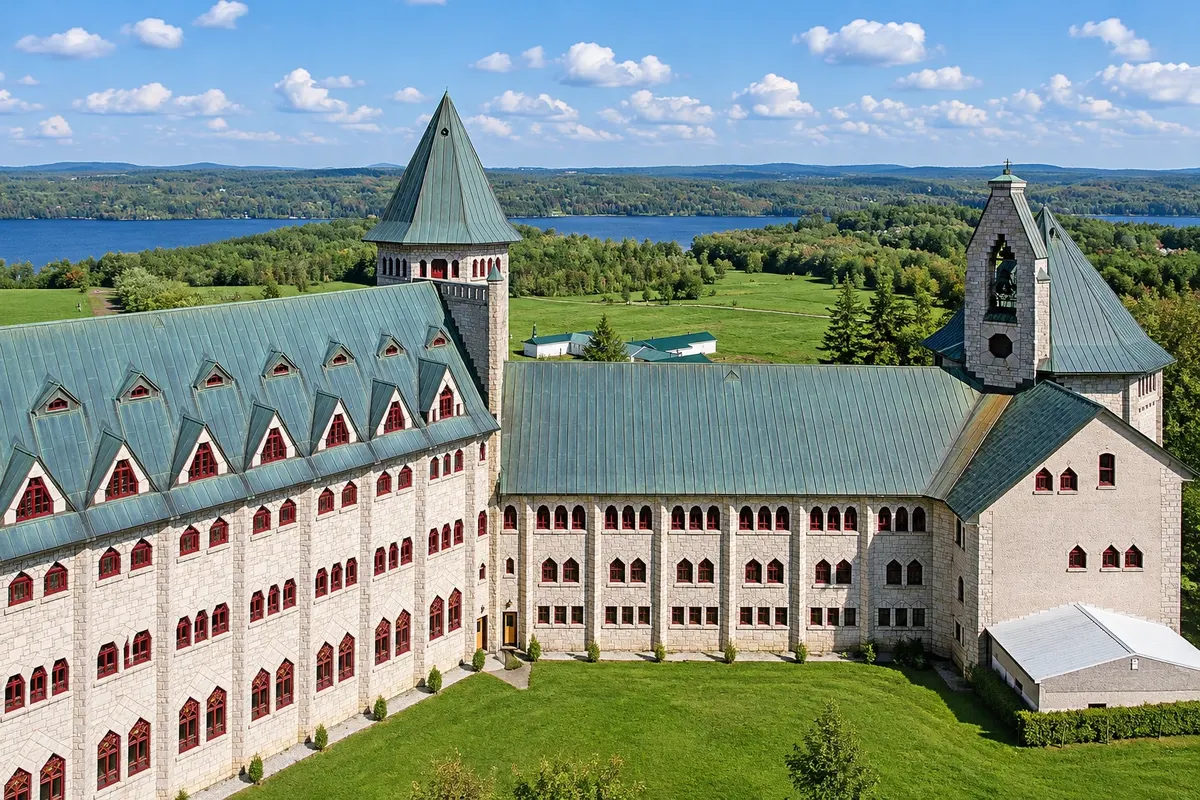
Abbey · Magog, Quebec
Saint-Benoît-du-Lac Abbey
Benedictine abbey on the shore of Lake Memphrémagog, with a tower and stone buildings, Gregorian chant at the services, and a shop selling cheeses and ciders made by the monks.
Illustrative images. The pictures in this guide are illustrations based on the real place, not photographs, and may differ from it.


Discover
About Saint-Benoît-du-Lac Abbey
The abbey of Saint-Benoît-du-Lac was founded in 1912 by Benedictine monks from France, on a hill above the west shore of Lake Memphrémagog, about 20 km from Magog. The current buildings, with a tall tower and stone walls in varied tones, were largely designed by the monk and architect Dom Paul Bellot.
The community sustains itself through the monks’ work, who produce cheeses such as Bleu Bénédictin and Ermite, cider and preserves, sold in the abbey shop. Apple orchards slope down to the lake.
Visitors can attend the services in the church, sung in Gregorian chant, and walk through the surrounding gardens. The abbey is a place of prayer: keep silence inside the buildings and check the times of services and the shop.
Before you go
Practical information
Cidade Turismo reviews its information regularly, but something may have changed. Check with the place before planning your trip.
How much time to set aside
One hour.
Best time
At the time of one of the sung services; in autumn, with the orchards and the lake colors.
How to get there
On the west shore of Lake Memphrémagog, about 20 km from Magog, by car.
Tip
Combine the visit with a Gregorian chant service and stop at the cheese shop on the way out.
Official website
Get your questions answered
Frequently asked questions about Saint-Benoît-du-Lac Abbey
What do the monks of Saint-Benoît-du-Lac make?
Cheeses, cider and preserves sold in the abbey shop, in addition to their life of prayer.
Can you attend Gregorian chant at Saint-Benoît-du-Lac?
Yes, at services open to the public in the church. Check the schedules.
When was the abbey of Saint-Benoît-du-Lac founded?
In 1912, by Benedictine monks from France.