1 city

 Search
 Brazil
 Argentina
 Bolivia
 Chile
 Colombia
 Ecuador
 Guyana
 French Guiana
 Falkland Islands (Malvinas)
 Paraguay
 Peru
 Suriname
 Uruguay
 Venezuela
 Germany
 Austria
 Belgium
 Croatia
 Denmark
 Spain
 Finland
 France
 Greece
 the Netherlands
 Hungary
 Ireland
 Iceland
 Italy
 Luxembourg
 Norway
 Poland
 Portugal
 the United Kingdom
 the Czech Republic
 Sweden
 Switzerland
 Turkey
 the United States
 Mexico
 the Dominican RepublicTurkey
 South Africa
 Australia
 Fiji
 New ZealandPapua New Guinea
Province · Papua Region
Oro guards the northern end of the Kokoda Track, the tropical fjords of Tufi and the forests of the world’s largest butterfly, the Queen Alexandra’s birdwing.
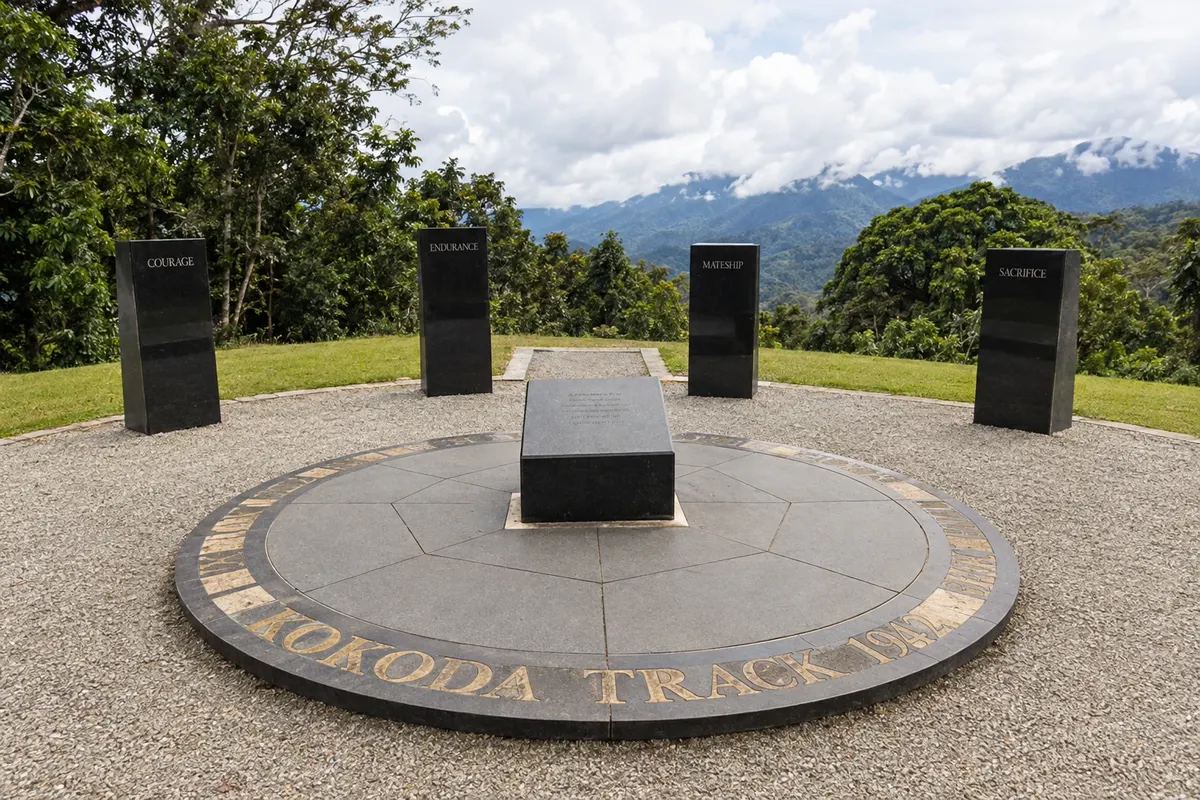
In the photo: Isurava Memorial
Illustrative images. The pictures in this guide are illustrations based on the real place, not photographs, and may differ from it.

The province
The province of Oro, officially called Northern, occupies the northeast coast of Papua New Guinea, between the Owen Stanley Range and the Solomon Sea. The capital, Popondetta, lies on a plain of plantations and forests at the foot of Mount Lamington.
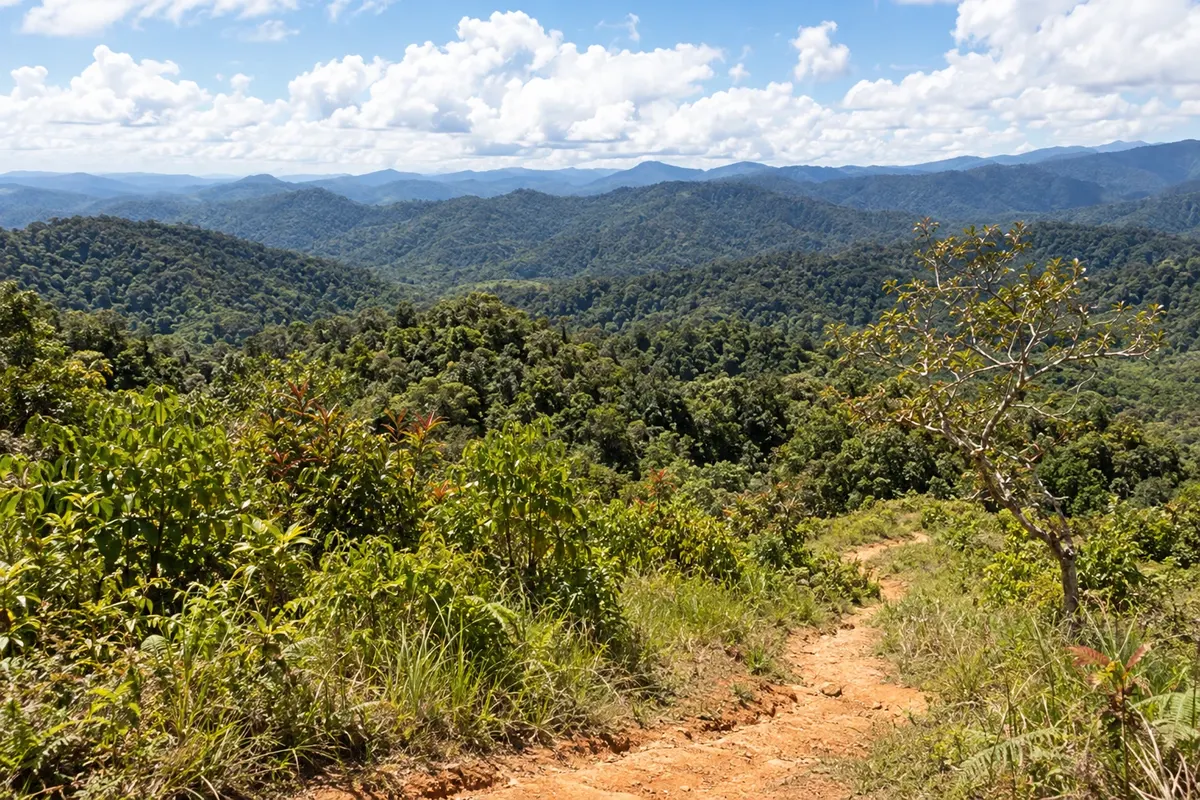
Kokoda is the northern terminus of the Kokoda Track, the multi-day trail that crosses the mountains from Owers’ Corner, near Port Moresby. At Kokoda station there is a memorial and a small museum about the 1942 fighting.
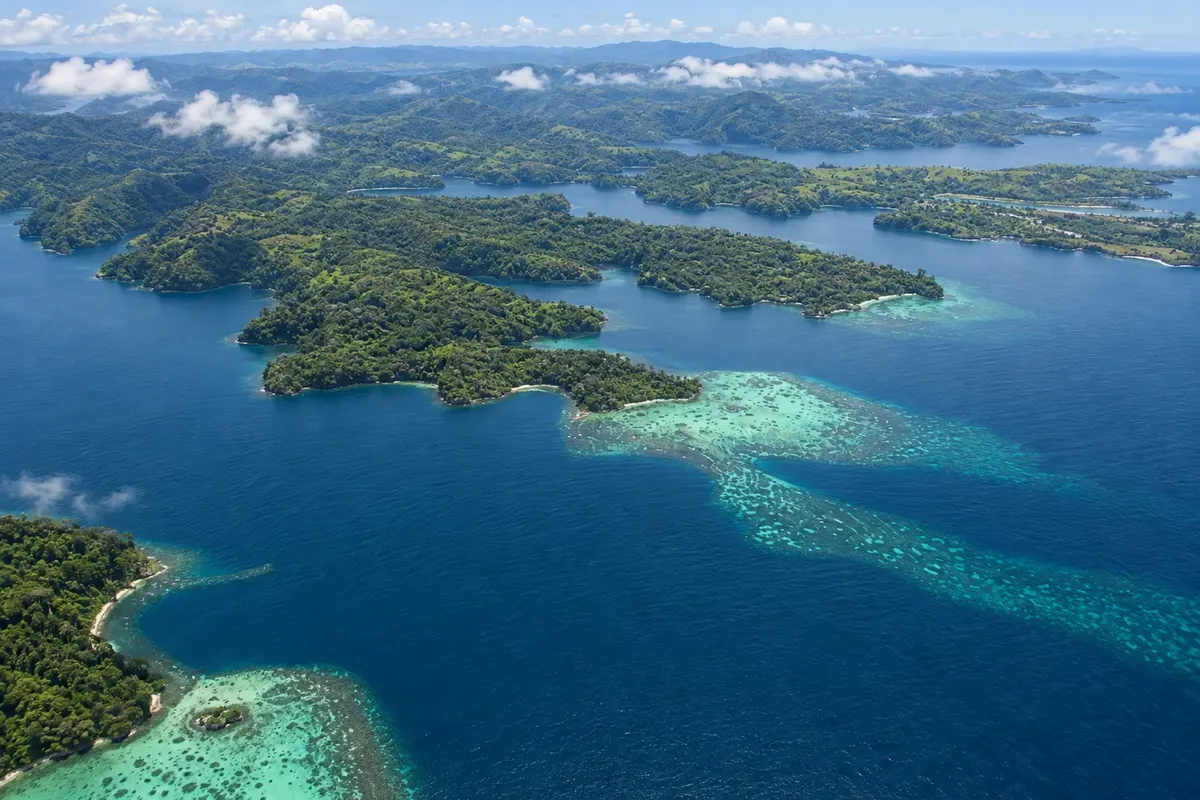
On the coast, Cape Nelson cuts the shoreline into narrow, deep sea arms between forested hills, known as tropical fjords. Tufi, at the mouth of those arms, is the base for reef diving, canoe trips and visits to villages where tapa is made — barkcloth painted with traditional designs.
The forests of Oro are the only place where the Queen Alexandra’s birdwing (Ornithoptera alexandrae), the world’s largest butterfly, lives; it is protected by law. Mount Lamington, which dominates the landscape near Popondetta, had a major eruption in 1951.
Destinations
Cities
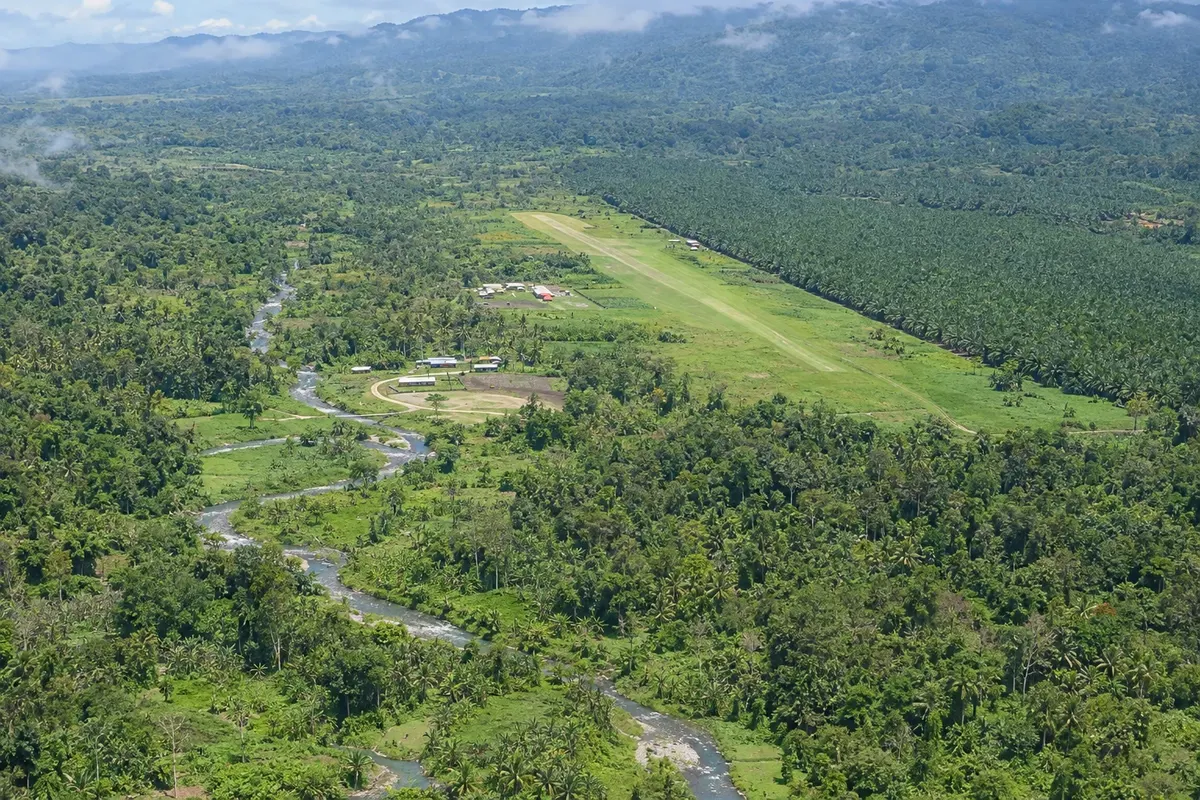
Kokoda is the government station, founded in 1904, on a plateau at the foot of the Owen Stanley Range in Oro Province, and is the northern terminus of the Kokoda Track. In the area of the old parade ground are the memorial with four stone markers and the Herbert Kienzle museum, about the 1942 campaign. To the south, the track climbs to Isurava, where a granite memorial marks the battlefield.
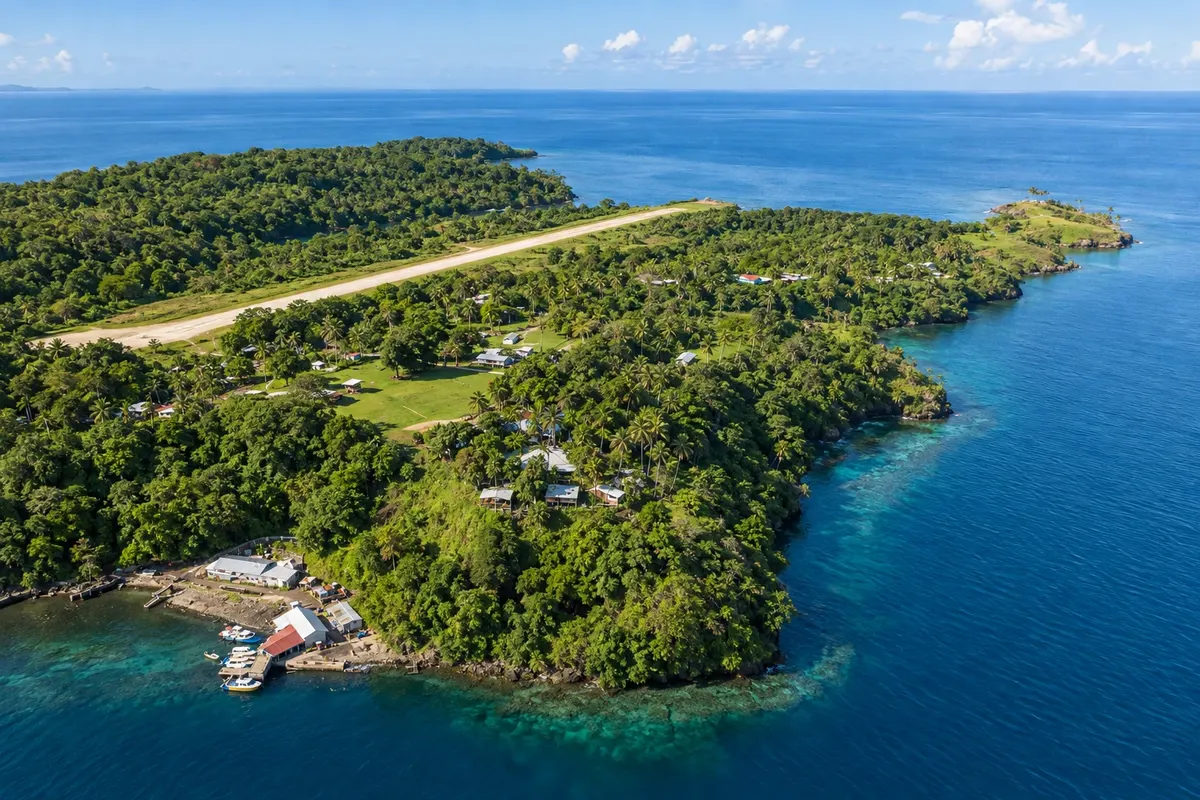
Tufi is a small station at the southeastern tip of Cape Nelson, in Oro, on the edge of one of the narrow sea inlets locals call fiords. Canoes depart from there into Tufi’s fiords and to villages where tapa is made, and dive boats go to the cape’s reefs. On good-sea days, experienced divers go to the wreck of the B-17 Black Jack at Cape Vogel, on the other side of Collingwood Bay.
The climate is hot and humid, with rain year-round and heavier rainfall from December to April. People who hike to Kokoda along the track usually do the crossing between April and November, the drier season. In Tufi, sea conditions are often good for diving much of the year; confirm conditions with operators.
Girua Airport (PNP), near Popondetta, has flights from Port Moresby. From Popondetta a road leads to Kokoda. Kokoda also has an airstrip for small planes used by track operators. Tufi has its own airstrip, with scheduled or charter flights depending on the season, and coastal boat links.
Your questions
To the north, at Kokoda station in Oro, where there is a memorial and a museum about the 1942 fighting. From Kokoda you return by small plane or by road to Popondetta, which has flights to Port Moresby. The crossing can also be done in the opposite direction, starting at Kokoda.
By small plane to Tufi’s airstrip, with flights from Port Moresby depending on the season, or by boat along the coast. Accommodation in Tufi usually arranges transfers and tours: arrange them before you go.
It lives only in the forests of Oro, near Popondetta, and is protected by law, including against capture and trade. Seeing an adult in flight depends on the season and on local guides who know the forest areas where the caterpillar’s host plant grows.
It is cloth made from beaten tree bark and painted with natural dyes, featuring designs passed down through generations. In Tufi and coastal villages, women demonstrate how tapa is made, and the pieces are sold as handicrafts.