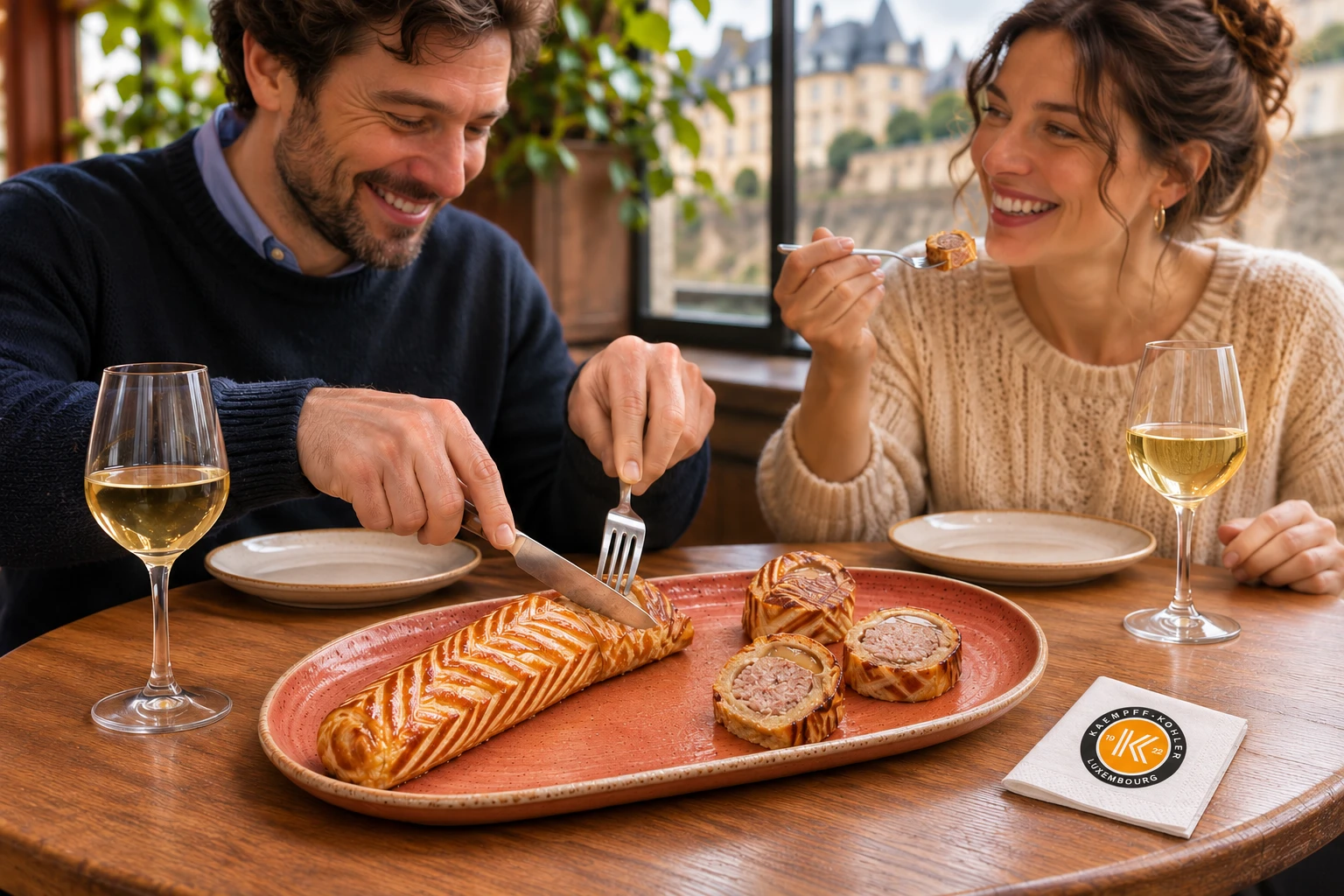
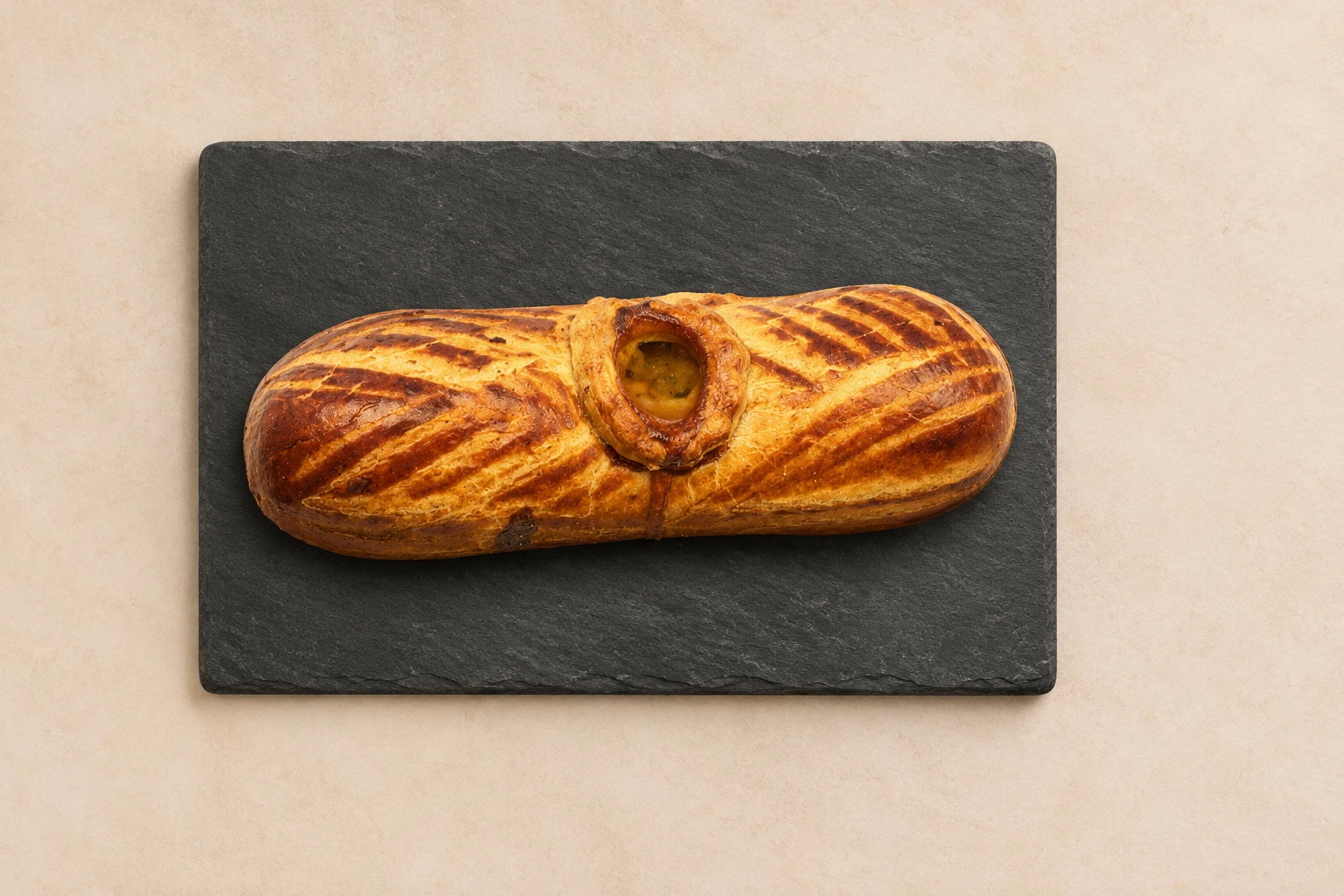
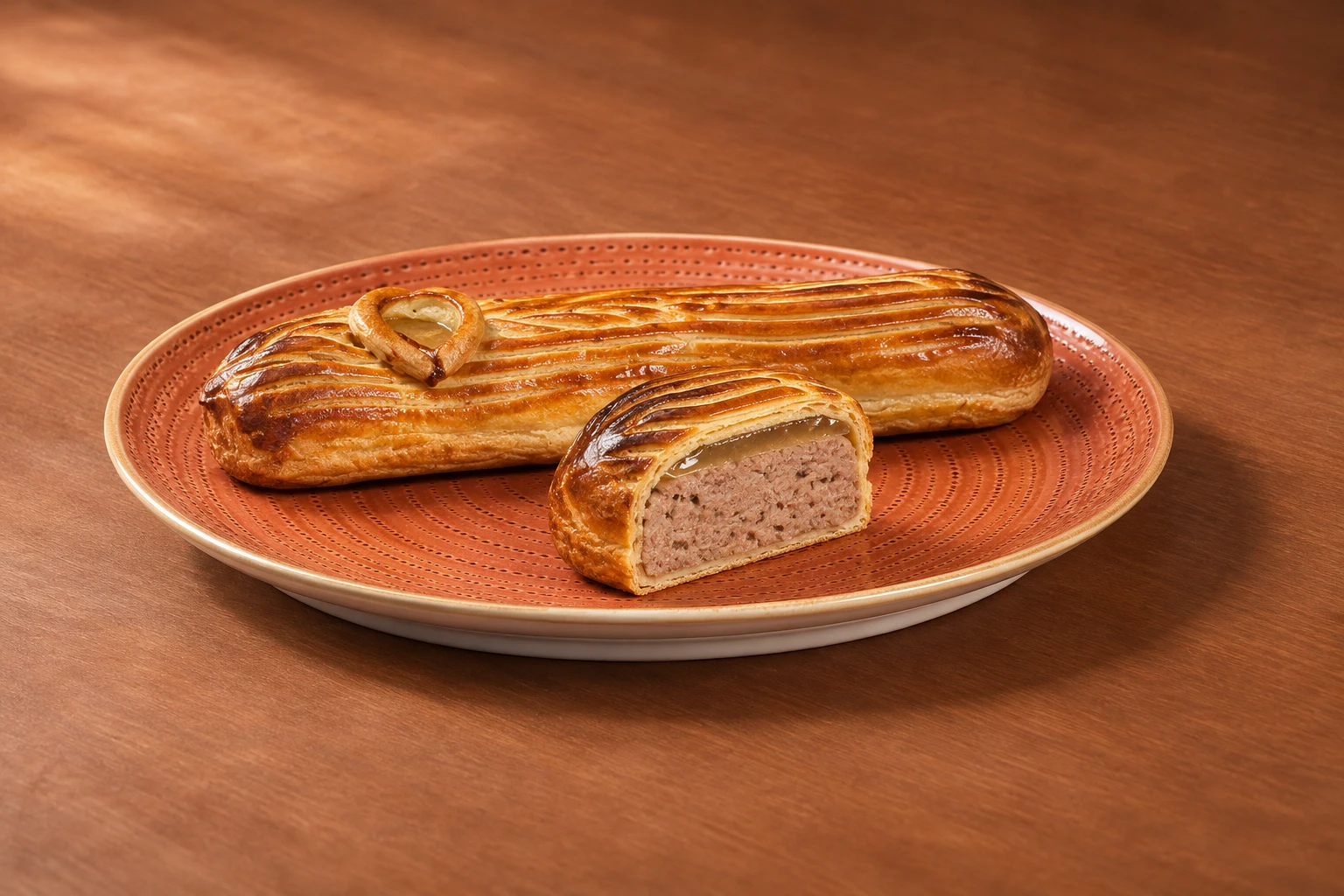
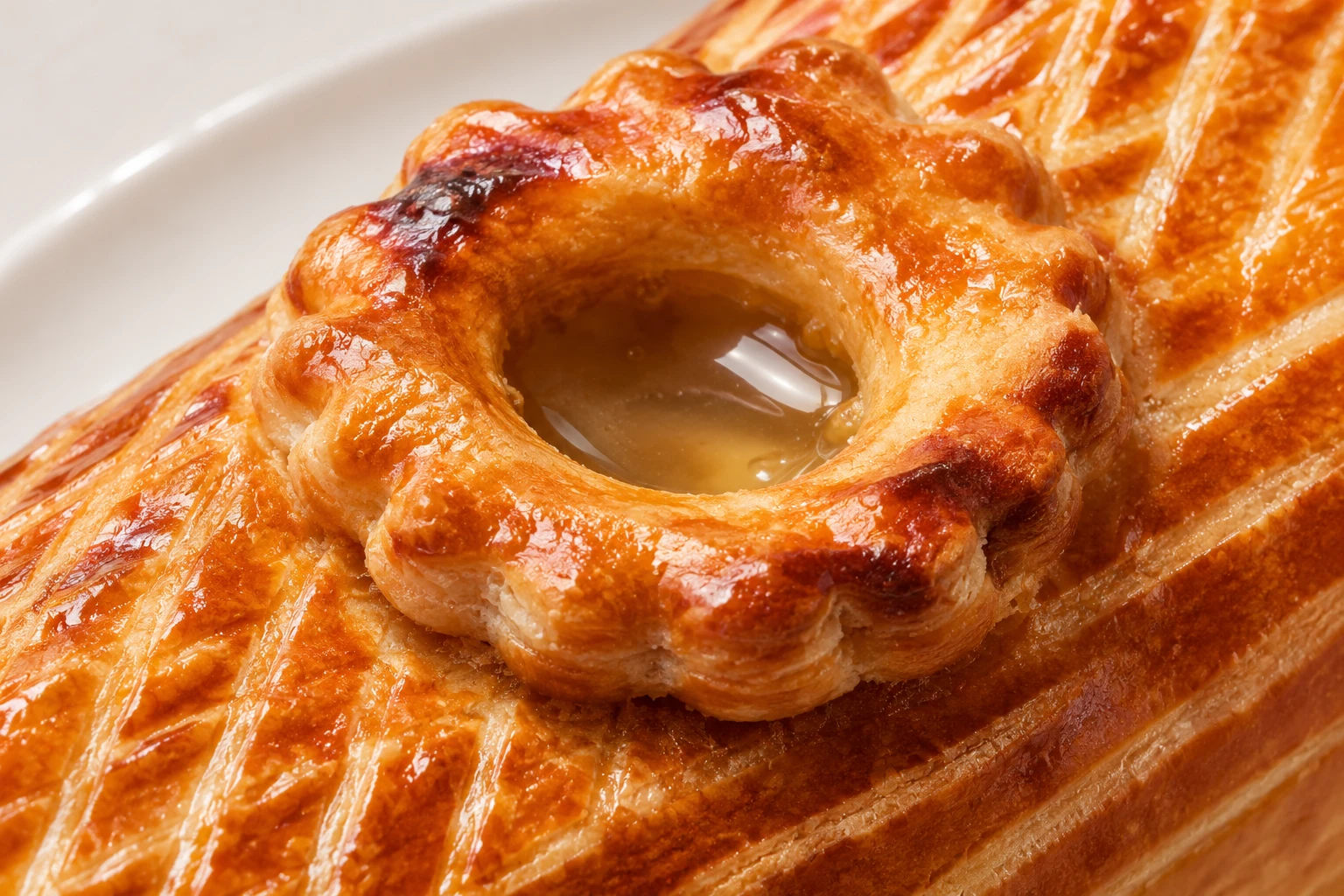
The Rieslingspaschtéit is a pâté en croûte: a shaped baked pastry crust that encloses a filling of pork and veal. After baking, the space between the meat and the crust is filled with a jelly made with Riesling, the white wine from the Luxembourg Moselle. It is served cold, sliced or in individual portions.
The story told in the capital is a family one. According to the account of Christian Kaempff, reproduced by the national tourism office, his grandfather, Pierre Kaempff, created the Rieslingspaschtéit in 1928 at the family pastry shop, Kaempff-Kohler, in the city of Luxembourg. He was drinking wine with friends, felt hungry and could not find anything that matched Riesling; so he decided to make a pie that used the wine itself.
The city’s tourism presents the Rieslingspaschtéit as a savory Luxembourg specialty and includes it on the pastry-shop route in the centre. It is also sold in other charcuteries and pastry shops across the country, and the same family developed a more recent version using Luxembourg Pinot Noir.
The pairing in the name is no accident: the pie was conceived to accompany the wine. At the table it usually appears as a starter, snack or canapé, with a glass of Moselle white wine.
The crust should be firm and the jelly clear and glossy. Because it contains meat and jelly, it requires refrigerated storage.


 Brazil
 Argentina
 Bolivia
 Chile
 Colombia
 Ecuador
 Guyana
 French Guiana
 Falkland Islands (Malvinas)
 Paraguay
 Peru
 Suriname
 Uruguay
 Venezuela
 Germany
 Austria
 Belgium
 Croatia
 Denmark
 Spain
 Finland
 France
 Greece
 the Netherlands
 Hungary
 Ireland
 Iceland
 Italy
 Norway
 Poland
 Portugal
 the United Kingdom
 the Czech Republic
 Sweden
 Switzerland
 Turkey
 Canada
 the United States
 Mexico
 the Dominican Republic
 South Africa
 Australia
 Fiji
 New Zealand
 Papua New Guinea