Dish · Cork
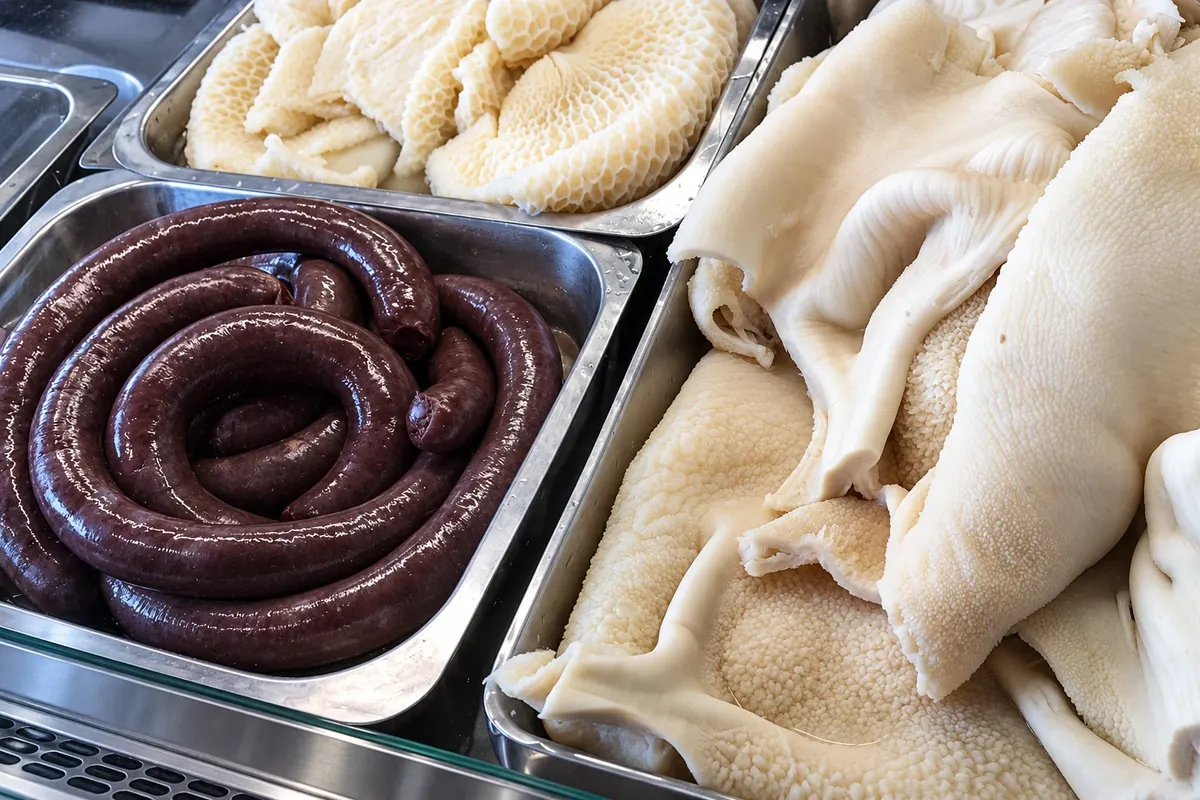
Tripe and drisheen
Beef tripe slow-cooked in milk with onion and served with drisheen, a blood sausage. It is a traditional dish of Cork, tied to the city’s history as a meat-exporting port.

 Search
 Brazil
 Argentina
 Bolivia
 Chile
 Colombia
 Ecuador
 Guyana
 French Guiana
 Falkland Islands (Malvinas)
 Paraguay
 Peru
 Suriname
 Uruguay
 Venezuela
 Germany
 Austria
 Belgium
 Croatia
 Denmark
 Spain
 Finland
 France
 Greece
 the Netherlands
 HungaryIreland
 Iceland
 Italy
 Luxembourg
 Norway
 Poland
 Portugal
 the United Kingdom
 the Czech Republic
 Sweden
 Switzerland
 Turkey
 the United States
 Mexico
 the Dominican RepublicTurkey
 South Africa
 Australia
 Fiji
 New Zealand
Flavors · Waterford
Soft white roll, dusted with flour, baked in batches with the rolls touching each other. It is Waterford’s specialty, has European Union protected geographical indication status since 2013, and is usually eaten at breakfast.
Traditional dish from Waterford, Waterford
Also known as: Waterford blaa, blaas
Illustrative images. The pictures in this guide are illustrations based on the real place, not photographs, and may differ from it.

Click a photo to enlarge it.
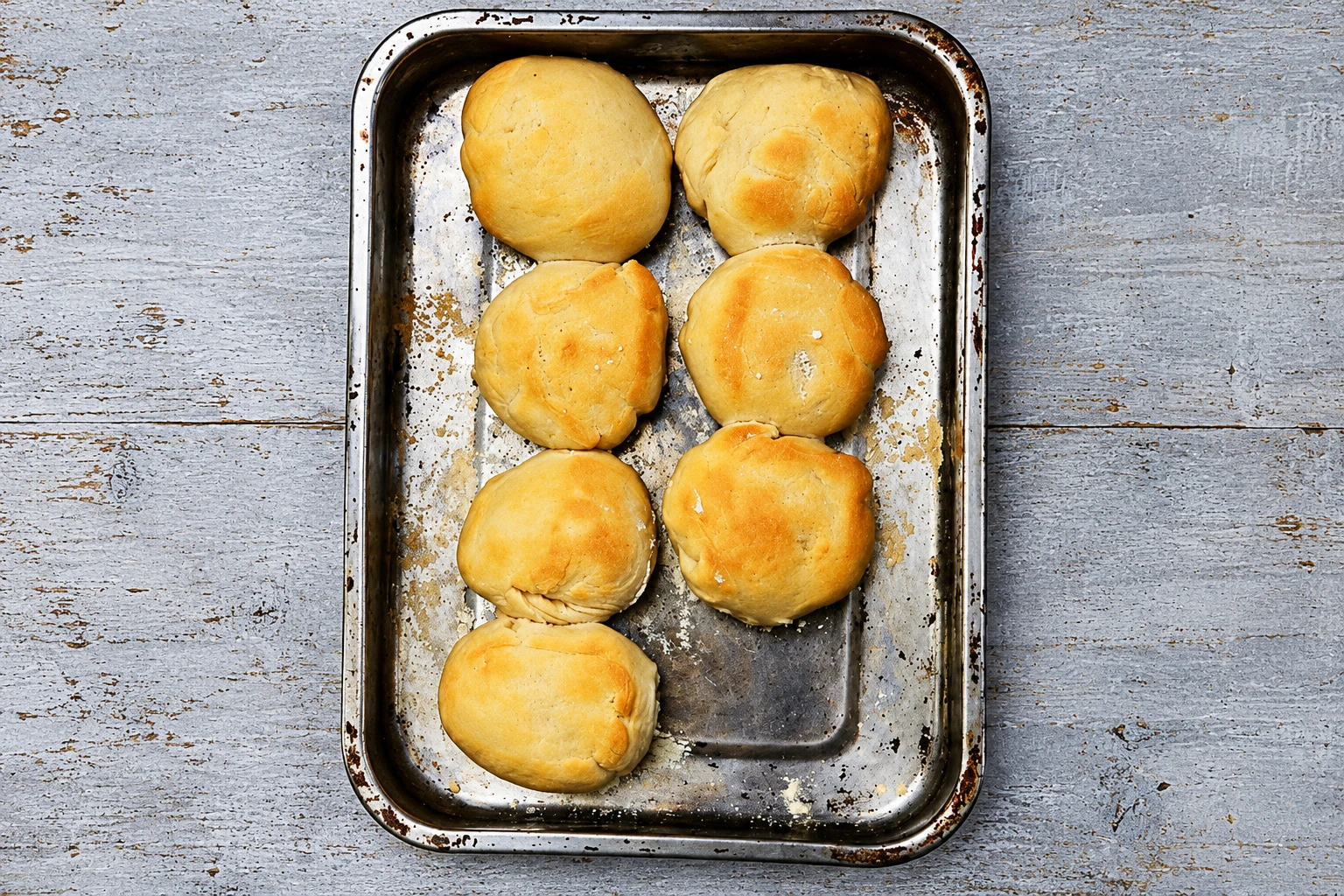
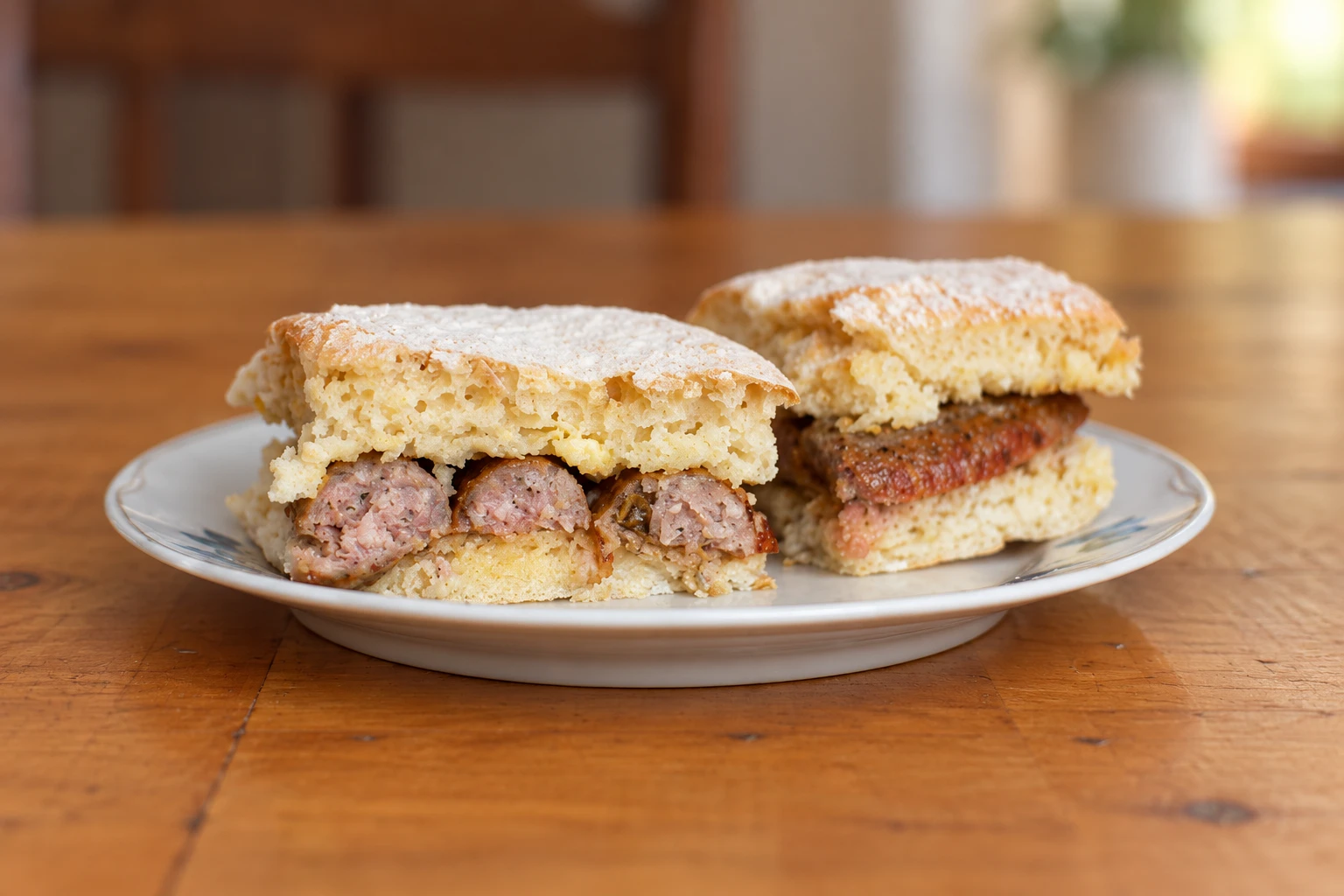
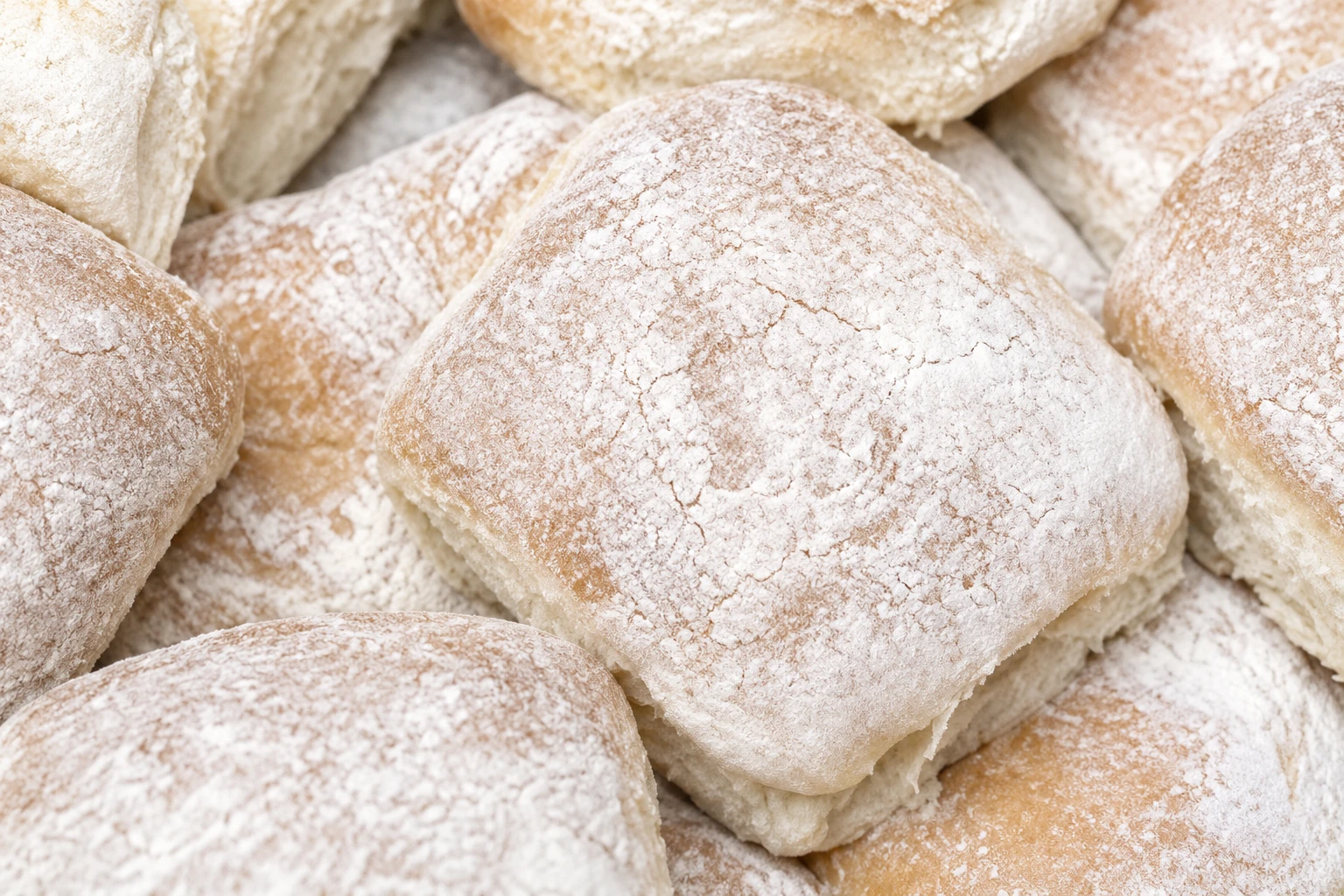
Blaa — Waterford, Ireland
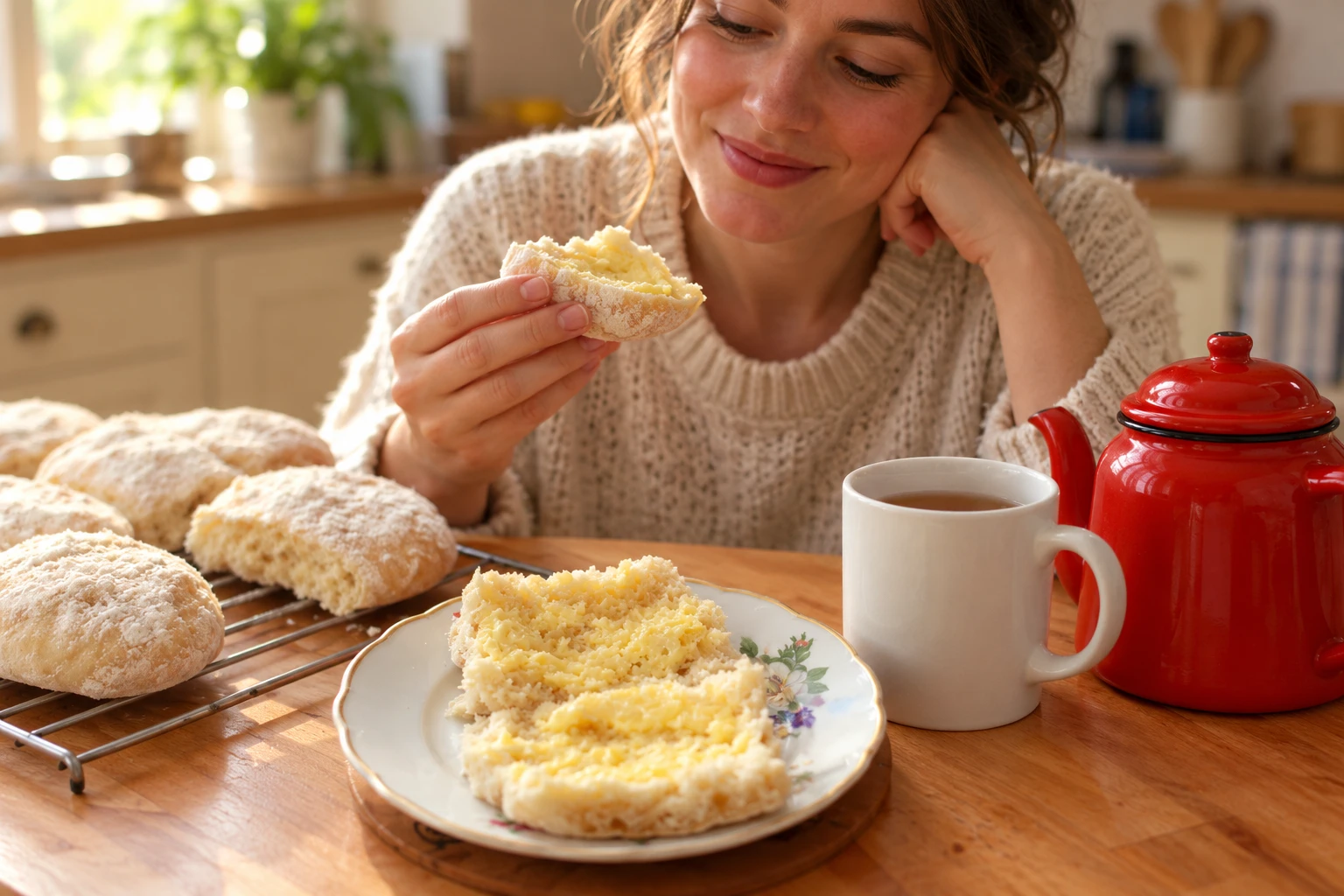
The blaa is a white roll, soft and preservative-free, made from wheat flour, salt, yeast, dough conditioner and water, and recognized by the flour dusting on top. The rolls are shaped round and baked together, touching one another; when separated they have straight sides and a domed top, so a blaa can be round or square.
In 2013 the European Union registered “Waterford Blaa / Blaa” as a protected geographical indication. The application was made by a regional bakers’ association. Under the registration, only bread made in County Waterford and a small adjacent area of south Kilkenny may use the name. The specification describes two versions: the soft one, pale and heavily floured, with a slightly sweet, malty flavor; and the crusty one, with dark, chewy crust and a slightly bitter finish.
Local tradition links the blaa to the Huguenots, French Protestants who took refuge in Waterford at the end of the 17th century. According to this story, they baked rolls from leftover dough; the name would come from the French blanc, “white”, because of the flour on top, or from an old word for flour. There is no document proving the origin, and it is told as a tradition by the bakers themselves.
In Waterford, the blaa is mainly a breakfast and lunch bread, meant to be eaten the same day. The best-known form is the breakfast blaa, filled with bacon, sausage or other items of the Irish breakfast. It is said in the town that after midday you can no longer find blaa in bakeries.
Waterford , Waterford
The Waterford Blaa has European Union protected geographical indication status since 2013 and is the city’s breakfast bread.
Strong wheat flour, salt, yeast, dough conditioner and water, without preservatives. For the breakfast filling: butter, bacon (rashers), sausage or other items of the Irish breakfast.
Fresh, on the same day it is baked. Split open with butter, or filled as a breakfast blaa. It also works as a sandwich bread at lunchtime.
Breakfast and lunch, year-round.
Your questions
A soft white roll dusted with flour, typical of Waterford. It is baked in batches with the rolls touching, so it can be round or square.
With that name, yes. Since 2013 the Waterford Blaa has EU protected geographical indication status, which limits production to County Waterford and a small area of south Kilkenny.
Fresh, the same day, with butter or filled. The breakfast blaa includes bacon, sausage or other items of the Irish breakfast.
Local tradition says the bread arrived with the French Huguenots at the end of the 17th century and that the name comes from blanc, “white” in French, because of the flour on top. There is no document that confirms it.
Flavors of Ireland
Beef tripe slow-cooked in milk with onion and served with drisheen, a blood sausage. It is a traditional dish of Cork, tied to the city’s history as a meat-exporting port.
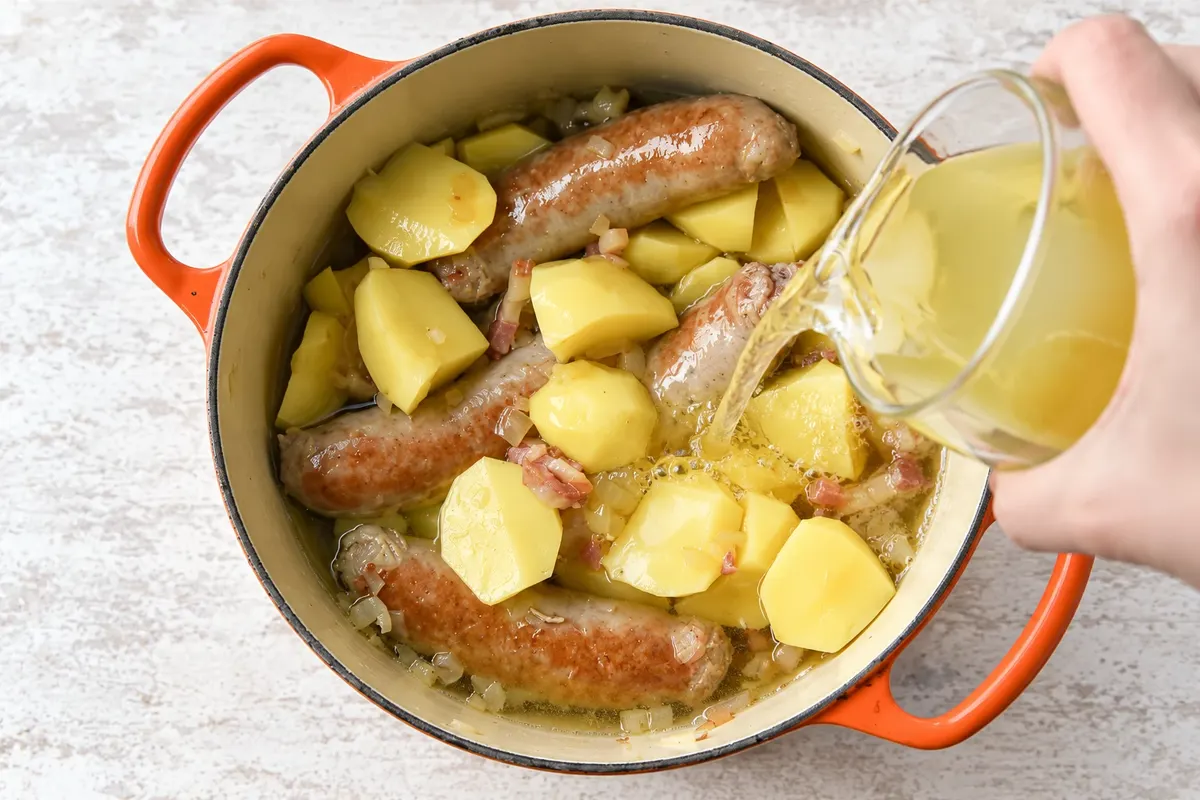
Stew of pork sausage, bacon, potato and onion, slowly cooked in a covered pot in a clear broth. It is the working‑class food of Dublin and appears in references to the city in the work of James Joyce.
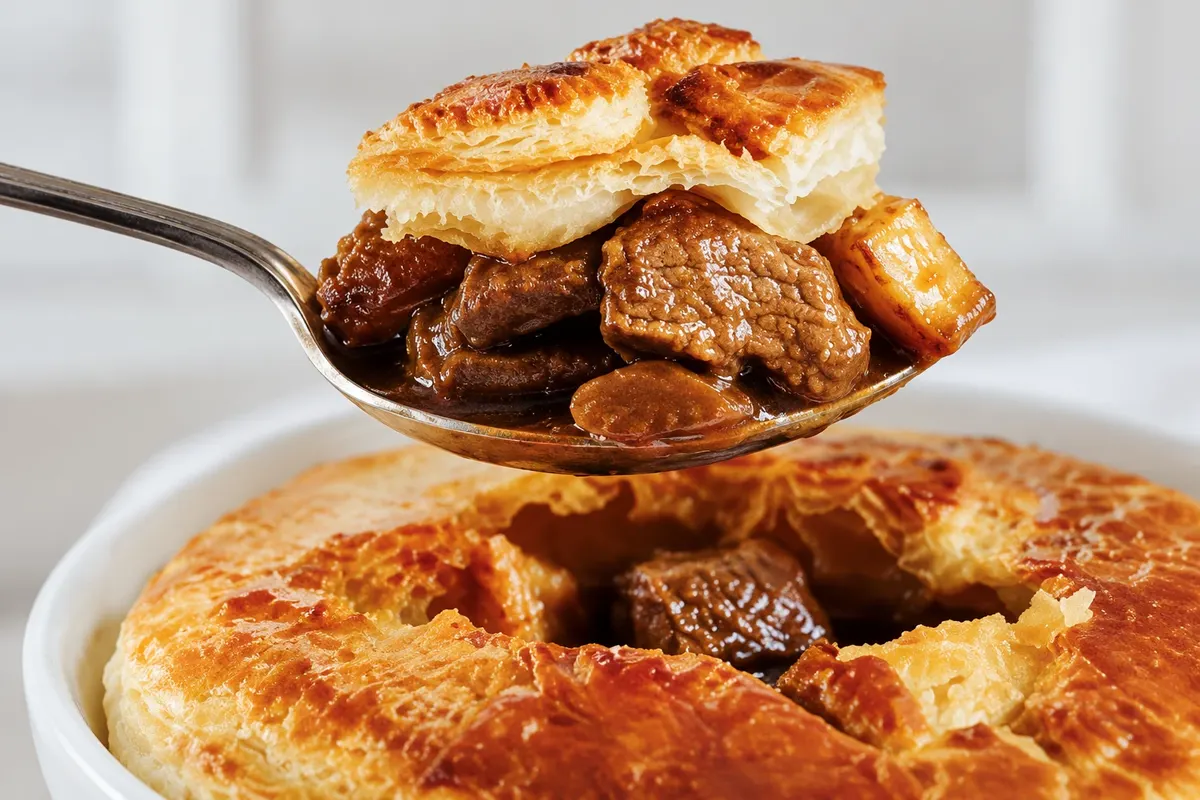
Small lamb pie with a firm crust, traditional at the markets and festivals of County Kerry, also called Dingle pie. It was served with a little of the cooking broth and is still made for the Pattern of Castlegregory in August.