
Dish · Dublin
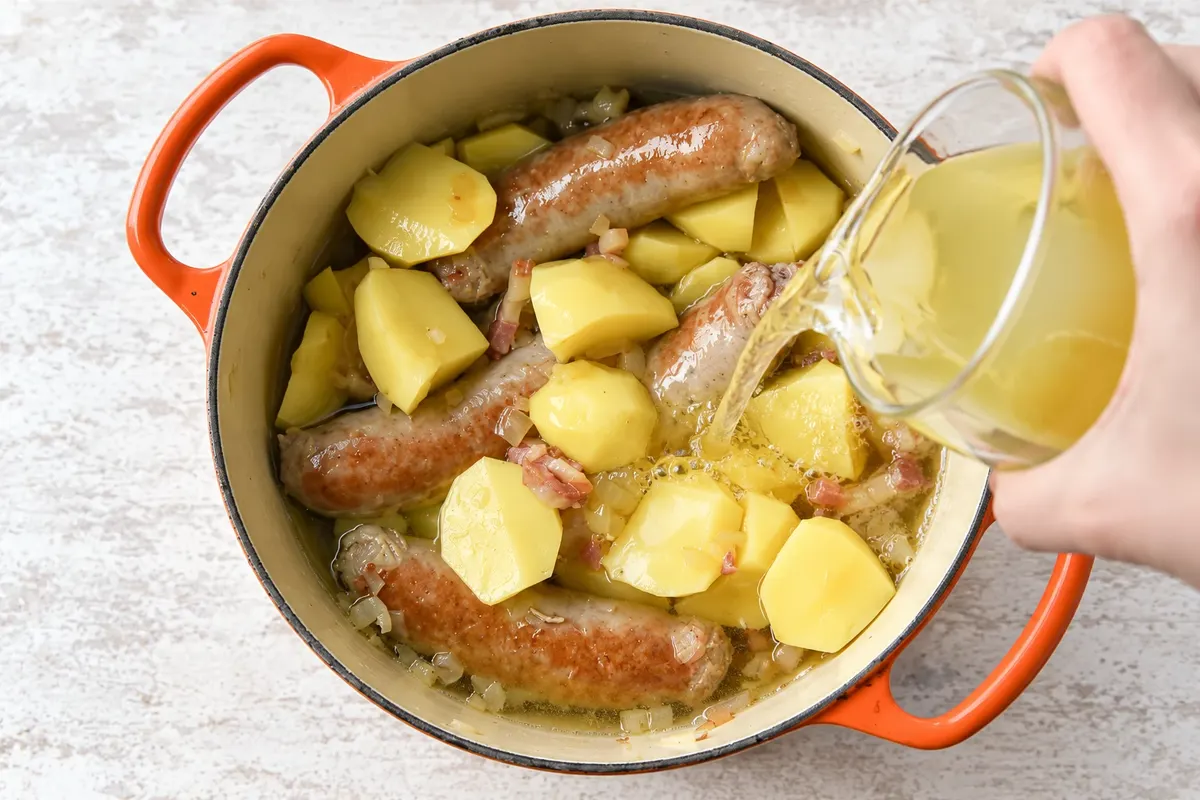
Dublin coddle
Stew of pork sausage, bacon, potato and onion, slowly cooked in a covered pot in a clear broth. It is the working‑class food of Dublin and appears in references to the city in the work of James Joyce.

 Search
 Brazil
 Argentina
 Bolivia
 Chile
 Colombia
 Ecuador
 Guyana
 French Guiana
 Falkland Islands (Malvinas)
 Paraguay
 Peru
 Suriname
 Uruguay
 Venezuela
 Germany
 Austria
 Belgium
 Croatia
 Denmark
 Spain
 Finland
 France
 Greece
 the Netherlands
 HungaryIreland
 Iceland
 Italy
 Luxembourg
 Norway
 Poland
 Portugal
 the United Kingdom
 the Czech Republic
 Sweden
 Switzerland
 Turkey
 the United States
 Mexico
 the Dominican RepublicTurkey
 South Africa
 Australia
 Fiji
 New Zealand
Flavors · Cork
Beef tripe slow-cooked in milk with onion and served with drisheen, a blood sausage. It is a traditional dish of Cork, tied to the city’s history as a meat-exporting port.
Traditional dish from Cork, Cork
Also known as: tripe & drisheen, drisheen and tripe
Illustrative images. The pictures in this guide are illustrations based on the real place, not photographs, and may differ from it.

Click a photo to enlarge it.
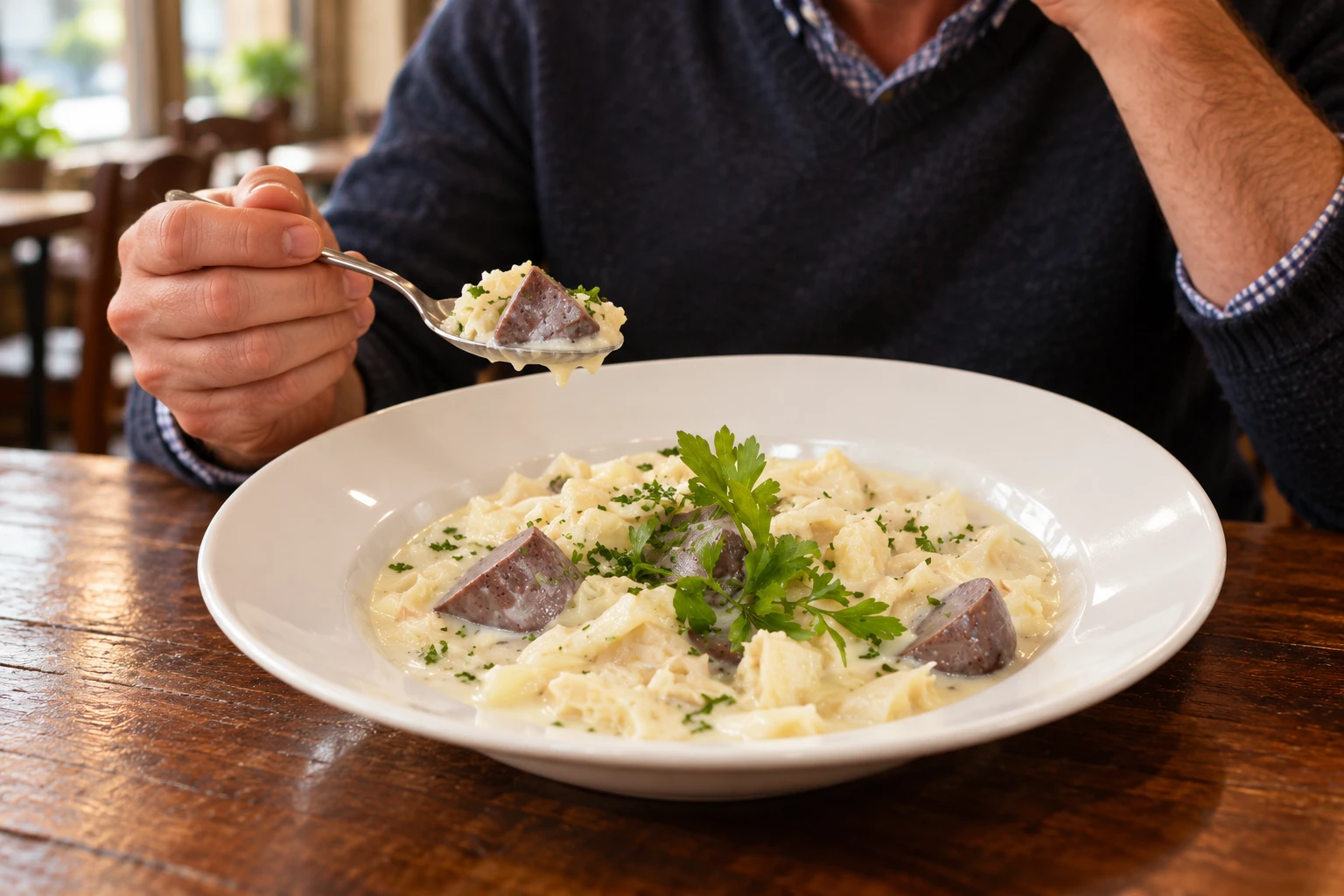
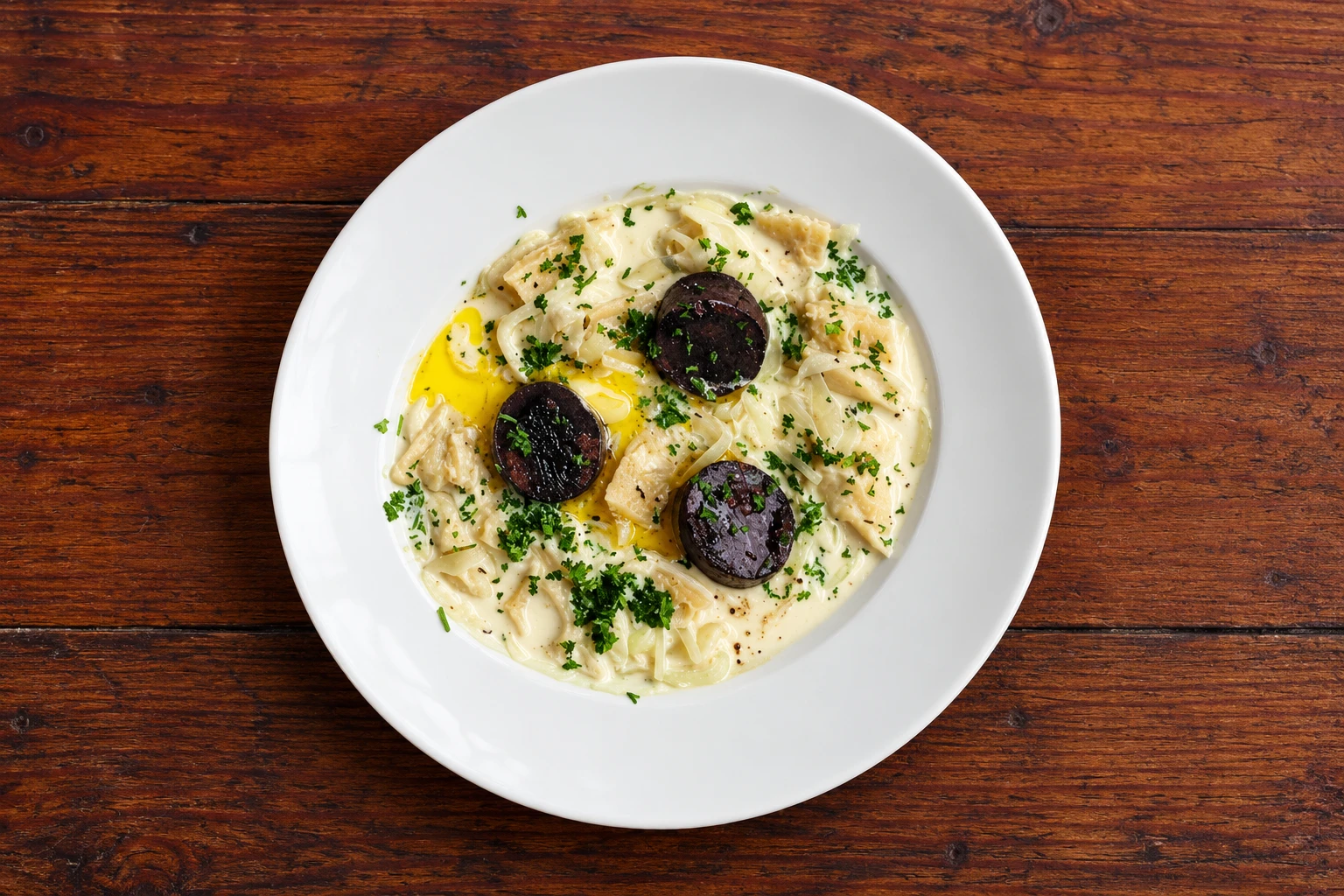
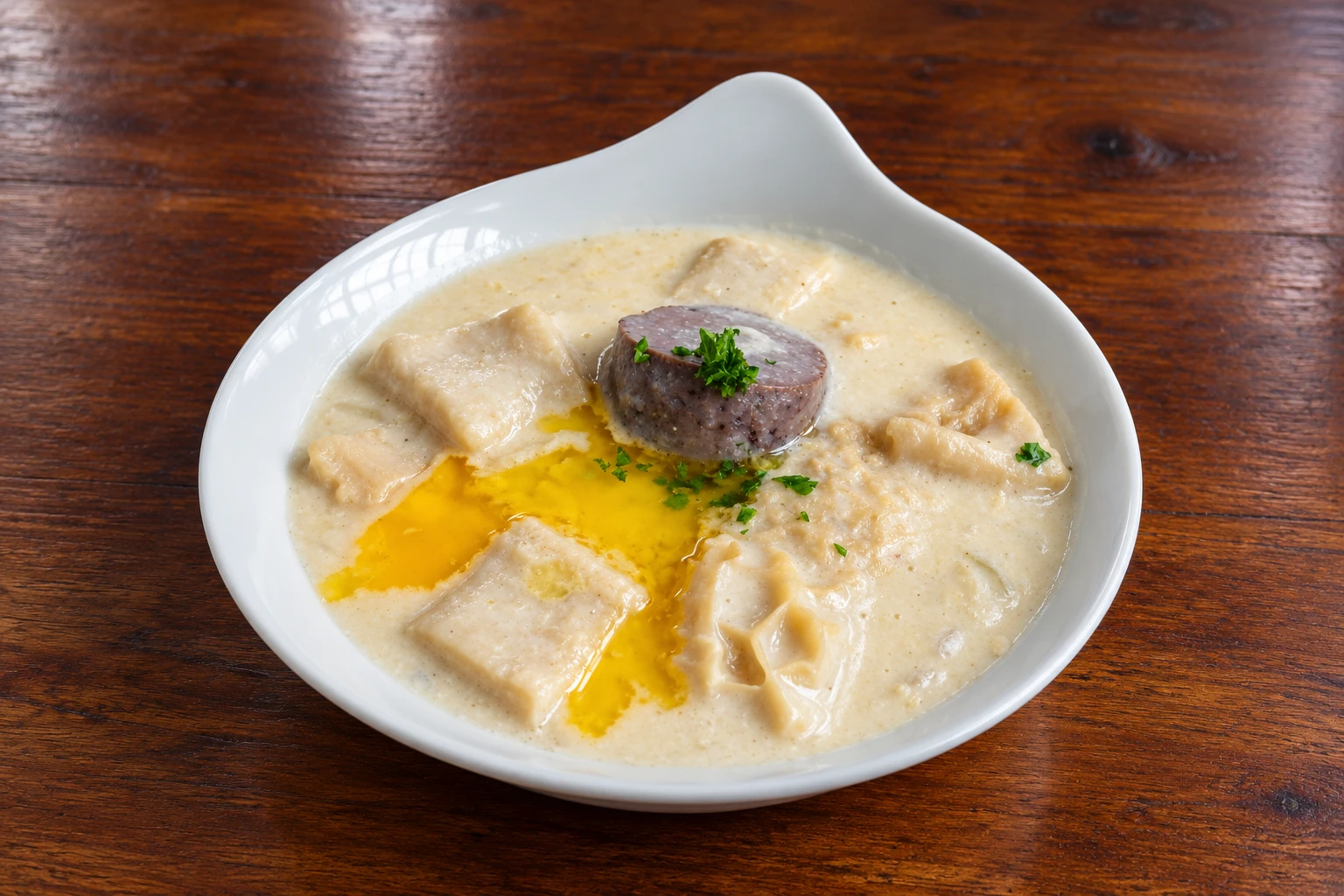
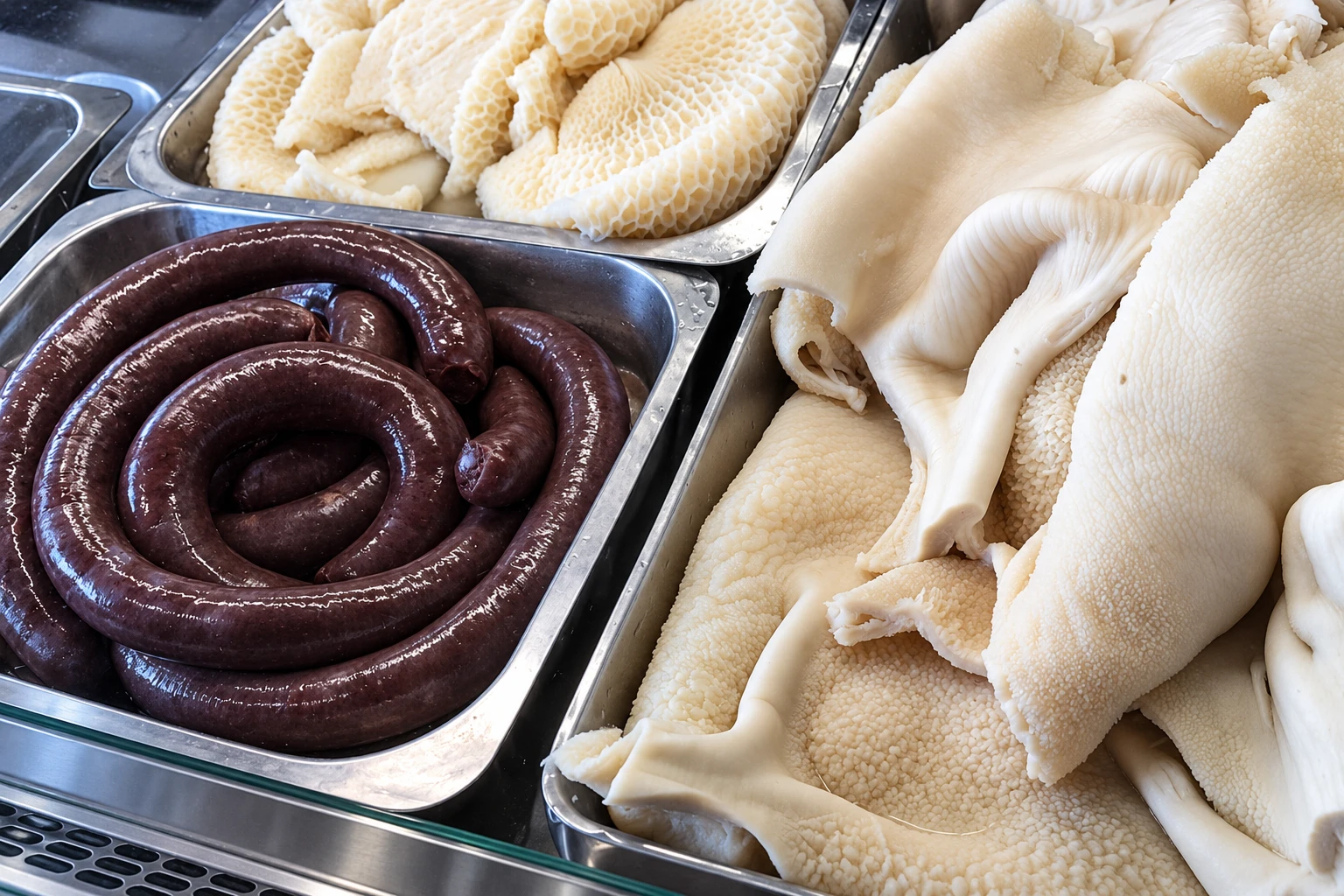
Tripe and drisheen — Cork, Ireland
Tripe and drisheen brings together two Cork traditions on one plate. Tripe is beef tripe, the honeycomb-like stomach, slow-cooked in milk with onion until tender. Drisheen is a blood sausage, which may combine cow and sheep blood, with a soft texture; it’s warmed in the same sauce and served in slices alongside the tripe.
The explanation is in the city’s history. For centuries, Cork was one of Ireland’s major ports for exporting beef and pork. The prime cuts were sent abroad, and the offal stayed in the city as a cheaper alternative, which gave Cork its own offal-based cuisine: tripe, drisheen, pig’s feet (crubeens), kidneys and other cuts that butchers still sell.
The place where this tradition is most visible is the English Market, Cork’s covered market in the city center, officially operating since 1788. Ireland’s tourism body cites drisheen and tripe among the traditional foods sold there, and one of the market stalls specializes in these products.
Recipes vary from household to household: some add thyme, bay leaf or mustard to the sauce, and the drisheen can be served separately.
Limerick also has a tradition of tripe with drisheen. In Cork, the dish is seen as part of the city’s identity.
Cork , Cork
Dish tied to Cork’s history as a meat-exporting port and to the English Market, where drisheen and tripe continue to be sold.
Beef tripe, onion, milk, salt and pepper; drisheen (blood sausage whose composition varies, possibly combining cow and sheep blood). Some recipes add thyme, bay leaf or mustard and thicken the sauce with flour.
Served hot, with the white milk-and-onion sauce. The drisheen is sliced and warmed in the sauce. Served with buttered bread or boiled potato.
Everyday dish, no fixed season.
Your questions
A traditional dish of Cork: beef tripe cooked in milk with onion, served with drisheen, a blood sausage whose composition varies, warmed in the same sauce.
For centuries the city was a major port for meat export. The prime cuts were sent abroad, and the offal, being cheaper, remained in the local cuisine.
The English Market, the covered market in the city center, is the place most associated with drisheen and tripe, sold at traditional butcher stalls.
Flavors of Ireland
Stew of pork sausage, bacon, potato and onion, slowly cooked in a covered pot in a clear broth. It is the working‑class food of Dublin and appears in references to the city in the work of James Joyce.
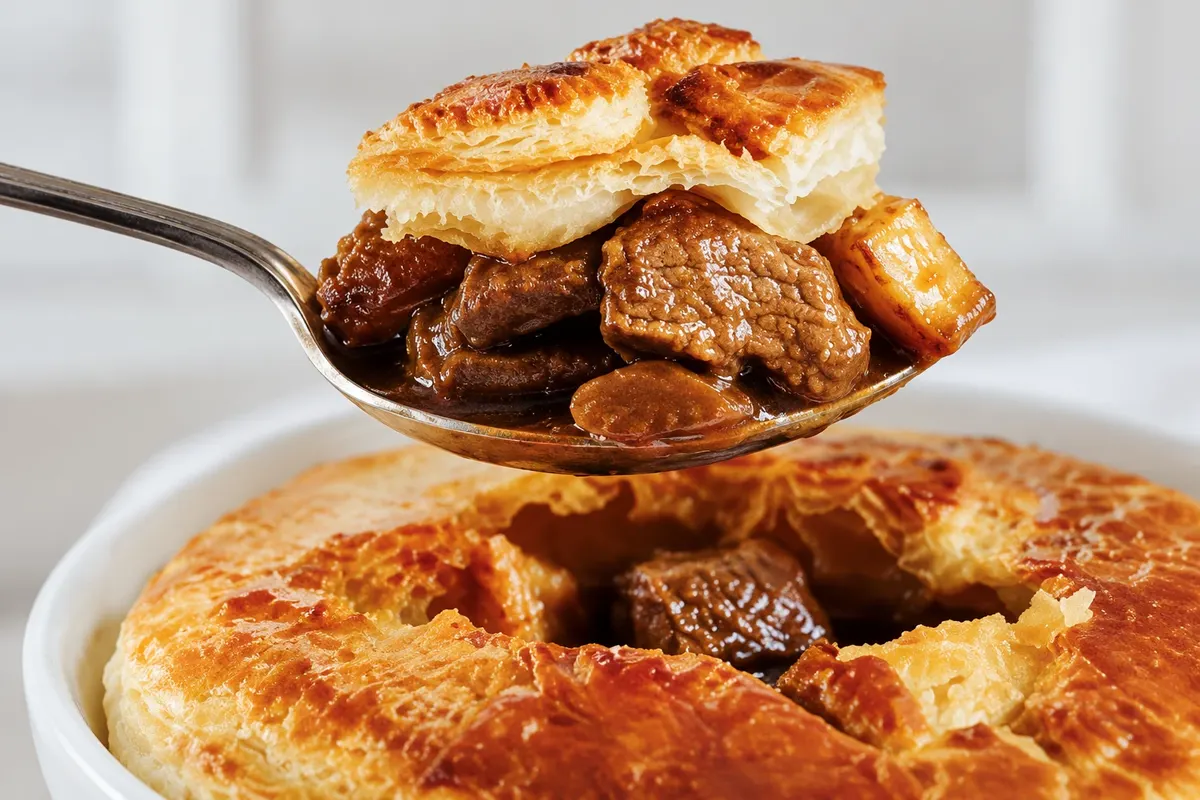
Small lamb pie with a firm crust, traditional at the markets and festivals of County Kerry, also called Dingle pie. It was served with a little of the cooking broth and is still made for the Pattern of Castlegregory in August.
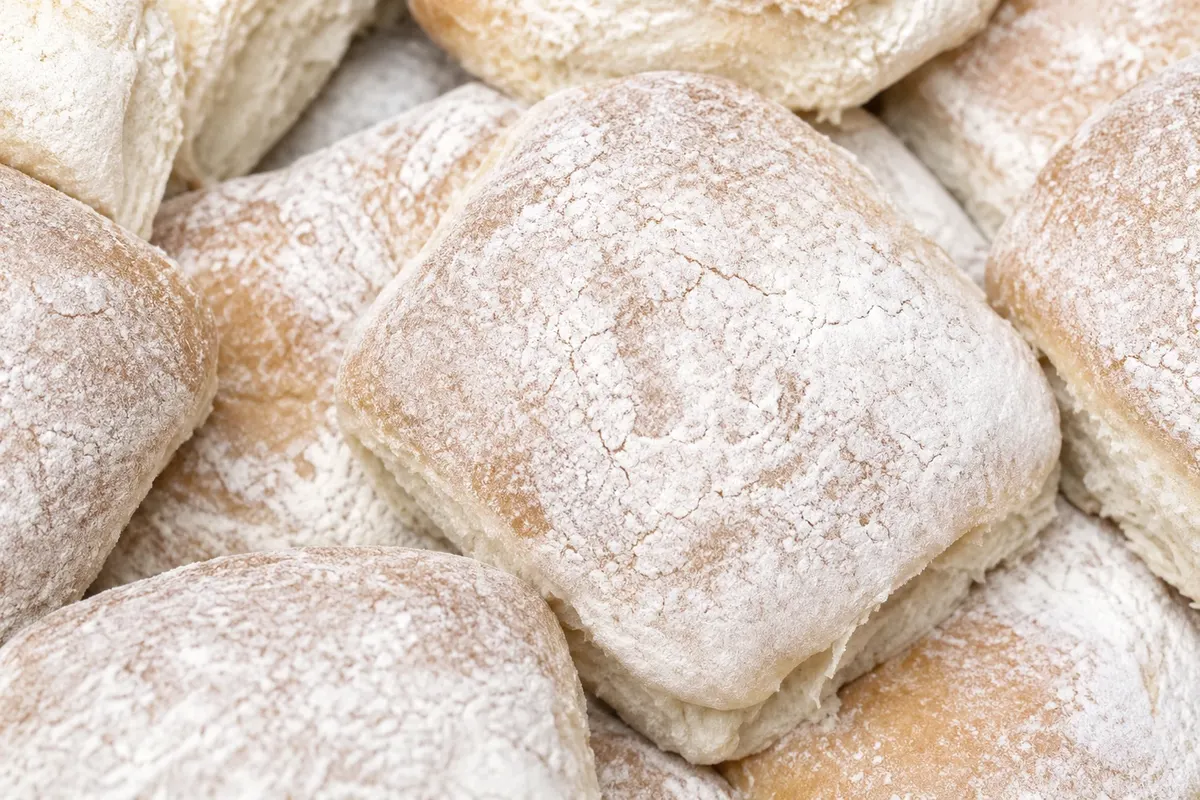
Soft white roll, dusted with flour, baked in batches with the rolls touching each other. It is Waterford’s specialty, has European Union protected geographical indication status since 2013, and is usually eaten at breakfast.