
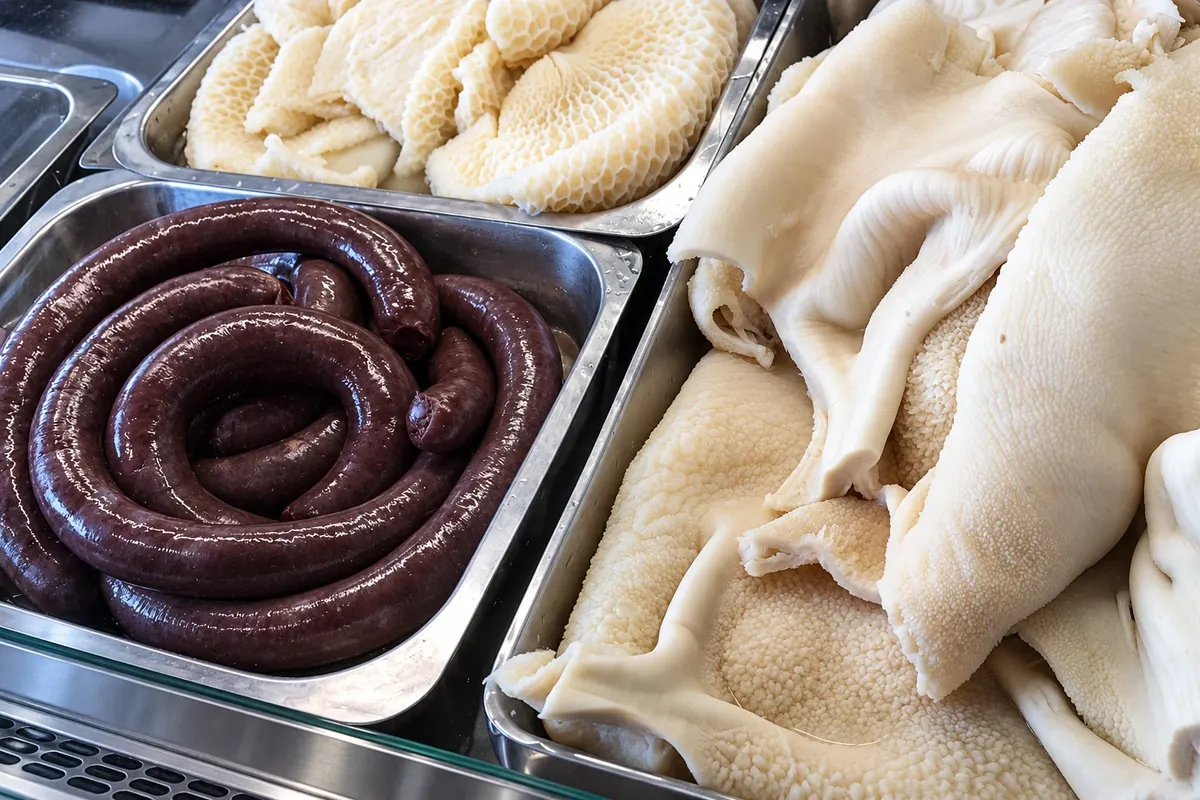
Dish · Cork
Tripe and drisheen
Beef tripe slow-cooked in milk with onion and served with drisheen, a blood sausage. It is a traditional dish of Cork, tied to the city’s history as a meat-exporting port.

 Search
 Brazil
 Argentina
 Bolivia
 Chile
 Colombia
 Ecuador
 Guyana
 French Guiana
 Falkland Islands (Malvinas)
 Paraguay
 Peru
 Suriname
 Uruguay
 Venezuela
 Germany
 Austria
 Belgium
 Croatia
 Denmark
 Spain
 Finland
 France
 Greece
 the Netherlands
 HungaryIreland
 Iceland
 Italy
 Luxembourg
 Norway
 Poland
 Portugal
 the United Kingdom
 the Czech Republic
 Sweden
 Switzerland
 Turkey
 the United States
 Mexico
 the Dominican RepublicTurkey
 South Africa
 Australia
 Fiji
 New Zealand
Flavors · Dublin
Stew of pork sausage, bacon, potato and onion, slowly cooked in a covered pot in a clear broth. It is the working‑class food of Dublin and appears in references to the city in the work of James Joyce.
Traditional dish from Dublin, Dublin
Also known as: coddle
Illustrative images. The pictures in this guide are illustrations based on the real place, not photographs, and may differ from it.

Click a photo to enlarge it.

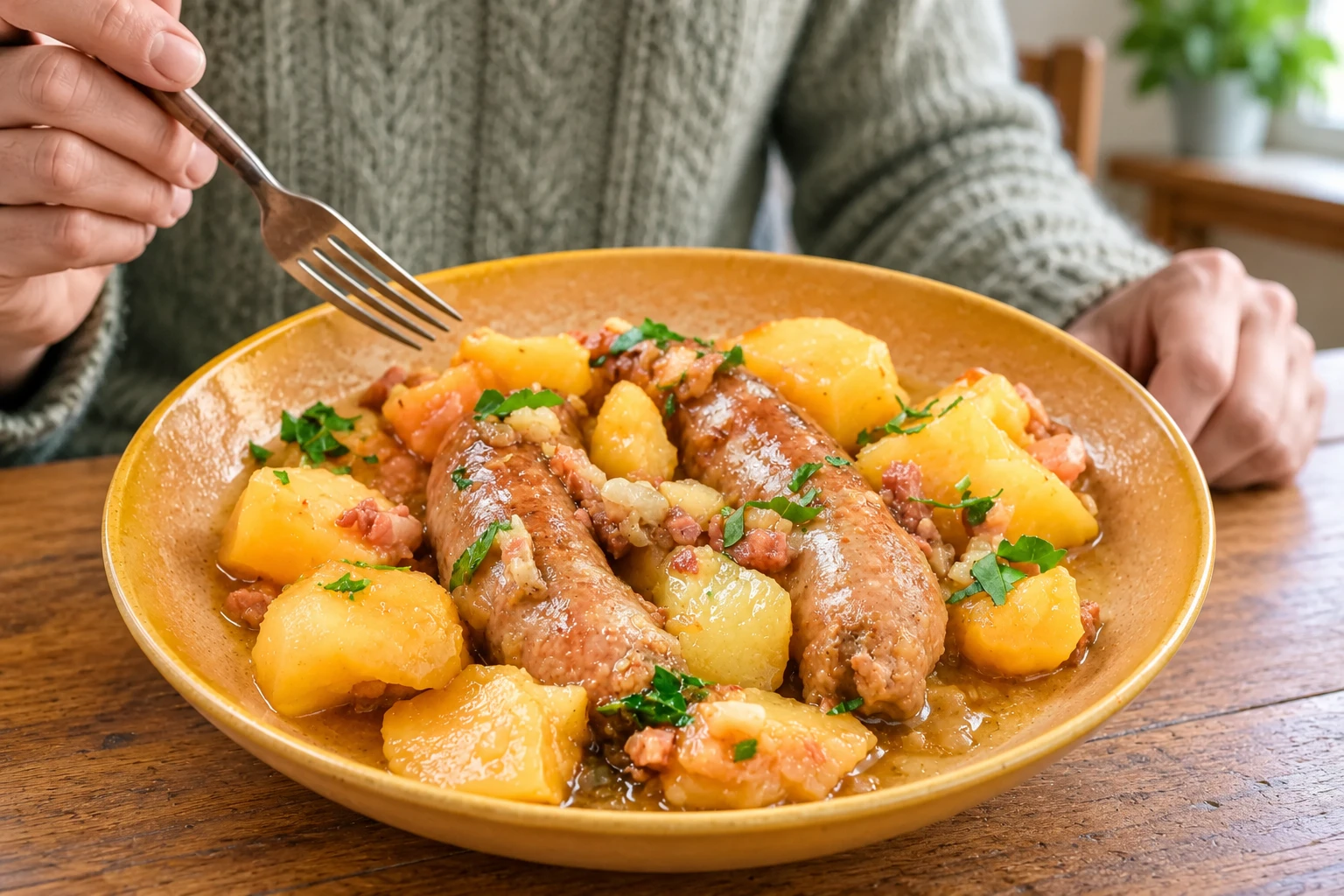
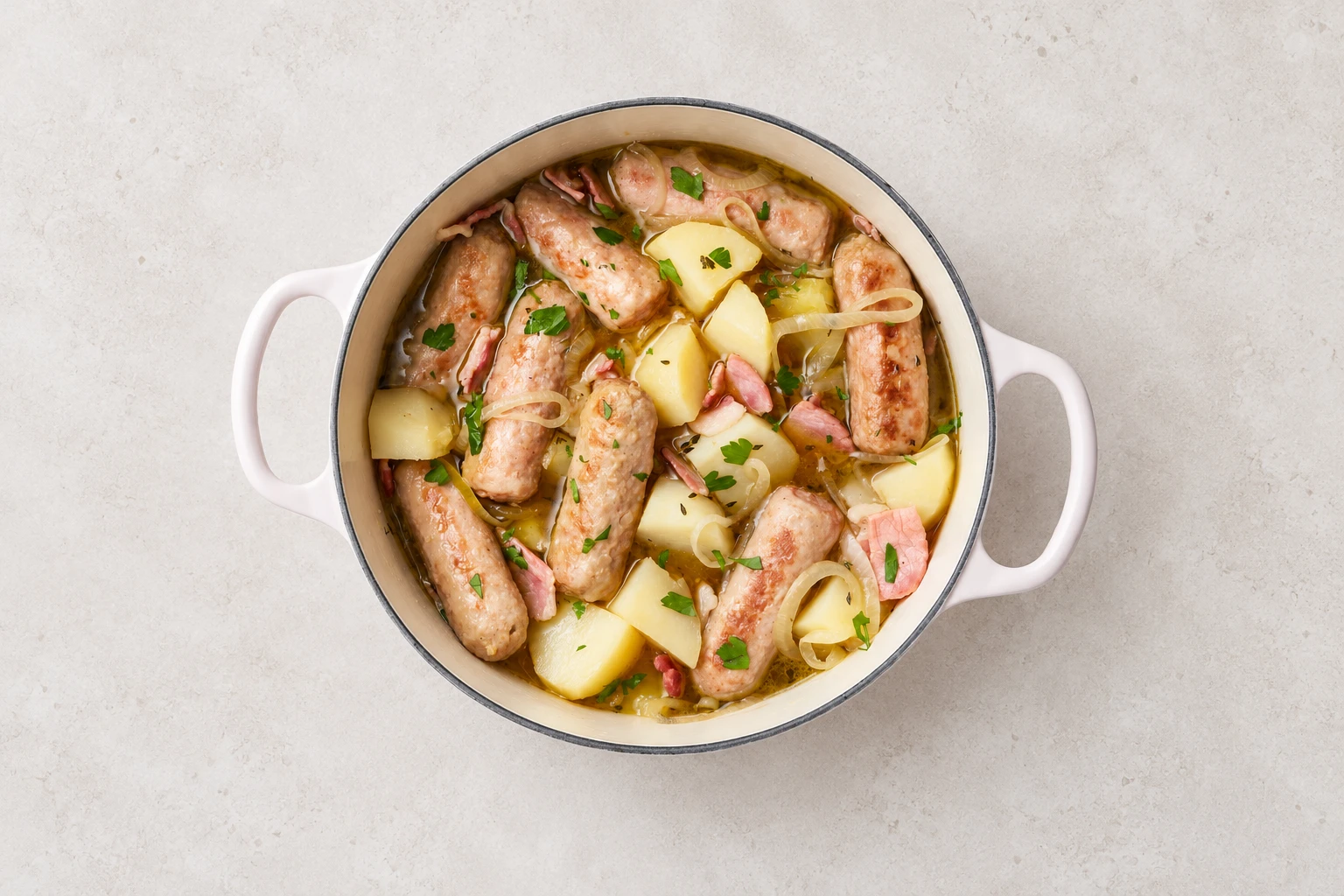
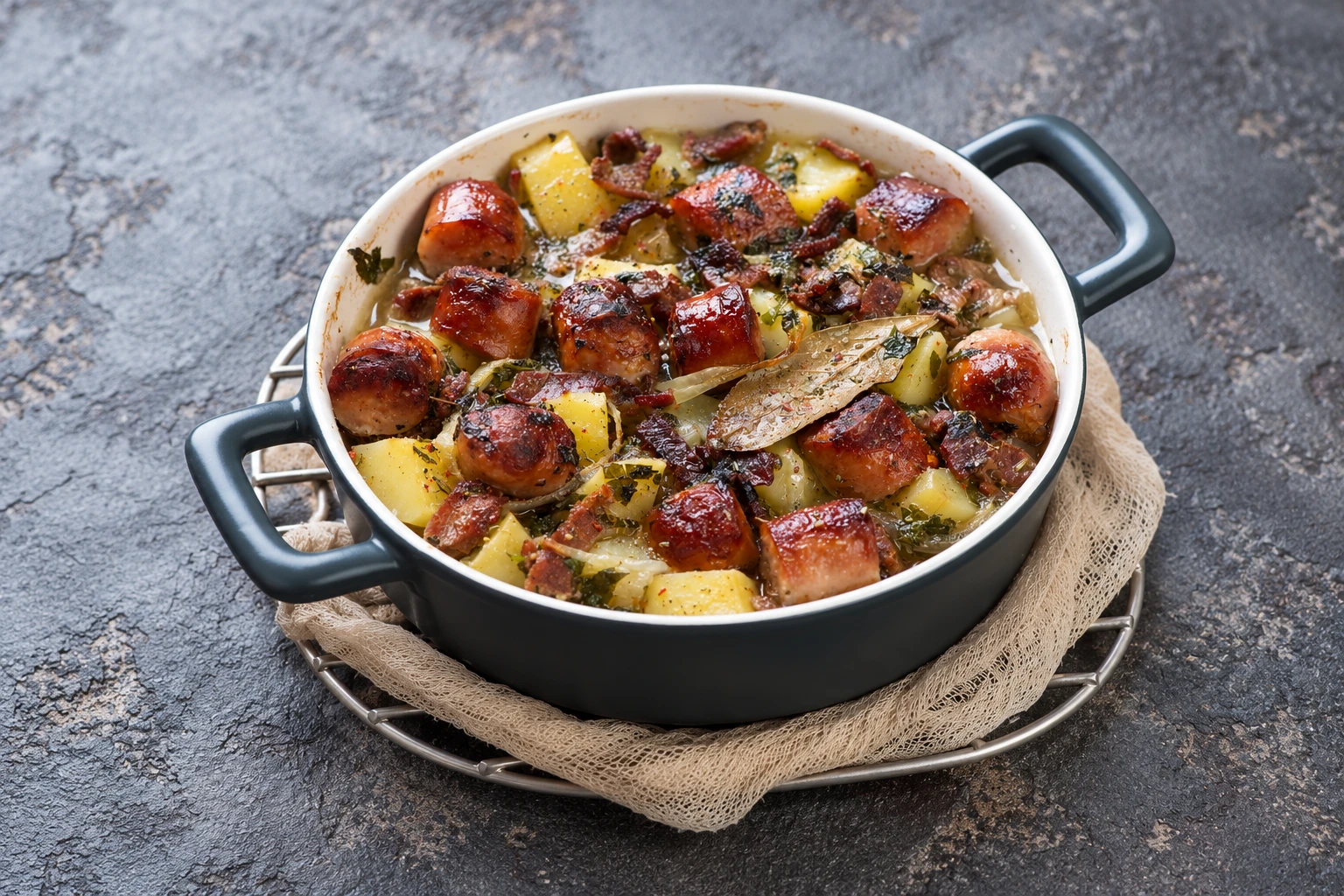
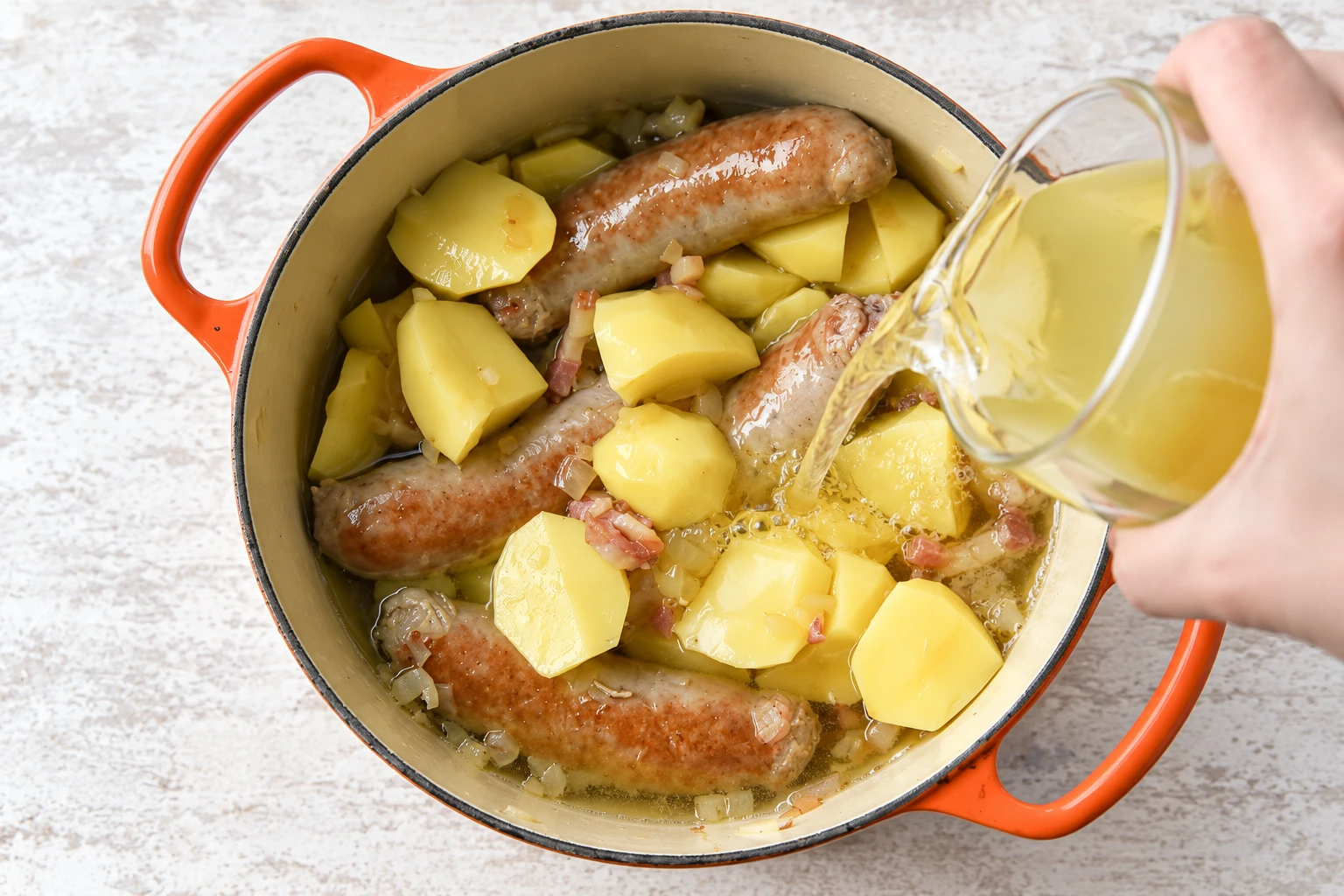
Dublin coddle — Dublin, Ireland
Dublin coddle is a one‑pot stew: pork sausage and slices of bacon (the Irish rashers) slowly cooked with potatoes in large pieces and sliced onion, in a clear broth, with the lid tightly closed so the steam cooks what the liquid does not cover. The clear broth gives the dish a pale appearance, which often surprises people seeing it for the first time.
Dublin’s public library describes coddle as working‑class food of the city. The most told story links the dish to rural families who moved to Dublin seeking work and brought chickens and pigs to raise; after slaughter, the leftover pork became sausage. Because coddle was born to use what was on hand, there is no fixed recipe, which fuels debate: purists say traditional coddle does not include carrot.
The word likely comes from the French caudle, related to the idea of cooking over low heat. According to the same library, the dish was said to be a favorite of writers Jonathan Swift and Seán O'Casey, and it appears in references to Dublin in the work of James Joyce.
Before take‑away restaurants, it was customary to prepare the pot in the morning, let it cool and reheat it in the evening after returning from work, the cinema or the pub. Some families made coddle on Thursdays to use up meat before the Catholic meatless Friday.
Many Dubliners defend the dish as part of local identity. It appears on menus of traditional pubs and, above all, in home kitchens in the cold months.
Dublin , Dublin
A working‑class dish of Dublin, linked to families who migrated from the countryside to the city, according to the public library.
Pork sausage, sliced bacon (rashers), potato, onion, broth or water, salt, pepper and parsley. Some modern recipes add carrot or barley; the traditional version does not include carrot.
In a deep hot bowl, with bread for dipping in the broth, usually soda bread. It is commonly served with a beer.
Everyday dinner, especially in autumn and winter, from September to February.
Your questions
A stew of pork sausage, bacon, potato and onion, slowly cooked in a covered pot in a clear broth. It is a traditional working‑class dish of Dublin.
The traditional version does not include it, according to Dublin’s public library. Some modern recipes add carrot or barley, and the topic is a point of debate among locals.
With bread for dipping in the broth, usually soda bread. It is a winter dish, served very hot.
Flavors of Ireland
Beef tripe slow-cooked in milk with onion and served with drisheen, a blood sausage. It is a traditional dish of Cork, tied to the city’s history as a meat-exporting port.
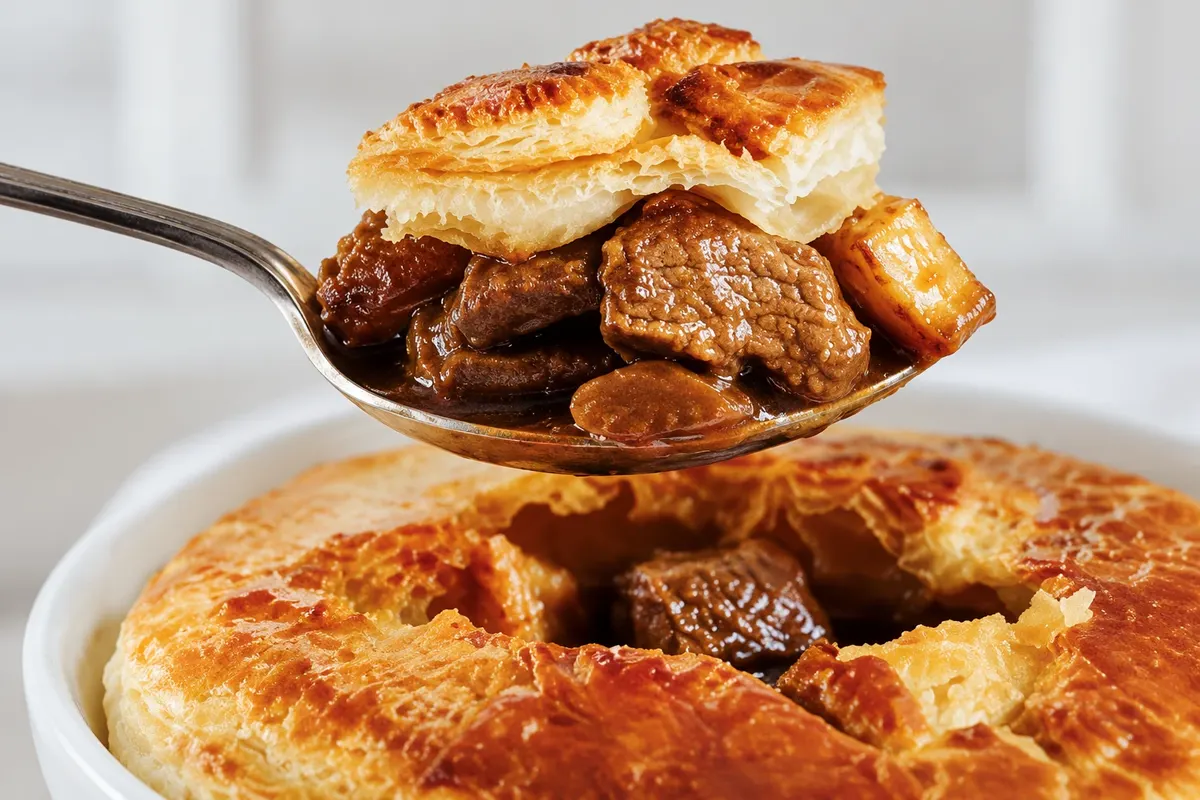
Small lamb pie with a firm crust, traditional at the markets and festivals of County Kerry, also called Dingle pie. It was served with a little of the cooking broth and is still made for the Pattern of Castlegregory in August.
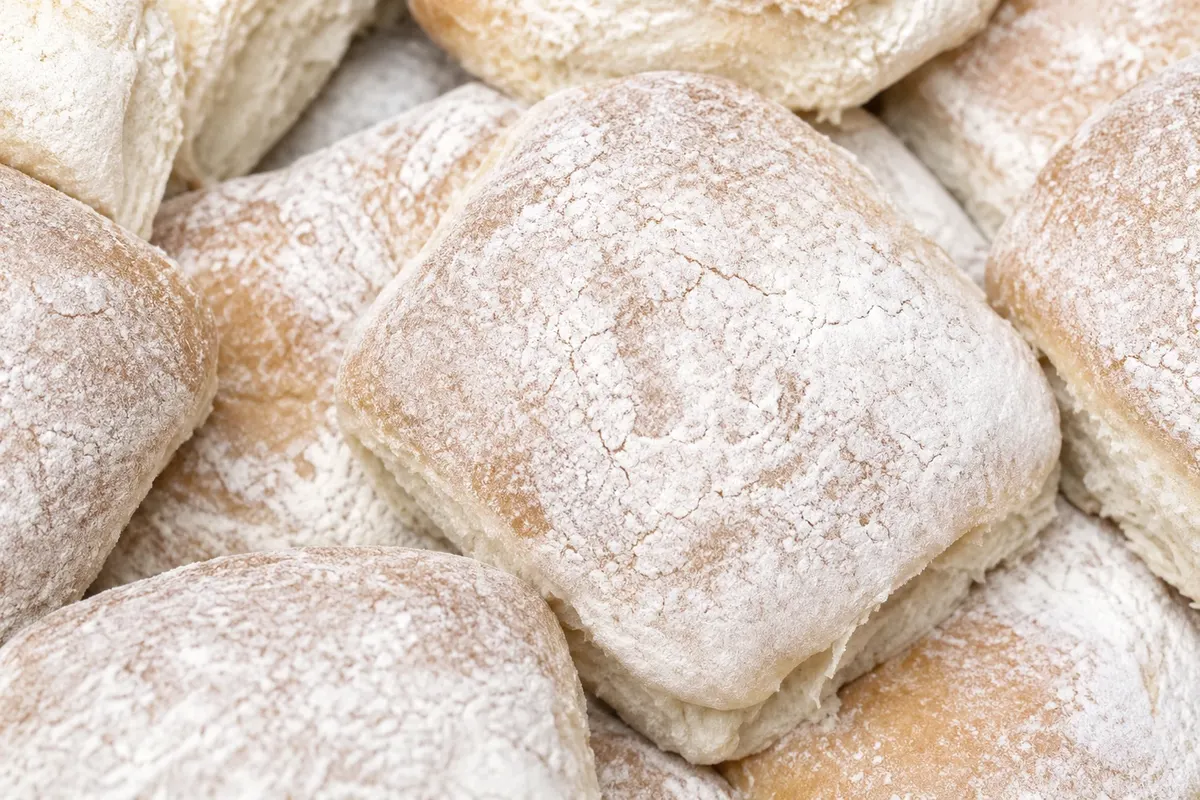
Soft white roll, dusted with flour, baked in batches with the rolls touching each other. It is Waterford’s specialty, has European Union protected geographical indication status since 2013, and is usually eaten at breakfast.