

 Brazil
 Argentina
 Bolivia
 Chile
 Colombia
 Guyana
 French Guiana
 Falkland Islands (Malvinas)
 Paraguay
 Peru
 Suriname
 Uruguay
 Venezuela
 Germany
 Austria
 Belgium
 Croatia
 Denmark
 Slovakia
 Slovenia
 Spain
 Finland
 France
 Greece
 the Netherlands
 Hungary
 Ireland
 Iceland
 Italy
 Luxembourg
 Norway
 Poland
 Portugal
 the United Kingdom
 the Czech Republic
 Sweden
 Switzerland
 Turkey
 Canada
 the United States
 Mexico
 the Dominican Republic
 South Africa
 Australia
 Fiji
 New Zealand
 Papua New Guinea
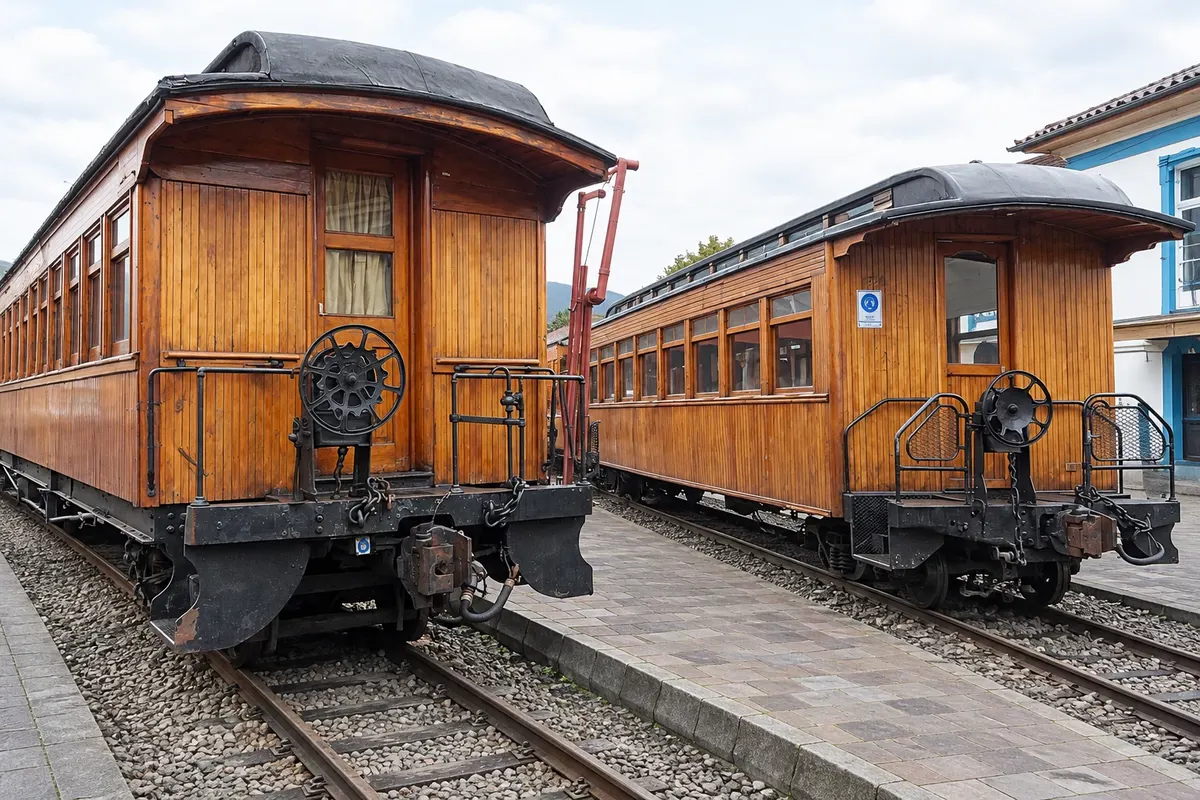
Train ride · Alausí, Chimborazo
Devil's Nose Train
The best-known section of the old railway between Guayaquil and Quito: the train leaves from Alausí, drops about 500 meters in altitude on a zigzag alignment along a rock face to Sibambe station, and returns the same way.
Illustrative images. The pictures in this guide are illustrations based on the real place, not photographs, and may differ from it.



Discover
About Devil's Nose Train
The Devil’s Nose is an almost vertical rock face on the slope of Mount Pistishí, between Alausí and Sibambe. It was the most difficult obstacle for the railway that linked Guayaquil to Quito, a 452 km line built between the late 19th century and 1908 during the government of Eloy Alfaro. To overcome it, engineers laid out a zigzag track: the train moves forward, stops at a track switch and then backs down the next section, descending about 500 meters over just more than 12 km.
The tracks reached the Devil’s Nose in 1901 and arrived in Alausí in 1902. The work cost the lives of many workers, several of them from Jamaica who came to cut the rock. Alausí station, at about 2,340 meters, preserves early 20th-century buildings and a monument to Eloy Alfaro.
The tourist ride covers Alausí–Sibambe–Alausí in two to two and a half hours, with panoramic carriages. On the outbound trip, the train stops at the Devil’s Nose viewpoint; in Sibambe, at about 1,800 meters, the station stop includes dance performances by local communities and craft sales. The section is operated by the municipality of Alausí.
Departures are Thursday to Sunday and on holidays, in three schedules in the morning and early afternoon. Service has been suspended in the past by heavy rains and track maintenance: confirm before you go whether the train is operating and buy tickets in advance.
Before you go
Practical information
Cidade Turismo reviews its information regularly, but something may have changed. Check with the place before planning your trip.
How much time to set aside
Two to two and a half hours for the round trip, including stops at the viewpoint and in Sibambe.
Best time
Morning departures usually have clearer skies over the valley. From June to September it rains less; on holidays trains fill up. Confirm departure days and times before you go.
How to get there
The station is in central Alausí, a few blocks from Avenida 5 de Junio, where Pan-American Highway buses stop. If you’re coming from Riobamba the same day, leave early: it’s one and a half to two hours by road.
Tip
Buy your ticket before traveling and arrive at the station at least half an hour early for boarding. Bring a jacket and sunscreen: Sibambe is usually warmer than Alausí, and the sun is strong in the open carriages.
Get your questions answered
Frequently asked questions about Devil's Nose Train
How long does the Devil’s Nose train ride last?
Two to two and a half hours, round trip between Alausí and Sibambe, with a stop at the Devil’s Nose viewpoint and time at Sibambe station.
What days does the Devil's Nose train run?
From Thursday to Sunday and on public holidays, with three departures per day between the morning and early afternoon. Service has been suspended before because of rain and track works, so check operation status before traveling.
Why is it called the Devil's Nose?
It’s the name of the nearly vertical rock face of Mount Pistishí, which the railway could only overcome by following a zigzag alignment. The name also recalls the difficulty and human cost of the work.
Does the Devil's Nose train depart from Riobamba?
No. The operating section departs from Alausí station, about 95 km from Riobamba, which can be reached by bus or car via the Pan-American Highway.