

 Brazil
 Argentina
 Bolivia
 Chile
 Colombia
 Ecuador
 Guyana
 French Guiana
 Falkland Islands (Malvinas)
 Paraguay
 Peru
 Suriname
 Uruguay
 Venezuela
 Germany
 Austria
 Belgium
 Croatia
 Denmark
 Slovakia
 Slovenia
 Spain
 Finland
 France
 Greece
 the Netherlands
 Hungary
 Ireland
 Iceland
 Italy
 Luxembourg
 Norway
 Poland
 Portugal
 the United Kingdom
 the Czech Republic
 Sweden
 Switzerland
 Turkey
 the United States
 Mexico
 the Dominican Republic
 South Africa
 Australia
 Fiji
 New Zealand
 Papua New Guinea
River · Fort Smith, Northwest Territories
Slave River Rapids
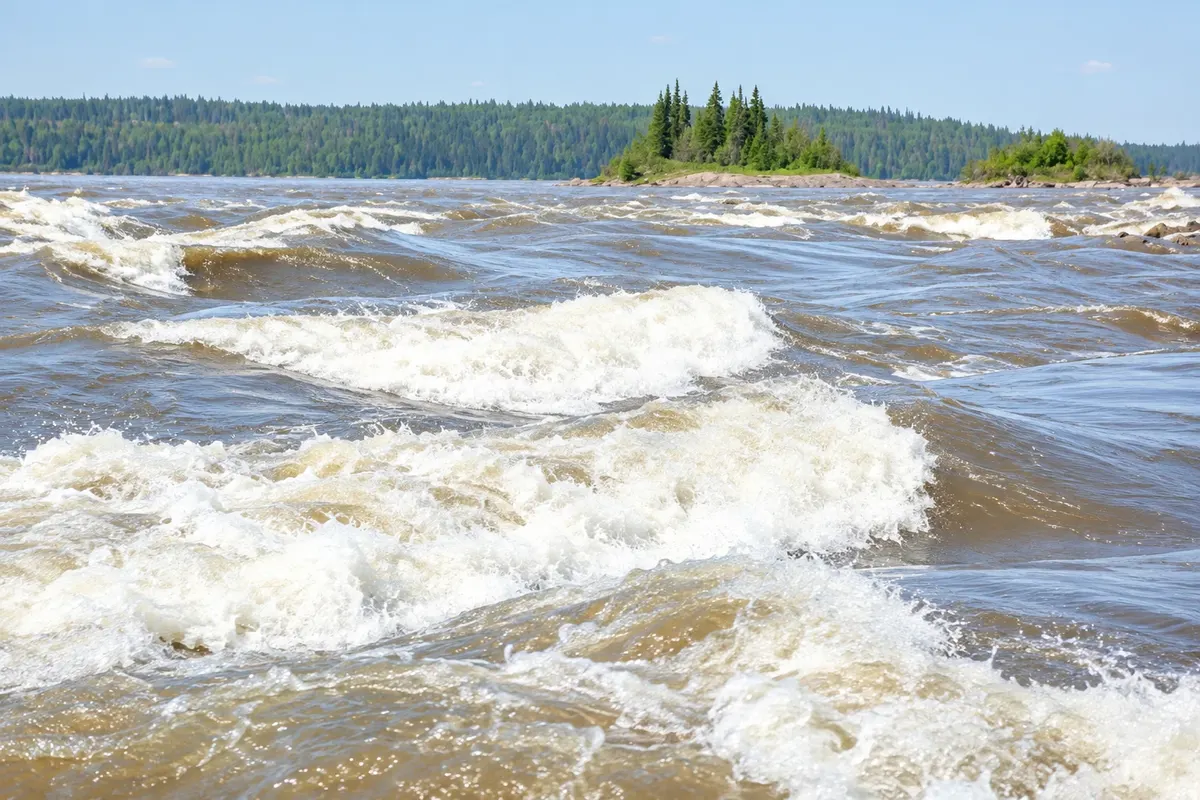
Series of rapids on the Slave River by Fort Smith, with viewpoints and trails along the bank and the northernmost colony of American white pelicans on the islands.
Illustrative images. The pictures in this guide are illustrations based on the real place, not photographs, and may differ from it.



Discover
About Slave River Rapids
Between Fort Fitzgerald, in Alberta, and Fort Smith, the Slave River drops through four large rapids over about 25 km. In the fur trade era, boats could not pass, and cargo and canoes were carried overland along the bank. Fort Smith began as a stopping place for that portage.
The rapid next to the town, called Rapids of the Drowned, commemorates an accident involving fur-trade boatmen in the late 18th century. On the rocky islands in the middle of the river, white pelicans nest every summer, in the northernmost colony of the species. They can be seen fishing in the churning water from the riverbank viewpoints.
Trails follow the river through town, and the rapids attract experienced kayakers who come from far away to run them.
Before you go
Practical information
Cidade Turismo reviews its information regularly, but something may have changed. Check with the place before planning your trip.
How much time to set aside
One to two hours.
Best time
June to August, when the pelicans are on the islands.
How to get there
On the bank of the Slave River, in downtown Fort Smith, with viewpoints a few minutes’ walk away.
Tip
Bring binoculars to see the pelicans on the islands and do not approach the water on wet rocks.
Official website
Get your questions answered
Frequently asked questions about Slave River Rapids
Are there pelicans on the Slave River?
Yes, white pelicans nest on the islands in the rapids in summer.
Why is the rapid called Rapids of the Drowned?
Because of an accident involving fur-trade boatmen in the late 18th century.
How many rapids are on the Slave River near Fort Smith?
Four large ones, over about 25 km.