

 Brazil
 Argentina
 Bolivia
 Chile
 Colombia
 Ecuador
 Guyana
 French Guiana
 Falkland Islands (Malvinas)
 Paraguay
 Peru
 Suriname
 Uruguay
 Venezuela
 Germany
 Austria
 Belgium
 Croatia
 Denmark
 Slovakia
 Slovenia
 Spain
 Finland
 France
 Greece
 the Netherlands
 Hungary
 Ireland
 Iceland
 Italy
 Luxembourg
 Norway
 Poland
 Portugal
 the United Kingdom
 the Czech Republic
 Sweden
 Switzerland
 Turkey
 the United States
 Mexico
 the Dominican Republic
 South Africa
 Australia
 Fiji
 New Zealand
 Papua New Guinea
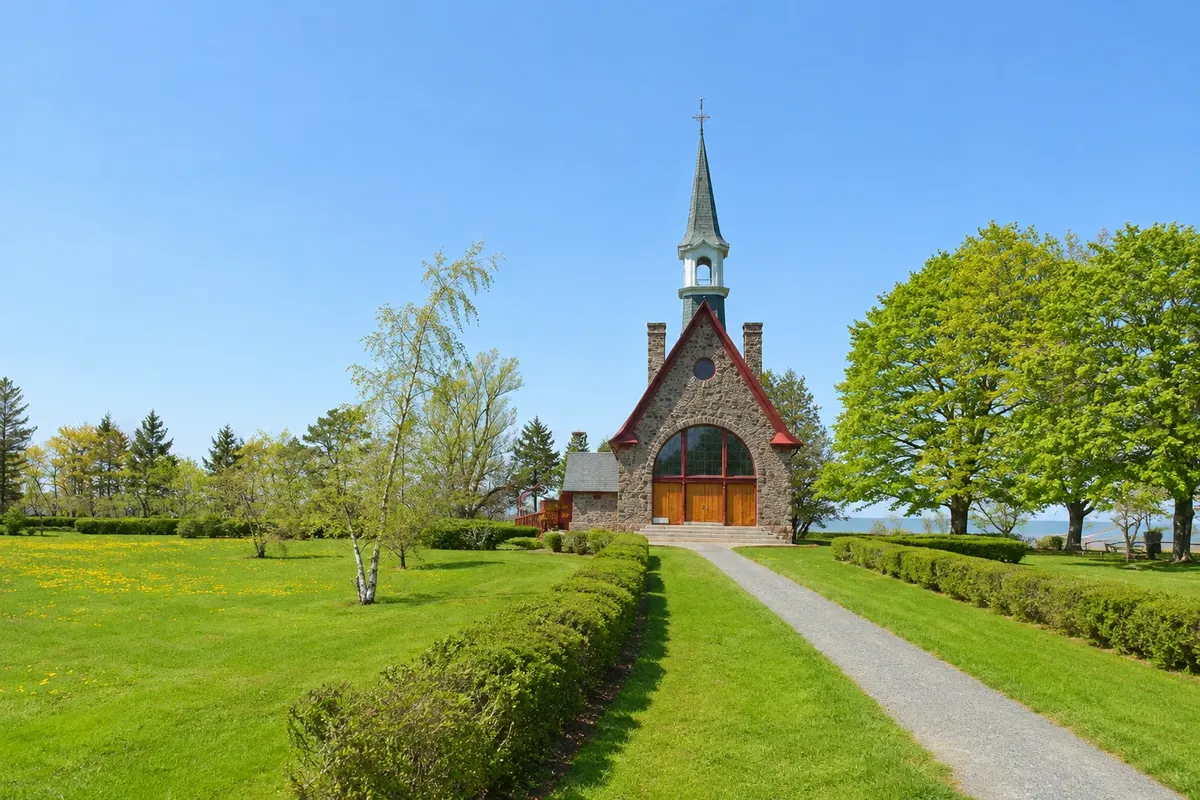
Historic site · Wolfville, Nova Scotia
Grand-Pré (Grand-Pré National Historic Site)
Landscape of dykelands and fields created by the Acadians on the shores of the Minas Basin, with a memorial church and a statue of Evangeline. A UNESCO World Heritage Site since 2012.
Illustrative images. The pictures in this guide are illustrations based on the real place, not photographs, and may differ from it.



Discover
About Grand-Pré (Grand-Pré National Historic Site)
Grand-Pré was one of the largest Acadian villages; the French settlers who established themselves in the region in the 17th century. They built earthen dykes with wooden sluices, called aboiteaux, that allowed freshwater to exit and prevented the Bay of Fundy tide from entering. The salt marshes were turned into fertile fields, which continue to be farmed today.
In 1755, British authorities ordered the deportation of the Acadians, who were forcibly boarded and dispersed to other colonies. Grand-Pré became a symbol of that episode, called the Great Deportation. The poem Evangeline, by Henry Wadsworth Longfellow (1847), tells the story of a young woman separated from her fiancé during the deportation.
The national historic site has a stone memorial church, built in 1922 on the site of the village’s old church, a statue of Evangeline, gardens, ancient willows and a visitor centre. A viewpoint on the hills shows the dykelands and the basin. In 2012, the landscape was inscribed on the UNESCO World Heritage List.
Before you go
Practical information
Cidade Turismo reviews its information regularly, but something may have changed. Check with the place before planning your trip.
How much time to set aside
One to two hours.
Best time
From May to October, when the visitor centre and the church are open. Late afternoon provides good light over the fields.
How to get there
About 5 km east of Wolfville, via Highway 101 or Route 1.
Tip
Climb to the Grand-Pré landscape viewpoint on the hills south of the site to see the dykes and the basin from above.
Official website
Get your questions answered
Frequently asked questions about Grand-Pré (Grand-Pré National Historic Site)
What happened in Grand-Pré in 1755?
The deportation of the Acadians by British authorities, which dispersed the region’s French population to other colonies.
What are the aboiteaux of Grand-Pré?
Wooden sluices in the earthen dykes that allow freshwater to drain and prevent the tide from entering.
Is Grand-Pré a UNESCO site?
Yes, since 2012, for the landscape of dykelands and fields and for Acadian memory.