

 Brazil
 Argentina
 Bolivia
 Chile
 Colombia
 Ecuador
 Guyana
 French Guiana
 Falkland Islands (Malvinas)
 Paraguay
 Peru
 Suriname
 Uruguay
 Venezuela
 Germany
 Austria
 Belgium
 Croatia
 Denmark
 Slovakia
 Slovenia
 Spain
 Finland
 France
 Greece
 the Netherlands
 Hungary
 Ireland
 Iceland
 Italy
 Luxembourg
 Norway
 Poland
 Portugal
 the United Kingdom
 the Czech Republic
 Sweden
 Switzerland
 Turkey
 the United States
 Mexico
 the Dominican Republic
 South Africa
 Australia
 Fiji
 New Zealand
 Papua New Guinea
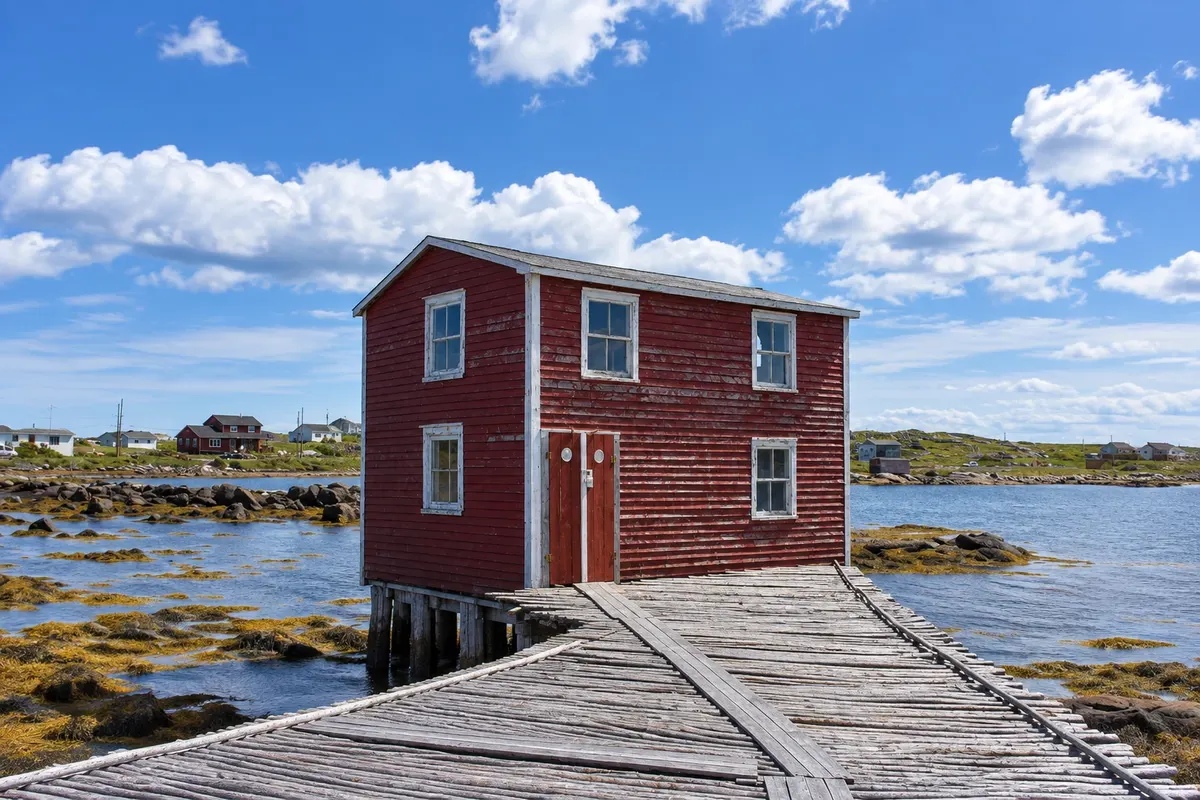
Historic village · Fogo Island, Newfoundland and Labrador
Tilting National Historic Site
A fishing village of Irish origin on the east of Fogo Island, with wooden fish stages, traditional houses and stone-walled fields, recognized as a cultural landscape.
Illustrative images. The pictures in this guide are illustrations based on the real place, not photographs, and may differ from it.



Discover
About Tilting National Historic Site
Tilting is at the far eastern end of Fogo Island, surrounding a sheltered harbour. The village was settled by Irish fishermen from the 18th century onward, and residents still preserve the Irish accent, surnames and customs.
The landscape retains the fishing stages, wooden platforms on stilts where cod was salted, the sheds, painted wooden houses and the stone- and stake-enclosed fields where gardens were grown and animals kept. Tilting is recognized as a national historic site and a provincial historic district. The 19th-century Dwyer family house and store can be visited in summer.
A trail leads from the village out to the headland, with views of the open sea and, in early summer, of icebergs.
Before you go
Practical information
Cidade Turismo reviews its information regularly, but something may have changed. Check with the place before planning your trip.
How much time to set aside
Two to three hours, including the trail.
Best time
From June to September, when the historic houses are open and the trails are dry.
How to get there
On the east of Fogo Island, about 20 km from the town of Fogo and about 40 km from the ferry terminal.
Tip
Take the Turpin's Coast trail, which leaves the village and passes headlands and coves.
Official website
Get your questions answered
Frequently asked questions about Tilting National Historic Site
What is the origin of Tilting?
Irish; fishermen from Ireland settled in the village from the 18th century.
What are Tilting’s fishing stages?
Wooden platforms on stilts where cod was salted and prepared.
Is Tilting a historic site?
Yes, it is a national historic site and a provincial historic district.