

 Brazil
 Argentina
 Bolivia
 Chile
 Colombia
 Ecuador
 Guyana
 French Guiana
 Falkland Islands (Malvinas)
 Paraguay
 Peru
 Suriname
 Uruguay
 Venezuela
 Germany
 Austria
 Belgium
 Croatia
 Denmark
 Slovakia
 Slovenia
 Spain
 Finland
 France
 Greece
 the Netherlands
 Hungary
 Ireland
 Iceland
 Italy
 Luxembourg
 Norway
 Poland
 Portugal
 the United Kingdom
 the Czech Republic
 Sweden
 Switzerland
 Turkey
 the United States
 Mexico
 the Dominican Republic
 South Africa
 Australia
 Fiji
 New Zealand
 Papua New Guinea
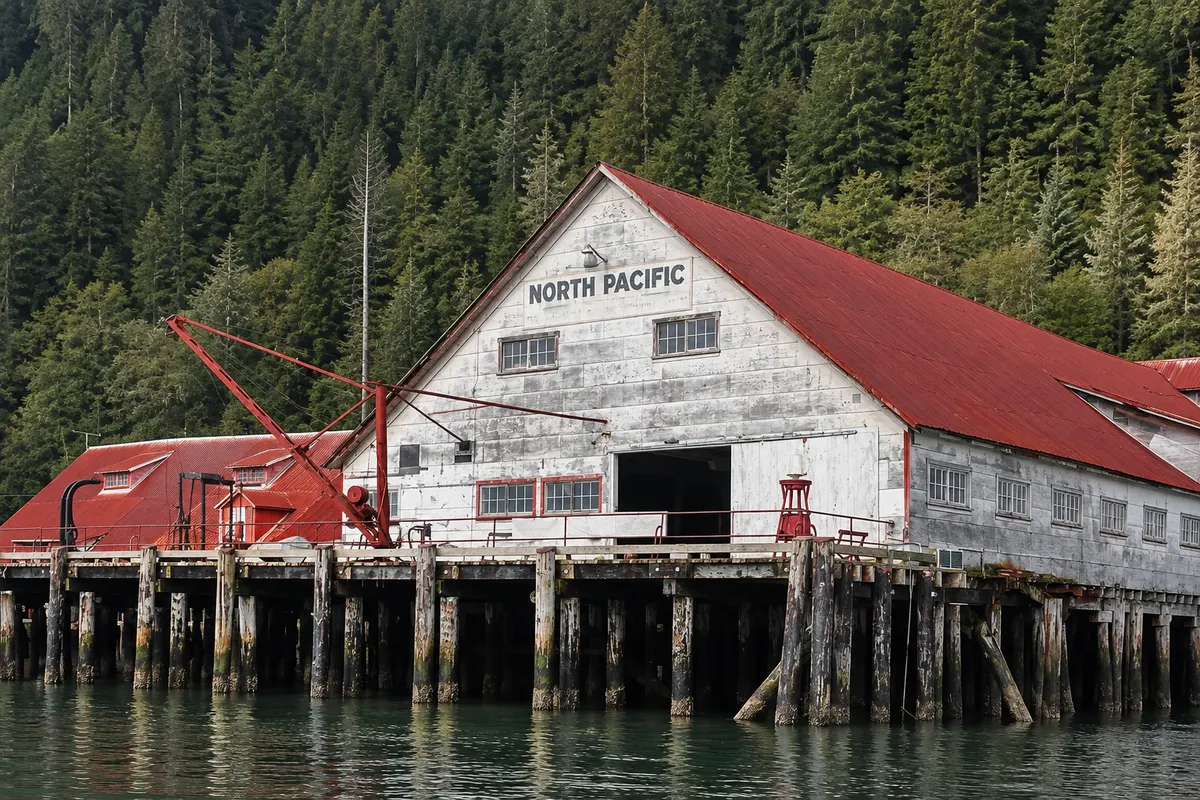
Historic site · Prince Rupert, British Columbia
North Pacific Cannery National Historic Site
A salmon-cannery village on pilings from 1889 in Port Edward, the oldest surviving on the west coast of North America, with work and housing buildings.
Illustrative images. The pictures in this guide are illustrations based on the real place, not photographs, and may differ from it.



Discover
About North Pacific Cannery National Historic Site
The North Pacific cannery opened in 1889 at the mouth of the Skeena River in Port Edward, south of Prince Rupert. It operated for nearly a century, canning salmon for markets around the world. It is the oldest surviving cannery village on North America’s west coast and a national historic site.
The wooden buildings stand on pilings connected by boardwalks above the water. There’s the production line with the machinery, the net shed, the company store, the office and the houses where workers lived. Fishermen and workers of Indigenous, Japanese, Chinese and European origin worked there, and each group lived in a different part of the village.
Guides explain what work and life were like there, and exhibits display cans, boats and fishing gear.
Before you go
Practical information
Cidade Turismo reviews its information regularly, but something may have changed. Check with the place before planning your trip.
How much time to set aside
Two to three hours.
Best time
May to September, when the site is open.
How to get there
By Highway 16 and the Port Edward road, about 20 km from Prince Rupert.
Tip
Take the guided tour: the guides tell stories about the families who lived and worked at the mill.
Official website
Get your questions answered
Frequently asked questions about North Pacific Cannery National Historic Site
How old is the North Pacific Cannery?
Dating from 1889.
When is the North Pacific Cannery open?
Generally from May to September.
How far is Prince Rupert from the North Pacific Cannery?
About 20 km, roughly a 20‑minute drive.