

 Brazil
 Argentina
 Bolivia
 Chile
 Colombia
 Ecuador
 Guyana
 French Guiana
 Falkland Islands (Malvinas)
 Paraguay
 Peru
 Suriname
 Uruguay
 Venezuela
 Germany
 Austria
 Belgium
 Croatia
 Denmark
 Slovakia
 Slovenia
 Spain
 Finland
 France
 Greece
 the Netherlands
 Hungary
 Ireland
 Iceland
 Italy
 Luxembourg
 Norway
 Poland
 Portugal
 the United Kingdom
 the Czech Republic
 Sweden
 Switzerland
 Turkey
 the United States
 Mexico
 the Dominican Republic
 South Africa
 Australia
 Fiji
 New Zealand
 Papua New Guinea
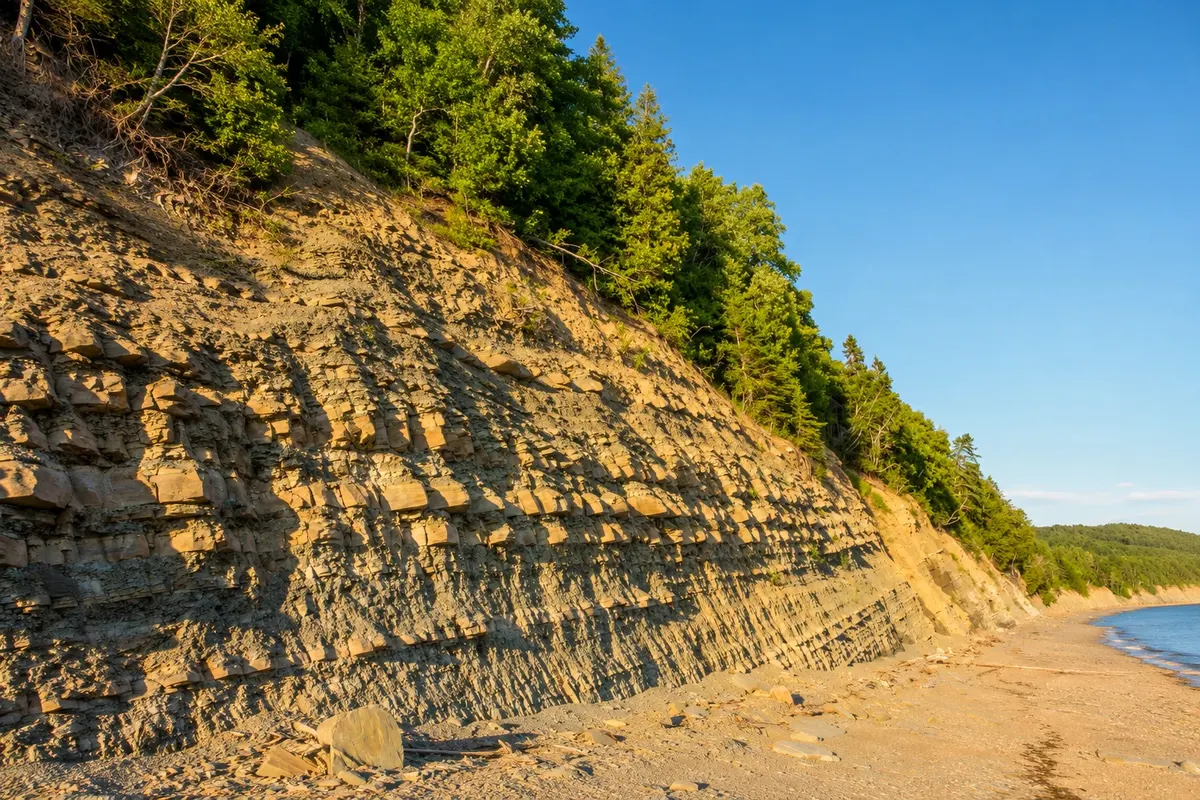
Geological site · Carleton-sur-Mer, Quebec
Miguasha National Park
A cliff with fish and plant fossils about 380 million years old, with a museum and a guided walk to the beach. A UNESCO World Heritage Site since 1999.
Illustrative images. The pictures in this guide are illustrations based on the real place, not photographs, and may differ from it.



Discover
About Miguasha National Park
Miguasha National Park lies on the north shore of Baie des Chaleurs, near the village of Nouvelle. The park’s cliff exposes the Escuminac Formation, layers of rock deposited in an estuary about 380 million years ago, during the Devonian period, often called the Age of Fishes.
The cliff holds thousands of very well-preserved fossils of fish, plants and invertebrates. The most important are fishes with fleshy fins, relatives of the first four-limbed vertebrates. In 2010 researchers found a complete specimen of Elpistostege there, one of the fishes closest to the animals that moved from water to land. In 1999 the park was inscribed on UNESCO’s World Heritage list.
The natural history museum displays the fossils, with a laboratory and exhibits, and guides lead visitors down the stairs to the beach at the base of the cliff to see the rock layers. A trail runs along the top of the cliff with views over the bay.
Before you go
Practical information
Cidade Turismo reviews its information regularly, but something may have changed. Check with the place before planning your trip.
How much time to set aside
Two to three hours.
Best time
From early June to mid-October, when the museum and guided visits operate. The descent to the beach depends on the tide.
How to get there
By Route 132 and the Miguasha road, about 20 km west of Carleton-sur-Mer.
Tip
Take the guided visit to the beach: guides point out where fossils appear on the cliff. It is forbidden to take stones or fossils.
Official website
Get your questions answered
Frequently asked questions about Miguasha National Park
How old are the fossils at Miguasha?
About 380 million years, from the Devonian period.
Why is Miguasha a UNESCO World Heritage Site?
Because of the fish and plant fossils that help explain the transition of life from water to land.
When does Miguasha Park open?
Generally from early June to mid-October.
Can you take fossils from Miguasha?
No, collecting is prohibited.