Marolles and Place du Jeu de Balle flea market
From Sablon or Bruxelles-Midi station On foot about 3 hours morning easy
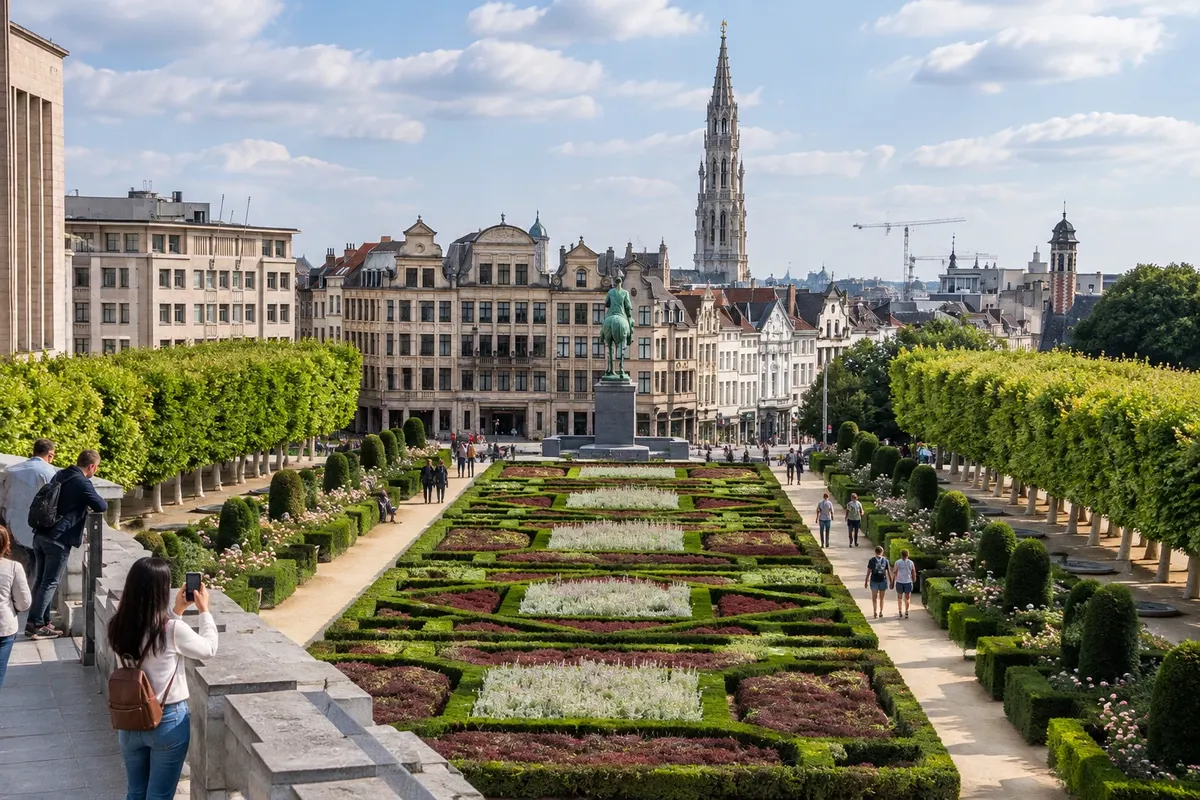
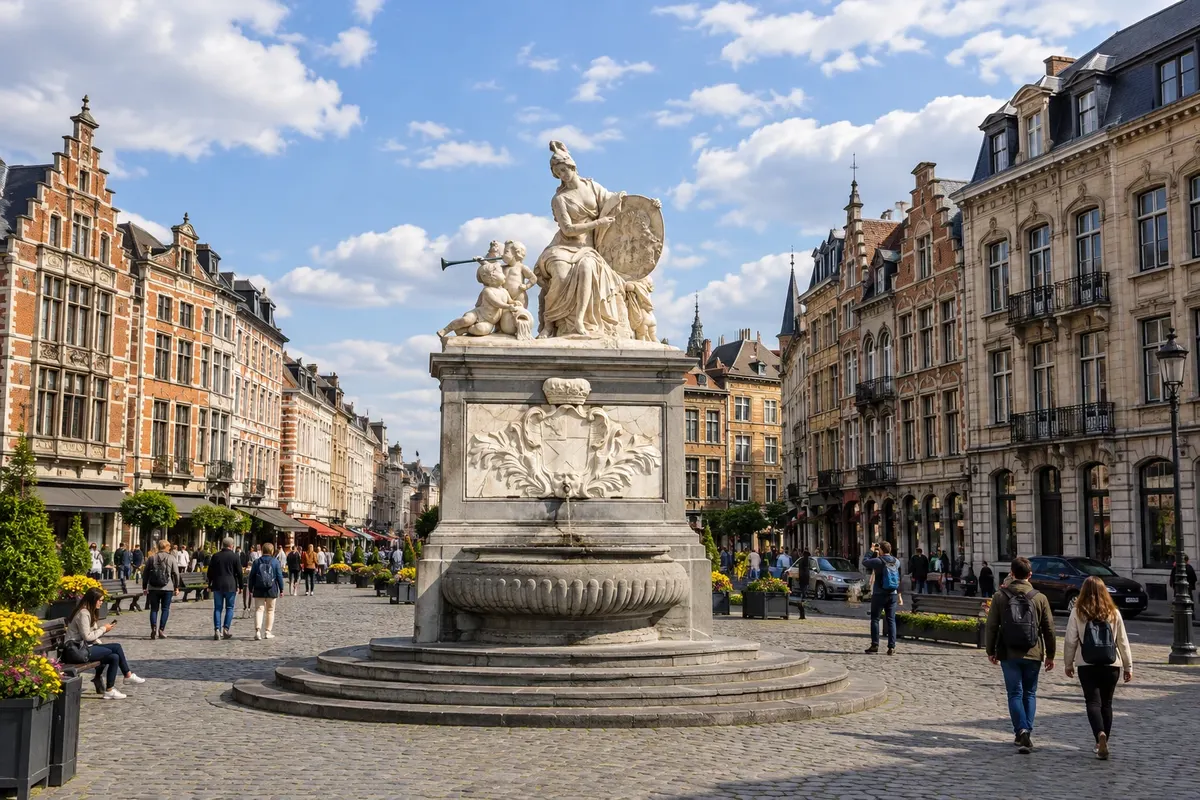
The Marolles (Marollen) are the oldest working-class neighborhood in the center, where you can still hear brusseleer, the Brussels dialect, alongside French, Flemish, Spanish and Arabic. The meeting point is Place du Jeu de Balle, where the flea market (Vieux Marché) sets up every day, from early morning until the start of the afternoon: dishes, records, clothes, furniture and antiques spread on the ground and on stalls. The parallel streets Rue Haute and Rue Blaes concentrate antique shops, secondhand stores and vintage decor shops. The neighborhood has murals on the comic route and a trail with murals inspired by Bruegel. On the upper side, a public elevator leads to Place Poelaert, with a view over the city and the Palais de Justice, an 1883 building designed by Joseph Poelaert, visible only from the outside.
Stops: Marolles, Place du Jeu de Balle, Rue Haute, Rue Blaes, Place Poelaert, Palais de Justice.
Includes: Walking around the neighborhood and the market is free; purchases are extra.
Tip: Arrive early: by late morning many good items have already been sold, and the market is taken down in the early afternoon. Weekends are busier. Haggling over price is part of the experience.
Best time: All year; from April to September the market has more stalls and the mornings are more pleasant.
Atomium and Mini-Europe (Heysel)
From Central Brussels Metro line 6 to Heysel station about 5 hours full day easy
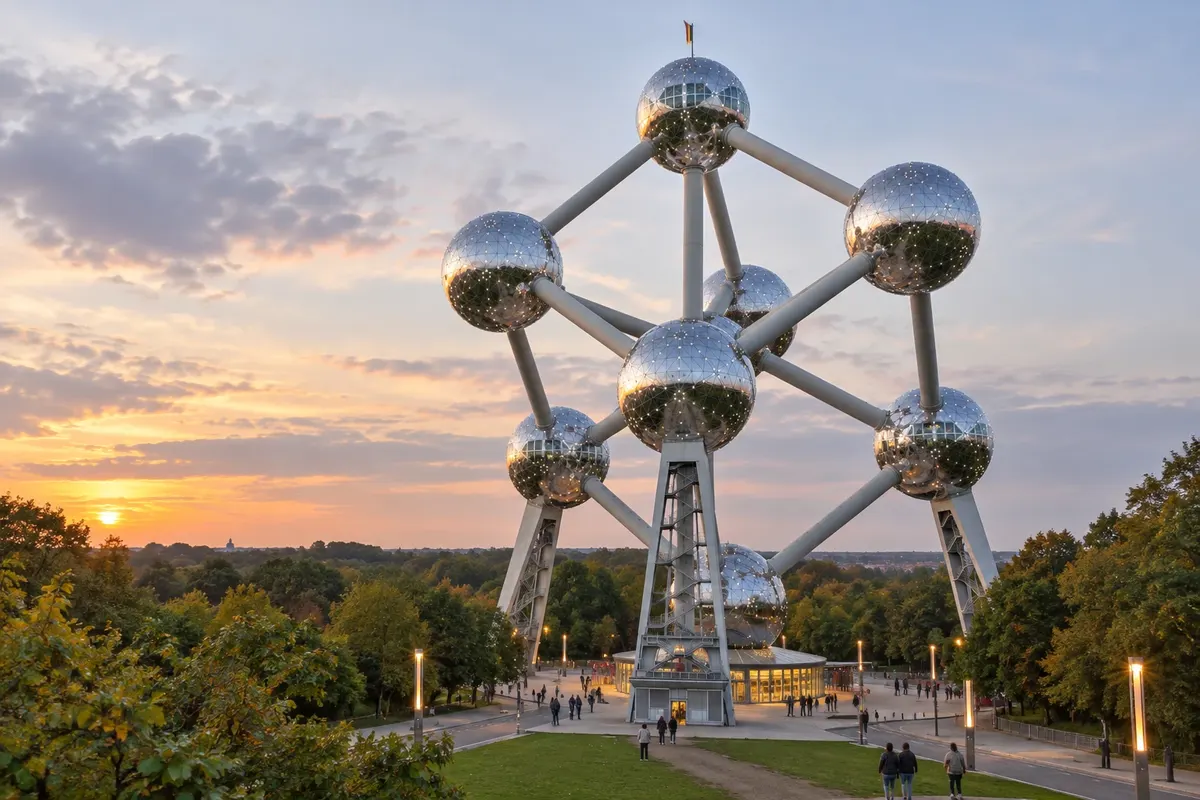
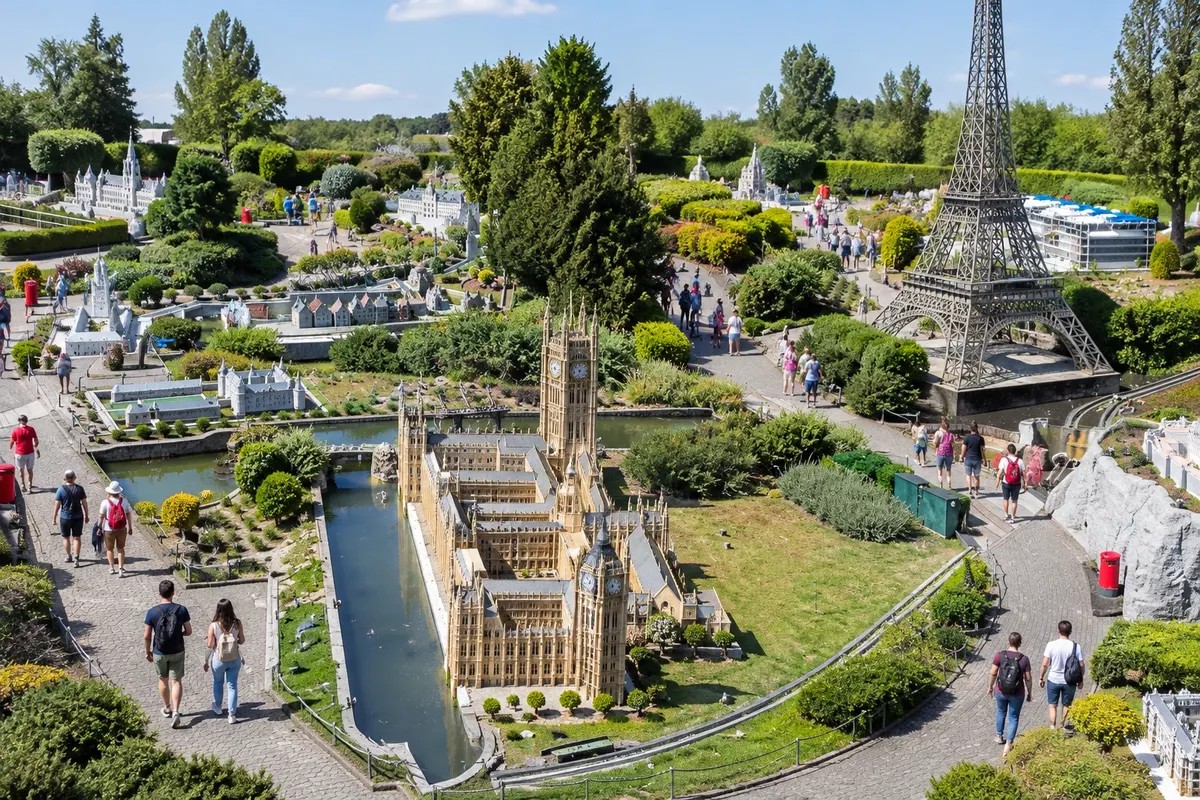
The Atomium was built for the 1958 World Expo and became a symbol of Brussels. The 102 m structure represents an iron crystal enlarged 165 billion times: nine spheres of 18 m diameter connected by tubes. Five of them are open to the public, featuring an exhibition about Expo 58 and temporary displays, and an elevator takes you to the top sphere with city views and a restaurant. Between the spheres, the route uses moving walkways inside the tubes. Next door, Mini-Europe brings together about 350 scale models at 1/25 of monuments from European Union countries, in a walking route of under two hours. The Design Museum Brussels, with a collection of plastic design, is in the same area, and the Parc de Laeken begins just beyond.
Stops: Atomium, Mini-Europe, Design Museum Brussels, Parc de Laeken.
Includes: Atomium, Mini-Europe and Design Museum have separate tickets, paid separately; combined tickets are available. Check the current table.
Tip: The Atomium and Mini-Europe are also open on Mondays, when many city museums are closed. Buy your Atomium ticket in advance to avoid queues. Check Mini-Europe’s winter schedule.
Best time: From April to September, when Mini-Europe, which is outdoors, is more pleasant. The Atomium is worth visiting year-round.
European Quarter: Parlamentarium, Maison de l'histoire européenne and Parc Léopold
From Trône metro station Metro and on foot about 4 hours full day easy
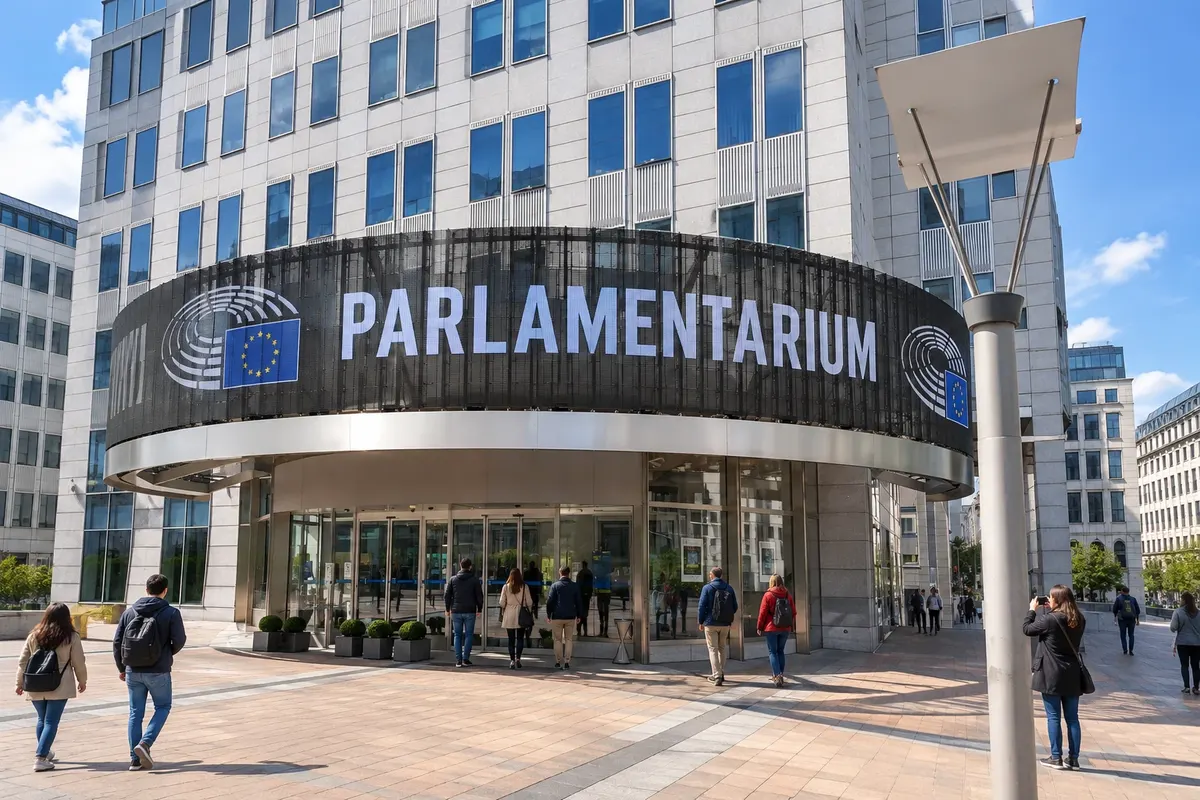
Brussels hosts the main institutions of the European Union, concentrated in the European Quarter. The Parlamentarium is the European Parliament visitor centre: it explains how the European Union works, features a 360° cinema and a large interactive map on the floor, with content in 24 languages, including Portuguese. On some days you can attend plenary sessions. In Parc Léopold, housed in an art déco building, the Maison de l'histoire européenne tells the continent’s history starting from the myth of Europa, also in 24 languages. The walk continues to the Berlaymont, headquarters of the European Commission, at Rond-point Schuman, and can end at Parc du Cinquantenaire just beyond.
Stops: Parlamentarium, Parlement européen, Parc Léopold, Maison de l'histoire européenne, Berlaymont, Rond-point Schuman.
Includes: Parlamentarium and Maison de l'histoire européenne do not charge admission; online reservation is recommended.
Tip: The Parlamentarium is open on Mondays, when many museums are closed. There is security control at the entrance of institutional buildings: bring your passport.
Best time: All year round.
Parc du Cinquantenaire: Art & History Museum, Autoworld and arcades
From Central Brussels Metro to Merode or Schuman stations about 4 hours afternoon easy
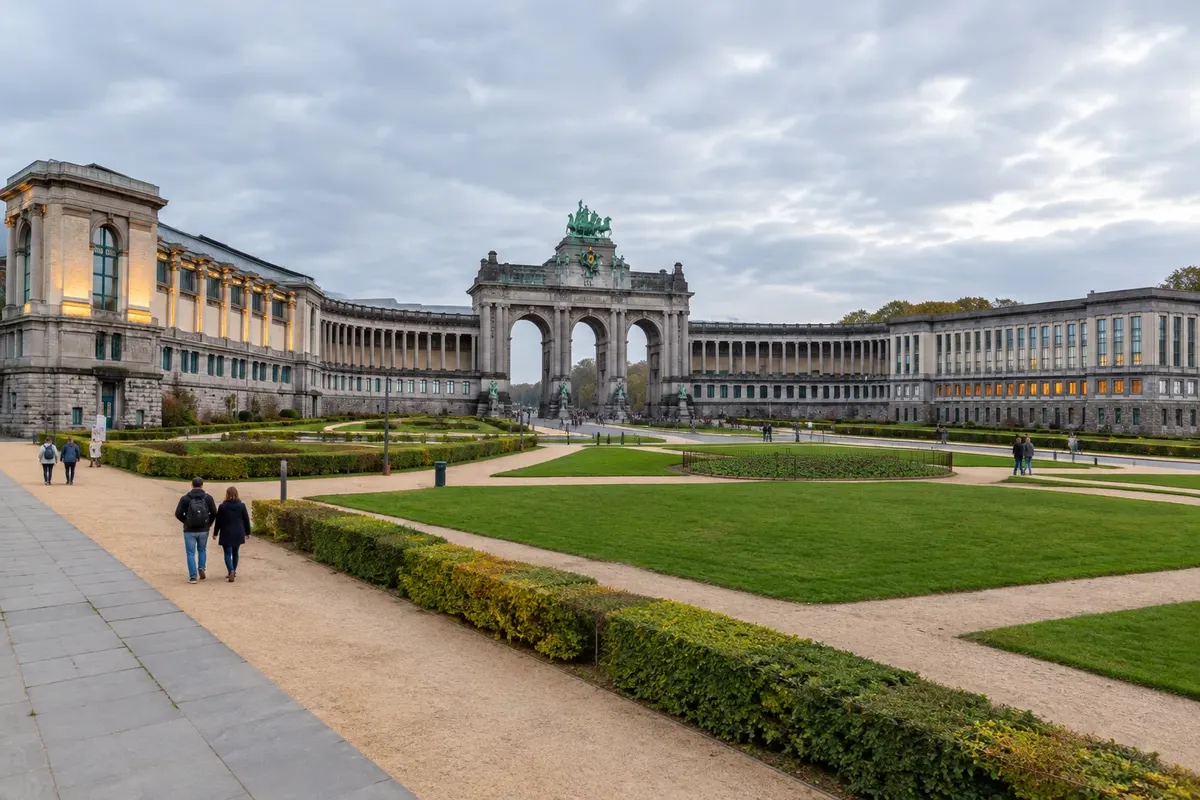
Parc du Cinquantenaire was created in 1880 to celebrate Belgium’s 50th anniversary. On the park’s axis stands the triumphal arch, with the arcades flanked by three museums. The Art & History Museum has a varied collection: flaked stones from prehistory, Egyptian mummies, medieval tapestries, Asian buddhas and Belgian Art Nouveau. Autoworld, the national automobile museum, displays more than 300 vehicles, from motorized carriages to sports cars. The War Heritage Institute (military museum) shows medieval armor, Napoleonic memorabilia and about a hundred aircraft and armored vehicles from the two world wars; the ticket includes access to the arch’s arcades, 45 m high, with a 360° view of the city.
Stops: Parc du Cinquantenaire, Arcade du Cinquantenaire, Art & History Museum, Autoworld, War Heritage Institute.
Includes: The park is open. Each museum has its own admission, paid separately. Check the current price list.
Tip: Autoworld is open on Mondays. If you have limited time, pick one museum and go up to the arcades late in the afternoon, with the low light over the city.
Best time: Year-round; from May to September the park is greener and fuller of people having picnics.
Art nouveau: Musée Horta, Saint-Gilles and Ixelles
From Central Brussels Tram and on foot about 4 hours afternoon easy
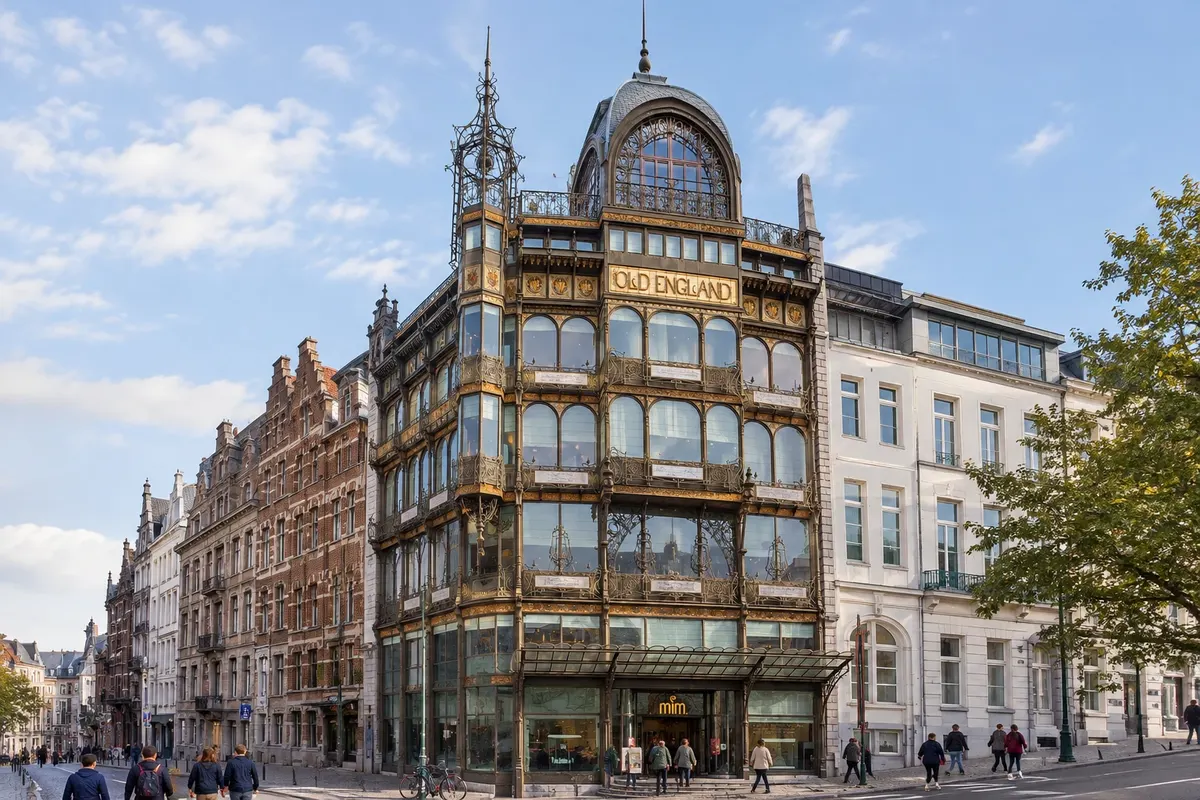
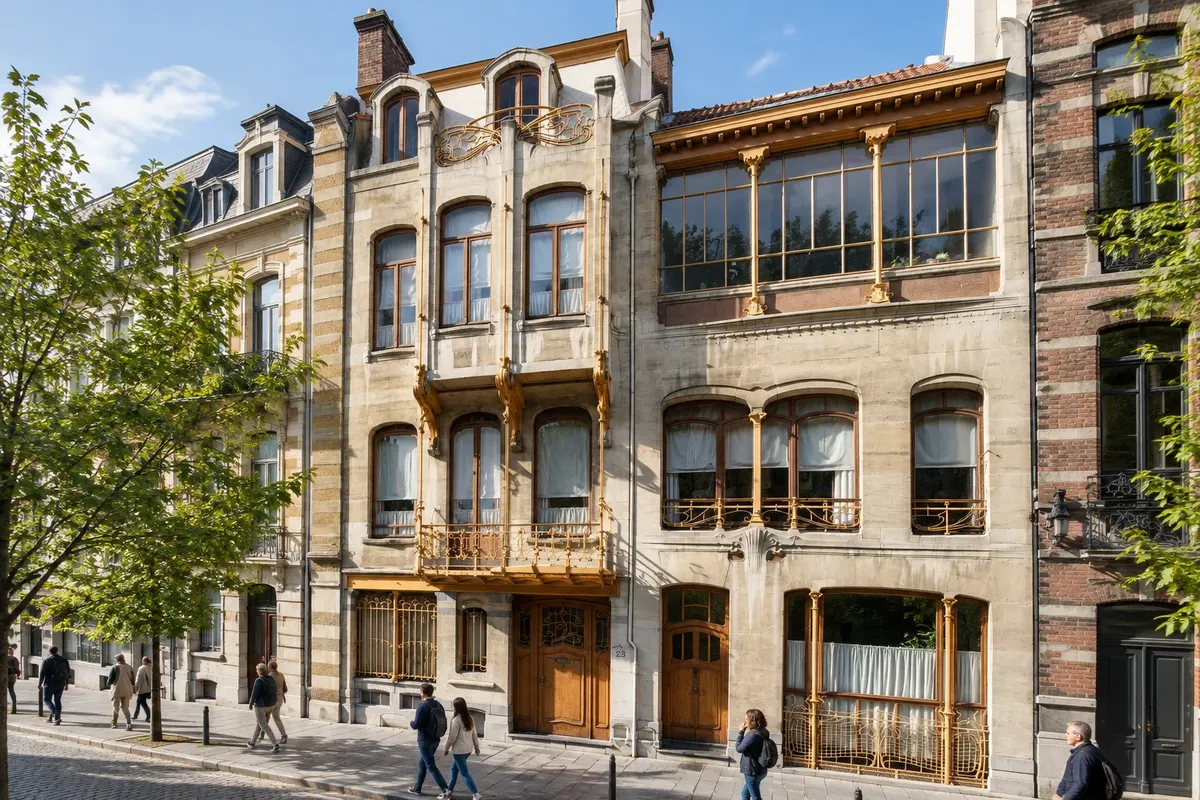
Brussels is one of the capitals of Art Nouveau, a style from the late 19th and early 20th centuries characterized by curved lines inspired by plants, iron, glass and mosaics. The central figure is architect Victor Horta. The Musée Horta, in Saint-Gilles, occupies the house and studio he built for himself between 1898 and 1901, with a staircase, stained glass, furniture and light fittings designed by him; the house is part of Horta’s residences listed by UNESCO as World Heritage. In the streets of Saint-Gilles and Ixelles, near Avenue Louise, there are facades by Horta and by Ernest Blerot, as well as the Hôtel Tassel (1893) and the Hôtel Solvay, which open only on certain days and by reservation. The walk can end at the Parvis de Saint-Gilles, a square with cafés and brasseries around the church.
Stops: Musée Horta, Saint-Gilles, Parvis de Saint-Gilles, Ixelles, Avenue Louise, Hôtel Tassel, Hôtel Solvay.
Includes: The Musée Horta and the houses open to visitors require separate paid tickets and typically need reservations. Walking the streets is free.
Tip: Book the Musée Horta in advance: visits are timed and the museum is closed on Mondays. Photography inside the house is usually restricted.
Best time: All year; April through September is more pleasant for walking the streets.
Comics Route (Parcours BD) and Centre Belge de la Bande Dessinée
From Grand-Place, Brussels On foot about 4 hours afternoon easy (about 5 km on foot)
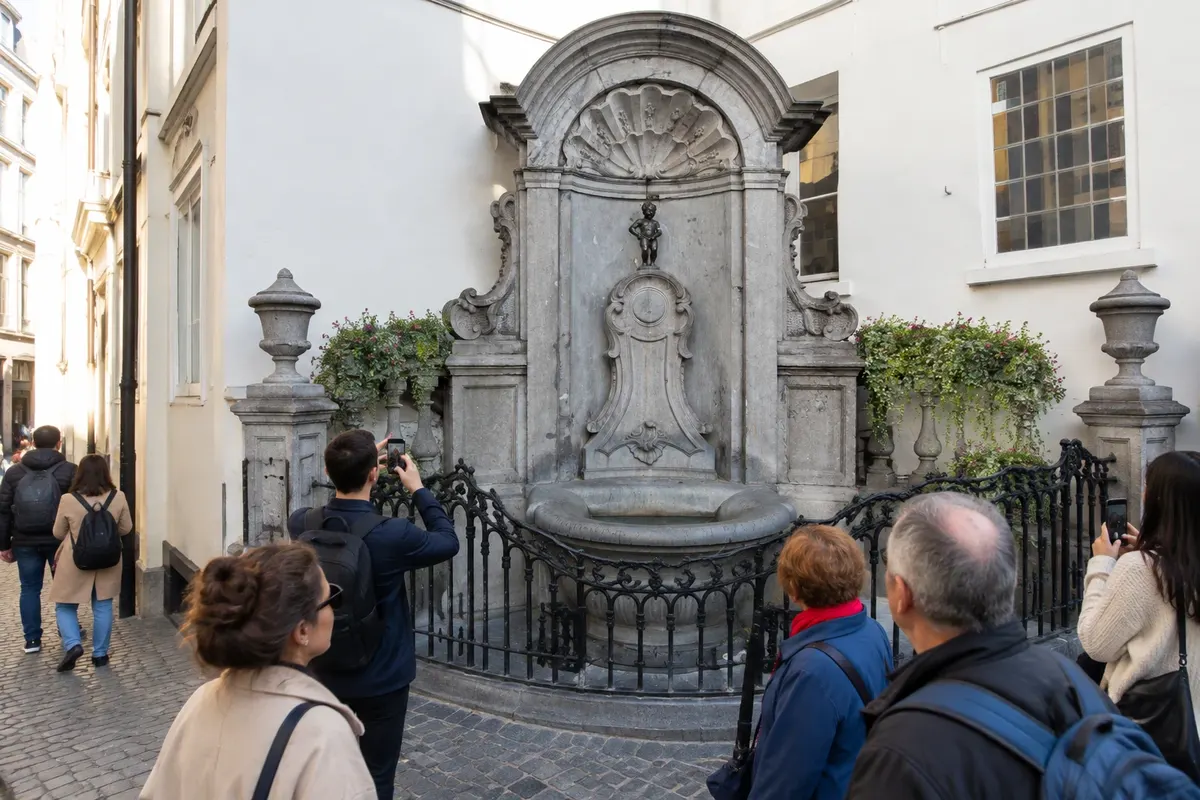
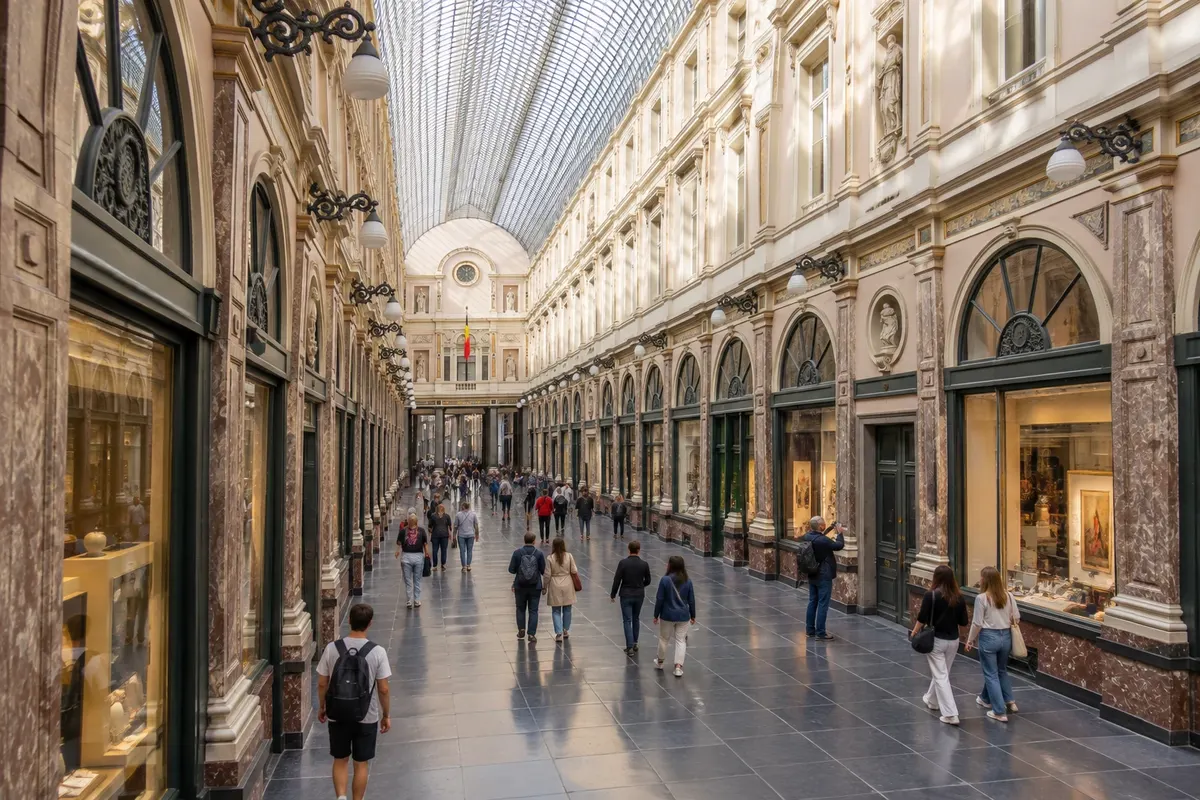
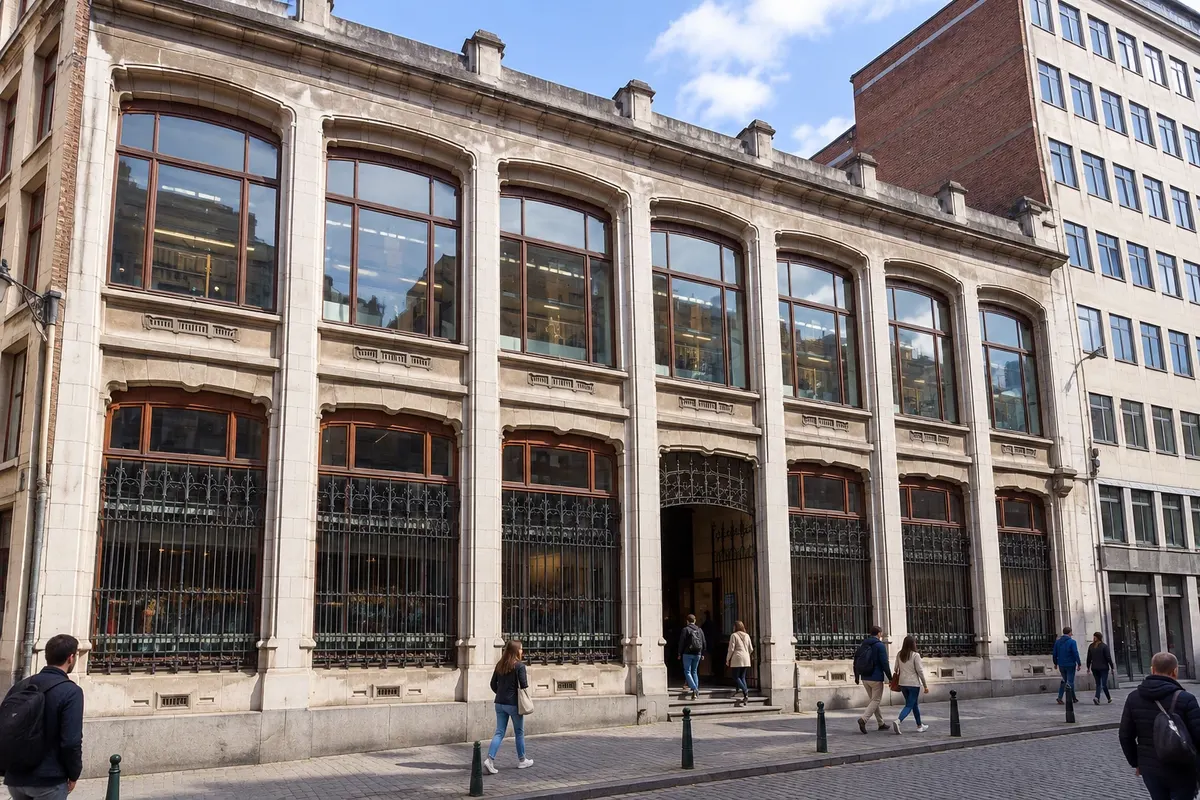
Belgium is the land of Tintin, the Smurfs, Lucky Luke and Gaston Lagaffe, and Brussels pays tribute to comics (bande dessinée, or BD) on its walls: since 1991 more than 80 character murals have been painted on the city’s façades. The historic-centre section of the route is about 5 km and passes the Grand-Place, the Galeries Royales Saint-Hubert, the cathedral, Place des Martyrs and the Manneken-Pis, featuring murals of Tintin, the Smurfs and Gaston Lagaffe, among others. The Centre Belge de la Bande Dessinée (Comic Strip Museum) occupies a former fabric store designed by Victor Horta in 1906, in Art Nouveau style, and tells the story of the ninth art with permanent and temporary exhibitions, a library and a bookshop.
Stops: BD route, Belgian Comic Strip Center, Grand Place, Royal Galleries Saint-Hubert, Place des Martyrs.
Includes: The murals are on the street. The museum has admission, paid separately. Check the current price list.
Tip: Pick up a route map at tourist information points or use the online map on your phone. The museum is closed on Mondays, except in July and August. Street name plaques with character names are also part of the walk.
Best time: Year-round. In September the city hosts a comics festival.
Beer in Brussels: Belgian Beer World, Cantillon and Brussels Beer Project
From Central Brussels On foot, metro or tram about 4 hours afternoon easy
Beer culture in Belgium is UNESCO intangible heritage, and Brussels has its own style: lambic, a spontaneous fermentation beer that is the base for gueuze and kriek (with cherry). In the old Stock Exchange building (Bourse), near the Grand-Place, the Belgian Beer World exhibition tells the story of Belgian beer and ends on a terrace with views over the centre. In Anderlecht, near Bruxelles-Midi station, Brasserie Cantillon has produced lambic, gueuze, faro and kriek since 1900 and also operates as the Musée Bruxellois de la Gueuze: the visit passes the vats and the cooling attic and ends with a tasting of three types. On Rue Antoine Dansaert, Brussels Beer Project has a bar, shop and brewery, with guided visits and tastings on certain days.
Stops: Belgian Beer World, Bourse de Bruxelles, Brasserie Cantillon, Musée Bruxellois de la Gueuze, Brussels Beer Project.
Includes: Each visit has an admission fee, paid separately, with tasting included. Check the current price table.
Tip: Cantillon is closed on Wednesdays, Sundays and public holidays; the self-guided visit does not require a reservation, and the guided tour on Saturdays does. Brussels Beer Project visits require a reservation. Drink in moderation and do not drive afterwards.
Best time: All year round.
Waterloo: Mémorial 1815, Butte du Lion and Panorama
From Brussels stations Train to Braine-l'Alleud and bus W about 5 hours full day moderate (226 steps on the Butte du Lion)
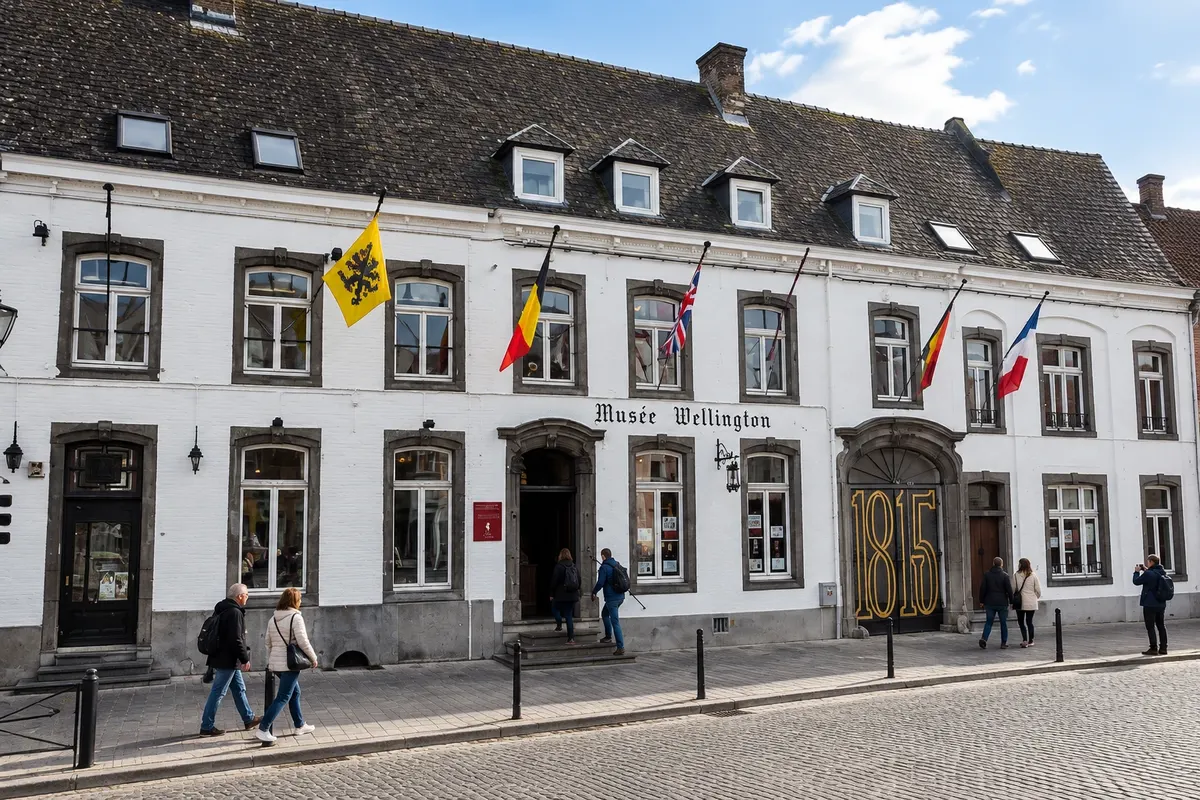
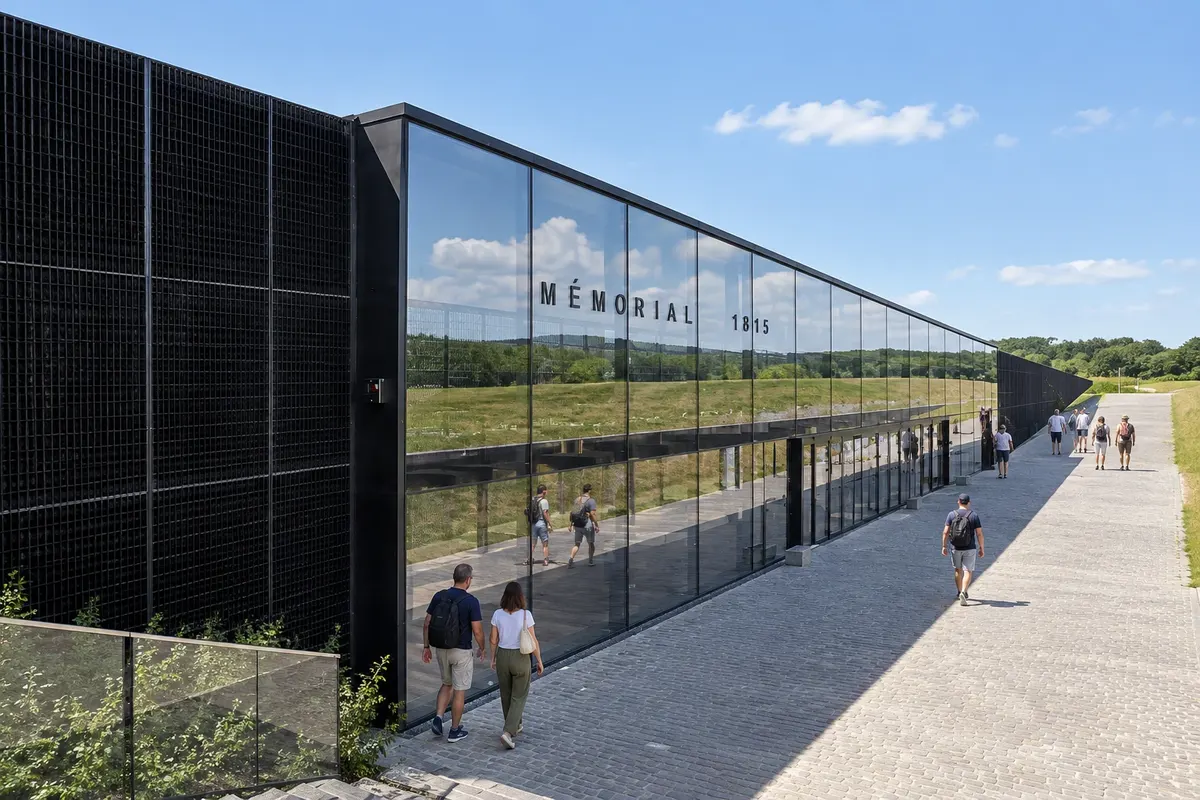
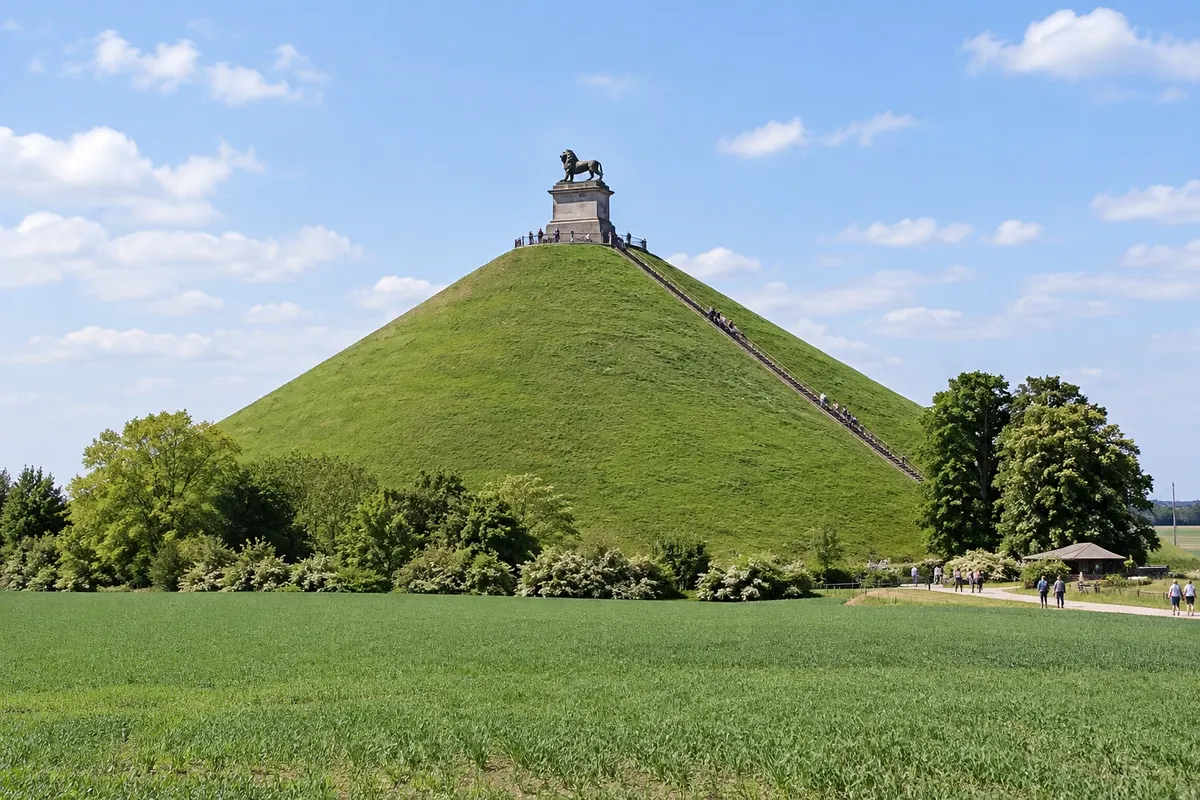
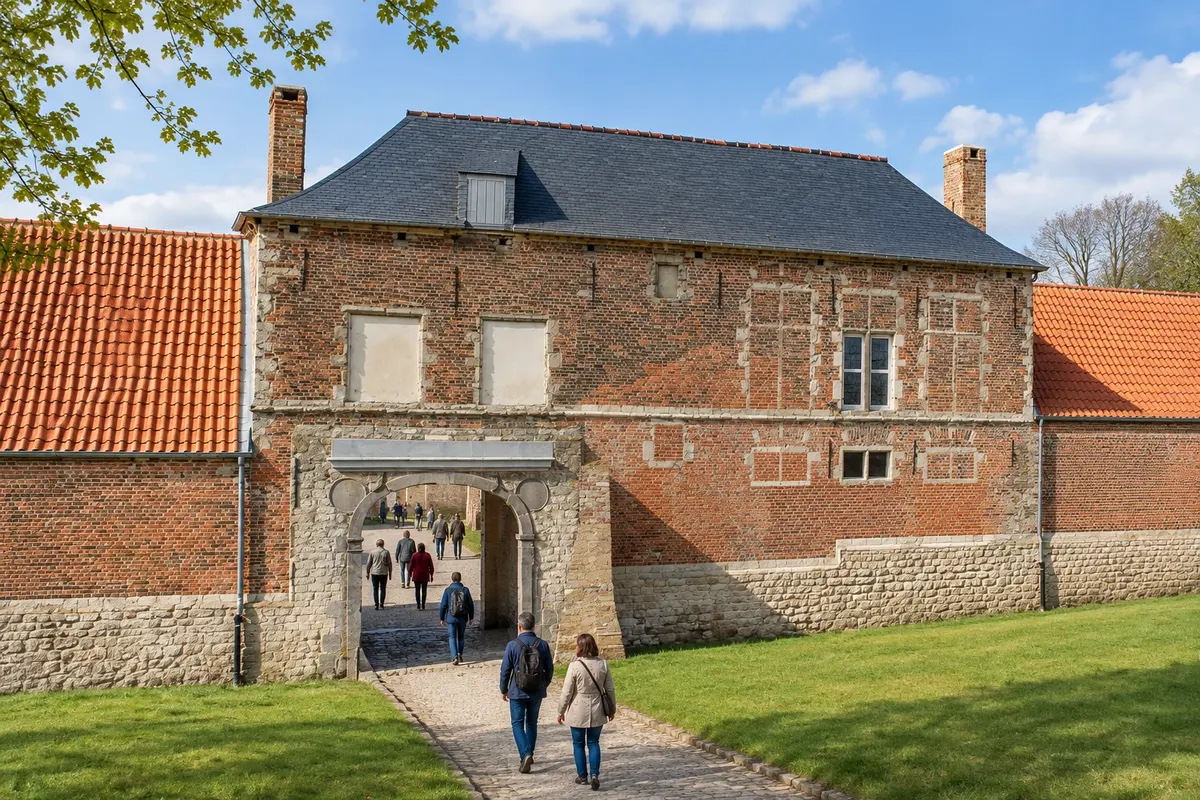
South of Brussels, already in Wallonia, are the fields of the Battle of Waterloo, where Napoleon was defeated on June 18, 1815. The focus of a visit is the Mémorial 1815, an underground museum at the foot of the Butte du Lion, with uniforms, period objects and a 3D film on a 180° screen. The route continues to the Panorama, a circular painting from 1912 extending 110 m, accompanied by sound effects of the battle. The Butte du Lion is an artificial mound completed in 1826, topped by a lion: it is 226 steps up to a view of the entire battlefield. A little farther away is the Ferme d'Hougoumont, the farm where fighting took place, with a multimedia show and a shuttle bus connection. In the center of Waterloo is the Musée Wellington, dedicated to the British commander.
Stops: Mémorial 1815, Butte du Lion, Panorama de la Bataille, Ferme d'Hougoumont, Musée Wellington, Waterloo, Braine-l'Alleud.
Includes: The Mémorial 1815 requires admission, paid separately, which gives access to other points of the battlefield; the Musée Wellington has its own ticket. Check what each ticket includes and the current price list.
Tip: Fast trains from Brussels to Braine-l'Alleud take about 15 minutes; from there, the W bus takes a few minutes to Route de Nivelles stop, from which the Butte du Lion is already visible. Allow about two hours just for the memorial. On weekends there are artillery demonstrations and period encampments.
Best time: From April to October, with longer days for walking the field. In June, near the battle’s anniversary, there is a historical reenactment on one weekend.
Basilique de Koekelberg (Basilica of the Sacred Heart)
From Central Brussels Metro to Simonis station and on foot about 2 hours afternoon easy
The Basilique nationale du Sacré-Cœur, known as Basilique de Koekelberg, sits atop a hill northwest of the center, at the end of Parc Élisabeth. Construction began in 1905 and was only completed in 1970; tradition says the idea came from King Leopold II after seeing the Sacré-Cœur in Paris. The result is an Art Deco church, 164 m long, 107 m wide and 93 m high. Besides the nave, the building houses museums, a theatre and other activities. From the top of the dome, the panorama looks out over Brussels.
Stops: Basilique nationale du Sacré-Cœur, Koekelberg, Parc Élisabeth.
Includes: Entry to the church is free; access to the viewpoint requires a ticket, paid separately.
Tip: Choose a day without rain to go up to the viewpoint. In the European winter, from late October to late March, the viewpoint closes earlier.
Best time: Year-round; on clear spring and summer days the view reaches farther.
Day trip to Brugge (Bruges) by train
From Brussels stations Direct train from SNCB/NMBS about 10 hours full day easy (366 steps in the Belfort, optional)
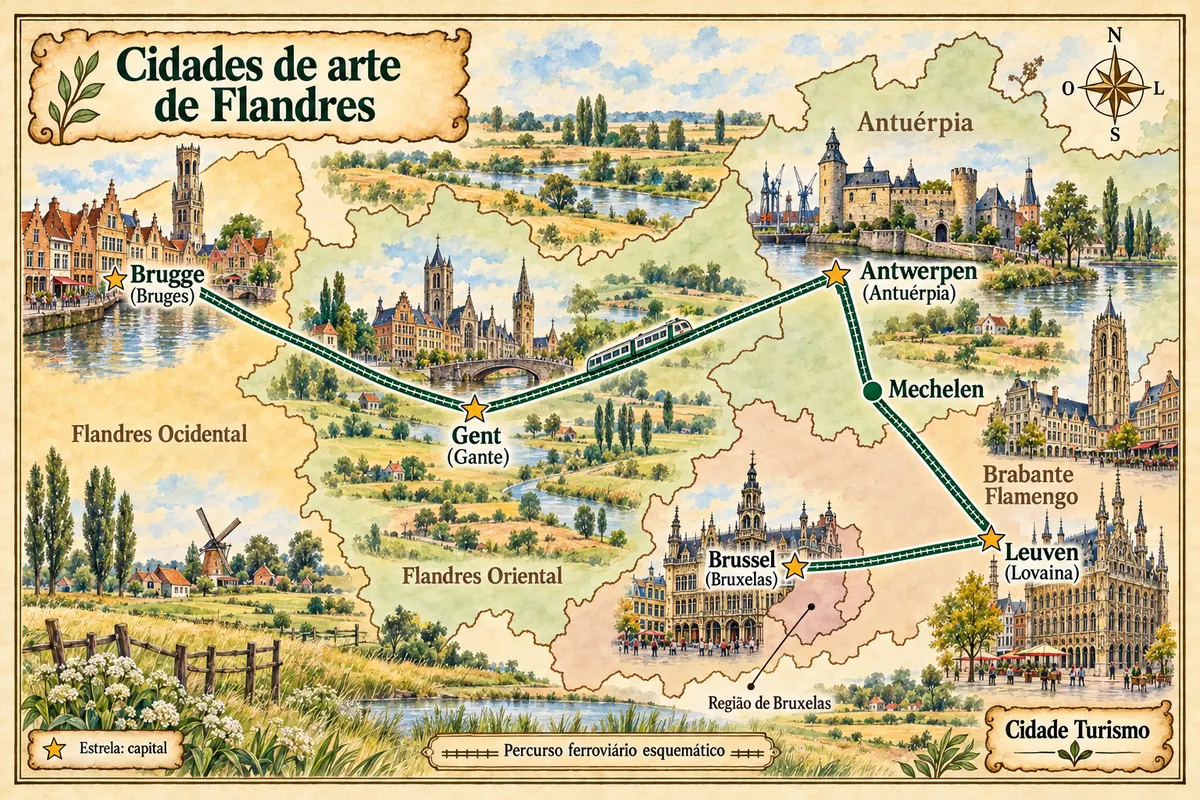
Brugge (Bruges), in Flanders, has a medieval historic centre with canals that is a UNESCO World Heritage Site. Direct trains depart from Brussels stations and take on average about 1 hour. From Brugge station to the Markt, the central square, it is about a 20-minute walk or a few minutes by bus. The Markt is home to the Belfort, an 83 m tower with a carillon of 47 bells: 366 spiral steps, no elevator, up to the rooftop view. Next to it, the Burg square houses the city’s government buildings. The Rozenhoedkaai quay is the classic photo spot of the canals, and the Begijnhof, an old beguinage with white houses around a garden, lies near Minnewater lake. Canal boat rides take about half an hour, between Jan van Eyckplein and the Begijnhof.
Stops: Brugge, Markt, Belfort, Burg, Rozenhoedkaai, Begijnhof, Jan van Eyckplein.
Includes: Train fare, Belfort ascent and canal boat ride are paid separately. Check the current price table.
Tip: Leave Brussels early to arrive before the tour groups. Book a time slot for the Belfort, which limits the number of visitors. If you prefer Gent (Gante) to Brugge, it takes about 36 minutes by train from Brussels.
Best time: Boats usually operate from early March through mid-November. From April to September the days are longer.


 Brazil
 Argentina
 Bolivia
 Chile
 Colombia
 Ecuador
 Guyana
 French Guiana
 Falkland Islands (Malvinas)
 Paraguay
 Peru
 Suriname
 Uruguay
 Venezuela
 Germany
 Austria
 Croatia
 Denmark
 Spain
 Finland
 France
 Greece
 the Netherlands
 Hungary
 Ireland
 Iceland
 Italy
 Luxembourg
 Norway
 Poland
 Portugal
 the United Kingdom
 the Czech Republic
 Sweden
 Switzerland
 Turkey
 the United States
 Mexico
 the Dominican Republic
 South Africa
 Australia
 Fiji