

 Brazil
 Argentina
 Chile
Chile Colombia
 Peru
Peru Uruguay
 Germany
 Spain
Spain France
 Greece
 the Netherlands
 Ireland
 Italy
Italy Portugal
 the United Kingdom
 Switzerland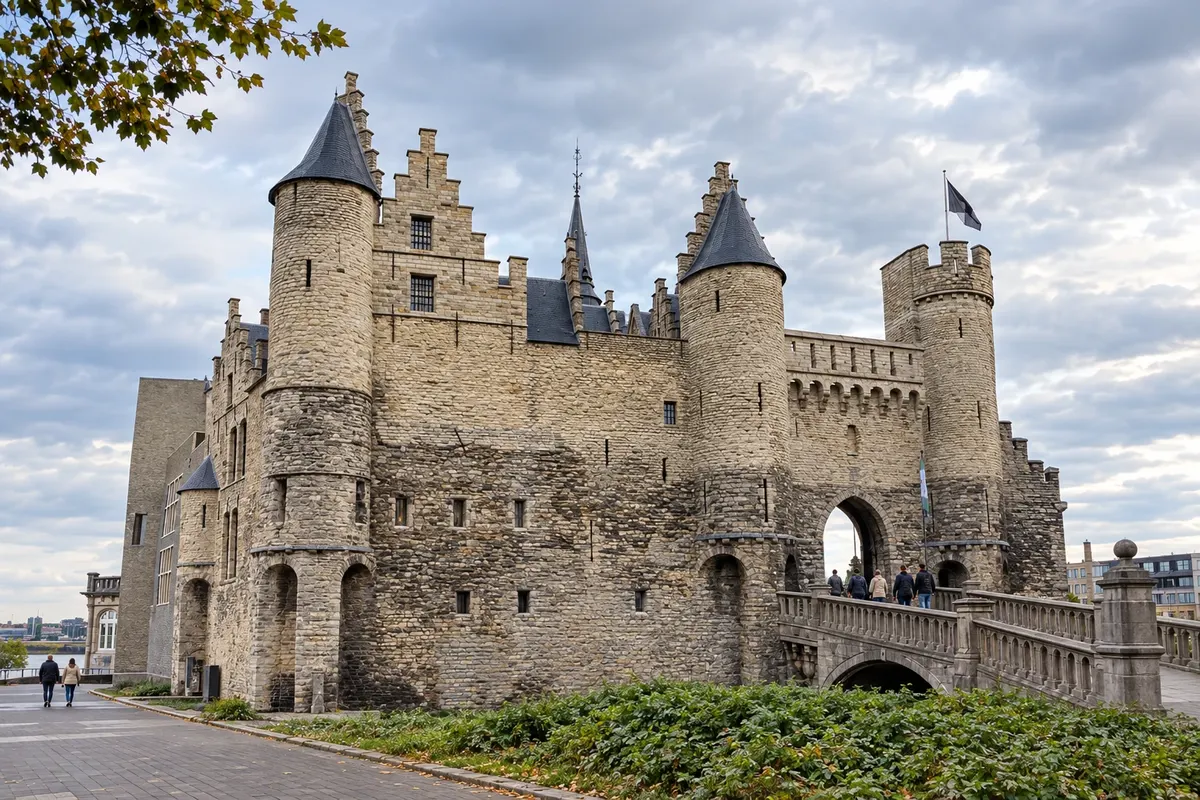
Route · Bruxelas · Brabante Flamengo · Antuérpia · Flandres Oriental · Flandres Ocidental
Art cities of Flandres
Six historic cities connected by train: Bruxelas, Lovaina, Mechelen, Antuérpia, Gante and Bruges, with Flemish painting, cathedrals and medieval centres less than an hour from each other.
In the photo: Het Steen de Antuérpia
Illustrative images. The pictures in this guide are illustrations based on the real place, not photographs, and may differ from it.

The route
What the Art cities of Flandres is
Flandres calls the group made up of Antuérpia, Bruges, Bruxelas, Gante, Lovaina and Mechelen its 'art cities'. They preserve the legacy from the time when the region was one of Europe's richest centres, with textile trade and ports. Hence the Gothic town halls, bell towers, beguinages and works by painters such as Van Eyck and Rubens.
The route runs from Bruxelas east to Lovaina, then up to Mechelen and Antuérpia and afterwards down west toward Gante and Bruges. Each leg has direct trains on the Belgian network, and the longest usually takes less than an hour. You can sleep in two or three cities and visit the others in the same day.
For Brazilians, the first surprise is the language. Bruxelas is bilingual, with signs in French and Dutch, and in the other five cities everything is in Dutch. That's why the same city appears with two names: Gent and Gand, Brugge and Bruges, Mechelen and Malines, Leuven and Louvain.
Several places along the way are UNESCO World Heritage: the Grand-Place de Bruxelas, the historic centre of Bruges, the cathedral tower of Mechelen, Lovaina's large beguinage and the Museu Plantin-Moretus in Antuérpia.
The map
6 cities along the way
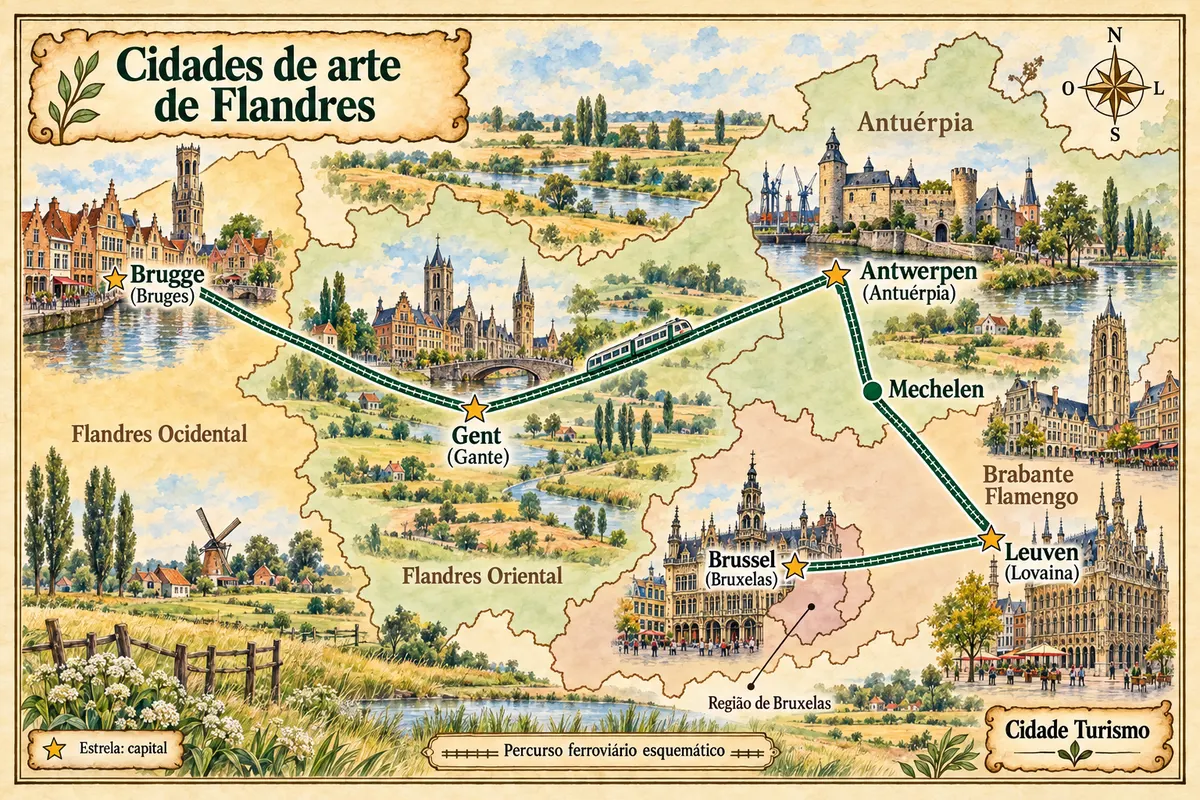
Contornos: © NGI-IGN, AdminVector, CC BY 4.0. Adaptação do Cidade Turismo.
The journey
City by city
Distances and times are approximate: check before you set off.
-
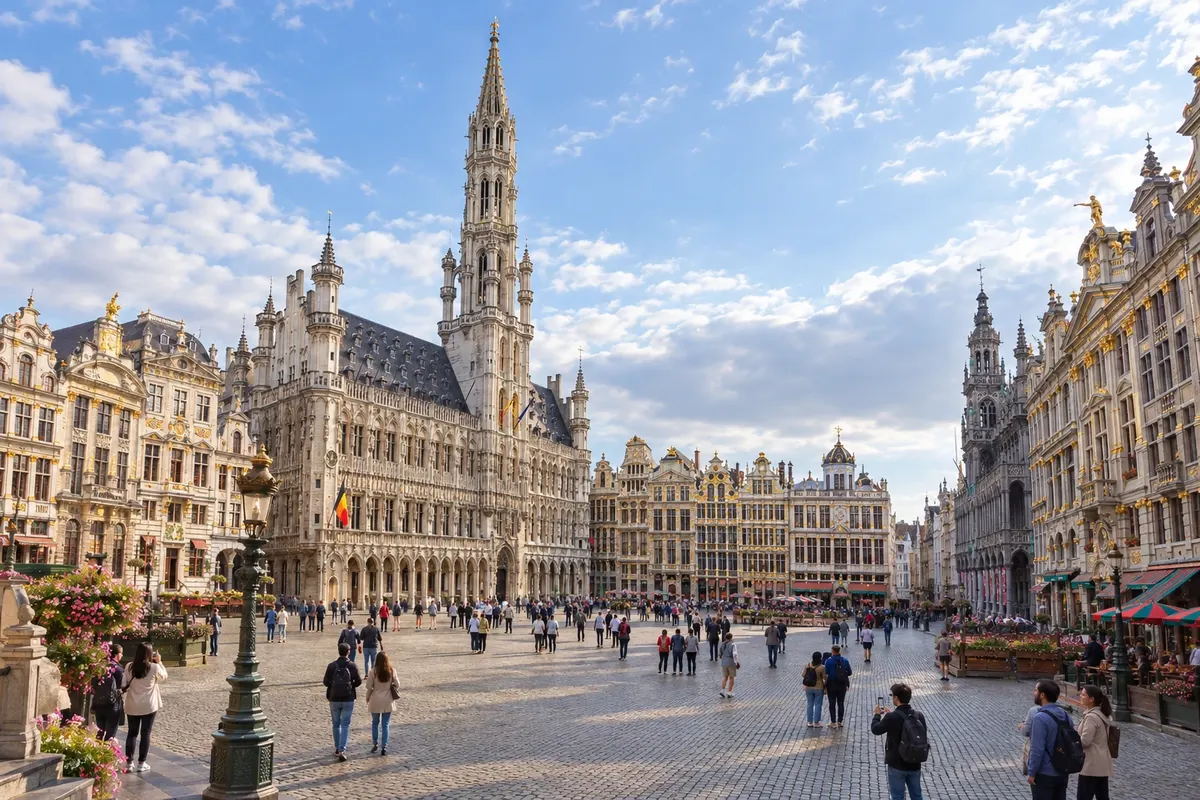 1 · Bruxelas
Bruxelas
Starting point and main gateway to the country, with international trains at Bruxelles-Midi station, also called Brussel-Zuid. The Grand-Place, surrounded by guild houses and the Gothic town hall, is the centre of the visit. The city also houses the Museus Reais de Belas-Artes, with a room dedicated to Magritte, and Victor Horta's art nouveau façades.
→ Lovaina about 25 minutes by train Direct SNCB train from Bruxelas to Lovaina, with several departures per hour from Bruxelas's central stations. The line heads east through neighbourhoods and fields of Brabante Flamengo, and the signs switch to Dutch only.
-
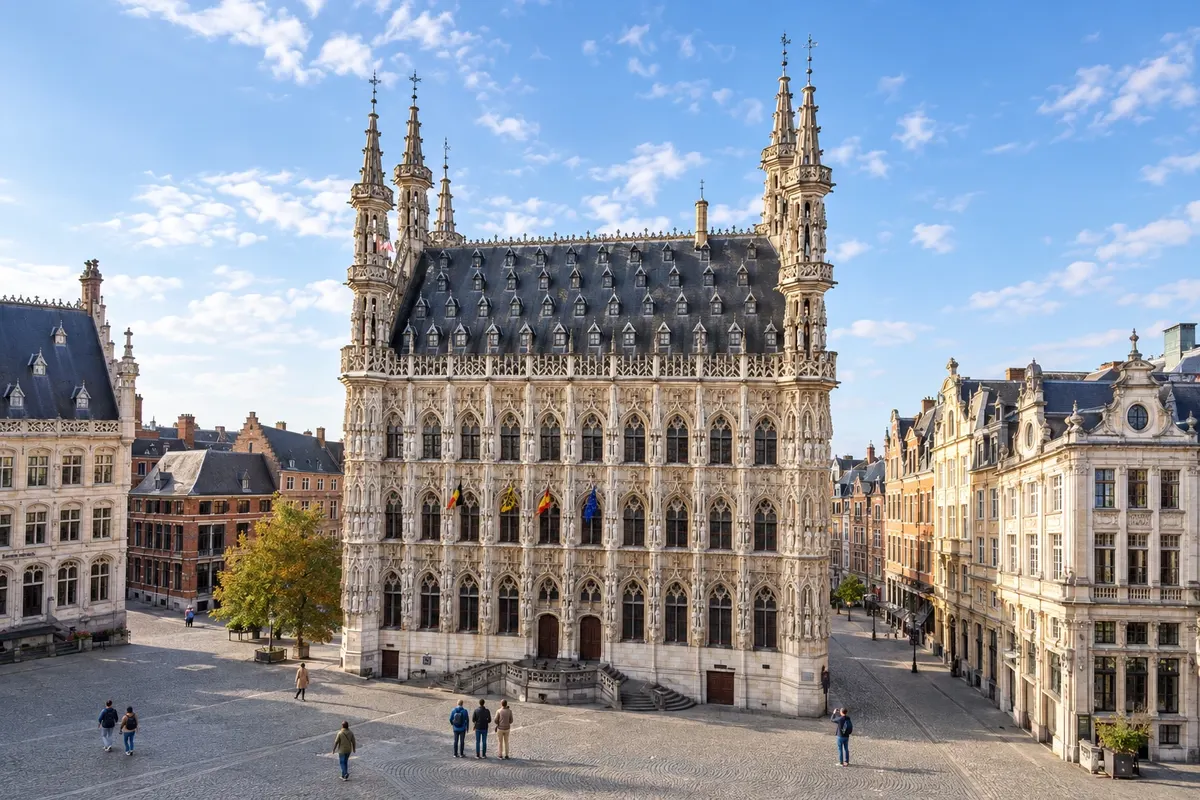 2 · Brabante Flamengo
Lovaina
A university city since 1425, when the university now called KU Leuven was founded. The Gothic town hall, covered in statues, stands opposite the church of São Pedro on the Grote Markt. South of the centre, the Groot Begijnhof is an entire neighbourhood of brick houses on the banks of the Dijle, protected by UNESCO.
→ Mechelen about 20 minutes by train Direct train from Lovaina to Mechelen on the line that passes through Bruxelas airport station. Get off at Mechelen, the main station; Mechelen-Nekkerspoel only receives some trains.
-
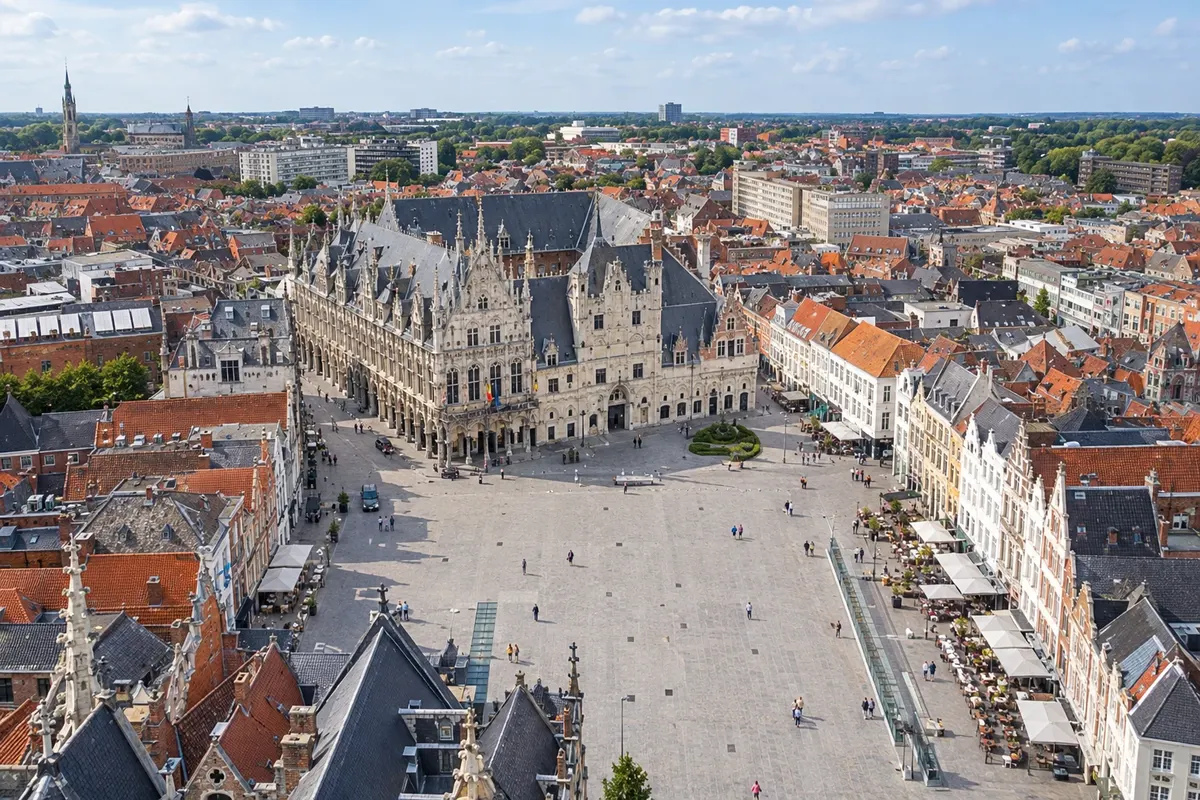 3 · Antuérpia
Mechelen
The smallest of the art cities, called Malines in French. At the start of the 16th century it was the seat of government of the Low Countries under Margaret of Austria, and the palaces from that time still stand in the centre. The tower of the cathedral of São Rombaldo can be climbed on foot and houses a carillon. The Hof van Busleyden shows the city in the time of the Habsburgs.
→ Antuérpia about 20 minutes by train Direct train from Mechelen to Antuérpia on one of the country's busiest lines, with frequent departures throughout the day. Arrival is at Antwerpen-Centraal, a few minutes' walk from Meir avenue and the centre.
-
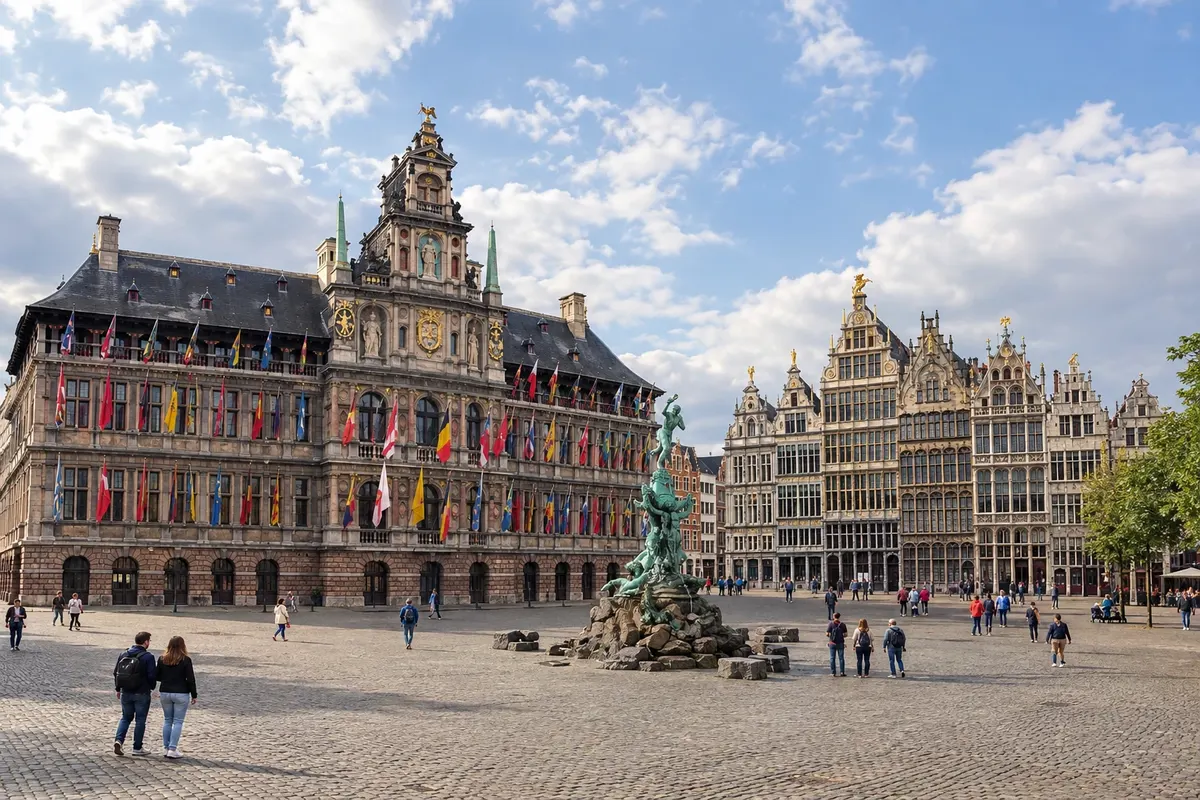 4 · Antuérpia
Antuérpia
Largest city in Flandres and one of the biggest ports in Europe. Arrival is via Antwerpen-Centraal, a station with a domed stone hall. In the Catedral de Nossa Senhora are paintings by Rubens, such as the Descida da Cruz. The Museu Plantin-Moretus preserves the house and print shop of a 16th-century family of printers, with original presses, and the fashion quarter shows the contemporary side of the city.
→ Gante less than an hour by train Direct train from Antuérpia to Gante via Sint-Niklaas, crossing the Waasland region. You disembark at Gent-Sint-Pieters, from where trams 1 and 3 go to the centre.
-
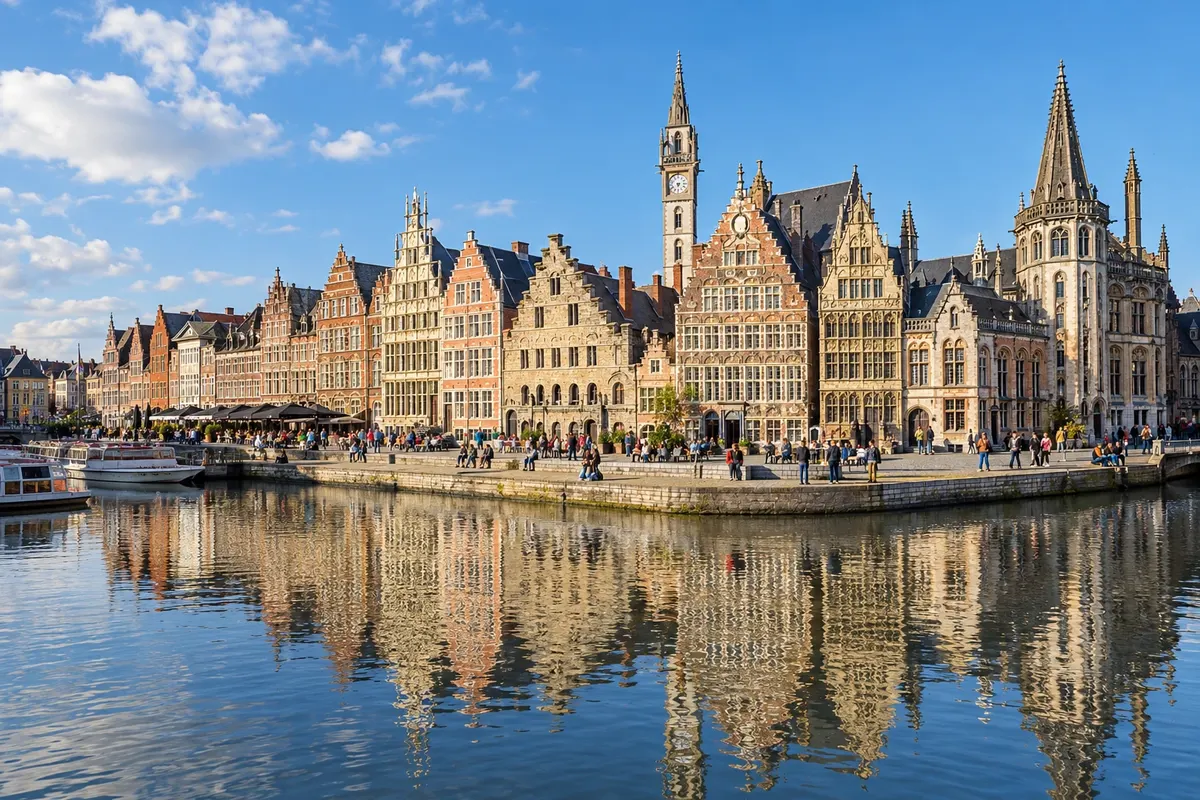 5 · Flandres Oriental
Gante
In the Catedral de São Bavão is the Retábulo de Gante, the Adoration of the Mystic Lamb, completed by the Van Eyck brothers in 1432. The counts of Flandres' castle, the Gravensteen, still has a moat and walls in the middle of the city. The Graslei and Korenlei quays along the Lys form the city's most well-known view. Gent-Sint-Pieters station is about a 20-minute walk from the centre, with trams running to the centre.
→ Bruges about half an hour by train Direct train from Gante to Bruges, with several departures per hour, on the line that continues to the coast at Ostende. The landscape is flat, of fields and canals of Flandres Ocidental. On the station sign, Bruges appears as Brugge.
-
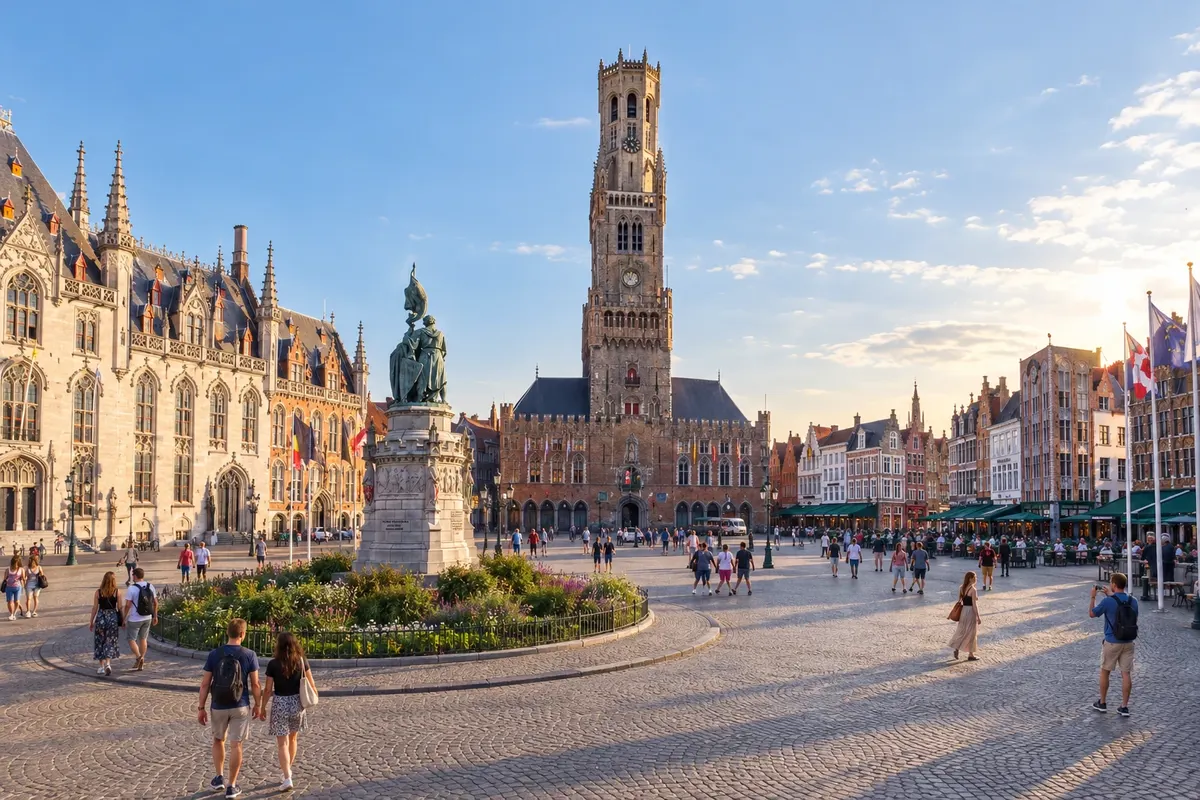 6 · Flandres Ocidental
Bruges
End of the route, with the entire historic centre inscribed by UNESCO and the medieval layout preserved. The canals cut through the centre and are explored by boat. The Belfort, the bell tower, dominates the Markt square. The Museu Groeninge brings together painting by the Flemish primitives, and the Begijnhof lies near the Minnewater lake. There are frequent buses from the station to the centre.
How many days
With a week you can see the six cities without rushing. In four or five days the most common plan is to sleep in Bruxelas, Antuérpia and Gante and visit Lovaina, Mechelen and Bruges as day trips. Each city requires at least a full day; Bruxelas and Antuérpia are worth two.
Best time to go
From April to September the days are usually long and drier, good for walking around the centres. July and August bring more tourists, especially in Bruges. From November to February it gets dark early and rain is frequent; in December several of the cities usually set up Christmas markets in the squares. It can rain any month, so bring a waterproof jacket.
The seasons shown are the most usual ones; nature doesn't always follow the calendar.
How to travel it
By train. The Belgian railway company links all the cities with direct, frequent trains. Historic centres have restricted-traffic areas and difficult parking, so a car tends to be more of a hindrance than a help. At the stations, names appear in the local language: Brugge, Gent-Sint-Pieters, Antwerpen-Centraal. Check timetables before you go.
Who it's for
For those who enjoy art, architecture and history and prefer to travel without a car. It works well for couples, solo travellers and first-time visitors to Europe, because the cities are compact and the centres can be explored on foot.
Your questions
Frequently asked questions about the Art cities of Flandres
Do I need a car to do the route?
No. All the cities have train stations with direct connections to the next stop, and the historic centers can be explored on foot. A car usually gets in the way, because the centers have restricted access and parking is difficult.
Is it possible to do everything from Bruxelas without changing hotels?
Yes. Mechelen and Lovaina are about 20 to 25 minutes by train, Antuérpia and Gante under an hour, and Bruges around an hour. Staying only in Bruxelas saves on luggage, but leaves little time to see the cities in the late afternoon and at night, when the centers are quieter.
How many days are needed?
A week is ideal for the six cities. With four or five days, choose two or three bases, such as Bruxelas, Antuérpia and Gante, and visit the others on day trips.
What's the best time of year?
From April to September, when the days are usually longer. July and August are the busiest months. From November to February it gets dark early and it often rains, but in December the cities usually have Christmas markets.
Why do the cities appear with different names on signs and tickets?
Bélgica has two main languages in that region. Flandres speaks neerlandês, and Bruxelas is officially bilingual, French and neerlandês. That's why Gante appears as Gent or Gand, Bruges as Brugge, Mechelen as Malines, Lovaina as Leuven or Louvain, and Antuérpia as Antwerpen or Anvers. When buying your ticket or reading the station board, look for the local name.
What order should you visit the cities in?
There is no fixed order, and the train allows you to start from any of them. Leaving from Bruxelas, going through Lovaina, Mechelen and Antuérpia and then down to Gante and Bruges avoids retracing your route, and each leg has a direct train.