

 Brazil
 Argentina
 Chile
Chile Colombia
 Peru
Peru Uruguay
 Germany
 Spain
Spain France
 Greece
 the Netherlands
 Ireland
 Italy
Italy Portugal
 the United Kingdom
 Switzerland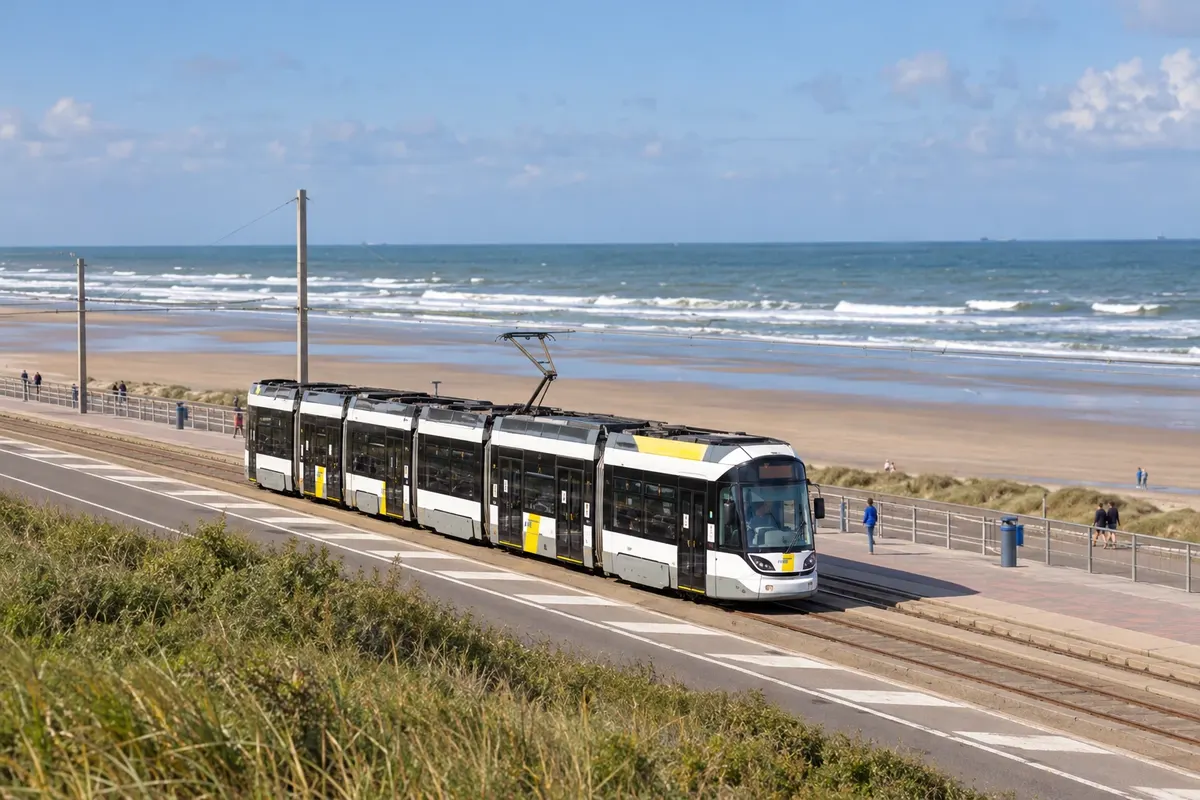
Route · Flandres Ocidental
Belgian coast on the Kusttram
Between De Panne, next to France, and Knokke-Heist, next to the Netherlands, a tram runs along the entire Belgian coast, with dunes, seaside resorts and the North Sea at its side.
In the photo: Kusttram on the Ostende seafront, by the North Sea
Illustrative images. The pictures in this guide are illustrations based on the real place, not photographs, and may differ from it.

The route
What the Belgian coast on the Kusttram is
Belgium has a short coast, and a tram runs it from end to end. The Kusttram, operated by De Lijn, is 67 km long and has more than 60 stops. It starts in De Panne, next to France, and ends in Knokke-Heist, next to the Netherlands. Without getting off, the whole trip takes a little over two hours.
The first section opened in 1885, between Ostende and Nieuwpoort. Today the line goes through all the seaside resorts of the coast: besides the six cities on the route, Koksijde, Oostduinkerke, Middelkerke, Bredene, Wenduine and Zeebrugge are on the way. Between Ostende and Middelkerke, the sea appears outside the window.
The idea is to get off, walk a bit and catch the next tram. De Panne has the dunes of the Westhoek reserve. Nieuwpoort preserves the port and the memory of the First World War. Ostende is the largest coastal city. De Haan keeps Belle Époque villas. Blankenberge has the 1933 pier, and Knokke-Heist has art galleries and the Zwin reserve.
The North Sea is cold for Brazilians: in Ostende the water usually reaches about 19 °C in August, the warmest month. It is often windy on the seafront, even in summer, and a light jacket helps. The entire coast is in Flanders, and the signs and stop names are in Dutch.
The map
6 cities along the way
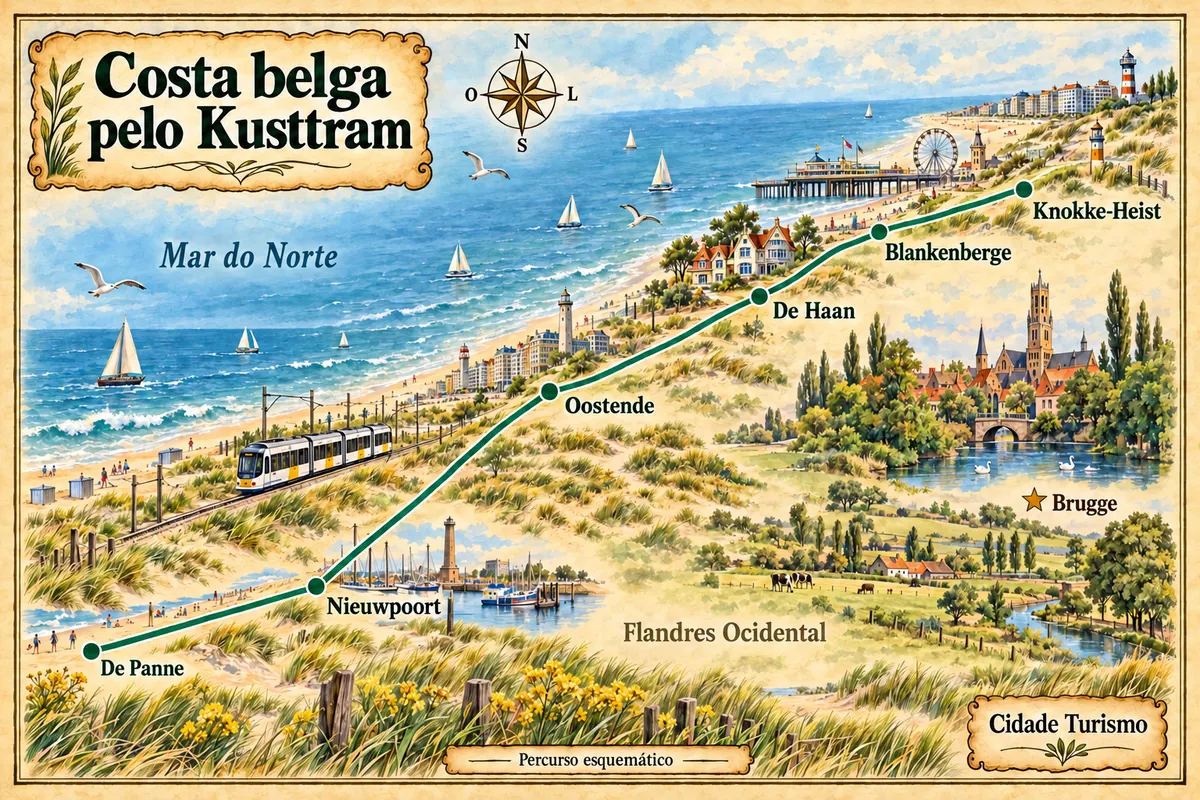
Contornos: © NGI-IGN, AdminVector, CC BY 4.0. Adaptação do Cidade Turismo.
The journey
City by city
Distances and times are approximate: check before you set off.
-
 1 · Flandres Ocidental
De Panne
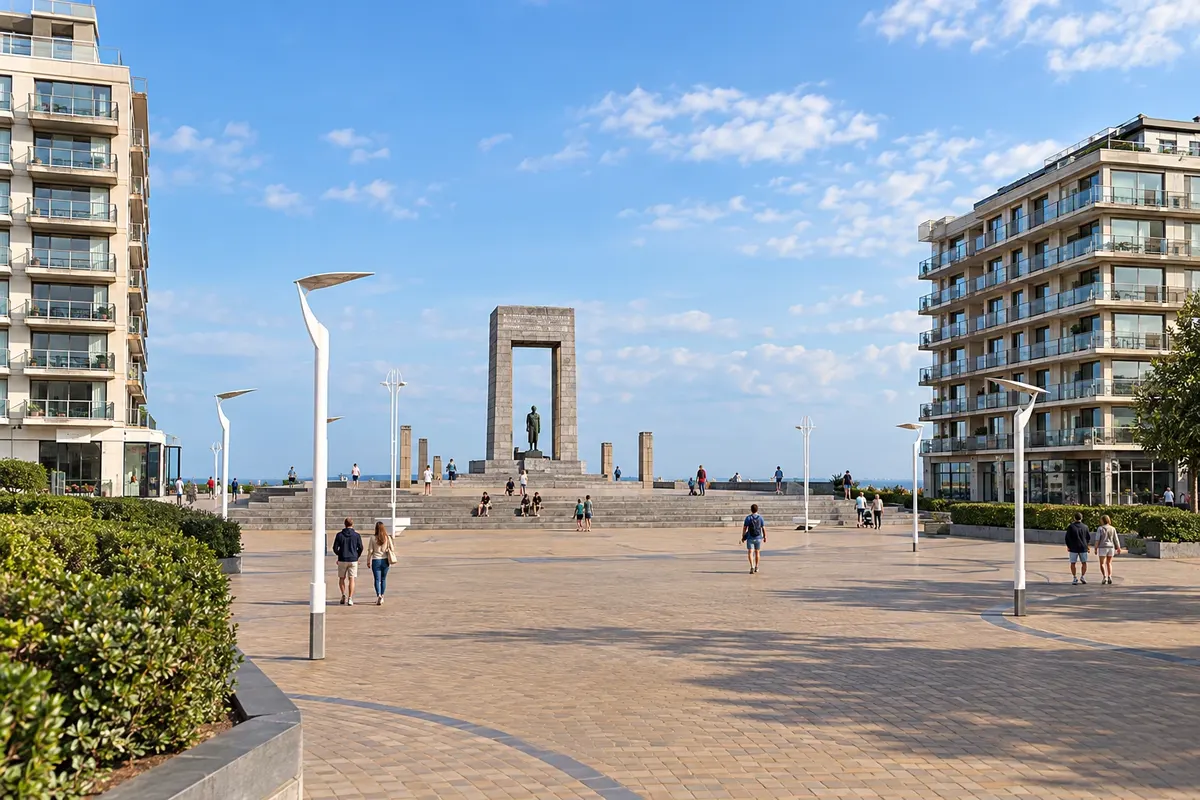
The western end of the line, a few kilometres from France. The tram terminates at De Panne station, which is in Adinkerke, after passing the Plopsaland stop. In the centre, the Leopoldo I esplanade marks the spot where the first King of the Belgians entered the country on 17 July 1831. The beach, very wide, is used for land sailing, and the Westhoek reserve protects the oldest continuous dune area on the coast.
→ Nieuwpoort Kusttram through Sint-Idesbald, Koksijde and Oostduinkerke, where shrimp fishing on horseback is an intangible UNESCO heritage. Dunes, villages and the dyke appear between stops.
-
 2 · Flandres Ocidental
Nieuwpoort
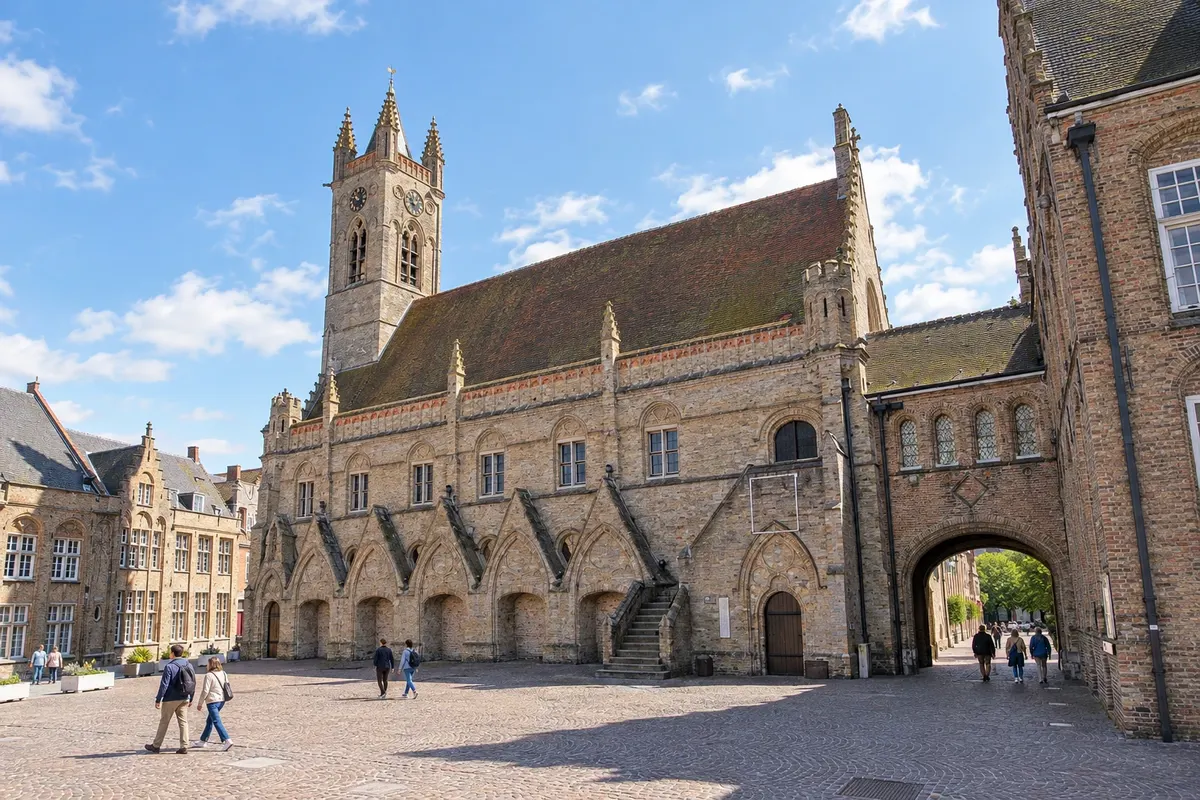
At the mouth of the Yser river, it was here that water stopped the German advance in 1914: the Nieuwpoort sluices were opened and the Yser plain was flooded. Beside the Ganzepoot lock complex stands the 1938 Monument to King Albert I, now home to the Westfront visitor centre. The tram has a stop in the centre, near the Stadshalle with its belfort, and another at the resort, close to the lighthouse.
→ Ostende Kusttram via Lombardsijde, Westende and Middelkerke. Before Ostende it passes Raversijde, which is home to the open-air Atlantic Wall museum, and runs with the sea in view for part of the route.
-
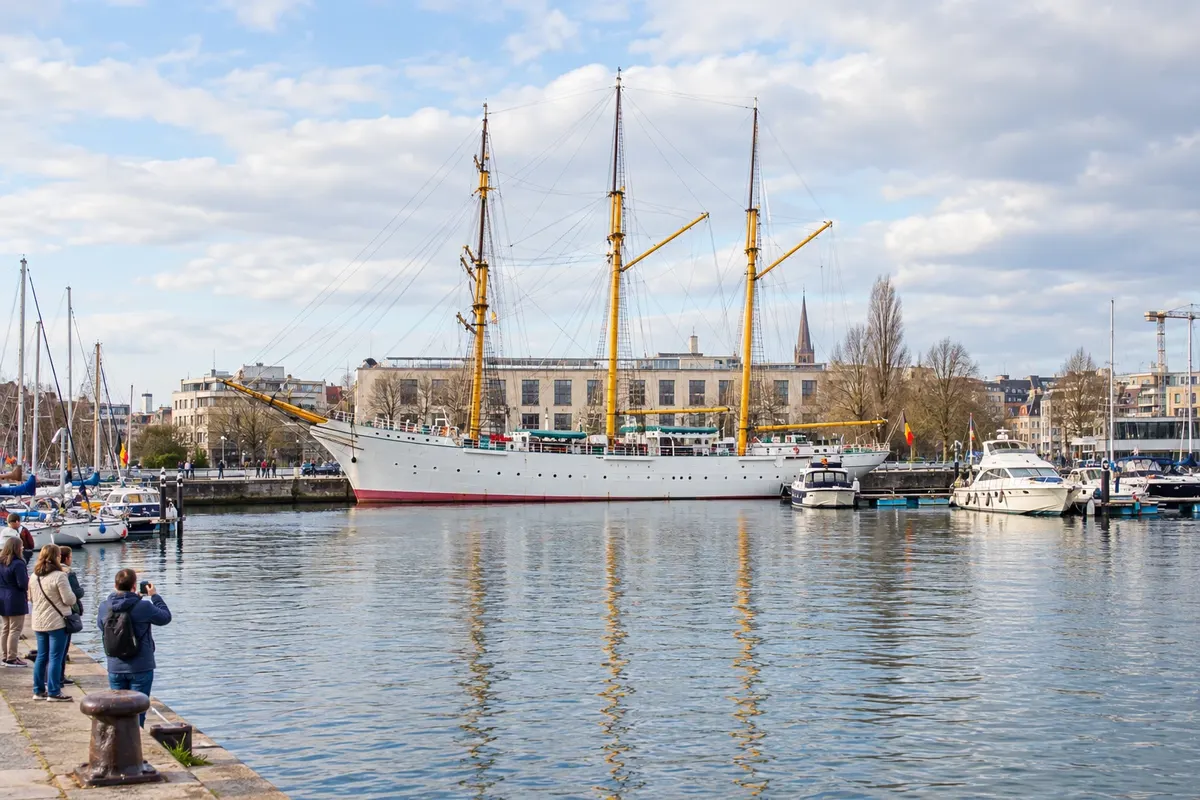 3 · Flandres Ocidental
Ostende
In the middle of the line and the largest coastal city. Oostende Station stop is next to the train station, which makes Ostende the most convenient point to join or leave the route. The Marie-Joséplein stop puts travellers near the Casino-Kursaal on the seafront. On the east side of the port, the Oosteroever stop leads to Fort Napoleon and the Lange Nelle lighthouse.
→ De Haan Kusttram from downtown Ostende to the east side of the port and via Bredene, with campsites and dunes, to the first stops of De Haan.
-
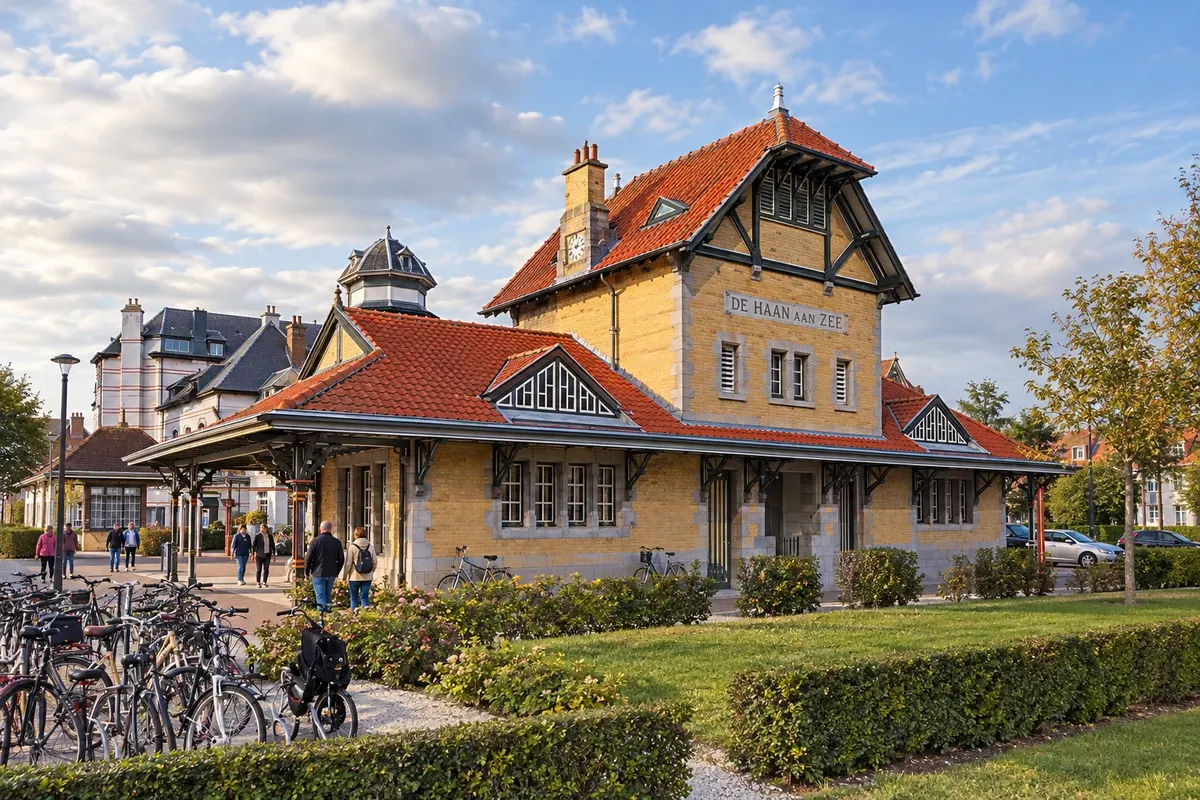 4 · Flandres Ocidental
De Haan
A low-rise seaside resort, where the villa neighbourhood called Concessie, with its oldest houses dating from around 1890, is protected and has no tall buildings. The De Haan aan Zee stop is next to the old tram station, from 1902, which now houses the tourist office. Albert Einstein spent six months in De Haan in 1933. Behind the beach, the dune woods have trails for walking and cycling.
→ Blankenberge Kusttram via Wenduine, which belongs to De Haan, with the Hubertmolen windmill from 1880 and the Spioenkop dune, before reaching Blankenberge.
-
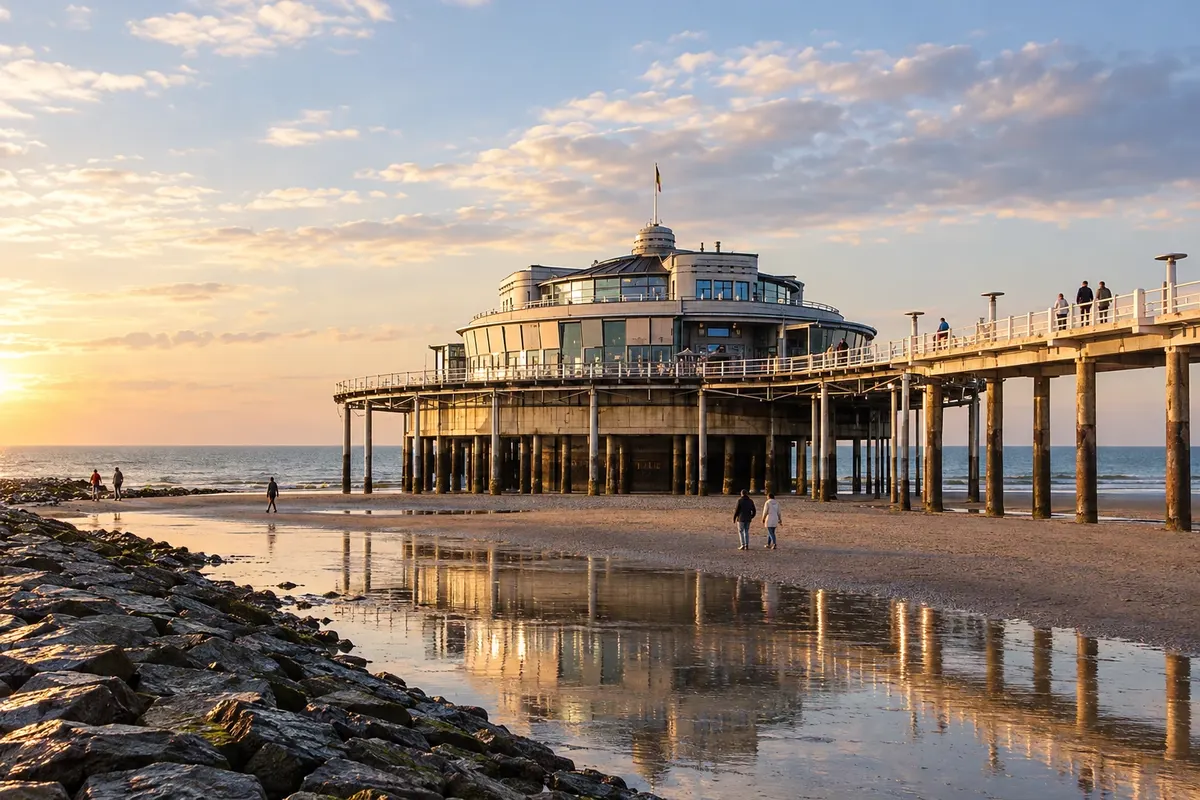 5 · Flandres Ocidental
Blankenberge
The town's landmark is the Belgium Pier, 350 m long, in Art Deco style, built in 1933 in the place of an iron-cast pier from the late 19th century. The casino, also Art Deco, dates from the same decade. The Blankenberge Station stop puts travellers next to the train station, and the Pier and Markt stops are closer to the promenade and the centre.
→ Knokke-Heist Kusttram via Zeebrugge, Bruges' port, where the line crosses the locks and can divert when the bridges are open, and through the Zeebos and De Fonteintjes reserves, to Heist.
-
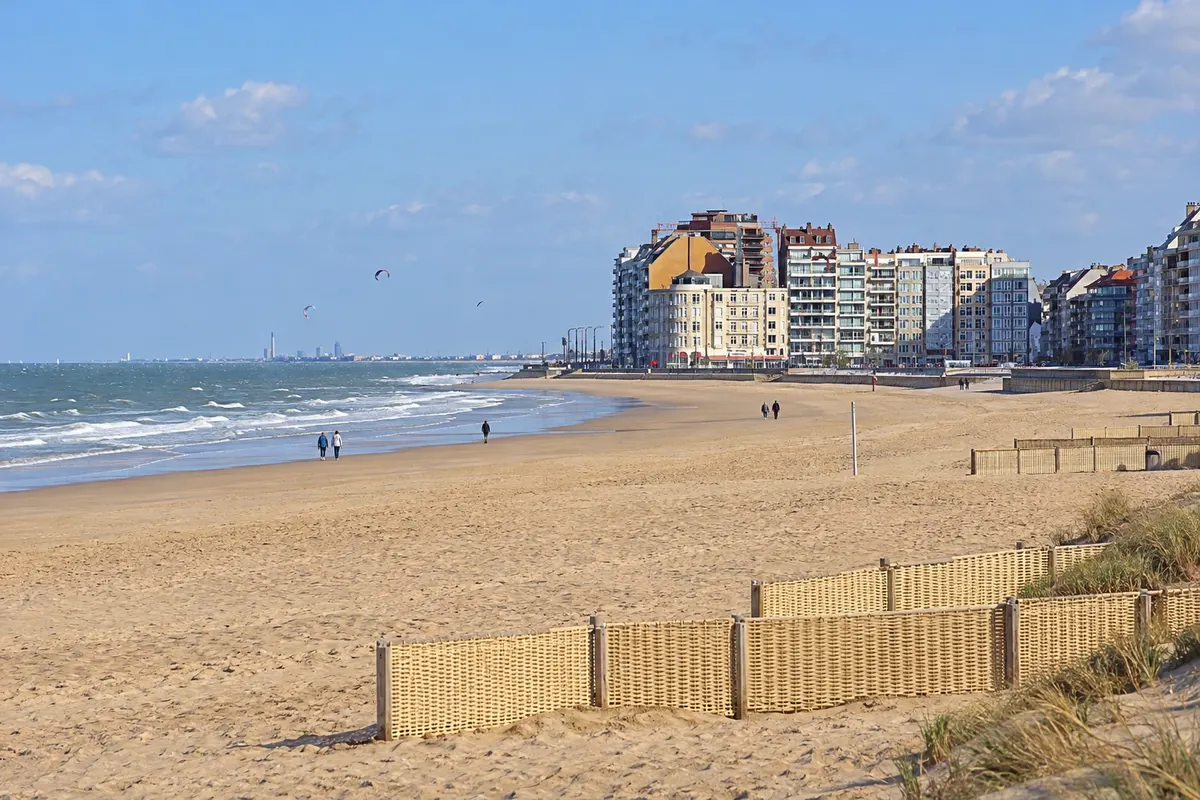 6 · Flandres Ocidental
Knokke-Heist
The eastern end of the line, bordering the Netherlands. The tram passes through Heist and Duinbergen before reaching Knokke, where the terminal is about 200 m from the train station. On the border is the Zwin, a salt-marsh reserve with white storks. It was the opening of that sea inlet in a storm in 1134 that gave Bruges access to the sea in the Middle Ages.
How many days
You can do end to end in one day with two or three short stops. With two or three days, the best plan is to sleep in Ostende, in the middle of the line, and explore one side of the coast per day. In summer many people choose a resort as a base and use the tram for day trips.
Best time to go
The beach season usually runs from June to September, with July and August busier. In August the average air temperature in Ostende is around 18 °C and the water around 19 °C. May and September tend to be quieter and good for walking in the dunes. From November to February the days are short, the wind strengthens and rain is frequent; November is the rainiest month.
The seasons shown are the most usual ones; nature doesn't always follow the calendar.
How to travel it
The Kusttram is the natural way to do the route: the same line runs from De Panne to Knokke, with stops just a few minutes apart. It runs frequently during the day, and in summer intervals are usually shorter than in winter; check before you go. De Panne, Ostende, Blankenberge and Knokke have train stations. By car, the N34 road follows the coast.
Who it's for
For those who want to explore the Belgian coast without a car, for families with children who will find wide beaches and parks near the stops, for fans of early-20th-century seaside architecture, and for birdwatchers in the dunes of De Panne and in the Zwin.
Length
About 67 km
Your questions
Frequently asked questions about the Belgian coast on the Kusttram
Do you need a car to do the route?
No. The Kusttram links all the towns on the route, and the stops are close to the beach and town centres. By car the N34 follows the coast from De Panne to Knokke, but the tram avoids the need to look for parking in the resorts.
Can you do it starting from Brussels?
Yes. There are trains from Brussels to Ostende, Blankenberge and Knokke, which pass through Bruges. For a day trip, it's best to choose a section of the coast, such as Ostende and De Haan, or Blankenberge and Knokke-Heist. The whole coast, at a relaxed pace, takes two or three days.
How long does the tram take from one end to the other?
The line is 67 km long and has more than 60 stops. Without getting off, the trip from De Panne to Knokke takes just over two hours. With stops to visit the towns, allow a full day.
Can you go into the sea?
Yes, but the water is cold for those used to the Brazilian coast. In Ostende, the average is usually around 18 °C in July and 19 °C in August, and it falls to about 7 °C in winter. The beach season generally runs from June to September.
Why do some cities appear with a different name?
The coast is in Flanders, where the official language is Dutch, and that is how the signs and tram stops are shown. In French, De Panne is La Panne, De Haan is Le Coq and Nieuwpoort is Nieuport, names that sometimes appear on maps and in books.
Which end should you start from?
It doesn't matter: the tram runs back and forth on the same line. If you arrive by train via Ostende you can do one side in a day and the other the next day. Those coming from France usually start at De Panne; those coming from the Netherlands, at Knokke-Heist.